
Jeffrey Epstein’s Secret War Against Iran
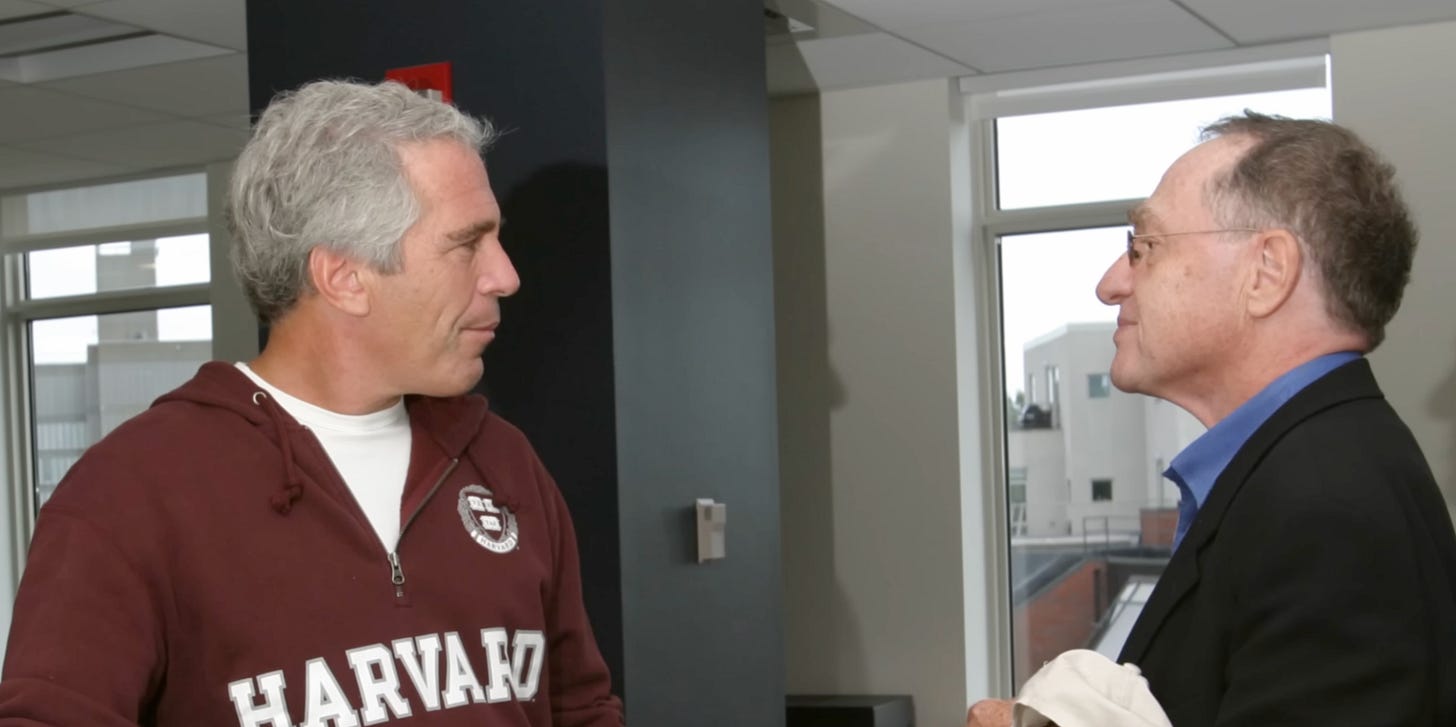
On the morning of August 10, 2019, Jeffrey Epstein was found unresponsive in his cell at the Metropolitan Correctional Center in Manhattan. The infamous JEwish financier and convicted sex offender was transported in cardiac arrest to New York Downtown Hospital, where he was pronounced dead at 6:39 a.m. He was 66 years old. The circumstances of his death remain hotly contested to this day.
But while the world has fixated on Epstein’s crimes against young women and his web of powerful connections, another dimension of his life remained largely unexplored until recently. Leaked emails released by the Handala hacking group (an Iranian-linked collective) and documents from the U.S. House Oversight Committee in November 2025 have revealed something extraordinary.
Jeffrey Epstein was not merely a socialite predator. He was a shadow diplomat, a backroom operator, and a relentless advocate for military confrontation with Iran.
At the center of Epstein’s geopolitical machinations stood Ehud Barak, the former Israeli Prime Minister and decorated military commander. The relationship between these two men defies easy categorization. Between 2013 and 2016, the pair engaged in what Drop Site News described as “intimate, oftentimes daily correspondence” spanning political strategy, business dealings, and their shared obsession with neutralizing the Iranian threat.
The leaked emails paint a portrait of Epstein as a tireless asset of world Jewry — and are highly compatible with the idea that he was a Mossad agent. Here was a man who could summon Larry Summers for dinner briefings on Middle Eastern geopolitics, who traded messages with Noam Chomsky about the Iran nuclear deal, and who maintained a direct line to one of Israel’s most powerful former leaders. Epstein moved through the corridors of power with the ease of a man who understood that in Washington and Tel Aviv, access is everything.
In February 2013, Epstein emailed Summers seven articles about Middle Eastern geopolitics to prepare for a briefing. The top article was a Wall Street Journal op-ed arguing that Iranian leadership was fundamentally unserious about nuclear negotiations and merely buying time to develop weapons. The subject line referenced “prep for dinner, israel pres briefing,” an apparent allusion to then-Israeli President Shimon Peres, who was a longtime friend of Summers and who allegedly introduced Barak to Epstein in the first place.
Epstein’s position on Iran was crystalline in its clarity. He despised the diplomatic approach. He mocked those who believed Tehran could be reasoned with. And he pushed, again and again, for the United States to take kinetic action against Iran.
In August 2013, when Bashar al-Assad’s forces were accused by Western governments of unleashing chemical weapons on the Damascus suburb of Ghouta, Epstein saw an opportunity. He immediately emailed Barak, urging him to write an op-ed connecting Syria to the larger Iranian question. “I would use the opportunity to compare it with Iran,” Epstein wrote, his characteristic misspellings intact. “The solutions become more compelx with time not less.”
Then came the revelation of his true ambitions. “Hopefully someone suggests getting authorization now for Iran,” he wrote to Barak. “The congress woudl do it.”
Epstein had developed a pet phrase for critiquing American foreign policy, one he returned to obsessively. “Wait until it’s too late.” He told Barak that he saw this as the defining failure of Western statecraft. “I really like the Wait until its too Late, to be your critiqe of the communities foreign policy…”
When the Obama administration achieved what it considered its signature foreign policy triumph in April 2015, reaching an agreement with Iran on its nuclear program, Epstein and Barak were united in their contempt.
Barak penned an op-ed for TIME magazine titled “Iran Has Escaped a Noose.” In it, he argued that only crushing sanctions and credible military threats could restrain Tehran—standing in sharp contrast to the Obama administration’s more diplomatic approach.. He proposed a “surgical strike” on Iranian nuclear facilities that would set the Islamic Republic “five years backward” and deter future violations.
Epstein received this article and discussed it approvingly with Barak. The two men had found common cause in their conviction that American diplomacy was naive at best and dangerous at worst.
The intellectual game-playing extended further. Barak sent Epstein videos of Bill Clinton discussing North Korea’s 1994 nuclear deal, titled “Bill Clinton on Virtues of North Korean Nuclear Deal – History Repeats Itself.” The implication was clear. Just as North Korea had exploited diplomatic agreements to eventually develop nuclear weapons, so too would Iran.
Even with Donald Trump in the White House — a president who ultimately abandoned the Iran nuclear deal — Epstein remained unsatisfied. His correspondence with Steve Bannon from 2018 to 2019 reveals mounting paranoia that Washington might soften toward Tehran.
When Iranian President Hassan Rouhani won re-election in May 2017, Epstein lamented the result. “I told you this would happen,” he wrote to Bannon. “It’s going to get a lot worse before it gets better.”
In one exchange, Bannon mentioned he was “all over Iran.” Epstein replied with what may be his most memorable assessment: “They are very very bad guys. Patient smart spread Shia.”
July 2018 provided a momentary high. When Trump made global headlines with an all-caps threat against Iran’s president, Epstein was giddy. He messaged Bannon, “Trump threatened Iran ;)”
But the following night, when Trump said the U.S. was “ready to make a real deal” with Tehran, Epstein’s excitement collapsed into contempt. He called it “nuts.”
Epstein’s obsession with Iran fed into a larger framework of fears, especially regarding China’s expanding footprint on the world stage.
In September 2018, he told Bannon that French contacts believed China was adopting a global “imperialistic strategy.” As proof, Epstein cited China’s growing presence in Iran, Venezuela, and Djibouti. For Epstein, Iran was not a standalone threat but a key node in China’s broader geopolitical ambitions.
Understanding Epstein’s unyielding hostility toward Iran requires a closer look at his underlying worldview and entrenched loyalties. A man of Jewish extraction, he consistently directed his wealth toward prominent Jewish institutions and pro-Israel causes.
Tax filings show he gave $500,000 to the Ramaz School, an elite Orthodox Jewish institution in Manhattan. He contributed $50,000 to the UJA-Federation in 2017. His foundation donated $25,000 to Friends of the IDF in 2005. Alongside Leslie Wexner, he bankrolled a new building for Harvard Hillel.
These were not casual donations. They reflected a sustained investment in institutions aligned with Israeli security and Jewish communal life. With Iran threatening Israel through Hezbollah, Hamas, and constant rhetorical aggression, Epstein’s hawkishness becomes more comprehensible. To him, confronting Iran was not only geopolitics — it was ideology and identity.
The Iranian government itself entered the conversation after the revelations of Epstein’s email correspondence. On November 3, 2025, Foreign Ministry spokesman Esmail Baqaei commented that the leaked emails revealed “the moral decay of Iran’s enemies.” He added: “A man guilty of human trafficking symbolizes the corruption of those who lecture others on human rights.”
The irony is stark. The man who wanted the U.S. to bomb Iranian nuclear facilities was himself a sexual predator. His geopolitical scheming — his cultivation of prime ministers, intellectuals, and presidential advisors — unfolded alongside his exploitation of the vulnerable.
Jeffrey Epstein wanted to shape the Middle East. He pushed relentlessly for war with Iran. He moved in the shadows of statecraft, influencing elites from Manhattan to Tel Aviv. And although he died before facing complete accountability for his crimes, the emails he left behind expose a man whose ambitions stretched far beyond depravity.
Epstein may be gone, but the shadow he cast over U.S. foreign policy is still very much alive in a Trump administration that is actively pursuing a radical Zionist agenda that would make the neocons of yesteryear blush.




Even more interesting is the close relationship Epstein had with Kremlin:
Jeffrey Epstein and the Mossad: How The Sex-Trafficker Helped Israel Build a Backchannel to Russia Amid Syrian Civil War
https://www.dropsitenews.com/p/jeffrey-epstein-ehud-barak-putin-israel-russia-syria-war-depose-assad
Wikileaks Group Leaks Emails Revealing Putin’s Personal Relationship With Jeffrey Epstein
https://slavlandchronicles.substack.com/p/wikileaks-groups-leaked-emails-reveal
They really are going for total world domination. Suddenly Africans are showing up in Southern China apparently. Know them by their deeds.
B… b… but I’ve been told by American Nazis (who had never set foot in Russia) that Putin was based…
As I understand it, all speech laws and cultural beliefs are engineered by Putin himself in Russia. Putin is not Group Selected, but Individually Selected, so he works simply to maximize the well-being of his personal life. He is atheist and nihilistic, he has no Altruistic sentiments for any other Russian citizens. Russian media is reporting that Putin has made a deal with India to import millions of Hindus to make up for all the Russian Slavs that are fighting in Ukraine. Putin is not interested in Slavic racial integrity. He has criminalized “anti-semitism” and race realism in Russia. It makes logical sense – the best way for Putin to maximize his well-being is to exploit the labor of anyone willing to work in Russia. This could be adequate for Putin to live a long successful personal life. But, he is not interested in the collective well-being of Russian Slavs centuries into the future.
Is it too unrealistic for me to hypothesize that Perhaps Epstein is not deceased and that perhaps he was actually covertly sent to Israel? Sure, every Group Selected Ashkenazi person is willing to die for his race, and I would speculate that Epstein would be willing to be killed if that was what was required for him to avoid a public court scrutiny that would hurt Israel. But, what if such a death was not actually required and he was successfully sent to Israel where he now just works for MOSSAD out of the public view?
Unz.c*m/pgiraldi/donald-trump-on-a-roll-all-week/
Yes, I agree with this article that the White House has been very clever in promoting Israeli “puppet” Trump. How successful will it be? Well, Americans have very low innate IQs, so they are very easily convinced by “catchy” phrases that the White House puts out. On the other hand, Americans are experiencing a rapidly decreasing quality of life due to inflation under the current White House, and the Democratic Party, run by Western Jewish people, are pretending to be able to fix the problem. Democrat elites are saying that they will end and reverse inflation, but they are not explaining how they will do it. Will they end all tariffs on China, India, South America, Mexico, and the rest of the world? Will they invest in domestic factories and infrastructure so we can make everything here? Will they end all low IQ immigration and execute all domestic criminals? The Democrats are not explaining anything. They too are just using catch phrases. So, it seems to me that that we American Gentiles are “screwed” either way – our IQs are too low and our genes are too inferior now due to dysgenics to be able to help ourselves. Our fate rests on the elites of both parties that have no Altruistic sentiments towards us. We are finished. Oh well. It’s not as if we were going to live forever anyway.
https://www.youtube.com/watch?v=p63EKgG_UMc
Here Freddy Gray was joined by University of Chicago’s Professor John
Mearsheimer to discuss why Trump’s 28-point Ukraine peace plan and what happened when Jeffrey Epstein and Alan Dershowitz ran a smear campaign against him over his
essay on the Israel lobby.
Here’s the direct link to Dr. John Mearsheimer’s official faculty profile page at the University of Chicago:
https://political-science.uchicago.edu/directory/John-Mearsheimer
Additional Context
• Position: John J. Mearsheimer is the R. Wendell Harrison Distinguished Service Professor of Political Science at the University of Chicago.
• Background: He has taught at the university since 1982, after earning his PhD in political science from Cornell University.
• Research Focus: Mearsheimer is widely known for his work in international relations theory, particularly his development of offensive realism, which emphasizes the competitive nature of great powers in an anarchic international system.
• Publications: His notable books include The Tragedy of Great Power Politics (2001), The Israel Lobby and U.S. Foreign Policy (2007), and The Great Delusion: Liberal Dreams and International Realities (2018).
Here’s a direct link to Dr. Mearsheimer’s official personal website:
https://www.mearsheimer.com
It includes access to his major works including The Tragedy of Great Power Politics and The Great Delusion and teaching materials directly curated by him.
Epsteinify.com and Epstein Data Explorer facilitate browsing thousands of documents released by the U.S. House Oversight Committee in November 2025 including email, flight slips, legal notes, and interview summaries.
Epsteinify allows searching and browsing the email releases by name, date, or keyword.
Epstein Data Explorer http://www.epsteindata.org organizes over 4,500 PDF, MSG and text files to facilitate browsing.
DocETL Explorer provides interactive analysis of 2,322 emails, with filters for participants, organizations, and topics.
Epstein Archive.org hosts case-related material including flight logs, depositions, and court filings.
A Gmail-style interface called Jmail allows users to browse Epstein email as if it was in a personal inbox.
The Epstein estate reportedly is fighting to shield email under attorney-client privilege, particularly those with Kathryn Ruemmler, a “top attorney” for GOLDMAN SACHS.
https://nationalvanguard.org/2025/12/epstein-the-fake-reveal/
“Epstein: The Fake Reveal”
American Dissident Voices broadcast of 6 December, 2025
by Kevin Alfred Strom
Includes audio of Mr. Strom reading his analysis of disclosures including what was not disclosed and why not– one of a continuing series with hyperlinks to the others and more.