
Bootstraps or Bailouts? The Hidden Truth of Israel’s Military Power
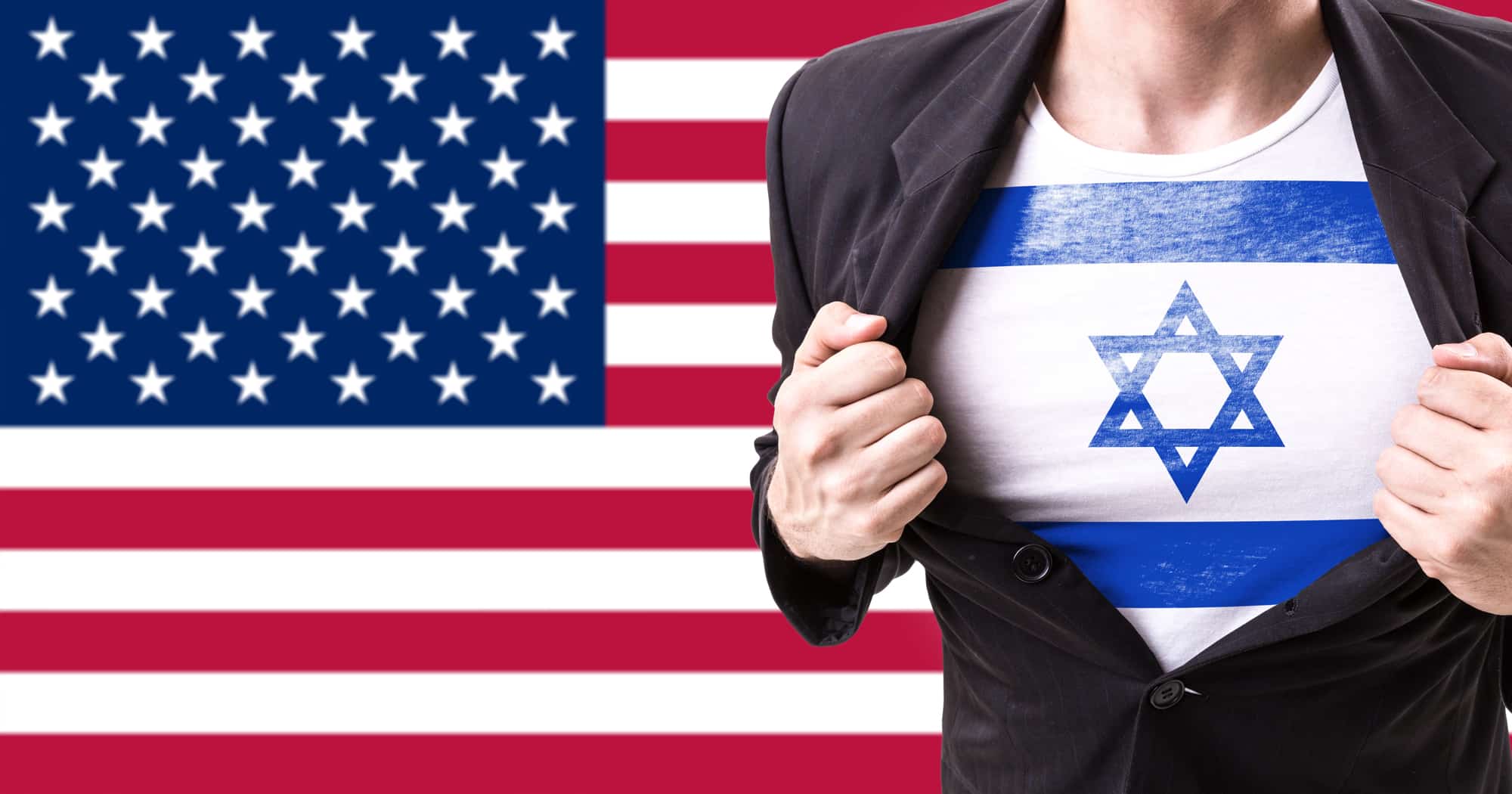
As America continues pouring billions into Israeli defense, the uncomfortable truth is that Israel’s security and strategic position have always depended on outside assistance—contrary to popular conservative claims.
Conservative pundits like Ben Shapiro repeatedly boast about Israel’s alleged independence in the face of external foes, arguing that “Israel has bootstrapped its way into military dominance despite all of the internal obstacles” it has faced. However, this claim contradicts the extensive evidence of American and Western support the Jewish state has received since 1948.
From the crucial Soviet arms supplies in 1948 to the unprecedented $38 billion U.S. military aid package of 2016, Israel’s history reveals a persistent dependence on outside aid, belying its image of independence. Israel’s very survival during its founding depended critically on external military support, primarily from an unexpected source: the Soviet Union.
The Soviet Union initially backed Israel in 1948 by facilitating arms deals between its satellite state Czechoslovakia and Israel. These arms transfers proved decisive in the War of Independence. As David Ben-Gurion later acknowledged, “They saved the country, I have no doubt of that… The Czech arms deal was the greatest help, it saved us and without it I very much doubt if we could have survived the first month.”
Perhaps most remarkably, Israel’s early survival also depended on support from Jewish-American organized crime networks. Meyer Lansky, more notoriously known as “the Mob’s Accountant,” donated a million dollars to the Zionist cause in 1948, a contribution that proved crucial during Israel’s War of Independence. Lansky, an Ashkenazi Jew born in present-day Belarus, immigrated to Manhattan in 1911. He later used his extensive criminal network to aid the Jewish state, obstructing arms shipments to Arab countries and assisting Jewish settlers.
Lansky’s operations extended beyond just financial donations. He controlled major U.S. ports through his connections with the Italian Mafia and the International Longshoremen’s Association, enabling him to manipulate cargo shipments. Workers and customs officials who feared Lansky’s reputation helped ensure key weapons shipments reached Israel safely while Arab-bound arms mysteriously “fell” from cranes into harbors or were “mistakenly loaded” onto ships sailing to remote destinations, according to a report by JFeed.
In a similar vein, Jewish mobster Bugsy Siegel organized secret meetings in Los Angeles with Jewish businessmen and other members of the criminal underworld to raise donations for weapons smuggling. According to reports, Siegel donated tens of thousands of dollars toward the Israeli independence movement through meetings held with Zionist diplomat Reuven Dafni. Siegel viewed the Zionist struggle as a chance to achieve something of lasting consequence that would endure beyond his lifetime. At a fundraising meeting, he declared, “When Israel is established, I want to know that I had a part in it.”
The Jewish Agency ran a secret arms-purchasing operation from the Hotel Fourteen in New York, where Jewish gangsters from Brooklyn offered their services. According to electronics engineer Dan Fliderblum, who witnessed these meetings, “The mobsters offered to help in any way they could. One of them said, ‘If you want anyone killed, just draw up a list and we’ll take care of it.’”
Beyond the shadows of Brooklyn backrooms, Israel soon secured a lifeline through official state agreements that dwarfed underworld contributions. The 1952 Luxembourg Agreement provided Israel with another source of critical funding during its infancy as a state. In this instance, West Germany agreed to pay Israel $714 million (3 billion marks) over fourteen years for Holocaust reparations. These payments made up 87.5% of Israeli state revenue in 1956 and were instrumental in building Israel’s infrastructure.
In contrast to later massive aid packages, U.S. economic assistance during Israel’s early years was relatively modest. President Harry Truman laid the foundation for U.S.-Israel relations by approving a $135 million Export-Import Bank loan in 1948 for immigrant absorption. Between 1949 and 1973, the United States provided Israel with an average of about $122 million annually, totaling $3.1 billion.
The Six-Day War in 1967 fundamentally altered the trajectory of U.S. foreign aid to Israel. France’s post-conflict arms embargo left Israel scrambling for reliable suppliers, creating an opening for Washington to cement itself as the country’s principal military patron. As a direct result, U.S. military aid skyrocketed from $7 million in 1967 to $25 million in 1968—a staggering 450% increase.
This upward trend in military support set the stage for the next major inflection point. The 1973 Yom Kippur War triggered the largest American airlift in history. Operation Nickel Grass delivered 22,325 tons of military supplies to Israel between October 14 and November 14, 1973. Congress subsequently passed $2.2 billion in emergency aid, increasing military assistance by 800%. This emergency response during the Yom Kippur War established the precedent for massive U.S. injections of military aid whenever Israel faced military challenges that purportedly posed a threat to its national security.
The 1978 Camp David Accords would subsequently establish a new aid paradigm. The United States agreed to funnel $1.3 billion annually to Egypt as part of the peace treaty with Israel. This economic aid transfer effectively purchased Egyptian acquiescence while simultaneously neutralizing Egypt’s military threat to Israel and preserving Israel’s position as the main beneficiary of American aid in the region.
In the decades following Camp David, successive agreements and policy shifts steadily expanded the scale and scope of U.S. assistance to Israel, culminating in a series of long-term commitments that dwarfed earlier aid packages. The landmark 2016 Memorandum of Understanding established the largest military aid package in U.S. history: $38 billion over ten years (2019-2028). This includes $33 billion in foreign military financing and an unprecedented $5 billion commitment for missile defense.
These vast funding commitments have translated directly into advanced weapons acquisitions, enabling Israel to maintain a “qualitative military edge” over its regional rivals. Israel has received thirty-nine of its ordered fifty F-35I “Adir” aircraft as of 2024, with an additional twenty-five advanced stealth fighter jets ordered for $3 billion in June 2024. In 2018, Israel became the first country to use F-35s in combat operations. Additionally, the United States has provided over $1.7 billion for Iron Dome development since 2011, with an additional $1 billion approved in September 2021.
Since the October 7, 2023 attacks, U.S. military aid to Israel has soared to unprecedented heights. By September 2024, Washington had already delivered $17.9 billion in security assistance. The following month, the Joe Biden administration approved an enormous $20 billion arms sale that included F-15 fighter jets and advanced missile systems. The surge continued into President Donald Trump’s second term, with his administration authorizing an additional $3 billion emergency arms package in March 2025.
The United States is still Israel’s leading provider of military assistance, but European states have supplied significant amounts of weaponry as well. Between 2018 and 2022, European Union member states sold arms worth €1.76 billion to Israel. Germany emerged as the largest European supplier, providing 30% of Israel’s weapons between 2019-2023.
The current Trump administration has approved close to $12 billion in military sales to Israel in its first one hundred days. Secretary of State Marco Rubio fast-tracked $4 billion in military aid using emergency powers in March 2025. From 1948 to 2025, the United States has provided Israel with over $300 billion in aid, reflecting decades of sustained support.
This enormous and ongoing flow of financial, military, and economic assistance underscores a simple reality: without U.S. foreign aid, Israel’s ability to maintain its security, economic stability, and regional position would be severely compromised. In practical terms, the nation’s survival and strategic strength remain deeply tied to continued American support.
Those who insist that Israel is fully capable of thriving without American assistance will be confronted with an unwelcome reality. Decades of overwhelming U.S. aid have underpinned Israel’s security, technological edge, and economic resilience. To suggest otherwise ignores the depth of this dependency and vastly overestimates Israel’s ability to maintain its strategic posture independent of Washington.
For those who champion a restrained or non-interventionist U.S. foreign policy, this reality carries a clear implication: Israel represents not merely a fiscal burden but a strategic commitment whose ongoing subsidization no longer aligns with broader American interests. If geopolitical stability and the long-term health of U.S. national security truly matter, it is time to recognize that continued American aid to Israel must ultimately be ended.
Reposted from Libertarian Institute, with permission.



Professor Robert Rockway is a good source of information on the support Jewish gangsters gave to Jewish causes.