
From the Great Confinement to a Chemical Gulag
This is an appendix to How to Murder Your Child’s Soul by César Tort,
The Great Confinement
Aristotle said that to gain a profound knowledge of something, it is necessary to know its history. To understand what happened to me, it is necessary to know how the profession came into being. The following exposé of how the psychiatric profession came into being is taken from Michel Foucault’s Madness and Civilisation, which I will paraphrase.
Three centuries before I was born, in England there appeared the pamphlet Grievous Groan of the Poor, which proposed to banish the destitute and move them to the newly discovered lands of the East Indies. The famous Bedlam for “lunatics” had existed in London since the 13th century. In the 16th century it housed only twenty inmates. By the 17th century, when the pamphlet to banish the poor appeared, there were over a hundred prisoners in Bedlam. In 1630, King Charles I convened a commission to address the problem of poverty and the commission decreed the police persecution of vagrants, beggars ‘and all those who live in idleness and who don’t wish to work for reasonable wages.’[1] In the 18th century, many destitute people were taken to correctional facilities and workhouses in cities where industrialisation had marginalised part of the population. Prisons for the poor were also established in continental Europe. The spirit of the 17th century was to bring order to the world. After the eradication of leprosy, the medieval leper colonies that had been left empty were filled with the new lepers: the destitute. Foucault calls this period ‘The Great Confinement’ and underlines the fact that the concept of mental illness didn’t yet exist.
Isolating the leper, a truly sick person, had served a hygienic purpose in the Middle Ages. But isolating the indigent had no such purpose: it was a new phenomenon. 1656 was a pivotal year in this policy of cleansing “human refuse” from the streets. On 27 April, Louis XIV ordered the construction of the General Hospital, a place that was a hospital in name only: no doctor presided over it. Article 11 of the king’s edict specified who would be imprisoned: ‘Of all sexes, places and ages, of whatever town and birth and in whatever state they may be, valid or invalid, sick or convalescent, curable or incurable…’ [2] At the head of the General Hospital directors for life were appointed. Their absolutist power was a miniature decal of the power of le Roi Soleil, as can be read in articles 12 and 13 of the edict:
They have all the power of authority, direction, administration, commerce, police, jurisdiction, correction and sanction over all the poor of Paris, both inside and outside the Hôpital Général. For this purpose, the directors shall have stakes and torture rings, prisons and dungeons in the said hospital and the places dependent on it, as they see fit, without being able to appeal against the ordinances drawn up by the directors for the interior of the said hospital. [3]
These draconian measures aimed to suppress begging by decree. A few years after its foundation, the General Hospital housed one per cent of the population of Paris. There were thousands of women and children in the Salpêtrière, the Bicêtre and the other buildings of a ‘Hospital’ which was an administrative entity that, in concurrence with the royal powers and the police, repressed and policed the marginalised.
On 16 June 1676, another royal edict established the foundation of general hospitals in every town in the kingdom. Prisons of this type were opened all over France, and a hundred years later, on the eve of the Revolution, they existed in thirty-two provincial towns. The archipelago of prisons for the poor covered Europe. The Hôpitaux Généraux in France, the Workhouses in England and the Zuchthaüsern in Germany incarcerated young people in conflict with their parents, vagrants, drunkards, lechers and ‘fools.’ These prisons for the poor were indistinguishable from ordinary prisons. In the 18th century an Englishman was surprised to see, in one of these prisons, quite different people together because they didn’t know how to confine them separately.[4] The so-called alienated were confused with the sane, though destitute, individuals, and it was sometimes impossible to distinguish one from the other.
In the Middle Ages pride was a cardinal sin. When banking flourished during the Renaissance, greed was said to be the greatest sin. But in the 17th century, when the work ethic took hold not only in Protestant countries but also among Catholics, laziness—actually: unemployment—was the most notorious of “sins”. A city in which every individual had to become a cog in the social machine was the great bourgeois dream. Within this dream, groups that were not integrated into the machinery were destined to carry a stigma. The men of the 17th century had replaced medieval leprosy with destitution as the new group of exclusion. It is from this ideological framework of destitution as a vice that the great concept of madness appeared in the 18th and 19th centuries. For the first time in history, madness would be judged by the standards of the work ethic. A world governed by the work ethic rejects all forms of uselessness. Anyone who cannot earn a living transgresses the limits of the bourgeois order. He who cannot be integrated into the group must be alienated.
The edict creating the General Hospital is very clear in this sense: it considers ‘begging and idleness as the source of all disorders.’[5] Significantly, ‘disorder’ is still the word used by psychiatrists today. The Diagnostic and Statistical Manual of Mental Disorders (or DSM, the ‘Bible’ of psychiatrists) uses the word ‘disorder’ instead of ‘disease.’ As the 17th century marks the line at which it was decided to incarcerate a group of human beings, it would be a mistake to believe that madness waited patiently for centuries until some scientists discovered it and dealt with it. Likewise, it would be wrong to believe that there was a spontaneous mutation in which the poor suddenly and inexplicably became insane.
The imprisonment of the victims of a large city was a phenomenon of European dimensions. Once the Great Confinement of which Foucault speaks had been consummated, the censuses of the time on prisoners who had not broken the law show the type of committed people: old people who couldn’t fend for themselves, epileptics disowned by their families, deformed people, people with venereal diseases and even those imprisoned for the king’s letters. The latter was the most widespread imprisonment procedure from the 1690s and the petitioners for the king to write a lettre de cachet were the closest relatives of those imprisoned. The most famous case of imprisonment in the Bastille by lettre de cachet was that of Voltaire. There were cases of so-called ‘incorrigible girls’ who were interned. ‘Reckless’ was a label that would more or less correspond to what in the 19th century would be called ‘moral insanity’ and which today is equivalent to adolescent oppositionalism or ‘defiant negativism’ in the contemporary DSM. I would like to illustrate this with a single case from the 18th century:
A sixteen-year-old woman, whose husband’s name was Beaudoin, openly asserted that she will never love her husband; that there is no law commanding her to love him, that everyone is free to dispose of her heart and body as she wishes, and that it is a kind of crime to give one without the other.[6]
Although Beaudoin’s wife was considered foolish or crazy, these adjectives had no medical connotation. Behaviours were perceived under a different sky, and confinement was a matter to be settled between the families and the judicial authority without medical intervention. Persons to be interned were considered ‘dishonest,’ ‘idle,’ ‘depraved,’ ‘sorceresses,’ ‘imbeciles,’ ‘prodigals,’ ‘handicapped,’ ‘alchemists,’ ‘unbalanced,’ ‘venereal,’ ‘libertines,’ ‘dissipators,’ ‘blasphemers,’ ‘ungrateful son,’ ‘dissipated father,’ ‘prostitutes’ and ‘fools.’ In the records, one can read that internment formulas also used terms such as ‘very bad man and cheater’ and ‘inveterate glutton.’ France had to wait until 1785 for a medical order to intervene in the internment of all such persons: a practice that came to fruition later under Philippe Pinel. As I have already said, the departure from the social norm would provoke the great issue of madness in the 19th century. It is from this point that we must understand the classifications of Kraepelin, Bleuler and the several editions of the DSM in the 20th and 21st centuries.
 French psychiatrist Philippe Pinel releasing women from the Salpêtrière asylum of Paris in 1795.
In our century some psychiatrists openly say that ‘suicide is a brain disorder’: a blatantly pseudoscientific pronouncement. In the 17th century pronouncements were not yet pseudo-scientific, such as ‘self-murderer,’ a crime ‘against the divine majesty’ (i.e., the Judeo-Christian god). In internment files for failed suicide attempts the formula used was: ‘he wanted to get rid of himself.’ It was to those who committed this crime against “God” that 19th century psychiatrists first applied the instruments of torture: cages with an open lid for the head and lockers that enclosed the subject up to the neck. The transformation from an overtly religious trial (‘against the divine majesty’) to the realm of medicine (an alleged ‘brain disorder’) was gradual. What today is considered a biomedical disease in the 17th and 18th centuries was understood as extravagant and ungodly behaviour that endangered the prestige of a certain family.
In the 17th century, for the first time in history, people from very different backgrounds were forced to live under the same roof. None of the previous cultures had done anything like this or seen similarities between such people (venereal, foolish, blasphemous, ungrateful children, witches, prostitutes, etc.). That there was a moralistic judgement behind the imprisonment is revealed by the fact that people suffering from venereal diseases—the great scourge of the time—only were imprisoned if they contracted the disease out of wedlock. Virtuous women infected by their husbands didn’t run the risk of being taken to the General Hospital in Paris. Homosexuals were locked up in hospitals or detention centres. Any individual who caused a public scandal could be interned. The family, and more specifically the bourgeois family with its demands to keep up appearances, became the defining norm for the confinement of any of its rebellious members. At that time began the dark alliances between parents and psychiatrists that would give rise to the profession of Dr Amara. Psychiatry would have an easy birth with the gestation of a couple of centuries since the Great Confinement of the 17th century. The origins of the profession known today as psychiatry go back to that century of intolerance.
Throughout the 18th century, the confinement of non-lawbreakers continued, and by the end of that century the houses of confinement were full of ‘blasphemers.’ The medieval Inquisition had held sway in southern France, but once the Inquisition was abolished society found a legal way to control dissenters. There is a well-known case of a man in Saint-Lazare who was imprisoned for refusing to kneel at the most solemn moments of the mass (this strategy was also practised a century earlier). In the 17th century, unbelievers were considered ‘libertines.’ Bonaventure Forcroy wrote a biography of Apollonius of Tyana, a contemporary of Jesus to whom miracles were attributed, and demonstrated with this paradigm that the Gospel accounts could also be fictitious. Forcroy was accused of ‘debauchery’ and imprisoned, also in Saint-Lazare.
The imprisonment of freethinkers, outcasts and undesirables was a cultural event that dates back to a particular moment in the long history of intolerance in post-Renaissance and post-Reformation Europe. The 17th and 18th centuries shaped the psychiatric values of Western man, values that continue to determine the way we see the world.
Psychiatry
At the end of the 18th century, psychiatry didn’t exist as a medical speciality. The word psychiatry was coined by Johann Reil in 1808. The new profession took for granted a postulate that had its roots in ancient Greek medicine. A postulate is a proposition that is admitted without proof. The postulated platform of the new profession assumed the organic origin of psychic disturbances. This postulate elevated to an axiom, and even to biologic dogma, prevented the introduction of subjectivity in the study of mental disturbances.
As we shall see in this trilogy, the reality is diametrically opposite. Only by introducing the subjectivity of a soul in pain, and rejecting the organic hypothesis, is it possible to understand the inner demons of those of us who have experienced parental treason. “Objectivity” in questions of the inner world of a subject is as impossible as the opposite case: approaching the empirical world in the manner of philosophers like Plato, who from his idealistic philosophy despised the practical study of nature. This Platonic error cost the West the discovery of the scientific method, just as the antipodal error of reducing the humanities to science is so confusing for our civilisation. It is a category mistake to try to understand psychological trauma through neuroscience, just as it is a category mistake to try to understand the empirical world, say astronomy, through social discourse. Postmodern philosophers and psychiatrists represent two symmetrical, though opposed, attempts at extreme ideologies. The former wants to reduce science to the humanities; the latter, the humanities to science: neither respects the other as a separate and intrinsically legitimate field.
The birth of modern psychiatry occurs when the marginalised leave the jurisdiction of the French and European houses of confinement and are placed in the care of the medical institution. In the 21st century profession, armed with a battery of genetics, neurology and nosological taxonomy, it is impossible to see what psychiatry is at its root. But in Johann Christian Heinroth’s Lehrbuch der Störungen des Seelenlebens (Textbook on the Disorders of Mental Life), published in 1818, we see the foundations of psychiatry without the pseudo-scientific smokescreen so common today. Following the tradition of the 17th and 18th centuries, Heinroth used the expression ‘mental illness’ and defined it as ‘egoism’ or ‘sin’: terms he used interchangeably. Heinroth not only equated the Christian concept of sin with that of mental illness. Although he regarded mental illness as an ethical defect, Heinroth’s great innovation is that he treated it with medical procedures.
How did Heinroth make this conceptual leap? Or, we may ask, why should physicians re-route the flock of straying sheep? This turn of events wasn’t envisaged in the plans of the architects of the 17th century Great Confinement. Once the Inquisition was abolished, Heinroth himself wondered who would be the new social controller: ‘Would this be the task of a doctor? or perhaps a cleric? or of a philosopher? or an educator?’ [7]
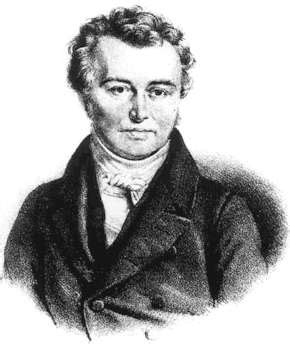
Johann Christian Heinroth
In the end, the task fell to the physician. Presumably, this was because, as the physician deals directly with the physicality of human beings, it was easier to cover physical violence in the medical profession than in other professions. At a time when the ideals of the French Revolution were still in the air, civil society would have been suspicious of a clergyman or a philosopher with jurisdiction over other people’s bodies, but not of a physician.
For people to accept the new inquisitor, he also had to literalise the central metaphor of the profession. Originally, ‘mental illness’ was understood as a mere metaphor for what in previous centuries had been called ‘men of unreason,’ a policy that lumped dissenters together with the disturbed. When the physician took on the responsibility of occupying the role formerly occupied by prison officials, Heinroth assumed that the selfishness and sin he treated were medical entities: something like saying that the ‘viruses’ that infect our hard drives are not a metaphor for subversive programmes, but micro-organisms. The literalisation of the metaphor ‘mental illness’ into a real disease wouldn’t have been possible if Heinroth and other mental health professionals hadn’t met with society’s approval. The 19th century was the most bourgeois of the last few centuries, and the social forces that drove the rich to lock up the undesirable were still expanding, more so than at the time when Heinroth himself was born.
The only way to understand Heinroth and his philosophy of hammering the witch is to let him speak. I have borrowed the following paragraphs from a study by Thomas Szasz. The first sentence quoted is taken from Medicina Psychica Politica: a title that perfectly illustrates how, in its origins, psychiatrists spoke not in Newspeak but Oldspeak. Heinroth wrote: ‘It is the duty of the State to care for mentally disturbed persons whenever they are a burden to the community or present a public danger; and the accommodation, cure, and care of such individuals is the duty of the police.’ But who are the ‘mentally disturbed’?
It is those least deserving of freedom, namely the maniaci [maniacs], who love freedom best; and as long as they are left to themselves and their perverted activity, even if only in an Autenreith chamber, no recovery is thinkable.[8]
Autenreith’s chamber and the mask of the same name were torture devices about which he explains his modus operandi:
Experience has shown that the patient in the sack is in danger of asphyxiation and of falling victim of convulsions… [In the confinement chair] the patient can remain bound in the chair for weeks on end without incurring the slightest bodily harm. [The pear is a] piece of hard wood, with the shape and dimensions of a medium-sized pear, has a cross-bar with straps which can be tied at the back of the neck of the patient. Since the oral cavity of the patient is more or less filled by the instrument, the patient can obviously utter no articulate sounds, but he can still utter stifled screams.[9]
Heinroth articulated some guidelines for the psychiatrist: ‘First, be master of the situation; second, be master of the patient.’[10] Szasz comments that in these sentences psychiatry is laid bare for what it was and still is today: subjugation, enslavement and control of one human being by another. He also comments that contemporary psychiatrists, although they do similar things, don’t speak frankly as they did in Heinroth’s time. However, Heinroth understood early on that in his profession he had to disguise torture chambers for social control as a hospital activity, for which he recommended: ‘all impression of a prison must be avoided,’ a situation which persists today. In Spain, for example, contemporary psychiatrists have replaced window grilles with external shutters: cosmetic but rigid metal slats that act as prison bars. The façade of the psychiatric gardens of our century follows 19th century standards. On what goes on behind the façade, according to Heinroth:
The edifice should have a special bathing section, with all kinds of baths, showers, douches, and immersion vessels. It must also have a special correction and punishment room with all the necessary equipment, including a Cox swing (or, better, rotating machine), a Reils’s fly-wheel, pulleys, punishment chair, Langermann’s cell, etc.[11]
Here are further words from this doctor who lived a century before Orwell wrote 1984. According to Heinroth, the psychiatrist
appears to the patient as helper and saviour, as a father and benefactor, as a sympathetic friend, as a friendly teacher, but also as a judge who weighs the evidence, passes judgement, and executes the sentence; at the same time seems to be the visible God to the patient. [12]
Heinroth seems a hybrid between the Orwellian O’Brien and a contemporary man of his time: Sade. The fact that some psychiatrists see in Heinroth one of the founders of modern psychiatry and the forerunner of Eugen Bleuler speaks for itself and needs no further comment.
A profession is born
Thanks to Heinroth and other apologists for medical violence, in the mid-19th century the metaphor ‘mental illness’ was recognised as a real illness. In England, parliament granted the medical fraternity the exclusive right to treat the newly discovered disease. The first journals specialising in psychiatry appeared. The American Journal of Psychiatry, originally called the American Journal of Insanity, whose first issue appeared in 1844, published from its inception data now known to be fraudulent.[13] Throughout the 19th century, countless ‘reckless’ women such as Hersilie Rouy and Julie La Roche were imprisoned by their fathers and husbands; and psychiatrists resisted attempts to inspect their ‘asylums,’ as they were then called because it interfered with medical autonomy. Many doctors tried to get important positions in the asylums.
The modern psychiatric profession was born.
In the 20th century, the psychiatric profession consolidated its power and prestige in society. A smokescreen terminology developed and, for the man in the street, it became impossible to see psychiatry in its naked simplicity. Sadists like Heinroth became ‘psychiatrists,’ their tortures became ‘treatments,’ social outcasts became ‘patients,’ insane asylums became ‘hospitals’ and dementia praecox became ‘schizophrenia.’ Before the creation of Newspeak, asylums were properly called Poorhouses. Before drugs were designed to induce torturous states of mind, Emil Kraepelin and Bleuler used other methods of subjugation. In 1911, the latter experimented with a particularly repugnant drug that caused bloody vomiting, but at least Bleuler confessed with a frankness no longer seen in psychiatry today: ‘His behaviour improves. From an ethical point of view I cannot recommend this method.’[14] Similarly, in 1913 Kraepelin used to inject sodium nucleate to induce fever in his patients, who became more docile and obeyed the doctors’ orders.[15]
But the great revolution in modern psychiatry came in the 1930s. Previously, Heinroth and his colleagues had assaulted people’s bodies with their instruments to control them. In the 1930s the assault on the body was abandoned in favour of a more effective method: directly attacking the brain. Metrazol shock, insulin shock and electroshock were introduced knowing that they killed brain cells.
Pentylenetetrazole (known commercially as Metrazol in North America and Cardiazole in Europe) provokes an enormous reaction in the victims. They suffered such violent attacks that teeth, bones and spinal cords were often broken. The Metrazol shock was so devastating to the brain that, once it wore off, some suffered regressive states and behaved like babies; they played with their faeces, masturbated and wanted nurses to cuddle them. When they recovered, they prayed ‘in the name of humanity’ that they wouldn’t be injected with Metrazol again—a drug that subdued even the toughest of military men. But in 1939 the use of Metrazol was common in most US hospitals, which meant that in those days some inmates often received multiple injections.
The New York Times, Harper’s, Time and even Reader’s Digest joined the chorus of praise for a similar psychiatric treatment: insulin shock, which also produced frightening convulsions. A Time writer wrote that as the patient descends into a coma he ‘shouts and bellows, gives free vent to his hidden fears and obsessions, opens his mind wide to listening psychiatrists.’ Self-serving professionals interpreted the victims’ complaints in favour of their colleagues. At a meeting of the American Psychiatric Association, Roy Grinker psychoanalytically interpreted the patient’s mind stating that he ‘experiences the treatment as a sadistic punishment attack which satisfies his unconscious sense of guilt.’[16] Robert Whitaker, the author of a very readable critique of American psychiatry, describes this era, the first fifty years of the 20th century, as ‘the darkest’ in the history of psychiatry.
1935 marked the birth of lobotomy. Egas Moniz, a Portuguese psychiatrist, had begun his experiments by using alcohol to destroy brain tissue in the frontal lobes but changed the method by cutting it directly with a scalpel. His first guinea pig was a prostitute, and three months later he had lobotomised twenty people, daring to cut more and more brain tissue from his victims. According to Moniz, ‘to cure these patients we must destroy the more or less fixed arrangements of the cellular connections that exist in the brain.’[17] Moniz’s work led to an explosion of lobotomies in the West, especially in the United States, but also in the United Kingdom, Italy, Romania, Brazil, Cuba and finally Mexico.
In 1941, neurosurgeon Walter Freeman called this practice ‘brain-damaging therapeutics.’[18] At least it is to Freeman’s credit that he didn’t express himself in Newspeak, but in Heinroth’s lingua franca: he acknowledged that lobotomy damages the brain. But in that decade the Swedish Academy awarded Moniz the Nobel Prize of Medicine and the media was enthusiastic about the novel therapy, including The New York Times, Time and Newsweek. A New York Times editorial celebrated the success with lobotomised patients: ‘Would-be suicides found life acceptable.’[19] With this social support, tens of thousands of lobotomies were performed in the 1940s and 50s. Emotionally troubled college students, and even rebellious children, were thought to be ideal candidates for Freeman’s lobotomy.
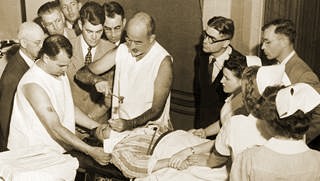
Walter Freeman at the moment of cutting out the healthy brain of one of his victims. Note how this was done openly, with students learning from the lobotomist.
In Mad en America Whitaker mentions the effects of this radical operation. One lobotomised woman was described as ‘fat, silly and smiling.’ Although she had been of lineage, another woman who suffered the operation defecated in a dustbin. Lobotomised patients would take food from their neighbour’s plate or vomit in their soup and keep eating. Some wouldn’t get out of bed unless ordered to do so by a family member, and it was common for them to urinate there. Others just looked out of the window. Those who had been employed before the operation couldn’t earn a living for themselves. It was possible to insult them and get a smile in response. Some referred to lobotomy as ‘a surgically induced childhood,’ and you can imagine the burden on families to support them. But Freeman and his assistant Watts took a more positive view. They wrote that the lobotomised patient could be considered ‘a household pet.’[20] Reports in scientific journals also painted things in a favourable light for the medical profession. The language of science is intended to be neutral, apolitical and unemotional. It doesn’t make value judgements: quite the opposite of what I do. In the professional literature, where graphs and figures abound, it is easy to write articles in which the tragedy left by these semi-vegetable humans wasn’t perceived as a crime.
The ‘brain damage therapeutics’ of Moniz and Freeman lost momentum in the 1960s and 70s. Today it is difficult to know how many lobotomies are performed in the world each year. According to an article in defence of lobotomy published in Psychology Today (March/April 1992), at the beginning of that decade there were at least 200-300 openly declared ‘psychosurgeries’ each year. In our century, some doctors continue to promote ‘psychosurgery’ for serious emotional problems, and in some US states, special boards have been formed to review all proposals for such operations.[21] However, although lobotomy has fallen into relative disuse, electroshock (ECT or electro-convulsive ‘therapy’ in Newspeak) remains a common psychiatric practice today.
It was developed in 1938, inspired by a slaughterhouse in Rome where pigs were given electric shocks to facilitate the cutting of their necks. A psychiatrist, Ugo Cerletti, had been experimenting with electric shocks on dogs, placing electrodes on the dog’s snout and anus. Half of the animals died of cardiac arrest. After seeing the electrocuted pigs, Cerletti decided to use it on humans. Cerletti’s first guinea pig was a homeless man wandering around Rome’s train station. Shortly afterwards, in 1940, electroshock therapy was admitted to the other side of the Atlantic. Manfred Sakel, who introduced insulin shock into medical practice, compared his technique to electroshock and commented on the latter ‘the stronger the amnesia, the more severe the underlying brain cell damage must be.’[22] This was another form of Moniz and Freeman’s ‘brain-damaging therapeutics.’ Although psychiatrists acknowledged all this in their journals, they were more cautious in their public pronouncements. They painted ‘electroconvulsive therapy’ as a harmless therapy and said that the loss of memories was temporary. The media took the propaganda as honest science, and by 1946 half the beds in American hospitals were occupied by psychiatric patients, some of whom had undergone such therapy. Two years later, Albert Deutsch published The Shame of the States and an article appeared in Life magazine with shocking photographs of a reality that the American people were unaware of: what went on in concentration camps called psychiatric institutions.
While the images contributed to the reform of public institutions in the United States, the 20th century witnessed two other psychiatric revolutions. One was the consortium between psychiatrists and multinational pharmaceutical companies; the other, the invention of chemical lobotomies in the 1950s. Surgical lobotomy fell into relative disuse in favour of the use of neuroleptics: a more subtle form of social control.
From pesticides to antipsychotics
May 1954 is a memorable date for psychiatrists. For the first time a neuroleptic (popularly known as an ‘antipsychotic’), chlorpromazine, commercially called Thorazine in the United States and Largactil in some European countries, was marketed, revolutionising treatment in the profession. The first generation of phenothiazines from which chlorpromazine emerged had been used for pesticidal purposes in agriculture. In addition, experiments were known to induce catalepsy in animals. The neuroleptic was a chemical intentionally designed as a neurotoxin, but millions of prescriptions for Thorazine were written in the US. Under the effects of chlorpromazine, patients could now be ‘moved about like puppets,’ and the first psychiatrist to experiment in the US with this neuroleptic said it ‘may prove to be a pharmacological substitute for lobotomy.’[23] The campaign to sell Thorazine to American society was so fierce that even the professionals called the propagandists of the company that manufactured them ‘Thorazine assault troops.’[24]
This was the first massive public relations foray by a pharmaceutical company into a hitherto very small market: institutional psychiatry. In its first year of marketing, Smith, Klein & French made $75 million from the drug. The rest, as they say, is history.[25]
In 1955, Time magazine called the professionals who opposed chlorpromazine ‘ivory tower critics.’ Gregory Zilboorg, the same psychiatrist who held the authors of the medieval Malleus Maleficarum in high esteem, said that the public was being misled and that the drug only served to control the patient. Another doctor raised his voice and said that chlorpromazine was more dangerous than heroin and cocaine. But the publicity dampened all internal dissent. By the mid-1960s more than ten thousand medical articles had been written about chlorpromazine. Television campaigns omitted any mention of the drug’s Parkinsonian effects, and magazines received substantial sums if they advertised the miracle pill in their lead articles. Time, Fortune and The New York Times were among these prostitutes for the pharmaceutical corporations. The use of neuroleptics was soon considered cutting edge among psychiatric treatments, trumping insulin-induced comas, electroshock and lobotomy.
In the 1960s, the revolution of this miraculous alchemy from pesticides to antipsychotics was consummated, and the message was implanted in the public mind that these were ‘antipsychotic’ drugs: an idea that persists to this day. By 1970, nineteen million prescriptions for neuroleptics had been written, and not just for distressed people. Some juvenile delinquents and rebellious adolescents who were given the neuroleptic called it ‘zombie juice,’ but professionals countered by introducing the euphemism ‘major tranquillisers.’ In the case of children and adolescents, a study showed that between 1987 and 1996 the number of children given the drug had doubled. Between 1996 and 2000 the figure multiplied to one in fifty children, although the most important age group was 5-9 years old.[26] The propaganda through which multinational pharmaceutical companies brainwash civil society that they need to take these neurotoxins is carried out through education campaigns to health visitors, school counsellors and parents.
Joe Sharkey, financial journalist and author of Bedlam: Greed, Profiteering and Fraud in a Mental Health System Gone Crazy, has reported that in the late 1980s, 25 per cent of the revenue paid by health insurance went into the pockets of mental health workers, largely due to the psychiatric treatment of these unruly adolescents.[27] Moreover, since the 1970s these professionals entered into an open partnership with pharmaceutical companies. The consortium between psychiatrists and Big Pharma is so blatant that all psychiatric congresses are funded by these corporations, and in some medical centres, all laboratory research is also funded by multinationals. These corporations also fund psychiatric journals. In addition, a study of 800 articles from some of the most prestigious non-psychiatric scientific journals (Science, Nature, Lancet, The New England Journal of Medicine and Proceedings of the National Academy of Medicine) found that 34 per cent of the authors had financial interests with Big Pharma. The pharmaceutical industry is the largest funder of psychiatric research in the United States, including research at universities and medical schools. It is estimated that in 1994 alone it spent $1.5 billion on academic research.[28] Some critics have used the expression ‘Is academic medicine for sale?’ to describe this situation.
This is fundamental to understanding why I say that psychiatrists, despite their impeccable medical credentials, promulgate pseudoscience. The sponsorship provided by these companies translates into a biologistic, pro-drug bias in research. Editors of specialist journals are very wary of publishing articles by professionals who criticise biological psychiatry, especially if they question the efficacy of psychotropic drugs or if they mention the terrible effects of these drugs, such as tardive dyskinesia and dystonia produced by so-called ‘antipsychotics’: symptoms that doctors euphemistically call ‘extrapyramidal symptoms.’ Pharmaceutical companies spend huge sums on advertisements in trade journals, and editors are unwilling to offend their sponsors with articles exposing the epidemic of drug-induced tardive dyskinesia, under threat of the companies withdrawing advertising. The financial dependence of journals on these companies leads not only to discretion, but many authors resort to self-censorship. As some mental health professionals say, the pharmaceutical industry owns the data obtained in the clinical trials it subsidises and decides which studies should be published; it chooses the authors, writes the articles and even the reviews to interpret the data.[29]
On the other hand, it is only natural that new medical research professionals choose the most promising area: the one that is generously funded by pharmaceutical companies. That is where the funding for their careers is to be found. There is a whole book on the subject, How the Pharmaceutical Industry Bankrolled the Unholy Marriage Between Science and Business by Linda Marsa, and this trend is much more evident in psychiatry. There are fewer guarantees for scientific accuracy in a psychiatric journal than in other specialist journals. The profession no longer hears, as in the 1950s and 1960s, that abusive parents drive their children mad. The economic interests in hiding this reality are enormous.
For example, in the mid-1990s, one pharmaceutical market analyst claimed that the $1 billion market for neuroleptics could grow to $4.5 billion a year. In May 2001, a Wall Street Journal report valued the neuroleptic market at $5 billion a year, a five hundred per cent growth in five years. Total US sales of neuroleptics in 2000 were $2.5 billion, and international sales reached $6 billion in the same year. The neuroleptic Zyprexa alone earned Eli Lilly $1 billion in profits in 1998. In 1999/2000, the United States led Western consumption of neuroleptics with 65 per cent, followed by Europe with 22 per cent and Latin America with 2.5 per cent (not counting Russia, Asia or Africa). As I have said, the misnamed ‘antipsychotics’ are even used in veterinary medicine. Considering that many people want to control others in prisons, asylums, insane hospitals, juvenile correctional facilities and even at home, the growth in market demand for these terrible drugs is understandable.[30]
These figures are key to understanding today’s psychiatry: a chemical Gulag.
Our century
In the face of a multi-billion dollar business that has subtly bought off doctors, universities and the media, civil society cannot see what is happening. Just as in Heinroth’s time political actions were cloaked in medical garb when the ideals of the French Revolution were in the air, after the rebellion of the 1960s psychiatry reacted by increasingly cloaking itself in the garb of hard science, the paradigm of our times. In 1999, Professor Leonard Duhl of the University of California defined mental illness and poverty as the 17th century ideologues of the Great Confinement did: ‘the inability to command events that affect one’s life.’[31]
The consolidation and expansion of psychiatric power continues into the 21st century. The tenfold increase in the use of neuroleptics in minors from the mid-1990s to the first five years of the new century, with the advertising claim that they are ‘at risk,’ shows the cynicism of this marketing design.
Heinroth was a great visionary. He foresaw that drugs could be the prisons of the future. Although neuroleptics had not been manufactured, Heinroth was already talking about ‘pharmaceutical means of restriction’ and ‘restrictive surgical means,’ anticipating the lobotomy that Moniz would develop a century later. Since the guidelines that would define the policy of psychiatrists were promulgated in the 19th century, the expansion of a chemical Gulag meant a shift from long-term involuntary hospitalisation to long-term voluntary (or involuntary) drug addiction. Psychiatrists, of course, would put things differently. They say that in the treatment of mental illness the most remarkable development of the 20th century was the ability to synthesise these substances in laboratories. But this is one of the claims of scientific progress that, on closer inspection, is found fallacious.
In psychopharmacology there are no biographies of John, Peter or Mary when they are prescribed neuroleptics, nor when they are prescribed antidepressants, nor when they are prescribed stimulants, nor when they are prescribed tranquillisers. In biological psychiatry, or biologistic psychiatry as I prefer to call it, there are no persons: only biochemical radicals to be normalised by other chemicals. In an age that seeks easy solutions to existential problems, there is no need to dig into the past. It is enough to calculate the dosage of ‘happy pills,’ be it Prozac or any other. This is also the case with the abuse of illegal drugs, the only difference being that psychotropic drugs are legal. Approximately thirty million people have taken Prozac (fluoxetine), a drug that Newsweek has publicised with cover stories. The situation is increasingly reminiscent of scenes from Aldous Huxley’s Brave New World where, at the behest of the state, all citizens consumed the drug soma.
In the medical profession, the environmental factors that prick our souls have disappeared from the map. If the ideology of the biological psychiatrists is correct all our passions, traumas and conflicts, loves and fears, are not the result of our desires in conflict with the outside world: but of the swings of tiny polypeptides in our bodies that are transformed into despair. The preface to some editions of the DSM states that the future will completely erase the ‘unfortunate’ distinction between the popular concept of mental disorder and physical illness. On 1 January 1990, California became the first US state to accept the dogma of psychiatry: that mental disorders are illnesses originating in brain dysfunctions. (This reminds me that for Benjamin Rush, the father of American psychiatry, insanity was caused by low blood circulation in the head.) But in real neurological science the claims about dopamine and serotonin have been discredited.[32] Bioreductionist psychiatry is all about looking at supposed biological abnormalities in the body and not traumatic events due to the environment or the family. It is like studying trauma not as a reaction to a scandalous act, say, Dora’s incestuous rape, but studying the temporal lobe of the raped daughter, where the treatment is directed. The drugs, or the hammer of electroshock, are the result of a medical postulate. After all, he who only knows how to use the hammer treats all things as if they were nails.
I am not caricaturing the profession. In November 2002 I had a long discussion with Dr Miguel Pérez de la Mora, a physician specialising in experimental cell physiology at the Biophysics Department of the National Autonomous University of Mexico (UNAM) and director of the Mexican Academy of Sciences. In my discussion with Pérez de la Mora, it struck me that when I mentioned the mental state of concentration camp inmates, my opponent immediately jumped to the subject of the amygdala and anxiety, which he was studying in his laboratory: anxiety understood in a strictly biological way. In our surreal discussion, it took me a long time to make the obvious point to the doctor: that the cause of the inmates’ mental stress was the brutality of the camps. But even conceding this point Pérez de la Mora added—without evidence—that only camp inmates who presumably had a genetic predisposition could be the ones who were disturbed. For this neurologist and his colleagues, the concentration camps were merely a ‘triggering mechanism’ for the disorder of a prisoner whose biology was presumably already defective!
I must clarify the concept of a ‘trigger mechanism’ for an alleged latent mental disorder. This is one of the psychiatrist’s main mantras, and it exemplifies what I have called bioreductionism. For the bioreductionist, human rights and psychological trauma are put on the back burner, and the only thing that matters is the genomic project and the search for the gene responsible for the disorder (or other strictly biological cause). Pérez de la Mora’s speciality is the study of anxiety disorders in UNAM’s laboratories, and during our conversation, he confessed that the company that manufactures the psychiatric drug Valium funded his research. I pointed out to Pérez de la Mora that research funded by the same pharmaceutical companies produces results with a clear biological bias. The eminent scientist told me that researchers rarely sell out to companies.
The reality is that the way multinational pharmaceutical companies buy scientists is infinitely more subtle than direct bribery. Roche, which makes Valium, simply funds professionals who postulate biological hypotheses, and no one else. Neither Roche nor its competitors would give a penny to those of us who research psychological trauma. Our line of research is a proposal that requires social engineering and changes in the nuclear family to prevent child abuse. But in our world, no one wants to fund the researcher who puts parents in the dock. For example, no institution funded the research to write this book. On the other hand, the medical model promotes the drugging of the abused child without changing the family. Only in this way does the field enjoy society’s approval. If the anxiety that Pérez de la Mora studies, or panic, depression, addictions, phobias, manias, obsessions and compulsions are the result of abnormal biology, the human and existential content that has caused these experiences becomes irrelevant.
The thinking of our time is limiting itself to a one-dimensional worldview when it comes to mental health. Bioreductionism, the ideology of doctors with blinders reluctant to see the social sides, is a doctrine whose conceptual framework is quite simple: determinism and reductionism (‘Your biology is your destiny’). But as psychiatrists present this doctrine with all its scientific sophistication, the matter seems complicated. The following Szaszian analogy illustrates how simple biopsychiatry is at heart.
The primitive sorcerer, trying to understand nature in human terms, treated objects as agents: a position known as animism. The modern sorcerer, who tries to understand man’s subjectivity in terms of Nature, treats agents as objects: a position known as bioreductionism. Primitive man has been demystified in our scientific age. Who will demystify the psychiatrist?
[1] Quoted in Michel Foucault: Historia de la Locura (op. cit.), p. 106.
[2] Edict of Luis XIV, quoted in ibid, p. 81.
[3] Ibid, p. 81s.
[4] Ibid, p. 182.
[5] Ibid, p. 115.
[6] Quoted in ibid, p. 213. It is interesting to compare Foucault’s encyclopaedic history of so-called madness, written in opaque prose, with Thomas Szasz’s brief but clear history of psychiatry (e.g., Cruel Compassion: The Psychiatric Control of the Society’s Unwanted, Syracuse University Press, 1998).
[7] Johann Christian Heinroth, quoted in Thomas Szasz, The Myth of Psychotherapy (NY: Syracuse University Press Edition, 1988), p. 73.
[8] Ibid., pp. 74-75.
[9] Ibid., pp. 76-77.
[10] Ibid., p. 77.
[11] Ibid., p. 79.
[12] Ibid., p. 78.
[13] See, for example, Whitaker: Mad in America (op. cit.), pp. 75ff.
[14] Bleuler, quoted in John Read, Loren Mosher & Richard Bentall: Modelos de Locura (Herder, 2006), p. 39.
[15] Kraepelin, quoted in ibid.
[16] The revelations about Metrazol appear in Whitaker’s book.
[17] Egas Moniz, quoted in Mad in America, 113.
[18] Freeman, quoted in ibid, p. 96.
[19] Quoted in ibid, p. 138.
[20] Freeman, quoted in ibid, p. 124.
[21] Lobotomy, Microsoft® Encarta® Encyclopedia 2000. On the resurgence of lobotomy, see Peter Breggin: Toxic Psychiatry, pp. 261ff and an article by a lawyer, Lawrence Stevens, that can be read on the internet: ‘The brain-butchery called psychosurgery.’
[22] Manfred Sakel, quoted in Mad in America, p. 98.
[23] Heinz Lehmann, quoted in ibid., p. 144.
[24] These words from the pharmaceutical company Smith, Kline & French appear in Loren Mosher: ‘Soteria and other alternatives to acute psychiatric hospitalisation’ in The Journal of Nervous and Mental Disease (1999, 187).
[25] Loren Mosher, Richard Gosden & Sharon Beder, ‘Las empresas farmacéuticas y la esquizofrenia’ in Modelos de locura, pp. 141s.
[26] These figures appear in Modelos de locura, pages 124s.
[27] Sharkey: Bedlam, p. 4. Sharkey’s book takes as its central theme the unjustified hospitalisations by psychiatrists, especially of children and adolescents, in order to get as much money as possible from their parents’ insurance companies.
[28] This information appears in Eliot Valenstein: Blaming the Brain, pp. 199 & 187.
[29] Modelos de locura, p. 144.
[30] See Whitaker: Mad in America, and Valenstein: Blaming the Brain, chapter 6. See also Richard Gosden and Sharon Beder: ‘Pharmaceutical industry agenda setting in mental health policies’ in Ethical Human Science and Services (Autumn/Winter 2000).
[31] Leonard Duhl, quoted in Szasz: Pharmacracy, p. 95.
[32] See Valenstein, Blaming the Brain.




Thank you, Professor MacDonald, for giving a racially conscious audience the opportunity to encounter a critique of the psychiatric profession.
I would like to remind readers that, last November, TOO published another chapter from my book, in which I expose the Jew Freud.
Freud was not nearly the worst jew. His nephew Bernaise was pure Ashkenazi evil by contrast.
Thank you sir. I will be sharing this with my family. Enlightenment is good. But how do I ‘encourage’ one of my children to approach this with an open mind, when they are A. A psychology graduate, and B. Not of a same mind as most of us at TOO?
Take care.
JBP:
In my opinion, the best way to introduce a “normie” to the topic is by sending them YouTube links featuring Bob Whitaker, who explains our position in the most candid and didactic way possible (watch, for example, this clip).
Who invented the pseudo science?
A fascinating essay which I’ll definitely reread a few times. To the author’s last question – who will demystify the psychiatrist – I believe they’ve already been demystified by modern society.
I don’t believe that most are knowingly charlatans but, speaking as a professional, I consider all professions; legal, medical, architectural etc to have been demystified by almost unlimited access to information that renders their ‘in speak’ / secret language accessible to all who take an interest.
Few people with interest in their health, say, will sit and listen to a doctor without questioning prescriptions and diagnosis. And this would hold true of laymen accepting advice from other professionals.
Anyone putting themselves unquestioningly in the hands of an ‘expert’ is asking for trouble.
Thanks for posting a brilliant article. I read your book with vengeful pleasure. I can’t really add anything to this – it speaks, loudly and clearly, for itself. I have some experience of contemporary psychiatrists. I hope it doesn’t come across as a cynical plug, but I direct genuinely interested parties to my website, if you’d like to know my own story, and my own experience of this system. I finished the definitive edition of my autobiography last year.
I think, for the moment, I’ve written all I can, or perhaps am willing to (in my own writings), about the devastating pseudoscience that is biomedical psychiatry. However, just to put a final nod in, the line that struck me the most above was “In the medical profession, the environmental factors that prick our souls have disappeared from the map”.
Now, taking the mandate of the aorist imperative carved into the Temple of Apollo at Delphi, as first maxim, to heart (“know thyself!” – with the expectation that this process is not complete until knowledge is total), it seems that what remains of any Aryan ‘soul’ (taken to read: psyche; mind) cannot be pricked or penetrated whilst psychotropic ‘medications’ still exist in our society. I know this through the gruelling experience of the past two years. I recently went cold turkey on these dreaded neurotoxic poisons, and have felt a perceptual clarity returning daily, and exponentially, regardless of the emotional stinging of real-life that accompanies a withdrawal from tranquillizing drugs akin to street opioids in strength, back to how I was a while back in my life, like coming up for air (much as it is true that, whilst my book remained unwritten, I did indeed experience psychosis). I know myself well now, just as I know intrinsically what stimulated those frenetic bouts of mania, delusion, and typed word salad at all. They were, invariably, environmental factors; from my earliest formative experiences, in hostile familiar company.
There are enough papers and research projects and impassioned testaments out there by now to thoroughly debunk psychiatry’s foundational hypotheses (swiftly promoted to a model), so I won’t patronise – unless confronted negatively here – by adding yet more documentation – at least not until the above footnotes have been assimilated – but, still, just for interpersonal awareness, I hope one day my book is read, cover to cover. I’m happy to give it away gratis, if one would like to contact César for my primary email address.
Consistently, the racial Right has proven itself to be ignorant, often wilfully (for it would open a can of worms, one suspects) over this vital, glaring issue – that of psychiatry’s legitimacy (with further acknowledgment that its subservient lapdog, clinical psychology, and indeed ‘psychotherapy’, in its majority institutional presentation is also highly iatrogenic, based on flawed premises). I hope, eventually, that these controversies are laid to rest internally by our movement.
As final note, I simply add that – in favour as I am of The West’s Darkest Hour viewpoint – I wish, in future revolutionary times for all biomedical psychiatrists to be crucified, in all literality. A very harsh pronouncement. It would be easy to pathologise it (very tempting, I’m sure – especially given the above). However, I hope at least before deciding fixedly on that that one could bring themselves to read the literature (and lived experience simultaneous to that) that might bring one to consider such a drastic pronouncement, and read it well (and there is considerable work, heretical to to the dispassionate allure of the orthodoxy). For academic and scientific rigor as much as for Aryan loyalty. I have no higher recommendation to impart that César Tort’s work on this matter.
Quoting Michel Foucault is a give away that there is something very wrong headed about this article. There will be little comment on it because it is highly , as we say, problematic. Not worth commenting on further. Further, it reminds me of the debates about 25 years ago about the same thing.
Biology IS destiny, just like race. Also, our biology, etc. is so complex that it is a wonder that most of us, at least white folks, come out pretty normal.
Joe Webb:
If you stand for protecting Aryan interests, I think you will have to repudiate the notion that “biology is destiny” in obvious cases where psychiatrists tried to commit sane people, like George Lincoln Rockwell, to psychiatric wards. The attempt to institutionalise Rockwell was clearly a political move, not a medical necessity (Ezra Pound, who was also aware of the Jewish Question, wasn’t so lucky in avoiding such inquisitorial action by psychiatrists).
As for Michel Foucault, I confess that philosopher bothers me. However, his Madness and Civilization: A History of Insanity in the Age of Reason contains a great deal of useful information. I cite Foucault because he had access to archives in Paris that other historians critical of the profession—such as Tom Szasz—couldn’t access due to the language barrier.
Agree, something is very, very wrong here.
Dear Frank,
My curiosity gets the better of me. I know you haven’t wanted to spell out so far (either in this comment or the one underneath) what exactly it is that is “very, very wrong”, nor to express those “fundamental facts” that would counter such a position, but please could you do so, just a little, just so I know personally where I’m standing, and what argument it is you’re making (or would make, so so far there isn’t much to go on), and so you could back up your claims of “irresponsible”, as so far it’s an ipse dixit argument. It doesn’t matter if the remarks aren’t acknowledged, i.e. agreed with (do they have to be? Surely that’s what informed debate is for). If you want to be taken seriously, I always think it’s good to elaborate on a position. We’ve already acknowledged that psychological therapies have extremely serious issues (I have in my comments; César has elsewhere in his work; if not, the author Jeffrey Masson is a good read) but here we’re discussing bio-medical psychiatry. We can discussion the idiocy of psychotherapy afterwards if you like.
Mental Illness is real.
Mania and psychosis, serious, serious illnesses.
Medications DO, without question, alleviate symptoms, I’d say it’s as close to a miracle as you can get in the modern day.
There’s lot’s and lots to be said, that won’t be because the opening, fundamental facts in my remarks aren’t acknowledged by the author.
There’s also extremely serious issues in psychiatric/psychological therapies, and instead of us discussing those, we’re getting the irresponsible.
Frank:
Yes: mental disorders are real, but regarding psychotropic drugs, I would suggest familiarising yourself with the work of Robert Whitaker, author of *Anatomy of an Epidemic: Magic Bullets, Psychiatric Drugs, and the Astonishing Rise of Mental Illness in America* (watching some of his recent YouTube interviews would be a good introduction).
I agree with you, in that the distress response symptoms are real enough… mania; psychosis, depression, what have you, but I personally don’t use the term ‘illness’ for it as there is no proven mapping to a biological reality, i.e. there are no biomarkers – no genes, no GWAS evidence, no hereditary evidence (unless one is falling for now-debunked twin studies methodologies – which researcher Jay Joseph contests, with much historical and contemporary evidence) no proof (or way to academically research in a lab) so-called ‘chemical imbalances’. The entire premise of its decades of ‘it’s just over the horizon!/It seems it’s very complex!’ research thrust is self-perpetuating and scientifically unfalsifiable on a Popperian scale. Thus I draw the more parsimonious option… that’s it’s psychological, and a matter of the mind; the psyche not the ‘hardware’ (much as I am a physicalist – I won’t get into consciousness research debates here – and much as I acknowledge that orthodox clinical psychology has itself much to answer for, universities having ridden roughshod over all attempts to transmit the seemingly heretical Trauma Model to the new breed of totally-useless and airheaded therapists).
The psychotropic drugs do indeed alleviate symptoms (at a level slightly above placebo, but not significantly; ask me if you’d like the papers in question, or indeed for any of this), but it comes at the cost of a extensive range of debilitating long-term side-effects that can cause everything from a supersensitivity (tardive) outbreak of psychotic symptoms themselves to long term neurological and bodily damage (thinking of both diabetes and venous thromboembolism, among many other ailments), up to and including severe brain shrinkage & brain-damage, and early death, sometimes 25 years premature, just on average.
I agree with you… most therapy is deeply irresponsibly (to both society at large and crucially, to the benighted patient themselves) but I hold out hope that, were the Trauma Model to be properly evaluated, and were it to catch on instead where analytic psychology has failed, I think it would provide a better treatment option that the above horror. To my knowledge, Professor John Read and his team have devoted some time to researching psychological cures for psychotic disorders, with some unexpected success, if only in its infancy. Soteria House equivalents also.
It’s not that I don’t think these people are manifesting extremely distressing and disruptive behaviour patterns which need to be resolutely treated, it’s that, psychiatry haven proven bankrupt (on academic grounds), and ‘meds’ being invariably toxic – despite their questionable/small scale alleviation – as much as a mere stop gap and indeed emotional tranquillizer by default (stalling them their entire lives and preventing them by its very mechanism from psychologically dealing with the more-probable causes of their afflictions), I think one of these days we might need to take a deep breath, and seriously consider the real causes of mental ill-health… trauma, and, specifically, childhood abuse (the most common form of such remaining parental emotional abuse, during formative years, with sexual and physical abuse also playing their part).
To those who expose the biological ‘Medical Model’ at all costs, I ask: does it really matter to you so much why these people get to the state they’re in? Why do you have so much riding on the bio-psych angle? It’s as if you work for these industries (and if you do… well, you know my response then)! Surely it’s nihilistic in practice (even were it not incorrigibly wrong)! Why not support – or at least remain open-minded to the Trauma Model? I’m certainly a believer in racial eugenics – painless euthanasia at birth – when there is a real biological scale to measure by, but in this case there isn’t. In which case, where is our loyalty to our own tortured people (social nuisance that they are)?!
Tell me if I’ve missed anything obvious.
“Medications DO, without question, alleviate symptoms, I’d say it’s as close to a miracle as you can get in the modern day.”
I’m sure you’d like to share a room with Vince Weiguang Li, since his tendencies have been thoroughly squelched with those miracle drugs.
https://allthatsinteresting.com/vince-li
“After killing Tim McLean, Li decapitated him and displayed his severed head through the window. He also began slicing off pieces of the young man’s body… Li had McLean’s ears, tongue, and nose in his pockets. Other body parts were scattered across the bus, but investigators never found his eyes or parts of his heart. They believe Li ate them.”
PS. This all occurred after Li had converted to Christianity.
In any case, Li’s predilections are now under control. He was given an absolute discharge by the Criminal Code Review Board, also been given a new identity and a place to live, and all is well. Gotta love those medicines, the wonders they can perform.
Sorry for my delay in responding – I wasn’t sure if you were replying to me or to Frank.
I think using such an sensationalist example is bad faith to the argument in question – most patients are docile, or at least relatively harmless; a social nuisance at most. It would depend very much on the diagnosis in question, but even then it’s suggestive that it’s negative media hype in many cases, tarring all with the same brush… I think there’s an extended study called the “MacArthur Violence Risk Assessment Study” that one could peruse for more of a detailed rebuttal. In additional anecdotal evidence, I’ve encountered literally hundreds of psychiatric patients over my life, giving me a modest to reasonable sample size to draw from, and not one of them has been like that in ‘predilections’.
When it comes to criminal actions, I agree with Szasz that the ‘insanity plea’ option should be abolished. Just use the death penalty if necessary – take the recent Clancy case for example. I don’t think the former’s a viable excuse – and in most cases it’s just a way to get the offender off the hook, i.e. I don’t think they’re psychotic as much as psychopathic – as much as drum up business for the psychiatry industry. In general though, yes, his extreme violence may have been pacified (I assume by heavy application of neuroleptics), but I doubt what set him off in the first place was dealt with (and by now, given his conduct, whatever it was is a moot point). Think of the example of Jeffrey Dahmer – the authorities had every excuse to intervene when he was still in his extreme depression phase, pre-criminal actions, but never reviewed the family dynamics properly: in his case, his abusive father, who was extremely neglectful towards him – to a serious degree – throughout his childhood. I don’t condone what he did (and wish the worst for him and those like him), but I don’t find it unreasonable to look for obvious psychological signs of long-term damage either. Had they put him – or Li – in an effective (albeit nigh on impossible to find in the modern world – see my other posts) therapy early on, and coaxed him into expressing the repressed hurt, the chances are he wouldn’t have offended. Those ‘tendencies’ don’t pop out of nowhere, neither are they hardwired. You could review the criminologist Lonnie Athens also, for the (physical) abuse to violent offending pipeline.
Howdy; thanks for your reply. We could debate these issues til the cows come home. As to Lindsay Clancy, I really don’t grasp what is going on there. If she was not in a psychotic state (I have no way of knowing), then she deliberately killed her children – knowing it was wrong – while realizing she would be caught and tried. So – what was her motivation? Suicide by cop or what. Was this even brought up in her trial.
You said, “Those ‘tendencies’ don’t pop out of nowhere, neither are they hardwired.”
I beg to disagree. There appear to be such things as outright Bad Seeds or at least something close to it. If the parents abuse their kids, sometimes it is because those children are just horrible from Day One, and the parents can’t cope, so they lose it and beat their kids. I know of one such case (he was horrid as a child & is now equally horrid but in a sly way), and for sure he can’t be the only one.
You might find it enlightening to read the works of Abram Hoffer, MD, PhdD. I have two of his books, both of which have co-writers. “Niacin”, 2nd edition, is very much useful to those interested in this subject. “Orthomolecular Medicine for Everyone” has a big section on psychiatric and behavioral disorders.
“One of the enormous burdens psychiatrists placed on mothers was the facile idea that they had made their children sick, either deliberately or under the sway of their own subconscious conflicts. Adding guilt to their burden in most cases made the problems worse.” (from one of Hoffer’s books)
That was in the past. Today, it’s powerful drugs, every time and all the time.
Thanks for the swift reply. I won’t debate on and on if you don’t want to. Thanks for the recommendation. I’d merely add on the final point that Hoffer makes that it hasn’t actually been academically proved with hard evidence why the statement “some mothers make their children psychologically unhealthy through abusive behaviours” (or words to that effect) is a ‘facile’ statement. It’s just put forward flatly as yet another vacuous ‘common sense’ statement of fact, recycled ad nauseam from unclear origins. That’s not good enough for science.
To quote a little bit from a WDH debate we had a while back (as a controversial example we were using autism, but we could apply this just as easily to those conditions conventionally considered psychiatric). We had just debunked the genetics angle previous to this, with reference to Wikipedia’s own shallow (i.e. vacuous yet padded out) entry on the topic:
Me: All this, really because we refuse to even consider the ‘discredited’ – for once, evidence-based to some degree historically, though more of the modern budget could look into it – theory of poor parenting from maternal figures, discredited only because, in the paraphrased words of [psychiatrist] Peter Breggin: “the psychogenic theory of autism was abandoned because of political pressure from parents’ organizations, not for scientific reasons” (I’d add possibly from feminism also, and a politicised female desire not to held accountable for anything). I haven’t seen any genuine hard evidence that Bruno Bettelheim, Frances Tustin, Silvano Arieti, Alice Miller, and Leo Kanner weren’t onto something. I think the powerful, popular, big budgeted, utterly cack-handed (they cling to twin studies for one!) genetics industry usurping control of the issue does nothing to suggest that in reality, unpalatable as it may be in the vast can of worms it opens, yes, autism is indeed a matter of psychology and environment-imposed developmental brain damage, and very much a mental health topic.
César: Wikipedia is schizophrenic on this subject. It has a scientific article debunking the claim of “Vaccines and autism” and a pseudoscientific article on the “Refrigerator mother theory”.
Me: I note that just because Bettelheim’s therapeutic methods were unsuccessful, because he was sadistic in his flawed treatment plan, it should not discredit the theoretical work in general – so what, one professional failed to come up with a suitable treatment model, how does that diminish the hypothesis? – and I still note that Arieti found much in common with his ‘schizoid personality type’ and autism (so much so that that autism has formerly been referred to as ‘child schizophrenia’), notably in the social withdrawal and grooming behaviour characteristics. I think the latter article has real merit only in its references… see reference 9. by A. Feinstein… already we find the very idea of parents being responsible as ‘dreadful’, ‘ghastly’, ‘this rubbish’, and then suddenly, by 1998 the theory is ‘long discredited’, announced, rather summarily, by a massive 60 organisations of ‘psychiatrists, paediatricians, psychologists and educationalists’, but with no real clue as to why (!). Do we think these ‘parents organisations’ are covering for something? I do – my mother went to the grave considering personally that she had done no wrong by me (an alternative being that the truth of what she had done, by neglect, finished her off, unspoken, and too immediate) and my father will go to his believing himself to have always been decent to me, so why, extrapolating from this example – of both guilty parents denying to the hilt that they have committed any errors in their parenting whatsoever (!) – should I believe these vast arrays of presumably guilty parents finding solace in each other, and in their guilty words to their offspring, and in a medical community that wants so much for [the bio-medical perspective] to be true anyway?
César: What you say about how those “researchers” dismissed the theories that parents cause autism and/or schizophrenia reminds me of something I mention in my trilogy. A casual student on the topic observed that whenever these textbooks for students stated that these theories had been “long discredited,” those statements never included a footnote indicating the study that had disproven the theory! In other words, in all those student textbooks, that statement was a mere flat statement, without scholarly references. The psychiatrist Peter Breggin, in his most important book, says that these theories were dismissed simply because of the power of lobbies: both those of parents who wanted to be absolved of all blame (like NAMI) and those of Big Pharma, which sponsors the APA journal (they make a big business by brainwashing the public with the story that mental illnesses and depression can be cured with “happiness pills”).
In a nutshell, today’s Drug Model (or in this case ‘neurodivergence’) is a regression from truths we did seem to investigate previously in the 20th century, not progress. I think researchers were less cowardly then; less cowed by social pressures not to rock the boat. Consequently, much of their modern research is sloppy. One researcher who stands out from this is Jay Joseph. In return I’d very much recommend him to you. I don’t know if this site can cope with links, but here’s a list of his publications: https://jayjoseph.net/publications/
If not, Alice Miller always strikes me as as a good read, or Colin Ross.
@Benjamin. Thanks for link to writing of Jay Joseph, PsyD. I’ll read at least one.
It was kind of you to take the trouble to write. All this pilpul between and among countless mind doctors leads me to respect Classical Chinese Medicine even more (while not trying to throw the baby out with the bathwater).
By the way, since the cultural revolution, Classical Chinese Medicine has been watered down into “Traditional” Chinese Medicine, yet can still be useful in these Shen disturbances now known as schizophrenia and others.
TCM is more mechanistic than the original form of old Chinese medicine, which included much more of what we would now call “spiritual” concerns. Thankfully, there has been (recently) an interest in reviving Classical Chinese views, of which the following article is a part:
All Disease Comes From the Heart: The Pivotal Role of the Emotions in Classical Chinese Medicine
ENGLISH
GERMAN
By Heiner Fruehauf
National University of Natural Medicine, College of Classical Chinese Medicine
https://classicalchinesemedicine.org/all-disease-comes-from-heart-pivotal-role-emotions-classical-chinese-medicine-2/
Most modern clinicians find that a majority of their patients suffer from the symptom complex generally referred to as “stress.” Emotional stress, however, is usually regarded as a confounding rather than a causative factor in pathophysiology. This assessment is contrary to the tenets of classical Chinese medicine, which originally regarded emotional imbalance as a spiritual affliction of primary significance. While ancient Chinese philosophy considered emotional sensibility as our greatest asset in the process of fulfilling human destiny, it also regarded human temperaments as our greatest liability due to vast pathogenetic potential.
While Western medicine has encountered psychosomatic theory in the 20th century, the subtle and non-quantifiable nature of the emotions continues to be viewed as a nebulous factor by the purveyors of materialist science. The result is that modern physicians generally ignore or simply medicate symptoms of stress, depression, or anxiety. This bias has affected how institutionalized Chinese medicine views the topic of the emotions today. While the contemporary brand of Chinese medicine, exported by the People’s Republic of China under the trade name “TCM,” acknowledges that the treatment of non-local and non-structural symptoms belongs to its therapeutic domain, textbook TCM theory lacks both a cohesive and in-depth approach to the nature and dynamics of human feelings.
Through a review of relevant ancient sources, this essay intends to heighten awareness about the original complexity and significance that classical Chinese medicine bestowed on the subject of the emotions. Written more than 2,000 years ago, many of the texts cited below remind us that most diseases in urban human beings are caused by emotional stress. This is pertinent clinical advice that more than ever applies to the realities of contemporary Chinese medicine practice. [The rest is for practitioners and you may have some difficulty with it, perhaps.]
———————————
PS. I am sorry for you boys who had/have shitty parents. I am convinced that parents who mistreated or misunderstood their children have only to make a heartfelt apology and better late than never. Kind of like a General Confession in Catholicism. This goes a long way to setting things right. Maybe it can’t undo biology or other factors, but by god, it is an important one.
Wow what a read!
That being said, I’d say the real “chemical gulag” is that the US is awash in street drugs. At the user level, any and all street drugs, no matter how strong or how harmful, are legal.
Marijuana is considered cute and fun, and it may actually have been when it was Mexican weed grown by campesinos who didn’t know genetics from Mother Mary and whose idea of chemistry was putting salt around the rim of their tequila glass. The stuff was imported in bricks, stems and seeds and all, had probably cooked and frozen in this or that hiding place on its way here, and was really pretty mild.
Not so now. Genetics have been tweaked and some of the modern stuff is really strong. There are all kinds of things mixed in, in many cases. Psychosis from ingesting weed is a thing now. I’m pretty sure we all know or know of someone who’s become basically useless, from ingesting weed.
And that’s the mild end of the spectrum. The US is awash in drugs and just as in Deuteronomy it says it’s OK, even encouraged, to sell spoiled meat to the goyim, this translates to, well, selling them everything else no matter how poisonous. The shining example is the Sackler family but they are far from the only one.
A very typical “career” in the US is to have a problem, get prescribed a drug whether for physical pain or mental pain, then you can’t afford the legal form or simply can’t access medical care at all (keep in mind 90% of Americans live very close to the “kill line”) and turn to street alternatives.
Then there’s alcohol. Traditionally, where the Jews were concentrated, so was vodka or gin. In Russia, Jews had the licenses to distill, and they controlled and profited hugely from the vodka trade. In England, I’m sure the infamous “gin mills” were the product of the Jews. And who controls liquor now? Jews.
And these days, younger people are drinking less. Less drinking, more Noticing, the kids are alright.
“1935 marked the birth of lobotomy. Egas Moniz, a Portuguese psychiatrist”
And received the Nobel Prize in Medicine for his efforts. I’m going with probable jew along with Fauci.
From an independent French global policy expert
I was interned for two and a half months in a psychiatric hospital in France and then was the subject of a year-long follow-up, due, according to the gendarme who directed my abduction, to my unpleasant writings on the internet.
Those who organized this have put together a list of accusations, appeals to racial hatred, possession of pedocriminal material, appeals to violence, imaginary.
The problem I posed is that I know the French political milieu very well, and that I had begun to reveal what is only a total sham of political life, including professional politicians, associations, unions, low-level activities, nothing helps the stranglehold of the regime.
I became aware that there is in France the equivalent of the Soviet gulag, but not centralized, and camouflaged.
People who disturb or displease are referred to certain services of certain normal psychiatric hospitals.
In these services, there is a concentration of people who are there for economic, political or other reasons, which have nothing to do with mental suffering.
The psychiatrists I met who obey the orders of the political police department, are crazy people capable of obeying any order.
But as soon as I got out of this ward, and I was placed in a ward, I was made to understand that I came from a very particular background, and they told me bluntly that I didn’t have to do anything in a psychiatric hospital, but everyone continued to play the game, even telling me that they were forced to obey.
As for the “real” mentally ill, they are not treated but sidelined, either isolated and incarcerated, either by the stupefaction of drugs falsely named medicines, or they suffer the equivalent of the blows with a stick on the head of the old days, causing concussions, but by electric or magnetic shocks, without threatening the integrity of the brain as with the stick, but which inflicted repeatedly, cause a different kind of destruction.
For me, psychiatrists, psychologists and other psychoanalysts are not therapists, they are about something else, they are henchmen, executioners, who practice an easy and risk-free profession, whose studies are easy compared to really scientific studies, and who all have serious personal problems, some even very serious, like those who lend themselves to this role of political executioner.
I have seen several cases of young people in conflict with their parents forcibly placed in psychiatry by the parents, which says a lot about the character of the parents.
For me, insanity does not have to be stigmatized, insofar as normality is for me obviously a serious dementia.
Thank you for your testament Michel. I’m very sorry you went through that.
I would like to say, in my own way, that I commiserate (though perhaps I had the worst of both worlds): it is true, by my late 20s to early 30s I was experiencing irregular episodic psychotic bouts (never present in my life before, much as it had been unpleasant in other ways), instigated by the repeat impacts over many years of my genuinely toxic parents, and similarly toxic girlfriend, and my fraught home life. I had been, on account of this, placed violently in psychiatric prisons (i.e. units – much as from experience, as I think you will agree, they are indeed the former) on numerous occasions, these inquisitors naturally never acquiescing to a fair hearing (or hearing at all!) of my home life, or my childhood and adolescent history; when the damage really started to amp – it would override their noxious paradigm, too much of a professional threat.
However, I was on the whole sane, and carried on with my life, up until late 2021 when a spurious allegation of terrorism was levelled at me (spurious by modern British State standards – as I can say is that they have lowered the bar significantly on that charge so as to reel in as many serious dissidents as possible). For the next 2 years (and even after my bail expired), the police tried everything to instigate the domestic circumstances that would lead them to be able to level their proposed 25 year sentence at me; goading me, with the aid of neighbour informants, and creating a home life crucible that – if one had any psychological sense professionally – was bound to elicit stress breakdown behaviours on my part. They failed in this impulse ultimately.
Still, following an incident of self-harm in the summer of 2024 (since when is depressed self-injury a conventionally-understood psychotic complaint?), I was placed forcibly by vengeful police in a low-key unit. I knew as well as they did that I was sane, albeit hated, as a ‘political terror’ (and had argued for my release from there on the grounds of a total lack of symptoms from early on), but was – as best as I believe now – deliberately ego-broken and driven mad again by them whilst in their custody, by their methodical cruelty, as political torturers, as, up until that point I had vociferously and consistently refused their drugs, cogently, and with much relevant contemporary research literature ordered in from outside to back me up (and as in the outside world – I recovered each time from my prior bouts within 4 days to a week, regardless of their feeble ‘medication’), and still was *sane*, as interpreted by myself and my family, on the phone, and from my partner’s daily visits.
It was the full coercion imposed on me, and the threats they gave me, that finally broke my will. I did go mad there, following that. Told I would be punished harshly, over an extended time frame – and never released – simply for presenting informed disagreement with their verdict. I lost hope… Then they had every excuse they needed to drug me against my will, on a draconian CTO I have laboured ever since to remove myself from, even two more years down the line. The psychiatrist went so far as to deliberately cover the ‘does not consent’ option with her thumb, on the sheet I was encouraged, increasingly desperate then, to sign. I was rushed through the process by them. I remember their expressions well: that feral delight.
So I get you, I think, in general, and I agree with everything you write. Whether by callousness or deliberate artifice, first the counterterrorism police strived to break me, and then, in frustration, they handed the reins onto their favourite, historically effective, co-workers (who did the job). Never, in all that stay were any of my psychological demons discussed. It was simply a matter of ‘he is a dangerous terrorist’ – regardless of due process; I had not faced a court – neuter him, in the only way we can, all in accord with the System. Of course, there are more loose ends to this story I haven’t covered, but I save those for my print diaries.
I would argue myself that ‘normality’: in reality either Christianity or Neochristianity (i.e. woke values) is in itself mass psychosis, historically or in our ethno-suicidal post-war era, and these values are held effectively by over 99% of our civilisation’s folk. I maintain that I would like psychiatrists – lazy students and private life deviants the lot of them – made an example of, though, especially so.
In case you’re wondering, my ‘terror offence’ was to share hard libertarian survivalist literature with the internet.
Good morning Benjamin,
I thank you for your intervention
My text was written very poorly because I didn’t have time, and the automatic translation by Yandex didn’t make it easier to understand
As for the pseudo madness (the real one being according to me that of psychiatrists and other psychologists, psychoanalysts and other henchmen), during my incarceration I was in contact with a young Kanak (native of New Caledonia colonized by the French and still French territory). He heard voices that pushed him to suicide. For me, his body and mind, because there is no dissociation, externalized what the colonial power was trying to do on the indigenous population, simply this young man was a kind of medium, had rare abilities of feeling going so far as to live the reality, in this case, that of a population occupied by another who seeks to exterminate him but hiding him behind his famous human rights and others
Continuation of the text (difficulties with the Yandex French – English automatic translator)
I also met a young Arab who felt persecuted, to the point of hearing gossip against him too, I thought the same thing about his case, the French are mostly racist, especially towards Arabs, and this young Arab was hypersensitive, he was also a kind of medium, and his body made him hear very real voices those of the hostile atmosphere towards him in a country where he was not from.
The internees in psychiatry are for the most part endowed with abilities superior to that of normal people, they disturb for this, and are rejected in these particular concentration camps called psychiatric, and put in the hands of special individuals, with abnormally diminished vital capacities, psychiatrists and others, who do not support these people with exceptional abilities, superior, and who are determined to diminish them, or even to eliminate them physically.
It’s the world upside down.
Psychiatrists and others of the same kind are only the expression of a diminished society, the extreme expression, whose work is dedicated to eradicating real life.
The manifestations of mental illness known as paranoia, schizophrenia and other manias, are only manifestations of rejection on the part of the real living with regard to a morbid society.
Good luck
Re “biomedical psychiatry”.
Orthomolecular psychiatrist Abram Hoffer, MD, PhD, stated in one of his many books:
“However, a small group [of disturbed chldren] suffers from a variety of psychosocial factors including broken homes, parental brutality or pathology, and so on. In diagnosing, one must determine which area is responsible, for it is as wrong to treat children with psychosocially caused problems with vitamins as it is to treat children suffering from nutritional problems by psychotherapy or family counseling. Unfortunately, the second error has been, and still is, the more common one.”
And much more, many more details, in this particular book ORTHOMOLECULAR MEDICINE FOR EVERYONE – Megavitamin Therapeutics for Families and Physicians (authors Abram Hoffer & Andrew Saul).
Thanks for this very good article (book chapter) Mr. Tort.
I closely read and enjoyed it. Three or four anecdotes that are a little relevant.
I took the first-year psychology course at university and found it very interesting, also seceived a distinction.
It was a great course, centred on behaviourism, the lectures were all interesting, the idea was to present the spectrum from Piaget’s theories on child developmen, through facts on early infant cognition and reflexes, Pavlov, Skinner, Watson, etc., and much more. Three segments were presented in a lesser way: the ones on psychotherapy, psychoanalysis, and what was at the time called ‘the human potential movement’, basically cult groups which were only a small distance from Scientology. All of the lecturers on those units were from those fields, so, even though I didn’t like the ideas, they were presented in an an intererting way.
Also class lab work and reports, library research, and use of PL/1 for statistical calculations, which augmented my own degree.
I suspect that Prof. MacDonald would have strongly approved of that course.
Too long an intro. An early migrant rape gang in that place kidnapped my fiance at knifepoint as we were walking home from a train station after a happy pop and rock show.
They released her in the very early a.m. hours. In subsequent weeks, she didn’t come home on some nights. Turned out that she’d been staying with some older hippy man from her workplace.
After a few months, she and the hippy departed for a distant city.
Not much later, I indulged in some seriously self-destructive behaviour and was ordered to see a psychiatrist. He wasn’t a pleasant man, and prescribed a type of tricyclic antidepressant for me.
Those pills just made me feel worse. In the end, I took an overdose of them, perhaps unfortunately my new and very strange g/f (now long dead by her own will) noticed, so it was ambulance, stomach pump, out-of-body experience, and defibrillator for me. After my discharge from the hospital, I flushed what remained of the pills down the toilet and never went to see that same shrink (or any other) again.
Lighter notes from here. In two or three timespans, I had friends who were on ‘heavy sedatives’, thorazine type. They make one feel so bad. Once, though, it was a little interesting: I’d been given one of those pills before the second time I saw A Nightmare on Elm Street. It sure added a kind of extra dimension to the horror and strangeness of that film.
Most recently, (a few weeks ago) I made a Discus account to commemt on a religious site that I like. Later, I found that I was also able to use it on an anti-Scientology site that I sort of like. That was funny, at one point I made an anti-psychiatry comment, immediately many assumed I must be a Scientology agent for that alone, I mentioned Thomas Szasz, that the CCHR and Cult Awareness Network had both existed and done good work before Scientology bankrupted them and took control, that being anti-psychiatry doesn’t mean being pro-Scientology, etc. It did no good.
It was a really good reminder of two things:
most people are far more supid than you may expect and Discus-based comments systems are a form of data-mining so are best avoided.
Gnome Chompsky:
When someone comes at me with that nonsense about Scientology, I remind them that Ron Hubbard’s cult began in 1953, whereas the first critic of the practice of, say, husbands having their sane wives committed (cf. what I say in the article about “hospitals”) was Daniel Defoe—the author of Robinson Crusoe—who lived from 1660 to 1731!
This is one account by an ex-Scientologist, one of the more interesting IMHO.
https://www.cs.cmu.edu/~dst/Library/Shelf/xenu/
Note that it isn’t strictly autobiography; she mixes experiences of others she knew into the account. A link to her own true autobiography (titled Testimonial) is also on the top-right of the linked page.
I suggest that reading in the reverse order to me (read Testimonial, then The Road to Xenu) might be interesting.
In any case, both are worth reading.
Unimportant self-correction: the programming language for the little parts of the course where it was required was APL, not PL/1.