
In Haaretz: Jewish Academic Activist: What We Can Learn From 100 Years of American Failure to Fight Antisemitism
In his new book, James Loeffler traces a century of U.S. battles over antisemitism and free speech. He tells Haaretz how American Jews are caught between Tucker Carlson and Hasan Piker and why Trump’s ‘smothering embrace’ offers little protection
Loeffler’s recently published “Exceptional Hatred: Antisemitism and the Fight over Free Speech in Modern America” is a sweeping journey through a century of antisemitism in America, and the tense waltz between U.S. Jews, civil rights groups, Jew haters, the First Amendment and the courts. Much of the debate swirls around the fact that, grounded in the Bill of Rights and unlike most of the rest of the world, hate speech in the United States enjoys constitutional protection, unless it threatens or incites violence.
The book describes liberalism’s torturous balancing act between free speech and equal protection for minorities, exploring why antisemitism is such a problem for the left and right to define and confront. It also points to the ways recurrent surges of antisemitism in America have been met with contradictions, timidity, exploitation and incoherence.
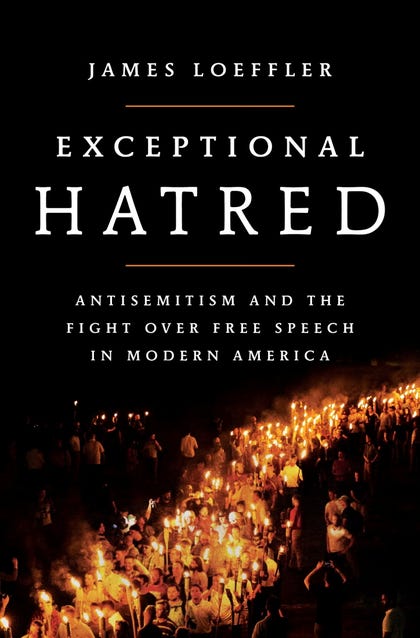
It also explores how, in many of the tangible, pivotal moments when American society was put to the test about anti-Jewish incitement or abuse, from court cases to university responses, Jews themselves were not called to testify as victims, or the word “antisemitism” was not even mentioned.
Loeffler warns, too, that the Trump administration’s hyperactive campaign to “defend the Jews” by launching a war on left-wing dissent and liberal academic institutions, while appeasing or ignoring right-wing antisemitism, is an exercise in cynical manipulation which endangers Jews and democracy.
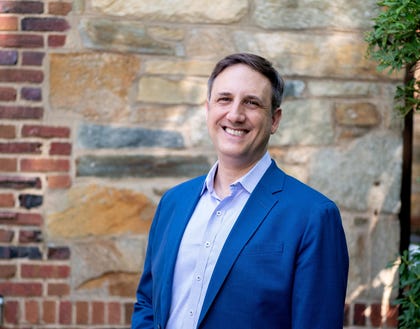
Loeffler is an award-winning historian and serves as the Felix Posen Professor of Modern Jewish History at Johns Hopkins University, and the university’s Jewish Studies program director; he is also a senior fellow at the Shalom Hartman Institute.
He is the author of several acclaimed books, including “Rooted Cosmopolitans: Jews and Human Rights in the Twentieth Century” (2018) and is working on a biography of Raphael Lemkin, the Polish Jewish lawyer who coined the term “genocide.” Loeffler spoke to Haaretz over Zoom from his home in Washington, D.C.
Codeword ‘Zionism’
It was striking to read in your book about the evolution of the term “Zionist” over the last century, especially its use in the 1940s by the antisemitic far right. So debates today about the relationship between anti-Zionism and antisemitism have actually been going on for a century?
“As long as there’ve been Zionists, there’ve been anti-Zionists,” Loeffler says. “Alongside principled opposition to Zionism, there have been bigots, who have also trafficked in the term, but as an epithet for an evil, global conspiratorial power – Marxist, communist, capitalist or some kind of conflation.”
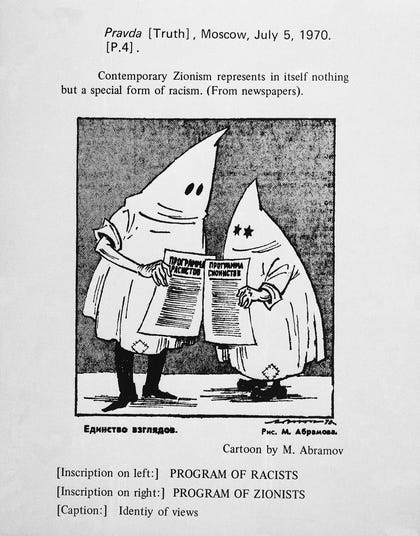
In his book, Loeffler invites us back to postwar Chicago, and to Father Arthur Terminiello, a Catholic priest nicknamed the “Father Coughlin of the South” who called for a “Christocracy” to save America. In 1945 he announced a crusade to stop what he saw as an imminent global coup by “capitalistic Zionists” united with “Red fascism.”
A year later, Terminiello addressed a large gathering in Chicago and explained his terminology, which sounds startlingly contemporary: “The moment we point to a man and say that man is a communist, or that his name happens to be Ginsberg, then we are considered to be antisemitic…Let us call them Zionist Jews, if you will,” adding that it was necessary to oppose “Every attempt to shed American blood to promote Zionism.” Around him, the crowd dispensed with the niceties, shouting “Kill the Jews.”
“Using this coded language was a way for opportunistic demagogues to attack Jews. Many of those invocations of Zionism back in the 1940s, they really show little interest in Palestine. It simply is a useful code word.”
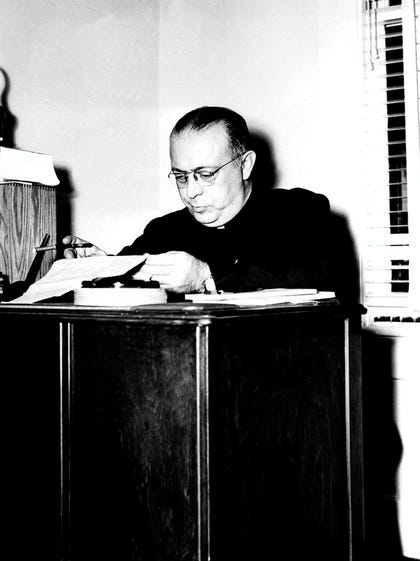
Since Terminello’s time, Loeffler explains, antisemites of all denominations have adopted the same word-bending strategy, distinct from those who opposed Zionism, as a movement for Jewish self-determination, on principle.
“Today, again, we have both principled positions against Zionism, and also bigoted uses of the term to dehumanize Jews and demonize Israel in ways that go beyond valid and necessary critique.
“It’s part of the phenomenon of ‘good Jews’ and ‘bad Jews.’ Back in the 1940s, Terminiello, an American antisemitic Christian nationalist, talked about ‘Zionist Jews,’ but he also said there are ‘good’ Jews too. That, too, is a characteristic of antisemitism, and we live with that today: Partitioning Jews into the right kind and the wrong kind. It should sensitize us to the reality of this [coded] rhetorical move to call Jews ‘Zionist.’ It wasn’t just invented by defenders of Israel to attack anti-Zionist speech.
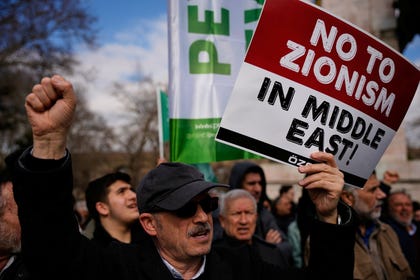
“But at the same time, it doesn’t mean that you can use it as a license to repress everything you find offensive or injurious to Zionism. It means you need to have ethical, legal principles consistently applied, to talk about when something is wrongful discrimination, and when it is simply politics.”
Hasan Piker makes ‘fodder for demonization of U.S. Jews’
Hasan Piker, an extraordinarily popular left-wing live-streamer and political commentator who is fiercely hostile to Israel, has campaigned with several Democratic candidates ahead of the midterms.
In August, Piker remarked during a broadcast that if American Jews continue to present themselves as singularly invested in Israel, “eventually someone is going to come around and take action, not against the State of Israel, mind you, but against American Jews.” These comments, among others, have triggered an intense debate about the line between legitimate political speech and incitement.
Where does Piker stand in your historical understanding of American antisemitism?
“The lesson from history and from the law is that the context actually matters. In the abstract, his message about how Jews’ connection to Israel is going to trigger increasing threats is valid, because we know empirically that every time Israel engages in a war, antisemitism rises in Europe and the United States.
“But Piker making that statement as someone who has consistently engaged in demagoguery is a political move that reeks of singling out Jews who identify with Israel, trying to stigmatize them. It’s an ethically irresponsible move.”
Hasan Piker: “In a totally just world, I think that, regardless of your background, any kind of fucking Zionist tendency should be treated in the same way as being a fucking rabid neo-Nazi. You shouldn’t even let someone be the fucking local dogcatcher, okay, if they’ve ever… pic.twitter.com/GEE2Gr9iuQ
— Shannon Watts (@shannonrwatts) September 4, 2026
In a broadcast he made a year ago and circulating again now, Piker opined that “In a totally just world…any kind of fucking Zionist tendency should be treated in the same way as being a fucking rabid neo-Nazi. You shouldn’t even let someone be the fucking local dogcatcher, okay, if they’ve ever exhibited any sort of positive feelings about the State of Israel.”
When do words become incitement? Piker’s comments from August have been understood by some as a ‘warning’ to American Jews that their attachment to Israel means they have a target on their back. That doesn’t seem too far away from legitimizing those people’s violence.
“I agree it is not very far away from the violence that someone might do in the name of that message. But context still matters: It is one thing for a speaker to describe a situation on campus, but it’s different to do it in an interview with Haaretz or a tweet or a Twitch, in which it is being deliberately provocative.
“Our challenge is to call it out when it is destructive, raising the temperature in this country and giving a pass to people to justify their hateful thoughts about Jews who identify with Israel.
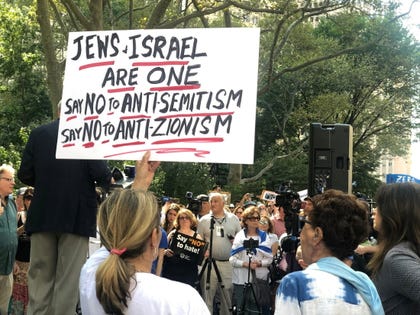
“I don’t think Piker is saying: ‘Watch out, American Jews, if we progressives take power, we will enact the flipside of the Trump-era efforts to criminalize pro-Palestinian advocacy – but this time against pro-Israel advocates.’ But I do think he is deliberately provoking, in a way which is not incitement but is certainly going to be fodder for more demonization of American Jews.”
Is “Zionist” recoverable as an identifier that Jews can openly use in America?
“I definitely think it has been damaged, but the word itself is not the problem.”
Loeffler notes in his book that in the Zionist vs. anti-Zionist conflict, “each side’s excesses [reinforce] the other’s intransigence.”
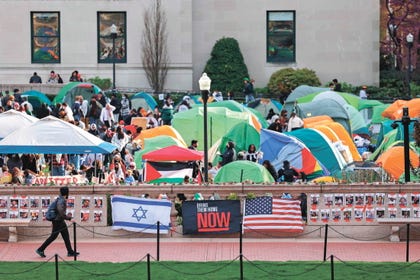
“I’m skeptical that just words themselves can be the magic bullet, or the responsible party for all this. I think that takes the burden off progressives and Zionists to think more clearly and responsibly about how to build coalitions, how to talk through Israel-Palestine, how to differentiate between antisemitism and politics.”
Tucker Carlson: A ‘real and dangerous phenomenon’
In his book, Loeffler goes through the 2021 Sines vs. Kessler trial after the Charlottesville Unite the Right march, which tested the argument that the far right was engaged in a civil conspiracy to commit racially motivated violence; the far-right defense was that they were simply exercising their First Amendment rights.
One defense lawyer even played the jury a YouTube video about the “white genocide” organized by “the international Jewish system” – the far-right belief in the great replacement theory, which posits that liberal Jews are using immigrants to demographically engineer the ‘replacement’ of white Christian America.
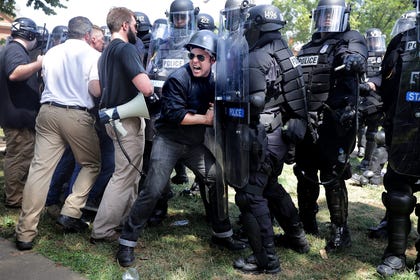
Loeffler notes that “these conspiracy theories migrated from the margins to mainstream conservative discourse…replacement theory became a staple of Tucker Carlson’s Fox News commentary.”
These days Carlson, who is close to U.S. Vice President JD Vance, leads a supercharged obsession with Jews and Israel on the U.S. right, fueled by conspiracy theories and most recently focused on the Iran war.
In your book, you quote Charles Lindbergh, star aviator and Hitler enthusiast, who blamed the ‘Jewish control of American media and government for the prospect of global war.’ He said that in 1938. How different is it from what Carlson has said recently?
“There is a through line in our history, and it’s to do with American reactionary conservative populism. It seizes on images of Jewish power to blame Jews for all of America’s conflicts, for America’s own imperial overreach and overseas entanglements. It recurs in American society.
“People reach down to that reservoir of antisemitism, tap into that tradition, pull out that rhetoric. And they know full well that it will resonate because it’s a persistent underbelly of American society.
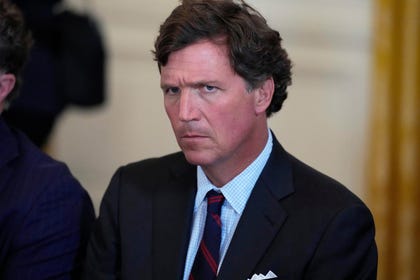
“I think we are in a very dangerous moment, because the rhetoric from Tucker Carlson and the antisemitic MAGA right is directly connecting sinister tropes about Jews and Zionists being responsible for global conflict and issues that impinge on everyday American life. Most Americans don’t care about foreign policy, but they care about gas prices and the cost of living.
“It is a classic move: taking a real issue about the America-Israel war on Iran, about our defense alliances and geopolitical questions, and turning them into a conspiracy theory. That is a dangerous move.
“There is a version of this on the left too, which also attributes all of America’s ills to Zionists – such as the theory that Israel has trained every cop in America. But it is particularly dangerous on the right, firstly because of the empirical reality that white supremacy is a violent tradition in America, which, as I show in my book, consistently produces lots of violent attacks. Secondly, the fact that someone like Carlson has a lot of power and influence in society makes it a real and dangerous phenomenon.”
A ‘fractured landscape’ of coalition-building
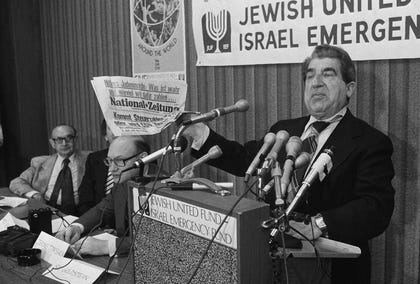
As you describe in the book, in Skokie in 1978, Holocaust survivor Sol Goldstein helped build an incredibly wide coalition to confront a neo-Nazi rally that planned to march through what it called the “Jew-ized suburbs” of Chicago. That coalition included Catholics, Chinese Americans, Orthodox Jews, Teamsters, war veterans, the Rev. Jesse Jackson, even a representative sent by then-President Jimmy Carter. Could this kind of coalition happen today?
“I would hope it could, but I think it’d be much less likely. That Skokie coalition was the product of a moment where the Holocaust was understood as a uniquely evil phenomenon that was also distinctly un-American and which America had helped to stop, and also a universal evil that didn’t connect to America: it happened over there. These days, antisemitism is not just about an external problem, it’s here. Holocaust memory has also changed, and splintered in lots of directions.
“What I always found striking is that when the mayor of Skokie, a Catholic, is accused of not caring enough about antisemitism, his first response is to say: ‘I just came from the Israel Bonds event in downtown Chicago.’ That consensual liberalism, based on the idea that support for Israel is a good marker for caring about American Jews, that it’s fully compatible with Democratic sensibilities and the Democratic Party – that moment has gone.
“After [the Hamas attack of] October 7, there was a very broad response of solidarity, care, concern among the American public. But we live in a moment where history keeps moving, Israel takes its own actions and the world changed because the war continued.
“There would still be a baseline response to denounce antisemitic attacks. But it is a very fractured landscape: Coalitions are much harder because Israel has changed and American politics have changed. Now, unlike the ’70s, there is a live, ongoing violent conflict – and that prevents us from doing any of the deep coalition-building that we will need to move forward.”
A ‘wild overcorrection’ by the Jewish establishment?
You closely trace how major American Jewish organizations, such as the Anti-Defamation League and the American Jewish Committee, responded to antisemitism over the past century. But when it comes to the last decade, you mention them far less. Why is that?
“They are less important than they were,” says Loeffler, dating the decline to their ineffective response to the Charlottesville rallies, which occurred just six months after Trump’s inauguration. “I think they felt really flummoxed about how to respond to the rise of the Trump movement: They simply could not muster a clear, forcible response to what should have been very, very easy: Neo-Nazis holding torches and saying they want to kill Jews.”
Since then, and despite Trump’s infamous comments about there being “fine people, on both sides,” he says, parts of the Jewish establishment have made a “wild overcorrection” – jettisoning principle and proportionality while acquiescing to Trump’s overreach, “terming way too much as antisemitism and using it as a weapon.” While the legacy groups behaved in a weak, incoherent and reactionary way, he says, both the left and right jumped into the antisemitism space.
“It began very dramatically on the right with aggressive and destructive anti-antisemitism ‘start-ups’ – groups who marched into campus, capitalizing on Jewish fear and outrage. And then making alliances with parts of the MAGA right. The progressive left has had its organizations too; some of them have got it right, and some of them have been too willing to ignore antisemitism on the left, because of its political inconvenience.”
Are the clashing ways of confronting antisemitism based on a fundamental error – that there is a “cure” to antisemitism?
“In America, we have a general problem of rising racism and intolerance, and religious hatred. We have a general problem about a decline in democracy, and so it’s in that context that we have to fight antisemitism. The search for quick solutions is often quite damaging. It has to be about managing a problem, balancing rights and values rather than a utopian quest based on the contention that we can stamp out all things that we find hateful or that may even harm us, or a stoicism that says, let’s just ignore this problem.”
Instead of falling into “Judeo-pessimism” – that antisemitism is both ineradicable and insurmountable – he sees an imperative to rethink past solutions to hate speech and incitement that no longer work. The cyclical nature of antisemitic surges should push us to look at the contiguities in the history of American antisemitism, including the recognition that, even right now, “It’s not only about Israel.”
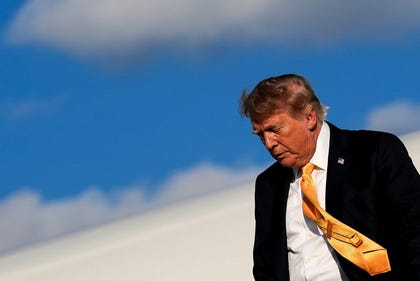
Do you think the frequent interventions by President Trump and his administration in the loud public debate about antisemitism make Jews more or less protected in America today?
“American Jews are more vulnerable now. The instrumentalization of Jews has not brought us recognition and the protection that we need. Instead, it’s turned us into a political football, and bred even more cynicism and casual bigotry – much of which is not connected to Israel-Palestine. It has turned Jews into a target and convenient scapegoat for all kinds of prejudices.
“It has also lifted us out of context, without really giving Americans a way to understand where we fit in and the conflicts about antisemitism are part of our larger problem about diversity and civil rights in America, when the Trump administration is trying to dismantle all the civil rights and protections we have. It turns Jews into this exception, and that is not good for us.
“The Trump right’s so-called ‘philo-Semitic’ embrace doesn’t protect Jews or equalize them as full members of society. It singles us out, and I don’t want that kind of smothering, selective embrace. Nor do I want Jews to be rebuffed or excluded if they don’t fit in with the ‘right’ political sensibilities.”




Leave a Reply
Want to join the discussion?Feel free to contribute!