
Even a stopped clock is raped twice a day
First time tragedy, second farce … but this is the fourth time
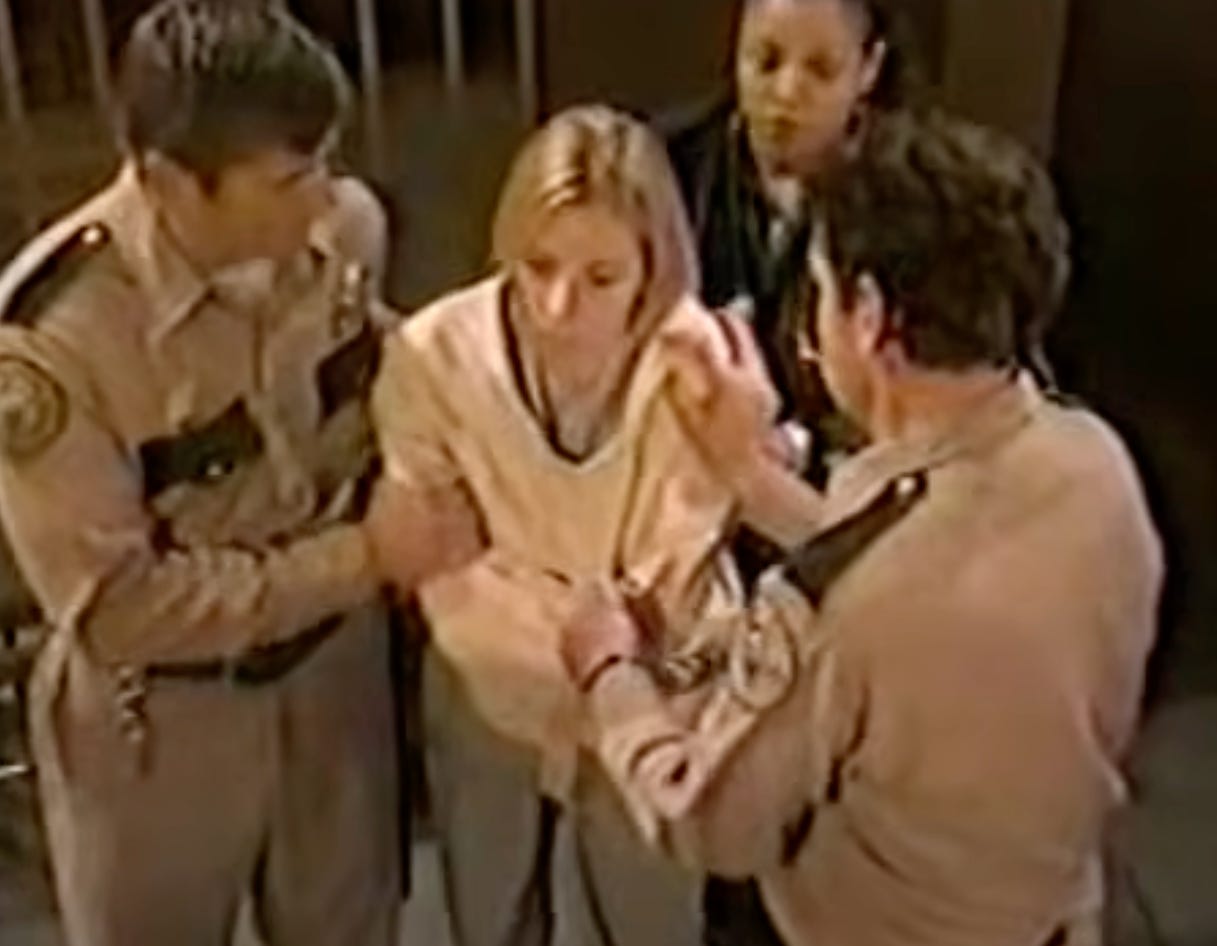
As the Cornell circus drags on, we are past the point where The New York Times has to be told, I’m sorry, this is a feminist thing, you have to recuse yourself. The paper can only respond, You’re right, but I have a problem with alcohol.
Having repeatedly made itself a journalistic laughingstock by believing any gang-rape accusation against white men, the Times thinks it gets an unlimited number of free shots, with no penalty.
To take a few of the paper’s standout efforts: in the Duke lacrosse debacle, the Times held out to the bitter end, believing the soon-to-be-disbarred prosecutor and hiding the burgeoning evidence of the players’ innocence long after every other media outlet had admitted the truth.
A few years later, the Times gave front-page billing to Jamie Leigh Jones’s tale about being violently gang-raped by military contractors in Baghdad, even claiming to have confirmed her account by talking to other self-proclaimed victims and—to get the other side of the story—their lawyers. The jury verdict against her on all counts was given in a short AP report, demurely placed on page A13.
Then, when nearly every news outlet was pillorying Rolling Stone magazine’s preposterous cover story about a gang rape at a University of Virginia fraternity, the Times stood alone in finding no flaws with the chronicle. (Sample sentence from the original article: “’Grab its motherf*cking leg,’ she heard a voice say. And that’s when Jackie knew she was going to be raped.”) The most the paper would allow was that others had doubts, noting that the magazine’s account had “come under scrutiny.”
After every gang-rape saga blows up in its face, the Times runs and hides, waits a few years, then rushes to embrace another fraud.
Jane Doe’s recent lawsuit against Cornell puts the Times right on schedule to fall flat on its face again. Doe claims that, two years ago, she was gang-raped at a fraternity there. Sadly, the accused rapists aren’t white this time, but they’re in a fraternity and that’s close enough.
Let’s see how the paper’s doing.
The Times first reported the story on Sept. 28 this year, but it wasn’t until Oct. 9 that it finally coughed up texts Doe sent the week after the “gangbang” (as she called it), strongly implying her consent. She wrote to Matthew Ingalls, the Muslim frat boy: “Everyone needs to grow up cause sexuality and sex and shit is changing and stuff like this is going to become more common. I’m really open-minded.”
Even then, the Times buried the quote 680 words into a lengthy magazine piece, and described Doe’s text as “heartbreaking,” as opposed to “exonerating.” That was nine days after her texts had already been published by multiple news outlets, including ABC, TMZ, and my Substack.
It’s not as if the Times was withholding judgment, saying little about Doe’s accusation until more facts came in. In the intervening nine days, the paper published 74 pieces on the case, with titles like these:
“What the Cornell Lawsuit Reveals About Sexual Violence in America”
“Anger and Questions at Cornell”
“Cornell Students Demand Accountability”
“Cornell and the Age of Impunity”
“Cornell Case Revives Anger About Handling of Campus Sexual Assault Cases”
“The Cornell Case and Trump’s America”
As we go to print (and until the end of time), the Times has still not reported Doe’s text to another accused rapist, Jonathan Newell, the African American frat boy, saying: “anything anyone has to say about the gangbang is out of their jurisdiction. I don’t think we should feel any shame for that part. our body our choice asf” [as f*ck].
That text was mentioned exclusively in the subscriber-only “Backstory” newsletter on Oct. 15, simply for the purpose of explaining why the Times had not used it. The paper repeatedly quoted the Snapchat message from Newell to other frat members, offering “free pussy”—without asterisks—so it wasn’t a matter of delicacy.
Debra Kamin, shaper of the Times’s narrative, explained that she saw no need to quote the stuff about the “gangbang” being “our body our choice asf” because she’d already quoted Doe saying, “None of the sexual stuff was illegal and honestly i really liked being w u and matt.” Saying nothing “illegal” happened, Backstory explained, “made the same point.”
No, actually, lots of things that aren’t “illegal” might not be described with such defiant, I Am Woman, Hear Me Roar gusto. But Kamin insisted, “There was never a goal of sanitizing her quote.”
Not only are the Times’ feminist watchdogs covering for Doe in their reporting, they’re attacking anyone with the audacity to ask any questions about her, such as, for example, her name. You know, like the alleged rapists’ names were. With pictures. All over.
This past weekend the paper ran an article by Kamin and three other lady hysterics titled, “When a Social Media Mob Came for Cornell’s Jane Doe.” I knew the piece was going to be good when it began with a Twitter user who’d been trying to find out her name and described him as “a 23-year-old man who regularly praises Hitler…”
[Shouting from the Times editorial room: FIND ME A GUY WHO’S PRAISED HITLER!]
Hmmm, I wonder why they chose this guy as their representative of the “online mob.” According to them, more than 10,000 people were searching for her name. Did they all praise Hitler?
But fully one-third of the article is about this fellow, who “regularly praises Hitler.” (And his name actually doesn’t matter, at least until he accuses someone of a heinous crime under the cloak of anonymity.)
Feminist legal scholar Catharine MacKinnon told the Times that merely to reveal Doe’s name amounts to “an attempt to silence” her, communicating, “this is what is waiting for her—public shaming, stigma, and a spoiled identity.”
How about the “public shaming, stigma, and a spoiled identity” of the hundreds of men falsely accused of rape? The Times’ position is: What kind of monster defends himself against a charge of rape?
Meanwhile, ordinary people just want to know if it’s true.
Feminists have got to understand that it is wrong to falsely accuse people of crimes. It doesn’t matter if it’s drawing attention to an important issue. Rape is a crime like any other—except that it’s four times more likely to be false, according to the FBI. (More like 40% probable, according to several large academic studies.)
Instead of always believing any charge of rape by anyone at any time—provided the alleged rapists are white—maybe the paper should take some time to reflect on its history of falling for sham rape cases.
When it comes to any feminist cause, no one can believe anything the Times says. It’s sad, but that’s where we are.


Leave a Reply
Want to join the discussion?Feel free to contribute!