PART 1
In the 2010 feature-length documentary Wagner and Me the British celebrity Stephen Fry explored his love affair with the music of Richard Wagner. Fry, who is Jewish, homosexual, and bipolar, enjoys a multi-pronged “victim” status that has made his identity politics credentials the aesthetic equivalent of a nuclear warhead. The inevitable consequence of this (and his Leftist politics) is his constant presence in the British media. Indeed, Stephen Fry is possibly the most overrated and overexposed individual in the history of British entertainment, and has benefited enormously from the intellectual elite’s construction of Jewish genius to the point where he is routinely hailed in sections of this fawning media as a “genius” and a “national treasure.”
As well as providing another celebrity vehicle for the overrated Stephen Fry, Wagner and Me offered another platform for exploring the life, work and thinking of one of the world’s most famous “anti-Semites.” While acknowledging Wagner’s undoubted genius, Fry reminds us in portentous tones that “a shadow falls across the sublime music. It’s not only the fact that it was later appropriated by Hitler which makes some people think of Wagner’s art as tainted. It’s also because Wagner himself was outspokenly anti-Semitic.”

Wagner and Me is just one in a long line of books and documentaries that have explored Wagner’s putative role as the spiritual and intellectual godfather to Hitler. In the Jewish-dominated cultural milieu of the contemporary West this meme has taken on such a life that Wagner’s name is seldom mentioned today without the obligatory disclaimer that, while admittedly (and unfortunately) a musical genius, his reputation is forever sullied by his standing as a morally loathsome anti-Semite. A consequence of this, notes William Berger, is that for many people, Wagner “has become symbolic of everything evil in the world.”
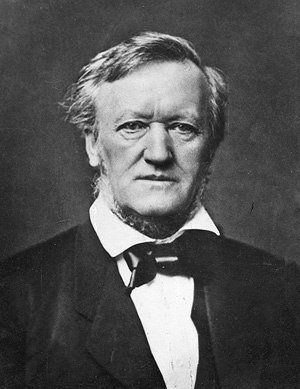
Richard Wagner was a one-man artistic and intellectual movement whose shadow fell across all of his contemporaries and most of his successors. Other composers had influence; Wagner had a way of thinking named after him. Indeed, a significant biographical feature of most of the composers that followed Wagner was how they grappled with his legacy. Some imitated him, some rejected him, and some (like Hugo Wolf) were almost paralysed by the immensity of his achievement. Wagner was a deeply polarizing figure in his lifetime, and no other composer has provoked such extreme antipathy or adulation. Yet even the anti-Wagnerites had to acknowledge the enormity of his achievement, and his most fanatical detractors (a great many of them Jewish) have reluctantly agreed with Tchaikovsky, who wrote of the Ring: “Whatever one might think of Wagner’s titanic work, no one can deny the monumental nature of the task he set himself, and which he has fulfilled; nor the heroic inner strength needed to complete the task. It was truly one of the greatest artistic endeavors which the human mind has ever conceived.”
As we approach next year’s bicentenary of Wagner’s birth, and the 130th anniversary of his death, the composer retains a cultural prominence that surpasses any of his contemporaries. The excellence of his music has ensured that its popularity has never waned, and Wagner is still well represented on recordings, on radio, and in the theater. Wealthy Wagner devotees travel the world in pursuit of live performances of his fifteen-hour, four-night opera cycle, Der Ring des Nibelungen. Every year thousands still make a pilgrimage to the small Bavarian town of Bayreuth where in 1876 he inaugurated a festival devoted to his own music. The appeal of Wagner’s music, libretti and stagecraft has ensured his music dramas remain useful to opera companies around the world as a reliable income source, even in straitened economic times.
It is, however, Wagner’s standing as “a notorious anti-Semite,” and the intellectual establishment’s obsession with him on this basis, that has increasingly shaped his image in the popular consciousness. Wagner’s reputation is now so thoroughly tainted that one almost never encounters a serious examination of his ideas. As Adrian Mourby notes: “The notion that artists don’t have to be as beautiful as the works they create is a commonplace now – except in the case of Wagner. Judaism in Music is what has made him the unforgivable exception.”
JUDAISM IN MUSIC
Kevin MacDonald observes in Separation and its Discontents that Richard Wagner is perhaps the best known intellectual who focused on the Jewish domination of culture. Wagner first expounded on what he saw as the pernicious Jewish influence on German art and culture in his 1850 tract Das Judenthum in der Musik (usually translated as Judaism in Music or Jewishness in Music), which was published under pseudonym in 1850. Wagner’s essay took up the theme of a previous article by Theodor Uhlig in the Neue Zeitschrift für Musik that was critical of the “Hebraic art taste” that Uhlig thought was manifest in Giacomo Meyerbeer’s grand opera Le prophète.
Wagner attempted in his essay to account for the “popular dislike of the Jewish nature,” and “the involuntary repellence possessed for us by the nature and personality of the Jews.” He concludes that Germans instinctively disliked Jews due to their alien appearance, speech and behavior, noting that “with all our speaking and writing in favor of the Jews’ emancipation, we always felt instinctively repelled by any actual, operative contact with them.” Wagner here simply stated an obvious fact: that Germans were ethnocentric like all other racial and ethnic groups, and this colored their interactions with a fiercely competitive, deeply ethnocentric, and hostile outgroup residing among them.
Wagner also argued that Jewish musicians were only capable of producing music that was shallow and artificial, because they had no connection to the genuine spirit of the German people. He asserts that: “So long as the separate art of music had a real organic life-need in it down to the epochs of Mozart and Beethoven, there was nowhere to be found a Jewish composer. … Only when a body’s inner death is manifest, do outside elements win the power of lodgment in it — yet merely to destroy it.” Jews had not fully assimilated into German culture, so they did not identify with and merge themselves into the deepest layers of that culture, including its religious and ethnic influences — the Volksgeist. According to Wagner, “our whole European art and civilization … remained to the Jew a foreign tongue.” The Jews “through an intercourse of two millennia with European nations” had never fully abandoned the posture of “a cold, nay more, a hostile looker-on.”
The same thesis was advanced by Zionist intellectuals like Ahad Ha’Am (the pseudonym of Asher Ginsburg). MacDonald notes that both Wagner and Ginsburg “developed the idea that Jews could not have their own artistic spirit because they failed to identify completely with the surrounding culture.” (p. 184) In Wagner’s view, higher culture springs ultimately from folk culture. In the absence of Jewish influence, German music would once again reflect the deeper layers of German folk culture. For Wagner “Judaic works of music often produce on us the impression as though a poem of Goethe’s, for instance, were being rendered in the Jewish jargon. … Just as words and constructions are hurled together in this jargon with wondrous inexpressiveness, so does the Jewish musician hurl together the diverse forms and styles of every age and every master. Packed side by side, we find the formal idiosyncrasies of all the schools, in motleyest chaos.”
This observation has been roundly condemned by Jewish commentators, and yet the Jewish music commentator David Rodwin, while labelling Wagner’s essay “a vile anti-Semitic screed”, admits there is substantial truth in the “aesthetic eclecticism” that Wagner identified as a unifying feature of Jewish composers. Jacob Katz likewise acknowledged that “Jewish qualities may quite naturally appear – for better or for worse – in artistic creations of Jews, even of those who have joined non-Jewish culture. It would therefore be preposterous to dismiss categorically all observations from the mouths of anti-Semites as prejudicial misconceptions.” (p. 98)
Drawing on the thesis of Heinrich Laube’s book Struensee, Wagner held Jews to be responsible for the introduction of hyper-
commercialized values into German art. In February of 1848, at the funeral of Wagner’s mother, Laube commiserated with his friend Wagner, equating the sadness of the hour with their mutual despair at the state of German art and culture, noting that “On the way to the station, we discussed the unbearable burden that seemed to us to lie like a dead weight on every noble effort made to resist the tendency of the time to sink into utter worthlessness.” As the preface to Struensee makes clear, this “worthlessness” consisted in the flowering of Jewish values. Wagner’s only remedy was to “plunge dully and coldly into the only thing that could cheer me and warm me, the working out of my Lohengrin and my studies of German antiquity.” (p. 360) Regarding the Jewish tendency to convert art into a form of commerce, Wagner writes:
[All] is turned to money by the Jew. Who thinks of noticing that the guileless looking scrap of paper is slimy with the blood of countless generations? What the heroes of the arts… have invented… from two millennia of misery, today the Jew converts into an art-bazaar … We have no need first to substantiate the Jewification [Verjudung] of modern art. It springs to the eye and thrusts upon the senses. … But if emancipation from the yoke of Judaism appears to us the greatest of necessities, we must hold it crucial above all to assemble our forces for this war of liberation. But we shall never gain these forces by merely defining the phenomenon [of Judaism] in an abstract way. This will be done only by accurately knowing the nature of that involuntary feeling of ours which utters itself as an instinctive repugnance against the Jew’s prime essence. … Then we can rout the demon from the field … where he has sheltered under a twilit darkness … which we good-natured humanists ourselves have conferred on him.
For Wagner, Judaism was the embodiment of the bourgeois money-egoist spirit. As he later confessed to Liszt: “I felt a long-repressed hatred for this Jewish money-world, and this hatred is as necessary to my nature as gall is to blood. An opportunity arose when their damnable scribbling annoyed me most, and so I broke forth at last.” In Judaism in Music Wagner finds the plea for Jewish emancipation to be “more than commonly naïve, since we see ourselves rather in the position of fighting for emancipation from the Jews. The Jew is in fact, in the current state of the world, already more than emancipated. He rules.”
Interestingly, despite his stated views, Wagner twice refused to sign the “Anti-Semites Petition” of 1880 (presented to Bismarck) which complained about the very economic domination that so troubled him. The Petition itself stated:
Wherever Christian and Jew enter into social relations, we see the Jew as master, the indigenous Christian population in a subservient position. The Jew takes part only to a negligible extent in the heavy labor of the great mass of the nation. But the fruits of his [the German’s] labor are reaped mainly by the Jew. By far the largest part of the capital which national labor produces is in Jewish hands. … Not only do the proudest palaces of our large cities belong to Jewish masters whose fathers and grandfathers, huckstering and peddling, crossed the frontiers into our fatherland, but rural holdings too, that most significant preservative basis of our political structure fall more and more into the hands of the Jews. … What we strive for is solely the emancipation of the German Volk from a form of alien domination which it cannot endure for any length of time. (p. 52)
For Roger Scruton, it is in Wagner’s determination to use his art to escape from this commercialized world — a world where everything is for sale, “where value is price and price is value,” and where entertainment is considered more important than art — that is central to his genius. Wagner escaped “to a garret, high above the market place” in conscious reaction against the sentimentality and disingenuousness of the art and music at his time.
The operas of Wagner attempt to dignify the human being in something like the way he might be dignified by an uncorrupted common culture. Acutely conscious of the death of God, Wagner proposed man as his own redeemer and art as a transfiguring rite of passage to a higher world. The suggestion is visionary, and its impact on modern culture so great that the shockwaves are still overtaking us. … In the mature operas of Wagner our civilization gave voice for the last time to its idea of the heroic, through music that strives to endorse that idea to the full extent of its power. And because Wagner was a composer of supreme genius, perhaps the only one to have taken forward the intense inner language forged by Beethoven and to have used it to conquer the psychic spaces that Beethoven shunned, everything he wrote in his mature idiom has the ring of truth, and every note is both absolutely right and profoundly surprising. (p. 69)
Wagner fled from the commercialized world of art into the inner realm of the imagination. He believed that the idealism and heroism of a bygone age could be rekindled to dwell among us again. He strived to generate a new music public that would not just identify with the Germanic heroic ideal, but adopt it as part of an idealistic nationalism that eschewed the bourgeois worldly values of the mid-nineteenth century. In this endeavor, Wagner strived to connect at an emotional rather than a rational level with his audience. As he once wrote of his Ring cycle: “I shall within these four evenings succeed in artistically conveying my purpose to the emotional — not the critical — understanding of the spectators.” This was in keeping with his dictum that art should be “the presentation of religion in a lively form.”
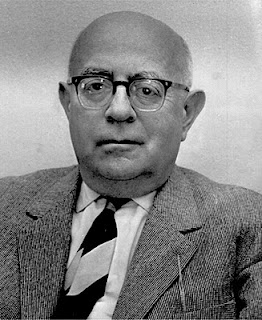
It was precisely this quality in Wagner’s works that most repelled the Frankfurt School music theorist T.W. Adorno, who likened Wagner’s famous system of leitmotifs to advertising jingles in the way they imprinted themselves on the memory. For Adorno, Wagner’s musical innovations led to feelings of disorientation and intoxication that seduced audiences and rendered them docile and vulnerable to political persuasion. Moreover, in every crowd applauding a Wagnerian work, Adorno insisted, lurked “the old virulent evil” of “demagogy”. Elizabeth Whitcombe notes how:
Adorno believed that Wagner’s work is “proselytizing” and “collective-narcissistic.” Adorno’s complaint about the “collective-narcissistic” quality of Wagner’s music is really a complaint that Wagner’s music appeals to deep emotions of group cohesion. Like the Germanic myths that his music was often based on, Wagner’s music evokes the deepest passions of ethnic collectivism and ethnic pride. In Adorno’s view, such emotions are nothing more that collective narcissism, at least partly because a strong sense of German ethnic pride tends to view Jews as outsiders — as “the other.” It is also not surprising that Adorno, as a self-consciously Jewish intellectual, would find such music abhorrent.
Adorno’s jaundiced assessment of Wagner was encapsulated in Woody Allen’s quip that “When I hear Wagner I have the irresistible urge to invade Poland.” Scruton points out that Wagner’s attempt to engage his audiences at the emotional level of religion (which so perturbed Adorno) was already doomed when Wagner first conceived it. The main problem being that:
[Wagner’s] sacerdotal presumptions have never ceased to alienate those who feel threatened by his message. Hence modern producers, embarrassed by dramas that make a mockery of their way of life, decide in their turn to make a mockery of the dramas [in so-called Regietheater/Eurotrash productions]. Of course, even today, musicians and singers, responding as they must to the urgency and sincerity of the music, do their best to produce the sounds that Wagner intended. But the action is invariably caricatured, wrapped in inverted commas, and reduced to the dimensions of the television sitcom. Sarcasm and satire run riot on the stage, not because they have anything to prove or say in the shadow of this unsurpassably noble music, but because nobility has become intolerable. The producer strives to distract the audience from Wagner’s message, and to mock every heroic gesture, lest the point of the drama should finally come home.
As Michael Tanner has argued, in his succinct and penetrating defense of the composer, modern productions attempt to “domesticate” Wagner, to bring his dramas down from the exalted sphere in which the music places them, to the world of human trivia, usually in order to make a “political statement” which, being both blatant and banal, succeeds only in cancelling the rich ambiguities of the drama. In contemporary Wagner productions we see exactly what the transition from modernism to the “post-modern” world involves, namely, the final rejection of high culture as a redemptive force and the ruination of the sacred in its last imagined form. (p. 69)
In the conclusion to Judaism and Music, Wagner wrote of the Jews that “only one thing can redeem you from the burden of your curse: the redemption of Ahasuerus — going under!” Although this has been taken by some Jewish commentators to denote actual physical annihilation, in the context of the essay it refers to the eradication of Jewish separateness and traditions. Wagner advises Jews to follow the example of Ludwig Börne by abandoning Judaism. In this way Jews will take part in “this regenerative work of deliverance through self-annulment; then we are one and un-dissevered!” Wagner was calling for the assimilation of Jews into mainstream German culture and society. He thus offered to take Hermann Levi, the first conductor of his Parsifal, to be baptised a Christian. Under the influence of Darwinian thinking (promoted in Germany by Ernst Häckel), Wagner later came to favor expulsion over conversion, and thus paralleled the trajectory of German anti-Semitism over the course of the nineteenth century, which “shifted from demands for Jewish assimilation by intellectuals such as Kant and the young Hegelians in the early part of the century, to an increasing emphasis on the ethnic divide separating Germans and Jews.” (p. 165)
Wagner republished Judaism in Music under his own name in 1869, with an extended introduction, leading to several protests by Jews at the first performances of Die Meistersinger von Nürnberg. Wagner repeated similar views in later articles, such as “What is German?” (1878, but based on a draft written in the 1860s), and Cosima Wagner’s diaries often recorded his comments about “Jews.” Toward the end of his life, in his “Religion and Art” (1881), Wagner declared: “I regard the Jewish race as the born enemies of humanity and everything that is noble in it; it is certain we Germans will go under before them, and perhaps I am the last German who knows how to stand up as an art-loving man against the Judaism that is already getting control of everything.” Wagner repeatedly observed (and lamented) the fact that the Jews had stormed the fortress of German high culture, especially its music, and had successfully “brought the public Art-taste of our time between the busy fingers of the Jew.” A host of Jewish middlemen had taken over the critical press, publishing, theaters, operas, art galleries and agencies. This Jewish cultural ascendancy in Germany was, of course, to reach its zenith in Weimar Republic Germany. As Walter Laqueur observed:
Without the Jews there would have been no “Weimar culture” – to this extent the claims of the anti-Semites who detested that culture, were justified. They were at the forefront of every new, daring, revolutionary movement [including Dadaism]. They were prominent among Expressionist poets, among the novelists of the 1920’s, among the theatrical producers and, for a while among the leading figures in the cinema. They owned the leading liberal newspapers… and many editors were Jews too. Many leading liberal and avant-garde publishing houses were in Jewish hands. … Many leading theater critics were Jews, and they dominated light entertainment. (p. 99)
Wagner’s Racial Thinking
In addition to his concern about the baleful Jewish influence on German culture, Wagner, under the influence of Darwinism and the French racial theorist Arthur de Gobineau, became increasingly concerned about the fate of the White race. Wagner met Gobineau in Rome 1876, and then again in Venice in 1880 when he read the French author’s bestselling An Essay on the Inequality of the Human Races which had been published 25 years earlier.
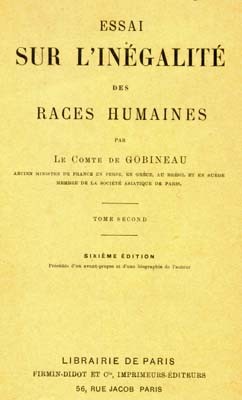
Wagner thought that Gobineau had demonstrated in this famous essay that “we should have no History of Man at all, had there been no movements, creations, and achievements of the White man,” and was taken with his pessimistic notion that Western society was doomed because miscegenation would inevitably lead to the degeneration of the white race. In his essay “Heroism and Christianity”, Wagner writes that:“We cannot withhold our acknowledgment that the human family consists of irremediably disparate races, whereof the noblest well might rule the more ignoble, yet never raise them to their level by commixture, but simply sink to theirs.” The Jews, however, offered a unique exception to this general rule:
The Jew, on the contrary, is the most astounding instance of racial congruence ever offered by world history. Without a fatherland, a mother tongue midst every people’s land and tongue he finds himself again, in virtue of the unfailing instinct of his absolute and indelible idiosyncrasy: even commixture of blood does not hurt him; let Jew or Jewess intermarry with the most distinct of races, a Jew will always come to birth.
While accepting many of Gobineau’s basic premises, Wagner, in his 1881 essay about the German people entitled “Know Thyself” rejects the idea of complete Aryan superiority and writes about the “enormous disadvantage at which the German race … appears to stand against the Jewish.” Furthermore, when Gobineau stayed with the Wagners at Wahnfried for five weeks in 1881, their conversations were punctuated with frequent arguments. Cosima Wagner’s diary recounts one exchange in which Wagner “positively exploded in favor of Christianity as compared to racial theory.” Wagner proposed that a “true Christianity” could provide for the moral harmonization of all races, which could, in turn, help prevent the physical unification of the races, and thereby the degeneration of the White race through miscegenation:
Incomparably fewer in individual numbers than the lower races, the ruin of the White races may be referred to their having been obliged to mix with them; whereby, as remarked already, they suffered more from the loss of their purity than the others could gain by the ennobling of their blood. … To us Equality is only thinkable as based upon a universal moral concord, such as we can but deem true Christianity elect to bring about.
Wagner had first developed the idea of a revolutionary new Christianity in the opera text Jesus of Nazareth (1849), which depicted Jesus as redeeming man from the materialism of the “Roman world … and still more, of that [Jewish] world subject to the Romans. … I saw the modern world of the present day as a prey to the worthlessness akin to that which surrounded Jesus.” Wagner here drew heavily on Kant’s critique of Judaism. Enslaved to the Law, the Jews had rejected Jesus’s message of love; Jewish egoism and lovelessness had led Judas to betray him. The Jews had preferred “power, domination … [and] the loveless forces of property and law, symbolized by Judaism.” Wagner’s hope for the emergence of a “new Christianity” to act as a bulwark against miscegenation and the degeneration of the white race has not transpired, although some Jewish commentators see it as having being realized in the ideology and practice of National Socialism.
For Larry Solomon, in Richard Wagner “all the racist historical models from Luther to Fichte, Feuerbach, Gobineau, Hegel, Schopenhauer, and Chamberlain, come to full maturity.” Yet, despite the irate epithets directed at Wagner, most of his assertions are objectively true. The races are unequal intellectually and physically, and race mixing does lead (on average) to the cognitive decline of the more intelligent racial party to the admixture. Wagner’s racial views were mainstream opinions at the time he expressed them — not least among the leading Jewish intellectuals I cited in my review of Jews & Race — Writings on Identity and Difference 1880–1940.
Wagner’s views on the Jewish Question strongly paralleled those of Theodor Herzl. Both Wagner and Herzl saw the Jews as a distinct and foreign group in Europe. Herzl saw anti-Semitism as “an understandable reaction to Jewish defects” brought about by the Jewish persecution of gentiles. Jews had, he claimed, been educated by Judaism to be “leeches” and possessed “frightful financial power.” (p. 57) For Herzl, the Jews were a money worshipping people incapable of understanding any other motives than money. MacDonald notes in Separation and Its Discontents that Herzl argued that “a prime source of modern anti-Semitism was that emancipation had brought Jews into direct economic competition with the gentile middle classes. Anti-Semitism based on resource competition was rational.” Herzl “insisted that one could not expect a majority to ‘let itself be subjugated’ by formally scorned outsiders that they had just released from the ghetto.” (p. 54) Daniel Barenboim notes that “Wagner’s conclusion about the Jewish problem was not only verbally similar to Herzl’s” but that “both Wagner and Herzl favored the emigration of the German Jews.” Despite their convergence of opinion on the Jewish Question, Herzl avoided the opprobrium that was posthumously heaped on Wagner; intellectual consistency being the first casualty of Jewish ethnic warfare through the construction of culture.






The Joys of Jihad: Islamentable, Isatrocious, Isbetrayal
Nordics versus Implicit Jews in "The Switch"


Brilliant essay. I wonder if you will comment on George Bernard Shaw’s The Perfect Wagnerian (Shaw was a music critic before he became a playwright). I have seen a version of The Ring full of Leftist symbolism that in my mind did not spoil the music of the message.
And to think that Nietzsche criticized this man for being “un-German.” Wagner was warning Germans about Jewish domination of their government, finance, and press while Nietzsche was blathering about how Jews only wanted to become a part of Germany to make it stronger, and that German nationalists were preventing them from doing so. Well, we know which one of them was correct in the end, right? (oh, but of course Nietzsche didn’t believe in facts, only “perspectives”…right).
Awesome Wanger music video:
http://www.youtube.com/watch?v=jC-pA81QxGs
What the evil call evil is good.
Our family went to an opera last month. Several of the pieces were by Wagner, and what a blessing they were!
What poured from his soul was pure and beautiful – be it music or ideas. And, that music and those ideas are eternal, as is Wagner.
nice piece. If a jew had composed The Ring, the jews would love it. Arguably, from a critical standpoint, it is over-wrought, but would fit the Jews’ passion just dandy. What the hey, they got the ring anyway and smirk.
What has kept me away from The Ring, is largely that it is not beautiful in the way that bel canto is beautiful. The Ring is not liberal music. It is not sentimental music. I confess to preferring beautiful classical and baroque and romantic music, yet have had Mozart up to here, etc. 20th C. music is more interesting, but no jew 20th c. music. Prokofiev, etc.
Jews seem to have composed very little great music. I recall a Mendelsohnn concert here locally in Menlo Park last year. It was hosted by, you know who, and was selling like 50 dollar tickets. Must have been a fund-raiser. The folks were so ugly, I passed on it.
Wagner may be our swansong but we need something more like marshall music to get our fighting spirit up. Also, pop music seems to be the preferred music for some of our videos which need back-up. Well, whatever works here I guess. Don’t wanna turn anybody off. J although I like Barber despite …
Of course, even today, musicians and singers, responding as they must to the urgency and sincerity of the music, do their best to produce the sounds that Wagner intended. But the action is invariably caricatured, wrapped in inverted commas, and reduced to the dimensions of the television sitcom. Sarcasm and satire run riot on the stage, not because they have anything to prove or say in the shadow of this unsurpassably noble music, but because nobility has become intolerable. The producer strives to distract the audience from Wagner’s message, and to mock every heroic gesture, lest the point of the drama should finally come home.
Is there a particular set of Wagner CDs that you recommend?
First, I would always caution against taking Nietzsche too literally vis-a-vis Wagner. A man in love, especially with another man’s wife, cannot always be expected to think correctly, all of the time. And some of it was not even personal, but a critique of Bayreuth as a mere social event, as mere entertainment.
As far as revenge goes, today’s stagings, often called “Eurotrash,” show the length that modern aesthetes will go in order to deconstruct perfection into their own debased image.
Interestingly, the most recent traditional production available is Otto Schenk’s Met staging conducted by James Levine. In a better world it would have been done by Furtwangler and the Berlin orchestra.
Wonderful article, thank you! I come from a southern family who for several generations made a fine art of genteel poverty. Despite all those ugly rumors started by Tennessee Williams, this was a refinement of true values, of what is really important in life. It included a rather elaborate etiquette designed to avoid any mention of money, in order to spare other’s feelings. We are a bit more comfortable now, but we still value those traits. I hope that as we head into the troubled financial days ahead, perhaps we can shed some of the more crass aspects of modern culture and remember what is really important.
An a different note, I urge any who passed it up to read the link given for Ahad Ha’am. I had not heard of him before. His entry gives the lie to all of the founding myths of Israel.
http://en.wikipedia.org/wiki/Ahad_Ha%27am
On Fry, interesting that he appeared with arch-Aryan Rik Mayall in several episodes of Blackadder; Mayall more recently got in some Derbyshire-hot water with this comment: “”You have to be black, homosexual or a woman to work at the BBC.”
As for Wagner, well, enemy of my enemy, and all that, but really, we need to junk him along with all the rest of the post-Medieval stuff, all of which is implicitly judaic. Between Wagner and Mahler, who’s the bigger, more hysterical, Jew?
Even Spengler emphasized, there has been no “art” possible in the West since the Baroque. Wagner’s work epitomizes the vain, increasingly desperate search for expression through ever bigger, ever louder forces, when the real answer, as Danielou pointed out, lies in junking the expressionless “Western” musical system, in favor of something like the Indian or Chinese. In fact, this is the root of the Western obsession with jazz and blues, where the corrupt “equal temperament” system is ignored.
Who is the real Aryan? Wagner, sitting around Venice in his silk dressing gown and bedroom slippers, distorting our sagas into crypto-Christian theatrical nonsense, or Baron Evola, who told us: “Burn down the opera houses and all that other bourgeois quatsch!”
@James O’Meara:
Come on now. How can you listen to Siegfried’s Funeral March and not hear the wind howling through the Alps?
I don’t quite understand the “classical music is implicitly Judaic” perspective. I’ve seen Nietzsche, Evola, and others make this argument but I never understood their reasoning.
“which makes some people think of Wagners art as tainted”.
What people?
My Lord, Herzl, seemed to be an extraordinary man in his forthright and straitforward views.
but we need something more like marshall music
How about something from Marshall Dylan? Or MARTIAL music. . .
When I hear the word culture I release the safety-catch on my Browning.
@James O’Meara: James, I don’t know who the real Aryan is. If your question has an answer, than it could be interpreted in a different way than you did. Wagner spent many years, about twelve, lauguishing in poverty, and hiding, while composing great music that had to be filed his desk, because he was hounded by political enemies out to kill him for his involvment in challanging the status quo. So many times in his life, this man walked the walk, so to speak. There was an element of daring and bravery to the man, that is unquestionable.
SCHLAGETER: Good old Fritz! (Laughing.) No paradise will entice you out of your barbed wire entanglement!
THIEMANN: That’s for damned sure! Barbed wire is barbed wire! I know what I’m up against…. No rose without a thorn!… And the last thing I’ll stand for is ideas to get the better of me! I know that rubbish from ’18…, fraternity, equality, …, freedom…, beauty and dignity! You gotta use the right bait to hook ‘em. And then, you’re right in the middle of a parley and they say: Hands up! You’re disarmed…, you republican voting swine! — No, let ‘em keep their good distance with their whole ideological kettle of fish…. I shoot with live ammunition! When I hear the word culture…, I release the safety on my Browning!”
SCHLAGETER: What a thing to say!
THIEMANN: It hits the mark! You can be sure of that.
SCHLAGETER: You’ve got a hair trigger.
—Hans Johst’s Nazi Drama Schlageter. Translated with an introduction by Ford B. Parkes-Perret. Akademischer Verlag Hans-Dieter Heinz, Stuttgart, 1984.
@TabuLa Raza: Sounds like a long time buddy of mine, quite an intelligent guy who repais and tunes classical music instruments. He doesn’t like the idea of cultural interpretations. His thinking and interpretation on matters, begins and ends with strict Darwinism.
@Lancashire lad: You’re close; the title is actually The Perfect Wagnerite.
Shaw is quite a curious case—I speak as a lifelong admirer of his wit and his plays—in that, on the topic of Wagner’s music as on virtually everything else he turned his attention to, his not occasional utter brilliance of thought and expression and his remarkable insight into human nature and motivation can so blind his reader that that reader fails to grasp that what he is reading amounts to essentially an attorney’s brief rather than a full statement of the case at hand. Put otherwise, Shaw is a writer and thinker with 20/20 tunnel vision; what he sees, he sees with dazzling clarity, and he was graced with the ability to communicate his clarity of vision to the rest of us. Yet his criticism of the Ring particularly and Wagner’s dramaturgy generally is crippled by his failure or unwillingness to come to grips with the entirety of Wagner’s means and ends; that is, all his goals, all his aspirations, and preeminently the totality of his accomplishments.
It is noteworthy that every single postmodern Eurotrash director (even the few who are goys), whichever side of the Atlantic he stems from, has silently adopted as his own Shaw’s understanding of the nature of the structure of the nonhuman universe in the Ring. This structure presumes that the archvillain, the dwarf Alberich, is a top-hatted capitalist plutocrat exploiter masquerading as a virtuous Christian philanthropist and that his diametrically opposed foe, the god Wotan (who at one point in Siegfried actually defines himself as “Licht-Alberich,” the Alberich of Light) is a well-meaning, benevolent tyrant whose regime collapses under the weight of its own internal political, economic, and evolutionary contradictions. Since such an interpretation finds only marginal support in the actual text and action of the Ring, it is hardly surprising that productions based on it do better in places where audiences don’t understand German! (Most students of contemporary production, even those who wholly embrace its distortions and willed misdirection, agree or at least concede that without government funding of the antimajoritarian [in effect, antiwhite and anti-Christian] creatures responsible for such radical misconceptualizations, their work would never find a place on a major German stage. Even at Bayreuth, where Wagner’s own granchildren and great-grandchildren have long run the show, virtually every new production from 1960 on has been booed heartily by disgusted audiences.)
Permit me a homely example. Let’s say that I decide to direct a production of the Ring that is to begin by equating Wotan with an urban-dwelling American paterfamilias and petit entrepreneur who wants to get his family away from black and Hispanic crime and criminals. He thinks the best way to do so is to buy a custom-built house or estate in the exurbs or a distant suburb, a house-cum-grounds complex big enough to accommodate his immediate and extended family and also a sizable number of employees and security personnel. To realize his dream, he throws caution to the winds and takes out a mortgage so large that he can never repay it. Though he is fully aware of the scope of the risk, he takes it nonetheless, as he believes, like Mr. Micawber, that something will turn up to extract him from his own folly—perhaps one of Washington’s seemingly endless giveaway or debt-forgiveness programs! (Wotan, alas, not being a reader of Kevin MacDonald’s books or this site, doesn’t realize that none but Jews and minority scoundrels are the recipients of this largesse.)
My point is that a production elaborated on the basis of this thesis will hew far closer to Wagner’s actual text and intentions than any post-Shavian Eurotrash production ever has hewed or indeed could hew.
Incidentally, though several hundred book-length studies of Wagner’s works have been published in the past 150 years, few are worth the recycling cost of the paper they’re printed on. By far the best study of the Ring ever written—I Saw the World End (1979), by Deryck Cooke—is, alas, far from complete, since its profoundly brilliant but emotionally unstable author took his own life in 1976 at the age of 57, when the book was not quite a third finished. Copies are very hard and very expensive to come by. (Perhaps our colleague Trenchant, whose ability to uncover links to the most surprising material never ceases to amaze me, can turn up a free online copy originating in Andorra or some equally recherché place.) Still, what is there is of incomparable value—if, that is, one is interested in Wagner as artist.
Accounts of Wagner’s significance for white loyalists will, I suspect, henceforth be compared invidiously to what Brenton Sanderson is writing, if his start here accurately prefigures what is to come.
Wagner created magnificent music. He was understandably mad that the Jews–who loved his music, but could not, in his view, understand or produce it–would end up commercializing, and marginalizing German culture, or something like that. However, Wagner’s bombast lives on!
We don’t need more Marshall music, though it has it’s small place. It is white nationalist female singers like saga that reminds us of the beauty we are fighting for. One also should try and learn from the “Prussian blue” experience: beautifull twin teenagers who sang white nationalist music but eventually just got burned out by the aggression and intensity of it and flipped out by playing Dylan. Balance! We need both push and pull factors, something that speaks to a full range of white needs.
@Pierre de Craon:
My, it is fine to have you back in such good form!
@Alice Teller: Thank you, Alice. Doubtless you’ve noticed what I have: the bulk of the comments so far dismiss (a) the worth and (b) either the substance or the utility of Wagner’s oeuvre for the white future. For the record, I take comfort from the fact that if they get their heart’s desire, I won’t be alive to suffer in the crypto-Judaic wasteland they want to create and will be rejoicing in should they get it. Living in the here and now, in the ugly present of an unconcealed Judaic wasteland, at least has the virtue of not requiring me or anyone else to pretend that he or she is well off and content!
I want to clarify a misconception here. It is not Jews who care about money, but WE who will do literally anything for the right amount of money. Jews realize this and thus see money as a means of power, but strictly as a means to and end. Thought experiment: How many non-Jews and Jews alike have betrayed the United States to Israel for money? Probably too numerous to ennumerate, right? Now ask yourself how many Jews have ever betrayed Israel for money, or at all for that matter? Benjamin Vanunu perhaps one could make the argument, but his revelation of Israel’s nuclear arms program was strictly an act of conscience, not motivated by any expectation of reward, other than honor, and at great personal risk, as the sequel proved. And it was doubtful that that would harm Israel in any real way.
Having been an aficiondo of classical music, and Wagner for quite some time now, I’ve come to realize one thing. There is no neutral Wagner fans, followers. One either considers him one of the greatest, or a minor leaguer.
@Bobby: I’m sorry “are” no neutral fans…..etc. See what I mean, Wagner gets me all passionate defending his music.
@James O’Meara: Danielou? Do you mean Jean Daniélou, the rogue priest turned modernist post–Vatican II cardinal? What you cite doesn’t sound like anything of his that I’ve ever read. Please provide chapter and verse for this citation. Or is this simply another copy-and-paste job, Mr. O’Meara?
@Kullervo: The central point of what you write is too sadly true to comment further upon. I believe that you do understate, however, the Jews’ lust for and devotion to wealth for its own sake (not to suggest that this vice is exclusive to them). There is nothing intrinsically inconsistent in holding to these two contingencies.
@Pierre de Craon
Nil desperandum !
@Kullervo:
“It is not Jews who care about money, but we who will do literally anything for the right amount of money.”
PAGING HOWARD HUGHES.(“every man has his price,etc.”
This is why I keep saying stubbornly, that, all mantra’s and automatic methods aside, people who claim to be WN’s or real believers in any ideology, yet have thousands of doubts, and duplicitous thoughts are fooling themselves. They should relax, test the wind, and enjoy the show. No one can be a true follower(intergrated) of any ideology, unless they have been through a complete and convincing transformation.
“How many Jews and non-Jews alike have betrayed the United States to Israel for money?”
And it doesn’t even have to be Israel. That is why the Soviets during the cold war, used to say that of all the people in foreign nationas they bribed to betray their own, Americans were unique. Where others would ask for and often get hundreds of thousands of dollars, American traitors would settle for a few thousand.
@Kullervo:
Do Mikhail Fridman’s ties to Iran’s nukes count?
http://www.nypost.com/p/news/international/atom_bombshell_vqcJrl2tH6hdftUtmAwvuO#ixzz1rYOD057l
@Alice Teller: oh, guess they do
@Pierre de Craon: It is always a treat to read your commentary, you are a credit to our race, Brother Pierre.
@Bobby: It’s because the US is not a “blood and soil” proposition any more. What’s to be loyal to in this place?
@fender: You’re right Fender. 22 Years ago here in Australia one of our TV Channels had a lengthy piece on the dramatic and sudden fall of the Berlin Wall. It was accompanied by Siegfried’s Funeral Musik without the Channel identifying it as such.
I remember that majestic sound haunting me for weeks, I just couldn’t get it out of my head. Eventually I called the Channel’s producer in Sydney, a woman who told me what it was and that it was from Wagner. It must be my inner Nazi, I was born in Germany after all.
@Kullervo: Not that it’s any of my business, but are you a Finn or a Finnish American? Knowledge of the Kalevala has never been widespread on these shores (outside an old Finnish/Estonian neighborhood in upper Manhattan and maybe a dozen spots between Minnesota and Idaho), but nowadays it’s as scarce as the proverbial hen’s teeth.
After reading this interesting Part I, all I can do is come away — yet again — with the profound sensation that the Jews are indeed a conundrum. I hate to say this about Wagner, as I’ve never heard the Rings or anything else he’s written, but there’s this bothersome sensation I always get when it comes to people who are ideologues, and write high-sounding wafty things about how great Christianity is. Yet that sensation of what a crock of utter hypocrisy is always just under the surface when I read that sort of writing. I think I see why Nietzsche kept coming up. With the Jews, though, it’s different somehow.
Anyway, whatever I guess. Someone mentioned a book with a provocative title:
” By far the best study of the Ring ever written—I Saw the World End (1979), by Deryck Cooke—is, alas, far from complete,…”
@Vlad Writes: If only that were true, my friend! Almost everything I write is second-order reflection on the work of my elders and betters—or in the case of Mr. Sanderson, my junior and better.
@blue rose:
Some of us cannot aspire to your purity and clarity of thought and expression.
Unfortunately the “education” by Judaism was helped by the adoption of the so-called “Old Testament” by the Christian Church
http://www.monio.info/2012/03/17/the-churchs-historic-error/
@Einherjar_800:
There’s so many great Wagner recordings that it’s hard to recommend just one. The Karajan Ring cycle is superb:
http://www.amazon.com/Der-Ring-Nibelungen-Dietrich-Fischer-Dieskau/dp/B000009CMV/ref=sr_1_3?ie=UTF8&qid=1334220696&sr=8-3
If you’re new to Wagner, start with a collection of the orchestral music. Karajan’s recording of overtures and preludes with the BPO is a classic.
http://www.amazon.com/Wagner-Orchestral-Herbert-von-Karajan/dp/B0001O3YG2/ref=sr_1_1?s=music&ie=UTF8&qid=1334221077&sr=1-1
@fender:
Those who don’t find Wagner’s music evocative of the German landscape should watch the following program about walking in the Bavarian Alps:
http://www.youtube.com/watch?v=Zc_t6H2II9A
Part 2
http://www.youtube.com/watch?v=QMjXQCLF-nk&feature=relmfu
Never do any disclaimer for Wagner. We don’t do one for Moses, who was one of history’s greatest racists, or for any of the other Old Testament “prophets,” so no one should ever do one for Wagner.
For martial music, the best thing I’ve found near to it is the Scottish group Scocha. Their music is not martial, but it’s heartfelt, sincere and strong. Their recording of “Scots wha’ hae’ ” makes me want to take start wielding a claymore, and I’m not even Scottish.
@Pierre de Craon: No, my handles emanate from whatever I happen to be reading at the moment.
@Pierre de Craon: Many thanks to you for a remarkably insightful post. Your cultivation, especially in the fine arts, is most impressive and unfortunately I am not up to the task of matching your commentary. But I would like to throw out one thought on all this.
Wagner seems to have been one of the last bright stars of the once-vigorous and confident Western tradition. It’s hard to imagine that such a figure, even possessing Wagner’s talent, could emerge today. The sensibilities that Wagner appealed to are no longer valued or encouraged. In her wonderful book on the history of ballet, Apollo’s Angels, Jennifer Homans laments the loss of the values that lie at the core of ballet:
“{Classical ballet} does not fare well in cynical times….Today we no longer believe in ballet’s ideals. We are skeptical of elitism and skill…..Committed and well-trained dancers are still in good supply, but very few are exciting or interesting enough to draw or hold an audience. Technically conservative, their dancing is opaque and flat, emotionally dimmer….Today’s dancers are more brittle and unsubtle, with fewer half-tones than their predecessors. Uncertainty and doubt have crept in. Many of today’s dancers have a revealing habit: they attack steps with apparent conviction- but then at the height of the step they shift or adjust, almost imperceptibly, as they they were not quite at ease with the statement. (epilogue pp. 540-50)
I find very revealing the part about attacking the step but not quite being able to follow through, not able to emotionally commit to the meaning of the movement. I wonder if the same issues aren’t at play in the way Wagner is treated in the modern world. It’s not even so much an issue of artistic direction of any given production that I have in mind — that’s quite noticeable and intentional — but rather the half-tones, the deep immersion in an idea or character with the accompanying will and sensitivity to bring it to life, or lack thereof. When the values of a work are so removed from the prevailing values of a culture (and necessarily of those producing, conducting and performing), the work will either be muted (and at some level, apologized for) or made ironic. I am curious, Mr. de Craon, if you have any thoughts on this matter.
I separate thanks to Mr. Sanderson for an outstanding and thought-provoking article.
@Felix:
I googled youtube for the Scocha video with the lyrics. It’s quite a rousing song and almost brought a tear. If America from its inception had such a song for a national song, we’d probably be a different country, living in a land that was actually free.
I guess in a way the Dire Straits song ‘Brothers in Arms’ is a martial song. For the youtube video of it, I always preferred the war version:
Dire Straits – Brothers in Arms ( war version )
http://www.youtube.com/watch?v=qGpwKQo5_Z0
@Brenton Sanderson: I wondered whether you would answer the gentleman’s question. Now that you have, I wish only to express delight at your response. Karajan’s performance of the Ring truly is remarkable.
Many reading these articles of yours will not know (though you yourself do, I’m sure) that he was a polarizing figure for music lovers through most of his long career, and the unsurprising result was that his Wagner performances and recordings tended to be liked by his -philes and dismissed or loathed by his -phobes.
In my own youth I was neither, though my sympathies were more with the -phobes. Yet his Ring performances spoke to me as no others ever had. Even now, more Rings later than I can count, no other recording seems to me to contain and express so comprehensive an understanding of Wagner’s musicodramatic accomplishment.
Like most other mere mortals, I never had the coin to get to Salzburg for the Osterfestspiel performances; I count those who were there among the luckiest of my fellow creatures. I did see and hear the Walküre at the Met on December 2, 1967; two weeks later I was in Vietnam, but my spirits were sustained by inspiring memories. Du holde Kunst, ich danke dir.
Though I am a National Socialist and a big fan of Wagner, I think that he, and the NS regime in Germany, that was so influenced by him, was/were unfair in his/their derogatory dismissal of ALL jewish composers as derrivative and lacking in the Germanic folk soul.
Mahler composed some great music, and Mendelssohn (a personal favourite of mine) produced music that in no way was anything other than in the tradition of the West.
Credit where credit is due; we don’t have to deny ourselves the pleasure of listening to great music, just because its creators were jews.
Mahler typically overstated his reach; his lieder influenced work was the best, and often reaches a higher level. He was, though, a lightweight compared to Wagner. But so is almost anyone apart from Bach, Beethoven, Mozart, and possibly Handel.
To the person who wants to “junk” Wagner? All I can say is when one so grotesquely overstates their position, it is difficult for serious people to take them seriously. But maybe this comment was in jest and I misunderstand the joke.
Chinese music? Not as sophisticated at all. To be fair, the Chinese have reached a high aesthetic historically, however all was abandoned during the Cultural Revolution, and is only now becoming evident. It is a recovery of tradition, and as such it is interesting to compare and contrast the spiritual deficiencies of much modern Western music (post-Wagnerian abandonment of a true spiritual music-form for mere technique) with certain contemporary Chinese symphonic offerings.
A symphonic form is not indigenous to Oriental music, but has been appropriated. In fact, during the Cultural Revolution, Western symphonic-type scores were combined with traditional Chinese instruments making up the so-called “model operas.” Symphonic suites from The Red Detachment of Women, The White Haired Girl, The Red Lantern, and Shajiabang, are thoroughly modeled on Western musical styles, and are aesthetically interesting not because of their overt propagandistic origin, but because they maintain a melodic structure along with the use of leading motives—certainly none as sophisticated as Wagner’s (but what is?). Another aspect of the CR music is worth thinking about: it is nationalistic. None of this “we are the world” nonsense.
While the CR was a disaster for tradition, and an aesthetic dead-end, nowadays Chinese are attempting to recover what was lost. A recent Taiwanese production of of an abridged version (9 hours of the original 20 or so) of Tang Xianzu’s Kunqu opera, Peony Pavilion (The Return of the Soul), was a big hit throughout the mainland, and it is available on DVD. It demonstrates the depth of high civilizational Oriental art, and may even appeal to “pagans” inasmuch as the opera presents chthonic nature-spirits interacting with humans. The music is certainly not indigenous (some Western string instruments are used), however the visual aspect is quite stunning.
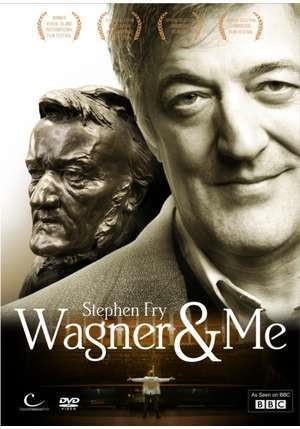
Does the cover of ‘Wagner & Me’ seem vaguely homorotic? Note the positions and raised eyebrow..
Probably another half-hidden insult.
@Joe Co:
I don’t see it myself, a subliminal like that.
I’m not sure what the positioning of the bust in the background looking off to the side, and Stephen Fry’s full-on face would have to do with homoeroticism, nor Fry’s very slightly raised eyebrow, which doesn’t look as if it’s the focal point. but rather the slight deriding look to the shape of the lips on Fry’s face. Fry is Jewish and also a homosexual, so I think therein lies the whole nutshell for the picture.
Also, I’ve no doubt the jacket cover was designed and photographed by another Jew and homosexual. These things tend to stay in the family, as it were, since money is involved.
But now I’m wondering — was Wagner homosexual by any chance, or is this the idea to implant the thought in the reader?
@blue rose:
Wagner was definitely not homosexual. In fact he was a notorious womanizer. Wagner’s benefactor King Ludwig II of Bavaria apparently fell in love with him – though his feelings were certainly not reciprocated.
@Brenton Sanderson:
Ohhhh I see. Now I see why there’s a book by Stephen Fry in the first place. It has to do with King Ludwig II then, which the gays are claiming as one of their own. Well that’s fascinating. I have no idea about King Ludwig one way or the other, so I’m taking it now that I just learned he was homosexual. Well…I don’t know what to say about that.
@Brenton Sanderson: They say that Ludwig II von Wittelsbach had homosexual inclinations. His friendship with the actor Josef Kainz is often used to justify such claims – however no proofs of homosexual union between thos two had ever been found. With Wagner however it was far simpler: absolutely nothing indicates this kind of relations. Even the extensive correspondence (“Briefwechsel”) between Wagner and Ludwig (published in several volumes in 1936) does not give any such clues. Those two wrote to each other about politics, operas, musik, their letters contained poetry, but how could this indicate any homosexuality, i do not know.
How did I miss this? “Wagner and Me” is not a book — it’s a DVD.
As per amazon
‘United Kingdom released,: SYNOPSIS: Actor and writer Stephen Fry explores his passion for the world’s most controversial composer – Richard Wagner. But Stephen is Jewish and lost family members in the Holocaust, so can he salvage the music he loves from its dark association with anti-semitism and the Nazis? Shot on location in Germany, Switzerland and Russia, the film includes unique behind-the-scenes access to the Bayreuth Festival, the annual extravaganza of Wagner’s music held in the composer’s own purpose built theatre. Animated by Stephen Fry’s trademark wit and intelligence, and featuring a soundtrack of Wagner’s extraordinary music, this is a fantastic introduction to the life and legacy of one of the most important composers ever, and a must-see film for those who already know and love his music. …Wagner & Me ( Wagner and Me ) ”
OK now I’ve at least got the context of this article. I had it all wrong.
@mike: Mike, I agree. Some great Jewish intellects were forced out of the country many identified with, and were part of some good things. But, unfortunatley Mike, as someone(Hitler I think) said at the time, and I don’t know the exact quote but the idea is something like, “Where there is a lot of planing, shavings will fly”. The new regime had its own ideas.
@blue rose:
If you click on the Wagner and Me hyperlink in the article you can watch the documentary in full.
@Pierre de Craon:
Karajan was definitely at his best with Wagner and late romantic symphonic repertoire. I find his Beethoven symphonies (with a couple of exceptions) inferior to other accounts (e.g. Bohm, Kleiber, Harnoncourt). On the other hand the Wagner recordings mentioned and his Bruckner symphonies (on DG) are just sublime. His accounts of the Sibelius 5th, 6th and 7th symphonies, Nielsen’s 4th symphony, and the Strauss tone poems and Four Last Songs (with Janowitz) are all personal favorites.
@Brenton Sanderson:
Thanks. But I get a ‘connection failed, unable to stream’ message. That’s o.k. I’ll google the internet to see if Fry’s documentary is available on another site.
@Brenton Sanderson: I almost entirely agree with you. I’d add the Sibelius 4th to your list, though I seldom listen to his music anymore. The quality of his Nielsen 4th (now that’s music I care for now even more than I did when I discovered it, with wild enthusiasm, in ’65 or ’66) was an enormous surprise to me on first hearing long ago. It’s not an idiom I ever expected him to be attuned to.
When Harnoncourt came to New York to do all the Beethovens in the mid-90s, I decided to throw reserve and caution to the winds and try to talk to him in Carnegie’s green room if he’d let me (I’d come by then to consider him the greatest performing musician alive, and being fifty, I’d learned how to at least pretend that I wasn’t a goofy teenaged fan). Well, he put up with me on three evenings postconcert, and he and I spoke for about an hour all told. In addition to the odd autobiographical bit he revealed (e.g., that he’d never again play the Bach cello suites because his technique was in utter disrepair), he talked somewhat about his days with the Vienna Symphony in the fifties. He mentioned how great and inspiring Karajan’s performances of several Bruckner symphonies were. I decided to risk all by asking him why K. later became his virtual enemy; to which he said that he simply had no idea, but, yes, it was true that K. had effectively locked him out of Salzburg and Berlin.
@Hooper: I do have thoughts—thanks for asking—but having discovered that a huge chunk of the Homans book is free for the reading at Amazon, I’m doing just that first. (I’d never heard of it before today; so thanks for bringing it to my attention.)
I can say that I am fully in agreement with her pessimism, as well as with her specific complaints about the divorce of technique from confidence in its “relevance” and comprehension of its presumptions and point. Whether Ms. Homans herself fully comprehends the evils of the egalitarian and democratic impulses, I don’t yet know, of course, but both impulses are the sworn enemies of excellence, especially artistic excellence, and here in the States they come to the fray far better armed than their opponent.
@Pierre de Craon:
Fascinating about Harnoncourt.
michael monikowsky
As it is, Ludwig II was indeed homosexual. Some of his letters have turned up that are genuine and leave no doubt. But he seems to have suffered deeply from the condition and it certainly played a part in his early suicide.
Here a lovely example of an eurotrash production. Or, if you so want, opera whorehouses.
http://www.operawarhorses.com/2011/05/31/wagners-siegfried-starts-san-francisco-operas-ring-season-with-a-smashing-stunner-29-may-2011/
@Brenton Sanderson: I have a question for you and for Pierre de Craon.
I started listening to classical music a year or a year and a half ago, and whenever I found something more difficult, I just put it aside, and returned to it a few months later. (E.g. I found the rhapsodies of Franz Liszt boring a year ago, but a few months later I was surprised to find them really enjoyable.)
Now I think the Ring is still too difficult for me. Do you think these are the best operas for a Wagner-beginner, or are there some easier operas out there?
@The Admiral On Horseback:
You’ve adopted the best approach – start by listening to what immediately appeals and branch out from there. Your ear will become more and more accepting of (and satisfied by) musical complexity over time. For the Wagner neophyte it’s best to start with works like the Siegfied Idyll and the overtures and preludes. From there move on to highlights from the operas. Then you’ll be ready for the whole operas. The Flying Dutchman is probably the most accessible of Wagner’s operas, and is a good place as any to start. Watch a performance (but not a Eurotrash one) on DVD or online. If this appeals move on to the other operas including the Ring.
@The Admiral On Horseback: I agree with Mr. Sanderson. Follow where your nose leads you. I agree, too, about the Dutchman being a good place to start. The music is fresh and direct and breathes the open but sometimes frightening air of the open sea. But remember, too, that Wagner was a great dramatist; he told terrific stories and created three-dimensional characters. Thus, the Dutchman is a multidimensional tale, a tale of pain and fear and love and transcendence, yet also a tale of the sea, of ratlines creaking and of women ashore praying for their menfolk while their spinning wheels hum under their fingers feet. (Money comes into play, too; doesn’t it always?)
One of the happiest things about Wagner as an artist of the theater is that his ability to manipulate plot, to elaborate character, and to maximize the visceral appeal of his dramas grew apace with his musical sophistication. For this reason, the character of the music alone is not always the surest guide to predicting which of his works will hook the newcomer and reel him in.
For example, in my own case—I’m talking about a time almost exactly fifty years ago now—I fell in love with the Ring operas before I heard a note of them beyond the excerpts that, at least back then, everyone who went to a good high school or virtually any college was familiar with: the Ride of the Valkyries, the Entrance of the Gods into Valhalla, Dawn and Siegfried’s Rhine Journey, and Siegfried’s Funeral Music. What hooked me was sitting down with the Ring’s libretto. (Disclaimer: I fell in love with Beowulf and, through it, with Anglo-Germanic mythology and the Icelandic eddas and sagas in high school, and they were a big incentive for me to discover how Wagner treated the material. Curiously, I knew Tolkien’s name as a famous scholar and translator four years before I ever heard of The Lord of the Rings.) The part of the Ring that thrilled me the most was Siegfried. What could be more appealing to an eighteen-year-old boy than a story about a heroic figure his own age, a story that starts with a dwarf, ends with awakening a beautiful sleeping princess, and has an encounter with a dragon smack in the middle?
My point—as usual, too long in the making—is that a man who desires to engage with Wagner is unlikely to meet with disappointment or failure. If you can be touched by great music native to your own culture, by great tales rooted in the memory and psychology of your own people, and by a great artist who sees people in the round, who sees man’s potential for a life of significance and nobility yet also sees that life as having a necessarily defined place in the vaster dimensions of time and eternity, of this life and the life hereafter—if you can be touched by these things (and I am certain you can be), Wagner’s works will touch you very, very deeply. Just give them a chance.
@Pierre de Craon: . . . fingers and feet. . . .
Sanderson’s talk about Karajan is nonsense. Among true Wagnerians, Furtwängler is just about the only name that really counts. If Karajan is a beetle, Furtwängler is more like a Mercedes-Benz…
@Pierre de Craon: Thanks for the helpful answers from the both of you!
Your comments might be long, but in my opinion they are always worth to read.
@fender: I listened to your Wagner recommendation with my eyes closed Fender. Sorry. The music transported me to a magical place. Thank you for that gift.
But on the same youtube link was this alternate Richard Wagner Gem!
I may be a Newbee to Wagner but I know the Real Thing when I hear it.
Here’s the Real Thing.
Played by real people in front of a live audience, conducted by the best of his peers, Herbert Von Karajan.
http://www.youtube.com/watch?feature=player_embedded&v=h8VLYb3T3hs
It took my breath away.
Literally…whew!
@arthurdecco: arthurdecco, another specialist and great interpreter of Wagner was Hans Knapperstbusch. I bought one of his Wagner recordings at an estate sale in the seventies. It was a 78rpm.
@Pierre de Craon: Another thing I just recognized after reading your comment, just how totally wrong was my approach to Wagner. I was listening to his music watching the performance, or even as much as following the libretto, just as if I was listening to a symphony or a sonata.
@Pierre de Craon
Do you know that Harnoncourt hates Wagner with a passion? He once said he would never conduct his music because he hates the person Wagner so much.
I have to admit that I like Harnoncourt’s Mozart-records but he seems to me a disgusting opportunist.
Karajan ist a really great conducter (hated by many jews with a passion).
@German: Clearly I don’t agree.
http://apps.facebook.com/theguardian/music/musicblog/2012/apr/05/southern-rock-passion-marred-racism
Get a load of this shit:
“Southern rock’s passion and romance is marred by racism and bigotry
It embraced black soul music – but couldn’t divorce itself from the prejudices of the south.”
In truth, southern rockers embraced elements of black music but couldn’t divorce themselves from the REALITIES of the South. Those ‘prejudices’ exist because of realities where too many blacks act like the Jena Six gang. It seems Guardian is divorced from social reality of what’s really happening in America.
Yes, Southern rockers embraced elements of blues, but how should they feel about blacks in general when their relatives have been raped, robbed, or killed by blacks?
Besides, Jews embraced Civil Rights but they sure divorced themselves from integrated communities through White Flight or Jew Flew.
Also, how would Guardian feel if someone said, “blacks embraced the benefits of white civilization but couldn’t divorce themselves from African savagery.” And given where rap culture is going, that is truer than Guardian’s headline.
Finally, who says just because you like the music of a people that you must like the people themselves and their culture as a whole?
After all, many Jews really love Wagner’s music. James Levine is one of the leading interpreters of his operas. Mahler wept when Wagner died and roamed the streets screaming ‘THE MASTER IS DEAD’. And a whole bunch of German music composers deeply influenced many generations of Jewish composers and conductors. Does that mean Jews have to like everything about Germany: Prussianism, antisemitism, militarism, teutonic thickskulledism, WWII, and the Holocaust?
Many Jews also love Tolstoy and Dostoevsky, but they still remained very critical of and hostile to Russians who were seen as backward, boorish, and anti-Jewish.
So, Jews can love German music but not like Germans. Jews can love Russian literature but not like Russians. So, why do we have to embrace everything about blacks just because we like certain forms of black music?
I love samurai movies, but I don’t like much about Japan. Since I embraced Japanese cinema, am I bigoted for not divorcing myself from every anti-Japanese view? Ridiculous.
http://youtu.be/IUlCYWINAwQ
Well, well, lookie here. Jews decry how Nazis presented the ‘Aryans’ as muscled, noble, and manly while presenting Jews as subhuman, dorky, grubby, and sickly. But now, Jew advertisers show the Negro as the Neo-Aryan while the white boy is presented as faggoty, dorky, subhuman, and effeminate. Jews want all white boys to be castrated and all white women to surrender to the racial superman Negroes. THAT was the main reason for the Jewish pushing Obama on the nation. It’s Jewish-Negro supremacism over subhuman whites, whereby white women must have sex with blacks while white boys are reduced to Nibelungenish maggots. Funny how history repeats itself with Jews as the New Goebbels.
———————-
http://www.youtube.com/watch?v=LIsPBqAQ2qk
What does the old spice ad have in common with the Baltimore attack? Both feature tough black guys beating up a dorky white guy and stripping the ‘faggoty white boy’ of his clothing, as if to say, “look at that soft, slow, flabby mofo.”
I saw the Ring Cycle in Chicago. I liked best Siegfied, with John Trealaeven as Siegfried. he was pretty decent, and Jane Eaglen. Big Jane~ before gastric bypass surgery. LOL “The fat lady sang~!” and the guy– named Cangelosi– who played Mime did him like Gollum, most well done. The scene where he reforges Nothung was just fantastic, and so clearly nationalistic and anti-Jewish it was unmistakable. And yet these works keep on getting redone year after year.
The Jews can’t stop these works. Wagner is too signficiant and any Jew in music makes a fool of himself to deny it. Look at how many times the otherwise loathesome James Levine produced Wagner, and you know what? A lot of those were far better productions then some of the crazy deconstructionist crapola they do in Europe.
Anyhow the idea of the musical drama as GESAMKUNSWERK or however you spell it underlies all of modern filmmaking and television and theatre. Wagner truly did rediscover and reawaken and reinvent drama.
William Pierce’s old book catalogue recommended a fine work on Wagner by a Jesuit professor, M. Owen Lee. “Turn the Sky Around” that is still in print. It is agood introduction but an even better one that radical traditionalists will deeply appreciate is M Owen Lee’s commpanion work — “Wagner Sings, Athena and the Greeks.”
of course the ENR pagan revivalists may have a hard time with Wagner on a certtain level since as Fred N correctly observed he had a Christian turn of mind later in life and it is most definitely exemplified by Parsifal that I personally really enjoyed, in which the heathens are cast in the bad guys roles. Lovingly so though, in a way– who can fail to appreciate the glorious power of this malediction against Parsifal:
Leonie Rysanek: Lohengrin, “Entweihte Götter!”
http://www.youtube.com/watch?v=mgHV1tRiXi0&list=FL5qjeBMTbadyr-Erg0f2V_w&index=43&feature=plpp_video
Make no mistake, Wagner’s music is universal, anybody can love it, though we are right to cherish his work as one of the pinnacles of western music and drama.
I went to a lecture once in Chicago where this one jew defended his nasty book about Wagner as ant eye seemite to a crowd of Wagnerians. There was one old professorial black dude there who got up and made an angry speech at the Jew and stormed out of the place in outrage at the slanderous remarks. I tried not to laugh, this jew looked more than a little embarassed at being denounced by the only black guy in the room. There were other jews in the crowd but they shrank into their seats and kept a low profile. This author really had chutzpah to come and lay on the hate to a bunch of ardent Wagnerians, I will give him credit for that.
@andrea ostrov: Interesting arguments.