
Suicidal Empathy and the Subversion of Western Women
How the government and the media subverted female empathy, turning women from mothers into economic units, breaking apart the family unit, and speeding the decline of Western civilisation.
Suicidal empathy is defined as “a political and social concept describing excessive or misdirected empathy that supposedly harms the person or society expressing it.” The phenomenon occurs when people prioritise compassion or tolerance over logic, security, or self-preservation. A simple and reductive way to illustrate the concept on a societal level is to look at two distinct and individual societies – which shall be called Society A and Society B – and examine how they might interact with each other. Within Society A are individuals or groups that have high levels of empathy for those in Society B, who are, for the most part, less well-off both socially and economically. The problem arises from the fact that those in Society B pose a clear and well-documented threat to those in Society A; when Society A opens its doors to help those from Society B, its residents suffer a number of negative consequences as a result.
By this point, the astute reader will clearly understand how this concept regularly plays out in the West. A sizeable number of people of European descent consistently express a high degree of empathy for those from impoverished or war-torn parts of the world. As a result of this empathy, many within Western nations regularly campaign for open borders and compassionate policies towards migrants – especially those who arrive on European shores posing as “refugees”. These displays of empathy often confuse or anger a large portion of the population, as, time and again, those who enter Western nations as “refugees” commit some of the most heinous crimes, often targeting the weakest and most vulnerable in society, such as women and children. This leads to a situation where those who understand the threat posed by large numbers of mainly male migrants entering the West are completely bemused, and even enraged, by continued calls for compassion from those who support open-border policies.
However, there is another clearly observable aspect to this particular issue: those who regularly display this sort of “suicidal empathy” are often women. When observing two opposing demonstrations – such as a nationalist “Stop the Boats” protest and a “Refugees Welcome” counter-protest – one thing is immediately obvious: the group calling for open-border policies is often disproportionately female compared to the group calling for stricter controls on immigration. The casual observer might initially be shocked by such a realisation, given that women and girls are frequently the victims of migrant violence, which is often sexually motivated. As such, these displays of empathy for migrants by Western women can appear to be a form of severe cognitive dissonance. Women are seen to be effectively campaigning to allow men who pose a much greater per-capita threat to them into Western nations. Consequently, these women are often characterised as being like “turkeys campaigning for Christmas” (or Thanksgiving in the U.S.)
This dynamic might lead the casual observer to two erroneous conclusions: first, that empathy itself is a bad thing; and second, that European women pose a threat to the continued existence of people of European descent. This can lead Western men to hold a seemingly justifiable animus towards their female counterparts. However, this animosity towards women is not only misplaced, but is actually completely counterproductive to any genuine attempt to prevent European ethnic groups from being reduced to minorities in either their ancestral homelands or the nations that their forefathers founded. In fact, by laying the blame for suicidal empathy at the feet of women and making Western women the enemy, Western men are actively speeding up the decline of the West and accelerating the demographic trends being witnessed in almost every majority-White country. Recently, there have been two notable examples of White women seemingly “siding with migrants” in extremely public and well-documented instances of suicidal empathy. Both incidents led to a mixture of both angry and confused reactions that led to a narrative that characterised White women as the great destroyers of Western civilisation.
The first of these examples was seen during the recent riots in France, where a young White woman was filmed in a state of shock and dismay as she attempted to prevent looters from ransacking and looting what looked like an upmarket boutique. Some reports claimed that the woman in question owned the shop, while others claimed that she was simply trying to quell the unrest, but one thing everyone agreed upon was the fact that she had previously sympathised with the rioters – until she was confronted with the undeniable reality of the situation. On seeing the reality of the actions she had previously cheered on, she was reduced to a tearful and bemused state. This led to a specific narrative being formed: one that painted a picture of an attractive, young Parisian woman whose own misdirected empathy left her standing crying in the street as those she supported looted and ransacked the business, causing her extreme distress. Daily Mail, quoting her: “They don’t even have a political message. They’re just breaking things and stealing, without grasping the consequences of their actions. And if the RN [far-right National Rally, led by Jean-Marie Le Pen] comes to power, we’re all going to be in deep s**t!” To many, the irony was delicious, and the woman in question was seen as being taught a well-needed life lesson.
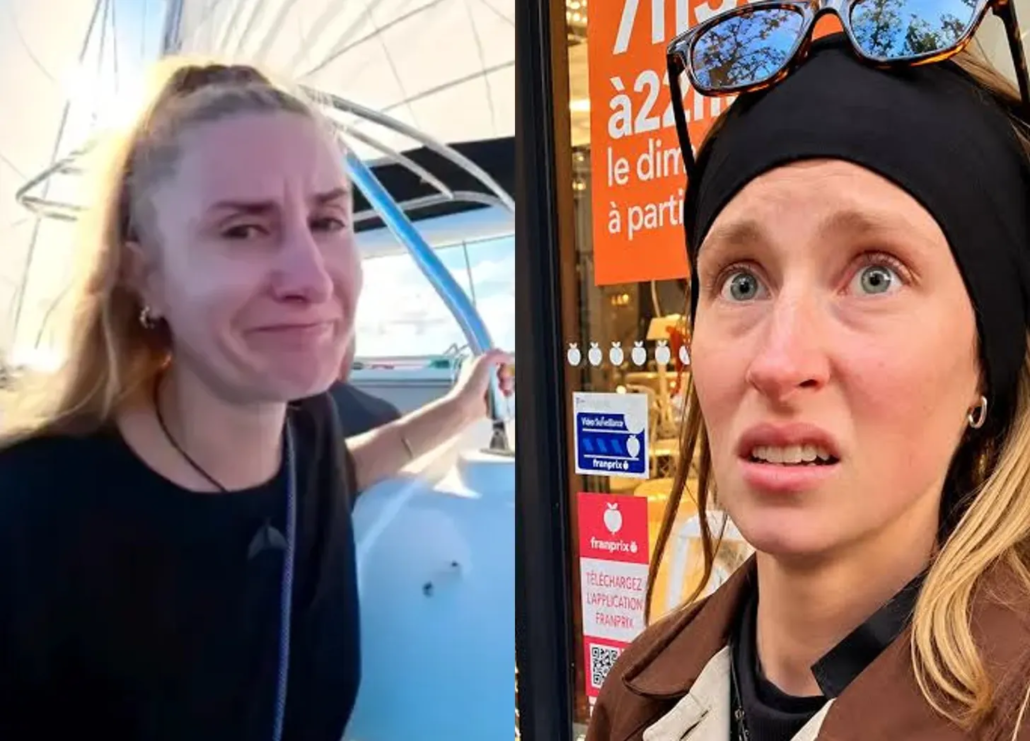
Left: the Polish travel blogger empath; right: the French actress empath
The second example occurred more recently and involved another young White woman. The woman in question was reportedly a solo travel blogger who appeared weeping into the camera of a mobile phone whilst aboard a yacht. What had turned this woman into a blubbering emotional mess was that the captain of the yacht had refused to come to the aid of a group of male African migrants who were in a large wooden boat. According to reports, the woman had asked the captain to sail the yacht alongside the wooden boat and allow some of the men to board the yacht in order to help them and ease any overcrowding. The captain wisely declined this request, and the woman appeared largely inconsolable. Again, many erupted in laughter, claiming that the woman’s instincts for self-preservation were clearly lacking, with some suggesting that the captain should have transferred her to the wooden boat in order to quieten her down. Clearly, had the captain of the yacht followed her instruction, it could have caused the yacht to have capsized, putting everyone on board the vessel at risk.
These are two different cases, yet both illustrate the idea of suicidal empathy. In one case, a woman who supported rioters ended up dealing with the consequences of a riot. In the other case, a woman who wanted to help migrants put the crew of a yacht at risk and, when she did not get her own way, had a public meltdown. However, the conclusion many drew when viewing these two events was that women are effectively the problem – a liability to Western nations and civilisation as a whole. This narrative is not only incorrect, but also highly damaging. If the West is to survive, men and women must embrace one another and, crucially, they must have children. If a wedge were to be driven deep enough between Western men and their female counterparts, birth rates would drop further, demographic change would accelerate, and majority-minority countries would emerge sooner rather than later. Ultimately, this anti-female narrative should be challenged – but how?
This damaging narrative must be primarily challenged by understanding and defending the very notion of empathy. Empathy is, in fact, a vital survival instinct present in almost all females (and males but to a lesser extent , with those who do not exhibit such a trait being outliers. Empathy is crucial for one primary endeavour: raising children. Historically, the primary role of women in the West was to raise and nurture the next generation, and high levels of empathy allow a woman to put her own children first. In fact, women regularly put the well-being of their offspring over and above their own desire for gratification, pleasure, and even survival. This ensured that the family unit was always geared towards raising children, and no effort was spared to protect them. This is, of course, an evolutionary survival mechanism, as those who did not prioritise the well-being of their offspring and instead pursued their own selfish desires would ensure their children were less likely to survive, meaning their genetic lineage would more than likely come to an end.
A woman without this form of empathy would be seen as a psychopath. Imagine a woman who left her child alone in a cold, dark house without food or water so she could go out and enjoy herself; imagine a woman who left her child alone, screaming and crying, so she could sit and pursue her own enjoyment. Evolutionary pressures have selected empathetic women as effective mothers who do a better job of ensuring that their children survive and grow up to be successful, going on themselves to raise children. This pressure means that more empathetic women successfully bring larger numbers of children to adulthood than non-empathetic women, and over time, empathy naturally becomes more common amongst the female population. This trait is likely to be even more pronounced amongst Western females due to the harsher environmental pressures found in Northern and Western Europe, which historically raised infant mortality rates through low seasonal temperatures and the scarcity of resources during winter months.
So, if empathy is natural, healthy, and, in fact, desirable, are women the problem? After all, they are over-represented when it comes to those calling for open borders, and they are consistently the primary examples cited when illustrating real-world instances of suicidal empathy. Again, the answer is no. Women are obviously one half of what is required to sustain any society or civilisation. At this point, it is worth noting that men generally exhibit lower levels of empathy than women. This is, again, an evolutionary advantage: men are traditionally the protectors, the warriors, and the hunters. As such, if a man were to weep every time he had to kill a deer in order to feed his family, he and his family would all soon go hungry. Equally, if a man were defending his community or family from attack, high levels of empathy for those posing the threat would, of course, lead to fatal consequences. As such, men and women can be seen as complementary pairs; both are different, yet both are necessary in order to maintain a healthy society or civilisation.
However, if neither empathy nor women are the root of the problem, then what is? Put simply, it is re-routed or misdirected empathy – and, crucially, the individuals and institutions that have set about ensuring Western women centre their empathy on outsiders rather than their own children. As stated in the definition of suicidal empathy introduced at the outset, a key feature of the phenomenon is “misdirection”. Following the Second World War, there have been two broad pushes that have changed the way women think and behave. One involves driving women into the workplace, ensuring they have fewer children; the other is misdirecting the empathy they would have had for their own progeny elsewhere – often towards outsider groups. Firstly, there has been a concerted effort by both Western governments and the media to draw women out of the home and into the workplace, ensuring that females enter into competition with their male counterparts on largely male-dominated ground. This drive to integrate women into the workforce achieved two things: firstly, it provided a significant increase in GDP by effectively doubling the labour force; secondly, it caused a significant drop in Western birth rates.
This trend of women carrying out previously male-dominated jobs actually began during the Second World War. As men were deployed to fight, millions of women stepped into industrial, administrative, and service roles to replace their male counterparts. While many women returned to their domestic roles immediately after 1945, a structural shift had already been set in motion, and Western governments had witnessed the potential of a large, untapped pool of female labour that could be utilised to fuel an economic boom. Subsequently, during the post-war economic reconstruction, the rapid expansion of the service sector – encompassing office work, retail, a booming healthcare industry, and a rapidly expanding educational sector – created an unprecedented demand for labour that men alone simply could not fill.
Over the following decades, particularly from the 1960s onwards, governments passed a raft of equal pay and anti-discrimination laws – such as the UK’s Equal Pay Act 1970 and Sex Discrimination Act 1975. At the same time, a technological boom provided household appliances that freed up time previously spent on unpaid domestic chores. This effectively transferred millions of women from the home into the paid workforce and dramatically expanded the labour supply – as a result, dual-income households became the “new normal”. This, of course, boosted consumer spending, raised tax revenues, and ensured that the GDP across Western nations grew significantly. However, as women gained financial independence and career opportunities, the obvious casualty was Western birth rates, and large families became a thing of the past. Historically, as women were largely excluded from paid careers, staying home to raise a large family did not mean giving up a salary. However, once women could earn competitive wages, stepping out of the workforce to have children meant sacrificing income – all of a sudden, having children presented a massive opportunity cost and reduced the perceived quality of life for Western women. Effectively, Western governments had made child-rearing appear to be a net negative.
Women then began pursuing higher education and sought to establish careers before starting families. This naturally shortened the window for having multiple children, as the age at which Western women had their first child rose dramatically. This, of course, was aided by new medical interventions, and the introduction of the contraceptive pill in the early 1960s gave women more power over whether and when to have children, helping them to forgo having children for longer so they could realise workplace goals. As dual-income households drove up living standards and housing costs, raising children became more expensive, encouraging parents to invest heavily in one or two children rather than having larger families. In this case, both men and women were asked the question: would you prefer more children, or more material wealth – and the answer to this was witnessed by ever-decreasing family sizes. Together, all of these factors compounded a specific demographic issue that drastically accelerated declining Western birth rates. The combination of lower birth rates, the decline in workplace mortality, and rapid post-war medical advancements resulted in a top-heavy, or inverted, demographic pyramid.
This, of course, left Western nations with a dilemma: deaths would soon outstrip births amongst indigenous ethnic groups, meaning that European populations would eventually begin to shrink. Such a trajectory directly challenged the post-war economic model, which was built around endless, unchecked economic growth. What’s more, doubling the workforce by transferring women from the home into the workplace could not be repeated. Furthermore, Western governments faced an impending issue: the now ageing population would not only require care, but rising pension payments would also need to be offset by continued tax contributions; if fewer people were of working age, the economic boom would eventually come to an end, and Western nations would enter into downward spirals of recession and economic uncertainty. Who would look after the elderly Europeans who had forgone having children? Who would pay for the ever-growing number of pensioners – who, thanks to medical advances, were living much longer past retirement age and were therefore a net drain on the economy long after they stopped working?
The chosen solution to this issue was mass immigration. If Western populations were not having children, Western governments would simply import new populations to take their place – and so millions of people from all over the world were encouraged to move to European countries. Mass immigration was, of course, contentious, and large sections of Western populations routinely pushed back against such government policies. However, despite consistent pushback against migration, there were always people who supported it. This is where the mainstream media played a pivotal role, by misdirecting the empathy of the increasing number of childless women in the West. Despite more and more women entering the workplace and fewer engaging in child-rearing, tens of thousands of years of evolutionary pressure could not be undone in a single generation; as a result, women retained their high levels of empathy. The problem was that, without children to direct this empathy towards, their feelings were misdirected elsewhere – often towards migrant populations and “refugees”, who were routinely characterised as a victim class by the press and media.
While some women directed their empathy towards pets – giving rise to the ridiculous notion of the “fur baby”, whereby instead of raising children a woman comes home from work to her cats or dogs, lavishing affection upon animals rather than offspring – millions of other females redirected their empathy elsewhere. So far, much of the focus has been on the role of Western governments in pushing women into the workplace; however, it is also important to analyse the role the media played. The media, of course, worked hand-in-glove with Western governments when it came to transitioning women from the home into workplace careers. The media often glamorised the idea of the working woman while making stay-at-home mothers seem like either a holdover from a bygone era or as simply unfashionable. Further to this, women were constantly presented with images of the successful businesswoman who had it all: she was beautiful, confident, and had all the financial freedom she could hope for. Conversely, there were the stay-at-home mothers, whom the media would present in a number of negative lights.
The media would often focus on large families that were attached to what might be seen as an outlying lifestyle choice. For example, a large family would regularly be shown as being part of a strange or more fundamentalist religious group, tying the idea of large numbers of children to a lifestyle many would view as strange or alien. The other predominant negative light large families were presented in was even more off-putting. The mainstream media would regularly run stories about families on benefits. These articles would usually be accompanied by a picture of a large family – the sort that would have been totally normal before the Second World War. However, this family would be presented by the media as a group of down-and-outs, the type who lived in squalor and only managed to achieve any basic quality of life by existing on a range of welfare benefits. It was clear: stay-at-home mums with large families were either old-fashioned – a leftover from a bygone era – or, worse, they were effectively painted as marginalised social oddities or as an impoverished underclass.
Women did not walk into the workplace willingly; both Western governments and the media worked seamlessly to promote the transition. But the media also played another card, which was arguably even more devastating to the West and to people of European descent. With a growing proportion of women now having fewer children – or in many cases none at all – the media began misdirecting the empathy those women would have had for their own offspring towards outsider groups. The media went to great lengths to portray migrants and “refugees” as a victim class that needed special care and compassion. As a result, instead of raising families and pouring their love into their own progeny, many Western women looked at young migrants whom the media painted in a positive light and felt an overwhelming, misdirected motherly and protective urge towards them. Thus, as Western men lined up to demonstrate against a perceived migrant threat, their natural partners came out in opposition to those demonstrations and instead defended the rights of the “refugees” and campaigned for their protection.
This two-stage process that involved both Western governments and the media had effectively separated women from their natural role as mothers and then misdirected the empathy that those women should have had towards their own children, instead focusing that empathy on other things, including the well-being of often hostile migrant groups. Suicidal empathy came about not due to women being inherently flawed or due to empathy being an unnecessary weakness, but due to a decades-long, ongoing process that was aimed at breaking the family, turning women into economic units, and then re-routing their natural empathy. But in a final bitter twist of irony, the response to suicidal empathy amongst women is to blame them and to paint them as the enemy, which only serves to worsen the situation, drives a greater wedge between men and women, and, in fact, accelerates the decline in Western birth rates. By insulting women, belittling them, and blaming them for a process that they were not in control of, but was, in fact, designed to exploit them, the anger men feel over this issue is as misdirected as the female empathy which causes such outrage.
The empathy that is an integral part of the mentality of Western women is a clear evolutionary advantage. What’s more, that empathy works to the benefit of a European population when those women are part of a homogenous, closed society. Western civilisation was built upon the bedrock of the family unit, and a key component of any successful and healthy family is a loving mother. However, when the family unit is broken, when women are incentivised to go into the workplace, and when their motherly instincts and empathy are redirected, this can be catastrophic for the health of society and civilisation as a whole – reducing the native birth rate and leading to major structural problems within the demographic profile of a population. What’s more, when these societal changes are coupled with open borders and mass immigration, the issues are compounded and European populations not only shrink, but also begin to be replaced, leading to demographic change and eventually to countries where the indigenous European ethnic groups are reduced to pluralities.
Ultimately, if Western men wish to raise falling birth rates amongst native European populations and reverse the resulting demographic changes that are being witnessed all over the Western world, they need first to reverse the widening wedge that has been driven between themselves and Western women. This can never be achieved by deepening these divisions and simply laying the blame for the problems faced by European nations at the feet of European women. By calling women names, insulting them, and blaming them for every problem the West faces, the resulting fallout only accelerates the greater issue of demographic change. But crucially, placing the blame at the feet of women is also incorrect, as they have been subverted and lied to, and their empathy has been misdirected by decades of government policy and media narratives. Western women and Western men are not naturally enemies, but, in fact, perfect partners who lived in harmony for tens of thousands of years and whose union was the bedrock of Western civilisation. Rather than directing anger at women due to the outcome of these cultural shifts, men should save their vitriol for those who undermined the traditional family unit in the first place – and, crucially, save their energy in order to work towards rebuilding a culture that values mothers, fathers, and family life once again.



Leave a Reply
Want to join the discussion?Feel free to contribute!