A Note on Jews and Feminism

My recent review of Janice Fiamengo’s The Goddess that Failed cited her summary of a study by four Israeli social psychologists of a personality trait they called “TIV,” or the Tendency for Interpersonal Victimhood. Fiamengo considered it valuable as a description of a kind of woman frequently met with in feminist circles, and I agree. I also noted in my review that the Israeli origin of the researchers might not be an accident: readers of this site are familiar with the salience of victimhood within the self-concept of many Jews. I did not explore this question in the review, because I wished to keep the focus on Prof. Fiamengo’s ideas, but will try to address it briefly here.

Here, as a reminder, is Fiamengo’s summary of the TIV type:

Passionate belief in one’s victimhood creates an identifiable personality type, one that ruminates on grievance and interprets all experiences through the victimhood lens. Belief in victimhood need have no correlation with actual experience of victimization. The victim personality is characterized above all by a strong need to have one’s suffering recognized. With this need comes a conviction of immaculate morality, a resulting inability to accept criticism or disagreement, and a profound lack of empathy for those perceived as enemies. The researchers also found that people with a victim personality believe themselves justified in taking revenge on those who appear to oppress them. Even when presented with facts and evidence to rebut their beliefs, they are unwilling to relinquish their worldview, which becomes intimately associated with their sense of self. Anger at others and the belief in innocent victimhood create a toxic stew of self-righteousness and moral blindness.

A look at the original paper by the Israeli psychologists (which can be read here) reveals that the ethnic angle did not escape the authors’ attention. They refer explicitly to the cult of the holocaust, and recognize that it can represent a moral hazard for their own people by way of the TIV personality. Good for them: we all know what epithet would have been assigned to any gentile researcher bold enough to make the same point.

Group differences are statistical, and the TIV personality presumably occurs at different rates in different races and ethnicities. It is likely to be elevated among Jews, although it would probably be futile to expect any objective research on this question in our current cultural and intellectual environment. But the TIV type can and does occur within other races.

Indeed, much group conflict over the past forty years has been aptly described as a “victimhood sweepstakes” wherein not only Jews and feminists but blacks, homosexuals, the handicapped, and other identity groups competitively jockey for moral authority by signaling their victimhood. The only group not allowed to participate in the sweepstakes—White, heterosexual, able-bodied men—are by now a distinct minority of the American population (possibly a third). So the increasing prominence of the personality type described by these Israeli researchers would seem to help explain many aspects of our historical moment, and not just feminism or Jewish-gentile conflict.

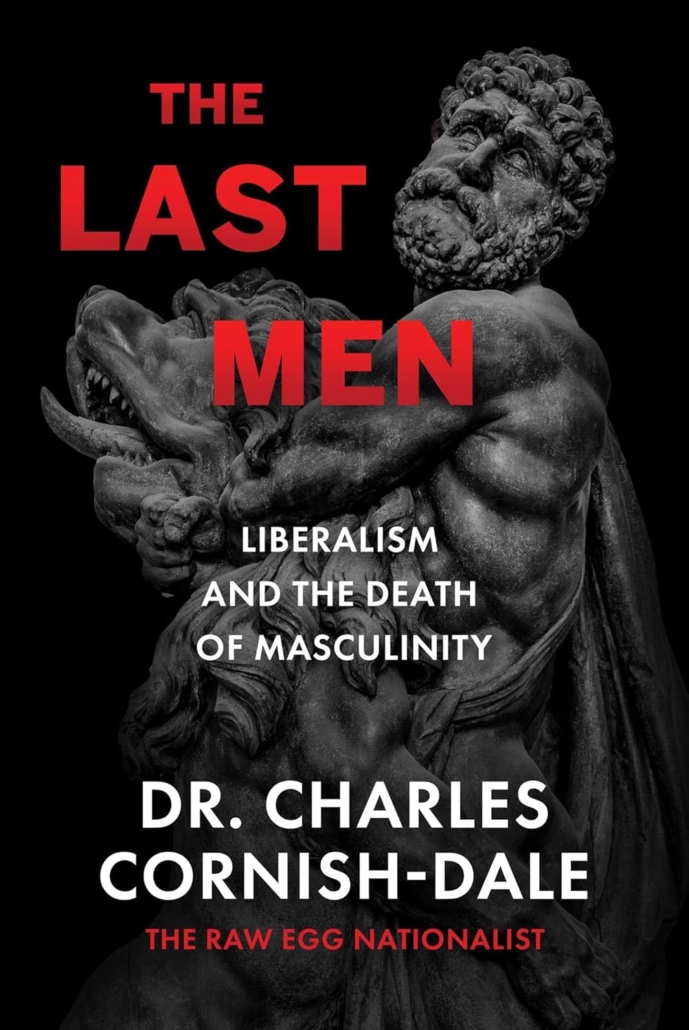
Anyone who writes against feminism as I do eventually encounters the thesis that it is all simply a product of Jewish subversion, often backed up with long lists of prominent Jewish second-wave feminists. Here is a popular graphic currently doing the rounds on the internet that embodies this thinking:

This view is historically myopic: it requires that one’s familiarity with feminism be limited to the American second wave, usually dated from 1963. But feminist ideas have been widely circulating in the West since the eighteenth century, and not only in the form of Mary Wollstonecraft’s celebrated tract. A review of long-forgotten German debates for and against the “emancipation of women” in the 1780s and -90s, for example, reveal that there is not much novel in twentieth century feminism (cf. Klaus Epstein’s The Genesis of German Conservatism pp. 229–236). Indeed, we have plentiful evidence that similar ideas were discussed in ancient Athens, as witness book 5 of Plato’s Republic and Aristophanes’ comedy The Assemblywomen. Western man did not need the Jews to invent feminism for us.

It remains true, however, that Jews have been massively overrepresented in second wave feminism—by far the most successful version, as they have been in other forms of twentieth-century radicalism, and this calls for explanation. A good place to start might be the work of the above-discussed Israeli psychologists on the Tendency for Interpersonal Victimhood. If Jews are indeed especially susceptible to this “toxic stew of self-righteousness and moral blindness,” it would explain much of their involvement in destructive movements such as feminism without our having to assume the existence of a conscious conspiracy to subvert alien races.

Second Thoughts from an Ex-Feminist

The Goddess that Failed: Feminism’s Unending War Against Men, Families, and Civilization Itself
Janice Fiamengo
New English Review Press, 2026

Janice Fiamengo, born 1964, is a retired professor of English at the University of Ottawa. Entering the academy as an impressionable young woman in the 1980s, her initial acceptance of feminism must have been almost a foregone conclusion: “I have felt its euphoric exultation and its self-flattering conviction of moral purity,” she admits. She studied all the standard feminist texts and for many years took the validity of their analysis for granted. But The Goddess that Failed is not her personal story. However her disillusionment came about, she began speaking out against the movement in 2012. Her work can be followed online at The Fiamengo File.

The author does not blunt her message with any assumption that there must originally have been a good, moderate, or reasonable feminism that was later hijacked, betrayed, or taken to excess by wayward followers. She reminds us, for example, that the campaign for women’s suffrage in the United Kingdom over a century ago escalated from heckling politicians and smashing shop windows to arson attacks on homes and churches. Some suffragettes concocted letter bombs out of phosphorous and sulfuric acid. One threw a hatchet at Prime Minister Asquith:

Through all the destruction of property, threat to livelihoods, and physical harm to innocent bystanders, the suffragettes saw themselves as sacrificial heroines. Like many terrorists, they envisioned their cause as pure enough to justify nearly any level of violence…. They were successful in their campaign at least in part because the men they castigated as villains couldn’t bear to deal firmly with their maudlin claims and dangerous acts.

Fiamengo knows that a crucial element in feminism’s success has been the strong natural bias in favor of women that characterizes both sexes: a synergy between female in-group preference and the male protective instinct. There has been some objective research on this timeless phenomenon. In 1994, for example, psychologists Alice Eagly and Antonio Mladinic reported that both male and female research subjects were more likely to ascribe positive traits to women than to men, with the bias measurably stronger in women; they christened this the “women-are-wonderful” effect. Later studies found women’s in-group bias four and a half times stronger than men’s. In 2019 British psychologists Martin Seager and John Barry developed the concept of “Gamma bias” to describe “unconscious prejudice against men and boys,” as observed in the tendency of both men and women to sympathize more with women than men.

Such studies are valuable, but as with much of social psychology, they merely confirm something that has always been widely known: men are expected to put the needs of women and children first. As Fiamengo points out, feminists could never have achieved the success they have if men were remotely similar to the selfish brutes they depict. Even half a century of feminist fury has been unable to do away with men’s natural bias in women’s favor.

The other side of male bias in women’s favor is what the author calls “the empathy gap”—the often-shocking inability or unwillingness of many women to empathize with male suffering. She recounts that after the sinking of the Titanic, a group of women survivors organized to build a memorial to the men who had sacrificed themselves in the women’s favor:

Some feminists refused gratitude, noting that men had built the ship and therefore could be expected to take their lumps when it proved faulty. Some proclaimed with fury that women suffered daily under men’s cruelty; a single day of suffering and death paled by comparison.

During the First World War, thousands of British women participated in a mass-shaming ritual of their menfolk, accosting any man they found in civilian clothing to present him with a white feather as a symbol of his cowardice. They accompanied the gesture with rehearsed speeches making clear their furious contempt: “Why don’t you fellows enlist? Your King and Country want you. We don’t.” This went on for the entire duration of the war, and feathers were even given to wounded men on leave or underage boys. One sixteen-year-old was so mortified by the bullying that he lied about his age in order to enlist and was promptly killed. Fiamengo also mentions an officer awarded the Victoria Cross for bravery; that same day he changed into civilian clothes only to be given a white feather by some female passers-by: “He accepted without a word and, as a curiosity, put it with his V.C. He remarked to a friend that he was probably the only man who ever received on the same day emblems of bravery and cowardice.” The man later died at the front.

Such attitudes continue to this day, as feminists brag online about “bathing in male tears” and exult over various instances of male suffering.

The similarities between feminism and Marxism have long been noted: indeed, as far back as 1884, Friedrich Engels explicitly drew a parallel between wives and the oppressed proletariat. Most importantly, feminism shares the Marxist mental gestalt whereby society is envisaged in terms of conflicting innocent and guilty groups. As Fiamengo observes, this leaves feminism unable to affirm any universal principles of justice: “it is incapable of extending empathy to whose it has been taught to see as oppressors” or “of demanding accountability from those it has been taught to see as victims.” Because of this inability, “one of feminism’s biggest lies has been its declared aim to overthrow traditional Western gender arrangements in order to liberate men as well as women into an equal partnership.”

This last remark is a useful reminder: in the more optimistic days of early “second wave” feminism, back in the 1970s, the movement did indeed claim to seek the liberation of men as well as women from traditional arrangements. Female careerism, e.g., would supposedly ease the burden upon husbands to be sole providers for their families. Such talk has now largely disappeared.

The parallel with Marxism is instructive here as well. Officially, socialist revolution was supposed to liberate the bourgeoisie as well as the working class from the “alienation” that characterizes capitalism. The sons of capitalists would one day join hands with the sons of the proletariat in order to build the classless society of the future, and the unfortunate but necessary stage of “merciless class struggle” would barely survive as a memory. But Marxist practitioners such as Lenin quickly became too preoccupied with killing the class enemy to worry much about healing him of his capitalist alienation.

A similar development can be observed in feminism as well: an involuntarily divorced husband would not make much headway in family court by appealing to the supposed feminist goal of reducing his burdens as a provider. “The last thing aimed at by feminism,” Fiamengo notes, “is the liberation of men from their traditional roles and obligations.” Feminists alternate opportunistically between their explicit egalitarian ideology and appeals to traditional notions of male duty; logical consistency is not important to them.

For this reason, close analysis of feminist doctrine is perhaps of less use in making sense of the movement than a look at the psychological rewards it provides to adherents. A relevant 2020 study involving researchers from America and—perhaps not accidentally—Israel identifies what it calls “TIV,” the Tendency for Interpersonal Victimhood, as a stable personality trait involving a chronic, deep-seated feeling of being a victim across many different relationships and situations. Fiamengo summarizes:

Passionate belief in one’s victimhood creates an identifiable personality type, one that ruminates on grievance and interprets all experiences through the victimhood lens. Belief in victimhood need have no correlation with actual experience of victimization. The victim personality is characterized above all by a strong need to have one’s suffering recognized. With this need comes a conviction of immaculate morality, a resulting inability to accept criticism or disagreement, and a profound lack of empathy for those perceived as enemies. The researchers also found that people with a victim personality believe themselves justified in taking revenge on those who appear to oppress them. Even when presented with facts and evidence to rebut their beliefs, they are unwilling to relinquish their worldview, which becomes intimately associated with their sense of self. Anger at others and the belief in innocent victimhood create a toxic stew of self-righteousness and moral blindness.

Fiamengo notes that many young women experience something like a religious conversion upon “finding” feminism: “adherents feel washed clean, reborn, filled with purpose and zeal…. All of life’s dissatisfactions make sense and can be blamed on the oppressive system. Nothing is one’s own fault.”

Caption on Fiamengo’s website: Feminism Cannot Be Reformed

Obviously, not all women are feminists. American conservatives have long taken comfort from the well-attested finding that a majority of women express reservations about the label. But all radical movements involve a small, hard core and a far larger and fuzzier periphery, and feminism’s periphery now extends deeply into Western society. Fiamengo writes that, while she tries to maintain the distinction between women and feminists, this can sometimes be difficult.

A 2020 Pew poll found that only 19% of American women say the term feminist describes them “very well,” but another 42% say it describes them “somewhat well.” So that makes 61% unwilling to distance themselves from feminism unambiguously. A closer examination of the other 39% would probably reveal plenty of feminist influence as well. As the author notes, most women now take for granted that they belong to a “historically oppressed group,” and accept as a matter of course that special legal protections and government programs should promote their advancement and well-being. People cannot be marinated in an ideology their entire lives without coming to believe that at least some of its claims must be true. Fiamengo also mentions the phenomenon of “confirmation bias:” applying a feminist lens when viewing the world helps one see evidence supporting it while screening out contradictory information.

The author is under no illusions that feminism can be reformed:

Even today, half a century after the implementation of equity hiring programs as well as ceaseless female empowerment campaigns in schools and universities, many women are still angry and many men still trying to make amends. It must be stopped. We will never reach a point where feminists decide to call off the gender war, accepting that men have done enough for them. There will never come a point where the suffering of boys and men matters more to feminists than their own power.

Women can destroy any society to which they belong simply by refusing to be wives and mothers. Feminism brings such a refusal about by directly undermining women’s ability to love. No less than other hostile forces discussed on this website, it is a deadly threat to European Civilization.


Voy Polloi: Mankind and Morality in These Darkening Days

Dr William Pierce was a stale pale male who lived in West Virginia. Monika Kim is a vibrant Korean-American who lives in Los Angeles. What do they have in common? Very little, of course. Nevertheless, I thought of Pierce when I was reading Kim’s second novel. It was the title of the novel that caught my eye: Molka. And the eyes eyeing the title — they caught my eye too. Here’s what I’m talking about, the front cover of Molka:

The eye-catching cover of Monika Kim’s Molka (2026)

What does Molka mean? I had no idea, so I picked up the book and found out on the back cover: “molka (n): the Korean term for spy cameras secretly and illegally installed, often to capture voyeuristic images and videos.” Yes, I’d read about those scandals in Korea. And here was a novel based on them. A horror novel set in Seoul. Well, that sounded interesting, so I got a copy of the book and began reading. But while I was reading, I was reminded of Dr William Pierce, the neo-Nazi mystic who headed the hate-group National Alliance until his death in 2002. More specifically, I was reminded of something Pierce once said about cruelty. He said that a man’s true character is revealed in the way he treats those weaker than himself.

High tech and low deeds

That’s “weaker” in the full sense: unable to defend oneself or call on defenders. Pierce was talking about cruelty to animals, but his point has much wider relevance and resonance. How do we behave when we think there would be no consequences for bad behavior? That’s a true test of character. The molka scandals in Korea have answered the question on behalf of large numbers of sometimes very ordinary men. Their true character is bad, because advanced technology has allowed them to invade women’s privacy without fear of retribution. Some of those men were wrong not to fear, because they’ve been caught and jailed. Not enough men and not for long enough — that’s what Molka says. But being caught doesn’t alter the psychology of the voyeurs: they thought they wouldn’t get caught, so they chose to behave badly. That’s certainly the reasoning of a male character called Junyoung in Kim’s novel (inter alia, Junyoung means “Handsome Excellent One” in Korean). He installs spy-cameras in the women’s toilets at the company he works for, so that he has on-demand private porn at the desk where he supposedly devotes all of his time to computer security.

Men have really behaved like that in Korea. And in lots of other countries. I wrote about one example from Britain in my article “A Clown Called Chleo,” where I described how I had been puzzled in 2025 by a headline that read: “Woman jailed for recording hundreds of men using the toilet in Aldi.” Woman? I thought. But women don’t do that sort of thing to men. My instinct was right: it wasn’t a woman, it was a male pervert called John Leslie Graham who claimed to be a “transwoman” called Chleo Sunter. OK, maybe there are real women who have installed spy-cameras and gotten depraved thrills by watching unaware men use the toilet. But there can’t be many.

This kind of voyeurism is what feminists call a “gendered crime.” It’s overwhelmingly carried out by men and overwhelmingly directed at women.[1] Hoi polloi, “the many,” is a Greek term for the great mass of ordinary men and women.[2] But “Voy Polloi,” the great mass of voyeurs created by modern tech and the internet, are overwhelmingly men, not women. That “gendered criminality” is the basis of Monika Kim’s novel Molka, which describes how an ordinary Korean woman called Dahye (“Many Graces” or “Much Intelligence”) strikes back at the patriarchy after being the victim of video’d voyeurism, first by the toilet-camera installer at her place of work, then by her rich and manipulative boyfriend Hyookjun (“Radiant Handsome One”).

“Castrate cruel males”

Molka was described as “wildly original” by the New York Times, but that isn’t a good description. Contra the myths of Clown-World about White racism and White male sexism, Monika Kim enjoys non-White privilege and female privilege, so she’s been praised beyond her merits and has been successful beyond her due. “Wildly original”? Nope. I’m not an expert in or an aficionado of female-revenge fiction and films, but I can describe Molka as like a cross between a book from 1991 and a film from 2000. Molka has the “all men are bastards” and “castrate cruel males” of Helen Zahavi’s novel Dirty Weekend from 1991 and the “vengeful ghost of unjustly killed woman” of Robert Zemeckis’s film What Lies Beneath from 2000. And although I finished Molka easily enough, I wouldn’t recommend it to anyone.

I kept asking myself what I increasingly ask myself nowadays: How much of this was written by AI? Then again, maybe AI would have done a better job. The prose was bland and uninspired, conjuring little before the mind’s eye and conveying no strong sense of place or character. And there was a big wodge of woke in the mix. Although Molka is set entirely in Korea, the first cruel male defeated by the Korean heroine Dahye is a White American called Bobby. He tries to force fellatio on her in a Seoul nightclub and doesn’t reckon on the sudden appearance of a vengeful female ghost, that of Dahye’s dead sister Eunhye (“Kind Blessing”). A cruel Korean male had made Eunhye pregnant and she’d committed suicide by jumping in the Han river that runs through Seoul.

Not monsters, just men

Her watery death means that the imminent appearance of her ghost is announced by dripping taps and leaking ceilings. Has that been used in a horror-film before? I don’t know, but I wouldn’t be surprised if it’s been used in lots of films and is even a cliché. It’s certainly something designed for the camera and microphone: a close-up of a suddenly and mysteriously dripping bathroom tap as a ghost prepares to manifest to presently oblivious living characters. Or a sudden drip-drip-drip in the darkness of a bedroom where an oblivious living character slumbers. Like so much fiction since the rise of cinema and TV, Molka was written with a cinematic or televisual sensibility. It’s about screens and was shaped by screens. But if the novel isn’t a good read, it is an interesting one. Modern technology has given the human race much more opportunity and flexibility to do bad things. And lots of humans have seized that extra opportunity.

More precisely, lots of men have done so. And not just as individuals. Modern technology allows bad men to find each other and collaborate in ways that were once impossible. And when I say “bad men” I don’t mean monsters like Jeffrey Epstein. No, I mean perfectly ordinary men whose true character was revealed by what they thought was the opportunity to do bad things without consequences. Molka reminded me indirectly of William Pierce. It also reminded me directly of Gisèle Pelicot. She’s the French woman whose husband Dominique drugged her and pimped her out to male strangers for nearly a decade of nocturnal rape and voyeurism. In Molka, Dahye is drugged and pimped out by her bastard-of-a-boyfriend, which is another reason for her to chop off his penis at the end of the book.

“An international network of rapists”

But condign castration is feminist fantasy. The real victim of cruel drug-rape, Gisèle Pelicot, didn’t want to behave like that. Instead, she behaved with dignity and courage after being stripped of dignity by the man she thought she could trust. That was part of what made her story so uncomfortable for me as a male. I didn’t like to think that perfectly ordinary men could behave like that. Even less did I like to think that perfectly ordinary White men could behave like that. I was both disturbed and fascinated by what had been done to Gisèle Pelicot. So I followed the court-case, trying to understand what had gone on and wondering whether I should write about it for the Occidental Observer. But there was no apparent racial or religious angle, no way to contrast the bad behavior of White men with the worse behavior of non-White men or Muslim. The same is true of similar cases now receiving attention across the world: see articles like “‘Truly international’ network of drug-facilitated rape uncovered by UK crime agency,” which describes how “offenders arrange to sexually assault and film victims via online networks with crimes often taking place in trusting relationships.”

That’s an article at the Guardian, because it’s the left that are most heavily covering and condemning these crimes. After all, they support the leftist world-view, don’t they? Men are evil, women are innocent. Well, I think these cases expose the contradiction in the left’s world-view, the double-think I’ve summed up in the phrase “Preach Equality, Practise Hierarchy.” The crimes themselves are masculine in a way that can’t be denied by any honest observer, but the leftist response to them is moralized in a way that can’t be justified by a core leftist principle. How so? Well, think of how a core leftist principle explodes the left’s moralism about the White “enslavement” of Blacks. If human beings are indeed all “The Same Under the Skin,” there’s no way to justify a hierarchy where one group, such as women or Blacks, is morally superior to another group, such as men or Whites. If egalitarianism is true, good behavior and bad behavior are contingent on circumstances outside any individual’s control. As I said in “Destroy the Goy,” the leftist principle of human equality entails omnia ex alea — that “all things come from the dice,” from the unchosen and undesigned contingencies of geography, environment and history, which are effectively random from the ethical point of view.

Disgust or temptation?

By leftist principles, we can’t pass judgment or erect a moral hierarchy because Whites enslaved Blacks and because men are preying on and perving over women. It would be like saying that someone who rolls 10 with three dice is morally superior to someone who rolls 5 with one dice. If history had been different, Blacks would have enslaved Whites (Blacks have no problem enslaving other Blacks in Africa) and it would be women preying on and perving over men. As it is, even in our present time-line leftist principles entail that vice or virtue can’t belong wholly to one side or another. If we’re all the same under the skin, our propensity to bad behavior is the same, whether or not we express it to the same extent. As groups, Blacks can behave badly towards Whites and women can behave badly towards men. And will indeed be doing so, if we look. But leftists don’t look. And don’t report on the findings of those who do look: “Studies finding anti-female bias are shouted from the rooftops [while] those finding no bias or bias against men are reported in a whisper or simply ignored.”[3] That’s something I didn’t expect to see in the New Statesman, that other citadel of British leftism where the disgusting crimes committed against Gisèle Pelicot have been extensively covered.

And I do find those crimes disgusting. But what if she had been younger, more attractive, and her husband had been offering her not to a group of men but just to me? Even as it is, I have to think “There but for the grace of God go I” about Dominique Pelicot. If I imagine a younger and more attractive Gisèle Pelicot, disgust starts to dwindle and temptation starts to rise. In my defence, I can say that I consciously chose not to look at the “topless” photos of Kate Windsor, the Princess of Wales, during the furore about paparazzi intrusion in 2012. I thought: “She wouldn’t want me to look, so I won’t.” But it was easy to think like that, because I’ve never found Kate Williams attractive and never wanted to see her naked. Would I have resisted the temptation to perve if I did find her attractive?

“First endure, then pity, then embrace”

I hope so, but I don’t know so. I would certainly have resisted if I’d known I’d have to face consequences for perving. But consequence-free perving is what modern tech and the internet have offered in abundance for decades. Or so millions of men have thought. Most of them have been right, because most tech-aided voyeurs and most consumers of illegal porn aren’t in prison. They couldn’t be: there wouldn’t be room. The bad character of millions of men has been revealed by modern porn in a way that was once impossible. That’s because modern porn is much easier to find and much more stimulating to view than the older kind. I’m glad that I grew up before the internet and gladder that I had little exposure to porn as a teenager. I wasn’t glad at the time, mind you. I wanted to see naked women. If I’d grown up in the internet age, I would have seen women not just naked but doing nasty things that I would’ve regretted seeing. But maybe I wouldn’t have regretted seeing them for long. Using porn is like taking drugs: you don’t know what you’re doing to yourself until after you’ve done it. As the poet Alexander Pope (1688-1744) so wisely, and unsettlingly, wrote:

Vice is a monster of so frightful mien,
As, to be hated, needs but to be seen;
Yet seen too oft, familiar with her face,
We first endure, then pity, then embrace. (Essay on Man, 1733)

Like the depraved baby-rapist Jamie Varley, the depraved wife-pimper Dominique Pelicot was probably conditioned to depravity gradually by using porn. It’s improbable that either man started with the worst first. The worst porn would probably have repelled them at the beginning. In the end, they were embracing the worst and acting on it. That’s why Dominique Pelicot is world-infamous and Jamie Varley should be world-infamous. It’s easy to explain why he isn’t: he committed a worse crime than Dominique Pelicot, but his crime wasn’t suitable for leftist propaganda. Leftists are very happy to talk about straight men drugging, raping and pimping their wives or girlfriends. Leftists are not happy to talk about homosexual men raping babies to death.

So they don’t talk about it and they ignore the probability that baby-rape is more common, maybe much more common, among gay men than among straight men. If it is, I don’t think that makes straight men morally superior to gay men. Instead, it makes them differently depraved. And I don’t think women are morally superior to men because it’s men who are overwhelmingly the perpetrators of sexual violence and women who are overwhelmingly the victims of it. Monika Kim and her novel Molka do assume moral superiority for women, but can’t justify it by their own leftist principles.

The wingless and the stingless

As a man, I don’t like to see men behave so badly with spy-cameras or collaborate so disgustingly in sex-crimes. But stats are stats. And these stats don’t lie. For obvious biological reasons, men are much more likely to become perverted and to practise perversions. But men don’t choose their biology any more than moths do. In some species of moth, the males are winged and the females are wingless. Is that pernicious patriarchy at work, literally denying females the freedom to fly?

Pernicious patriarchal aptery? The winged male and (almost) wingless female of the Winter Moth, Operophtera_brumata (Wikipedia)

No, it’s not patriarchy. The female moths are wingless for the same reason as male bees are stingless. The biggest hate criminal of all has been at work. It’s that giant racist, sexist and homophobe called Mother Nature. And she’s still at work in the tech-nourished and tech-aided human depravities of the twenty-first century. Biology doesn’t allow us to excuse men’s crimes and perversions, but it does allow us to understand them better and to see through the left’s attempts to exploit them not for the benefit of women but for the benefit of leftism. The Christian doctrine of original sin is also an antidote to leftism. The doctrine states that we all inhabit a Fallen World and all inherit the moral fallibility of Adam and Eve. We all sin, because we’re all the children of sinful Adam and Eve.

I think that’s a metaphorical truth, not a literal one, but it’s a metaphor that’s soon going to become inescapable. Israel’s war on Iran is not going to end well. If it crashes the world’s economy and leads to mass starvation, depravity will become everyday reality. If we escape the worst, we’re still going to see seismoclasms and surges in sin. My advice to myself and others remains the same: Seek Sophia, not stimulation. Sophia is the divine personification of wisdom; “stimulation” is the mind-numbing and morality-sapping in all its forms, from drugs to porn to television. William Pierce sought Sophia, not stimulation. He would be a good man to follow in these darkening days.


[1]  It is possible that homosexual voyeurs are using spy-cameras much more than we’re aware of, but there seems much less incentive for homosexuals to behave like that. Sex is much more easily available to homosexual men than to heterosexual men, including in toilets. Plus, invading men’s privacy is, for men, less of a transgressive thrill than invading women’s privacy.

[2]  “Hoi polloi” was one of my earliest introductions to how much literacy has frozen English pronunciation. I first encountered it spoken as “hoy floy” by someone who wasn’t very educated and had presumably never encountered it in print. That kind of phonetic change is natural enough for a foreign term (p- in English is aspirated and can easily be misheard as f-). It would have altered English a lot more without literacy.

[3]  That claim is made in the psychologist Steve Stewart-Williams’ A Billion Years of Sex Differences, a book about biological sex reviewed by a “gender-critical” feminist. The review is entitled “Ignoring sex differences harms us all.”

Review of The Last Men and their tendency for liberal politics

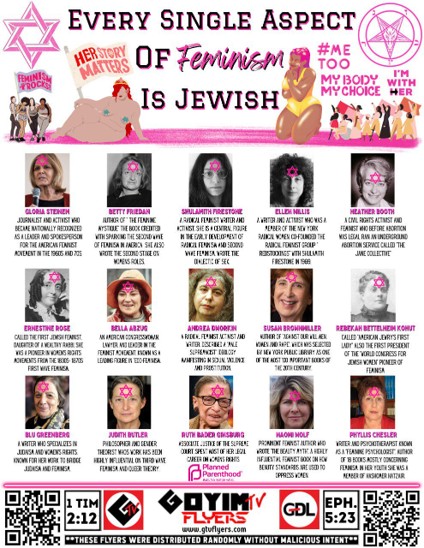
The Last Men: Liberalism and the Death of Masculinity
Charles Cornish-Dale
Passage Publishing. 2025
 

“A cross between Jordan Peterson and The Most Interesting Man In The World, Nationalist blends the sensational with the scientific. Dr. Peterson shot to fame telling young men to clean their rooms; Mr. Nationalist is busy telling men to clean up their diets.”
—John MacGhlionn, The Federalist

“A man’s testosterone levels may be the difference between a life of sex and success and a life spent rotting in a fetid basement, playing video games and eating chicken tenders heated up in the microwave by Mum,” explains Charles Cornish-Dale is his fascinating yet slightly frightening book The Last Men: Liberalism and the Death of Masculinity. He goes on to introduce us to the hikikimori, Japanese “herbivore men” who have done exactly this. Completely lacking in any kind of drive whatsoever, they have simply dropped out of life. This phenomenon, argues Cornish-Dale, who is more commonly known as “Raw Egg Nationalist,” is increasingly being seen in the West.

The West has become an anti-masculine society. Cornish-Dale reminds us that Francis Fukuyama’s infamous book title The End of History, which people quote as hubristically implying that the world’s conflicts are over, was actually The End of History and the Last Man, and he notes that it actually alludes to something particularly poignant. Man has always built a society in which he can engage in what the Greeks called thymos; the ability to thrust. However, with the key political battles won there is no longer room to do this. Instead, we see the victory of the submissive slave who will conform to the system. There is nothing left to strive for, so what are men supposed to do now?

This, argues Cornish-Dale, is the unfortunate situation that the “the last men” find themselves in. Indeed, there are many ways in which modern society is actively reducing their testosterone levels; actively making them into lesser men. Studies find that average male testosterone levels are falling year on year, contributing to a growing fertility crisis among Western males. A significant contributor to this is endocrine disruptors which are found in plastics and numerous other industrial products by which we are increasingly surrounded. Cornish-Dale points out that Alex Jones was roundly mocked in 2014 for ranting that certain herbicides were causing frogs to become gay. However, it appears that he was correct, and the same is true in humans. Certain industrial products do actually appear to be feminising men and so rendering them less heterosexual and less fertile. Cornish-Dale presents evidence that the epidemic of transgenderism in recent decades might possibly be related to endocrine disruptors.

There are also very specific industrial products that have been shown to interfere with masculinisation. Diethylstilbestrol (DES) was given to millions of pregnant women in the mid-twentieth century who had a history of miscarriages. It may have stopped them from miscarrying but it had a devastating impact on their sons: “Exposure to DES in utero has been linked to terrible reproductive abnormalities in both sexes, including undescended testicles and micropenises in boys . . .” A class of chemicals known as phthalates are used in many plastic products. They lead to reduced semen quality and lower testosterone. Cornish-Dale notes that if you use these plastics to store food then they will leak into the food and, by extension, into you and they can be transferred to a baby via breast milk. At one point in the book, Cornish-Dale notes that micro-plastics are in all of us and all parts of our bodies including the “meat,” that is within the tissue of the penis.

Naturally, argues Cornish-Dale, this has a serious impact on politics. If men are low in testosterone, they lack not just sex drive but any kind of drive—the two are intimately connected. They become docile, permitting replacement migration, but this can never work because it doesn’t take long before testosterone begins to drop among the immigrants as they begin to be exposed to the same industrial chemicals. Also, observes Cornish-Dale, various liberal ideas, such as vegetarianism, cause a collapse in testosterone as well. The obesity epidemic, caused, in part, by a lack of exercise and the consumption of appalling food—in particular, highly processed food—further adds to this testosterone decline.

Cornish-Dale sets out a clear manifesto on what needs to be done, giving advice that reaches into minutiae of everyday life. Use wooden chopping boards; don’t use plastic ones. Don’t store food in plastic and for goodness sake don’t microwave food if it’s on a plastic plate because this will cause serious leakage of plastic into the food. Much of his advice is common sense: exercise, lift weights and eat meat. One of the problems with this area of research is that it is so often espoused by obvious fanatics; “gyms bros” and the like. The Last Men is popular-academic in style. It carefully and reasonably argues its case and fully references its assertions with copious academic studies.

As a person who has researched the causes of changes in political viewpoint across time in the West, I found The Last Men very persuasive. Male testosterone is in decline and this, surely, at least in part, helps to explain the feminised kind of men who, as studies show, tends towards liberal politics.

Devlin Talks Sex

Attack of the Cat Ladies

America has been invaded but not by a foreign force. No, this invasion is much more insidious. America has been invaded and subverted from within. A female army of obnoxious, humorless, censorious, scolds and shrews has slithered out from beneath various rocks to occupy, moderate and control all thought, speech and behavior public and private.

The foot soldiers in this army are called cat ladies. They run the churches, schools, drama groups, choirs, orchestras, garden clubs, book clubs, libraries, town boards and fire and police departments  — everything. As a result, America has been feminized. It is all yin and no yang. It is plagued with an epidemic of feigned cuteness, pretend niceness and all too genuine incompetence. Kamala Harris (a woman noted for nothing but her ability to advance in politics by pleasing powerful, California-Democrat men from her knees) is the clueless, incoherent leader of the cat ladies. The late Jewess Supreme Court Justice Ruth Bader Ginsberg is their patron saint.

The genus “Femina felina Americana” is not new. It first appeared in the early 19th century when female social reformers harangued men about money, marriage and meat. Then came the abolitionists led by Harriet Beecher Stowe. Her novel Uncle Tom’s Cabin played a crucial role in inciting Northern hatred of all things Southern thereby fueling The Civil War aka The War of Northern Aggression. Ironically, before writing her novel, Harriet had never been to the South or seen a planation. But, in classic cat lady style, her ignorance didn’t stop Harriet from holding forth on a subject of which she knew nothing.  The Scottish cat lady Fanny Wright was a racial reformer of even more spectacular stupidity. Neshoba, her mixed-race utopian commune, collapsed under the weight of the first winter snow and the tug of racial reality.  Our Fanny then skedaddled back to Europe where she was kept by a much older man –  the Marquis de Lafayette. Funny how often these proto-feminist heroines managed to find Sugar Daddys.

Those harridans were followed by the temperance hags whose leader Carry Nation smashed up perfectly good saloons with hatchets thus giving us the term “old battle axe.” Then the singularly charmless Margaret Sanger emerged in the 20th century to lead the birth control movement called Planned Parenthood. Like her British counterpart Marie Stopes, Sanger had a failed marriage. Sanger also failed to look after her own children while having many affairs with powerful men and dabbling in spiritualism. I suspect she attended seances to contact her offspring who died from neglect. Welp… that’s one form of birth control, I guess.

Franklin Roosevelt, one of America’s most disastrous presidents, compounded his sins by foisting his repugnant, loudmouth wife Eleanor on an unsuspecting public. Due to polio, FDR was practically a helpless invalid from 1935 on so Eleanor served as Madam President for almost 10 years. At the same time, she used her newspaper columns and radio programs to explain to America just how wrong it was about just about everything. By the way, Ellie was a secret lesbian. But then, cripple though he was, FDR managed to jump the bones of his secretary and cousin so…

In the late 1960s, “second wave” feminism reared its decidedly Jewish head and created the current generation of aging, childless, single, obese, blue haired, tattooed, pierced and miserable creatures called cat ladies. The Jewish comedian Lenny Bruce brilliantly observed, “There is nothing sadder than an aging hipster.” Man was he right. These gals are not  happy campers. They cut a pathetic figure in their self-consciously ethnic attire accessorized with clunky earrings made by indigenous jewelers and carrying a hemp tote bag emblazoned with the sayings of Maya Angelou, Harriet Tubman or Cher. They are obviously disappointed by life, furious about the mistakes they made (especially the tattoos and piercings) and determined to take their misery out on everyone else – especially men. Their regret fuels the unhinged, petulant rage they display whenever they don’t get their way.  You can see their hilarious and horrifying fury in full flow at any protest du jour.

With no children or men in their lives, these sad singletons had no outlet for their natural nurturing instinct. But they did have excess leisure time to run around with their pink hair on fire proselytizing for every harebrained do-gooder fad that came their way. Queer rights. Animal rights. Trans rights. Plant rights. Free abortions. Free Palestine. Free any negro currently incarcerated for anything anywhere.

They sat on their substantial backsides gorging on Cheetos and chardonnay while having their substantial egos stroked by female TV chat show hosts who validated their every imagined slight, social justice mania or hypochondriacal concern. And because they were neither as intelligent or well educated as they believed, they fell for every health and beauty scam advertised while complaining that it was men who obsessed about women’s bodies.

Enter – Oprah Winfrey. She came on the scene in the 1990s. Her Jewish handlers did a brilliant job of marketing this fat, no-talent, dimwit as an “Everywoman” who shared every woman’s pain. Oprah was perfect for this role because she had weight and relationship problems and she wasn’t very bright — just like her audience. So she was relatable and non-threatening. Plus, she was black which gave White women a chance to virtue signal that they weren’t racist. (Soon after Oprah appeared,  Barack Obama rode that same White guilt train into The Oval Office.)

All the chat shows consist of cat ladies sitting on sofas clutching each other’s hands as they weep together and play a game of “Can you top my misery?” This is just a TV version of the newspaper advice columns written by  “Sob Sisters” and “Agony Aunts.” Hillary Clinton’s handlers knew who her voting block was so they ran presidential campaign commercials that mimicked this scenario. She was featured sitting on a sofa in a cozy living room set with a fire crackling in the background. You could smell the bread baking. And with legs curled casually beneath her she purred, “Let’s have a chat?” Yeah, a chat. See, running the country is  just one big  coffee klatsch between us girls. We don’t need those nasty men no way, no how. (Please observe that when the Left says, “Let’s chat” or “It’s time for a national conversation” they mean, “Shut up! I’ll do the talking.”)

Since Hillary’s campaign, we have seen an ever-increasing feminization of American political discourse. Now, it is all about feelings. Consider – at its heart, the Harris presidential campaign was an attack on Trump for not being “nice” and daring to challenge  Kamala’s obvious right to the presidency because she was black and a woman. Worse — Trump dared to be unashamedly male and to bristle with testosterone.

Social media, especially Facebook, is the “Hall of Lies” where cat ladies  stroke each other. But I promise you that if every woman had to be truthful on Facebook for one day, this female fantasy world would crumble. As it is, in “Facebookland” every woman is assured by her thousands of Facebook girlfriends that she looks beautiful in her latest outfit or facelift. Every day is a good hair day.  Every woman’s child is a genius and gorgeous. Every performance given is virtuoso. And no woman’s butt ever looks big in any dress. Ever. This bubble of hysterical happiness is fueled with Oxycodone, Ozempic and Ouzo. Yes, Madam definitely enjoys a tipple or two or three.

In the universe of cat ladies every woman and child (Men need not apply) wins a participation medal for every act in daily life no matter how banal. Eating breakfast and having a bowel movement garners fulsome praise and multiple smile emojis. (Where would cat ladies be without cutesy-wutesy emojis?) The lowest common denominator is the highest standard.  Criticism (at least outspoken) is forbidden. Meanwhile, in private, these cat ladies can be as catty as anyone. To paraphrase Oscar Wilde, “Women only call each other sister when they have called each other a lot of other things first.”

Horrible to report — this pseudo-saccharin sorority of psycho-sexual misfits has a strangle hold on education. And, you guessed it, academic achievement has nose-dived. I have been told by two female College Deans at two different universities to “go easy” on my students since “The students don’t respond well to criticism.” Hmnnn… would you want to be treated by a surgeon who had been pampered that way in med school?

This removal of masculinity from American life has also undermined government at federal, state and local level. Don’t believe me? Listen to a speech by any of the women in Congress of either party. Research the many, many black, female Mayors, Fire Chiefs and Police Chiefs that pollute the American landscape. Watch these cretins address the press while sporting outrageous ‘hood rat hair weaves and enameled fingernails longer than an eagle’s talons. (I wonder how they complete certain bodily functions without slicing their nether regions to bloody bits!)

Ask yourself how many bodies these morbidly obese couch potatoes have carried out of a burning apartment and down a ladder or how many violent criminals they have disarmed and wrestled to the ground. But as these Affirmative Action airheads struggle to complete a simple declarative sentence in comprehensible English you are not allowed to laugh or even notice. Yet, there they sit. Entrenched by DEI. Shielded from criticism by the cat ladies. Even if fired, these nitwits will get a Golden Parachute sweeter than any you can ever hope of receiving.

But the worst result of Americas retreat from sexual sanity is how  the benign “Soccer Moms” of yesteryear have morphed into the “Castrating Cat Lady Moms” of today. I see them in the supermarket with their sissified, soy boy sons. These boys never had a chance. Mom has fed them nothing but crap since the cradle and as a result they are sporting man boobs at age nine. They have obviously never thrown or kicked a ball. Dad has flown the coop and left Junior in the clutches of a woman with serious man issues. You bet Junior might pretend to be a girl to avoid mommy’s rage and maybe even win her approval. Cue: hormone “therapy” followed by cross dressing and eventually genital mutilation. If you think this sounds melodramatic, you haven’t been watching the family dynamics around gender reassignment surgery for minors. It’s the mothers who, in effect, wield the scalpel.

Not as horrific but still emblematic of the disease and just downright annoying is the glut of female sportscasters who know nothing about sports — “The team that scores the most runs will win this game. Back to the studio.” And the inane news babes – “The candidate with the most votes will win this election. Back to the studio.”  (Hand to heart, I have actually heard both of those quips.)

Older readers may recognize that I am making many of the same points about the American female as those made by Philip Wylie in his brilliantly venomous diatribe A Generation of Vipers (1943). So not only have cat ladies been with us for far too long but they have been identified and dissected by a brave few male anthropologists — your humble reporter among them.

But wait. Put down that vial of hemlock. Mother Nature always has the last word and laugh. As Shakespeare put it, “The lady doth protest too much, methinks.” Indeed. As much as the cat ladies claim to despise traditional female roles and values their behavior suggests otherwise. Case in point — at a recent country music camp yours truly attended, there were more than the minimum daily requirement of lesbians present. Several of these “Sapphic Sadies” sported beards. Yet hirsute though they were, they were anxious to learn the most traditional form of country music – ballads derived from Celtic songs that were derived from medieval madrigals. These achingly romantic songs speak of knights in armor, fair maidens, courtly love and chivalry i.e. every little girl’s dream.

In publishing, the leading genre is romance novels. These books are churned out to formulas that suit various education levels. They are written to templates that specify settings, professions, names, locales, periods and levels of eroticism. But the plots are always “damsel in distress” or “Cinderella.”  There is even a sub-genre of romance novel – Amish Romance. The covers of these books feature impossibly good-looking models dressed in Amish drag making goo-goo eyes at each other over a butter churn. This proves that women yearn not only for love with a man but love with a man in a traditional societal context. Never mind that in reality the Amish are the least attractive and least romantic society on earth – with the exception of the Satmar Jews. And all this literary tripe is catnip to cat ladies. One look at the cat ladies who control publishing will make all things literary abundantly clear.

In film and television, romantic-comedies (rom-coms) are the leading genre. I blush to confess that I have been prominently featured in several of these treacly abominations. As a result, I am regularly recognized and asked for selfies and autographs by uber-masculine Lesbyterians. They squeal that they and their mothers watch the films together over and over and they cry every time. Note to the curious: These films are all modern-day versions of Cinderella. (Anyone else see a pattern here?)

I can attest that the America I left in 1990 was not riddled with autism and gender dysphoria. But the America to which I returned in 2021 had become a nightmare world where women hated men and men were too beaten down and bored to care. (Think of that Incel nonsense.) Call me paranoid but I’m ready to believe the conspiracy theory that “they” have been putting something in the water or food or vaccines. Somehow or other this  country’s mojo has been messed with.

Still I sense that men and women have some species memory of how things ought to be. Even those suffering from gender dysphoria hunger for the natural order. Note that they aren’t trying to do away with male and female roles just to switch places.  Meanwhile, they vicariously slake their hunger for romance and adventure with books, movies and computer games.  I believe that hunger can be stoked back to a healthy, happy generative heat if we can clear our minds and bodies of the poisons and filth that modern Jewified culture has placed there.

I believe that within every odious cat lady there is a Sleeping Beauty. I believe that within every soy boy there is a Prince Charming. Now all we have to do is get these two crazy kids together and let nature take its course.  You may think I’ve been watching too many rom-coms myself. But it is an awful truth that we must have a rebirth of Adam and Eve or we must perish.


Jack Antonio resides in rural America. He is the author of Boy Outa Brooklyn — a murder memoir. It is available on Amazon as a paperback and e-book and from all major e-book distributors. Or visit Jack’s blog at https://boyoutabrooklyn.com/blog/

Attack of the Cat Ladies was originally published in issue 127 of Heritage and Destiny magazine 40 Birkett Drive Preston PR2 6HE England – www.heritageanddestiny.com

The Treatment of Prince Andrew Proves We Live in a World Run by Bullying Schoolgirls

Like the previously posted article on Helen Andrews’ “The Great Feminization,” Ed Dutton’s article also deals with the feminization of culture, also citing Joyce Benenson’s Warriors and Worriers.

Things have moved fast in the Royal Family since I reviewed the book Entitled for this publication; the book proving beyond reasonable doubt that Prince Andrew is a liar, happily associates with and takes money from a convicted paedophile, is a statutory rapist and is a supreme Narcissist. Despite his maintaining that he “vigorously denies” the allegations against him, Prince Andrew paid off his accuser, Virginia Roberts, and has now gone even further. Now an email to Jeffrey Epstein has come to light in which Prince Andrew wrote to sex offender, “We’re in this together.” The King has swiftly reacted. The way he has done so, however, is a fascinating reflection of just how feminized the West has become.

As American psychologist Joyce Benenson has explored in her book Warriors and Worriers, males and females punish transgressions in markedly different ways, and this also extends over into the way in which they bully each other. Men are evolved to create large coalitions to fight for the interests of the group; in effect, to create armies. If you seriously break the rules, then you will be punished, often physically as seen in the floggings that were common in the British Army until the twentieth century. Once you are punished, then it is over and the group moves on, almost as though the transgression and the punishment never happened. If your crime is especially egregious – such as cowardice – then you were executed, usually with a priest present, as English journalist Tim Stanley has pointed out in the Daily Telegraph “We don’t know how to handle Prince Andrew because we no longer understand sin.” The Church, which is intimately connected to the Army, forgives you and we move on.

Stanley further observes that, “In place of retribution, which we’ve decided is cruel, we isolate and ostracise the accused,” and that punishment has been replaced by the far crueller system of “cancellation.” However, he fails to mention the obvious reason for this shift, which is the rise in the influence of females. As Benenson observes, women do not “punish” in the conventional, male sense; they exclude. Women are evolved to be part of part of a system centred around dominant males. They create closely bonded cliques of a small number of “alloparents” to help raise their children; the Alpha male often gradually neglects them in favour of the newest and most nubile wife. In that their children are involved, these cliques must be based around complete trust and equality, so they bond by sharing intimate information; by being “vulnerable” with each other.

Women are physically weaker and a fight is dangerous because if they are killed, then their child may die from neglect. Women therefore seek safety. Moreover, the entire system of punishment is different. It involves being “cancelled,” excluded from the parties with the popular girls, shamed, whispered about and, generally, excluded. This is a far more vicious way of punishing because it is, potentially, without end: there is no forgiveness, there is no moving on, it is never “over with” and the process – of being excluded – is the punishment.

Of course, some people don’t care about being excluded by the Leftist elite, something the left, being feminine, find incomprehensible. They have no “shame” and they find a new clique of which to be part; the growing right-wing counter-elite which has welcomed ex-Leftists such as the comedy writer Graham Linehan, who criticised the Trans insanity. This is what you must do in the world of girls; you must find a new “clique” to protect you.

Prince Andrew has been treated in exactly this “female” way by his brother, the King. Rather than being punished by being stripped of his military honours and the titles of “His Royal Highness” and the Duke of York, he has voluntarily renounced his military honours and agreed not to use the prenominal “His Royal Highness” and, as of October 2025, not to use his title of Duke of York. In other words, despite what some newspaper commentators are wrongly saying, Prince Andrew has not been “stripped of his titles.” He has agreed not to use them but, legally, he is still “His Royal Highness,” because he is the son of the Queen, and he is still “the Duke of York” and he will remain so unless the King formally strips him of this title, which would require an Act of Parliament.

Put simply, Prince Andrew hasn’t been punished – nothing has been taken from him. He has been pressured to relinquish things or stop being open about things he still possesses, such as the Dukedom of York. This may be seen as a benevolent compromise for Prince Andrew; his royalty is very important to him and this process means that his ego is not too badly hurt. He gets to be in control and can say to himself, “I am His Royal Highness, the Duke of York, but I merely choose not be publically styled as such.”

However, this also means that he hasn’t really been punished at all and that there can be no “moving on.” He will spend his life in this limbo where can attend some royal events but not others, where he is royal but not fully. I suspect this, itself, reflects the female focus on “harm avoidance.” To really punish Prince Andrew would be to overtly harm him, which might make the punisher look “mean;” the ultimate sin the world of women — an egregious sign of lack of empathy. Much better to covertly harm him; harm him, but with plausible deniability.

If Prince Andrew could simply be punished, by being stripped of his dukedom for example, then society could move on and perhaps Prince Andrew could live out his days doing charity in order to atone for his behaviour. But, it seems, the UK is too feminized for this happen. In a world run by women, he is to be excluded from the party run by the “glossy posy.” It will be Purgatory. Forever.