
Cécile Tormay’s “An Outlaw’s Diary”
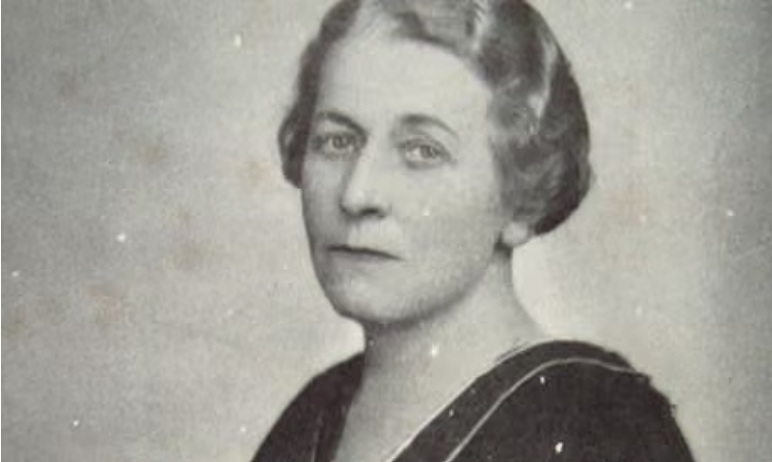
An Outlaw’s Diary
Cécile Tormay
3163 Words
Cécile Tormay’s An Outlaw’s Diary (published in two volumes in 1923 and 1924) provides an impressionistic firsthand account of the Bolshevik rebellion and takeover in Hungary in the years following the First World War. Although it has all the trappings of a diary—with chapters comprised of dated journal entries and long passages detailing the author’s experiences, dreams, and feelings—it often reads more like a chronicle wherein the author relays the sheer catastrophe of a great civilization collapsing day by day. Softening this in places are lovely and memorable descriptions of nature, city life, and human interaction which belie a novelist’s artistry. Yet Tormay never relinquishes her own identity as a person trapped in the very conflagration she is attempting to depict.
Several pages in, one realizes that Tormay is an iron-willed Hungarian patriot and aristocrat. She is a conservative reactionary who identifies wholly with her nation, for better or for worse. Unfortunately for her, she gets more of the latter than the former in An Outlaw’s Diary, where we find many passages like this one: “My heart was wounded and bleeding, and the blood that was flowing was the blood of all my ancestors who were Hungarian.”
While her attitude toward Christianity remains deferential, her sense of nationalism supersedes it and never ceases to throb with racial awareness and solidarity:
“I’m already negotiating with the various Catholic women’s institutions,” the Countess said, “and I hope to bring about their unity.”
“I don’t want the unity of creeds,” said I; “I want the unity of Hungarians. The forces of Destruction have united in one camp. All its apostles work together. Why shouldn’t the forces of regeneration unite as well?”
This is what gives An Outlaw’s Diary its staying power a century later, when mass Third World migration into Europe, North America, and the Antipodes is threatening the very existence of Western civilization. Through her racial identity, Cécile Tormay offers an eloquent voice for White majorities everywhere. Only, in Tormay’s case, the alien races are the Czechs and the Romanians, and, most importantly, the Jews. Never for a moment does she take her eyes off the Jews.
But she is a woman. This means that there is little she can do other than observe, seethe, and hide. There is not much of a plot in An Outlaw’s Diary besides all the history unraveling around her. This does not make it any less engrossing.
Tormay begins her narrative on October 31st, 1918, in the midst of the Chrysanthemum Revolution in which Count Michael Károlyi and his National Council usurped control from Prime Minister János Hadik. She narrates the heart-wrenching moment when former Prime Minister Stephen Tisza is assassinated in his home. Károlyi has popular support, and his influence at that moment is buoyed by the Hungarian people who are sick of the war and sick of watching Entente forces pick apart Hungarian territory like vultures upon carrion. Angry men are now causing trouble in the streets of Budapest and looking for people to blame for the catastrophe. Shots are being fired in the night. Theft is rampant. Through it all, Tormay knows who’s really behind Károlyi’s takeover.
Who proclaims himself the saviour of Hungary in the hour of her greatest peril? Count Michael Károlyi and Rosa Schwimmer? Martin Lovaszy, Baron Louis Hatvany-Deutsch, John Hock, Sigmund Kunfi-Kunstatter, Ladislaus Fenyes, William Bohm, Count Theodor Batthyany and Louis Biro-Blau? Dezso Abraham, Alexander Garbai and Ernest Garami-Grunfeld? Oscar Jaszi-Jakobovics, Paul Szende-Schwarz and Mrs. Ernest Muller? Zoltan Janosi, Louis Purjesz and Jacob Weltner?
Eleven Jews and eight bad Hungarians!
My soul is racked with indescribable pain. Good God, where is the King? Where is Count Hadik and his government, the officers, the still faithful troops? Are there no longer any fists? Is there nobody to strike at all?
This passage underscores two important themes for Tormay—naming the Jew and suffering on behalf of her people. Quite often she anthropomorphizes Hungary and views communism as an infectious disease. With all the anguish she endures, it’s as if she’s the patient herself. At one point she likens the red flags of communism to “a gaping wound inflicted with a giant axe.”
As for the Jews, her enmity is boundless. She sees them quite clearly as an enemy race which lacks the virtue of honest conquest. Instead it skulks about in the shadows doing its “silent, clandestine work of undermining” while reeking with “foreign money.” An Outlaw’s Diary is filled with photographs exposing revolutionary Jews by their real names—and it’s amazing how hideous some of these people are:
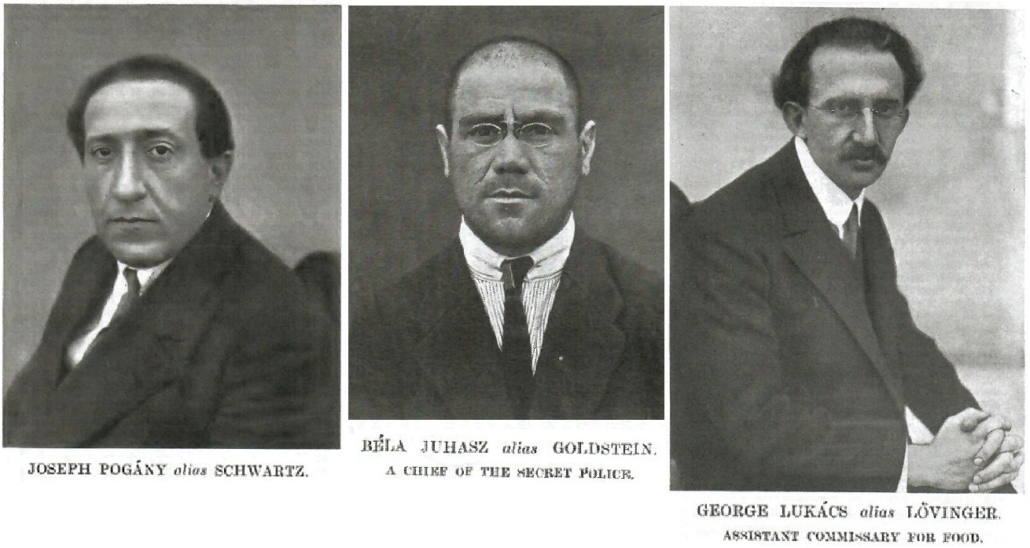
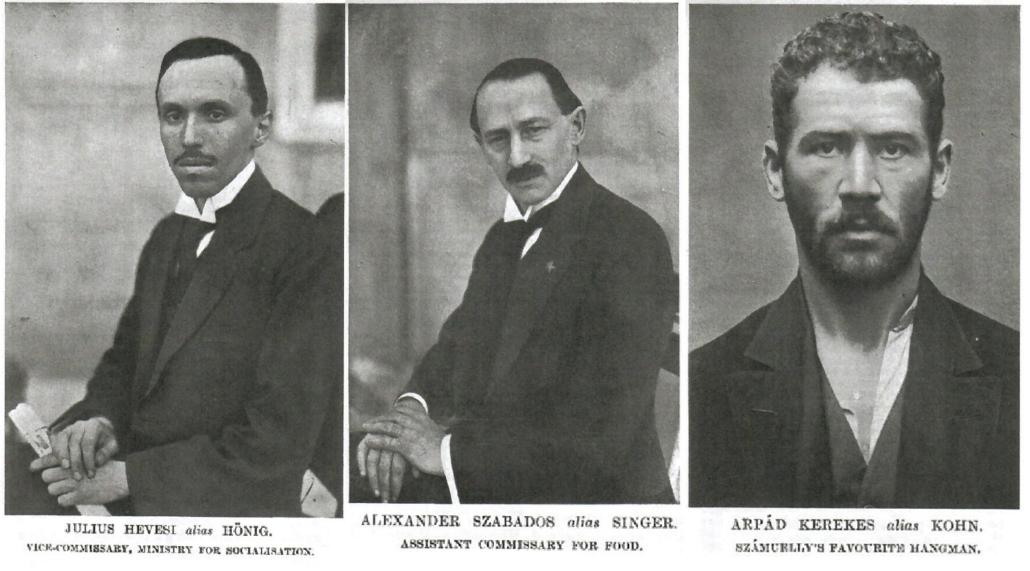
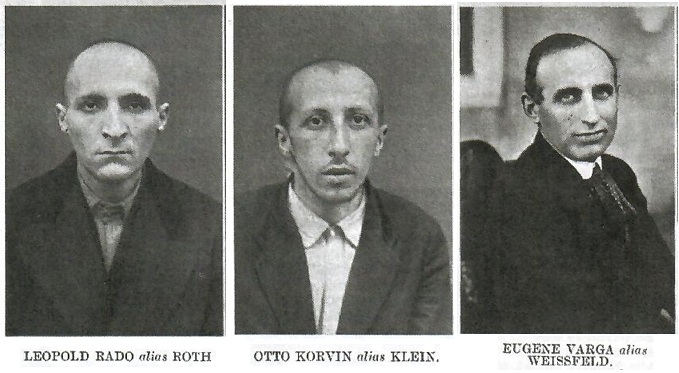
If echo signaling had existed in Cécile Tormay’s day, it seems she would have made great use of it.
Tormay finds particularly galling the Jewish practice of either pretending to be Hungarian while speaking for Hungarians or denying that Hungarians exist at all. She includes this fascinating exchange with a Jew:
“I see things differently,” said the man. “That is just the trouble in Hungary. They always talk of the country, the nation. There is no such thing as a country and a nation. It is the same to me where I live, in Moscow, in Munich or in Belgrade. It is all the same to me as long as I live well. That is the thing we have to drive at, and it is only through socialism that it can be attained”
“The ultimate end being communism?”
“Later, sometime, some day, yes,” the man answered in a low voice.
“And the Russian example? Do you think that what is going on there is the realisation of human happiness?”
“That is only the stage of transition.”
“Transition which may mean annihilation.”
Károlyi’s reign does not last long, only several months. Tormay contemptuously dismisses him as a feebleminded megalomaniac. He is not the enemy so much as the tool of the enemy. In several places throughout Volume One, we hear the name Bela Kun whispered in both fear and awe. We witness the man’s mastery over the disaffected masses, his urgent, violent rhetoric, and his thuggish ways.
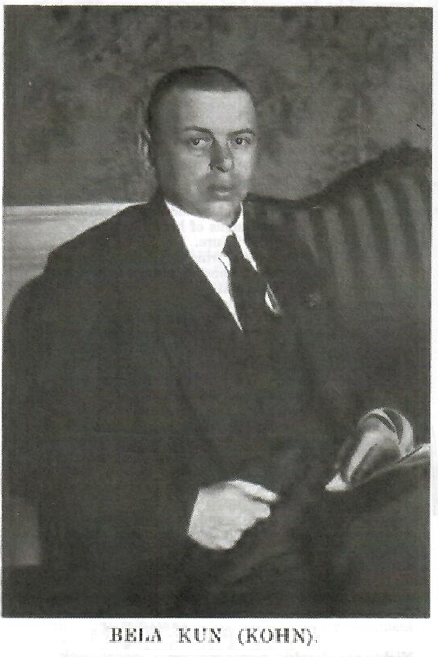
Volume Two opens as Volume One ends, with a Bolshevik in the street shrieking, “LONG LIVE THE DICTATORSHIP OF THE PROLETARIAT!”
In quick succession, Karolyi is forced out by the Jewish cabal which empowered him, who then install the Jew Kun as leader of the Soviet Republic of Hungary. After this Tormay invites her readers to witness the hunger, the incompetence, and the demoralization which result. All around her are spies and stool pigeons for the government. People’s lives depend on food tickets. There are “meatless weeks” in Budapest. Those who are not issued food tickets literally starve—Tormay describes it as “executions merely by the use of coloured scraps of paper.” Further, the classification of head of household applies to an entire household. So if a man is deemed unworthy of food tickets, his entire family starves as well.
Fuel is scarce, and the winter is cold. Homes are requisitioned; clothing, furniture, valuables are simply stolen—either by the government or by bandits; people are losing hope. Those who can, flee; those who can’t or choose not to—like Tormay—hide. In her case, she must part with her elderly mother. Most of Volume Two depicts Tormay either in hiding or on the run between safe houses, while beyond their borders the Czechs and Romanians continue to seize Hungarian territory in the face of the dithering Entente. The loss of thousand-year-old territory galls her more than the warrant out for her arrest. Her crime was merely to write an essay giving hope to Hungarians.
One of the first things the Bolshevik Jews do is close churches and replace them with movie theaters. Simultaneously they promote free love and divorce. They take over the education of children as well. Here are some of their innovations, which modern readers should find sickeningly familiar:
The mass appointment of Jewish masonic professors and teachers; the Bolshevik reform of school books; the destruction of the souls of the children; the degradation of parental authority; the systematic destruction of patriotic principles; the revelation of sexual matters . . .
And then there’s the terror. Kun’s terrorist underlings, leather-coated Jewish killers called “the Lenin Boys,” are always on the hunt for counter-revolutionaries. Leading them is an utterly ruthless Jew named Tibor Számuelly. Torture and murder are but trifles for these people, and if you’re even suspected of counter-revolution, they’ll come get you.
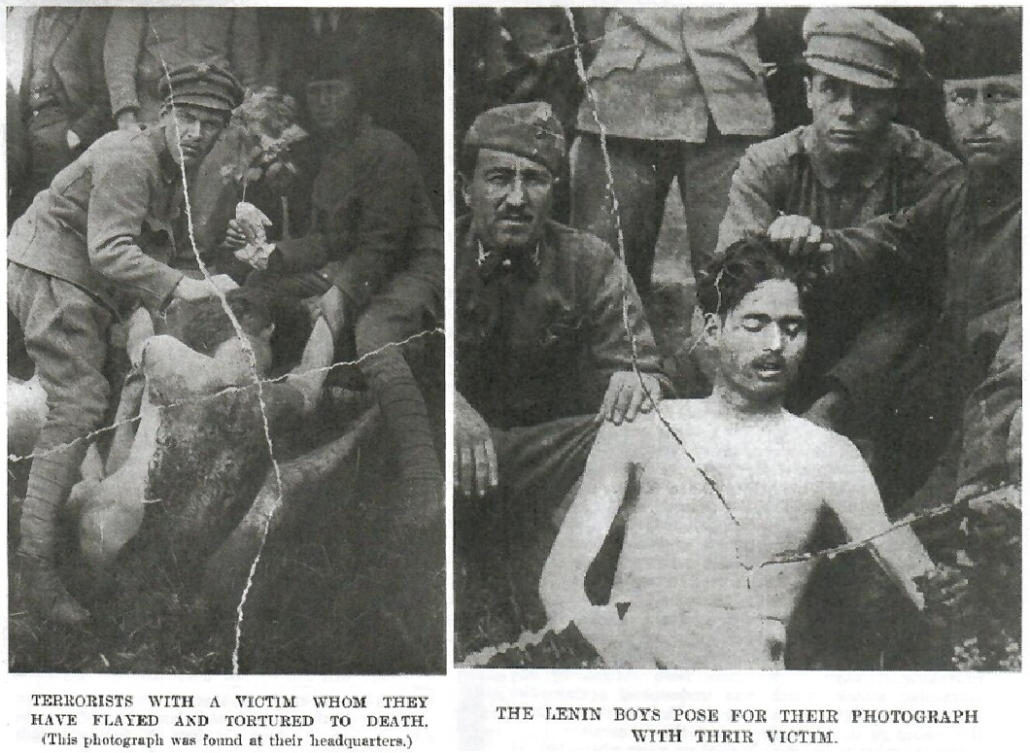
Tormay relates how Számuelly would go on punishment tours across Hungary in order to commit atrocities.
He arrested three men at random, Kérner, a mill-owner, Joseph Tokay a police officer, and Ladislaus Fekete the mayor, and had them hanged on trees in front of a chemist’s shop. Be quick!” he said, and cleaned his nails while the execution was being carried out. Then he boarded his train again and went on. In Kaba he had the curate, the notary and the magistrate hurriedly tortured, and moved on again, because the Rumanians were coming. Thence he went to Szolnok, where he took hostages and had them hanged. One hundred and fifty were executed. They were all Hungarians—and Christians. . . .
Just as in the Soviet Union, the Hungarian Bolsheviks had supported workers when they went on strike against Aristocratic employers. But when these same workers strike against Bela Kun’s regime, Kun threatens to “hang a few railwaymen in every station.”
In the end, the red center cannot hold. There is too much pressure from the Romanians and the Czechs, and—belatedly—the Entente. There is too much suffering, too much discontent. After months of defeat, counter-insurgencies gain steam, win battles, and put the communists on the run. Just under a year after they lost it, the Hungarians regain their country. Eventually, Tormay becomes reunited with her mother.
It’s a sweet ending, but I am not spoiling anything by sharing it. I don’t think readers even in her day were turning to An Outlaw’s Diary for suspense. They turned to her for a clear-eyed, ethnocentric view of the Bolshevik takeover of Hungary as rendered through the adroit and evocative prose of a novelist—a truly singular literary experience. Tormay’s depiction of the ghost of Stephen Tisza haunting the street outside the House of Parliament is chilling. So is the scene at the end of Volume One in which the national poet of Hungary, Sándor Petőfi (who died in 1849) rises from the dead and scours the streets of Budapest like an avenging angel:
“What have you done to my flags?”
“What have you done with my free press?”
“What have you done with my songs?”
“To whom have you given my grave?”
Not only this, but Tormay has genuine insight into the human condition, which elevates her work even further. Toward the end of the second volume, she channels Oswald Spengler as she cycles through the stages of civilization: Birth, Youth, Manhood, Degeneracy, and Senility. She notes the stark difference between martial and civic courage, and bemoans how Hungarian men have a surfeit of the former and almost none of the latter. She engages a proletarian in an argument and concedes that the aristocracy is partly to blame for their current troubles for not interacting more with the working classes. She also notes how the World War had weakened Hungary such that “[t]hose who might have saved us to-day are dead.” In one touching moment, she searches the canon of Western literature for consolation and finds nothing—until she strikes upon fairy tales.
My favorite moment appears immediately after the takeover:
The bright, clean streets, policemen, protection, security of the past — where have they all gone?
Civilisation was only a scaffolding which was covered with paper posters so that we should not see that there was no building behind it, and it has collapsed at a single blow. It is a wreck, and wolves prowl over the abandoned ground. The town has slipped suddenly back to the times when nobody who started on an errand at night knew if he would ever see home again.
An Outlaw’s Diary can be uneven at times, and it has its faults. Tormay is so locked in on the Jews that her prose sometimes grows purple as she strains to find new ways to express her loathing for them. Here are some examples:
“The Wandering Jew paints his face young, and indulges in orgies on the edge of the grave.”
“I know their poor little villages, pounced upon by the army of leeches in gabardines, bloodthirsty, insatiable, on its westward march.”
“Unkempt, fat women stood in the doorways, silk dresses rustled on the pathway, and the smell of filth mingled with that of cheap scent.”
Insults like these pop off the pages almost regularly in An Outlaw’s Diary. Her depictions of Jews are unsparing in their odium, and rarely does she report an interaction with a Jew which isn’t wholly negative. She is also not above publishing rumor as fact, and sometimes ascribes a near supernatural quality to the Jews as if they were Sauron in JRR Tolkien’s The Lord of the Rings:
They scatter without order, under the influence of that terrible eastern eye, which hypnotises our people and lures the unhappy nation to disgrace.
Unlike Sauron, however, the Jews are a corporate evil:
The demon of the Revolution is not an individual, not a party, but a race among the races.
So sometimes, her objectivity becomes questionable. In some ways, one could look at her diary as time capsule of classic anti-Semitism:
How is it that his racial interests are identical in a Ruthenian village and in the heart of New York? He praises one individual, and the praise rings over the globe. He condemns another, and that man’s ruin begins wherever he be. Orders are given in mysterious secrecy. What the Jew finds ridiculous in other people he keeps fanatically alive in himself. He teaches anarchy and rebellion only to the gentiles, he himself obeys blindly the directions of his invisible leaders.
Mirabeau was led towards the Revolution by Moses Mendelssohn and the influence of beautiful Jewesses. They were there, in Paris, behind every revolution, and they appear in history among the leading spirits of the Commune of 1871. But they are only visible during the hours of incitement and success; they are not to be found among the martyrs and the sufferers. When the returning powers of order proceeded to take revenge on the Commune, Marx and Leo Frankel had fled.
It was during the days of the Turkish Revolution that a Jew said proudly to my father: “We made that: the Young Turks are Jews.”
How to pick apart such a salad of truth, conspiracy, and lies? Yes, Jews wield disproportionate power behind the scenes, often for nefarious purposes. Yes, the Jews were the group most responsible not only for what happened in Hungary, but for the establishing the degenerate age we live in today. Yes, left-wing, diaspora Jews have proven to be the greatest enemy of patriotic, race-conscious whites everywhere. But blaming the French Revolution and its consequent bloodbath on Moses Mendelssohn is a wild stretch. It is true Mendelssohn was an Enlightenment liberal who pushed for greater civic freedoms for Jews, and it is true that the revolutionaries (after rancorous debate) gave it to them. Like Voltaire and other Enlightenment thinkers, Mendelssohn’s rationalism and humanism had impacted the Revolution. But Albert Lindemann in his insightful 1997 work Esau’s Tears has a section in chapter two entitled “The French Revolution and the Jews” wherein Mendelssohn does not get a mention. Plus, Mendelssohn died in 1786; it’s hard to pin the horrors of the guillotine and the Vendée Uprising on him. And who exactly are these “beautiful Jewesses” Tormay mentions?
And the claim that the Young Turks were Jews is simply false. In 2025 I wrote a three-part review of They Can Live in the Desert but Nowhere Else, Ronald Suny’s 2015 history of the Armenian genocide, and nowhere in that lengthy tome does Suny claim that the Young Turks were Jewish. The Young Turks did start out as multi-ethnic, secular, and progressive, and they did include some Jews in their ranks along with Armenians, Albanians, Greeks, and many others. But the men who seized power from the Sultan in 1908 grew into staunch Turkish ethnonationalists during the First World War. The three main architects of the genocide, Talat Bey, Enver Bey, and Cemal Bey were all at least part-Turkish and were anything but Jews.
I understand that this line of criticism might not be entirely fair. Even with several years separating her from the events she describes, Tormay may not have had access to the wealth of information we have today about many of these events. Also, this was a time of existential threat for her and her people, so we should grant he some charity in this regard. But if one takes an anti-Semitic perspective, one should do it right; and reporting something an unnamed Jew said to a family member years earlier just isn’t going to cut it.
Nonetheless, in the vast majority of cases, Tormay remains within the bounds of fair play vis-à-vis the Jews, regardless of her personal animosity for them. She is correct to identify the hostile takeover of Hungary as the act of predatory opportunism on the part of one race against another, weakened by the First World War as it was. What she describes in An Outlaw’s Diary is demographic warfare, and in war it is appropriate to dehumanize the enemy—especially when one’s survival is at stake. And if Jews and their allies complain today about Cécile Tormay’s anti-Semitism, we should invite them to compare and contrast Miss Tormay’s words with those of modern Israeli politicians when discussing the Palestinians. Tormay will come across as mild in comparison.
More than a diary and more than a chronicle, An Outlaw’s Diary has worth as great literature. Cécile Tormay was a novelist as well as a diarist, and even in translation, one can sense her refined taste and sensitivity to language. Sentences are not merely building blocks of language; for her, they are molecules of elegance and meaning—precious in and of themselves, and doubly elegant for the direct truths they convey. And the mind which produced them was bolstered by millennia of Western thought, art, and tradition—and was proud of it. What else could have conceived such a powerful and unforgettable passage as this?
In front of the county hall Comrade Singer pronounced the valedictory discourse:
“We take leave of you with the promise that we will fight with merciless hatred against the bourgeoisie, and, should we perish, the very blades of grass will continue the fight, animated by our hatred.”
In the cemetery the minister spoke:
“My brethren in the Lord, standing at these open graves, let your last word be that of love.…”
In these two speeches Christ and those who had crucified him met.
Indeed.




This is what they are doing to the Palestinians now. And it’s what they will do to us if they have enough power.
I would love to come to an agreement with our government. Let the Jews ethically cleanse Gaza and let us ethically cleanse America. I honestly don’t give a fuck about Palestine or Israel.
I’m not optimistic about that idea because I’ve thought for awhile that they keep the conflict going so they can test the same techniques and weapons on Palestine that they will to us.
Almost all of these non white immigrants are blood and soil nationalists for their home country and anti white in their host country. They all follow the Jewish model.
Yes. That is absolutely correct Chris. It’s maddening.
Really, Dr M?
Lenin Boys & Netayahu’s IDF, same people, same ends?
Why would “they” do that to the Americans & kill the golden goose?
Like poor old Revilo, you are beginning to lose it as you get older.
I think you underestimate Jewish hatred toward the West.
@ Terry
One of the Jews greatest strengths is their paranoia. We probably don’t even have it in our DNA to be as paranoid as we them but we should certainly learn from their morality of survival.
We should also mention that when communism took hold in Hungary after WWII, the top leadership were Jewish communists yet again. The names have Umlauts, but they were figures like Rakosi, Gero, Farkas and Revai. It is a historical fact, not bias, Hungary truly had Jews in power for long periods.