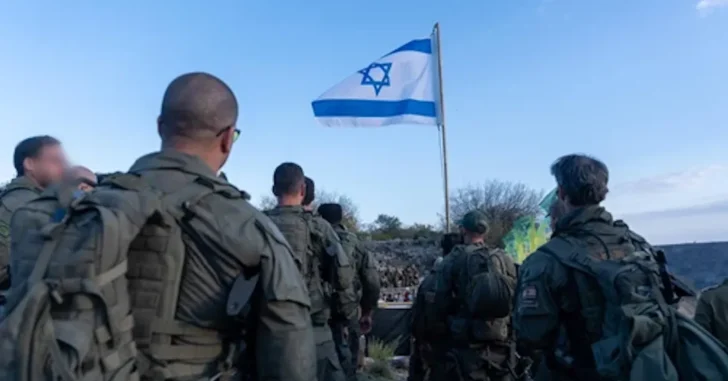
Dr. Bartov is a professor of Holocaust and genocide studies at Brown University.
A month after the Hamas attack on Israel on Oct. 7, 2023, I believed there was evidence that the Israeli military had committed war crimes and potentially crimes against humanity in its counterattack on Gaza. But contrary to the cries of Israel’s fiercest critics, the evidence did not seem to me to rise to the crime of genocide.
By May 2024, the Israel Defense Forces had ordered about one million Palestinians sheltering in Rafah — the southernmost and last remaining relatively undamaged city of the Gaza Strip — to move to the beach area of the Mawasi, where there was little to no shelter. The army then proceeded to destroy much of Rafah, a feat mostly accomplished by August.
At that point it appeared no longer possible to deny that the pattern of I.D.F. operations was consistent with the statements denoting genocidal intent made by Israeli leaders in the days after the Hamas attack. Prime Minister Benjamin Netanyahu had promised that the enemy would pay a “huge price” for the attack and that the I.D.F. would turn parts of Gaza, where Hamas was operating, “into rubble,” and he called on “the residents of Gaza” to “leave now because we will operate forcefully everywhere.”
Netanyahu had urged his citizens to remember “what Amalek did to you,” a quote many interpreted as a reference to the demand in a biblical passage calling for the Israelites to “kill alike men and women, infants and sucklings” of their ancient enemy. Government and military officials said they were fighting “human animals” and, later, called for “total annihilation.” Nissim Vaturi, the deputy speaker of Parliament, said on X that Israel’s task must be “erasing the Gaza Strip from the face of the earth.” Israel’s actions could be understood only as the implementation of the expressed intent to make the Gaza Strip uninhabitable for its Palestinian population. I believe the goal was — and remains today — to force the population to leave the Strip altogether or, considering that it has nowhere to go, to debilitate the enclave through bombings and severe deprivation of food, clean water, sanitation and medical aid to such an extent that it is impossible for Palestinians in Gaza to maintain or reconstitute their existence as a group.
My inescapable conclusion has become that Israel is committing genocide against the Palestinian people. Having grown up in a Zionist home, lived the first half of my life in Israel, served in the I.D.F. as a soldier and officer and spent most of my career researching and writing on war crimes and the Holocaust, this was a painful conclusion to reach, and one that I resisted as long as I could. But I have been teaching classes on genocide for a quarter of a century. I can recognize one when I see one.
This is not just my conclusion. A growing number of experts in genocide studies and international law have concluded that Israel’s actions in Gaza can only be defined as genocide. So has Francesca Albanese, the U.N. special rapporteur for the West Bank and Gaza, and Amnesty International. South Africa has brought a genocide case against Israel at the International Court of Justice.
https://www.theoccidentalobserver.net/wp-content/uploads/2018/06/TOO-Full-Logo-660x156-1.png00Kevin MacDonaldhttps://www.theoccidentalobserver.net/wp-content/uploads/2018/06/TOO-Full-Logo-660x156-1.pngKevin MacDonald2025-07-15 07:22:272025-07-15 07:22:27Even a Jewish Holocaust scholar writing in the NYTimes thinks Gaza is genocide
“A very big and important step toward marriage equality in Ukraine, and a small victory in our struggle for simple family happiness,” one of the men said.
Zoryan Kis and Tymur Levchuk | Screenshot Bird in Flight
A district court in Ukraine has formally recognized a same-sex couple as family, the first legal precedent of its kind in the country, the Kyiv Independentreports.
The plaintiffs in the case were Zoryan Kis, first secretary of Ukraine’s Embassy in Israel, and his longtime partner, Tymur Levchuk. The couple has lived together since 2013 and were married in the U.S. in 2021.
Ukraine does not currently recognize same-sex marriages or civil unions.
In 2024, Ukraine’s Foreign Ministry refused to acknowledge Levchuk as Kis’ family member, denying him spousal rights to accompany his husband on his diplomatic posting to Tel Aviv. The couple filed a legal complaint naming the Foreign Ministry as a defendant in September.
The court’s decision cited both the Ukrainian constitution and precedent from the European Court of Human Rights (ECHR), to which Ukraine is a signatory. ECHR requires member states to ensure legal recognition and protection for same-sex families.
The couple’s shared finances and property, joint travel records, photographs, correspondence, and witness testimony were among the evidence considered by the court establishing a long-term domestic partnership.
“A very big and important step toward marriage equality in Ukraine, and a small victory in our struggle for ‘simple family happiness’ for Ukrainian diplomats,” Kis posted to Facebook after the court rendered its judgment.
“Now we have a court ruling that confirms the feelings Tymur Levchuk and I have for each other,” he said, while thanking the judge in the case.
Public support for LGBTQ+ rights in Ukraine has grown steadily in recent years as the country has drawn closer to Europe, and in particular after Russia’s war on the sovereign nation in 2022.
Legal progress on the issue has remained slow, however. Legislation recognizing civil partnerships was introduced in 2023 but hasn’t advanced through the Ukrainian parliament’s Legal Policy Committee.
The proposed bill would legalize civil partnerships for both same-sex and heterosexual couples, providing inheritance, medical, and property rights, but not the full status of marriage.
Kis and Levchuk are longtime civil rights activists in Ukraine. In 2015, the couple filmed a video for Ukrainian online magazine Bird in Flight, reenacting a recent social experiment conducted in Moscow featuring two young men holding hands as they walked through the city to gauge the public’s reaction. The responses in Kyiv mostly ranged from shrugs to bemusement, until Levchuk sat on Kis’ lap.
https://www.theoccidentalobserver.net/wp-content/uploads/2018/06/TOO-Full-Logo-660x156-1.png00Kevin MacDonaldhttps://www.theoccidentalobserver.net/wp-content/uploads/2018/06/TOO-Full-Logo-660x156-1.pngKevin MacDonald2025-07-14 11:21:182025-07-14 11:21:18Western values: Why the U.S. is fighting its proxy war in Ukraine
Zohran Mamdani is poised to become New York’s first Muslim mayor in no small part thanks to a tight-knit team of young Jewish professionals who helped him beat a storied political dynasty.
The team behind the youthful socialist’s shocking blow to the establishment is all the more remarkable, considering how his positions on Israel have roiled the largest Jewish community outside of Israel.
Mamdani’s rivals in the primary and now ahead of the general election have painted the state legislator as a dangerous radical, even an antisemite. His statements on the Israeli-Palestinian conflict have unsettled many of the city’s more than 1 million Jews.
Jewish professionals advising Mamdani had a strategy to counter concerns about whether his inclusiveness extended to Jews.
They platformed him on podcasts, chose tough interviewers and brought him into Orthodox neighborhoods who had supported his primary rival, former Gov. Andrew Cuomo, or Adams.
His progressive message of inclusion and justice was consistent, no matter the forum. Mamdani confronted criticism head-on, insisting that opposing the policies of the Israeli government and supporting the boycott Israel movement did not mean endangering Jewish New Yorkers.
“I’m lucky that I do not have to turn too far for feedback from Jewish New Yorkers in that so much of my campaign is being run by Jewish New Yorkers,” Mamdani said in his April interview with the Forward, his first to a major Jewish outlet. “It is a key part of both the way in which we are running this campaign and also the values that underpin the campaign.”
Here’s a look at Mamdani’s Jewish team:
Andrew Epstein, communications director
NYC mayoral candidate Zohran Mamdani and his aide Andrew Epstein, right, on June 17. Photo by Jeff Coltin/Politico
Epstein, 38, a professional digital director, built an online campaign in a town that typically has seen candidates run on broadcast and cable. He produced all the campaign’s social media videos, several of which went viral.
Epstein, working closely with campaign manager Elle Bisgaard-Church, Mamdani’s chief of staff in the Assembly, made the candidate approachable to reporters. He booked him on podcasts, including those who opposed Mamdani, to broaden the campaign’s reach and engage younger voters. He also helped with debate prep.
Epstein joined the Mamdani campaign last September after serving as chief of staff to Assemblymember Emily Gallagher, who represents the Greenpoint and Williamsburg neighborhoods in Brooklyn. Gallagher, like Mamdani a democratic socialist, was elected the same year, 2020, amid an anti-establishment wave that began in 2018. Epstein managed Gallagher’s campaign and worked very closely with the Satmar Hasidic sects in Williamsburg on local issues.
Epstein learned some Yiddish growing up while attending the West Side Yiddish School.
Previously, Epstein volunteered on Bernie Sanders’ presidential campaign, as well as for local races, such as the campaigns of State Sen. Julia Salazar, Rep. Alexandria Ocasio-Cortez and actress Cynthia Nixon’s unsuccessful bid for New York governor in 2018.
In an interview with The Forge, Epstein said he became politically active in high school after the 9/11 terrorist attacks and the Iraq War, participating in the anti-war protests and later joining a community organizing group. At Yale University, which he attended from 2013 to 2017 as a graduate teaching fellow in history, Epstein signed a letter calling for a ceasefire in the 2014 war in Gaza.
Epstein is expected to stay on as a senior adviser to Mamdani on messaging and outreach.
Julian Gerson, political director
Julian Gerson. Courtesy of Julian Gerson
Gerson, 28, brought insider credibility to his key role in shaping Mamdani’s agenda and his campaign’s outreach. It was Gerson’s idea to have Mamdani walk the length of Manhattan on the Friday before the election, a move that earned media coverage and was mentioned by the candidate at the start of his victory speech, according to an official affiliated with the campaign.
He previously served as the campaign manager for Rep. Jerry Nadler, the co-chair of the congressional Jewish Caucus, who faced a tough reelection bid in 2022.
In outreach then to Jewish voters, Gerson noted that Nadler was the city’s lone remaining Jewish House member. He said losing that primary, against former Rep. Carolyn Maloney in the redrawn 12th District — which includes the heavily Jewish neighborhoods of Manhattan’s Upper West and East sides — would have “national implications.”
He also highlighted Nadler’s liberal record on Israel. “Jerry embodies the idea that one can absolutely be pro-Israel and progressive simultaneously,” Gerson wrote in an email to Jewish voters.
In Congress, he served as Nadler’s press secretary and speech writer.
Nadler endorsed Mamdani immediately after his primary win, while other New York Democrats, including House Minority Leader Hakeem Jeffries and Rep. Dan Goldman, have yet have yet to do so.
Gerson previously worked for the 2018 congressional campaign of Antonio Delgado, now the lieutenant governor of New York, who is married to a Jewish woman. Before he joined the Mamdani campaign, Gerson was a speechwriter for Gov. Kathy Hochul, who is running for reelection and facing a possible primary challenge by Delgado next year.
Gerson now serves as Mamdani’s director of writing, overseeing speeches and all written communications.
Morris Katz, media strategist
Zohran Mamdani’s “freeze the rent” TV ad. Photo by Zohran Mamdani for mayor/Screenshot
Katz, 28, is affiliated with Fight Agency, a Democratic media firm that identifies inspiring candidates with working-class appeal. He served as Mamdani’s senior adviser and TV ad buyer.
Katz was initially hesitant to join the campaign because of his doubts about Mamdani’s viability, according to a New York magazine profile. Mamdani personally reached out and Katz said he left their 45-minute meeting inspired and fully won over. At the time, Mamdani was polling at just 1% after launching his mayoral bid last September.
The son of David Bar Katz, a screenwriter and producer behind Showtime’s Ray Donovan, Katz wrote several screenplays while attending Skidmore College. After the election in 2016 of Donald Trump, he brought his ad-writing and messaging skills to Democratic candidates.
Katz has worked closely with Rebecca Katz, a veteran strategist who worked for former Mayor Bill de Blasio. She recently helped Ruben Gallego, a moderate Democrat, win a tight U.S. Senate race in the battleground state of Arizona. The two are not related.
Spencer Goldberg, Mamdani’s executive aide and body man, who typically is near the candidate and privy to all conversations, is also Jewish.
Brad Lander, outgoing NYC comptroller and key ally
NYC mayoral candidates Zohran Mamdani and Brad Lander on June 24. Photo by Michael M. Santiago/Getty Images
Lander, the highest-ranking Jewish elected official in the city, is credited with helping Mamdani get over the finish line. His cross-endorsement of Mamdani in the final week of the campaign, despite their disagreements on Israel, assuaged some voters who might have been wary of the assemblymember’s pro-Palestinian activism.
“You had a Muslim New Yorker and a Jewish New Yorker campaigning together,” Lander said in an interview. “You could tell that it touched something in people.”
Lander, who finished third in the primary, said his alliance with Mamdani spurred mixed reactions among Jewish voters. Some applauded him for forging a hopeful Jewish-Muslim political partnership, while others said they were alienated by his decision.
A liberal Zionist, Lander said the two continue to talk regularly but declined to elaborate on whether he will seek to influence Mamdani’s approach to the Israeli-Palestinian conflict. “We’re having some conversations about the campaign and the issues we’re facing,” he said.
The progressive Jews For Racial & Economic Justice, of which Lander is a member, endorsed both Mamdani and Lander through its affiliated political arm, The Jewish Vote, after hundreds of members voted in favor of a dual-ranked endorsement. Audrey Sasson, JFREJ’s executive director, praised Mamdani’s alignment with the organization’s values, particularly his focus on kitchen table issues and commitment to combating hate crimes.
Sasson said she expects JFREJ to have a closer partnership with City Hall under Mamdani than in previous administrations. “We can’t wait to keep shaping the city and having an opportunity and a partner in that work,” Sasson said.
Confronting fears over antisemitism
New York City mayoral candidate Zohran Mamdani on June 29. Photo by Roy Rochlin/Getty Images
Since his surprise victory, Mamdani has expanded his team and redoubled his outreach efforts, including with critics of his support for the Boycott Israel movement and with Orthodox leaders who may view Adams as a more reliable ally but question his chances of reelection given the scandals that plague him.
In his victory speech, Mamdani appealed to voters who had backed Cuomo.
“I hope now that this primary has come to an end, I can introduce myself once more,” he said. “I promise that you will not always agree with me, but I will never hide from you.”
Mamdani has tempered his public comments on the conflict, but has not backed down from his sharp criticism of Israel. He says he would govern based on his commitment to international law and human rights.
“We are going to have an administration that is open to all New Yorkers, especially Jewish New Yorkers,” Ali Najmi, the Mamdani campaign election attorney who is close with some Orthodox leaders, said on NY1, a local TV station.
Lander said Jews concerned about rising antisemitism need not worry about Mamdani. “He is absolutely committed to keeping all New Yorkers safe — including Jewish New Yorkers, who, like me, are Zionists,” he said.
https://www.theoccidentalobserver.net/wp-content/uploads/2018/06/TOO-Full-Logo-660x156-1.png00Kevin MacDonaldhttps://www.theoccidentalobserver.net/wp-content/uploads/2018/06/TOO-Full-Logo-660x156-1.pngKevin MacDonald2025-07-14 11:11:432025-07-14 11:11:43Forward: Progressive Jewish strategists helped the Muslim candidate navigate controversy and connect with voters
Israeli forces carried out another massacre at an aid center in southern Gaza run by the Gaza Humanitarian Foundation. Witnesses described Israeli tanks shooting toward the crowds with machine guns and soldiers sniping aid-seekers in the head.
Palestinians carrying aid boxes from the Gaza Humanitarian Foundation, June 16, 2025. (Photo: Omar Ashtawy/APA Images)
Samir Shaat, a young man in his thirties, sits in the courtyard of Nasser Medical Complex, recounting what he describes as the worst day of his life.
On Saturday morning, Shaat went to the al-Shakoush aid distribution site in Rafah city run by the Gaza Humanitarian Foundation (GHF). After the closure of all other GHF sites across Gaza, this was the only one still operational. Shaat and his friend were there to bring back food for their families.
As soon as they arrived at 9:40 a.m., Shaat says, Israeli army tanks appeared on a high hill near the site and began firing with heavy machine guns at the thousands of civilians who were waiting for the U.S.-run company’s signal to enter the site.
Advertisement
Instead of returning home carrying food, Shaat returned carrying his friend, who was shot directly in the head. He carried him for more than a kilometer on foot, running in the hope of saving him. By the time he reached the hospital, his friend had already died on his shoulders.
The Gaza Ministry of Health announced that 18 deaths and over 50 injuries were recorded at Nasser Hospital following today’s aid massacre at the GHF center. The Ministry said that the deaths bring the total number of people killed at these centers to 805, while the number of wounded at GHF sites stands at 5,252.
‘They began sniping at us one by one’
In video testimony obtained for Mondoweiss, Samir Shaat sits in the courtyard of Nasser Hospital with his clothes soaked in blood. He describes what he saw at the GHF center earlier today as a “sea of blood.”
People carrying empty bags, hoping to fill them with food, came back wrapped in them like a shroud, Shaat says, maintaining that despite knowing the danger he faced in going to the GHF center, he chose to go anyway. “What drives us to go there other than having nothing to eat?” he says. “Imagine if your mother asks you for something to eat, or your little sister asks you for something to curb her hunger, and you stand there watching them slowly die of starvation day in and day out. I would walk straight into death to get them whatever I can.”
Shaat says that his brother was killed last week in a similar incident at one of the GHF’s centers. He explains that with his father also killed during the war, he is the family’s sole breadwinner.
The crowds were at least 500 meters away from the Israeli army’s location when it opened fire, Shaat says. “They began sniping at us one by one, shooting the starving civilians with direct shots to the head,” he recounts.
“They are deliberately killing us in front of everyone. They have killed hundreds of thousands of us, and the world does not move, so they increase their killing without caring about anything.”
Shaat opens the plastic shroud, unzipping it in front of the cameras gathered around him. “This is Ahmad, my friend. Look at his fresh blood, it hasn’t dried yet.” He points to the bullet entry wounds, all concentrated in the upper part of his body. “We had breakfast together and went on our journey to secure something for our families to eat. But as you see, I came back carrying my friend dead on my shoulders. He won’t return to his hungry family.”
We saw the soldiers from close range, aiming their weapons at our heads and sniping us like birds, as if we were worthless.
Ahmad Haddad, survivor of aid massacre at Rafah GHF center.
After a journalist asks what drives him to keep going to these centers, Shaat says, “Ask us instead: what else do we have to eat?”
Another survivor of the aid massacre, Ahmad Haddad, lies in a bed in the same hospital as he recounts the day’s events. “We go there because we want to eat,” he says in video testimony for Mondoweiss, speaking through labored breaths while letting out painful cries between sentences. “We know the danger there. But hunger is harsh. There’s no other choice.”
“The only food we can get is through the aid that they throw at us,” he continues. “But when we went today, the soldiers came out with their guns, and the tanks came out with their machine guns. We saw the soldiers from close range, aiming their weapons at our heads and sniping us like birds, as if we were worthless; as if they were amusing themselves with our blood and killing us by the dozens.”
Haddad says that Israeli tanks fired randomly at the crowds, while soldiers watched whoever stood up and sniped them in the head. “We lay on the ground, fearing the bullets and trying to save our lives,” he recounts. “But the soldiers were waiting for us, lying in ambush. Whoever stood up fell back dead.”
GHF poised to build ‘concentration camp’ in Rafah as ceasefire talks stall
The GHF’s aid distribution scheme continues to be widely condemned by international aid organizations for the daily occurrence of massacres inside or in the vicinity of its centers. This has led Palestinians in Gaza to describe the sites as “death traps” that use aid as bait to lure civilians into concentrated zones under Israeli military control.
The GHF has also been criticized for complementing Israeli military objectives of forcing Gaza’s population into these “cleansed” zones inside the Strip, with the objective of eventually expelling the civilian population from Gaza under the pretext of facilitating “voluntary migration.”
This objective was most recently vocalized earlier this week, when Israel’s Defense Minister, Israel Katz, announced that Israel would seek to “concentrate” Gaza’s population in so-called “humanitarian cities” built over the ruins of Rafah in southern Gaza. Katz said that all of Gaza’s 2 million people would be forced into this area ahead of their displacement. Katz’s statement has been widely condemned as a plan to build a “concentration camp.”
The GHF is seen by Palestinians as a vital component of this plan, providing humanitarian cover for Israel’s political and military objectives.
Earlier this week, Reuters reported on a proposal it had seen bearing the name of the Gaza Humanitarian Foundation detailing the construction of “large-scale transit camps called ‘Humanitarian Transit Areas’ inside — and possibly outside — Gaza.”
Today’s massacre at the Rafah aid site comes amid reports that ceasefire talks between Hamas and Israel in Qatar have stalled.
Muhammad Eslayeh collected testimonies for this story.
https://www.theoccidentalobserver.net/wp-content/uploads/2018/06/TOO-Full-Logo-660x156-1.png00Kevin MacDonaldhttps://www.theoccidentalobserver.net/wp-content/uploads/2018/06/TOO-Full-Logo-660x156-1.pngKevin MacDonald2025-07-13 14:48:162025-07-13 13:50:40Mondoweiss: Gazan aid-seekers ‘sniped in the head’ at GHF distribution center, witnesses say
IDF sources tell Haaretz that Gaza has become “a place with its own set of rules” where they are interacting with civilians with whom “your only means of interaction is opening fire”. Deadly military weapons are used as crowd control to steer the starving populace wherever it’s determined they’re supposed to be, routinely killing desperate aid seekers.
Sometimes I’ll write a headline that looks odd on its face, but then I’ll lay out facts and arguments that allow the reader to understand the validity of the claim by the end of the essay. This is not one of those times.
This headline is just me saying the thing that happened. Israeli Prime Minister Benjamin Netanyahu and Defense Minister Israel Katz are publicly denouncing a report from an Israeli newspaper quoting Israeli soldiers who describe atrocities they were ordered to commit in the Israeli military, accusing the report of “blood libels”.
The Israeli newspaper Haaretz has published an article titled “‘It’s a Killing Field’: IDF Soldiers Ordered to Shoot Deliberately at Unarmed Gazans Waiting for Humanitarian Aid”, subtitled “IDF officers and soldiers told Haaretz they were ordered to fire at unarmed crowds near food distribution sites in Gaza, even when no threat was present. Hundreds of Palestinians have been killed, prompting the military prosecution to call for a review into possible war crimes.”
One Israeli soldier attests that civilians seeking aid are “treated like a hostile force — no crowd-control measures, no tear gas — just live fire with everything imaginable: heavy machine guns, grenade launchers, mortars.”
“We open fire early in the morning if someone tries to get in line from a few hundred meters away, and sometimes we just charge at them from close range. But there’s no danger to the forces,” the soldier says, adding, “I’m not aware of a single instance of return fire. There’s no enemy, no weapons.”
IDF sources tell Haaretz that Gaza has become “a place with its own set of rules” where they are interacting with civilians with whom “your only means of interaction is opening fire”. Deadly military weapons are used as crowd control to steer the starving populace wherever it’s determined they’re supposed to be, routinely killing desperate aid seekers.
Another soldier describes being instructed to fire artillery shells at a crowd to keep them at a distance, saying, “Every time we fire, there are casualties and deaths, and when someone asks why a shell is necessary, there’s never a good answer. Sometimes, merely asking the question annoys the commanders.”
In quote after quote after quote, we read Israeli soldiers describing atrocities they were ordered to commit, which they knew were wrong. I guess Israel’s PR machine never counted on some of the soldiers they sent in to perpetrate the Gaza holocaust having an actual conscience.
A joint statement from Netanyahu and Katz denounced the report, accusing Haaretz of publishing “blood libels”.
“The State of Israel absolutely rejects the contemptible blood libels that have been published in the Ha’aretz newspaper, according to which ‘IDF Soldiers Ordered to Shoot Deliberately at Unarmed Gazans Waiting for Humanitarian Aid.’ These are malicious falsehoods designed to defame the IDF, the most moral military in the world,” the statement reads.
“Blood libel” refers to the way medieval Europeans used to falsely accuse Jews of murdering Christian children in blood sacrifices — an early form of atrocity propaganda used to justify the persecution of Jews.
So again, just to be absolutely clear, the leader of the Israeli government is claiming that an Israeli newspaper quoting Israeli soldiers describing their own atrocities is antisemitic. And that mountains of testimony from inside the IDF is “designed to defame the IDF, the most moral military in the world.”
What can I even say about that here? It speaks for itself. I have nothing to add.
The more exposed Israel’s criminality becomes, the more absurd the arguments made in its defense are getting.
Caitlin Johnstone is a reader-funded journalist, essayist, painter & poet based in Melbourne, Australia.
https://www.theoccidentalobserver.net/wp-content/uploads/2018/06/TOO-Full-Logo-660x156-1.png00Kevin MacDonaldhttps://www.theoccidentalobserver.net/wp-content/uploads/2018/06/TOO-Full-Logo-660x156-1.pngKevin MacDonald2025-07-13 13:45:132025-07-13 13:45:13Israel-Palestine News: Netanyahu Says It’s Antisemitic For Israeli Soldiers To Describe Their Own Atrocities
When the German state fails to protect the youth, some citizens are taking defense into their own hands, even as the police warn against such an action
The small German town of Harsefeld is grappling with a severe breakdown of public order, as a youth gang’s reign of terror has led to hospitalizations, extortion, and drug dealing. The situation has become so desperate that citizens are being forced to form a vigilante patrol group, highlighting a perceived failure of the state to protect its own people.
What was once a tranquil Lower Saxon town has now become a hotbed of controversy after a youth gang’s actions led to the formation of the patrol group.
Videos of the gang in operation have shocked the town and led to national headlines in Germany. In one video, the suspects’ faces are blurred, but one teen is severely beating his victim. There are also apparently other videos the group has uploaded online, in what some believe is an effort to boast of their acts and intimidate others.
The gang has been active for at least six months, with incidents ranging from beatings and threats to near-fatal attacks at the train station. These are not acts of youthful exuberance but brutal violence, seemingly with no regard for human life.
The official response, so far, has been silence, denial, and victim blaming.
The extensive list of crimes—extortion, drug trafficking, and violent assaults—reads more like a major city crime report than a situation in a town of 14,000. Local media outlets, including the Stader Tageblatt and NDR, have reported on the crisis. In addition, national outlets Focus Magazine and Bild have reported on the story.
The police response has been criticized as dismissive, with authorities citing staffing shortages. The Harsefeld police station is reportedly closed intermittently, forcing emergency calls to be rerouted to Buxtehude.
This 15-kilometer distance means patrols often arrive long after perpetrators have fled. A police spokesperson’s statement, “We are responsible for everyone,” does not appear to hold up to scrutiny, as parents and citizens are forced to form their own patrol groups.
The police spokesperson, Rainer Bohmbach, labeled these patrol groups as “quite creepy” while simultaneously appearing unable to stop the violent thugs operating in the town.
“Yes, of course, we find that quite creepy. A vigilante group doesn’t help anyone. It’s more likely that we’ll end up in the realm of vigilantism,” said Bohmbach. He is warning against the formation of such groups.
School administrators and the youth welfare office have raised alarms about the gang, resorting to warning letters and calls for discussion groups and social workers, but when it comes to minors, legal action is often difficult in the German system.
One key perpetrator, a known repeat offender, reportedly even engaged in a “pleasant conversation” with the mayor before the holidays. The mayor, who has known the boy for years, expressed shock at the violence but chose to “listen calmly,” an approach that appears to have no effect.
Police are reportedly well aware of who the two gang leaders are, both of whom have been known since 2023, with approximately 15 reported crimes each — a number likely lower than the true figure due to victims’ fear of reporting.
Despite known perpetrators and clear video evidence, no court cases have been initiated. The official explanation: “Investigations are ongoing, but it’s taking time.”
This lack of action has driven citizens to form a vigilante group, conducting their own patrols and recording incidents — exactly what authorities publicly warn against. Yet, authorities say they lack the resources to combat the group.
The nationality and names of the suspects have not been released, as no court cases have been initiated. Even if convicted, both teens are minors, and their identities are unlikely to ever be released.
https://www.theoccidentalobserver.net/wp-content/uploads/2018/06/TOO-Full-Logo-660x156-1.png00Kevin MacDonaldhttps://www.theoccidentalobserver.net/wp-content/uploads/2018/06/TOO-Full-Logo-660x156-1.pngKevin MacDonald2025-07-13 13:37:582025-07-13 13:37:58Enrichment in Germany: Youth gang terrorizes small town, vigilante patrol group forms to protect children
We may request cookies to be set on your device. We use cookies to let us know when you visit our websites, how you interact with us, to enrich your user experience, and to customize your relationship with our website.
Click on the different category headings to find out more. You can also change some of your preferences. Note that blocking some types of cookies may impact your experience on our websites and the services we are able to offer.
Essential Website Cookies
These cookies are strictly necessary to provide you with services available through our website and to use some of its features.
Because these cookies are strictly necessary to deliver the website, refusing them will have impact how our site functions. You always can block or delete cookies by changing your browser settings and force blocking all cookies on this website. But this will always prompt you to accept/refuse cookies when revisiting our site.
We fully respect if you want to refuse cookies but to avoid asking you again and again kindly allow us to store a cookie for that. You are free to opt out any time or opt in for other cookies to get a better experience. If you refuse cookies we will remove all set cookies in our domain.
We provide you with a list of stored cookies on your computer in our domain so you can check what we stored. Due to security reasons we are not able to show or modify cookies from other domains. You can check these in your browser security settings.
Other external services
We also use different external services like Google Webfonts, Google Maps, and external Video providers. Since these providers may collect personal data like your IP address we allow you to block them here. Please be aware that this might heavily reduce the functionality and appearance of our site. Changes will take effect once you reload the page.
Google Webfont Settings:
Google Map Settings:
Google reCaptcha Settings:
Vimeo and Youtube video embeds:
Privacy Policy
You can read about our cookies and privacy settings in detail on our Privacy Policy Page.



 Zoryan Kis and Tymur Levchuk | Screenshot Bird in Flight
 By
By 



 Palestinians carrying aid boxes from the Gaza Humanitarian Foundation, June 16, 2025. (Photo: Omar Ashtawy/APA Images)