• MISSION STATEMENT
  • TERMS
  • PRIVACY
The Occidental Observer
  • HOME
  • BLOG
  • SUBSCRIBE TOQ
  • CONTACT USPlease send all letters to the editor, manuscripts, promotional materials, and subscription questions to Editors@TheOccidentalObserver.net.
  • DONATE
  • Search
  • Menu Menu

General

Chad Crowley’s Substack:

June 5, 2025/4 Comments/in General/by Kevin MacDonald

Chad Crowley at Substack (“Undoing the Myth of the “Good War”) summarizes several important books on World War II: AJP Taylor: Origins of the Second World War; Gerd Schultze-Rhonhof: 1939: The War That Had Many Fathers; David Irving’s Churchill’s War, vol.1: The Struggle for Power; Patrick Buchanan: Churchill, Hitler and the Unnecessary War: How Britain Lost Its Empire and the West Lost the World; and David Lough, No More Champagne: Churchill and His Money. Here I post his section on Irving’s book, but the entire article is well worth reading.
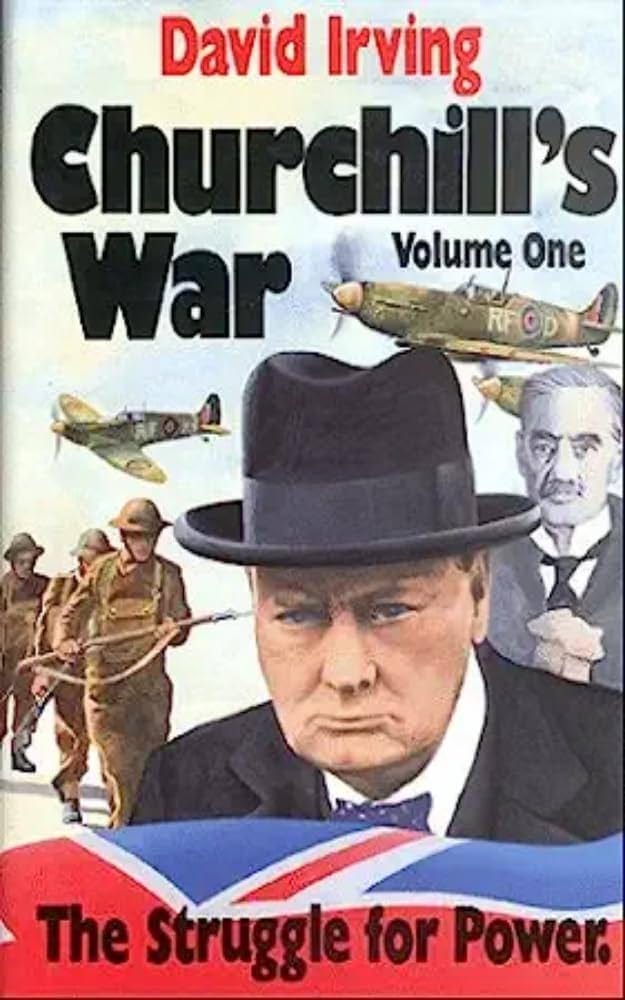
While most wartime histories paint Winston Churchill as the defiant savior of Western civilization, David Irving’s Churchill’s War (Vol. 1: The Struggle for Power) strips the myth to its roots and reconstructs the man from his own words, actions, and financial records. Drawing from private diaries, unpublished documents, and declassified archives across Europe and North America, Irving reframed Churchill not as the reluctant wartime leader thrust into history’s path, but as a calculating political outcast desperate to return to power, one who understood that war, above all, could restore his relevance.

Irving documented in detail how Churchill, largely excluded from political office after the First World War, was increasingly marginalized during the 1930s and reliant on private financial backing to sustain his lavish lifestyle. He was a man of letters, not a statesman, and depended heavily on income from newspaper columns, book royalties, and speaking tours—many of them sponsored directly or indirectly by interest groups eager to promote rearmament and confrontation with Germany. Irving’s research, drawn from Churchill’s unpublished financial papers and confidential correspondence, revealed a pattern of secretive and often foreign funding. Chief among these was Sir Henry Strakosch, a Jewish South African mining magnate who paid off substantial Churchill debts in 1938. This patronage helped keep Churchill solvent, and it aligned with his increasing hostility toward Germany, a hostility that suited the interests of his benefactors.

This financial dependency shaped his politics. Churchill, who once supported détente and praised Mussolini, pivoted sharply to championing intervention. Irving showed that Churchill used every diplomatic crisis—Abyssinia, Spain, Austria—as a theatrical stage to revive his public role. He fostered ties with Fleet Street editors, leaked documents to generate panic about German intentions, and used Parliament to position himself as Chamberlain’s most vocal rival. By 1938, Churchill had already opened unofficial channels of communication with Roosevelt’s inner circle, including ambassador Joseph P. Kennedy’s rivals, and urged the United States to resist neutrality in Europe. He was not merely awaiting a war; he was helping to engineer it.

Irving’s title refers not to the clash of nations, but to Churchill’s personal war for control of British policy. His rise was not the natural result of public demand, but the fruit of tireless private maneuvering. When Chamberlain resigned in 1940, it was Churchill, not Lord Halifax, who took power, largely because of his cultivated image as the voice of resistance and his backroom dealings with Labour and elements of British intelligence. Once in office, Churchill rejected every German peace offer, including the multiple proposals delivered through neutral channels in 1940 and 1941. These included full German withdrawal from Western Europe, restoration of Polish sovereignty (minus Danzig and the Corridor), and guarantees of British imperial holdings. Churchill refused to consider them. He insisted on total victory and unconditional surrender, even though Britain had no means to achieve such ends without American intervention.

The book also addresses Churchill’s psychological profile. Irving included testimonies from ministers, secretaries, and physicians, painting a picture of a man whose judgment was increasingly erratic. Churchill began each day with brandy, continued with whisky, and ended with champagne. His drinking was not social; it was habitual and heavy, bearing the marks of clinical alcoholism. Cabinet colleagues routinely commented on his inability to focus, his mood swings, and his detachment from material consequences. At the same time, he indulged in apocalyptic rhetoric and romanticized war as a stage for personal greatness. His belief in history vindicating him was not ironic, it was literal.

Irving also covered Churchill’s early approval of terror bombing. As early as 1940, long before the Blitz, he advocated for striking German civilian centers to break morale. He instructed RAF planners to maximize destruction and was briefed daily on the tonnage dropped and lives lost. This strategic shift, explicitly targeting civilian populations, represented a break from traditional rules of war and was, in Irving’s view, a moral decision for which Churchill bore full responsibility.

Churchill’s War was the product of a decade of archival research, including access to documents previously unpublished or unavailable to earlier biographers. It did not apologize for Hitler or endorse Germany’s policies. Rather, it asked whether the war was truly inevitable, or whether it had been maneuvered into existence by a man for whom war offered personal salvation.

Although Churchill’s War was not as immediately incendiary as Irving’s earlier Hitler’s War, it played a significant role in accelerating his marginalization within academic and media circles. While some reviewers acknowledged the book’s archival depth and provocative arguments, its central thesis—depicting Churchill not as a noble savior of the West but as a self-interested opportunist—fueled existing efforts to discredit him. A campaign was already underway to ruin Irving professionally, financially, and reputationally, and this work added further ammunition. As his research increasingly challenged the sanctified narrative of the war, especially regarding British motives and Allied conduct, the pressure to silence him intensified.

The most surreal phase of this campaign unfolded during Irving’s high-profile libel lawsuit against Deborah Lipstadt and Penguin Books in the early 2000s. Irving sued over Lipstadt’s characterization of him as a Holocaust denier and falsifier of history, but the trial became a show trial of his life’s work. A large legal team was granted full access to his personal archives. Tens of thousands of pages of handwritten diaries, private notes, and correspondence were subpoenaed and examined line by line, down to trivial marginalia and offhand remarks, in a sweeping effort to discredit him. Despite this unprecedented level of scrutiny, only a small number of factual errors were identified—fewer, in fact, than in many widely accepted academic texts. Nonetheless, Irving lost the case, was bankrupted, and a few years later was arrested and imprisoned in Austria for a speech delivered nearly two decades earlier.

As an aside, it is worth stating plainly: no other historian, perhaps in the entire history of civilization, has faced such sustained and coordinated censorship, financial ruin, legal persecution, professional ostracism, and exhaustive historical scrutiny as David Irving. At the height of his career, he published with major presses, was invited to lecture across the globe, and was widely praised for his unparalleled archival skill. His early books, such as The Destruction of Dresden and Hitler’s War, were once cited in mainstream academic and journalistic publications. But as his research began to challenge the sacred pillars of wartime memory—particularly Allied conduct, motives, and propaganda—he was systematically erased from polite intellectual life.

Whatever one thinks of his conclusions, the institutional force brought to bear against Irving speaks volumes about the fragility of official memory. Churchill’s War remains one of the most detailed and exhaustively documented accounts of Britain’s entry into the Second World War. Its arguments may be contested, but its sources remain, silent yet immovable.
https://www.theoccidentalobserver.net/wp-content/uploads/2018/06/TOO-Full-Logo-660x156-1.png 0 0 Kevin MacDonald https://www.theoccidentalobserver.net/wp-content/uploads/2018/06/TOO-Full-Logo-660x156-1.png Kevin MacDonald2025-06-05 07:45:042025-06-05 07:45:04Chad Crowley’s Substack:

NYT Oped by Sheila Katz: Jews Are Afraid Right Now. 

June 5, 2025/4 Comments/in General/by Kevin MacDonald

NYT Oped: Jews Are Afraid Right Now.

It’s a reasonable assumption that Jews who attended the pro-hostage march in Boulder are supporters of the genocide. And no acknowledgement that the Israel Lobby in the U.S. retains huge power and is entirely supported by the mainstream Jewish community. Kaatz acts as if the few Jews who protest the war are the mainstream. False.

In one city, two are dead. In another, 12 were wounded. Two horrific attacks against the Jewish community in less than two weeks.

For over 600 days, since the Hamas attacks of Oct. 7, the conditions in the United States for deadly antisemitic acts have grown. At rallies and on campuses, in coalition rooms and online spaces, slogans sometimes directly drawn from Hamas’s terrorist manifesto have been chanted and painted on placards, and shouted from stages and in the streets. “Globalize the intifada.” “By any means necessary.” “From the river to the sea.” “Zionists out.” These are not simply words; they can be interpreted as calls for violence.

The call was heeded on May 21 by a shooter who took the lives of Sarah Milgrim and Yaron Lischinsky outside a Jewish event in Washington. The call was heeded on Sunday, on the eve of the Jewish holiday of Shavuot, by someone firebombing a peaceful Jewish march in Boulder, Colo., calling for the release of hostages held by Hamas. Several older protesters, including at least one Holocaust survivor, were left critically injured. The victims were targeted because they were at Jewish events.

https://www.theoccidentalobserver.net/wp-content/uploads/2018/06/TOO-Full-Logo-660x156-1.png 0 0 Kevin MacDonald https://www.theoccidentalobserver.net/wp-content/uploads/2018/06/TOO-Full-Logo-660x156-1.png Kevin MacDonald2025-06-05 07:24:592025-06-05 07:24:59NYT Oped by Sheila Katz: Jews Are Afraid Right Now. 

Ross Douthat in the NYTimes: Is Civil War Coming to Europe?

June 4, 2025/7 Comments/in General/by Kevin MacDonald

Is Civil War Coming to Europe?

…

When I’ve written skeptically about scenarios for an American civil war, I’ve tended to stress several realities: the absence of a clear geographical division between our contending factions; the diminishment, not exacerbation, of racial and ethnic polarization in the Trump era; the fact that we’re rich and aging and comfortable, not poor and young and desperate, giving even groups that hate each other a stake in the system and elites strong reasons to sustain it; the absence of enthusiasm for organized communal violence, as opposed to lone-wolf forays.

Does the European landscape look different? On some fronts, maybe. Tensions between natives and new arrivals are common on both sides of the Atlantic, but ethnic and religious differences arguably loom larger in Europe than they do in the United States: There is more intense cultural separatism in immigrant communities in suburban Paris or Marseilles than in Los Angeles or Chicago, more simmering discontent that easily turns to riots.

At the same time, British and French elites have been more successful than American elites at keeping populist forces out of power, but their tools — not just the exclusion of populists from government but also an increasingly authoritarian throttling of free speech — have markedly diminished their own legitimacy among discontented natives. This means that neither underassimilated immigrants nor working-class white residents feel especially invested in the system, making multiple forms of political violence more plausible: pitting immigrant or native rebels against the government or pitting immigrants against natives with the government trying to suppress the conflict or, finally, pitting different immigrant groups against one another. (English cities have already played host to bursts of Muslim-Hindu violence.)

Then, too, Western Europe’s economies have grown more sluggishly than America’s for the past decade, reducing ordinary people’s stake in the current order and encouraging alienation and resistance. Finally there are arguably geographic concentrations of discontent — in the north of England or in immigrant-dominated cities that Betz warns could become ungovernable — that don’t exist in quite the same way in the United States.

All of this adds up, I would say, to a useful corrective to the progressive tendency to regard America in the Trump era as a great outlier, uniquely divided and deranged and threatened by factional strife, while liberal politics continues more or less as usual among our respectable and stable European allies. Not so: There are clearly ways in which Europe’s problems and divides are deeper than ours, with economic and demographic trends that portend darker possibilities, and the establishment attempt to keep populist forces at bay may end up remembered as accelerating liberal Europe’s downfall.

Yet many of the reasons to doubt the imminence of civil war in America still apply to Western Europe. The continent is more stagnant than the United States but still rich and comfortable and aged, there’s enthusiasm for rioting but rather less for organized violence, and for all the palpable disillusionment it is hard to glimpse any elite faction yet emerging — right or left, nativist or Islamo-Gauchiste — that would see violent revolution as an obvious means to its ambitions.

Meanwhile, there are distinctive European conditions that make civil war less likely there than in the United States: Smaller nations with more centralized political systems generally find it easier to police dissent, and there’s no Second Amendment or American-style gun culture to challenge the European state’s monopoly on force.


Ultimately I agree with the British writer Aris Roussinos, a pessimist but not a catastrophist, when he writes that the most likely near-future scenarios involve increasing “outbursts of violent disorder” but not the kind of collapse of central government authority, complete with ethnic cleansing and refugee flows, that the language of “civil war” implies.

And that imprecision matters: As I suggested before, if you use a civil-war framing to describe a world where rioting is more commonplace and assassination attempts and random forms of terrorism make a comeback, you’re describing realities that big, diverse societies often have to live with, using terms that misleadingly or hysterically evoke Antietam or Guernica.

I don’t think America in the 1960s and 1970s experienced a civil war, even though those were certainly chaotic decades. I don’t think modern France, with its long tradition of student protests and urban riots, has existed in a perpetual state of civil war. And as we face a future that’s clearly more destabilized than the post-Cold War era, it still behooves us to be realistic about the most plausible scenarios: We are still far more likely to be navigating a more chaotic landscape together as fellow citizens than shooting at one another across a sectional divide.

https://www.theoccidentalobserver.net/wp-content/uploads/2018/06/TOO-Full-Logo-660x156-1.png 0 0 Kevin MacDonald https://www.theoccidentalobserver.net/wp-content/uploads/2018/06/TOO-Full-Logo-660x156-1.png Kevin MacDonald2025-06-04 10:52:502025-06-04 10:52:50Ross Douthat in the NYTimes: Is Civil War Coming to Europe?

David Betz: Civil War Comes to the West, Part II: Strategic Realities

June 4, 2025/3 Comments/in General/by Kevin MacDonald

That civil war is looming in the West is a logical conclusion of standard, well-understood precepts of social science. The likely fracture of multicultural societies along lines of identity is an obvious hypothesis. The configuration of demographic geography, and the factional polarisation that is its political consequence, is a measurable fact. The precariousness of contemporary urbanity is a thing which geographers have worried over for at least a half century.[xvi] In short, the situation which I have described above is unpleasant, but it is not controversial as far as our grasp of current reality and theoretical understanding of how societies function is concerned.

Civil War Comes to the West, Part II: Strategic Realities

David Betz

– King’s College London, Department of War Studies

Civil War Comes to the West, Part II: Strategic Realities

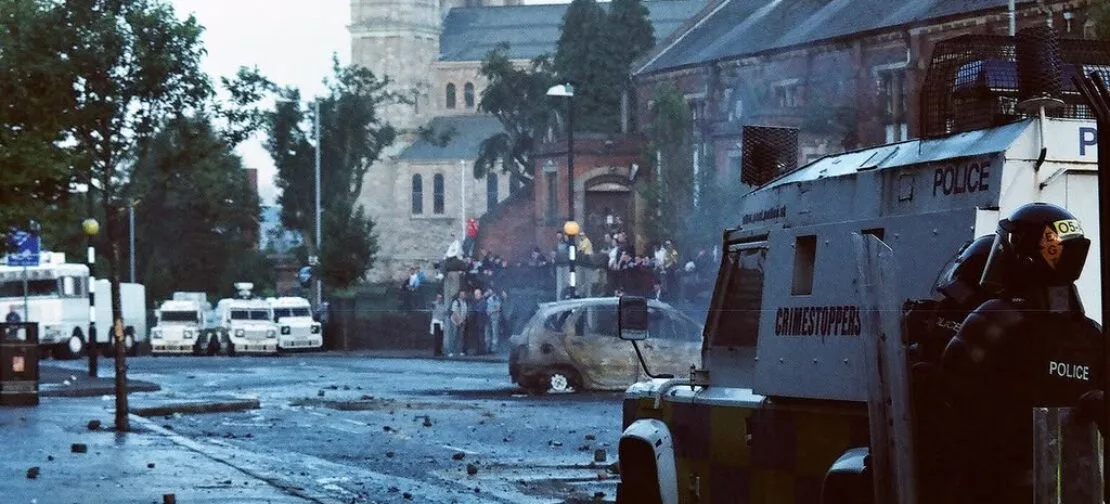
Image credit: by Sineakee, Belfast Riots 2011, original source , via Wikimedia Commons CC-by-2.0.

David Betz is Professor of War in the Modern World in the Department of War Studies, King’s College London. He has wide interests in strategic and military affairs but has written extensively on insurgency and counterinsurgency, information warfare, and strategic communications. His most recent book is The Guarded Age: Fortifications in the 21st Century (Cambridge: Polity, 2024).

This is the second of two articles on the dawning of an uncomfortable new strategic reality for the West, which is that the primary threat to its security and well-being today is not external but internal—specifically, civil war.[i] In the first essay, I explained the reasons that this situation has arisen: a combination of culturally fractured societies, economic stagnation, elite overreach and a collapse of public confidence in the ability of normal politics to solve problems, and ultimately the realisation by anti-status quo groups of plausible strategies of attack based on systems disruption of vulnerable critical infrastructure. In this article I expound on the likely shape that civil war will take and the strategies that might be employed to minimise and mitigate the damage that will entail.

At the time of writing the countries that are most likely to experience the outbreak of violent civil conflict first are Britain and France—both of which have already experienced what may be described as precursor or exemplary incidents of the kind discussed further below. The conditions are similar, however, throughout Western Europe as well as, for slightly different reasons, the United States;[ii] moreover, it must be assumed that if civil war breaks out in one place it is likely to spread elsewhere.[iii]

In the previous article in this journal, I explained how the conditions which scholars consider to be indicative of incipient civil war are present widely in Western states. According to the best guess of the extant literature, in a country where the conditions are present the chances of actual civil war occurring is four per cent per year.[iv] With this as an assumption, we may conclude that the chances of it occurring are 18.5 per cent over five years.

Let us assume, based on the existence of recent statements to that effect by credible national political or academic figures, that there are at least ten countries in Europe that face the prospect of violent civil conflict. In Appendix 1, I provide fifteen such examples—readers may dispense with whichever five of those they deem less credible. The chances then of it occurring in any one of these countries over five years is 87 per cent (or 95 per cent if you include all 15 of the sample).

A further reasonable assumption is that if it occurs in one place it has the potential to spread elsewhere. If we say, arbitrarily but plausibly, that the chances of spreading are half and half, then we may conclude that the chances of it occurring in one of ten Western states and then spreading to all others is about 60 per cent (or 72 per cent with all fifteen of the sample included) over five years.

A reasonable person might argue with the assessment of all or some of these factors and calculations. Perhaps things are only half as bad as I argue, might the risk therefore be just two per cent per year? On the other hand, perhaps I have been rather conservative? As I have argued previously the perception of ‘downgrading’ of a former majority which is one of the most powerful causes of civil war, is the main issue in all of the cases at hand.[v] Objectively, one must conclude that there is ample cause for concern about a worryingly large possibility of a form of war occurring in the West, to which it has not thought itself vulnerable for a long time.

This brings me to the matter of to whom this article is addressed. The first intended audience is statesmen, a constituency which I hope will get the message that the danger is ‘clear and present’, to use the jargon. The second is the general public, to whom I wish to say ‘No, you are not taking crazy pills’, the feeling you have had that something like this is going seriously wrong is right.

Finally and most specifically I hope to address military commanders at all levels, but particularly those with the greatest authority. You have spent a quarter of a century now thinking about insurgency and counterinsurgency. You know exactly what is in store for a fractured society under economic stress in which political legitimacy has been lost because your own doctrine spells it out.[vi] Everything that the general staffs and ministries of defence are now doing is secondary to the primary danger.

There is good precedent for what I am suggesting be done. In February 1989 Boris Gromov was the most highly regarded general in the Soviet Army, an obvious candidate to be chief of the general staff, and in time to be minister of defence. Instead, he resigned from the Army to join the Interior Ministry as commander of internal troops—a policeman, in effect. A perplexed journalist begged him to explain why he did it. The answer was that he feared civil war.[vii]

Soviet society was configured in a way that drove it towards internal conflict, he believed. Gromov’s duty, therefore, as he understood it, was to reorient his mindset to meet the main danger. The situation faced by soldiers and statesmen in the West today is fundamentally similar. It is as imminent for them now as it was for General Gromov on the eve of the implosion of the USSR.

The question: If civil war in the West is potentially as imminent, what ought commanders be preparing to do now? The answer is that a drastic reorientation of mindset on the part of the Western defence establishment is required. Generals should be formulating strategies to respond to the reality of civil conflict now. At the very least, should they fear for their careers lest they begin to plan for the outbreak of civil war without a civilian political directive, they ought to seek such a directive.

The essay which follows is intended as a guide to some of the things they might seek permission to consider.


In his book Military Strategy, John Stone reminds readers of the most important Clausewitzian aphorism, that the most crucial step in any ends-means calculation is the selection of the objective, which in turn must be based upon a realistic apprehension of the character of the war that one faces.[viii] I shall argue that the strategic objective in the coming civil war is the maximum limitation of the damage it will entail.

All civil wars are sui generis but we can surmise some general qualities that they tend to possess, which serve well to structure the following rumination on how to navigate the coming turmoil. These are as follows:

  1. Civil wars inflict serious depredation through iconoclastic vandalism or theft of societal cultural infrastructure—i.e., art and other historic objects and architecture.
  2. They destroy a country’s human capital through the strategic displacement of the civilian population on a mass scale.
  3. They increase societal vulnerability to predatory foreign intervention.[ix]

Civil wars are disproportionately long and bloody. A statistical study of civil wars from 1945 to1999 found that their median duration was six years and that total deaths in them came to 16.2 million—five times that of interstate conflicts in the same period.[x] It follows that shortening their duration is the most highly desirable strategy for damage limitation. The importance of the last point above is that foreign involvement in civil conflict seems to be the most important contributor to civil war duration.

As for casualties, if we take Britain as an example, with a population of 70 million and assume levels of violence only as bad as the worst year of the Northern Ireland conflict (1971 with 500 deaths in a population of 1.5 million) then 23,300 killed per year would be expected. If we take the Bosnian War of the 1990s, or the more recent Syrian War as indicators we might hazard a guess that between one and four per cent of the pre-war population will be killed, with many times more that amount displaced.

In light of the human cost of what might be called the best-case scenario, readers may, rightly, consider what follows a dismal strategy. It seeks as much as possible to negate/mitigate certain outcomes but does not assume that preventing them entirely is possible. Its logical parallel is the suite of civil defence measures once undertaken by many states in anticipation of mass aerial bombing of cities—which did occur—and nuclear war—which thankfully has not yet.

At this stage, it is useful to elucidate more specifically the shape of the civil wars that are going to occur in the West.

Feral Cities

Western governments under increasing structural civilisational distress and having squandered their legitimacy are losing the ability to peacefully manage multicultural societies that are terminally fractured by ethnic identity politics. The initial result is an accelerating descent of multiple major cities into marginally ‘feral’ status as defined by Richard Norton in a 2003 essay in this way:

…a metropolis with a population of more than a million people in a state the government of which has lost the ability to maintain the rule of law within the city’s boundaries yet remains a functioning actor in the greater international system.[xi]

The concept as further explored by Norton and others is understood to encompass a range of contingencies of increasing ferality, usually explained with a simple green (non-feral), amber (marginally or partially feral), or red (actively or incipiently feral) typology. In 2003, the exemplary feral city according to Norton was Mogadishu, Somalia.

As of 2024, a list of global cities exhibiting some or all the characteristics of amber and red ferality, such as high levels of political corruption, negotiated areas of police control if not outright no-go zones, decaying industries, crumbling infrastructure, unsustainable debt, two-tier policing, and the burgeoning of private security, would include many in the West.[xii] The direction of the situation, moreover, is decisively towards greater ferality.

In short, things are manifestly worsening right now. They are, however, going to get very much worse—I would estimate over not more than five years. That is because of the combination of two other vital factors. The first is the urban versus rural dimension of the coming conflicts which, in turn, is a result of migrant settlement dynamics. Simply put, the major cities are radically more diverse and have a growing mutually hostile political relationship with the country in which they are embedded.

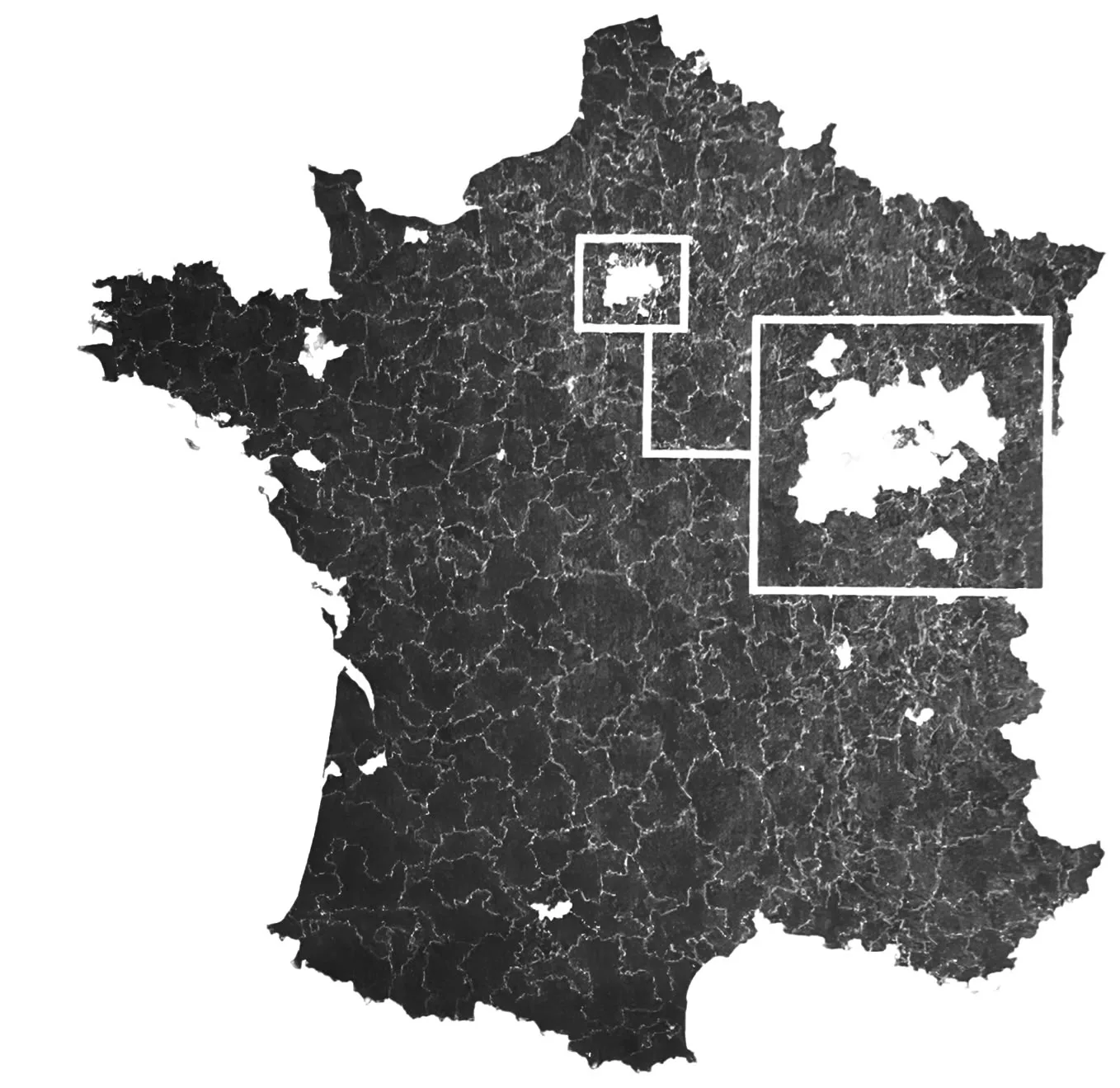
Figure 1: French Elections 2024

Source: map adapted by the author from an original published in Le Monde (16 June 2024).

This is most effectively shown graphically, as in the map above which shows in black the 457 French constituencies which voted in the first round of the 2024 European Parliament elections for Marine Le Pen’s National Rally, as opposed to the 119 in white that voted for other parties. Similar maps using other proxies for measuring anti-status quo mood showing the same pattern of geographic distribution could be easily made for the United States, Great Britain, and other countries.

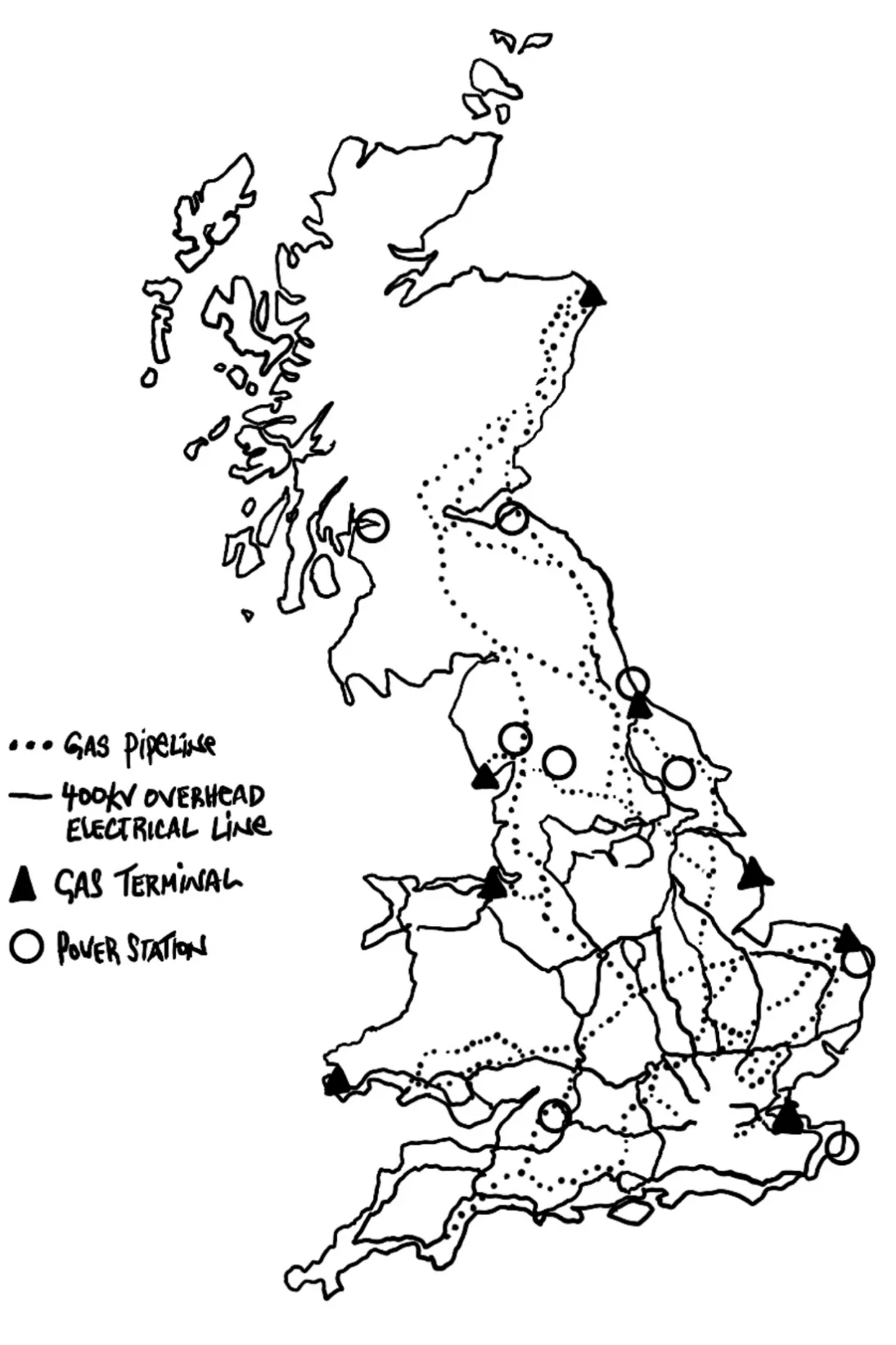
The second is the way in which modern critical infrastructure—gas, electricity, and transportation—is configured. Again, simply put, the life support systems of cities are all located in or pass through rural areas. This is easily illustrated below with a simplified map of Britain’s energy infrastructure. None of this infrastructure is well guarded, indeed most of it is effectively impossible to guard adequately.

Putting these factors together allows one to outline the trajectory of the coming civil wars. First, the major cities become ungovernable, i.e., feral, exhausting the ability of the police even with military assistance to maintain civil order, while the broader perception of systemic political legitimacy plummets beyond recovery. The economy is crippled by metastasising intercommunal violence and consequent internal displacement. Second, these feral cities come to be seen by many of those indigenes of the titular nationality now living outside them as effectively having been lost to foreign occupation. They then directly attack the exposed city support systems with a view to causing their collapse through systemic failure.

Figure 2: Simplified Representation of UK Energy Infrastructure

Source: map adapted by the author using data from ‘Open Infrastructure’, https://openinframap.org/#2.03/26/12.2

In a limited but exemplary form, infrastructural attacks such as I have described have already occurred. In Paris, in July of 2024, a major sabotage attack on the long-distance fiber-optic cable network followed a series of coordinated arson attacks on the rail network. Both attacks were supposed to have been timed to coincide with the Olympic Games that were being hosted by the city.[xiii] In London, vigilantes known as ‘Blade Runners’ have damaged or destroyed somewhere between 1000-1200 surveillance cameras intended to enforce the city’s ultra-low-emission-zone scheme.[xiv] At the time of writing, counterterrorism police are investigating why the primary electrical transformer for Heathrow Airport is burning, causing 1300 flights to be delayed or cancelled with consequent severe economic damage.[xv]

That civil war is looming in the West is a logical conclusion of standard, well-understood precepts of social science. The likely fracture of multicultural societies along lines of identity is an obvious hypothesis. The configuration of demographic geography, and the factional polarisation that is its political consequence, is a measurable fact. The precariousness of contemporary urbanity is a thing which geographers have worried over for at least a half century.[xvi] In short, the situation which I have described above is unpleasant, but it is not controversial as far as our grasp of current reality and theoretical understanding of how societies function is concerned.

Searching for a definition of ‘city’ which would satisfy all the many variants of such a thing that have existed in human history, Arnold Toynbee supposed that it was, simply, ‘a human settlement whose inhabitants cannot produce, within the city limits, all of the food that they need for keeping them alive.’[xvii] It is a definition which is currently highly apposite. The fact of the matter is that numerous major Western cities are perceived increasingly as alien to and parasitic of the nations in which they are embedded.

The viability of such places has always been contingent; their apparent stability is, in fact, an astonishing balancing act requiring constant and competent maintenance. On current trajectory, that balancing act is going to fail.

Continues…

https://www.theoccidentalobserver.net/wp-content/uploads/2018/06/TOO-Full-Logo-660x156-1.png 0 0 Kevin MacDonald https://www.theoccidentalobserver.net/wp-content/uploads/2018/06/TOO-Full-Logo-660x156-1.png Kevin MacDonald2025-06-04 07:00:462025-06-04 07:00:46David Betz: Civil War Comes to the West, Part II: Strategic Realities

Report: ‘Thousands’ of (White) South African Refugees to Arrive in U.S. by End of Summer

June 3, 2025/9 Comments/in General/by Kevin MacDonald

50,000 applications for refugee status from Afrikaners

Report: ‘Thousands’ of South African Refugees to Arrive in U.S. by End of Summer

“Thousands” of white South African refugees may be in the United States by the end of the summer as massive amounts of applications from Afrikaners — an ethnic minority in the country — continue to pour in, the Daily Caller reported.

A U.S. Department of State official told the outlet on Friday that the Trump administration is hoping to take in many more than the small group of 59 Afrikaners that arrived in Washington, DC, last month.

“We won’t be talking about dozens of arrivals, but hundreds and perhaps thousands,” the official said. While they did not specify an exact time frame, the official added that “we’ll start to massively scale this up” towards the “second half of summer.”

Referring to a backlog of more than 50,000 applications for refugee status from Afrikaners, who frequently face political and racial violence in their home country, the official added that this number will “continue to rise.”

As the first group of a few dozen Afrikaners was welcomed into the U.S. by the State Department on May 12, President Donald Trump blasted the establishment media for refusing to cover the “genocide” taking place against white farmers in South Africa.

“It’s a genocide that’s taking place that you people don’t want to write about, but it’s a terrible thing that’s taking place, and farmers are being killed,” Trump told reporters in the White House. “They happen to be white, but whether they’re white or black makes no difference to me.”

“But white farmers are being brutally killed, and their land is being confiscated in South Africa, and the newspapers and the media — television media — doesn’t even talk about it,” he continued. “If it were the other way around, they’d talk about it. That would be the only story they’d talk about.”

According to the State Department official, every Afrikaner who has been granted refugee status in the U.S. thus far “has demonstrated a persecution claim.”

“People have suffered attacks on their farms that were racially motivated,” they explained.

Despite the allegations of persecution against white people in his country, South African President Cyril Ramaphosa has repeatedly insisted that they are not victims, Breitbart News reported.

“They are leaving because they don’t want to embrace the changes taking place in our country in accordance with our Constitution,” Ramaphosa claimed soon after news broke of the first group of refugees.

Speaking to reporters a short while later, the president called the refugees “cowardly” for “running away.”

Ramaphosa even went so far as to defend violent political chants calling to “Kill the Boer” and to “Kill the Farmer,” arguing that his country simply values “freedom of expression.”

Olivia Rondeau is a politics reporter for Breitbart News based in Washington, DC. Find her on X/Twitter and Instagram. 

https://www.theoccidentalobserver.net/wp-content/uploads/2018/06/TOO-Full-Logo-660x156-1.png 0 0 Kevin MacDonald https://www.theoccidentalobserver.net/wp-content/uploads/2018/06/TOO-Full-Logo-660x156-1.png Kevin MacDonald2025-06-03 10:43:592025-06-03 10:43:59Report: ‘Thousands’ of (White) South African Refugees to Arrive in U.S. by End of Summer

JTA: Karol Nawrocki, right-wing Holocaust revisionist historian, elected Polish president

June 3, 2025/9 Comments/in General/by Kevin MacDonald

Karol Nawrocki, right-wing Holocaust revisionist historian, elected Polish president

Read more

https://www.theoccidentalobserver.net/wp-content/uploads/2018/06/TOO-Full-Logo-660x156-1.png 0 0 Kevin MacDonald https://www.theoccidentalobserver.net/wp-content/uploads/2018/06/TOO-Full-Logo-660x156-1.png Kevin MacDonald2025-06-03 10:16:162025-06-03 10:16:16JTA: Karol Nawrocki, right-wing Holocaust revisionist historian, elected Polish president

Dutch Government Collapses Over Migration Dispute

June 3, 2025/1 Comment/in General/by Kevin MacDonald

Mr. Wilders said that implementation of that policy was not going quickly enough. During a news conference last week, he said he wanted to add 10 more proposals to the agreement to further curb migration and demanded the immediate support from his governing partners.

The proposals included calls for a complete halt to asylum, as well as a temporary stop to family reunions for asylum seekers who had been granted refugee status, and the return of all Syrians who had applied for asylum or are in the Netherlands on temporary visas.

Dutch Government Collapses Over Migration Dispute

The populist Geert Wilders withdrew his right-wing party from the ruling coalition, saying that partners were stalling his plans for the Netherlands’ “strictest migration policy ever.”

Geert Wilders is flanked by two people as he talks to reporters with microphones.
Geert Wilders, the far-right leader of the Netherlands’ biggest political party, speaking to reporters in The Hague on Tuesday.Credit…Robin van Lonkhuijsen/ANP, via Agence France-Presse — Getty Images
The governing coalition in the Netherlands collapsed on Tuesday after the populist leader Geert Wilders withdrew his party over a dispute about migration policy, ending a rocky 11-month reign by the country’s first far-right government and triggering early elections.

The move by Mr. Wilders shows how much a debate over unauthorized migration continues to roil European politics, a decade after a large-scale influx of people fleeing wars or seeking better economic opportunities unsettled the region.

The governing coalition’s collapse was confirmed by Prime Minister Dick Schoof, who said he would hand in his resignation to King Willem-Alexander on Tuesday. He said he would stay on as the leader of a caretaker government, without Mr. Wilders’s party, until elections and the formation of a new coalition.

It was not immediately clear when the elections would take place, but they appear unlikely to happen before October, plunging the country into political uncertainty for at least the rest of the year. Mr. Wilders’s party has been dropping in Dutch polls lately.

Mr. Wilders announced the withdrawal of his Party for Freedom from the four-party coalition on X, saying the decision was made because of his partners’ refusal to sign off on a new list of proposals to curb migration. “No signature for our migration plans,” he said.

The political crisis comes about two weeks before the Netherlands is set to host a NATO summit on June 24 and 25.

Mr. Wilders’s Party for Freedom — which has advocated banning the Quran, closing Islamic schools and entirely halting the acceptance of asylum seekers — won the largest number of seats in November 2023 elections, sending shock waves through the Dutch political system.

Mr. Wilders was able to form a government with three other right-wing parties — the People’s Party for Freedom and Democracy, a center-right party; the Farmer Citizen Movement, a populist pro-farmer party; and the New Social Contract — after more than six months of wrangling last year. It was the first government to include Mr. Wilders’s party, which mainstream parties had previously shunned.

Together, the four parties hold 88 seats in the 150-seat House of Representatives, a comfortable majority. But in a sign of how uncomfortable their arrangement was, the four agreed not to name any of their own leaders as prime minister. Instead they settled on Mr. Schoof, a career civil servant with no elective office or party affiliation, to lead the government.

“It was a marriage of convenience,” said Janka Stoker, a professor of leadership and organizational change at the University of Groningen.

Despite a decline in further migrant arrivals, anti-immigrant sentiment remains strong across Europe, fueling far-right populism that has brought politicians like Mr. Wilders to power.

Efforts to limit unauthorized migration have become more mainstream on the continent. In Germany on Monday, a Berlin court ruled that the German border police can no longer reject asylum seekers who arrive from neighboring European Union countries without investigating their claims, dealing a blow to Chancellor Friedrich Merz’s attempts to control such migration.

Mr. Wilders had prided himself on bringing the “strictest migration policy ever” to the Netherlands, something that his governing partners had said they agreed with. In May 2024, the four parties reached a deal that included “the strictest asylum admission policy and the most comprehensive migration control package ever.”

But Mr. Wilders said that implementation of that policy was not going quickly enough. During a news conference last week, he said he wanted to add 10 more proposals to the agreement to further curb migration and demanded the immediate support from his governing partners.

The proposals included calls for a complete halt to asylum, as well as a temporary stop to family reunions for asylum seekers who had been granted refugee status, and the return of all Syrians who had applied for asylum or are in the Netherlands on temporary visas.

The leaders of the other three parties in the coalition said that while they did not necessarily oppose Mr. Wilders’s plans, they wanted him to propose them in the Dutch House of Representatives. That would have taken longer and would not have guaranteed the plans’ implementation.

Then on Tuesday morning, after an emergency meeting with his governing partners that lasted barely 20 minutes, Mr. Wilders said he had no choice other than to withdraw his party from the coalition.

Dilan Yesilgoz-Zegerius, the leader of the People’s Party for Freedom and Democracy, expressed disbelief over the move. “I am baffled, and I assume his voters are, too,” she said. “I don’t think we will get another right-wing majority.”

Caroline van der Plas and Nicolien van Vroonhoven, the leaders of the other two governing parties, called Mr. Wilders’s decision “irresponsible.”

“He isn’t putting the Netherlands first, he’s putting Geert Wilders first,” said Ms. van der Plas, the leader of the pro-farmers party. “And I blame him for that.”

New elections now seem all but certain, less than two years after voters in the Netherlands went to the polls. The opposition leader Frans Timmermans, who leads the country’s left-wing alliance of the Green Party and the Labor Party, which came in second in the November 2023 elections, said he hoped for new elections “as soon as possible,” effectively ruling out any other option for saving the coalition.

https://www.theoccidentalobserver.net/wp-content/uploads/2018/06/TOO-Full-Logo-660x156-1.png 0 0 Kevin MacDonald https://www.theoccidentalobserver.net/wp-content/uploads/2018/06/TOO-Full-Logo-660x156-1.png Kevin MacDonald2025-06-03 07:33:302025-06-03 12:58:17Dutch Government Collapses Over Migration Dispute
Page 56 of 209«‹5455565758›»
Subscribeto RSS Feed

Kevin MacDonald on Mark Collett’s show reviewing Culture of Critique

James Edwards at the Counter-Currents Conference, Atlanta, 2022

Watch TOO Video Picks

video archives

DONATE

DONATE TO TOO

Follow us on Facebook

Keep Up To Date By Email

Subscribe to get our latest posts in your inbox twice a week.

Name

Email


Topics

Authors

Monthly Archives

RECENT TRANSLATIONS

All | Czech | Finnish | French | German | Greek | Italian | Polish | Portuguese | Russian | Spanish | Swedish

Blogroll

  • A2Z Publications
  • American Freedom Party
  • American Mercury
  • American Renaissance
  • Arktos Publishing
  • Candour Magazine
  • Center for Immigration Studies
  • Chronicles
  • Council of European Canadians
  • Counter-Currents
  • Curiales—Dutch nationalist-conservative website
  • Denmark's Freedom Council
  • Diversity Chronicle
  • Folktrove: Digital Library of the Third Way
  • Human Biodiversity Bibliography
  • Instauration Online
  • Institute for Historical Review
  • Mondoweiss
  • National Justice Party
  • Occidental Dissent
  • Pat Buchanan
  • Paul Craig Roberts
  • PRIVACY POLICY
  • Project Nova Europea
  • Radix Journal
  • RAMZPAUL
  • Red Ice
  • Richard Lynn
  • Rivers of Blood
  • Sobran's
  • The European Union Times
  • The Occidental Quarterly Online
  • The Political Cesspool
  • The Raven's Call: A Reactionary Perspective
  • The Right Stuff
  • The Unz Review
  • Third Position Directory
  • VDare
  • Washington Summit Publishers
  • William McKinley Institute
  • XYZ: Australian Nationalist Site
NEW: Individualism and the Western Liberal Tradition

Also available at Barnes & Noble

Culture of Critique

Also available at Barnes & Noble

Separation and Its Discontents
A People That Shall Dwell Alone
© 2025 The Occidental Observer - powered by Enfold WordPress Theme
  • X
  • Dribbble
Scroll to top

By continuing to browse the site, you are legally agreeing to our use of cookies and general site statistics plugins.

CloseLearn more

Cookie and Privacy Settings


How we use cookies

We may request cookies to be set on your device. We use cookies to let us know when you visit our websites, how you interact with us, to enrich your user experience, and to customize your relationship with our website.

Click on the different category headings to find out more. You can also change some of your preferences. Note that blocking some types of cookies may impact your experience on our websites and the services we are able to offer.

Essential Website Cookies

These cookies are strictly necessary to provide you with services available through our website and to use some of its features.

Because these cookies are strictly necessary to deliver the website, refusing them will have impact how our site functions. You always can block or delete cookies by changing your browser settings and force blocking all cookies on this website. But this will always prompt you to accept/refuse cookies when revisiting our site.

We fully respect if you want to refuse cookies but to avoid asking you again and again kindly allow us to store a cookie for that. You are free to opt out any time or opt in for other cookies to get a better experience. If you refuse cookies we will remove all set cookies in our domain.

We provide you with a list of stored cookies on your computer in our domain so you can check what we stored. Due to security reasons we are not able to show or modify cookies from other domains. You can check these in your browser security settings.

Other external services

We also use different external services like Google Webfonts, Google Maps, and external Video providers. Since these providers may collect personal data like your IP address we allow you to block them here. Please be aware that this might heavily reduce the functionality and appearance of our site. Changes will take effect once you reload the page.

Google Webfont Settings:

Google Map Settings:

Google reCaptcha Settings:

Vimeo and Youtube video embeds:

Privacy Policy

You can read about our cookies and privacy settings in detail on our Privacy Policy Page.

Privacy Policy
Accept settingsHide notification only