
Aristotle on Immigration, Diversity, and Democracy
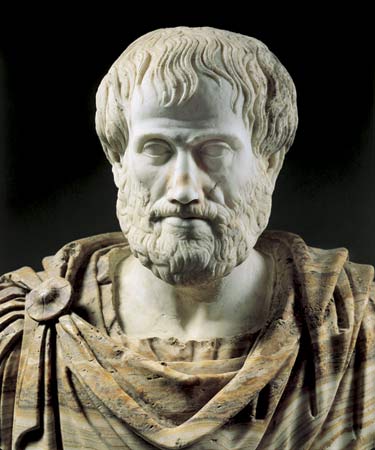
Aristotle (trans. Ernest Barker and R. F. Stalley), Politics (Oxford: Oxford University Press, 1995)
One measure of the intellectual and moral degeneration of the West over the last decades is the now near-total ignorance of the founding Classics of Western civilization, even among the so-called educated class. Those who remain in ignorance of what superior minds have thought before them are condemned to remain as children, at best reinventing the wheel, rather than standing upon the shoulders of giants.
While the Classics were clearly written for a time and place very different from our own, their concerns often speak to us very directly. Aristotle’s Politics, his main political treatise, is replete with comments concerning the dangers of diversity and egalitarianism. Aristotle’s political thought does not soar to the eugenic and spiritual heights of Plato’s utopia. However, Aristotle’s moderate and pragmatic brand of politics is much more palatable to someone raised in modern liberalism, while at the same time being a better introduction to the communitarian and aristocratic political ethics of the ancient Greeks.
Aristotle is greatly concerned with the preservation of civil peace in the city-state. One of the most common causes of “faction” and civil war, he says, was the unhappy consequences of unassimilated immigration and the consequent diversity. Aristotle’s prose is perfectly clear:
Heterogeneity of stocks may lead to faction – at any rate until they have had time to assimilate. A city cannot be constituted from any chance collection of people, or in any chance period of time. Most of the cities which have admitted settlers, either at the time of their foundation or later, have been troubled by faction. For example, the Achaeans joined with settlers from Troezen in founding Sybaris, but expelled them when their own numbers increased; and this involved their city in a curse. At Thurii the Sybarites quarreled with the other settlers who had joined them in its colonization; they demanded special privileges, on the ground that they were the owners of the territory, and were driven out of the colony. At Byzantium the later settlers were detected in a conspiracy against the original colonists, and were expelled by force; and a similar expulsion befell the exiles from Chios who were admitted to Antissa by the original colonists. At Zancle, on the other hand, the original colonists were themselves expelled by the Samians whom they admitted. At Apollonia, on the Black Sea, factional conflict was caused by the introduction of new settlers; at Syracuse the conferring of civic rights on aliens and mercenaries, at the end of the period of the tyrants, led to sedition and civil war; and at Amphipolis the original citizens, after admitting Chalcidian colonists, were nearly all expelled by the colonists they had admitted. (1303A13)
Thus, immigration of different peoples was a common source of conflict, often leading to civil war and concluding with the ethnic cleansing of either the native peoples or the invaders.
Aristotle’s ideal of citizenship, entailing civic duties and group solidarity, necessarily requires a strong common identity and a sharp differentiation between citizens and foreigners. Conversely, foreign mercenaries had no solidarity with the people, and were thus frequently used by tyrants to enforce their unjust rule:
The guard of a [legitimate] king is composed of citizens: that of a tyrant is composed of foreigners. (1310B31)
It is a habit of tyrants never to like anyone who has a spirit of dignity and independence. The tyrant claims a monopoly of such qualities for himself; he feels that anybody who asserts a rival dignity, or acts with independence, is threatening his own superiority and the despotic power of his tyranny; he hates him accordingly as a subverter of his own authority. It is also a habit of tyrants to prefer the company of aliens to that of citizens at table and in society; citizens, they feel, are enemies, but aliens will offer no opposition.” (1313B29)
This passage brings to mind the Bolshevik tyranny in the early decades of the Soviet Union, when the government, and especially the secret police, was dominated by people from non-Russian ethnic groups. As Aristotle notes, under such a system any assertion of independence was ruthlessly crushed.
Aristotle also clearly expresses a related idea, that ethnic homogeneity enables the group solidarity that is needed to throw off tyrannical rule, while a diverse population with a no common identity is easier to rule. Aristotle, in order to enable leisure in the premodern era, argues for having a population of ethnically diverse slaves (something I, for reasons of civil peace and genetic integrity, would not endorse and especially not in the age of automation):
The class which farms it should, ideally, if we can choose at will, be slaves – but slaves not drawn from a single stock, or from stocks of a spirited temperament. This will at once secure the advantage of a good supply of labor and eliminate any danger of revolutionary designs. (1330A23)
Thus, a mass of mongrels without identity is easier to rule than a self-conscious people, a truth which the hostile elites who rule the West seem to instinctively understand.
Aristotle observes that foreigners were also a favorite political weapon not only of tyrants but also of egalitarian extremists. He writes: “At Amphipolis someone by the name of Cleotimus introduced Chalcidian settlers, and incited them after their settlement to make an attack on the rich” (1305B39). Aristotle says that naturalization of foreigners played a key role in founding the more extreme form of democracy found in Athens. He writes of Cleisthenes, who was said to have founded the democracy of that city: “after the expulsion of the tyrants he enrolled in the tribes a number of resident aliens, both foreigners and slaves” (1275B34).[1] Aristotle says elsewhere that democrats consolidate their regime by efforts to mix the citizenry (breaking down old identities) and stoking individualism:
Other measures which are also useful in constructing this last and most extreme type of democracy are measures like those introduced by Cleisthenes at Athens, when he sought to advance the cause of democracy, or those which were taken by the founders of popular government at Cyrene. A number of new tribes and clans should be instituted by the side of the old; private cults should be reduced in number and conducted at common centers; and every contrivance should be employed to make all the citizens mix, as much as they possibly can, and to break down their old loyalties. All the measures adopted by tyrants may equally be regarded as congenial to democracy. We may cite as examples the license allowed to slaves (which, up to a point, may be advantageous as well as congenial), the license permitted to women and children, and the policy of conniving at the practice of “living as you like.” There is much to assist a constitution of this sort, for most people find more pleasure in living without discipline than they find in a life of temperance. (1319B19)
These measures appear in line with what Samuel Francis has called “anarcho-tyranny”: by weakening traditional group identities and the authority of family fathers, the population of “liberated individuals” is paradoxically reduced to an impotent mass, which can then be ably manipulated by demagogues. Aristotle considers extreme democracy to be undesirable because it leads to lawlessness and individualism.
* * *
Aristotle is rare among ancient thinkers in that his political theory advocates at least a kind of moderate democracy or constitutional government. He generally believes a large number of people should have citizenship, limited by service in the army and a moderate property qualification — a description that fits the Roman Republic remarkably well. He argues for a “mixed regime” featuring democratic, oligarchic, and aristocratic elements, subject to a largely unchanging basic law, the latter embodying and stipulating a way of life.
The American Founding Fathers’ (or indeed the Confederates’) vision of government strikes me as having significant overlap with Aristotle’s political thought. The greatest difference is perhaps that Aristotle argued for a moderately democratic constitutional regime, not on grounds of individual “rights” or “equality,” but because these served the interests of the community. A moderately democratic regime gave as many people as possible an interest in the preservation of that regime (“buy-in”) and allowed all citizens to include their share of wisdom, however small, in government.
Aristotle forcefully argues in favor of a community-centered notion of justice: “The good in the sphere of politics is justice; and justice consists in what tends to promote the common interest” (1282B14). How many political discussions today — whether about abortion, gay marriage, immigration, economic policy, or whatever — refer to the common good rather than to solipsistic and childish arguments about “rights” and “fairness”?
While Aristotle is decidedly more “bourgeois” than Plato, he too is contemptuous of egalitarian excesses, which manifest themselves in democratic extremism and selfish individualism. Aristotle notes that some democracies are so extreme that they actually undermine the existence of the state, and hence do not survive as long as a moderate democracy. He writes with great eloquence on that “false conception of liberty” which has so often seduced our people:
In democracies of the type which is regarded as being peculiarly democratic the policy followed is the very reverse of their real interest. The reason for this is a false conception of liberty. There are two features which are generally held to define democracy. One of them is the sovereignty of the majority; the other is the liberty of individuals. Justice is assumed to consist in equality and equality in regarding the will of the masses as sovereign; liberty is assumed to consist in “doing what one likes.” The result of such a view is that, in these extreme democracies, each individual lives as he likes — or as Euripides says,
For any end he chances to desire.
This is a mean conception [of liberty]. To live by the rule of the constitution ought not to be regarded as slavery, but rather as salvation. (1310A12)
Is this not a very neat summation of the ills of modern liberalism? I would argue that the West was already severely infected by the 1930s, before metastasizing to an absurd degree from the 1960s onwards. Thus today, liberals express only desire only for “equality” and “solidarity,” all the while destroying the very foundations for these ends through multiculturalism and open-borders, these being fanatically imposed with the most short-sighted bigotry.
Aristotle provides a powerful rationale for a moderate constitutional regime of responsible citizen-soldiers constrained by an enlightened basic law. In the coming ethnostate, the basic law will necessarily prescribe the preservation of the identity and ethnic-genetic interests of the European peoples as an inviolable imperative, to be enforced by judges and perhaps a military-spiritual order (or one of soldier-scientists) dedicated to that end.
In any event, Aristotle clearly articulates how homogeneity, a common identity, and a sense of peoplehood are social goods necessary to citizenship, solidarity, and freedom from tyrannical government. He argues for good government oriented towards the common interest as opposed to towards individual “rights,” caprice, and equality as ends in themselves. Ancient Greek politics can only seem “authoritarian” or even “totalitarian” to modern liberals. In fact, the politics of the Greek city-state is nothing more than that of the assembled paterfamilias, come together to fulfill their sacred responsibility to protect, discipline, and educate their kinsfolk towards the good.
Aristotle’s grim observations on diversity are worth repeating: unassimilable immigration can only lead to conflict, conflict which can only end through separation, separation which can only occur through the expulsion either of the invaders or the natives from their ancestral lands.
[1] This was before the reforms of Pericles, who democratized Athens further, while actually tightening citizenship qualifications to those born of two native Athenian parents.




Comments are closed.