GOP Pledge: No More Talking About Trump
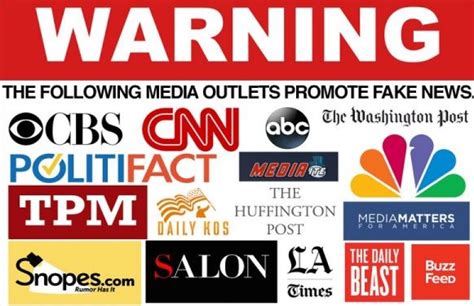
The media are so desperate for Republicans to nominate Donald Trump that they’ve turned over 96.7% of their programming to covering him, with brief interruptions for Emmett Till updates. Like dogs playing a game of fetch for eternity, they never tire of rehashing Trump’s legal troubles, his behavior on Jan. 6 (which has now been more investigated than the Kennedy assassination), his payment to a stripper, his call to election officials in Georgia and on and on and on.
It has become clear that the media also plan to make the GOP presidential primaries entirely about Trump. Every Republican running for president is required to spend half of any interview answering questions about the former president. Even when they’re not saying anything at all about him, somehow the media make it about Trump.
E.g.:
Ron DeSantis gives a speech in South Carolina not mentioning Trump.
Headline: “Ron DeSantis says little about Trump indictment; decries unequal justice and ‘weaponization‘” — USA Today
Mike Pence announces he’s running for president.
Nikki Haley attacks Trump.
Headline: “Nikki Haley accused of ‘MAGA agenda’ after supporting abortion restrictions in town hall” — The Guardian
Candidates who aren’t talking about Trump are attacked for “enabling” him. MSNBC’s totally objective, nonpartisan anchor (and former Biden press secretary) Jen Psaki denounced Republicans on Monday, complaining that, unless they’re constantly berating him, “they are effectively enabling a guy who led an attempted coup. And for what? To maybe win a handful of delegates?”
Republicans, forget the pledge to support the party’s nominee. It’s pointless, irrelevant, stupid and openly defied, as it was in 2016 by Jeb! and John Kasich. The pledge we need candidates to take is this: We jointly refuse to answer any more questions about Trump. All of you, except Chris Christie.
Do you really think the media are trying to help you with this endless focus on Trump? They’re putting Republicans in a no-win situation: Either the candidates are forced to take an utterly indefensible position by defending Trump, or they’re required to write off the votes of all Trump supporters.
Democrats will never be asked to criticize any part of their coalition — and they’ve got a much crazier base than Republicans do. Why are Republicans held responsible for every nut on the right, while Democrats are allowed to skate on the core beliefs of their base?
Here are some questions Democratic candidates ought to be asked but never will be.
— Do White lives matter? Why did Democratic presidential candidate Martin O’Malley have to apologize for saying “All lives matter” in 2016?
— What percentage of White people do you believe are racist? Should teachers and college professors who indoctrinate students to believe that all Whites are guilty of “systemic racism” keep their jobs?
— If one unionized teacher could stay home while still being paid, but 10 children would die, which would you choose? The American Federation of Teachers, a major Democratic donor, relentlessly fought to keep schools closed throughout the pandemic. A Reuters study later found that the school closures led to a 43% rise in drug-related 911 calls for people aged 20 and younger.
— Should the police be defunded? If not, will you denounce left-wing “philanthropist” George Soros? A major source of dark money for Democratic causes, this sinister figure gave $35 million to anti-police activists in 2021. Last year, as the murder rate continued to soar, he pledged to give more.
— How about ICE? Rep. Alexandria Ocasio-Cortez campaigned on abolishing ICE. Other Democrats who support abolishing ICE include Sens. Elizabeth Warren, Bernie Sanders and Kirsten Gillibrand. House Democrats have actually introduced legislation to abolish ICE.
— What is a woman? Do you think Biden’s Supreme Court pick, Justice Ketanji Brown Jackson, was lying when she claimed under oath not to know the answer to that question, or is she stupid?
— Should men be allowed in girls’ bathrooms, locker rooms and prisons? Should they compete in women’s sports? Should children be allowed to poison and mutilate themselves under the belief that they can change genders? Are Republican governors who ban these practices guilty of “hate” — as claimed by almost all Democrats? Do you agree with Biden that such measures are “ugly” attacks from “hysterical” and “prejudiced” people?
— If Blacks, Hispanics, Whites and Asians are not disciplined, arrested and imprisoned at their exact proportions in the population, is that proof of racism?
— Is it OK to be White? If so, will you call on liberal “hate watch” groups and college administrators across the nation to stop treating that phrase as “hate speech”?
— Should Al Sharpton be required to pay income taxes? This Democratic kingmaker has been a guest of President Biden’s at the White House at least twice, the Obama White House more than 72 times and has his ring kissed by any Democrat running for president.
The last time The New York Times investigated, about 10 years ago, Sharpton owed more than $4 million in income taxes.
While we’re on the subject, he’s also responsible for the Tawana Brawley hate hoax in 1987, and in the 1990s he helped gin up angry mobs in Crown Heights and at Freddy’s Fashion Mart in Harlem, which resulted in eight deaths.
True, that was a long time ago. Do you think if DeSantis had met with David Duke a really long time ago, the media would say, “no biggie”?
Democrats have won three national elections in a row by making them all about Trump. Unless the GOP is intent on committing suicide, their No. 1 objective has got to be preventing this from happening again. Every Republican candidate for president (except Chris Christie) has got to take this pledge. I promise not to answer any more questions about Trump.
COPYRIGHT 2023 ANN COULTER