
Lothrop Stoddard’s “The French Revolution in San Domingo”
This is a foreword that I wrote for Lothrop Stoddard’s The French Revolution in San Domingo, published in 2011 but sadly out of print. Stoddard (birthday on June 29, 1883) was an important racial theorist in the 1920s, along with Madison Grant, Henry Pratt Fairchild, William Ripley, Gustav Le Bon, Charles Davenport, and William McDougall. These people were able to hold academic positions and write for the popular media, but all that changed with the rise of the Boasian view of race. From my review of Joseph Bendersky’s The ‘Jewish Threat’: Anti-Semitic Politics of the U.S. Army.
The tide against the world view of the officers turned with the election of Roosevelt. “Jews served prominently in his administration,” (p. 244) including Felix Frankfurter who had long been under scrutiny by MID as a “dangerous Jewish radical” (p. 244). Jews had also won the intellectual debate: “Nazi racial ideology was under attack in the press as pseudo‑science and fanatical bigotry.” (p. 244) Jews also had a powerful position in the media, including ownership of several large, influential newspapers (New York Times, New York Post, Washington Post, Philadelphia Inquirer, Philadelphia Record and Pittsburgh Post‑Gazette), radio networks (CBS, the dominant radio network, and NBC, headed by David Sarnoff), and all of the major Hollywood movie studios (see MacDonald 1998/2001).
It is remarkable that the word ‘Nordic’ disappeared by the 1930s although the restrictionists still had racialist views of Jews and themselves (p. 245). By 1938 eugenics was “shunned in public discourse of the day.” (p. 250) Whereas such ideas were commonplace in the mainstream media in the 1920s, General George van Horn Moseley’s 1938 talk on eugenics and its implications for immigration policy caused a furor when it was reported in the newspapers. Moseley was charged with anti‑Semitism although he denied referring to Jews in his talk. The incident blew over, but “henceforth, the military determined to protect itself against charges of anti‑Semitism that might sully its reputation or cause it political problems …. The army projected itself as an institution that would tolerate neither racism nor anti-Semitism” (p. 252‑253).
Moseley himself continued to attack the New Deal, saying it was manipulated by “the alien element in our midst” (p. 253) —— obviously a coded reference to Jews. This time he was severely reprimanded and the press wouldn’t let it die. By early 1939, Moseley, who had retired from the army, became explicitly anti-Jewish, asserting that Jews wanted the U.S. to enter the proposed war in Europe and that the war would be waged for Jewish hegemony. He accused Jews of controlling the media and having a deep influence on the government. His anti-Semitism was crude: In 1939, he testified before the House Un-American Activities Committee on Jewish complicity in Communism and praised the Germans for dealing with the Jews properly (p. 256). But his testimony was beyond the pale by this time. As Bendersky notes, Moseley had only articulated the common Darwinian world view of the earlier generation, and he had asserted the common belief of an association of Jews with Communism. These views remained common in the army and elsewhere on the political right, but they were simply not stated publicly. And if they were, heads rolled and careers were ended.
The new climate can also be seen in the fact that Lothrop Stoddard [who lived until 1950) stopped referring to Jews completely in his lectures to the Army War College in the late 1930s, but continued to advocate eugenics and was sympathetic to Nazism in the late 1930s because it took the race notion seriously. By 1940, the tables had turned. Anti-Jewish attitudes came to be seen as subversive by the government, and the FBI alerted military intelligence that Lothrop Stoddard should be investigated as a security risk in the event of war (p. 280).
From Bendersky’s perspective, these changes are due largely to the triumph of science: “Not only was Stoddard’s racial science erroneous, it was —— despite his assertions to the contrary —— out of step with the major trends in science and scholarship” (p. 262). What Bendersky does not note is that the “scienitific” refutation of the ideas of Stoddard and the other Darwinian theorists was entirely due to a political campaign waged in academic social science departments by Franz Boas and his students and sympathizers. The political nature of this shift in intellectual stance and its linkage to Jewish academic ethnic activists has long been apparent to scholars. (Degler, 1991; Frank, 1997; MacDonald 1998/2001; Stocking 1968, 1989.)
The racialist, isolationist right viewed World War II as a looming disaster. …
* * *
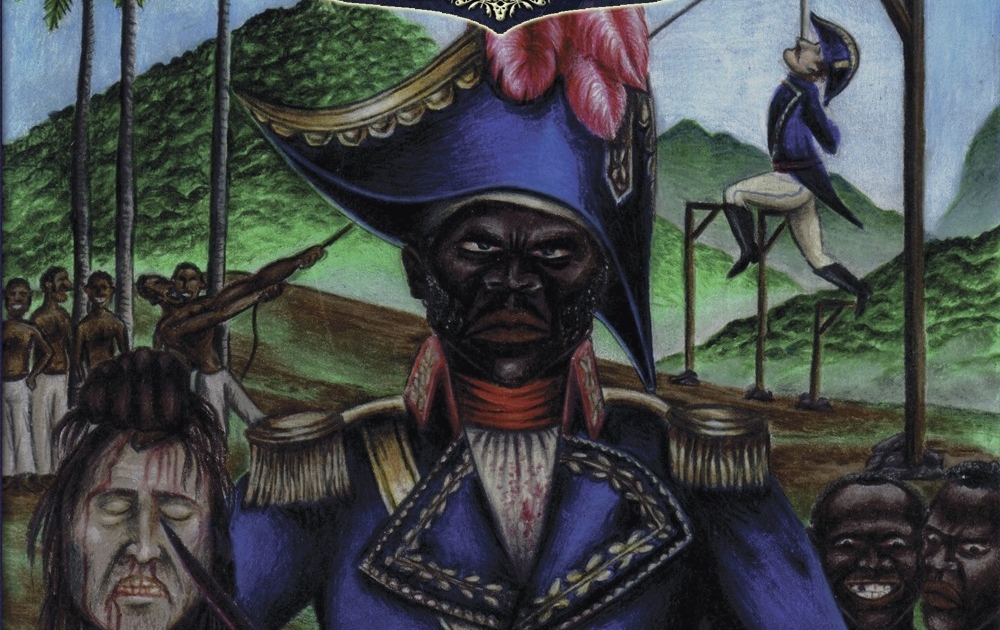
Lothrop Stoddard on the French Colonists in San Domingo
Historian Frank Moya Pons, writing in The Cambridge History of Latin America, describes Lothrop Stoddard’s The French Revolution in San Domingo as “a book now out of fashion because of its racism, although retaining some interest.” [1]
Interesting indeed, because it reflects the racial views of an important set of American intellectuals in the early twentieth century. There was a time when evolutionary thinking was widely considered to be the key to racial self-defense.[2] Although it didn’t play a role in the Congressional debates (itself an indication of the rapidly changing intellectual context), evolutionary thinking was prominent among some of the elite intellectual proponents of immigration restriction in the 1920s. This was the heyday of eugenics—motivated by concern about deterioration of the gene pool because modern civilization had increased the moral and intellectual burdens of life at the same time that natural selection had been relaxed because of advances in medicine, hygiene, and nutrition. Lothrop Stoddard’s The Revolt against Civilization: The Menace of the Under-Man exemplifies these trends.[3]
Race is indeed central to Stoddard’s volume. Written at a time when the science of race, race differences, and eugenics were at their height, Stoddard sees the conflict as fundamentally about race. But his view is that of a race realist. Unlike the vast majority of contemporary intellectuals, he sees race for what it is: a gargantuan fault line that separates humans.
However, Stoddard never comes across as a cheerleader for the Whites in their conflicts with Blacks and mulattos. Indeed, the Whites are described in highly unflattering terms—an important corrective to the view one might glean from previous chapters emphasizing the high-mindedness of Whites in the anti-slavery movements. Many are “shady characters”—opportunists out to make money and without any moral scruples. Heavy drinking and gambling are pervasive. The Whites are the consummate individualists. They are not a people but “only a mass of individuals.” Poor Whites were adventurers, unable to compete with slave labor and therefore forced to make a living by any means necessary. However, we also see strains of moralistic idealism noted in previous chapters as a characteristic of northern Europeans.
It’s difficult to have sympathy for the White planters. They live in a world of “material crudity … intellectual poverty and mental isolation.” They are surrounded by outrageous retinues of slaves, living like an Oriental potentate. Stoddard quotes a contemporary observer, Moreau de Saint-Mery: “That crowd of slaves which hangs upon the master’s lightest word or sign, lends him an air of grandeur. It is beneath the dignity of a rich man to have less than four times as many servants as he needs. The women have an especial gift for surrounding themselves with a useless retinue.”
The rich Whites are unsocial and quarrelsome with their neighbors. Another observer, DeWimpffen describes the “pretensions, either ill-founded or ridiculous; jealousies of each other’s fortune, more ridiculous still; disputes about boundaries . . . and finally trespasses committed by the negroes or the cattle — occasion such a misunderstanding, or such a coolness, that all reciprocal communication is out of the question. Consequently, as nothing is so savage as the recluse who is not so by choice, you must not be surprised that each owl rests in his hole, and that so little sociability reigns among men who have few or no sociable qualities.”
These Whites had a sense of preserving their racial uniqueness while at the same time the males among them were energetically creating a mulatto caste by procreating with Black slaves and by taking mulattos as concubines. The common understanding was that any trace of Black blood would show up among descendants and bring shame to the family, even if the parents were not recognizably Black. While creating mulatto children was commonplace and socially accepted, there was a horror at marriage with a mulatto (marriage with a Black being completely out of the question). Marriage to a mulatto resulted in ostracism and derision. Particularly interesting is that elaborate genealogies were kept so that Whites could advertise the racial purity of their ancestors. Racial consciousness was intense: “Creole or European, poor white or planter, smuggler or governor — all remembered that they were white; all were determined that the white race should keep white and should rule San Domingo.” Stoddard writes of “the racial fanaticism of San Domingo” that proved stronger than national loyalty: When the French government no longer supported them, they defected to the English.
Was Stoddard possessed of an invidious “racism” in his attitudes toward Blacks? Several of his statements are sure to ruffle modern sensibilities. For example, he cites a contemporary observer who noted that African women were only too happy to be concubines of their masters. These women “are proud of having children by white men. Also, they cherish the hope that the fathers will free them or buy their liberty.”
This is the sort of statement that is doubtless considered “racist” by most contemporary readers. However, I see it as eminently plausible given that it is clearly in the self-interest of the women to engage in such relationships and given what we know about the fragility of marriage bonds among sub-Saharan Africans. Why would an observer lie about this?
Similarly, Stoddard quotes a contemporary observer who noted “that, until the Revolution, nearly 600,000 blacks, continually armed,” obeyed without a murmur a handful of masters. Especially, as this superiority was not purely ideal. The negroes themselves recognized it by daily comparing the activity, energy, knowledge, and initiative of the whites with the degree of those same qualities in themselves and in the mulattoes.”
Stoddard cites an author who, he writes, “ably summed up the opinions of writers who have observed the negro in his African home”:
The negro is a grown-up child, living quite in the present and the absolute slave of his passions. Thus his conduct displays the most surprising contradictions. He is trifling, inconsistent, gay; a great lover of pleasure, and passionately fond of dancing, noisy jollification, and striking attire. His natural indolence is unparalleled, — force and cruelty alone can get out of him the hard labor of which he is capable. This, together with an inordinate sensuality, an ineradicable tendency to thieving, and absolute lack of foresight, a boundless superstition favored by a mediocre intelligence, and timidity in face of imaginary terrors combined with great courage before real danger, appear to be the causes of the negro’s lack of progress and of his easy reduction to slavery.
Such statements on the traits and abilities of Blacks conform to contemporary stereotypes as well. The central features of this stereotype — low intelligence and a relatively poor impulse control (low conscientiousness) — conform well to Prof. J. Philippe Rushton’s work, Race Evolution and Behavior: A Life History Perspective.[4] Stoddard presents these observations as factually based, he rejects the “partisan” views of anti-slavery people who saw Blacks as noble savages, and pro-slavery writers who regarded them as less than human.
Nevertheless, despite having generally negative views of Blacks, Stoddard was quick to point out the talents of Toussaint L’Ouverture, the Black leader, commenting on his intelligence, leadership ability, and on the strategic savvy of this “extraordinary man.” When L’Ouverture achieved power, he understood that the superior intelligence of Whites would be useful in rebuilding the island: Even the Blacks acknowledged the superior intelligence and energy of Whites. When Whites were eventually excluded from the island, there was the predictable descent into African-style political oppression and economic failure.
Stoddard is quite clear on the moral implications of chattel slavery: African slavery was the curse of San Domingo. It is an “evil institution.” Slaves suffered “a life of hard and unremitting toil. From dawn to dark the field-gangs pursued their monotonous round of labor, exposed to the burning tropic sun, spurred on by the whips of the black ‘commanders’ under the overseer’s eagle eye.” The burden of the slaves’ labor combined with poor diet and high infant mortality was so great that they did not reproduce themselves. Nearly a million were brought to the island by 1789, but deaths exceeded births by 2½%.
Controlling the slaves therefore required a sort of sociopathy on the part of Whites—complete lack of empathy about causing and witnessing human suffering on a daily basis: “to extract continuous labor from such essentially indolent beings as the negroes, an iron discipline was necessary.” Such lack of concern for others was doubtless facilitated by ingroup/outgroup psychology, an evolutionary adaptation that would make it easy to consider slaves as an outgroup and therefore less than human, or at least possessing qualities such that their oppression had no moral implications.
Such a system can only survive by instilling constant fear. In the words of a commentator quoted by Stoddard, “the sense of that absolute, coercive necessity which, leaving no choice of action, supersedes all question of right.” Indeed, the authorities excused the most horrific tortures on the theory that “the safety of the colony depended on acquitting the masters of crimes against their slaves, “thus affirming the solidarity of all whites as against the slaves.” Race mattered.
But beyond moral issues, slavery of Africans merely bought short-term prosperity for the island and a few individual Whites “at the cost of [the] whole social and economic future.” Indeed, how could anyone think that a system in which African slaves outnumbered Whites 15 to one would be stable far into the future?
The clear violation of normative Western notions of morality became an issue in France where ideologies of abstract human rights had become the intellectual basis of revolution against the old regime. An anti-slavery society, “Amis des Noirs” was formed with a considerable involvement of elite revolutionaries: Lafayette, Mirabeau, Condorcet, and Robespierre. This society “affiliated with the network of secret revolutionary organizations then springing up over France, embraced abstract principles, and already formulated the ‘Rights of Man.’”
Notice the reference to “abstract principles” of human rights. This is a prime example of moral universalism so typical of the uniquely European form of intellectual discourse. Individualist cultures frame moral issues in universal terms. Morality is defined not as what is good for the individual or the group, but as an abstract moral ideal — e.g., Kant’s moral imperative: “Act only according to that maxim whereby you can, at the same time, will that it should become a universal law.” This occurs because individualism implies an equality of interest—that everyone has interests, but no one has a privileged moral position, what philosopher John Rawls termed the “veil of ignorance.”[5] Arguments on morality therefore must necessarily seek an abstract sense of morality, independent of the interests of any particular individual; groups have no privileged moral standing at all. Pro-slavery arguments that slavery is good for individual Whites or for Whites as a group therefore fall on deaf ears because they fail to attach any moral significance to Blacks either individually or as a group
On the other hand, collectivist cultures such as Judaism have a highly elaborated moral code that privileges ingroup membership. Slavery is not an evil in itself. Rather, there are different ethical codes on how slaves may be treated depending on whether the slave is a fellow Jew; the same goes for criminal offenses.[6] In collectivist cultures, group membership, typically the kinship group, is critical to moral evaluation: “What’s good for the Jews.”
Moral idealism is a powerful tendency in European culture, apparent, for example, in the German idealist philosophers and the American transcendentalists discussed in Chapter 6.[7] Universalist moral ideals are erected and then steps are taken to achieve the moral vision by changing the world, often accompanied by a great deal of moral fervor, as among the French opponents of slavery discussed below.[8] This pursuit of moral ideals accounts may well account for some of the dynamism of Western history: Societies are always imperfect and in need of moral expurgation. American history has been sparked with such crusades, from the anti-slavery fervor of the nineteenth century to the crusade against alcohol in the 1920s to the Civil Rights movement of the 1960s. The same can be said of England, with the Puritan crusades of the seventeenth century and periodic crusades on behalf of moral rectitude thereafter, culminating now in much of the rhetoric underlying anti-colonialism and contemporary political correctness.
The moral universalism characteristic of individualism is a liability in the struggle with other groups. Individualists are prone to acting against their own people on behalf of a moral principle, as in the American Civil War where a great many Yankees were motivated to go to war against the South in order to eradicate the slavery of Africans as a moral evil.[9] Such people place their moral ideals above ties of racial kinship and are willing to go to great lengths to punish people like themselves because they violate moral ideals.
Here is US Supreme Court Justice John Paul Stevens expressing a typical sense of moral idealism that remains common among Europeans:
“The ideas of liberty and equality have been an irresistible force in motivating leaders like Patrick Henry, Susan B. Anthony, and Abraham Lincoln, schoolteachers like Nathan Hale and Booker T. Washington, the Philippine Scouts who fought at Bataan, and the soldiers who scaled the bluff at Omaha Beach,” he wrote in an unusually lyrical dissent [in a 1989 flag burning case]. “If those ideas are worth fighting for—and our history demonstrates that they are—it cannot be true that the flag that uniquely symbolizes their power is not itself worthy of protection.[10]
Ideas are worth fighting for, but Stevens has no interest in advancing the cause of White people as a racial kinship group. Here he idealizes non-White Filipinos fighting alongside Whites and Whites fighting Germans in order to secure a set of principles. He is not concerned about his race, presumably because he thinks that what’s important is that certain ideas will continue to guide the country even if (as seems likely) people like him are fated to become a small minority of the country. For Stevens, these ideals are more important than the racial composition of the country.
The moral crusade on behalf of human rights was also center stage in the events described by Stoddard. In 1789, a delegation of the “Colons Americains” (an organization of mulattos from San Domingo) appeared at French Assembly demanding that they “be allowed to enjoy all the privileges of citizenship, not as a favor but as a natural right. … The President replied amicably that ‘no part of the nation should ask for its rights from the Assembly in vain.’” It’s revealing that appeals to natural rights had huge emotional impact on the legislators: “the Amis des Noirs, with their ringing appeals to Revolutionary principles and their backing of sympathetic galleries, were certain sooner or later to sweep the Assembly off its feet and to gain some decisive victory.”
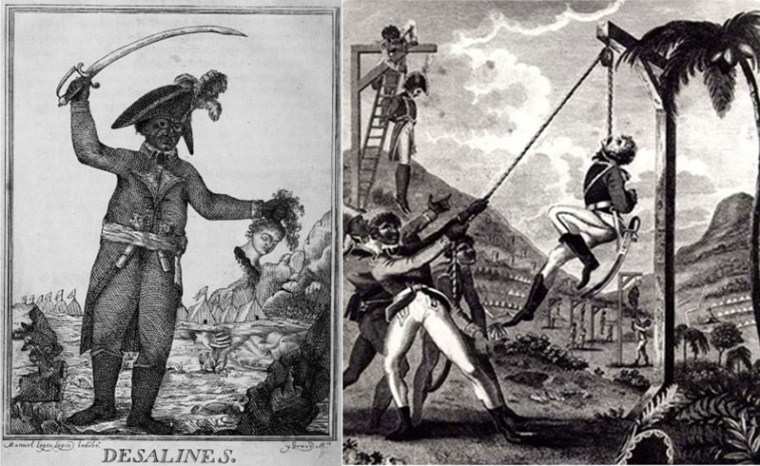
There were complex combinations of oppositions according to race and class. On one hand, poor Whites and wealthy Whites saw a common interest in opposing the mulattos, some of whom were wealthy. From the standpoint of the poor Whites, the wealth of his perceived racial inferiors was particularly galling. In 1789, when the French Revolution had compromised the power of the Royal government, the wealthy Whites “anxious for poor white support, were not likely to embroil themselves to protect their race opponents [i.e., the mulattos]. By this time the local offices were becoming filled with poor whites, and to the will and pleasure of these new functionaries, the mulattoes were now delivered almost without reserve.”
On the other hand, the lower-class Whites (described by Stoddard as “mostly … ignorant men of narrow intelligence”) engaged in class war against wealthy Whites: They were “too short-sighted to realize the results of white disunion or too reckless to care about consequences.” They excluded upper-class Whites from voting by “violence and intimidation.”
Some observers have argued that the revolutionary ideals of moral universalism were an ingredient in the revolt of the non-Whites. Stoddard quotes approvingly an observer who attributes the fervor for revolt among slaves and mulattos to their being exposed to revolutionary rhetoric. “To discuss the ‘Rights of Man’ before such people—what is it but to teach them that power dwells with strength, and strength with numbers!” Stoddard expresses his own view that “there seems to be no doubt that the writings and speeches of the French radicals did have a considerable effect on the negroes.” And he provides the conclusion of contemporary investigations: “Both the existing evidence and the trend of events combine to show that the great negro uprising of August 1791 was but the natural action of the Revolution on highly flammable material.”
Nevertheless, as with all complex events, the causes remain in question. Stoddard suggests that the quarrels among the Whites were a major contributing factor. In any case, we do know that the Jacobin radicals in France refused to help their racial brethren in San Domingo—their refusals motivated by partisan politics couched in the high-flown rhetoric of moral universalism:
These appeals [from the French colonists in San Domingo and their relatives in France], coupled with the horrors contained in every report from the island, might well have moved hearts of stone; — but not the hearts of the Jacobin opposition. Time after time a grim tragi-comedy was enacted on the floor of the Assembly. Some fresh batch of reports and petitions on San Domingo would move moderate members to propose the sending of aid. Instantly the Jacobins would be upon their feet with a wealth of fine phrases, patriotic suspicions, and a whole armory of nullifying amendments and motions to adjourn; — the whole backed by gallery threats to the moderate proponents.
Besides the radicals, French business interests cared far more for retaining their markets than in racial solidarity: “The very commercial classes were now estranged from their former allies, since the French merchants had no desire to be ruined for the upholding of the color line. What appeared to colonists a vital principle seemed to Frenchmen a foolish prejudice, and the whites of San Domingo were more and more regarded as a stiff-necked generation in great part responsible for the woes which overwhelmed them.”
Whereas the radicals and the merchants cared nothing for racial cohesion, the colonists remained committed to racial solidarity, albeit with the class divisions mentioned above. Unlike the legislators and merchants in far off France, they could easily see how allying themselves with mulattos would affect them in the long run. They refused to make an alliance with the mulattos against the Blacks, fearing that they would eventually be out-voted by the mulattos. They also feared that lowered social barriers would eventually result in intermarriage and the mixing of blood. “The colonial whites grimly resolved to keep San Domingo a ‘white man’s country’ or to be buried in its ruins.” Despite the feelings of horror by the Whites of San Domingo, the mulattos were given the vote April 4, 1792 and a Jacobin army arrived to enforce the law.
Stoddard is openly contemptuous of the Jacobin radicals who refused to aid the Whites of San Domingo. “Of this opposition to the relief of San Domingo it is difficult to speak with moderation. For not even on grounds of fanaticism can the Jacobin policy be palliated.” Stoddard labels Léger-Félicité Sonthonax, one of the commissioners sent to enforce the law on mulatto political equality, “a sinister figure,” “a mere mouther of phrases, corrupt in both public and private life, his one real talent a certain sly ability to trim with the times which was to bring him safe through the storms of the Revolution.” “If such a man can be said to have real convictions, his ideas on colonial questions may be gathered from a signed article published in one of the ultra-radical sheets about a year before. ‘The ownership of land both at San Domingo and the other colonies … belongs in reality to the negroes. It is they who have earned it with the sweat of their brows, and only by usurpation do others now enjoy the fruits.’”
Sonthonax surrounded himself with mulattos and engaged in brutal military campaigns against Whites. Eventually he turned on the mulattos by freeing the Blacks under his control without authority from the French government. He wrote “it is with the real inhabitants of this country, the Africans, that we will yet save to France the possession of San Domingo.” Needless to say, freeing the Blacks was not warmly greeted the mulattos, many of whom owned slaves: “The mulattoes had everywhere greeted Sonthonax’s negrophil policy with ill-concealed rage; his emancipation proclamation had roused them to furious mutiny.”
Sonthonax is truly remarkable in his hostility toward the colonial Whites. One of his closest associates reportedly stated that “The white population must disappear from the colony. The day of vengeance is at hand. Many of these colonist princes must be exterminated.” Not surprisingly, there was a general exodus of Whites, mainly to the US.
Stoddard notes Sonthonax’s “lavish expenditure” and his opposing a White captain-general who had expressed an attitude of superiority to the mulattos. Stoddard notes pointedly that this mulatto leader “had torn out the eyes of his wretched prisoners with a corkscrew and had been guilty of unspeakable outrages upon white women.” The mulatto’s vicious crimes against Whites were nothing in comparison with the enormity of the racial insult uttered by the White military officer.
Stoddard contrasts two of the Jacobin commissioners. Sonthonax is described as personally corrupt and unprincipled, acting against his White racial brethren for personal gain. On the other hand, Polverol was highly principled: his “Jacobinism, though fanatical, was sincere, his personal honesty was never questioned, and ripening years brought some insight and reflection in their train.”
This contrast also doubtless applies to the behavior of contemporary Whites who eagerly go along with the multicultural agenda of displacing White people and their culture. There are many Sonthonaxes who earn very good salaries because they are public liberals—Whites who by their every statement and action express support for the multicultural zeitgeist. Because the multicultural revolution is far advanced at this point, there are many lucrative opportunities for those willing to publicly utter the sorts of niceties needed to climb the ladder. An example that comes to mind occurred at Duke University where faculty who loudly condemned White men who had been falsely accused of raping a Black prostitute were rewarded by becoming deans and other high-level administrators of the university.[1] This incident is particularly remarkable because the behavior of these faculty cost the university a great deal of money when the victims later sued the university.
On the other hand, there are doubtless a great many Polverols as well in the contemporary West, intent on punishing Whites whom they see as violating principles of moral universalism. They see massive non-White immigration and the decline of Whites as moral imperatives, and their views are constantly drummed into them by the mass media, the academic world, and the political class. Like the nineteenth-century Transcendental idealists, they ignore the realities of human nature, preferring to envision a utopian society expunged of evil.
It’s interesting that Whites are the only group to exhibit principled attitudes and behavior in the world depicted by Stoddard. When he obtained power, Toussaint L’Overture brutally enslaved his own people. Instead of being owned by Whites, they were now slaves of the Black oligarchy that dominated Haiti. “Shirkers and rebels were now publicly buried alive or sawn between two planks.”
The hatred toward the White colonists by other Whites was palpable. During the height of the Reign of Terror in France, colonists sent home were greeted, in the words of one such unfortunate, with “a furious hatred …. A hatred so intense that our most terrible misfortunes did not excite the slightest commiseration.” At the same time, mulatto and Black delegates from San Domingo were greeted with delirious applause.
In the end, it was a war of racial extermination. The French under Napoleon returned and were winning the war, despite heavy losses from yellow fever. There was a common understanding that huge numbers of Blacks would have to be exterminated in order to restore the colony. But when the British intervened against the French, the White cause became hopeless. After a brief period when Whites were encouraged to return, they were exterminated under the leadership of the Haitian leader, Dessalines. “The destruction of French authority was but the prelude to the complete extermination of the white race in ‘la Partie François de Saint-Domingue.’” Like the White Jacobins and merchants, the British did not see the colonists as fellow Whites but as enemies, in the case of the British, because they were French.
Conclusion
The main message here is that individualism has served Whites well in enabling societies based on free markets, science, trust and innovation. Individualist European societies created the modern world. However, there is a tendency to short-term thinking that enriches individuals and produces long-term disaster for Whites as a group. In San Domingo, the short-sighted planter class imported masses of Africans without thinking clearly what this portended for the future, especially in a society where ideologies of moral universalism were becoming influential. The same thing happened in the U.S. and elsewhere in the Western hemisphere where large numbers of Blacks were imported as slaves. The tensions from slavery continue to loom over American society as the U.S. becomes increasingly polarized along racial lines. A similar phenomenon continues to occur as wealthy business interests lobby to import ever more low-IQ workers—workers who will eventually become citizens, vote, become the clients of aggressive, anti-White ethnic activist organizations, and seek their interests by expanding government entitlement programs.
There is an obvious sense in which the moral idealism so typical of the Western intellectual tradition can be fatally maladaptive. In the contemporary world of political correctness defined by the multicultural left, moral ideals incompatible with the interests of European-derived peoples are constantly trumpeted by elites in the media, the political class, and academic world. Such messages fall on fertile ground among European peoples, even as other races and ethnic groups continue to seek to shape public policy according to their perceptions of self-interest. The European proneness to moral idealism thus becomes part of the ideology of Western suicide.
With the exception of South Africa—another society where Whites eventually ceded power to Blacks and are now reaping the consequences in terms of violence, exploitation and insecurity, White populations are currently far safer than the tiny White population of San Domingo surrounded by a sea of hostile Blacks. However, the policies currently bringing millions of non-Whites into Western societies will ultimately create White minorities in all the societies that Whites dominated, including their ancestral homelands in Europe. Many of the peoples they are admitting have historical grudges against Whites for past evils like slavery, perceived anti-Semitism, etc. And in any case, the voting patterns of these groups are already clear—they are part of the ascendant non-White coalition centered in the Democratic Party in the United States and similar parties in other Western countries (e.g., the Labour party in the U.K). Whites should think about what happened in San Domingo before they continue embarking on their multicultural adventure. When Whites become vulnerable, as a result of these changes, the gloves will come off. The raw biological power of race for separating humans into mutually antagonistic groups will once again rear its ugly head, and the fine phrases of moral universalism that paved the way for White suicide will seem hollow indeed.
1] Frank Moya Pons, “The Independence of Haiti and the Dominican Republic,” in Leslie Bethell (Ed.), The Cambridge History of Latin America: Bibliographical Essays, Vol. XI. (Cambridge: Cambridge University Press, 1995, 234-237).
[2] This section is based on my foreword to Lothrop Stoddard’s The French Revolution in San Domingo (London: Wermod & Wermod, 2011; Stoddard’s book was originally published: New York: Houghton Mifflin, 1914).
[3] Lothrop Stoddard, The Revolt against Civilization: The Menace of the Under-Man (New York: Charles Scribner’s Sons, 1922)
[4] J. Phillippe Rushton, Race, Evolution and Behavior: A Life History Perspective. (New Brunswick, NJ: Transaction, 1994).
[5] John Rawls, A Theory of Justice. (Cambridge, MA: Harvard University Press, Belknap imprint, 1971).
[6] Kevin MacDonald, A People that Shall Dwell Alone: Judaism as a Group Evolutionary Strategy, with Diaspora Peoples. Lincoln, NE: iUniverse, 2002; reprint of the 1994 book published by Praeger (Westport, CT), Chapter 6.
[7] Kevin MacDonald, “American Transcendentalism: An indigenous culture of critique.” The Occidental Quarterly 8 (91–106, 2008).
[8] Kevin MacDonald, “Evolution and a Dual Processing Theory of Culture: Applications to Moral Idealism and Political Philosophy.” Politics and Culture (2010[Issue 1], April).
[9] MacDonald, “American Transcendentalism: An indigenous culture of critique.”
[10] Jeffrey Toobin, “After Stevens: What Will the Supreme Court Be Like without Its Liberal Leader?” The New Yorker (March 23, 2010).
http://www.newyorker.com/reporting/2010/03/22/100322fa_fact_toobin?currentPage=all#ixzz0tJXKtDE6
[11] William L. Anderson, “The Obama Administration’s Vicious Attack on Reade Seligmann.” LewRockwell.com, February 24, 2011.




The Mandani (dem) Socilaits Revolt in NY is still sending tremors along traditional political elites. As I quickly pant around the room I see NO (USA born) blacks. a lot of new comers from the Middle East, Puerto Ricans, Dominicans, MANY MAJORITRY white liberal women. BUT, way back in the dark rooms, behind the curtains, the people with clear rim glasses, reading the charts, issuing talking points, handling critical data, and all funding$ the young political consultants are ALL JEWS…who is running the show$…?? who is really making policies? These young unemployed Socialists without work experience. Elected candidates with PHDs in BS, with well calculated speeches are the clowns performers. They are the 21th Century USA Bolshevyks goyim.
The post-Boasian “anthropology” was a mainly reaction against “racist” immigration criteria and NS policy. Lothrop Stoddard was a humanitarian, much maligned. The contributions of Gustave LeBon, William McDougall and Ruggles Gates in particular need respectful revival.
I believe “Anti-Semitism” is a game we can all play, and refrain from playing to our peril. The Jews exploit whites, blacks, everyone. Hell they don’t mind “eating their own” as they did in the October 7th operation and there are instances of this in their Torah. They positively crow over throwing other Jews “under the bus” for being …. not Jewish enough or something.
Cultures/ethnicities being destroyed at the Jews’ pleasure dept:
The incomparable Taylor Oliviera never fails to deliver https://www.youtube.com/watch?v=JrTHDRF6-tU this is The Camp Of The Saints stuff here.
In case anyone’s been living under a rock, Jews hate Ireland and the Irish. Unlike so many Americans, who are brainwashed, the Irish know what’s going on and thus, they’re getting Raspail’d hard. This video is not only entertaining but a must-watch.
One major thing I see is, Whites need to stop being ashamed of being racist. They should be able to proudly say, “Hell yes, I’m racist” or at least they need to develop a full quiver of dog-whistles and the ability to smirk and say things like “Well, different cultures…. etc. tweet tweet tweeeeeeet!”
The Irish especially, need to throw the “We’re native to this land” thing right back into the faces of the parasites, because the Irish actually are native to Ireland, unlike stateless, rootless Jews who are really not native to anywhere any more (but claim to be so to Palestine).
Alex, your Torah verse quotations most welcome.
Most of Stoddard’s books are well worth reading. His book on Haiti is most sobering, but his book, The Revolt Against Civilization, is also very incisive and prescient. Both are highly recommended.
I can trll you living (then escaping)in a city/neighborhood decimated by blacks, you’re not getting anything out of Europeans.
They’ll deny it’s happening, to the point of clinical delusion.
They’ll constantly say ‘it’s getting better’
or
‘they’re cleaning it up’
Then they’ll go along with destroying the next place they move to.
I don’t know what you do. A vast propaganda campaign might not even fix them.
Africa is a big continent. Lots of room. Fly ’em out, give each one $10k or even $20k Nice Knowin’ Ya money, it’s the cheapest way to go about it by far.
In Britain eugenics continued well into the 1960s and for a while after with even with Penguin book publications, but gradually the DEI ideology and negrophilism took over, nobbling the Institute of Race Relations and then the Royal Anthropological Institute. The Mankind Quarterly moving back from the US to the UK fought a rear-guard action and is now a shadow of its former self. The most extraordinary development has been the total change of the Eugenics Education Society through The Galton Institute into the Adelphi Forum explicitly “opposed to all eugenic agendas”. But the eugenics idea is not dead, and is reviving in a sporadic fashion, as well it might. And “they” have led the way by reducing Tay-Sachs.
Wonderfully informative article. The corollaries with what is happening today and inparticular the attitudes of the those running our governments, is frightening. More than two hundred years and very little in our nature has changed.