I thought that this is a very thorough and balanced article. Basically the Israelis trapped Trump because of Netanyahu’s preemptive strike and the power of the Israel Lobby in the GOP and the media, making it politically non-viable to oppose Israel. He dragged his feet and he would have resisted if Israel ‘s attacks were ineffective. Only if the Israeli attacks were successful would he act. Once they were, Trump got on board. He always goes with a winner, however reluctantly in this case.
Israel sees this as a way to end their problems once and for all. And it may be that Trump is increasingly thinking the same thing.
So get ready for a very big war with the U.S. involved to the hilt.
President Trump spent the first months of his term holding back Israel’s push for an assault on Iran’s nuclear program. With the war underway, his posture has gyrated as he weighs sending in the U.S. military.
By the end of last month, American spy agencies monitoring Israel’s military activities and discussions among the country’s political leadership had come to a striking conclusion: Prime Minister Benjamin Netanyahu was planning for an imminent attack on Iran’s nuclear program, with or without the participation of the United States.
Mr. Netanyahu had spent more than a decade warning that an overwhelming military assault was necessary before Iran reached the point that it could quickly build a nuclear weapon. Yet he had always backed down after multiple American presidents, fearful of the consequences of another conflagration in the Middle East, told him the United States would not assist in an attack.
But this time, the American intelligence assessment was that Mr. Netanyahu was preparing not just a limited strike on the nuclear facilities, but a far more expansive attack that could imperil the Iranian regime itself — and that he was prepared to go it alone.
The intelligence left President Trump facing difficult choices. He had become invested in a diplomatic push to persuade Iran to give up its nuclear ambitions, and had already swatted down one attempt by Mr. Netanyahu, in April, to convince him that the time was right for a military assault on Iran. During a strained phone call in late May, Mr. Trump again warned the Israeli leader against a unilateral attack that would short-circuit the diplomacy.
But over the last several weeks, it became increasingly apparent to Trump administration officials that they might not be able to stop Mr. Netanyahu this time, according to interviews with key players in the administration’s deliberations over how to respond and others familiar with their thinking. At the same time, Mr. Trump was getting impatient with Iran over the slow pace of negotiations and beginning to conclude that the talks might go nowhere.
Contrary to Israeli claims, senior administration officials were unaware of any new intelligence showing that the Iranians were rushing to build a nuclear bomb — a move that would justify a pre-emptive strike. But seeing they would most likely not be able to deter Mr. Netanyahu and were no longer driving events, Mr. Trump’s advisers weighed alternatives.
At one end of the spectrum was sitting back and doing nothing and then deciding on next steps once it became clear how much Iran had been weakened by the attack. At the other end was joining Israel in the military assault, possibly to the point of forcing regime change in Iran.
A part of Tehran that was damaged in Israeli strikes last week.Credit…Arash Khamooshi for The New York Times
Mr. Trump chose a middle course, offering Israel as-yet undisclosed support from the U.S. intelligence community to carry out its attack and then turning up the pressure on Tehran to give immediate concessions at the negotiating table or face continued military onslaught.
Five days after Israel launched its attack, Mr. Trump’s posture continues to gyrate. The administration at first distanced itself from the strikes, then grew more publicly supportive as Israel’s initial military success became evident.
Now Mr. Trump is seriously considering sending American aircraft in to help refuel Israeli combat jets and to try to take out Iran’s deep-underground nuclear site at Fordo with 30,000-pound bombs — a step that would mark a stunning turnabout from his opposition just two months ago to any military action while there was still a chance of a diplomatic solution.
The story of what led up to the Israeli strike is one of two leaders in Mr. Trump and Mr. Netanyahu who share a common goal — preventing Iran from getting a nuclear bomb — but who are wary of each other’s motives. They speak often in public about their strong political and personal bonds, and yet the relationship has long been beset by mistrust.
Interviews with two dozen officials in the United States, Israel and the Persian Gulf region show how Mr. Trump vacillated for months over how and whether to contain Mr. Netanyahu’s impulses as he confronted the first foreign policy crisis of his second term. It was a situation he faced with a relatively inexperienced circle of advisers handpicked for loyalty.
This year he told a political ally that Mr. Netanyahu was trying to drag him into another Middle East war — the type of war he promised during his presidential campaign last year he would keep America out of.
the Iranians were playing him in the diplomatic negotiations, much as President Vladimir V. Putin of Russia did as Mr. Trump sought a cease-fire and peace deal in Ukraine.
And when Israel chose war, Mr. Trump cycled from skepticism about attaching himself too closely to Mr. Netanyahu to inching toward joining him in dramatically escalating the conflict, even bucking the view that there is no immediate nuclear threat from Iran.
As he rushed back to Washington from a Group of 7 summit in Canada early on Tuesday morning, Mr. Trump took issue with an element of public testimony of Tulsi Gabbard, his director of national intelligence, that the intelligence community did not believe Iran was actively building nuclear weapons even as it enriches uranium that could ultimately be used for a nuclear arsenal. “I don’t care what she said,” Mr. Trump told reporters. “I think they were very close to having them.”
For Mr. Netanyahu, the last several months brought to an end years of trying to cajole the United States into backing or at least tolerating his long-held desire to deal Iran’s nuclear program a crippling blow. He appears to have judged, correctly, that Mr. Trump would ultimately come around, if only grudgingly.
Beyond the lives lost and destruction wrought, the crisis has also laid bare schisms within Mr. Trump’s party between those inclined to reflexively defend Israel, America’s closest ally in the region, and those determined to keep the United States from getting further mired in the Middle East’s cycle of violence.
In the middle was Mr. Trump, determined to block Iran’s path to a bomb and caught between cultivating his own image of strength and the potential strategic and political consequences of acting aggressively against Iran.
Asked for comment, a White House spokesman pointed to public comments made by Mr. Trump about not allowing Iran to obtain a nuclear weapon.
‘I Think We Might Have to Help Him’
When Mr. Trump met with his top advisers at the wooded presidential retreat of Camp David late on Sunday, June 8, to review the fast-evolving situation, the C.I.A. director, John Ratcliffe, provided a blunt assessment.
It was highly likely, he said, that Israel would soon strike Iran, with or without the United States, according to two people familiar with the briefing, who spoke on the condition of anonymity to describe a confidential discussion.
The president sat at the head of the table in a rustic conference room inside Laurel Lodge. There were no slides, only maps prepared by the chairman of the Joint Chiefs of Staff, Gen. Dan Caine. For two and a half hours, he and Mr. Ratcliffe described their expectation of an imminent Israeli attack. Ms. Gabbard was on National Guard duty that weekend and was not included in the meeting.
Image
John Ratcliffe, the C.I.A. director, provided a blunt assessment of the fast-evolving situation between Iran and Israel at Camp David in June.Credit…Haiyun Jiang for The New York Times
Mr. Trump’s advisers had been preparing for this moment. In late May, they had seen intelligence that made them concerned that Israel was going to move ahead with a major assault on Iran, regardless of what the president was trying to achieve diplomatically with Tehran.
Based on that intelligence, Vice President JD Vance and Marco Rubio, in his joint role as secretary of state and national security adviser, encouraged an effort to give the president a range of options so he could make quick decisions if necessary about the scope of American involvement.
Mr. Ratcliffe’s intelligence-gathering efforts went into overdrive. And in the two weeks leading up to the Camp David meeting, Mr. Trump’s top advisers met multiple times to get on the same page about what the menu of potential options might be.
The day after the Camp David meeting, Monday, June 9, Mr. Trump got on the phone with Mr. Netanyahu. The Israeli leader was unequivocal: The mission was a go.
Mr. Netanyahu laid out his intentions at a high level, according to three people with knowledge of the call. He made clear that Israel had forces on the ground inside Iran.
Mr. Trump was impressed by the ingenuity of the Israeli military planning. He made no commitments, but after he got off the call, he told advisers, “I think we might have to help him.”
Still, the president was torn over what to do next, and quizzed advisers throughout the week. He had wanted to manage Iran on his own terms, not Mr. Netanyahu’s, and he had professed confidence in his deal-making abilities. But he had come to believe that the Iranians were stringing him along.
Unlike some in the anti-interventionist wing of his party, Mr. Trump was never of the view that America could live with, and contain, an Iran with a nuclear bomb. He shared Mr. Netanyahu’s view that Iran was an existential threat to Israel. Mr. Netanyahu, he told aides, was going to do what was necessary to protect his country.
The Diplomatic Route
Israel had begun preparing in December for an attack on Iran, after the decimation of Hezbollah, an Iranian proxy, and the collapse of the Assad regime in Syria, opening up airspace for a bombing campaign.
Netanyahu made his first visit of the second Trump term to the White House on Feb. 4. He presented a gold-plated pager to Mr. Trump and a silver-plated pager to Mr. Vance — the same devices the Israelis had secretly packed with explosives and sold to unwitting Hezbollah operatives who would later be maimed and killed in a devastating remote-control attack on the Iran-backed Lebanese group. (Mr. Trump later told an ally he was disturbed by the gift.)
Image
Prime Minister Benjamin Netanyahu of Israel and President Trump at a news conference at the White House in February.Credit…Tierney L. Cross for The New York Times
Mr. Netanyahu gave Mr. Trump a presentation about Iran in the Oval Office, walking him through images of the country’s various nuclear sites.
Israeli intelligence showed that Iran was making cruder and faster efforts to get to a nuclear weapon, and the weaker the Iranians got, the closer they moved to the bomb. In terms of the enrichment of uranium, Iran was days away from where it needed to be, but there were other components it required to complete the weapon.
The Israelis made an additional argument to Mr. Trump: If you want diplomacy to succeed you have to prepare for a strike, so there is real force behind the negotiations. Privately, they fretted that Mr. Trump would take what they viewed as an inadequate deal with Iran, similar to the 2015 deal negotiated by President Barack Obama, and that he would then declare mission accomplished. Mr. Netanyahu told Mr. Trump that the Iranians would be able to rebuild their air defenses that were destroyed during an Israeli attack in October, adding to the urgency.
After his election in November, Mr. Trump had named a close friend, Steve Witkoff, as his Middle East envoy, and gave him the job of trying to reach a deal with Iran. Mr. Trump, elected on a platform that promised to avoid military entanglements abroad, seemed to relish the idea of coming to a diplomatic resolution.
From the beginning of the administration, the Iranians were putting out feelers from a handful of countries to open a diplomatic path with the new administration. Then Mr. Trump made his own dramatic move: He sent a letter to Iran’s supreme leader, Ayatollah Ali Khamenei.
In early March, visitors to the Oval Office or guests on Air Force One were regaled by Mr. Trump about his “beautiful letter” to the ayatollah. One visitor treated to a live rendition recalled the letter’s basic message as: I don’t want war. I don’t want to blow you off the map. I want a deal.
Mr. Trump knew he was wading into dangerous political territory. More than perhaps any other subject, the Israel-Iran issue splits Mr. Trump’s coalition, pitting an anti-interventionist faction, led by media figures like the influential podcast host Tucker Carlson, against anti-Iran conservatives like the radio host Mark Levin.
But inside the administration, despite much hype about disagreements between “Iran hawks” and “doves,” ideological divisions were far less important than they were in Mr. Trump’s first term, when officials like Defense Secretary Jim Mattis and Secretary of State Rex Tillerson viewed the president as reckless and in need of being restrained from his impulses.
This time, nobody on Mr. Trump’s senior team played anything like that role. The new team generally supported Mr. Trump’s instincts and worked to carry them out. There were differences of opinion, to be sure, but few if any heated showdowns over Iran policy.
Mr. Rubio and Defense Secretary Pete Hegseth were always deferential to the president’s views, even if Mr. Hegseth, who has a close relationship with Mr. Netanyahu, was more trusting of the Israelis than some of his colleagues.
Image
Iran’s supreme leader, Ayatollah Ali Khamenei, in Tehran last year. Mr. Trump wrote a letter to the Mr. Khamenei, with the basic message as: I don’t want war. I don’t want to blow you off the map. I want a deal.Credit…Arash Khamooshi for The New York Times
Mr. Vance warned repeatedly about the prospect of the United States getting entangled in a regime change war, but even those on the team who had historically supported a more muscular stance against Iran backed Mr. Witkoff’s diplomacy. Mr. Trump’s tough-on-Iran national security adviser at the time, Mike Waltz, nonetheless had a close working relationship with the more dovish Mr. Witkoff.
On the intelligence side, Mr. Ratcliffe delivered information without weighing in on one side or the other. And while everyone knew that Ms. Gabbard was as anti-interventionist as they come, she rarely pushed that view on the president.
In April, the Trump team began a series of negotiations in Oman, with the U.S. side of the talks led by Mr. Witkoff, along with Michael Anton, the director of policy planning at the State Department. By the end of May, the Trump team had delivered a written proposal to the Iranians.
It called for Iran to ultimately stop all enrichment of uranium and proposed the creation of a regional consortium to produce nuclear power that would potentially involve Iran, the United States and other Gulf states like Saudi Arabia and the United Arab Emirates.
Keeping Military Options
Even as Mr. Trump pursued a diplomatic solution, he seemed persuaded by one thing the Israelis had said to him: having credible military options would give him a stronger hand in negotiations with Iran.
Options for taking out Iran’s nuclear sites already existed inside the Pentagon, but after taking office in January the president authorized U.S. Central Command to coordinate with the Israelis on further refining and developing them.
By the middle of February, in coordination with the Israelis, Gen. Michael Erik Kurilla, the head of Central Command, had developed three main options. The first and most minimal was U.S. refueling and intelligence support for an Israeli mission. The second was Israeli and American joint strikes. The third was a U.S.-led mission with Israel in a supporting role. It would have involved American B-1 and B-2 bombers, carrier aircraft and cruise missiles launched from submarines.
There was also a fourth option, quickly discarded, that included, in addition to large-scale U.S. strikes, an Israeli commando raid with air support from American Osprey helicopters or other aircraft options.
Image
People are marching after Israel-Iran attacks in Tehran, Iran on Saturday.Credit…Arash Khamooshi for The New York Times
But as Mr. Witkoff pursued negotiations with Tehran, mediated by Oman, the Israelis grew impatient.
Mr. Netanyahu made a quick visit to Mr. Trump at the White House in April. Among other requests, he asked for the American bunker-buster bomb to destroy the underground nuclear site at Fordo.
Mr. Trump, intent at the time on giving diplomacy a chance, was unpersuaded and in the days after the meeting, his team made a full-court press to stop the Israelis from launching pre-emptive strikes against Iran. The message from Mr. Trump’s team was blunt: You cannot just go and do this on your own. There are too many implications for us. These were tense conversations, but Mr. Trump’s advisers thought the Israelis had absorbed their message.
The president was concerned that Israel would strike out on its own or scuttle his diplomacy if Mr. Netanyahu did not like where his deal was heading. The Trump team also worried about what would happen if Israel launched strikes against Iran but failed to destroy all of its nuclear facilities.
But planning in Israel went ahead, driven in part by concern that Iran was rapidly building up its store of ballistic missiles that could be used for retaliatory attacks. Soon, U.S. intelligence agencies had amassed enough information to present it to Mr. Trump. The briefings got the president’s attention, and became the backdrop to the tense phone call in late May, during which Mr. Trump vented his unhappiness at Mr. Netanyahu.
Patience With Diplomacy Wears Thin
By that point, Mr. Vance was telling associates that he was worried about a potential regime change war, which he considered a dangerous escalation that could spiral out of control.
Mr. Vance had come to view a conflict between Israel and Iran as inevitable. The vice president was open to the possibility of supporting a targeted Israeli strike, but his concerns that it would grow into a more drawn-out war increased as the likely date of a strike approached, according to two people with knowledge of his thinking.
He turned his attention toward trying to keep America out of the conflict as much as possible beyond intelligence sharing. He worked closely with Mr. Trump’s inner circle, including Mr. Rubio, Mr. Hegseth and Susie Wiles, the White House chief of staff, to figure out contingency plans to protect American personnel in the region.
Image
After his election in November, Mr. Trump named a close friend, Steve Witkoff, as his Middle East envoy and gave him the job of trying to reach a deal with Iran.Credit…Eric Lee/The New York Times
As May turned to June, Mr. Witkoff told colleagues that the United States and Iran were on the brink of a deal. But on Wednesday, June 4, Mr. Khamenei rejected the U.S. proposal. Mr. Trump was beginning to feel as if the Iranians were not serious about a deal, advisers said.
That same day, Mr. Levin, the conservative radio host, met with Mr. Trump and several of his advisers in the dining room adjoining the Oval Office. He had been an influential force in presenting an anti-Iran view to the president. The conversation with Mr. Levin appeared to have made an impression on the president, advisers said.
After that meeting, Mr. Trump told aides he wanted to give the deal talks a bit more of a chance. But his patience was wearing thin.
That Friday, his team scheduled a Sunday meeting in the privacy of Camp David.
A Rapid Change in Posture
Publicly, Mr. Trump was still stressing the importance of giving diplomacy a chance. And while doing so was not intended to deceive the Iranians about the immediacy of a potential attack from Israel, the possibility that it might keep Iran from going on heightened alert was a welcome side effect, a U.S. official involved in the discussions said.
But last Wednesday, there was no indication of any negotiated breakthrough, and by that point Mr. Trump’s inner circle knew the attack would start the next day.
In some private conversations, Mr. Trump questioned the wisdom of the Israeli decision to attack. “I don’t know about Bibi,” he told one associate, adding that he had warned him against the strikes.
Mr. Trump joined his national security team in the White House Situation Room on Thursday evening as the first wave of strikes was unfolding, and was still keeping his options open. Earlier that day he was telling advisers and allies that he still wanted to get a deal with Iran.
The first official statement from the administration after the strikes came not from Mr. Trump but from Mr. Rubio, who distanced the United States from the Israeli campaign and made no mention of standing by an ally, even though the U.S. intelligence community was already providing support.
But as the night wore on and the Israelis landed a spectacular series of precision strikes against Iranian military leaders and strategic sites, Mr. Trump began to change his mind about his public posture.
Image
Smoke coming from an area north of Tehran after Israeli airstrikes in Tehran on Monday.Credit…Arash Khamooshi for The New York Times
When he woke on Friday morning, his favorite TV channel, Fox News, was broadcasting wall-to-wall imagery of what it was portraying as Israel’s military genius. And Mr. Trump could not resist claiming some credit for himself.
In phone calls with reporters, Mr. Trump began hinting that he had played a bigger behind-the-scenes role in the war than people realized. Privately, he told some confidants that he was now leaning toward a more serious escalation: going along with Israel’s earlier request that the United States deliver powerful bunker-busting bombs to destroy Iran’s nuclear facility at Fordo.
As recently as Monday, Mr. Trump held out the possibility that Mr. Witkoff or even Mr. Vance could meet with Iranian officials to seek a negotiated deal. But as Mr. Trump abruptly left the Group of 7 summit in Canada to rush back to Washington, there was little indication that the conflict would be brought to a quick end through diplomacy.
https://www.theoccidentalobserver.net/wp-content/uploads/2018/06/TOO-Full-Logo-660x156-1.png00Kevin MacDonaldhttps://www.theoccidentalobserver.net/wp-content/uploads/2018/06/TOO-Full-Logo-660x156-1.pngKevin MacDonald2025-06-17 18:20:112025-06-17 18:20:11NYTimes: How Trump Shifted on Iran Under Pressure From Israel
Multiple women recount organized abuse including ritual ceremonies conducted by people they knew, even close family members – after months of interviews with victims, their families, treatment professionals and experts in Israel and abroad, a disturbing picture emerges with descriptions difficult to read.
“I suffered painful sodomy, truly felt like I was splitting in two. It’s a terrible experience, but there’s something about these things, perhaps in their strangeness, that’s like… maybe the hardest component is that if you tell people about these things, they’ll think you’re crazy. I remember many types of severe sexual abuse, but there’s something about these ritualistic abuses that makes them the bottom of darkness.”
In direct words and with a clear voice, Emunah (pseudonym, like all victims’ names in this article) describes the severe abuse she allegedly experienced in her childhood. Organized sexual abuse that included “ceremonies” with supposed religious significance. Horrifying ceremonies in which religious people, some from her own family, sacrificed her as an offering for spiritual transcendence or redemption.
Emunah is not alone. More than ten women between the ages of 20-45 with whom we spoke describe a severe phenomenon raising serious concern that in Israel, like many countries worldwide, organized sexual abuse of children is occurring right under everyone’s nose.
“Perhaps the world knows that rape occurs, that incest exists, but this the world doesn’t know,” Emunah said. “These acts have been kept secret for years, perhaps because of their insanity… it was always very, very strange. As if there was an internal logic, but it was so crazy… very strange things happen there, normalized in a ritualistic and orderly manner. There’s a specific time, there’s when to say this verse and when to say that verse, there’s an order as if things are supposed to be done this way…”
Each woman we interviewed during our investigation has a different life story. They come from different areas of the country, from north to south. Each is at a different place in her life. Some are students, others work and manage careers and family lives, and there are also young women barely surviving, clinging to life by their fingernails.
These women did not know each other previously, grew up in different communities, and come from different sectors and religious streams. Yet the ritual abuse stories they describe are similar in ways that compel us to listen and not turn a blind eye. Some were harmed in early childhood educational settings or in girls’ schools, others in their family homes, yeshivas or synagogues. In this article, we present only a very small sample from many hours of interviews and information, and some descriptions in this article are difficult to read. The great fear expressed by everyone who spoke with us is that organized sexual abuse of children continues even today.
“Blessed who releases the bound”
Victim. Sacrifice. Punishment. Correction. Transcendence. Redemption. These are recurring concepts in the testimonies. The prayers, the mutterings, the ecstasy surrounding the victims. The extreme pain, humiliation, and torture. The crushing of personality and soul. Testimony after testimony after testimony from women who experienced organized childhood abuse that included group rape performed within ceremonial and ritual frameworks.
We met these women over the past few months. We spoke with family members of some victims, with treatment professionals, and with experts in Israel and abroad specializing in trauma and dissociation (a range of conditions from emotional detachment to complete disconnection from feelings, sensations, memories, and more). We collected information about organized ritual child abuse – a phenomenon recognized worldwide.
The picture emerging from all gathered information is disturbing and difficult. It requires, at minimum, a deep and meaningful investigation by law enforcement authorities. “It is a religious-national mission to expose this phenomenon and uncover the truth,” a treatment professional in the religious community familiar with details of the phenomenon told Israel Hayom.
Most women we interviewed come from religious Zionist or ultra-Orthodox communities, although Shishabbat received additional testimonies about similar cases in secular society. Therefore, it’s important to emphasize that these findings don’t target any specific sector, but rather direct a beam of light toward suspected crimes of the most severe kind imaginable – crimes committed in a parallel world transparent to sight, though deeply dark and sinister.
“Illustration: Talia Drigues
Several rabbis’ names appeared repeatedly in some testimonies. Multiple complaints filed at different police stations around the country were all closed relatively quickly. Even when suspicions arose previously about a network harming children in Jerusalem, police investigators, at best, lacked sufficient tools or knowledge to properly investigate.
In that case, extensively exposed in 2019 on the TV program The Source, suspicions arose about a pedophile network that harmed dozens of children in the Nahlaot neighborhood. Investigators tended to dismiss it as an “invention,” “exaggeration,” or “panic” by parents and treatment professionals, and closed the case with almost no relevant indictments.
A man named Benjamin Satz was convicted and sentenced in 2013 to imprisonment for committing indecent acts and sodomy against girls and boys aged 5 to 8. Another suspect was acquitted due to reasonable doubt. In practice, dozens of children remained traumatized and required years of emotional therapy.
“Not outsiders in the community”
“I remember a pentagram on the floor, usually in red. When the ceremony was in the forest, the pentagram was marked with a hoe and surrounded by lit candles in a circle. The rabbi would bless, ‘Blessed who releases the bound,’ men around prayed with prayer shawls, sometimes dressed in black, while the rabbi wore a white robe. There were several men and boys around the ages of 16-17 who participated in ceremonies for spiritual transcendence.
“There was one time they asked me to dig a hole and lie in it. Other times, they injected me with something and said, ‘Now you’ll feel better,’ after which my body went limp. They would repetitively read Psalms, like ‘A Psalm of David, the Lord is my shepherd, I shall not want.’ They told me ‘you are special, you are chosen’ and they would insert… I remember a palm branch, Hanukkah candles, a shofar.”
Limor (pseudonym) grew up in a religious-ultra-Orthodox home. Her father, she says, always acted violently toward her and her mother. Throughout the years, she required medical treatment at a hospital and was accompanied by a professional due to injuries caused by the violent abuse she experienced.
According to her testimony, her father was the one who brought her to these “ceremonies.” Being delivered by family members is characteristic of many testimonies we gathered. Limor says sometimes the ceremony took place in a forest, other times in a secluded apartment. There were instances when she witnessed and heard other children being abused. Testimony regarding additional child victims repeats across multiple cases. In many testimonies we documented, women also participate in the ceremonies and abuse.
“Organized rape of children is one of the most horrifying phenomena I encounter,” Dr. Anat Gur said, a psychotherapist specializing in treating women and trauma, head of the Psychotherapy Program for Sexual Trauma Treatment at Bar-Ilan University and the Tel Aviv Rape Crisis Center. “It’s a phenomenon probably much more widespread than we imagine. It exists in many places you wouldn’t expect to find it.”
Boaz (pseudonym), a senior treatment professional in the religious community, agrees, “The abusers are typically not outsiders in the community. One patient told me, ‘Understand, he’s the one who blows the shofar on Rosh Hashanah.’ The shofar symbolizes a channel – the person considered most spiritually worthy blows the shofar because he’s closest to God. And he’s the one telling her she is evil, that he’s helping with her atonement in this lifetime. Do you understand the distortion?”
“Crime without witnesses”
Beyond the women who dared to meet and speak with Israel Hayom, professionals possess information about additional victims who report sadistic ritual abuse during childhood. The content emerging from these accounts shows remarkable similarities. From all gathered information, it appears that in most cases, the sexual abuse began in very early childhood at home, perpetrated by a father, grandfather, or other family member. In other cases, the abuse occurred in educational or therapeutic settings.
“What I’ve observed over the years,” Dr. Gur said, “is that whoever endures these things suffers catastrophic damage. That’s also one of the challenges with exposure – the victims are so shattered that they’re difficult to believe. The more cruel and sadistic the abusers are and the younger the victims, and the more horrifying the abuse, the smaller the chance that perpetrators will face justice, because there’s no one left to testify. The abusers so thoroughly destroy the victims’ souls that it becomes a crime without witnesses, which of course serves a society that continues to abuse or maintain these rituals.”
Dr. Joanna Silberg, an international expert in treating dissociative disorders among children and adolescents and former president of the International Society for Trauma and Dissociation, guided the treatment of 70 children who allegedly fell victim to organized abuse in Israel over five years. In Chapter 14 of her book “The Child Survivor,” she describes the severe symptoms the children suffered “due to multiple forms of abuse – physical, sexual, emotional, and spiritual.”
Dr. Silberg notes several sources for the numerous testimonies about cases of organized abuse in Jerusalem. In one case reported in professional literature, a child abused in Israel and treated in the US described how several men tortured him and recalled an incident where they submerged his head underwater.
“When the ceremony was in the forest, the pentagram was marked with a hoe and surrounded by lit candles in a circle.” Photo credit: Getty Images
Descriptions of sadistic abuse appear consistently across all testimonies we collected, as in Emunah’s story: “There was a ceremony like a circumcision that I underwent. I was 10 or 11. It took place in the settlement’s synagogue. They tied me up, similar to the binding of Isaac, and wounded my genitals.
“My father is there, my mother is there, a rabbi from the settlement. I’m tied to a table, looking at the window and imagining how I could jump through it, how I might tie a rope and rappel down to the stones. I constantly wanted it not to be happening. That’s what characterizes it… I continuously thought about how it wasn’t happening, how I could escape. I kept telling myself I wasn’t there. It’s extremely difficult to understand that I was actually there. That it’s me – the bound child.”
“The youngest and most vulnerable”
Organized sexual abuse occurs, as noted, throughout the world. Researcher Michael Salter defines it as “a conspiracy of several attackers to abuse several victims.”
Rabbi Dr. Udi Furman quotes in his article “Ritual Abuse in Israel” Salter’s definition of ritual abuse as an ideological framing in organized contexts of child sexual abuse, “functioning as strategic practices through which abusive groups instill in victims a misogynistic worldview, violently, to control them.”
“In other words,” Rabbi Furman writes in his article, “ritual abuse occurs when a religious, political, or spiritual authority uses their position of power to manipulate victims’ belief systems and thereby control them.” According to him, “ritual abuse is primarily a strategy employed by groups involved in producing images of child abuse, child prostitution, and other forms of organized abuse, and does not constitute a separate category of violence.”
Rabbi Furman also presents research by Johanna Schröder and additional researchers from Germany, who examined attitudes among 165 adults who testified that they were victims of organized ritual sexual abuse, as well as attitudes of 174 professionals who supported victims of this type of abuse. In 88% of reports from both groups – therapists and victims – identical ideological expression emerged. The ideological content and objectives were also presented in a similar order: “justification of violence,” “justification of sexual exploitation,” and “maintaining power and control,” followed by “maintaining group commitment and ensuring redemption.”
“The researchers conclude that ideologies are primarily means to justify organized sexual violence,” Rabbi Froman said. However, in his article, Froman argues that some reports in Israel suggest ideology wasn’t merely a means to justify organized sexual violence, but formed the foundation of the abuse.
Rabbi Furman references, for example, the Nahlaot case, which “is just one of many similar cases, most occurring in ultra-Orthodox neighborhoods. For instance, a private ultra-Orthodox court writes that ritual sexual abuse is cruel and frequent, accompanied by traumatic, accusatory, and confusing ceremonies. The abuse is carried out by large criminal organizations and/or cults and/or secret organizations, with financial investment and recruitment of assisting personnel. The abuse carries for its perpetrators substantial profits such as satisfaction of deviant urges, commerce and pornography, threats and extortion, and more.”
According to Furman, the court document describes the practice of organized abuse: “From preparing the scene, through recruiting collaborators from educational institutions and transportation drivers, to the ceremonies themselves… The ceremony takes place under the leadership of an important rabbi. After a Torah lesson, approximately every two weeks, parents gather with children for what is called ‘soul correction.’ All couples recite Psalms together, sing verses repeatedly with melody, all while standing without clothes. They stand in a circle, naked, praying, lighting candles. The children are positioned in the middle of the circle, also naked.”
In the document, intended for parents, educators, and rabbis, the ultra-Orthodox court “Shaarei Mishpat” in Jerusalem details numerous methods and actions taken by abusers, aiming to warn and raise awareness of this spreading phenomenon and to protect children. Among other things, the document states that to shield themselves from exposure, abusers deliberately act in extreme ways contrary to logic, “so that even if children tell, they will sound completely delusional.”
Dr. Anat Gur. Photo credit: Efrat Eshel
In a “partial” list, actions are described, including abusers using disguises and masks, alongside sadistic torture such as forcing children’s hands into boiling water, submerging them underwater for several seconds, or threatening them with aggressive animals to frighten them and intensify the trauma effect. Additional mentioned actions include inserting objects and work or kitchen tools into the children.
To humiliate children and instill feelings of guilt and shame, perpetrators show them pictures of themselves naked or give them food while telling them they ate “carrion,” organize mock “wedding” ceremonies between children, force them to eat feces, and stage their burials.
“They collapse all self-trust and ability to resist,” Rabbi Froman said. “The regular and frequent abuse is so destructive that the children despair of ‘normality’ and the abuse becomes their life routine. Psychiatrists have diagnosed a complete ‘personality fracture’ in the normal part, allowing the child to continue functioning normally in school.”
According to Dr. Silberg, in each group, individual participants may have their own motives, such as sexual deviations, bizarre ideological affiliations that include conducting ceremonies, or economic enrichment, for example, through human trafficking for sexual exploitation, or producing images of child sexual abuse. These motives are not necessarily shared by all members.
Dr. Silberg further notes that networks engaged in producing and distributing child pornography, including organized abuse, have been exposed worldwide, and “despite the recurring, almost ideological skepticism, there have been several successful convictions of members of organized abuse networks worldwide.”
Over the years, there have been multiple examples of cases where authorities successfully exposed and convicted members of such networks. According to Dr. Silberg, as well as other researchers, since the development of the internet, and especially the emergence of peer-to-peer networks and the dark web, the phenomenon of sexual assaults on children has intensified significantly.
“These are the youngest and most vulnerable victims in society,” it is claimed. “Live streaming platforms from home allow children to be exploited in front of a camera and videos of the acts to be broadcast worldwide, without leaving traces.”
On the other side of the screen, cyber investigation specialists recognize the high demand among consumers for the most horrific videos, including sadistic abuse of children. In conversation with Israel Hayom, Dr. Silberg emphasizes the extreme difficulty in tracking members of such organizations, as most activity occurs on the dark web.
“I had hoped that in Israel there would be an understanding that this is an international phenomenon and that there would be cooperation between Israeli authorities and other countries,” she said, but in practice, “when a complaint arrives and a case is opened in Israel – the police did not conduct the investigation properly. The investigators treated each case as if it were isolated. If you separate each case and don’t look at the overall picture, you don’t ask where all the dots lead. And perhaps they did their best, and the attackers were simply more sophisticated.”
Dissociation
“I don’t want to go to school, I don’t want to!” Ayala (pseudonym) says, crying. “I never want to again. Ever. I don’t want to! No! No! At school, the teachers are scary. I don’t want them to take me from school. I don’t want to go to that class anymore.”
Ayala’s words blend with tears. In these very moments, she is pulled backward with the memory attack. Although chronologically she is 25 years old, right now she is 9, and nothing can convince her that the danger has passed. Even when her partner reminds her, “You know you’re grown up now?”, trying to bring her back to the present, she remains terrified. Trembling deep in the past.
Like many victims we met, Ayala also struggles with dissociation challenges. This is a survival disconnection mechanism that protects the child’s psyche during abuse, which will be explained later. Ayala grew up in a religious settlement in a family with many children. “In many community settlements, children wander around alone,” she said. After years of sharp deterioration in her mental state, including severe anxiety attacks, self-harm, suicidal thoughts, severe suicide attempts, and ongoing suffering – she developed the clear internal knowledge that she had been raped.
The memories began surfacing in severe flashbacks in which, to this day, she re-experiences the abuse incidents she endured. This too is a known phenomenon that repeats itself in some cases we encountered.
Professor Daniel Brom, a clinical psychologist and the manager and founder of “Metiv,” the Israel Center for Psychotrauma in Jerusalem, listened to a recording in which Ayala is heard during a memory attack, describing how they take her from school to a frightening place, where they beat her, tie her up, and lead her to a place where things happen that cause her pain.
Rabbi Dr. Udi Fruman. Photo credit: Eliora Efrati
“She talks about rabbis who abuse her and control her with statements about having a direct connection with God,” Professor Brom wrote. “The form of conversation is familiar to me as a conversation with a woman with dissociative identity disorder. I have seen such phenomena in the clinic quite frequently. Since 1990, I have repeatedly met children and adults who tell of organized abuse by men who not only sexually abuse, but also film their acts.”
“Silence, conceal, erase, move”
“Some abuse occurred in a building and some in the forest,” Ayala continues, “some in a cemetery and some in a synagogue, in all kinds of unusual places. In the building, you go downstairs and reach a very messy room with many tools, paint cans, and many boards. In the middle of the room is a bed, more like a wooden table. It seems there are more rooms there, because there are incidents where I clearly remember being in one room and hearing a child being abused in another room, and then I know what they’ll do to me.
“I hear children screaming, crying. It’s always a dark place. There are between six and nine men there. They tie me to the bed by my hands and feet, stand in a circle, mutter prayers or blessings, and there’s the rabbi who always leads the situation and tells everyone what to do, and everyone listens to him. There’s a ceremony, and each one of them rapes me.
“Sometimes the great rabbi arrives, and then he leads the ceremony. He speaks with God, and God tells him what to do. He puts one hand on my heart, one hand on my genitals, and it hurts when he talks to God. There are times when I scream, and there are situations where I stop because I know they’ll hit me in the head. There were cases where I didn’t cooperate or cried and knew I deserved punishment. There were various punishments, bizarre things: they put my head in a bucket of water for a long time, beat me with a cable, there’s also a ritual bath and purification, where they clean me thoroughly, and then immerse in a water source and explain to me that I need to be pure.
“There was one time they took out a Torah scroll and opened to the binding of Isaac. One of them read, and they simply did what they were reading to me. They tied me up, put the knife to my neck, and God said to lower the knife. Then there was rape.
“There was an event in the cemetery, and I saw a place with stones that had many words written on them, and then they told me to enter a hole, and they covered me with sand. It’s not clear to me how I remained alive.”
Noya was sexually abused by educational figures who cared for her in early childhood. These people, she says, invited additional men to the setting who participated in ritual abuse. The abusers acted with severe violence and used extreme and strong sensory stimuli, which helped her consciousness to split.
“I always had symptoms of post-traumatic stress disorder,” she says. “I was hospitalized, had nightmares, and eating disorders. I also had flashbacks of small fragments of moments from the abuse, but I didn’t understand their meaning. In adolescence, dissociative attacks began that looked like epileptic seizures. When I would return home beaten and bruised from abuse, for example, with a head injury or blood from my lips, I said I had a seizure on the stairs.
No one asked too many questions, and at an older age, when the abuse ended, Noya consciously decided to forget. “I told myself nothing happened to me. I had a mantra that I repeated continuously: ‘silence, conceal, erase, move, disguise, turn off, conceal, throw away, disconnect, forget.’ And I really did forget, for several years.”
During those years, Noya fulfilled dreams and established her life–until the difficult memories began to bombard her consciousness. Over the years, and later also in therapy, “figures” that were created during the abuse began to surface, figures that held the difficult memories in her place.
“When there is such massive and extreme abuse, the symptoms are most severe, especially dissociation,” says Silvia, a therapist from central Israel who treats victims of complex post-traumatic stress disorder due to prolonged childhood abuse. “This is a defense mechanism of the psyche that is expressed in disconnection at different levels. It can be disconnection from body sensations, from emotion, from thoughts, and from memories. Dissociation allows the victim to get up the next morning and conduct life as usual – go to school, play with friends, learn, and build her personality despite the massive threat she is under. The mechanism is activated during the abuse as a response to an existential threat or unbearable pain, or as a result of the use of consciousness-altering substances by the abusers.”
Dr. Sagit Blumrosen-Sela, a clinical psychologist specializing in trauma therapy for sexual abuse, dissociative identity disorder, and autism, recognizes in her clinical cases dissociative disconnections and patients coping with dissociative identity disorder (DID). “Today we’re discovering that dissociative identity disorder is more common than previously thought. Many of those affected are not diagnosed – either they hide it, or they don’t acknowledge it to themselves. Many of them are hospitalized and receive incorrect diagnoses. Many psychiatrists are not familiar enough with the phenomenon, and it’s important they understand that these can be patients who lead normative lives, work, study, raise children. There are real gaps between normative functioning and the abysses that aren’t expressed in the outside world.”
An Illustration of the attempted sacrifice of Isaac from the 19th century. Photo credit: Luc/Getty Images
According to her, “This is a mechanism created as a defensive response to intense physical or emotional pain, when there is no possibility or it’s dangerous to fight or flee, and parts of the experience are extracted from the accessible stream of consciousness. When the abuse is repetitive, a system of identities may be formed that carries the traumas, while disconnecting the memories and feelings associated with them from normal consciousness.”
Based on testimonies from around the world over the years, there are situations where abusers are aware of the possibility of producing such a disorder in young children. “One patient underwent repeated sadistic attacks, with the abusers intending to cause a split in consciousness, so she wouldn’t remember and wouldn’t tell. When she was an adult, she even met one of the attackers in a mall and didn’t recognize him,” Dr. Blumrosen-Sela said.
As if evil itself has intuition
“There’s an atmosphere of excitement, as if we’re performing the most sacred and elevated act in the world,” Nurit says. “I was very young. In the images, people and verses appeared… I have scars on my genitals. They injured and damaged them. It involved tremendous cruelty, abuse, humiliation, control, and ownership, all disguised as religion and elevated spiritual work. It’s appropriating God to serve urges. This remains central to my traumas. While such specific events may happen once, the abuse itself becomes a way of life… creating enormous internal destruction. So yes, the damage and implications are terrible.”
Through his extensive experience, Boaz has encountered dozens of cult survivors harmed in ceremonies, but also many patients harmed through home-based ceremonies, “typically by fathers or uncles who, chronically over the years, employed ceremonies they invented, incorporating religious texts and content.”
According to him, “This represents consciousness control. The child is forced into a tailored role. If told, for example, they came to repair the world and must therefore suffer, or that suffering must intensify beyond what they’ve already learned to survive, because they are the chosen victim. The child is told that if not they, another family child would be chosen for sacrifice.
“Ceremonies include invented prayers, mutterings, and songs with religious texts. I believe that through these mantras and mutterings, not only does the victim dissociate, but the abuser creates dissociation for himself. Immediately afterward, he can attend synagogue and blow the shofar. There are cases of institutionalized organizations worldwide where techniques for creating dissociation in children follow consistent patterns.
“I think the abusers I encountered through my patients were diabolically sophisticated, but in my opinion, they didn’t learn these methods from some manual—they developed them through intuition. It’s as if evil itself has intuition. In one case, a patient underwent massive abuse that caused physical injury, extreme humiliation, and contempt. Even today, decades later, she believes she’s a creature from another world. Though intellectually she understands this isn’t true, emotionally she feels destined for this role.
“Consider how easy it is to tell a child they were born from the power of impurity and therefore must suffer. These mantras penetrate deeply, especially when a child is abused and brought to the brink of death—certainly psychological death, but in several cases I encountered, part of the abuse involved nearly killing the victim before allowing them to survive. In such states, consciousness transforms, and implanted beliefs become part of one’s very essence, because what creates a stronger bond than nearly dying—and then surviving?”
“Organized, planned ceremony”
As we prepare to part, Eden’s mother shows me a photograph of her daughter with a broad smile and laughing eyes. “Look what a child I lost,” she says painfully. “Write for her sake.”
“When Eden was 25, she began remembering childhood rape,” Corinne, her mother, said. “It was highly unusual. She described it as a group rape conducted like a theatrical performance where everyone played an assigned role. When flashbacks occurred, memories surfaced, and she revealed shocking details. Men from the settlement acting together, conducting group rape with extreme violence, drugs, and nudity. Somehow, afterward, she returned home clean and intact—it’s unclear how. She filed a police complaint that was subsequently closed. She completely broke down from the experience.”
According to her mother, Eden began suffering severe anxiety attacks and reached states classified as psychotic, though she was primarily expressing extreme terror while convinced the main perpetrator would murder her. “She genuinely felt she was being stalked. There’s an entire community here concealing things, and apparently, many people have something to hide, while others either close their eyes or are too weak to act. Eden spoke about six men participating in the rape—such things require secrecy. Fighting an entire community is incredibly difficult. And some people simply cannot bring themselves to believe it.”
Many women we interviewed described ceremonies involving supposed reenactments of biblical stories. The “binding of Isaac” reenactment, for example, appears in five separate testimonies.
Nurit describes: “They tied me up, creating an imitation of the ‘binding of Isaac,’ though it wasn’t exactly the same because I’m female. They took a specific symbol, used it as they wanted, and connected it to a form of circumcision… Nothing in Jewish law requires performing the binding of Isaac this way. Nevertheless, I sensed they were reading texts, reciting passages, conducting a deliberately organized, planned ceremony with a specific process. It serves to legitimize evil.”
Arnon, a senior clinical psychologist who guides trauma therapists, encountered ritual abuse indicators four decades ago and several clear cases in recent years, leading him to “fear this represents some kind of network.”
According to him, “These individuals distort Kabbalistic sources through misinterpretation. I believe they’re psychopaths using Kabbalah to objectify and exploit victims. When ‘Kabbalistic’ forces combine with sexual exploitation desires, that creates an explosive situation. Anyone truly God-fearing should carefully avoid this movement, as they would be fired.
Dr. Sagit Blumrosen-Sela. Photo credit: Courtesy
“I’m certain similar practices exist in secular contexts. Spiritual frameworks can be misappropriated to justify deviations from norms while demanding blind faith. They deliberately choose synagogues, confronting our most sacred spaces. They perform these acts wearing holy garments, pronouncing divine names, exploiting the concept that certain individuals are permitted—even commanded—to behave contrary to normal expectations.
“But the notion that prohibitions don’t apply to specific individuals is completely foreign to authentic religious tradition. What makes this dangerous is that eventually they believe their own justifications when performing these horrific rituals you’ve heard described. These are the most shocking accounts I’ve encountered in my entire life, and I fear they genuinely believe they’re drawing closer to God through these means.”
To rob faith
“For survival, children often bond with their attackers out of necessity,” Boaz said. “It resembles Stockholm syndrome. They believe their abuser’s claim that they serve some cosmic purpose. Part of the catastrophic healing process comes when, after 30 years, a person suddenly realizes, ‘What? I never had a special role? It was simply evil?’ This creates an enormous, potentially suicidal break because it collapses their entire worldview. Their inner faith is completely stolen.
“At school, they pray and discuss divine providence—how everything has a purpose and God manages the world—but He wasn’t there for them. This represents profound mind control, requiring many years of therapy to address this pain. Therefore, any testimony you hear represents merely a fraction of what actually occurred. The spiritual injury is utterly unbearable. Just as sexual abuse damages trust in people, spiritual injury robs a child of faith. In my professional assessment, faith serves a fundamental function in the human soul—and whoever has had that faith stolen will carry that wound forever.”
Noga, who reports she was in a “cult” that conducted organized ritual child abuse until she reached late childhood, explains that “there exists some agreement with the gods. The entire theory revolves around ‘correction.’ The phrase ‘the great correction’ recurs constantly. To achieve the great correction, one must suffer, primarily because suffering purifies and advances redemption…
“The gods I remember are Baal Peor and Ashtoreth. I vaguely recall statues. I remember them saying ‘our lord Peor and our lady Ashtoreth.’ What makes this truly disturbing is that these are observant Jews who meticulously follow Jewish commandments, minor and major alike, not as a performance. They genuinely adhere to Torah commandments according to Orthodox tradition. They express contempt for Reform Jews while simultaneously, in a parallel existence, practicing literal idol worship.
“I had a connection to something I can’t quite explain. I possessed both strong faith and an innocent connection to God, which they exploited. For a child who is spiritually open and connected, it’s easy to implant messages and create twisted distortions.”
Q: What messages?
“Messages stemming from deliberate confusion between fundamental values, between heaven and earth, darkness and light, evil and good. They claim to reach the root of existence through the most defiled, lowest places, supposedly elevating them to holiness, and through this concept they create numerous distortions. They essentially blur boundaries between good and evil, between sexuality and love, and family. Whatever can be mixed and intermingled, they do it. Their ceremonies included cross-gender dressing, like transvestites, extremely promiscuous sexuality involving men with children, men with women, and even within family units.”
“Both religious and national obligation”
Throughout our investigation, we encountered difficult, horrifying, and incomprehensible descriptions. How is it possible that such horrific crimes against children continue for years right under everyone’s noses, particularly law enforcement agencies?
“Even we as treatment professionals have an existential need for denial,” Dr. Gur said. “When you hear that a woman who collaborated with abusers washed the abused child to remove evidence of the abuse, your entire soul screams—this cannot be real.
“Just as the child dissociates, knowing that remembering what happened would make continued existence impossible, we as witnesses must make a choice, consciously or unconsciously, whether we’re willing to believe such horrifying things occur. It undermines our very personal existence, creating a command of silence that operates not just externally, but at a deeply internal level.”
“In religious terms, these represent the most serious offenses possible. Exposing this phenomenon is crucial, particularly apprehending perpetrators and bringing them to justice. Beyond the physical and sexual harm, this involves profound spiritual abuse,” explained a religious figure familiar with victim accounts who is deeply troubled by the information he’s encountered in recent years.
“It’s essential to understand—these constitute the most serious offenses possible within Judaism,” he continued. “From a religious perspective, this is desecration of God’s name. Many ritual victims are delivered to these ceremonies by family members who also sexually abuse them, committing the sin of incest. If perpetrators have religious motivation, they’re engaging in idolatry. Therefore, exposing this phenomenon and uncovering the truth represents both a religious and national obligation, and anyone valuing religion should demand a thorough investigation.”
Alongside the defensive doubting mechanism that naturally arises when confronting the terror of death embedded in victims’ bones, understanding the crushing rocks of silencing, and the satanic chains of threats that bound victims, denying without investigation becomes a privilege we cannot allow ourselves.
The alleged crimes described in testimonies collected by Israel Hayom never reached courtroom discussion or a thorough investigation. Though these serious offenses may lack specific legal formulation, existing legal frameworks—including human trafficking and rape statutes—obligate law enforcement authorities to investigate complaints about monstrous evil that defies description.
Responses
Israel Police stated: “Every complaint received undergoes thorough and professional examination, with investigators working as necessary to identify possible connections between similar cases, according to findings arising during investigation. The subject mentioned in your inquiry is familiar to police and under examination; naturally, at this stage we cannot elaborate further.”
Dr. Naama Goldberg, CEO of “Not Standing By – Assisting Women in the Prostitution Circle,” stated: “Unfortunately, I’ve been hearing similar testimonies for many years describing identical patterns of abuse. Sometimes they’re so shocking that doubts arise regarding credibility. However, since these reports consistently repeat across victims who don’t necessarily know each other and come from different regions of the country, they appear well-founded.
“Moreover, from my professional experience working with crime victims, those who’ve approached me over the years display behavioral patterns consistent with profiles of people sadistically abused in childhood.
“The dissociative elements, time gaps before disclosure became possible, and other factors confirm complainants’ exposure to such harm at early ages. This represents a terrible story that must be heard loudly and clearly, and thoroughly examined by authorities.”
Orit Sulitzeanu, CEO of the Association of Rape Crisis Centers in Israel, stated: “In recent years, our Association has received inquiries regarding ritual sexual abuse. These violations typically occur in closed communities under the pretext of religious ceremony. Undoubtedly, the conspiracy of silence within religious society often prevents exposure of severe exploitation and abuse cases, making it tremendously important to bring these violations to light, giving words to what’s happening and allowing victims to release their secrets.”
https://www.theoccidentalobserver.net/wp-content/uploads/2018/06/TOO-Full-Logo-660x156-1.png00Kevin MacDonaldhttps://www.theoccidentalobserver.net/wp-content/uploads/2018/06/TOO-Full-Logo-660x156-1.pngKevin MacDonald2025-06-17 12:10:242025-06-17 12:11:04From Israel Hayom: Ritual Child Rape in Israel
As the man who righteously ran for the White House on the most anti-war platform of any Republican nominee this century, the president wanted to use diplomacy, not missiles, to deal with Iran. He said so on Thursday.
“I don’t want [Israel] going in because I think [an attack] would blow” America’s opportunity to reach a nuclear deal with Tehran, the president told the press before the Israelis did precisely that.
He also made his wishes clear to Benjamin Netanyahu, reportedly telling the prime minister as recently as last week to stop pushing another war in the Middle East.
So how did Netanyahu react? Did he pause and think that maybe, considering America dumps fortunes of taxpayer dollars into Israel each year, he should show its leader some respect, adhere to his wishes, and not hijack his negotiations by launching a strike before they concluded? You know the answer. He committed an act of war, bombarding the Islamic Republic with dozens of missiles, striking its top nuclear facility, and killing members of its leadership brass. Thanks to that, U.S. troops soon may die, and the chances of America and Iran reaching a deal any time soon feel microscopic.
Regardless of how you feel about Israel, and we happen to think it’s a nice place to visit, it’s hard to see that behavior as the kind of thing a “special ally” of America would do. They went out of their way to spoil our diplomacy, and we paid them to do it. Doesn’t that strike you as backward?
https://www.theoccidentalobserver.net/wp-content/uploads/2018/06/TOO-Full-Logo-660x156-1.png00Kevin MacDonaldhttps://www.theoccidentalobserver.net/wp-content/uploads/2018/06/TOO-Full-Logo-660x156-1.pngKevin MacDonald2025-06-16 11:42:362025-06-16 11:42:36Is This the Behavior of an Ally?
Also, From an Israeli-centered email list. Zaka Tel Aviv:
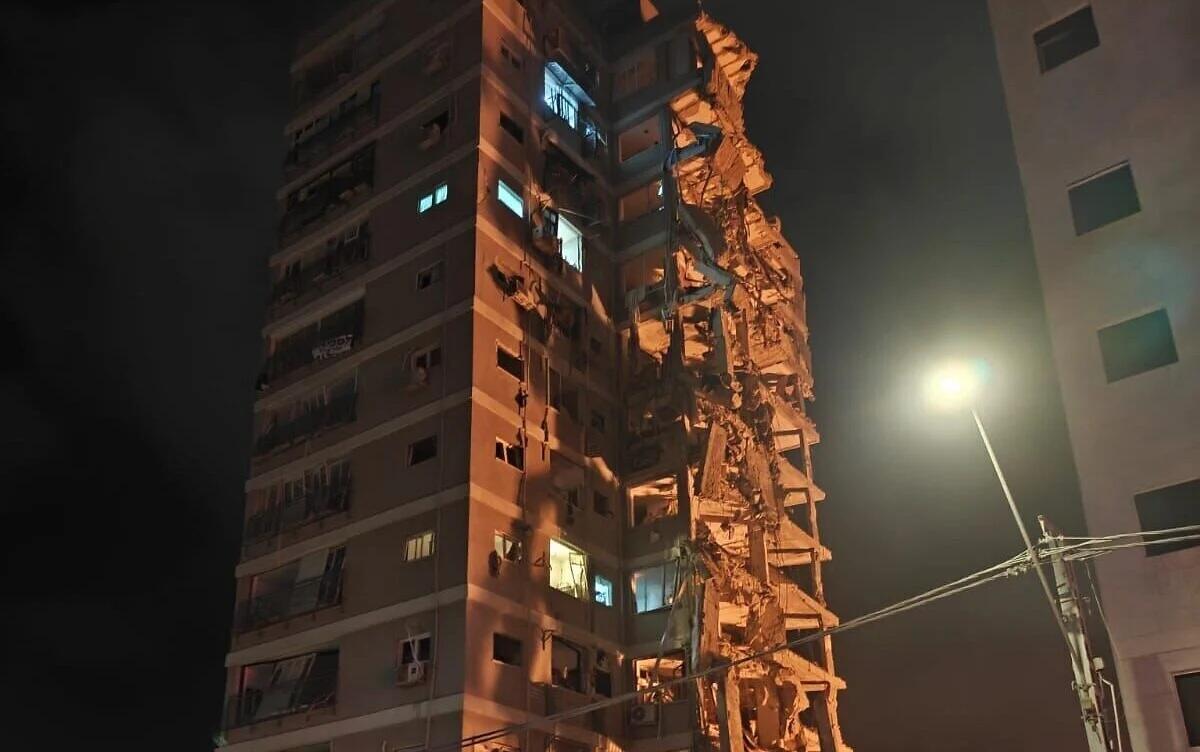
For the past 33 hours our volunteers have been digging through rubble in Bat Yam after a direct hit by an Iranian missile. So far, our teams have recovered six bodies: a 60‑year‑old woman, a 70‑year‑old man, a 10‑year‑old boy, an 8‑year‑old girl, a 55‑year‑old woman, and an 18‑year‑old teen. We continue the search for others who may still be trapped alive.
This tragedy is a part of an unprecedented attack of hundreds of ballistic missiles and drones targeting Israel since Friday. According to the latest information, the Bat Yam building collapse resulted in at least 35 people reported missing, hundreds are injured, and additional damage to 61 nearby buildings. In addition to our efforts to save those who are stuck under rubble, our teams have also established a makeshift mortuary to ensure victims are handled respectfully before transfer for forensics.
Trump showing some spine against Israeli demands. Surprising.
In the past 48 hours, Israel has asked the Trump administration to join its war effort, per Axios
Israel seeks help targeting & destroying the fortified Fordow uranium enrichment site
Axios says the Trump administration is so far rejecting the Israeli request
But if Fordow remains intact, Israel’s mission to dismantle Iran’s nuclear program will be considered a failure
AJ: At least 80 people – including 20 children – have been killed in Iran and four in Israel, with hundreds wounded on both sides in the ongoing tit-for-tat attacks.
Axios underscores that “Israel lacks the bunker buster bombs and large bomber aircraft needed to destroy Iran’s Fordow uranium enrichment site, which is built into a mountain and deep underground. The U.S. has both within flying distance of Iran.”
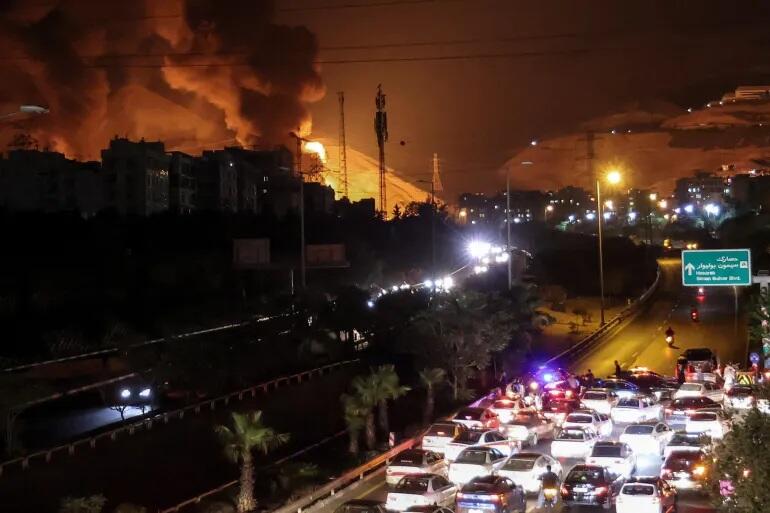
Meanwhile, the images coming out of Iran show unprecedented and shocking scenes of oil refineries burning uncontrollably while nearby highway traffic has been forcibly stopped…
Via AFP
Reports of an Iranian hypersonic missile strike on Haifa earlier:
And this stunningly close and at a good angle video shows major impact in Tel Aviv:
Some regional accounts are speculating this was a hypersonic strike on Tel Aviv:
These missiles are clearly causing significant damage in Israel — an unprecedented first:
TOI: Damage seen in a building in Bat Yam, on Israel’s Mediterranean Sea coast, following an Iranian missile barrage, early June 15, 2025
* * *
Latest updates (1850ET):
An unconfirmed Israeli airstrike has targeted Iran’s defense ministry headquarters, causing minor damage.
The Israeli Air Force reportedly bombed the Shahran oil depot near Tehran, Iranian state media reports.
Two Israeli citizens have been arrested on suspicion of carrying out security offenses under instructions from Iran.
Iran struck a two-story home in Tamra, east of Haifa, killing three.
Jordan has suspended all flight operations in its airspace until further notice
Several missiles were observed streaking above Jerusalem on Saturday night
Israel also carried out airstrikes in Yemen Saturday night, aiming to eliminate Abdul Malik al-Houthi, a senior Houthi military leader
Al Jazeera, citing Iran’s Tasnim news agency, reported that an Israeli airstrike targeted the country’s defense ministry headquarters in Tehran on Saturday evening, causing minor damage to one of its buildings
“[A]n attack on Tehran this evening by the air force of the Zionist regime, the headquarters of the defence ministry was targeted. One of the headquarters’ buildings was lightly damaged,” the state news agency reports.
The Iranian government did not comment on the reported strike.
Additionally, Iran’s Islamic Revolutionary Guard Corps (IRGC) claimed its missiles and drones targeted fighter jet fuel production facilities and energy supply centers in Israel, according to a statement reported by state media. The IRGC warned that its “offensive operations will continue more fiercely and widely” if Israel’s actions persist.
The IDF has not confirmed the attack.
* * *
Several missiles were observed streaking above Jerusalem on Saturday night, a witness told Reuters, as Iran launched another direct assault on Israel.
The IDF confirmed that missiles fired from Iran had been detected, with defense systems actively engaged to intercept them.
“Upon receiving an alert, the public is instructed to enter a protected space and remain there until further notice,” the IDF said in a statement, Reuters reports. The IDF did not comment on possible injuries or damages.
Meanwhile, Israeli authorities have arrested two citizens suspected of carrying out security offenses under instructions from Iran, officials told the Jerusalem Post. A gag order has been issued on further details, according to Channel 12’s Amit Segal.
* * *
Jordan has suspended all flight operations in its airspace until further notice due to escalating tensions between Israel and Iran, the Guardian reported, citing Jordan’s state news agency. Similarly, the Syrian Civil Aviation Authority announced a temporary closure of Syrian airspace to civilian flights, according to SANA.
* * *
The Israeli Air Force reportedly bombed the Shahran oil depot near Tehran, Iranian state media reports. The IDF said not officially commented on the alleged strike. The purported attack comes after Iranian media said Israel struck on the South Pars field in the southern Bushehr province.
The strikes have disrupted electricity supply in the area, though the full extent of the damage remains unclear. The Israel Defense Forces have not yet commented on the operation.
* * *
Iran confirmed an Israeli airstrike struck the Shahran oil depot but said the situation was “fully under control,” according to SHANA, the news agency of Iran’s oil ministry, Reuters reports. The state media outlet reported that the targeted tank contained a limited fuel volume. No further details on damage or casualties were disclosed.
* * *
Israeli Defense Minister Israel Katz wrote on X, “Tehran is ablaze” amid reports of the strike on the oil depot.
* * *
Update (1713ET): ‘Hundreds’ of Iranian missiles were launched at the Israeli cities of Tel Aviv and Haifa – which Iran described as ‘cluster missiles’ in what was the fifth salvo today.
Iran launched shortly after Israeli Air Forces completed “a wave of strikes against military and strategic assets, nuclear program sites and high-ranking figures” according to a Saturday evening statement by the IDF. The latest Iranian launch came after Iranian state TV said ‘heavy and destructive’ attacks against Israel were expected within hours.
Air raid sirens could be heard in Haifa and northern Israel.
It appears that Israel intercepted most of the rockets, though some got through – as footage has been posted on social media of a refinery on fire in Haifa.
“At this hour, Israeli Air Force pilots continue to conduct widespread strikes across various regions in Iran — an ongoing operation lasting nearly 40 hours and targeting over 150 objectives,” said IDF spokesman Brig. Gen. Effie Defrin, who added that protective measures will remain in effect.
According to the Times of Israel, one of the missiles hit a two-story home in Tamra, east of Haifa, killing one woman and injuring 13 others.
The death toll from the Iranian ballistic missile strike on a two-story home in Tamra, east of Haifa, has climbed to three, first responders told the Times of Israel. A 20-year-old woman was killed when missile directly struck her home, according to authorities. Firefighters extracted four individuals from a four-story building in the area, but two were pronounced dead at the scene, according to the Jerusalem Post.
Meanwhile in Iran…
Israel also carried out airstrikes in Yemen Saturday night, Israel’s military carried out airstrikes in Yemen on Saturday night, aiming to eliminate Abdul Malik al-Houthi, a senior Houthi military leader, according to Israel Defense Forces (IDF) sources cited by the Jerusalem Post.
The operation’s outcome remains uncertain, with one Israeli official tell the Israeli publication, “We will soon know if it succeeded.”
The IDF has not issued an official statement on the airstrike.
The airstrike in Yemen comes as the IDF continues conducting strikes on targets in Tehran while intercepting a barrage of ballistic missiles launched from Iran, the IDF said.
Earlier, the International Atomic Energy Agency announced on Saturday that there was “no damage seen” at the Fordow Fuel Enrichment Plant or at the Khondab heavy water reactor under construction in Iran. There has also been no further damage at the Natanz nuclear plant since Friday.
* * *
Update(1300ET): Israel’s military on Saturday has been busy touting that its warplanes have total air superiority over Western Iran and the capital area, as the Islamic Republic’s defenses have been largely degraded and destroyed. A senior IDF military official has been cited in local media as saying very significant damage has been inflicted on key nuclear sites and that the IDF will “continue”.
“Since the beginning of the operation, Iran’s nuclear project has suffered heavy blows in two main areas: Damage to the production of the weapon core through strikes on uranium enrichment and conversion sites in Natanz and Isfahan [and] damage to the regime’s weaponization group through the elimination of nine nuclear scientists with unique knowledge and experience in developing the nuclear detonation device,” the official said. And further that “all the scientists eliminated in the opening strike had, over the years, been involved in developing the nuclear detonation device.”
The CIA at this moment still assesses that Iran does not produce a bomb, and was likely not actively seeking it. Iran’s latest response is as follows:
“This aggression pushes the region into a dangerous cycle of violence,” Iranian Foreign Minister Abbas Araghchi says during a call with his Chinese counterpart Wang Yi, according to a statement from his ministry. “Iran has responded and will respond in a firm manner to the barbaric actions of the Zionist regime.”
Netanyahu is meanwhile maintaining that the has the “clear support” of US President Donald Trump, in a new televised address:
In an English video statement, Prime Minister Benjamin Netanyahu says Iranian leaders are “packing their bags” amid Israel’s airstrikes.
“I’ll tell you what would have come if we hadn’t acted. We had information that this unscrupulous regime was planning to give the nuclear weapons that they would develop to their terrorist proxies. That’s nuclear terrorism on steroids. That would threaten the entire world,” he says.
He adds that the operation has the “clear support” of US President Donald Trump.
“Our enemy is your enemy… We’re dealing with something that will threaten all of us sooner or later. Our victory will be your victory,” Netanyahu says, wishing the US leader a happy birthday.
“This is what Israel is doing with the support, the clear support of the president of the United States, Donald Trump, and the American people and many others in the world.”
At least 80 people – including 20 children – have been killed in Iran and four in Israel, with hundreds wounded on both sides in the ongoing tit-for-tat attacks.
US President Donald Trump has lauded Israel’s premeditated assault and warned of much worse to come unless Iran quickly accepts the sharp downgrading of its nuclear programme.
Continuing Iran-US nuclear talks is unjustifiable while “barbarous” Israeli attacks persist on the country, Iranian Foreign Minister Abbas Araghchi says.
The Israeli military says its air strikes on Iran killed more than 20 Iranian army and Revolutionary Guards commanders.
Israel’s latest attacks on an Iranian gas field takes tensions to a different level
* * *
Overnight has seen the continual trading of tit-for-tat missile salvos between Israel and Iran, with Israeli fighter jets busy over western Iran, where they’ve claimed to have achieved complete domination of the skies after taking out anti-aircraft missile batteries.
Images of large-scale destruction have emerged from both capitals, with Israeli authorities saying at least four citizens have been killed – though casualty figures could be much higher amid an ongoing emergency response – and Iran says Israeli attacks have killed at least 78, including women and children, and wounded over 320 others.
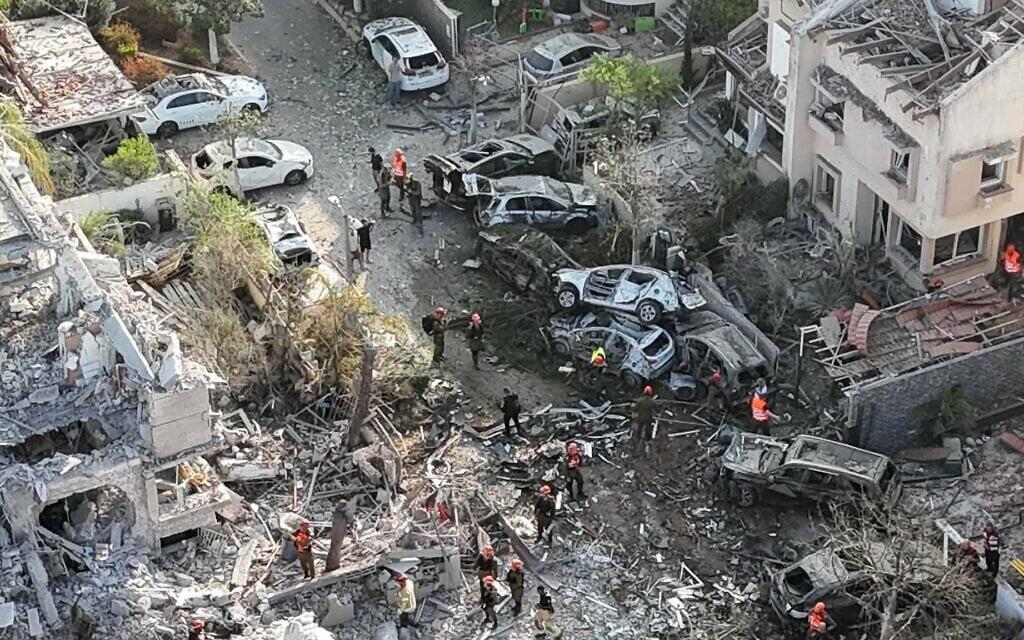
Destruction in Rishon Lezion following an Iranian ballistic missile attack, which killed at least two and injured dozens more, TOI.
Israel has shared footage of successful aerial attacks on Iran’s ballistic missile launchers in some cases, while the IDF has announced that 70 Israeli Air Force fighter jets participated in the overnight operation in Tehran to establish “aerial freedom of action” over the Iranian capital.
Some 40 sites were targeted, including air defense systems, IDF Spokesman Brig. Gen. Effie Defrin has said. Israeli jets were able to fly over and around the capital for some two-and-half hours.
“The dozens of aircraft are flying freely over Tehran, thanks to the opening blow that removed the threat of Iranian air defense systems,” he declared. Characterizing this as the deepest operation the Israeli Air Force (IAF) has ever been involved in over Iran, he announced:
“Tehran is no longer immune; the capital is exposed to Israeli strikes.”
Israeli jets have yet to strike all of Iran’s nuclear facilities, and Prime Minister Netanyahu has warned that this could continue for several days more. There is serious damage reported at Natanz nuclear site. There have been conflicting reports over whether there is any radiation or chemical contamination at the site.
Some sections of the Isfahan site have been damaged, the IDF has said, while the other key site of Fordo has yet to be targeted.
Important, Israel says that nine nuclear scientists have been killed as a result of Friday aerial operations. Clearly Israel is going for leadership decapitation of military and nuclear programs.
Impact scene from Tel Aviv:
Still, even with Iran’s military capabilities now being steadily degraded, the Islamic Republic has to some degree shown it can regroup and hit back. Israeli media has described a state of panic on the streets, and in some cases residential areas have been demolished:
Israelis on Saturday described the fear, chaos and confusion as several Iranian missiles slammed into houses and apartments in central Israel overnight, causing widespread destruction, killing three people and wounding dozens.
Warning sirens sent millions of people rushing for safe rooms and bomb shelters as Iran fired several waves of missiles in response to Israeli strikes on its military leadership and nuclear program. While the IDF said most were intercepted, several missiles — apparently armed with large explosive warheads — slammed into homes in Tel Aviv, Ramat Gan and Rishon Lezion.
“We shut the door, started watching the news through the computer, and suddenly there was a boom so loud that the whole building teetered,” Tali Horesh, resident of a Tel Aviv high-rise that was hit Friday night, told the Ynet news site.
Meanwhile President Trump has been nowhere to be seen, and certainly hasn’t faced reporters’ questions on where the United States stands in all this.
Is Israel committed to full war for regime change in Iran at this point?
developing…
https://www.theoccidentalobserver.net/wp-content/uploads/2018/06/TOO-Full-Logo-660x156-1.png00Kevin MacDonaldhttps://www.theoccidentalobserver.net/wp-content/uploads/2018/06/TOO-Full-Logo-660x156-1.pngKevin MacDonald2025-06-15 08:54:052025-06-15 08:54:05Trump Shows Some Spine—Rejects Netanyahu’s Request To Join War, As Israel Needs Large US Bunker Buster Bombs
This gives further credence to the view that Trump was trapped by Israel into supporting their war because of the power of the Israel Lobby in the U.S. Trump would like it to end but the Israelis are in the driver’s seat and they will not stop. I rather doubt that Israel should be concerned at all. Trump doesn’t have a politically viable choice. From the New York Timestoday:
Israel’s military spokesman, Brig. Gen. Effie Defrin, said Israel was not ceasing its attacks on Iran “for a moment.”
“At this hour, too, we continue to strike dozens of additional targets in Tehran. We are deepening the damage to Iran’s nuclear program and its military capabilities,” he said in a televised address, without elaborating.
The path to diplomacy appears limited after officials called off talks set for Sunday between Tehran and Washington on the future of Iran’s nuclear program. …
Expanding scope of attacks: Israeli strikes, initially focused on nuclear sites, air defenses and military targets, are also now targeting the energy industry that underpins much of Iran’s economy. The Israeli military’s chief spokesman said its forces had achieved “freedom of action” in the skies over Tehran, indicating they could strike targets without expecting major interference.
Israel’s leadership is concerned that international pressure may force the IDF to stop striking Iran before its mission is complete, an Israeli security source told Jewish Insider on Sunday.The source spoke a day after President Donald Trump wrote in a Truth Social post that “this war in Israel-Iran should end,” and continued to express hope that a deal could be reached between Washington and Tehran, even as the next round of negotiations between the U.S. and Iran over Tehran’s nuclear program was postponed.The president’s remarks came two days after Israel began targeting Iranian nuclear and military sites and Tehran retaliated by striking sites across Israel, including residential areas.“We want the U.S. to understand our point of view,” the source said. “The goal is for Iran not to have capabilities that endanger the State of Israel and its existence.”“If we’re paying a maximal price” — 13 fatalities, 380 injured in 22 missile impact sites as of Sunday morning — “we should get maximal achievements. That is the approach,” the source added, saying that Iran’s nuclear program should not be destroyed and not “wounded.”
The official aim of Operation Rising Lions, authorized by Israel’s Security Cabinet on Thursday night, is to damage Iran’s nuclear and ballistic missile programs.The goal did not include toppling the Iranian mullahs’ regime, in part because Israel would be unlikely to have “international legitimacy” to do so, the Israeli source said. In addition, the cabinet did not say its goal was the total elimination of Iran’s nuclear program, because it wanted to set attainable goals.
https://www.theoccidentalobserver.net/wp-content/uploads/2018/06/TOO-Full-Logo-660x156-1.png00Kevin MacDonaldhttps://www.theoccidentalobserver.net/wp-content/uploads/2018/06/TOO-Full-Logo-660x156-1.pngKevin MacDonald2025-06-15 07:23:112025-06-15 07:41:04Jewish Insider: Israel concerned U.S. will push for end of Iran operation before its aims are met
It’s not just Soros et al. The massively subsidized left: A political engine for the open-borders left was given $34 million by the government
Los Angeles has erupted into violence and at the center of it stands a cast of progressive activists and political operatives – some generously bankrolled by California taxpayers.
One organization in particular has emerged as a key player: the Coalition for Humane Immigrant Rights, or CHIRLA. The LA-based nonprofit has long pushed radical positions on immigration – for example, in 2018, it spearheaded a campaign to abolish ICE. Its stated mission is to “build power, transform public opinion, and change policies” to achieve “full human, civil, and labor rights.”
Critics might describe CHIRLA instead as a well-funded political engine for the open-borders left.
And taxpayers might question the source of that funding. According to its 2023 audit, CHIRLA received $34 million from the government, with 96 percent from the State of California. State funding of $32.5 million in 2023 represented a dramatic increase from $11.4 million in 2022.
CHIRLA leads the LA Rapid Response Network (LARRN), a hotline launched in January to collect tips about ICE activity and dispatch activists to intervene. Mayor Karen Bass herself has admitted that the city relies on this network to monitor federal immigration enforcement.
The LA protests kicked into high gear after David Huerta, president of the Service Employees International Union (SEIU) in California, was arrested for allegedly obstructing ICE officers. Huerta is a major political player in the state, leading a union of 750,000 workers that is a major donor to the Democratic Party. Though his spokesperson claimed he was merely observing, video released by the US Attorney appears to show him blocking an ICE vehicle.
CHIRLA sprang into action, organizing a rally to protest Huerta’s arrest. Demonstrators waved signs from the Party for Socialism and Liberation, a Communist group, and chanted familiar slogans: “No justice, no peace!” and “Stand up, fight back!” CHIRLA’s executive director referred to Huerta as her “brother,” highlighting the group’s close ties to organized labor.
Mayor Bass joined posted on X, “We will not stand for this” – “this” referring not to street violence, but to ICE enforcing federal law. In Spanish, she was more direct: “We are not going to permit these actions.”
Bass has a long-standing relationship with CHIRLA. Just last year, she congratulated the organization for acquiring a new building to continue advancing “justice and full inclusion for all immigrants.” In August, her office issued a press release bragging about securing federal funds for CHIRLA.
Roughly 37 percent of CHIRLA’s expenditures last year went to legal services, including representing both legal and undocumented immigrants in deportation proceedings. Whether California taxpayers should foot the bill for such services is an open question.
Dr. Rosemary Kelanic is the director of the Middle East program at Defense Priorities.
The United States is alarmingly close to getting dragged into yet another military entanglement in the Middle East, this time by Israel — which is looking less and less like a true friend.
Israel’s surprise attack on Iran on Friday has almost certainly blown up any chance of reaching the nuclear deal the United States was pursuing for months. Prime Minister Benjamin Netanyahu of Israel has also recklessly endangered the 40,000 U.S. troops deployed in the region, putting them at immediate risk of Iranian retaliation, which could draw America into a war with Iran.
However Iran interprets our role in the attacks, Israel appears to have acted without giving the United States enough warning to take adequate precautions. Though President Trump acknowledged on Thursday that an Israeli attack might be imminent, the United States only began voluntary evacuations of military families and nonessential embassy personnel on Wednesday afternoon, while the State Department began drawing up plans for mass evacuation of U.S. citizens mere hours before the attack.
Mr. Trump, and all Americans, should be furious. Now Mr. Netanyahu and hawkish voices in the United States will almost certainly put pressure on Mr. Trump to assist Israel in destroying Iran’s nuclear enrichment sites, something that will be difficult for the Israeli military to do on its own and that even the U.S. military might be unable to accomplish. It would be the worst mistake of Mr. Trump’s presidency.
A war with Iran would be a catastrophe, the culminating failure of decades of regional overreach by the United States and exactly the sort of policy that Mr. Trump has long railed against. The United States would gain nothing from fighting a weak country halfway around the globe that causes problems in its region but does not pose a critical security threat to us. And the United States would lose much: most tragically, the lives of U.S. service members, along with any chance of escaping our tortured past in the region.
Americans of all political stripes oppose war with Iran, presumably because they understand the two big lessons from U.S. experiences fighting in the Middle East over the past 25 years. Not only do preventive wars not work; they also have unintended consequences with lasting impact on America’s national security.
The misguided 2003 invasion of Iraq was also a war to forestall nuclear proliferation. Disaster ensued, and not just because Saddam Hussein didn’t have weapons of mass destruction. The U.S. invasion triggered chaos and civil war in Iraq and tipped the regional balance of power toward Iran by allowing it to establish new proxy militias in the country. It also led to the eventual rise of ISIS.
There is no reason to think that a war with Iran would go any more smoothly — and it could turn out considerably worse. If drawn in, the U.S. military’s involvement would likely begin with airstrikes rather than a ground invasion, given Iran’s large size and forbidding mountainous terrain. But as the fruitless $7 billion campaign against the Houthis showed, airstrikes are exorbitantly expensive, entail significant risks of American casualties and are likely to fail anyway. The United States never even gained air superiority over the Houthis, a ragtag militant group with the resource base of an impoverished country, Yemen, over which it couldn’t even consolidate control.
Iran is far more capable of defending itself than the Houthis are. If airstrikes fail to destroy Iran’s nuclear capabilities, pressure would dramatically increase on U.S. forces to pair an aerial barrage with a ground component, perhaps something akin to the “Afghan model” the United States used to topple the Taliban. We know how that went. Despite the intent to keep that war small and brief, an engagement that started with just 1,300 U.S. troops in November 2001 snowballed into a disastrous 20-year occupation that reached some 100,000 U.S. troops at its height in 2011 and ultimately caused the deaths of 2,324 U.S. military personnel.
Even a best-case scenario, in which the United States helps destroy the majority of Iranian nuclear sites, would only delay Iran’s progress toward developing a bomb. War cannot prevent weaponization in the long term, which is why either diplomacy or benign neglect have always been better choices for handling Iran. Its enrichment program is over 20 years old, spread across multiple sites in the Islamic Republic, and employs untold thousands of scientists — 3,000 at the Isfahan facility alone. It’s probable that enough Iranian scientists know how to enrich weapons-grade uranium that Israel would not be able to kill them all, despite its airstrikes explicitly targeting them.
Assuming some continuity of technical knowledge persists, Iran would likely be able to rebuild its nuclear facilities quickly. And a defiant Iranian regime would no doubt be determined on weaponizing to deter future Israeli and U.S. attacks.
That likelihood, coupled with Israel’s insistence that Iran must never get the bomb, suggests that Mr. Netanyahu’s theory of victory could be premised on an underlying logic of regime change. Supporting that point, Israel appears to be engaging in strikes aimed at disabling the regime’s leadership in Tehran.
The Israeli leader has long embraced the desirability of regime change in Iran, and hinted in September that it could happen “sooner than people think.” As a French diplomatic source told Le Monde last fall, “The idea is circulating in certain circles that perhaps the Israelis are leading us toward a historic moment, that this is the beginning of the end for the Iranian regime.” The fall of Syria’s Bashar al-Assad in December intensified speculation about similar upheaval in Iran. Some U.S. policy hawks and members of the Iranian diaspora now claim regime change is becoming inevitable; as Mr. Trump’s former national security adviser John Bolton put it, “It’s now time to think of the campaign for regime change in Iran.”
That is magical thinking. History has shown again and again that bombing a country turns its people against the attacker, not against their own regime, despite its deep unpopularity. Images already show Iranians demonstrating in the streets — not to oppose their government but to urge retaliation against Israel. And even if the regime were to be deposed, what then? For all the Iranian government’s faults, a bad government is preferable to the chaos of no government. Do we really want to turn Iran into a failed state, like Iraq or Libya after the United States attacked those countries?
Mr. Trump often touts his record during his first term of having started no new wars. That is a record worth turning into a legacy. He must resist pressure from Mr. Netanyahu and hawks at home to avoid tragic, irreparable self-harm.
https://www.theoccidentalobserver.net/wp-content/uploads/2018/06/TOO-Full-Logo-660x156-1.png00Kevin MacDonaldhttps://www.theoccidentalobserver.net/wp-content/uploads/2018/06/TOO-Full-Logo-660x156-1.pngKevin MacDonald2025-06-14 12:07:102025-06-14 12:07:10A U.S. War With Iran Would Be a Catastrophe
We may request cookies to be set on your device. We use cookies to let us know when you visit our websites, how you interact with us, to enrich your user experience, and to customize your relationship with our website.
Click on the different category headings to find out more. You can also change some of your preferences. Note that blocking some types of cookies may impact your experience on our websites and the services we are able to offer.
Essential Website Cookies
These cookies are strictly necessary to provide you with services available through our website and to use some of its features.
Because these cookies are strictly necessary to deliver the website, refusing them will have impact how our site functions. You always can block or delete cookies by changing your browser settings and force blocking all cookies on this website. But this will always prompt you to accept/refuse cookies when revisiting our site.
We fully respect if you want to refuse cookies but to avoid asking you again and again kindly allow us to store a cookie for that. You are free to opt out any time or opt in for other cookies to get a better experience. If you refuse cookies we will remove all set cookies in our domain.
We provide you with a list of stored cookies on your computer in our domain so you can check what we stored. Due to security reasons we are not able to show or modify cookies from other domains. You can check these in your browser security settings.
Other external services
We also use different external services like Google Webfonts, Google Maps, and external Video providers. Since these providers may collect personal data like your IP address we allow you to block them here. Please be aware that this might heavily reduce the functionality and appearance of our site. Changes will take effect once you reload the page.
Google Webfont Settings:
Google Map Settings:
Google reCaptcha Settings:
Vimeo and Youtube video embeds:
Privacy Policy
You can read about our cookies and privacy settings in detail on our Privacy Policy Page.