Jewish Influence

A Closer Look at What Happened to Pat Buchanan, Part 1

Pat Buchanan has not appeared on MSNBC since October, when he began promoting his book, Suicide of a Superpower: Will America Survive to 2025? He expressed concern about “the end of white America” and the shrinking of the “European and Christian core of our country.” In January 2012 MSNBC’s president Phil Griffin said, “The ideas he put forth aren’t really appropriate for national dialogue, much less the dialogue on MSNBC.”

Following his dismissal from MSNBC, Buchanan named what he regards as the provocateurs of his downfall (see “The New Blacklist”). Buchanan blames “an incessant clamor from the left,” itemizing the Black-advocacy group Color of Change, Media Matters, and an unnamed LGBT group. After them, at the end of the list, Buchanan adds, “On Nov. 2, Abe Foxman of the Anti-Defamation League, who has sought to have me censored for 22 years, piled on.” Likewise  Congressman Tom Tancredo: “MSNBC’s decision to dismiss Pat Buchanan shows the depths to which the mainstream media has caved to far-left pressure groups like the Southern Poverty Law Center, the National Council of La Raza, Color of Change and Media Matters. There can be no doubt that these smear operations were responsible for Buchanan’s dismissal.”

I disagree with this, the prevalent view. I argue that what many people think were the causes of Pat Buchanan’s dismissal probably were not. What really hurt Buchanan was probably not the horde of angry enemies circling the walls of MSNBC and blowing trumpets, not the ADL, not Media Matters, not even Color of Change or the LGBT group. While the public is disposed to equate making noise with exerting influence, the decision of an executive in an office need not have been influenced by any of that in the slightest. I suggest that the decision to fire Buchanan from MSNBC may have been based on a consideration that is relatively or even completely obscure to the general public. Read more

Tristan Tzara and the Jewish Roots of Dada, Part 2

Other Jews involved with Zurich Dada

Among the other Jewish artists and intellectuals who joined Tzara in neutral Switzerland to escape involvement in the war was the painter and sculptor Marcel Janco (1895–1984), his brothers Jules and George, the painter and experimental film-maker Hans Richter (1888–1976), the essayist Walter Serner (1889–1942), and the painter and writer Arthur Segal (1875–1944). Read more

Roosevelt’s Catos

Winter in Germany, 1946-1947

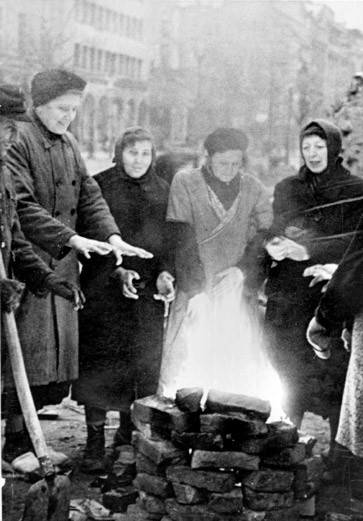
Today we can hardly imagine that 65 years ago the victorious Allies were in the process of dismembering Germany, tearing down its economy and starving out its population. Older Germans remember the postwar winter of 1946/1947 as a dreadful hunger winter. In his book The German Question and the Origins of the Cold War (Milan 2008) Nicolas Lewkowicz notes that “Germany was given the most comprehensive treatment ever dispensed to a vanquished nation in the modern history of the international political system.” (p. 11) The question is how this treatment came to be and which forces played a pivotal role in these developments.

In 1942 the war was far from decided as German submarines were cruising the American Eastcoast and German tanks were relentlessly advancing in Russia and Africa. This did not stop (or maybe actually encouraged) Jewish exiles from dreaming about Germany’s demise after the war. Tens of thousands of Jewish exiles from Germany had found refuge in New York and even had their own newspaper —Aufbau (German word for ‘build-up’). They were not sitting idle awaiting the end of hostilities, but were active in canvassing the public opinion to lobby for imposing a hard peace on Germany. The most active and outspoken among them was Emil Cohn, better known under his German pen name Emil Ludwig. Read more

Neocons and the Incredible Jewish Ethnic Infrastructure

Yet another glimpse into the massive Jewish ethnic infrastructure, the infrastructure that undergirds the power of the Israel Lobby. A column by Justin Logan in The National Interest (“Memo to Leslie Gelb: The neocons never left“) points out that neocons are alive and well, dominating the foreign policy of the Republican Party. Logan points to Mitt Romney’s foreign policy advisers, most of whom are neocon Jews. And we certainly can’t expect anything better from the likes of Rick Perry, Michele Bachmann, and Herman Cain.

The reason the neocons have been so successful in taking over the Republican foreign policy establishment is that they provide careers for like-minded people:

As Scott McConnell has pointed out, neoconservatism is a career. Or as Bill Kristol remarked in 2005, the neoconservatives have done such an excellent job building institutions and infrastructure for developing the next generation of neocons that “soon there are going to be more neoconservative magazines than there are neoconservatives.” There are dozens of twenty-something, thirty-something, forty-something and older neocons throughout Washington, working at think tanks, editorial pages, in government and elsewhere. I could probably count on two hands the number of youngish national-security types I know in town who I could strain to call realists. This imbalance among foreign-policy elites helps create the mistaken impression that there are lots of neoconservatives in America generally, which there aren’t. Neoconservatism really is a head without a body.

But that’s how foreign policy (not to mention immigration policy and policy related to all things multicultural) is made in the US—by elites with money and political connections, not by popular sentiment. The interests of America be damned. Read more

Mark Rothko, Abstract Expressionism and the Decline of Western Art, Part 3

Abstract Expressionism and the Culture of Critique

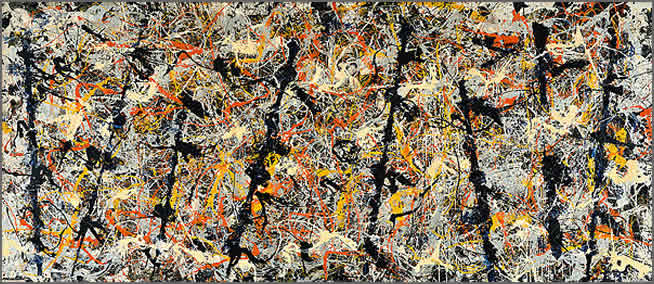
Abstract Expressionism was disproportionately a Jewish cultural phenomenon. It was a movement populated by legions of Jewish artists, intellectuals and critics. Prominent non-Jewish artists within the movement like Jackson Pollock and Robert Motherwell married Jewish women (Lee Krasner and Helen Frankenthaler). Willem de Kooning defied the trend, although he generally had to ingratiate himself with the overwhelmingly Jewish intellectual and cultural elite focused around the journal Partisan Review which was ‘dominated by editors and contributors with a Jewish ethnic identity and a deep alienation from American cultural and political institutions.’[i]

It was an art movement where the culture of critique of Jewish artists and intellectuals, frustrated that the post-war American prosperity based on Keynesian foundations had prevented the coming of socialism, turned inward and instead “proposed individualistic modes of liberation.” This mirrored the ideological shift that occurred among the New York Intellectuals generally who had “gradually evolved away from advocacy of socialist revolution toward a shared commitment to anti-nationalism and cosmopolitanism, ‘a broad and inclusive culture’ in which cultural differences were esteemed.”[ii] Doss notes how this ideological shift manifested itself among the post-war artists who became the Abstract Expressionists:

As full employment returned, New Deal programs were terminated — including federal support for the arts — the reformist spirit that had flourished in the 1930s dissipated. Corporate liberalism triumphed: together, big government and big business forged a planned economy and engineered a new social contract based on free market expansion… With New Deal dreams of reform in ruins, and the better “tomorrow” prophesied at the 1939-1940 New York World’s Fair having seemingly led only to the carnage of World War II, it is not surprising that post-war artists largely abandoned the art styles and political cultures associated with the Great Depression.[iii]

The avant-garde artists of the New York School instead embraced an “inherently ambiguous and unresolved, an open-ended modern art … which encouraged liberation through personal, autonomous ‘acts’ of expression.” The works of the Abstract Expressionists were “revolutionary attempts” to liberate the larger American culture “from the alienating conformity and pathological fears [especially of communism] that permeated the post-war era.”[iv] Rothko claimed that “after the Holocaust and the Atom Bomb you couldn’t paint figures without mutilating them.” His friend Barnett Newman remarked that if people only read his paintings properly “it would mean the end of all state capitalism and totalitarianism.”[v] Read more

Mark Rothko, Abstract Expressionism and the Decline of Western Art, Part 2

Creating a new “American” Art

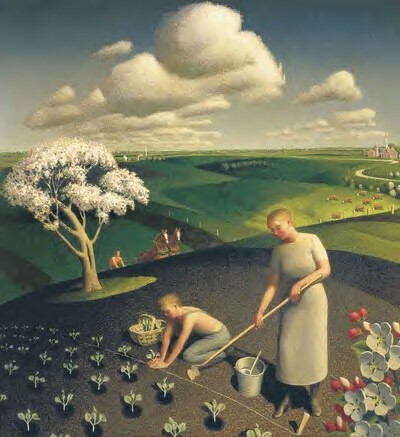
Before the rise of Abstract Expressionism, the American art scene after World War I was defined by two main currents. The first were what one might call the Regionalists (e.g. Grant Wood, Thomas Hart Benton and John Steuart Curry) who used their own signature styles to portray the virtues of the hard-working rural American population. In the second group were the artists of Social Realism (e.g. Ben Shahn and Diego Rivera), whose work reflected urban life during the Great Depression, and reflected a preoccupation with international socialism.

Neither of these two schools was interested in abstract art. Despite the leftwing view of the social realists, both groups held rather conservative attitudes on figurative representation. Yet, even as these two styles dominated, the artists of the nascent New York School “met frequently at the legendary Cedar Bar, where they discussed their radical theses. They argued endlessly about the problems of art, about how to effect a total break with the art of the past, about the mission of creating an abstract art that no longer had anything to do with conventional techniques and motifs.”[i]

Spring in the Country by Grant Wood (1941)

The Museum of Modern Art did not yet exist; the Metropolitan Museum tended to “look down its WASP patrician nose at modernism”; and the Whitney favoured exactly the kind of American painting young Rothko most despised: scenic, provincial, anecdotal, and conservative.[ii] For a Jewish outsider like Rothko, who in 1970 declared that he would never feel entirely at home in a land to which he had been transplanted against his will, urban America was his America.

Read more

Larry David on Some Jewish Stereotypes

In looking around for inspiration on Larry David, I came across this in an article by Gilad Atzmon (whom I admire):

David spits on everything: you name it, he spits on it. It was David who exposes the Jewish fetish with body organs long before we all started to discuss Israeli organ harvesting. David ridicules the Shoa obsession, the Jewish and anti Wagner fetish [here’s the Wagner video]. David spits on every possible American value one can think of. He mocks the celebrity culture, materialism and greed. He exposes Jewish supremacy, ignorance and arrogance. Yet, he is doing it all by putting himself in the line of fire. He doesn’t just bring to light to Jewish ugliness, he often embodies this ugliness himself.

I can’t say that I have seen many episodes of Curb Your Enthusiasm, but I happened to see the premier for the new season, and it definitely stepped on Jewish sensibilities. (But, as Atmon says, David offends everyone—here giving instructions to a teenage girl on how to insert a tampon. Probably a sign that he is a sociopath at heart.)

The main plot revolves around the fact that the divorce lawyer hired by David turns out not to be Jewish, but Swedish and Christian. David assumed that with a name like Berg and with Jewish religious paraphernalia ostentatiously decorating his office, that he must be Jewish. Berg also talks with a Jewish accent and liberally drops Yiddish words into his conversation. It turns out that he even hosts Hanukkah parties. David exclaims,  “I get a Swede lawyer. She’s going to get everything…. I got Sweded”—obviously a play on “Jewed” which plays on the stereotype of Jews engaging in sharp business practices/fraud.

(Another stereotype—which I think goes a long way toward explaining the attraction of Jewish men to non-Jewish women: the aggressive Jewish woman. While dining, a Jewish character casually says that if he ever gets divorced, he will be very equitable with the assets. His Jewish wife explodes with a torrent of hostility to the effect that if we ever get divorced, she will take him for every penny he has and nail his balls to the wall, etc. It’s like an earthquake. Everyone at the table sits in stunned silent for a while. Then it passes and things move on smoothly. We later see husband and wife very happy together.) Read more