Featured Articles

What Hitler Believed

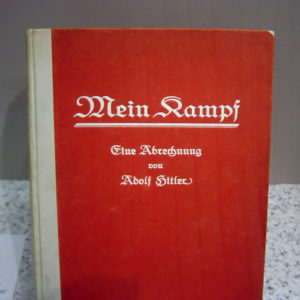
All my life, it’s been Hitler this and Hitler that.  For me, it was like the Norm Macdonald joke, the more I heard about the guy, the more I didn’t care for him.  Finally, I took it upon myself to read Hitler’s magnum opus, Mein Kampf, and see what I could pick up about him for myself.

Hitler dictated Mein Kampf (My Struggle) while he was in prison for an unsuccessful putsch (political insurrection) in November of 1923.  The book gives his account of his life, outlines the ideology of National Socialism, and relates the history of the National Socialist German Worker’s Party (commonly known as the Nazi Party) and its plans for the future.  The book was published in two volumes, in 1925 and 1926.   It became a best seller in Germany, though with its 688 pages of pedestrian prose, it might have been more purchased than read.

I skipped over parts of the book in deference to my purpose for reading it: I was looking for Hitler’s core beliefs.  Behind his own story and all the politics and programs and particulars, what were Hitler’s fundamental assumptions and values?  This is a report of what I came up with.

I think it’s important that you keep in mind what this writing isn’t as well as what it is.   I’m not a trained social scientist or philosopher.  My knowledge of Hitler and his time doesn’t go beyond what the average reasonably literate person picks up in the normal course of things.  I’m not getting into Hitler’s merits as a human being, or the wisdom or morality of anything he did while he was in power.  I’m not making a case for him or putting him down.  I read his book (or pretty much), and this is what I got out of it about his basic convictions.  That’s all this is.  Reading the book and putting this material together has given me a better handle on what Hitler believed than before; that’s as much as I can say with any certainty.  So take this for what it’s worth.

The quotes are from Mein Kampf, Hitler’s words. Read more

Authentic Heidegger vs. Inauthentic “Fake” News, Part 2

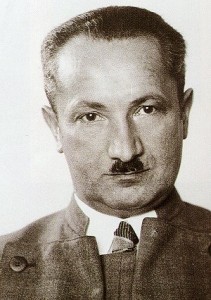
Martin Heidegger, 1889–1976

Go to Part 1.

The expression “fake news” has a generic purpose whose meaning varies with each individual user. This phrase, alongside a number of other phrases describing language manipulation in the media, can be ranked in the category of Heidegger’s “idle talk.” The political effects of idle talk and its related word “newspeak” were also well illustrated by the novelist and essayist George Orwell.[14] Attempting to grasp the meaning of liberal political propaganda while skipping over the study of Heidegger’s idle talk, or Orwell’s newspeak, is a nonstarter. Orwell had done a revolutionary work by demystifying idle talk and fake news by exposing frequent falsehood in modern political communication.

Needless to say a White nationalist in Europe or in America today will define differently Orwell’s description of newspeak than his globalist-minded liberal or antifascist counterpart. Blaming only Joseph Goebbels, the former National Socialist minister, for being the first to launch fake news in Germany, or for that matter for being the first in standardizing political lies and self-deception in public discourse, is false.  Ironically, it was Goebbels himself, much earlier than Orwell, who had pointed out in his books and his speeches the rising tide of idle talk or fake news in the liberal media: “And if we are to tell the truth, then we must simply confess that we are slowly getting sick of this idle talk (“Gerede”) about morality and humanity that is travelling, column by column, through the English press today.”[15]

The event which has acquired lately a historic importance and which makes modern opinion makers in the US and EU extremely worried is that charges against fake news media are being levelled by a man who represents the most influential and the most liberal country on earth—Donald Trump, president of the United States. If Trump doesn’t shy away from calling out mainstream news as fake news, he might someday start calling out the names and describe the ethnic origin of major fake news distributors in America. Trump’s labeling of major news outlets as providers of fake news is an  unprecedented indictment in the entire history of Liberalism — all the more so because the much-lauded so-called free press is viewed as the main pillar of liberalism or for that matter of the official, i.e., “deep state”  America today. Read more

Authentic Heidegger vs. Inauthentic “Fake” News, Part 1


Martin Heidegger, 1889-1976

The trouble with Martin Heidegger, the widely acclaimed Western philosopher, is not just how to correctly interpret his texts, but also how to correctly interpret the works of his interpreters. Out of a multitude of books and articles by hundreds of Heidegger’s critics one can barely single out two critics who are on par with each other. Each critic, or rather each would-be expert on Heidegger, usually handpicks several Heidegger’s words, only to interpret those words according to his own readymade conclusions. In traditional German scholarship this obsessive compartmentalization of social science, which skips over a wider social, racial, literary, historical, etc. context, has been derisively labeled with a noun “Fachidiotismus,” that is, “expert idiocy.” Such a compartmentalized approach in social science today is pretty much widespread among liberal academics and self-proclaimed media experts.

One is, therefore, obliged to raise a simple question: Is it worthwhile reading Heidegger’s mutually exclusive critics in the first place? Part of the problem also resides in Heidegger’s own opaque prose, devoid of footnotes and bibliography, which never offers a reader a single illustration from the public realm and which remains closed off from any ethical judgments. For modern social justice warriors such abstract philosophizing is inadmissible. To make matters worse Heidegger’s toying with German compound nouns makes his texts read like a jigsaw puzzle reminiscent of the travails of Orpheus, the chores of Theseus, or the labors of Heracles during which these three mythical heroes embark on a dangerous voyage of a deadly guesswork in an attempt to decipher the puzzle of life (Being). Although these heroes had managed to divine all of life’s puzzles, at some point however, the inexorable destiny sets in. The uncontrollable individual fate, combined with the unavoidable destiny of their community befalls them all: first the violent death of the hero and then the downfall of the hero’s community[1].

It comes as no surprise then that Heidegger, just like all “nationalist-socialist-conservative-revolutionary-traditionalist-pagan-traditional-Christian, et. al” European thinkers, poets, and scholars, including sympathetic prewar political figures, was in deep love with the ancient Greek language and lore. “Yes to Athens, no way to Jerusalem!” was the underlying motto of all of them. However, Heidegger meticulously avoids any reference to the public realm, never ever venturing into the troubled waters of race studies, sociology or theology — quite unlike his nationalist or conservative contemporary colleagues, inspirers, or even imitators of the same or similar intellectual caliber, such as Oswald Spengler, Carl Schmitt, or Ernst Jünger,[2] whose books still provide a very accessible and very readable historical, social and literary narrative about the abstract verbiage known as “Western democracy” or “humanism”(or one may paraphrase Heidegger with his own veiled words of “downward plunge” or “downfall” (i.e., Absturz) into liberalism). His sole and almost obsessive concern remains language and how language copes with immaterial and all powerful Being, and how in turn Being interrelates with physically visible “Being-there”, that is, man’s life or “Dasein.” Or, to put it simply, albeit more crudely, Heidegger theorizes on how indefinable Being affects man’s “thrownness”, or “falling” into this world without ever being asked whether he wanted to be thrown into this world in the first place. The late American rock singer Jim Morrison, who used to be an avid reader, is reported to have been influenced in his song by this Heidegger’s concept. Read more

Faustian Rome: The Indo-European Nature of the Roman Republic, Part 2

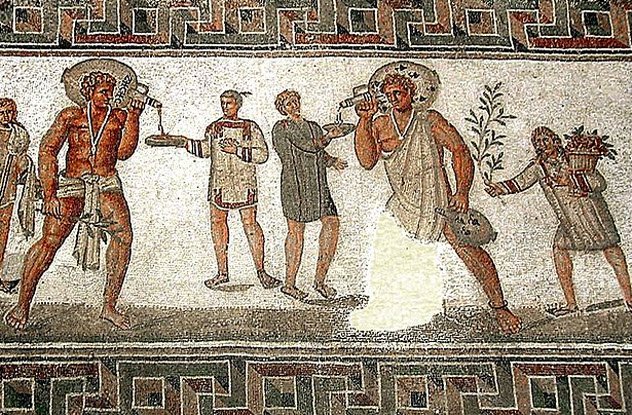
Mosaic depicting Roman slaves

Go to Part 1.

The Racial Decline of the Roman People

In more exacting terms, the long-term consequences of Republican Rome’s exposure to the Hellenistic East, and later to exclusively non-Indo-European populations in North Africa, was the beginning of a process of racial decline which would unfurl gradually, reaching its apex in the later Imperial period, and finally end with the collapse of a united Rome Empire in 476 A.D.. The seeds of demographic decline begin in earnest during the Republican period, blossomed to fruition during the Principate, culminating in a cataclysmically irreversible crescendo during the despotism of the tumultuous Dominate period. More specifically, it was during the reign of the Emperor Claudius (r. 41–54AD) in which the first non-Roman, non-Italic citizens, was granted the freedom to hold political office within the city of Rome itself. [11] Claudius himself was born in Lugdunum (modern-day Lyons, France) and his extending of the political enfranchisement to non-Romans was quite revolutionary at the time. As elaborated upon previously, Rome was a relatively open society, and when non-Romano-Italic peoples, specifically interrelated, racially accordant Indo-European peoples, like the Gauls, Germans or European Greeks were incorporated into the proverbial Roman fold, civilizational stability occurred; similar racio-cultural populations more easily assimilated to Roman racio-cultural norms. However, when non-Indo-European people, such as the largely Semitic population of ancient Judea were incorporated into the Empire, civilizational chaos was the result, as assimilation proved impossible, and as such more coercive forms of tyrannical government became the norm.

Furthermore, beginning during the period of Civil War and as first practiced by Marius and Sulla, and then by Augustus, and all future emperors, Roman military colonies were established throughout the entirety of the Roman world. During the early Imperial period, a majority of the military colonies were placed in the Eastern Mediterranean and North Africa, and would over the years drastically, and negatively influence the Indo-Roman racial hegemony of the original Romans. As the Roman, and the Romanized Indo-European racio-cultural core population groups came into sustained contact with non-Indo-European peoples, racial miscegenation inevitably followed. As a result of sustained contact, via the processes of Imperial incorporation, the Roman Empire became less Indo-Roman, and incrementally transformed into something that was both generically “Imperial” and consequently deracinated, which  in turn resulted in a demographic decline of the Empires vital European population core.  Read more

Faustian Rome: The Indo-European Nature of the Roman Republic, Part 1

In his monumental tome, The History of Rome, the historian Titus Livius wrote, “There is nothing man will not attempt when great enterprises hold out the promise of great rewards,” and in the annuals of human history nowhere is this aphorism truer than when one examines the nature of Faustian Europe and its rich diversity of constituent peoples.[1] In more specific terms, and as articulated quite definitively by Prof. Ricardo Duchesne, the uniqueness of Faustian Europe lays not with its institutions, but with the primordial drive of Faustian Man to overcome all that constrains him in the eternal quest for immortal fame. [2] Returning to Titus Livy, in his history of Rome the historian was exploring not only the meteoric rise of ancient Rome, but rather attempting to ascertain the exact reasoning behind the nature of Roman hegemony. Livy’s Rome was one of transition, the historian himself being born in 64 B.C. and dying 17 A.D., and as such had lived through the tumult of the Late Republic and bore witness to Rome’s imperial rebirth under Augustus Caesar. [3] Moreover, the nature of the age that Livy had lived through was a period of “transition” not only of governmental forms, from republic to empire, but more importantly was the beginning of Roman deviation from the racio-cultural values which underpinned the Faustian nature of Europe. When European man is truest to himself, it is when he and his civilization exist in harmony with his Indo-European, Faustian nature. When deviation from this historical, dare I say cosmic reality occurs, it is a prerequisite for civilizational chaos. In the historical context of Republican Rome, it was the transition from republic to empire, and the accompanying degenerative racio-cultural changes, which deviated from the Indo-European nature of the Faustian soul of Europe, which laid the foundation for Rome’s future collapse.

Evolutionary speaking, White-European success has its origin in the prehistory of the “Last Interglacial Maximum,” and it was through the successful surmounting of the trials and tribulations of such hardship that the Faustian soul of European man was forged. Irrespective of age or context, the success of European civilization stems from its evolutionary backgrounds as made manifest by the Faustian spirit of its earliest peoples, the Proto-Indo-Europeans and their successors, the Indo-Europeans. Early Rome, both of the monarchial and republican variety, was a continuation of the Faustian soul of Indo-Europe. Moreover, it is from within the racio-cultural values of early Rome that much of the Faustian soul of Indo-European Europe was transmitted to later societal and civilizations externalizations of the European soul. Returning back to Republican Rome, my proposition is that the success of early Rome was in large part predicted upon its adherence to the racio-cultural values of its Indo-European patrimony. While conversely, the fall of Rome coincides with its abandonment of its Faustian Indo-European patrimony, as evidenced by the demographic shift, immorality, and overall degeneration of the martial spirit of Indo-Europe, as evidenced by the Roman Empire, most notably in its later historical incarnation after the second century A.D.

The Indo-European, proto-Roman Latini people most likely migrated to central Italy, i.e., “Old Latium,” during the European Bronze Age, and from early on in their prehistory made their presence felt. [8] In continuation their Indo-European forbears, the racio-cultural world of both Monarchial and later Republican Rome was extremely competitive, with aristocratic individuals vying for power and prestige. This penchant for competition in both the IE and IE successor cultures more often than not found expression in a highly militarized racio-cultural milieu, From 509 B.C. to 27 B.C., in a series of gradual and militaristically stunning conquests, first of Italy, and eventually culminating with the conquest of entirety of the Mediterranean Basin, the Roman Republic reigned supreme. In continuation of the Faustian soul of Europe, the Republican era of ancient Rome was an epoch or martial glory and by extension, militaristic expansion, and one could argue by even the most objective metrics, the apogee of Roman civilization. Rome’s geopolitical expansion and eventual hegemonic lordship over huge swathes of Europe, North Africa and Western Asia is unprecedented in European history in terms of its sheer scale, scope and tempo, and as such is an important period of study for ethnonationalists. Furthermore, the Republican values held so dear by Livy and many of his fellow Roman contemporaries, that is martial valor, honor and what the later twentieth-century Danish scholar Georg Brandes would term “radical aristocratism” when describing the political orientation of Friedrich Nietzsche, are the hallmarks of European civilizational success. Ancient Republican Rome existed for nearly 500 years, and a great deal of this civilizational longevity was achieved by the Republic’s adherence to Faustian spirit of our Indo-European forefathers, particularly their warrior ethos. Read more

Tyranny and Diversity in the Ancient World

In his Politics, Aristotle observes that diversity resulting from immigration without assimilation was a frequent cause of civil war and breakdown of civic solidarity within the Greek city-states. In this brief article, I would like to highlight how diversity in the use of foreign mercenaries and changes in the population were a frequent tool exploited by Greek tyrants to subjugate the citizenry.

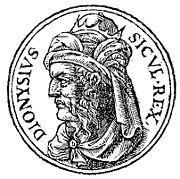
The archetypal example of this was the powerful and diverse Sicilian city-state of Syracuse, which was long ruled by a string of tyrants, making for a useful contrast with the homogeneous and free city-state.  Aristotle remarked: “at Syracuse the conferring of civic rights on aliens and mercenaries, at the end of the period of the tyrants, led to sedition and civil war” (Politics, 1303a13). Furthermore, Aristotle argued that a legitimate ruler was protected by his own armed citizens, whereas tyrants used foreign mercenaries:  “Kings are guarded by the arms of their subjects; tyrants by a foreign force” (1285a16). The use of foreign mercenaries frequently led to rule devolving to a tyrant or a small clique (1306a19). 

Aristotle’s observations have largely been echoed by modern scholars. Tyrants were keenly aware of the fact that common identity and civic solidarity were threats to their personal power. Kathryn Lomas observes that “the use of itinerant populations to subvert the status of the polis is common to many tyrants and Hellenistic monarchs throughout the Greek world.”[1] Paul Cartledge observes that Syracuse became:

what Tyranny in essence was: an autocracy based on military force supplied by a personal bodyguard and mercenaries; and reinforced by multiple dynastic marriages, the unscrupulous transfers of populations, and the enfranchisement of foreigners.[2]

There is evidence that the Greeks more widely considered homogeneity to be a source of strength in a city. During the Peloponnesian War, the Athenian political leader and adventurer Alcibiades argued that Sicily would be easy to conquer, because its diversity meant its cities lacked solidarity and social trust. Instead of common civic action, the Sicilians were prone to individual selfish behavior in the form of corruption and emigration:

Sicily may have large cities, but they are full of mixed rabbles and prone to the transfer of populations. As a result no one feels that he has a stake in a city of his own, so they have taken no trouble to equip themselves with arms for their personal safety or to maintain proper farming establishments in the country. Instead, individuals hoard whatever money they can extract from public funds by persuasive speaking or factional politics, in the knowledge that, if all fails, they can go and live elsewhere. A crowd like that are hardly likely to respond unanimously to any proposal or to organize themselves for joint action: more probable is that individual elements will go with any offer that attracts them . . . (Thucydides, 6.17)

Given that Alcibiades made these comments in a successful speech trying to convince the Athenian Assembly to invade Sicily, we can assume such arguments would have resonated with Athenian citizens in general. (In the event, the Athenian invasion of Sicily proved to be a disaster. Nonetheless, as one might expect, the Athenians did find local allies among Sicily’s diverse population, notably among the indigenous Sicels. Sicily’s lack of unity however was not sufficient to make up for the general riskiness of the enterprise, notably due to geographical distance from Athens, and Spartan support for Syracuse.)

In conclusion, the importation and enfranchisement of foreigners, whether by democrats or tyrants, was a common method to subvert the political process, destroy the constitution, and subjugate the citizenry. By hard experience, the ancient Greeks learned that republican self-government is impossible without the solidarity enabled by a strong shared ethno-cultural identity and that an unarmed citizenry watched over by foreign mercenaries is ripe for tyranny.


References

Aristotle (trans. Ernest Barker and R. F. Stalley), Politics (Oxford: Oxford University Press, 1995).

Thucydides (trans. Martin Hammond), The Peloponnesian War (Oxford: Oxford University Press, 2009).

[1]Kathryn Lomas, “The Polis in Italy: Ethnicity, Colonization, and Citizenship in the Western Mediterranean,” in Roger Brock and Stephen Hodkinson (eds.), Alternatives to Athens: Varieties of Political Organization and Community in Ancient Greece (Oxford: Oxford University Press, 2000), p. 182.

[2]Paul Cartledge, Ancient Greece: A History in Eleven Cities (Oxford: Oxford University Press, 2009), p. 128.

An Appraisal of the SSPX from the Viewpoint of White Advocacy

The Society of St. Pius X (SSPX) is a priestly fraternity founded in 1970 by Archbishop Marcel Lefebvre, who was one of the very few bishops to oppose the modern innovations imposed on the Catholic Church after the Second Vatican Council (1962–65). The SSPX does not have a sanctioned, official position within the Church, but it vehemently opposes any attempt to characterize it as “schismatic,” or opposed to basic and lawful Church authority. Its self-imposed mission is to preserve the kernel of the Church free from corruption, specifically the Latin Mass and the ordination of priests, and thus keep alive the old paths that produced millions of holy men and women.

The SSPX knows that enemies have infiltrated the Church—modernists, Jews, freemasons, and homosexuals—and have accomplished a profound and tragic transformation of the old Faith (see “The role of Jewish converts to Catholicism in changing traditional Catholic teachings on Jews“). Pope Francis with his leftist activism is not an isolated phenomenon, but simply the culmination of this maleficent penetration of the Church. It is crucial to understand that the Church we see today—wimpy and liberal—is emphatically not the Church of old. That Church is long gone, but a remnant perpetuates the old no-nonsense, masculine traditions. The SSPX is that remnant, along with patches of conservatism here and there in the New Church.

We must distinguish between the SSPX and its followers. The SSPX, strictly speaking, consists only of the priests and its few bishops. These priests offer Mass for many faithful (“traditional Catholics”), who are often mistaken for “members” of the SSPX. In this essay I will, however, sometimes lump priests and laity together under that term, or simply, “the Society.”

The SSPX is a very positive movement for Whites for several reasons. Perhaps the most important is that Society families produce White children at a rate virtually unknown anywhere in the contemporary West. The SSPX and its faithful make up one of the very few vital bodies in the entire West. By “vital,” I mean a body that is full of life and energy, from the Latin vita, “life.” And isn’t that what Whites need above all else? Life? Descendants? White children? What other group in America is “vital” in this sense? What other group in the U.S., apart from Mormons, and Mennonites, is producing large numbers of White children? Read more