Featured Articles

Herodotus on the Challenge of Hellenic Unity
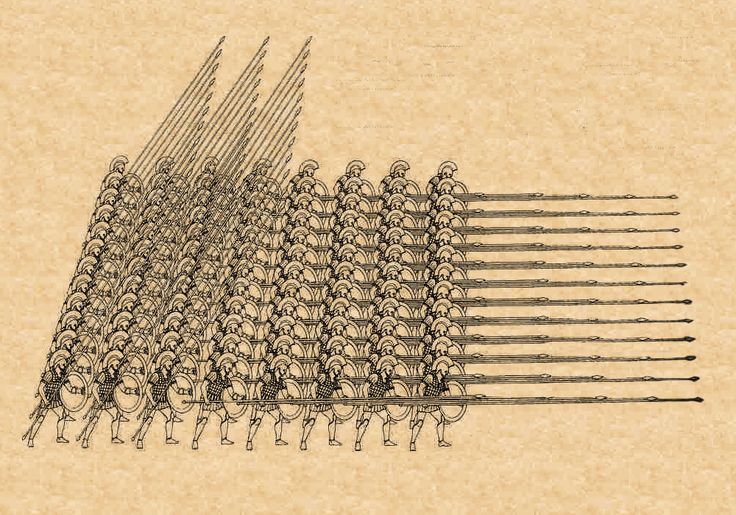
Greek hoplite citizen-soldiers in phalanx formation

Editor’s note: This is an excerpt from a longer article on Herodotus’s account of the Greek-Persian wars. The entire article will appear in the Summer issue of The Occidental Quarterly.

There was undeniably a strong feeling of shared national and cultural identity among the Greeks. However, if one looks at the sweep of ancient Greek history, one is struck by the disconnect between the pervasive rhetoric expressing pan-Hellenic sentiment and the political reality of division and often brutal wars among Greeks. The demand of the polis for total loyalty from its citizens meant that there were few qualms about annihilating fellow Greeks, if this was in the city’s immediate interests. Furthermore, it is often difficult to determine the degree to which patriotic sentiment actually underpinned the Greek states’ resistance, as opposed to merely being eloquent rationalizations for narrowly political interests, such as Athens and Sparta’s desire not to be dominated by any foreign power, Greek or not. Indeed, Herodotus says that one city, Phocia, opportunistically sided with the allies purely because its traditional enemy, Thessalia, sided with the Persians. (8.30) The collaboration of individual politicians[1] and cities with the Persians was common. Indeed the city of Delphi itself became Medized. In short, as so often in our history, broader ethnic and civilizational interests were ignored in the face of the selfish political interests.

In the Persian Wars, the Greek allies certainly achieved sufficient unity to ultimately repulse the invaders, but one is struck at how tenuous that unity was and how exceptional even that degree of unity was in the course of Greek history. The allies, who called themselves simply “the Greeks,” in the end only made up about one-in-ten continental Greek cities, the rest remaining neutral or collaborating.

Though far less discussed than the polis, the Greeks did have a quite venerable tradition of federalism—i.e., forming leagues of city-states. Such leagues, typically combining joint temples, a common council, arbitration, military alliance, and coinage, with greater or lesser degrees of central authority—were a common feature in Greek political history. Shared ethno-regional identity was a common basis for the formation of such leagues, as in Arcadia, Boeotia, Crete, and Ionia. Athens and Sparta would, in their history, each lead their own military alliances as hegemonic cities.

The league projected the basic features of the familial religion beyond the city to a regional commonwealth: shared blood and gods sealed the alliance of cities in a league, including notably a shared holy sanctuary, just as the family household and the polis were sacred spaces. However, the league was typically not a true federal state or sovereign federation, but a coalition of cities, each with its own army and jealous of its civic sovereignty. The confederal league therefore never had the solidity of the polis. The various leagues tended to fluctuate in their effectiveness as the necessity of unity (typically to acquire military scale) was in constant tension with the centrifugal tendency of each city’s desire for autonomy. In practice, a league tended to do well if it had a hegemonic city which could impose decisive leadership or, if led by two cities, if these leader-cities were in basic agreement. Rebellion and subjugation of cities was common. The Greek leagues failed to scale beyond the region and it is not surprising that they eventually fell to the far larger powers of Macedon and the Roman Empire. The ancient Greek leagues in their fragility were not unlike later fractious confederations of sovereigns, such as the Hanseatic League, the antebellum United States, the German Confederation, or the European Union.

Given the fragility of the league, moderns will be less surprised to learn that despite the Greeks’ strong sense of identity, it rarely occurred to them to seek to achieve political unity. This was not so much due to lack of imagination—Plato and Isocrates did make concrete proposals for Greek unity at the expense of barbarians—but due to the sheer impracticalities of federalism in an age before telecommunications. In the premodern world, as Montesquieu later remarked, scale was only possible for monarchies, not for republics.[2] Read more


Homage to the Post-First World: My Wanderings in Europe: Warsaw

I’m in Warsaw for the 99th Anniversary of Polish Independence. At least I think that’s what this is about. All I know is that Poland is the backdrop and I’m here to meet my friends – no my comrades – yes, that’s what they’ve become to me. We’ve come for the march from all over Europe.

Don’t get me wrong, we’re all for Poles being proud of being Poles and defending their White Christian heritage, but they seem to be doing just fine without us anyway.

Most of us have come from countries that are much worse off. For us, this is a practice run on friendly territory for people with our views. Poland seems to be the only White country in the world left where some form of nationalism is tolerated.

Anyways, I’m staying with the Swedes and every night is a binge-drinking session followed by a narrowly avoided barfight with a random drunk Pole.

I mention this because the Poles really do seem hell-bent on starting fights with random tourists. Read more

The Bestial of British: How Non-Whites Enrich a Stale Pale Nation

Where would Britain be without its communities of colour? For one thing, journalists would have much less to write about. The obscure northern town of Rotherham has achieved world-wide infamy thanks to its hard-working Pakistani rape-gangs. The southern city of London isn’t obscure, but it had fusty associations with stale pale males like Charles Dickens and stale pale institutions like parliamentary democracy.

Vibrancy and violence

Mass immigration has changed all that: in the twenty-first century, London vibrates with murders, gang-rapes and acid-attacks. A Black Londoner called Theodore Johnson has just hit the headlines after being convicted of killing his third “partner.” That’s some achievement, particularly at the age of sixty-four, but Johnson isn’t as remarkable as the Black Londoner Delroy Easton Grant, a serial rapist who specialized in attacking elderly women.

Black enrichers, White victim

These high-achievers originally came here from the small island of Jamaica, which has supplied many more murderers and rapists to Britain since our traitorous elite allowed mass immigration to begin after the Second World War. As the twentieth century closed, Tony Blair and his Jewish immigration minister Barbara Roche began to source our violent criminals from the entire Third World, with entirely predictable consequences. Blair and Roche are now long out of office, but their treachery goes on giving. At the end of December, a London newspaper wrung its hands and listed “the names of the young people we lost to violence in 2017.” A feast for phoneticians then followed:

Djodjo Nsaka (19), Quamari Serunkuma-Barnes (15), David Adegbite (19), Abdifatah Sheikhey (19), Karim Samms (16), Abdullahi Tarabi (19), Jordon Wright (19), Mahamed Hassan (17), Elijah Dornelly (17), Joao Ricardo Gomes (18), Abdirahman Mohamed (17), Osman Sharif (16), Mahad Ali (18), Joshua Bwalya (16), Soban Khan (18), Daniel Namanga (19), Jermaine Goupall (15), Abdul Mayanja (19), Corey Junior Davis (14), Saif Abdul Magid (18), Aren Mali (17), Michael Jonas (17), Kacem Mokrane (18), Jason Isaacs (18) (London youth violence: These are the names of the 24 teenage boys killed in stabbings and shootings in 2017, Get West London News, 29th December 2017)

Read more

Securing Our Future: The Wall & Border Security

One of the most foundational and principal tasks governments have had for over 2,000 years has been to secure and maintain its borders. The once great Western Roman Empire, spanning centuries, fell not because of a superior rival or total through war as so many others have. Rome fell as a result of barbarians slowly encroaching upon her borders. Border security has been discussed in the US for decades, and has seen even more feverish discussion since Donald Trump threw his hat into the political arena, bringing the issue to the forefront of the political landscape.

Something about the discussion of border policy and security always seemed somewhat disingenuous to me. There is an almost absurdity that creeps around the topic. A sort of dramatic irony lurking in the shadows, an irony I was never able to put into words. That is until I happened to stumble upon a documentary about strife in Africa where I saw something incredible — African warlords, with 60-year-old AK-47s, that are able to secure territorial borders, while the most well-funded military in human history cannot stop low-skilled Mexicans from invading the USA. This is, of course, a deliberate policy decision.

The US government as well as the governments of Europe are choosing not to enforce our borders. They are choosing to instead use our tax dollars to help fund the invasion. This raises several questions, what does our military actually defend, other than the government’s ability to replace the founding stock of the nation? How would a foreign occupation look any different? Men storming the gates, securing territory, installing their own people as government officials, murdering and raping the native population, and looting coffers. Every aspect of our lack of borders and immigration policy is far more akin to a nation being invaded by a hostile army, and less of a rational policy choice made by people with the concerns of their citizens in mind.

US citizens spend a little over $600 billion on the military, or an average of $12,000 per tax-paying household.[1] For that $600 billion what do we get? Around 1.3 million active-duty military personnel, 15% of which, about 193,000 are deployed overseas.[2] None of those people are protecting US borders, or the borders of our European cousins, for that matter.

I believe I have a plan that will actually work. The United States-Mexico border is less than 2,000 miles long. There are 1,760 yards in a mile. If we were to deploy an armed member of the US military every 100 yards along the border, it would take 35,200 people to line the border. Having soldiers take 8-hour shifts, it would require 105,600 soldiers to cover every 100 yards of the entire length of the US-Mexico border, just over half the number of military personnel that are actively deployed overseas right now. Read more

Jewish Leftist Activism in Children’s Fiction

“From the very beginning—that is, from the publication of the first book specifically for children — the intent was to mold and shape the mind to accepted standards of behavior.”
Saul Braun, The New York Times, June 7, 1970.

This article is the product of research originally conducted for a recent article titled “Jews, Obscenity, and the Legal System.” Given the significant amount of material discovered and the uniqueness of the subject matter, I decided there was enough material for an article devoted to children’s literature. During research for the obscenity essay, I consulted the American Library Association’s list of “Top 100 Banned/Challenged Books: 2000–2009” with a view to assessing the nature and extent of the Jewish presence. The first fact to become apparent was a marked Jewish over-representation in the production of books deemed controversial or perverse by parents, schools, and other institutions. Jews are notoriously shy of the census, but are probably somewhere between the 2.2% of the U.S. population suggested by the Pew Research Center and a maximum of around 5%. Even accepting a grain of truth in the apologetic argument that Jews are disproportionately attracted to literary professions (to say nothing about motive), one might very generously expect a Jewish representation of around 10 books on the ALA’s list.

However, my biographical checks on all authors on the list, some of which were indeterminate, revealed that 22 books on the ALA’s list were penned by 17 Jewish writers.[1] Jews are thus significantly over-represented in producing contemporary literature deemed oppositional by the surrounding culture, and are even more radically over-represented when older, White-authored, entries such as The Adventures of Huckleberry Finn (now often opposed as ‘racist’) are taken out of consideration. Since the majority of entries on the list were children’s books, and taking into account my previous discoveries concerning Jewish manipulation of demand for ‘diverse books’ in the school system, it occurred to me that children’s literature is an important, but sometimes neglected, front in the cultural conflict we see played out daily. This article is therefore intended as a brief introduction to some of the most pertinent personalities and themes in the area of Jewish Leftist activism in children’s fiction.

A great deal of Jewish radical activism in the cultural sphere comes under the umbrella of the general relationship between Jews and the Left. This relationship can historically be understood as involving Jewish innovation of, or support for, social, cultural, and political causes likely to weaken the cultural structures of the host society and make it more amenable to Jewish interests. In the chapter titled “Jews and the Left” in The Culture of Critique (p. 50 )Kevin MacDonald cites Stanley Rothman and S. Robert Lichter, who remarked in their Roots of Radicalism: Jews, Christians, and the New Left (1982): “Whatever their situation…in almost every country about which we have information, a segment of the Jewish community played a very vital role in movements designed to undermine the existing order.” MacDonald argues that superficial divergences between Jewish religion and radical agendas are negated by the fact many ethnically Jewish radicals have persisted in adhering to a strong Jewish identity, and have often explicitly pursued Jewish interests. MacDonald writes (p. 51): “The hypothesis that Jewish radicalism is compatible with Judaism as a group evolutionary strategy implies that radical Jews continue to identify as Jews.”

I argue that the material presented in this essay should be seen firmly within the same theoretical framework proposed by MacDonald. For example, several of the Jewish writers under consideration here are homosexuals, radical socialists, and feminists. A common apologetic from “Jews on the Right,” is that such figures are anathema to Judaism, or that as adherents of the Reform movement etc., they are unrepresentative of “true Jews.” The contention here is that the situation is quite the opposite, and I stress that many of these writers are demonstrably committed to Jewish tradition and the Jewish group. Read more

Noxious Propaganda from Sander Gilman and Newsweek

As propaganda goes, one would be hard pressed to find a nastier, more noxious piece than Sander Gilman’s Newsweek op-ed on the horrifying fact that Paul Nehlen tweeted that he was reading my book, The Culture of Critique. Here’s Nehlen’s tweet:

Nehlen committed the horrible sin of simply saying that he was reading the book, not endorsing it. But for this he has been pilloried in the media and disowned by the likes of Steve Bannon (just as well;  I have lost all respect assuming his remarks in Michael Wolff’s book were quoted accurately). After the over-the-top title, “The Alt-Right’s Jew-Hating Pseudoscience Is Not New,” we are greeted with photo of a KKK rally, the implication being that Nehlen and I endorse such things, or perhaps that the KKK spends their spare time reading my book.

This is ridiculous. Nehlen is a sincere Christian who is deeply concerned about the transformations to the U.S. brought about by immigration and multiculturalism; he is fighting the good fight against Ayn Rand groupie, open borders Speaker of the House Paul Ryan. And for my part I won’t dignify the juxtaposition of the KKK with my work as worthy of a response. My writing speaks for itself.

Read more

From Christian humanitarian and Royal Naval officer to venomous anti-White Terrorist: The Transformation of the Social Justice Warrior

It goes without saying, the odiously ignoble troupe of societal misfits turned Marxist activists, commonly referred to as Social Justice Warriors (SJW), care naught about redressing the balance of an unfair world.

If SJWs genuinely empathized with the impoverished working and impecunious lower classes, whose wages have been catastrophically depressed by decades of unfettered and unskilled mass immigration into Western Europe and the United States, they’d rush to defend the British electorate’s  decision to vacate the European Union as well as support America’s departure from the North American Free Trade Agreement.

If feminists were sincerely interested in defending women’s rights, they’d take to the streets of Rotherham and Malmö to pledge solidarity with the thousands of pre-teen and teenaged girls victimized by Islamic grooming gangs currently wreaking havoc on Northern Europe, instead of aligning themselves with the cultures that have been become synonymous with the sexual abuse of young women.

If Progressives genuinely cared about children and families, they’d fight to reunite embattled fathers with their estranged children, unfairly separated by a grievously unjust family court system that is hell-bent on eliminating the father figure from the home. Instead they no-platform brave filmmakers like Cassie Jaye for daring to suggest that men too have rights that need protecting, children need their fathers and challenging the hateful ethos of modern feminism.

But the Left have never been about doing right by their fellow man, fighting against genuine injustice or for a better world. The Left by nature are about destroying all that is righteous and decent through subversion and revolution. They thrive by sowing the seeds of societal discord, in the hope the disaffected they reach with their toxic message will eventually take up arms in their name in order to facilitate the transfer of power and lust for blood and societal carnage they crave.

Instead of helping those in genuine need the Neo-Marxist Left, and its instrument of terror — the Social Justice Warrior — exploit the misery and tragedy their policies result in to suck more lost souls into their demonic movement. In fact it’s often the people they’ve harmed most with their maddening activism that become their base and eventually their most fervid proponents.

Muslims and leftists make strange bedfellows

In Western Europe this has been achieved by attacking the indigenous majority through the empowerment of the unassimilable economic migrant and black and Hispanic minorities, whom they then recruit to block highways and attack statues.


But things weren’t always so….

Read more