Featured Articles

More racist newsletters from the past have emerged

The mainstream media, along with countless mainstream “conservatives”, have been attacking Ron Paul for un-PC sentiments expressed in his various newsletters back in the 1980s and 1990s. They’ve dredged up several quotes, from different issues and different years. I won’t rehash them all, but here’s the gist of a few of them:

The Rodney King riots only died down when the 1st of the month rolled around and it was time for blacks to pick up their welfare checks.

95% of young black males in Washington, DC are criminals or semi-criminals.

Martin Luther King was a commie and a pervert and is the last person who should have a national holiday.

You get the picture. So far, Rep. Paul has managed to stave off these attacks, and they don’t appear to have done him much damage.

But now other quotes from that same era have turned up, and the old quotes we’ve all heard about pale in comparison to these new ones that have come to light. See for yourself:

“The race question,” said Adolf Hitler, “not only furnishes the key to world history but also to human culture as a whole. There is absolutely no other revolution but a racial revolution ….”

To the enlightened and civilized, all of that sounded like gobbledygook. According to sophisticated books, the term “race” had little if any scientific status. There was no evidence that any “race” was superior to another. We were all part of “mankind,” though divided somewhat arbitrarily into “nation-states.” Our rational destiny was some sort of Parliament of Man. Read more


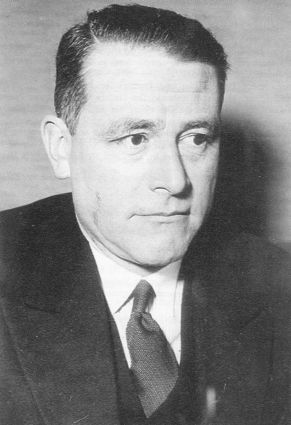
Dmitri Rogozin: Russians do not want privileges, but equality and justice

Dmitri Rogozin, Russia’s ambassador to NATO, speaks during a news conference at NATO headquarters in Brussels.

The World Policy Forum recently held a conference in Yaroslavl titled “The modern state in the age of social diversity.” It has attracted wide the attention of Russians as well as foreign experts and analysts. In particular, the speech delivered by Dr. Dimitry Rogozin, the Permanent Representative of Russia to NATO has attracted considerable attention (see here for TOO articles mentioned Rogozin). However, some of the media published the text with large inaccuracies, while others  simply ignored it. Therefore, at the request of readers, Arguments of the Week, a public affairs website, has decided to completely and without distortion publish the speech of Dimitry Rogozin (bold-faced type in original). The following is an English translation.

*    *    *

Thank you for the invitation Igor [Yurgens] and your kind introduction. The topic, which I now want to touch on, is not directly in the scope of my professional competence, but is relevant to my research, and has my civic interest. It’s about the national question in Europe and Russia. It is now a key domestic challenge and growing threat to the whole Euro-Atlantic space. Read more

This is the way the world ends

With a Whimper

This is the way the world ends

This is the way the world ends

This is the way the world ends
Not with a bang but a whimper.
— T.S. Eliot, The Hollow Men

Just as the more harsh totalitarianism of yesteryear has been replaced by the soft totalitarianism practiced by our hostile elites, the harsh collapses of yesteryear will be replaced by a series of insidious soft collapses. A levy will break over here. A riot will break out over there. Like a man who’s been castrated, we’ll steadily weaken by degrees both inwardly and outwardly. Where we were once muscular, we’ll find ourselves weak. Where we were once up to the challenges we faced, we’ll find ourselves shrinking from them. The West will likely be the last to know, as we’ll spiral even more deeply into denial and distraction while thing fall apart.

When the Mexican Army kicked off the Mexican-American War with the Siege of Fort Texas, they did not yet realize they were merely Mexicans up against a dramatically more capable opponent. They saw themselves—incorrectly—as the obvious and natural heirs of the great Spanish military tradition and were more surprised than anybody by the disastrous outcome. Similarly, contemporary Americans see themselves as the obvious and natural heirs of a great nation, a nuclear power with a sprawling military empire, an unparalleled economy, and an enviable commitment to the highest Christian and Enlightenment virtues—incorrectly. Read more

Carl Schmitt’s “Jews in Jurisprudence” (Part 2)

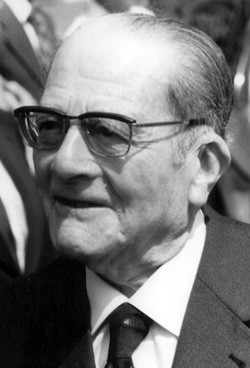
Carl Schmitt (1888-1985)

Introduction to Part 2:

Part 2 of “Jews in Jurisprudence” continues the glimpse into the mind of an important intellectual during the National Socialist period.  One has to remember that this is a speech to a gathering sponsored by a high government official in a nation with a very well-defined official ideology. It is not a treatise with elaborate and well-supported arguments tempered by qualifications sensitive to differences among Jews. Rather than an attempt to persuade by the weight of logic and argumentation, it reflects a shared understanding in a highly politicized context. Within these limitations, the essay is an important insight into perceptions of Jews among elite German academics during the National Socialist period. Read more

Carl Schmitt’s “Jews in Jurisprudence” (Part 1)


Carl Schmitt, 1888 – 1985

What follows is the English translation of the little known closing speech, given by Prof. Dr. Carl Schmitt at a conference held in Berlin, Germany, on October 3 and 4, 1936. The conference, sponsored by Reich Minister Dr. Hans Frank, was attended by hundreds of German legal scholars, law professors and political scientists, most of them affiliated with the National Socialist regime. The speeches and minutes of the two-day conference were subsequently published in several separate short volumes under the title Jews in Jurisprudence (Das Judentum in der Rechtswissenschaft) and are available in the German language on line.

Carl Schmitt (also Karl Schmitt and Carl Schmitt-Dorotic) was a German legal scholar, philosopher, political scientist and critic of liberal parliamentarianism.  His voluminous writings span the fields of international law, political theory, comparative linguistics, geopolitics, philosophy of history and comparative literature. After WWII, Schmitt, along with hundreds of thousands of German and other European professors, teachers and academics, was subject to the process of “denazification” and was removed from all academic and teaching positions by the American  occupying authorities.

Some contemporary critics consider Schmitt a big time opportunist and “Hitler’s Crown Jurist.” While acknowledging Schmitt’s influence on modern political thinkers, some of his contemporary (mostly Jewish) critics, like Steven E. Aschheim, from Hebrew University in Jerusalem, also note how “Schmitt’s anti-Semitism demonstrates in great and nuanced detail how his anti-Jewish attitudes permeated the very structure and grounds of his thought and categories.” The speech reproduced here clearly shows Schmitt as a completely accepting the National Socialist world view.

Over the last 30 years, however, Schmitt’s works have gained immense popularity, both in the USA and Europe, among leftist, conservative, liberal and rightwing scholars. Recently, most of his work has been translated into English. Of significant academic interest today are Schmitt’s theories on “just vs. unjust war,” on “limited vs. total warfare,” on the “notion of the political” in different political systems and on the “state of emergency.” His theories on the legal status of “terrorists”, “freedom fighters” and “disarmed enemy combatants,” on guerilla and partisan warfare, are debated today by many legal experts, including military establishments and colleges all over the world. ‘C. Schmitt’ is a household name for many nationalist intellectuals and nationalist parties in Europe (see my Against Democracy and Equality). Read more

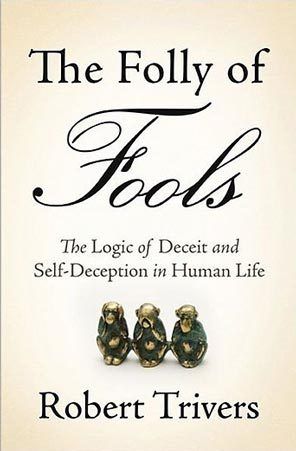
Robert Trivers Continues the Tradition of Moral Critique

There was a time when evolutionary thinking was widely considered to be the key to racial self-defense.  Although it didn’t play a role in the Congressional debates (itself an indication of the rapidly changing intellectual context), evolutionary thinking was prominent among some of the elite intellectual  proponents of immigration restriction in the 1920s. This was the heyday of eugenics—motivated by concern about deterioration of the gene pool because modern civilization had increased the moral and intellectual burdens of life at the same time that natural selection had been relaxed. Lothrop Stoddard’s The Revolt against Civilization: The Menace of the Under-Man exemplifies these trends.

Even by the mid-20s the Boasian onslaught against the idea of race and against Western culture generally had become ensconced in elite universities. It continued that way for the next 50 years, when E. O. Wilson included a chapter on humans in his Sociobiology: A New Synthesis. This set off a storm of outrage by the usual academic suspects (see here), but all of their outrage could not prevent the establishment of evolutionary outposts, especially in psychology and anthropology, and academic societies such as The Human Behavior and Evolution Society.

What is remarkable about these developments is that they have completely failed to challenge the dominance of elite consensus on all things related to immigration and multiculturalism. Evolutionary psychology is a paradigm, loudly proclaiming the idea that evolution did indeed sculpt the mind, but that all humans were alike because we all evolved in the same environment. This takes issues like race differences completely off the table. It also avoids discussing IQ, a measure that is strongly heritable, shows rather large race differences, and is linked to success in life in contemporary societies. IQ is the one measure that is most feared by the anti-White coalition. Read more

The Protestant Deformation of Christian Nationhood, Part 2

The Revolutionary Excesses of Christian Humanism

Throughout the Western world, both State and Church have adopted Barth’s doctrine of “near and distant neighbours.”  When we encounter “foreigners” or “strangers”—whether as citizens or Christians—we must not allow “being in one’s own people” to become “a prison and stronghold.”  Every man must instead obey God’s command “to move out from his beginning and therefore seek a wider field.”  The result has been that neither the State nor the Church works any longer to preserve and protect what even Barth conceded is our “divine disposition” to love kith and kin over both neighbours and strangers.  On the contrary, political and religious leaders, alike, now act as if “our only impulse” should “be so to strengthen the inner forces of our own land and people that we can not only tolerate many foreign countries, and many foreigners who find a second home among us, but make them our own.”  Barth denied that the church can “legitimate its own division along racial lines ‘because the community owes to the world a witness…to the mutual fellowship of human beings.”[1] In the years since his death, the “inner forces” pushing both State and Church to embrace the neo-communist program of open borders and mass Third World immigration have become so powerful that the national identity—indeed the very survival—of every Anglo-Saxon Protestant (and European Christian) country has been thrown into doubt.  The universalist humanism invoked to justify the globalist program is based not upon reason but upon an “existential leap of faith” entailing a host of unknown and potentially dangerous consequences.  Unless and until Protestant theology recognizes the ecclesiastical legitimacy of the Volkskirche, it may be impossible to avoid “excessive” reactions from the forces of ethnoreligious particularism demonized by Barth.  Christian ethnopatriotism is down but not out. Read more