
• MISSION STATEMENT
  • TERMS
  • PRIVACY
The Occidental Observer
  • HOME
  • BLOG
  • SUBSCRIBE TOQ
  • CONTACT USPlease send all letters to the editor, manuscripts, promotional materials, and subscription questions to Editors@TheOccidentalObserver.net.
  • DONATE
  • Click to open the search input field Click to open the search input field Search
  • Menu Menu

Jewish Aggressiveness

Differences between the Eastern European immigrant community in the US and the older German-Jewish establishment — and their commonalities

April 25, 2017/69 Comments/in Featured Articles, Jewish Aggressiveness, Jewish Influence, Jews and the Left/by Kevin MacDonald

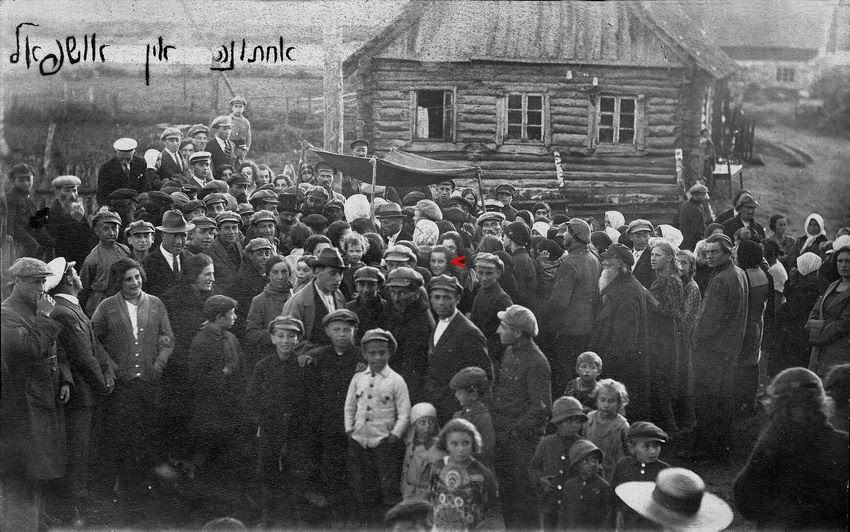
Eastern European Shtetl Jews; photos from “Rare Photographs and Images of Shtetl Life“
In his VDARE article of April 22, “Eastern European Jews And The Case Of the Marginalized Elite,” Paul Gottfried claims that I fail to make important distinctions among Jewish groups:

Though Kevin MacDonald argues his theory about Jewish group behavior ably, I believe it is unwarranted to generalize about the social behavior of all Jews simply because of the behavior of Eastern European Jews. …We are clearly dealing with a group that embraces all kinds of Leftist causes, most of which have a destabilizing effect on what remains of a traditional Christian society. Let me repeat: I don’t find anything about this behavior that has characterized all Jews at all times (unlike MacDonald).

This article summarizes some of my comments on different groups of Jews, some of which may have gotten a bit lost in the shuffle. In fact, beginning with my first two books on Judaism, I have repeatedly discussed differences among Jewish groups (e.g., IQ differences between Ashkenazi and Sephardic groups in chapter 7 of A People That Shall Dwell Alone). This includes the important distinction between Eastern European Jews and Western European Jews, beginning with Chapter 6 of Separation and Its Discontents (1994) on Jewish strategies to minimize anti-Semitism.

It has often been critically important for Jews to be able to present a divided front to the gentile society, especially in situations where one segment of the Jewish community has adopted policies or attitudes that provoke anti-Semitism. This has happened repeatedly in the modern world. A particularly common pattern during the period from 1880 to 1940 was for Jewish organizations representing older, more established communities in Western Europe and the United States to oppose the activities and attitudes of more recent immigrants from Eastern Europe (see note 20). The Eastern European immigrants tended to be religiously orthodox, politically radical, and sympathetic to Zionism, and they tended to conceptualize themselves in racial and national terms—all qualities that provoked anti-Semitism. In the United States and England, Jewish organizations (such as the American Jewish Committee [AJCommittee]) attempted to minimize Jewish radicalism and gentile perceptions of the radicalism and Zionism of these immigrants (e.g., Cohen 1972; Alderman 1992, 237ff). Highly publicized opposition to these activities dilutes gentile perceptions of Jewish behavior, even in situations where, as occurred in both England and America, the recent immigrants far outnumbered the established Jewish community.

This difference between the Eastern European immigrant community and the German-Jewish establishment in the US is a central theme of “Jews, Blacks, and Race” (in Samuel Francis (Ed.), Race and the American Prospect: Essays on the Racial Realities of Our Nation and Our Time [The Occidental Press, 2006]):

Anti-Jewish attitudes that had been common before [World War II) declined precipitously, and Jewish organizations assumed a much higher profile in influencing ethnic relations in the U.S., not only in the area of civil rights but also in immigration policy. Significantly this high Jewish profile was spearheaded by the American Jewish Congress and the ADL, both dominated by Jews who had immigrated from Eastern Europe between 1880 and 1920 and their descendants. As indicated below, an understanding of the special character of this Jewish population is critical to understanding Jewish influence in the United States from 1945 to the present. The German-Jewish elite that had dominated Jewish community affairs via the American Jewish Committee earlier in the century, gave way to a new leadership made up of Eastern European immigrants and their descendants. Even the AJCommittee, the bastion of the German-Jewish elite, came to be headed by John Slawson [in 1943], who had immigrated at the age of 7 from the Ukraine.

The AJCongress, a creation of the Jewish immigrant community, was headed by Will Maslow, a socialist and a Zionist. Zionism and political radicalism typified the Jewish immigrants from Eastern Europe. As an indication of the radicalism of the immigrant Jewish community, the 50,000- member Jewish Peoples Fraternal Order was an affiliate of the AJCongress and was listed as a subversive organization by the U.S. Attorney General. The JPFO was the financial and organizational “bulwark” of the Communist Party USA after World War II and also funded the Daily Worker, an organ of the [Communist Party USA], and the Morning Freiheit, a Yiddish communist newspaper. Although the AJCongress severed its ties with the JPFO and stated that communism was a threat, it was “at best a reluctant and unenthusiastic participant” in the Jewish effort to develop a public image of anti-communism—a position reflecting the sympathies of many among its predominantly second- and third-generation Eastern European immigrant membership. Concern that Jewish communists were involved in the civil rights movement centered around the activities of Stanley Levison, a key advisor to Martin Luther King, who had very close ties to the Communist Party (as well as the AJCongress) and may have been acting under communist discipline in his activities with King.


Read more

https://www.theoccidentalobserver.net/wp-content/uploads/2018/06/TOO-Full-Logo-660x156-1.png 0 0 Kevin MacDonald https://www.theoccidentalobserver.net/wp-content/uploads/2018/06/TOO-Full-Logo-660x156-1.png Kevin MacDonald2017-04-25 10:11:122017-04-27 20:59:03Differences between the Eastern European immigrant community in the US and the older German-Jewish establishment — and their commonalities

Church Burning and Jewish Settlers in Israel

July 6, 2015/28 Comments/in Featured Articles, Israel, Jewish Aggressiveness/by Enza Ferreri


Israel’s unfair treatment of Christians continues. At the end of June, Israeli Occupation Forces (IOF) arrested Greek Orthodox Bishop Atallah Hanna during his peaceful participation in a march protesting the illegal seizure and subsequent sale of Beit al-Baraka hospital, which is part of al-Baraka church, north of Hebron.

A few days ago Palestine News Network reported:

A delegation from the Presbyterian church as well as international and Israeli activists participated in the march against the sale of Beit al-Baraka, a hospital which provided medical services to Palestinians as part of al-Baraka church services. The sale is illegal under international and canonical law. …

Israeli newspaper Haaretz last month leaked details of the seizure of Beit al-Baraka hospital by a Jewish billionaire, the sale having been allegedly made through a fake Norwegian real estate company. Days after publication of this illegal seizure, the sale process halted, however Israeli Defense Minister, Moshe Ya’alon, subsequently decided that there was no legal impediment to the sale of the building.

The previous week saw one of the most serious episodes of violence in recent memory against Christians in Israel. Five teams of firefighters were necessary to put out the flames which at dawn woke up Tabgha, the area on the shores of the Sea of Galilee, in northern Israel, where Jesus fed the 5,000 with the miracle of the multiplication of the loaves and fishes (Mark 6:30–46) and where Jesus appeared for the fourth time after his resurrection following his Crucifixion (John 21:1–24). Read more

https://www.theoccidentalobserver.net/wp-content/uploads/2018/06/TOO-Full-Logo-660x156-1.png 0 0 Enza Ferreri https://www.theoccidentalobserver.net/wp-content/uploads/2018/06/TOO-Full-Logo-660x156-1.png Enza Ferreri2015-07-06 07:10:302015-07-06 07:10:30Church Burning and Jewish Settlers in Israel
Page 2 of 212
RSS Feed Logo RSS Feed Logo Subscribeto RSS Feed

Kevin MacDonald on Mark Collett’s show reviewing Culture of Critique

James Edwards at the Counter-Currents Conference, Atlanta, 2022

Watch TOO Video Picks

video archives

DONATE

DONATE TO TOO

Follow us on Facebook

Keep Up To Date By Email

Subscribe to get our latest posts in your inbox twice a week.

Name

Email


Topics

Authors

Monthly Archives

RECENT TRANSLATIONS

All | Czech | Finnish | French | German | Greek | Italian | Polish | Portuguese | Russian | Spanish | Swedish

Blogroll

  • American Free Press
  • American Freedom Party
  • American Mercury
  • American Renaissance
  • Arktos Publishing
  • Candour Magazine
  • Center for Immigration Studies
  • Chronicles Magazine
  • Council of European Canadians
  • Counter-Currents
  • Curiales—Dutch nationalist-conservative website
  • Denmark's Freedom Council
  • Diversity Chronicle
  • Folktrove: Digital Library of the Third Way
  • Human Biodiversity Bibliography
  • Institute for Historical Review
  • Mondoweiss
  • Pat Buchanan
  • Paul Craig Roberts
  • Project Nova Europea
  • Red Ice
  • Richard Lynn
  • Rivers of Blood
  • Sobran's
  • The Occidental Quarterly Online
  • The Political Cesspool
  • The Raven's Call: A Reactionary Perspective
  • The Right Stuff
  • The Unz Review
  • VDare
  • XYZ: Australian Nationalist Site
NEW: Individualism and the Western Liberal Tradition

Also available at Barnes & Noble

Culture of Critique

Also available at Barnes & Noble

Separation and Its Discontents
A People That Shall Dwell Alone
© 2025 The Occidental Observer - powered by Enfold WordPress Theme
  • Link to X
  • Link to Dribbble
Scroll to top Scroll to top Scroll to top

By continuing to browse the site, you are legally agreeing to our use of cookies and general site statistics plugins.

CloseLearn more

Cookie and Privacy Settings


How we use cookies

We may request cookies to be set on your device. We use cookies to let us know when you visit our websites, how you interact with us, to enrich your user experience, and to customize your relationship with our website.

Click on the different category headings to find out more. You can also change some of your preferences. Note that blocking some types of cookies may impact your experience on our websites and the services we are able to offer.

Essential Website Cookies

These cookies are strictly necessary to provide you with services available through our website and to use some of its features.

Because these cookies are strictly necessary to deliver the website, refusing them will have impact how our site functions. You always can block or delete cookies by changing your browser settings and force blocking all cookies on this website. But this will always prompt you to accept/refuse cookies when revisiting our site.

We fully respect if you want to refuse cookies but to avoid asking you again and again kindly allow us to store a cookie for that. You are free to opt out any time or opt in for other cookies to get a better experience. If you refuse cookies we will remove all set cookies in our domain.

We provide you with a list of stored cookies on your computer in our domain so you can check what we stored. Due to security reasons we are not able to show or modify cookies from other domains. You can check these in your browser security settings.

Other external services

We also use different external services like Google Webfonts, Google Maps, and external Video providers. Since these providers may collect personal data like your IP address we allow you to block them here. Please be aware that this might heavily reduce the functionality and appearance of our site. Changes will take effect once you reload the page.

Google Webfont Settings:

Google Map Settings:

Google reCaptcha Settings:

Vimeo and Youtube video embeds:

Privacy Policy

You can read about our cookies and privacy settings in detail on our Privacy Policy Page.

Privacy Policy
Accept settingsHide notification only

