Western Culture

Ancient Sparta: The First Self-Conscious Ethnostate? Part 1: Educating Citizen Soldiers

If in Athens we have ethnopolitical aspects, insofar as the democracy was tempered by Hellenic virtue, in Sparta we have a State wholly dedicated to systematic organization of the society according to a biopolitical ideal. Sparta’s mixed system of government and fiercely communitarian and hierarchical customs were supposed to have been created by the semi-legendary lawgiver Lycurgus, who perhaps lived in the ninth century B.C. Virtually nothing can be said for certain about his life. Lycurgus was, in later ages, rumored to have traveled to Egypt, Ionia, Crete, and even India, where “he talked with the Gymnosophists,”[1] before establishing Sparta’s constitution. What is clear, in any case, is that the basic law and way of life attributed to Lycurgus, and credited for Sparta’s success, were emphatically biopolitical.

Spartan law and culture were obsessed with systematically ensuring good breeding, martial education, and group unity. Spartan ethics and law considered that what was good was whatever was good for the community. During a debate as to whether a commander had abused his authority, the Spartan king Agesilaus argued: “The point to be examined . . . is simply this: has this action been good or bad for Sparta?”[2] Kevin MacDonald has argued that the law instituted by Lycurgus – featuring in-group altruism, relative egalitarianism, separation from and unity in the face of out-groups, specialization in warfare, and communally-determined in-group eugenics – qualifies as a genuine “altruistic group evolutionary strategy.”[3]

Few forms of government have so drawn the admiration of both liberals and ‘totalitarians’ as that of Sparta. Many republicans, both ancient and modern, have been impressed by the Spartans’ ‘mixed’ system of government, with its combination of monarchic, aristocratic, and democratic elements, as conducive to social unity, stability, and the rule of law. The Founding Fathers of the United States sought to emulate Read more

Ancient Athens: A Spirited and Nativist Democracy


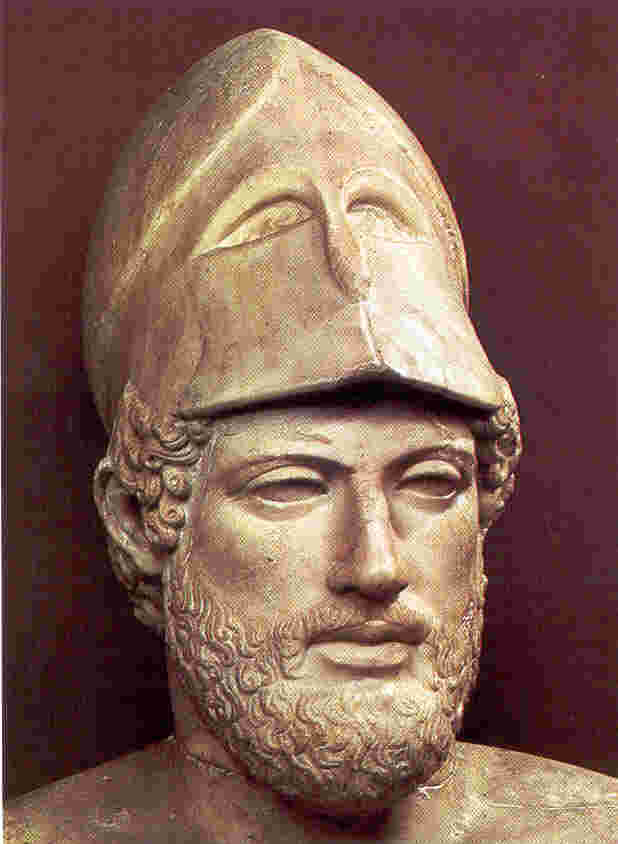
Pericles, Athenian leader at the city’s zenith

The Persian Empire was driven by a certain logic, certain feedback loops pertaining to domestic conditions and foreign relations, which led to that great state’s steady expansion.[1] The waves of this expansion were finally dashed on the rocks of Greek freedom, embodied in the city-states of Athens and Sparta. Athens and Sparta themselves were each driven by their own logic, their own virtuous circles of power, which defeated the Persian logic in Europe. If Persian power was that of a multinational military monarchy, a culture of empire, Greek power was that of patriotic, fractious little republics, defined by civic freedom.

The particular form of civic freedom and the virtuous circle of power at Sparta were very different however than those at Athens. At Sparta, a rigorous communitarian discipline was maintained by the demands of lordship, the need for the society to be constantly militarily organized to guard against the threat of rebellion by the enslaved Helots. The result was centuries of stability and regional power. At Athens, the virtuous circle of international trade and naval power led to rapid and constant demographic and imperial expansion, resulting in a short-lived empire which almost achieved hegemony in the eastern Mediterranean. Athens also underwent a stunningly creative artistic and philosophical flourishing with few rivals in all human history.

Athens and Sparta seem to embody a recurring dialectic in Western history: between sea-power, commerce, democracy, individualism, and technology on the one hand, and land-power, autarky, hierarchy, community, and discipline on the other.

The verdict of the philosophers and men of the Right has generally been Read more

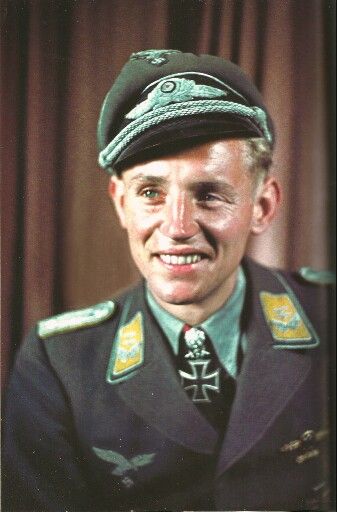
Warrior-Hero of the West: Erich Hartmann, the Blond Knight of Germany

Erich Hartmann was not a figure of world-historical importance, striding across the earth like a colossus. He was not a statesman or conqueror, nor a paradigm-destroying scientist, nor a virtuoso writer moving the masses. He was a simple airman of the Second World War. Yet, the way he performed his duty, with courage and honor—and deadly efficiency—made him the highest scoring ace in history and one of the genuine heroes of Western history. Erich Hartmann is a splendid example of the qualities peculiar to Western Faustian man, such as an acute sense of individuality, iron willpower, and utmost daring. For a few moments let us leave this modern world with its depressing role models, and look back in time to feast our hearts on the story of a great man, full of character and intelligence, a man whose greatest triumph ironically came after the fighting had ended.

Early Life

Hartmann was born April 19, 1922, in Wűrttemberg, Germany, in the heart of Swabia, a region renowned for its hardheaded, frugal, inventive, and proud people, whose number also includes Hegel and Erwin Rommel. Erich’s father Alfred was a doctor with a broad outlook on life, and his mother Elisabeth was capable, adventurous and beautiful. She apparently gave Erich his very blonde hair—and a daring spirit.

Young Erich was an excellent and fearless athlete. He commented humorously much later that his father thought he was “a kind of dare-devil, or an idiot” (Heaton and Lewis 9). His father wanted his boys to become doctors, and Erich assumed he would eventually follow that line, but really he just wanted to fly. From an early age he dreamed of emulating the aces of the Great War. His mother also wanted to fly, so she earned a pilot’s license and took her two sons flying with her. Later the family started a glider club and Erich was in his element: the air.

Erich went through school without enthusiasm, but passed his courses without difficulty. When he was seventeen he spied the future love of his life: Ursula Paetsch. He pursued her single-mindedly, going so far as to pummel a rival, and won her over with his customary directness, sparking a lifelong love affair.

Erich was blessed with an admirable character. (Actually, since people build their characters from the choices of their free wills, Hartmann was responsible for his own character, which is more virtuous. Temperament or natural disposition is what people get naturally; character is formed.) His biographer Raymond Toliver describes Erich as highly intelligent, with a will “almost fierce in its drive to prevail and conquer” and says he was “an incorrigible individualist in an age of mass . . . conformity.” Hartmann, he continues, had a blunt style of honesty that often mounted to a “devastating” lack of tact. Finally, Hartmann possessed “consummate coolness under stress” (Toliver and Constable 5, 12). All this corresponds very well with the characteristics possessed by Western Faustian man as described by, among others, Ricardo Duchesne. Read more

Greek Biopolitics and Its Unfortunate Demise in Western Thinking

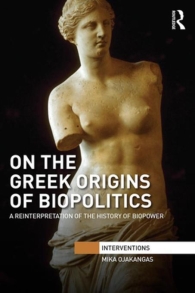
Mika Ojakangas, On the Origins of Greek Biopolitics: A Reinterpretation of the History of Biopower

London and New York: Routledge, 2016

Mika Ojakangas is a professor of political theory, teaching at the University of Jyväskylä in Finland. He has written a succinct and fairly comprehensive overview of ancient Greek thought on population policies and eugenics, or what he terms “biopolitics.” Ojakangas says:

In their books on politics, Plato and Aristotle do not only deal with all the central topics of biopolitics (sexual intercourse, marriage, pregnancy, childbirth, childcare, public health, education, birthrate, migration, immigration, economy, and so forth) from the political point of view, but for them these topics are the very keystone of politics and the art of government. At issue is not only a politics for which “the idea of governing people” is the leading idea but also a politics for which the question how “to organize life” (tou zên paraskeuên) (Plato, Statesman, 307e) is the most important question. (6)

The idea of regulating and cultivating human life, just as one would animal and plant life, is then not a Darwinian, eugenic, or Nazi modern innovation, but, as I have argued concerning Plato’s Republic, can be found in a highly developed form at the dawn of Western civilization. As Ojakangas says:

The idea of politics as control and regulation of the living in the name of the security, well-being and happiness of the state and its inhabitants is as old as Western political thought itself, originating in classical Greece. Greek political thought, as I will demonstrate in this book, is biopolitical to the bone. (1)

Greek thought had nothing to do with the modern obsessions with supposed “human rights” or “social contracts,” but took the good to mean the flourishing of the community, and of individuals as part of that community, as an actualization of the species’ potential: “In this biopolitical power-knowledge focusing on the living, to repeat, the point of departure is neither law, nor free will, nor a contract, or even a natural law, meaning an immutable moral rule. The point of departure is the natural life (phusis) of individuals and populations” (6). Okajangas notes: “for Plato and Aristotle politics was essentially biopolitics” (141). Read more

Authentic Heidegger vs. Inauthentic “Fake” News, Part 2

Martin Heidegger, 1889–1976

Go to Part 1.

The expression “fake news” has a generic purpose whose meaning varies with each individual user. This phrase, alongside a number of other phrases describing language manipulation in the media, can be ranked in the category of Heidegger’s “idle talk.” The political effects of idle talk and its related word “newspeak” were also well illustrated by the novelist and essayist George Orwell.[14] Attempting to grasp the meaning of liberal political propaganda while skipping over the study of Heidegger’s idle talk, or Orwell’s newspeak, is a nonstarter. Orwell had done a revolutionary work by demystifying idle talk and fake news by exposing frequent falsehood in modern political communication.

Needless to say a White nationalist in Europe or in America today will define differently Orwell’s description of newspeak than his globalist-minded liberal or antifascist counterpart. Blaming only Joseph Goebbels, the former National Socialist minister, for being the first to launch fake news in Germany, or for that matter for being the first in standardizing political lies and self-deception in public discourse, is false.  Ironically, it was Goebbels himself, much earlier than Orwell, who had pointed out in his books and his speeches the rising tide of idle talk or fake news in the liberal media: “And if we are to tell the truth, then we must simply confess that we are slowly getting sick of this idle talk (“Gerede”) about morality and humanity that is travelling, column by column, through the English press today.”[15]

The event which has acquired lately a historic importance and which makes modern opinion makers in the US and EU extremely worried is that charges against fake news media are being levelled by a man who represents the most influential and the most liberal country on earth—Donald Trump, president of the United States. If Trump doesn’t shy away from calling out mainstream news as fake news, he might someday start calling out the names and describe the ethnic origin of major fake news distributors in America. Trump’s labeling of major news outlets as providers of fake news is an  unprecedented indictment in the entire history of Liberalism — all the more so because the much-lauded so-called free press is viewed as the main pillar of liberalism or for that matter of the official, i.e., “deep state”  America today. Read more

Authentic Heidegger vs. Inauthentic “Fake” News, Part 1


Martin Heidegger, 1889-1976

The trouble with Martin Heidegger, the widely acclaimed Western philosopher, is not just how to correctly interpret his texts, but also how to correctly interpret the works of his interpreters. Out of a multitude of books and articles by hundreds of Heidegger’s critics one can barely single out two critics who are on par with each other. Each critic, or rather each would-be expert on Heidegger, usually handpicks several Heidegger’s words, only to interpret those words according to his own readymade conclusions. In traditional German scholarship this obsessive compartmentalization of social science, which skips over a wider social, racial, literary, historical, etc. context, has been derisively labeled with a noun “Fachidiotismus,” that is, “expert idiocy.” Such a compartmentalized approach in social science today is pretty much widespread among liberal academics and self-proclaimed media experts.

One is, therefore, obliged to raise a simple question: Is it worthwhile reading Heidegger’s mutually exclusive critics in the first place? Part of the problem also resides in Heidegger’s own opaque prose, devoid of footnotes and bibliography, which never offers a reader a single illustration from the public realm and which remains closed off from any ethical judgments. For modern social justice warriors such abstract philosophizing is inadmissible. To make matters worse Heidegger’s toying with German compound nouns makes his texts read like a jigsaw puzzle reminiscent of the travails of Orpheus, the chores of Theseus, or the labors of Heracles during which these three mythical heroes embark on a dangerous voyage of a deadly guesswork in an attempt to decipher the puzzle of life (Being). Although these heroes had managed to divine all of life’s puzzles, at some point however, the inexorable destiny sets in. The uncontrollable individual fate, combined with the unavoidable destiny of their community befalls them all: first the violent death of the hero and then the downfall of the hero’s community[1].

It comes as no surprise then that Heidegger, just like all “nationalist-socialist-conservative-revolutionary-traditionalist-pagan-traditional-Christian, et. al” European thinkers, poets, and scholars, including sympathetic prewar political figures, was in deep love with the ancient Greek language and lore. “Yes to Athens, no way to Jerusalem!” was the underlying motto of all of them. However, Heidegger meticulously avoids any reference to the public realm, never ever venturing into the troubled waters of race studies, sociology or theology — quite unlike his nationalist or conservative contemporary colleagues, inspirers, or even imitators of the same or similar intellectual caliber, such as Oswald Spengler, Carl Schmitt, or Ernst Jünger,[2] whose books still provide a very accessible and very readable historical, social and literary narrative about the abstract verbiage known as “Western democracy” or “humanism”(or one may paraphrase Heidegger with his own veiled words of “downward plunge” or “downfall” (i.e., Absturz) into liberalism). His sole and almost obsessive concern remains language and how language copes with immaterial and all powerful Being, and how in turn Being interrelates with physically visible “Being-there”, that is, man’s life or “Dasein.” Or, to put it simply, albeit more crudely, Heidegger theorizes on how indefinable Being affects man’s “thrownness”, or “falling” into this world without ever being asked whether he wanted to be thrown into this world in the first place. The late American rock singer Jim Morrison, who used to be an avid reader, is reported to have been influenced in his song by this Heidegger’s concept. Read more

Herodotus on the Challenge of Hellenic Unity

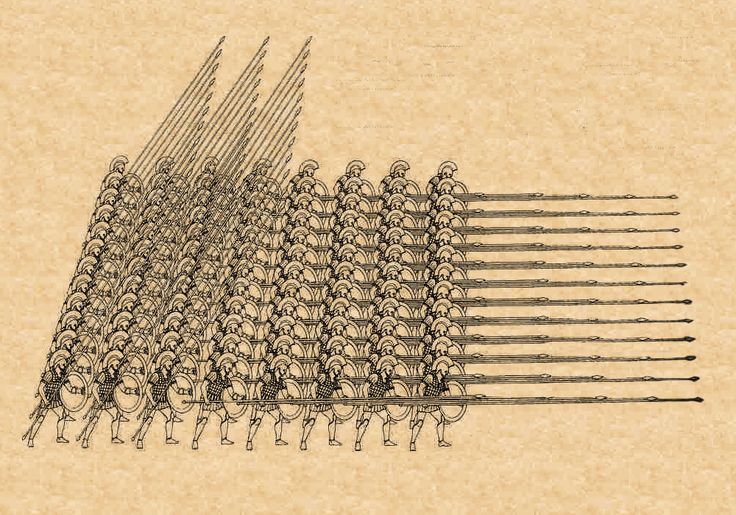
Greek hoplite citizen-soldiers in phalanx formation

Editor’s note: This is an excerpt from a longer article on Herodotus’s account of the Greek-Persian wars. The entire article will appear in the Summer issue of The Occidental Quarterly.

There was undeniably a strong feeling of shared national and cultural identity among the Greeks. However, if one looks at the sweep of ancient Greek history, one is struck by the disconnect between the pervasive rhetoric expressing pan-Hellenic sentiment and the political reality of division and often brutal wars among Greeks. The demand of the polis for total loyalty from its citizens meant that there were few qualms about annihilating fellow Greeks, if this was in the city’s immediate interests. Furthermore, it is often difficult to determine the degree to which patriotic sentiment actually underpinned the Greek states’ resistance, as opposed to merely being eloquent rationalizations for narrowly political interests, such as Athens and Sparta’s desire not to be dominated by any foreign power, Greek or not. Indeed, Herodotus says that one city, Phocia, opportunistically sided with the allies purely because its traditional enemy, Thessalia, sided with the Persians. (8.30) The collaboration of individual politicians[1] and cities with the Persians was common. Indeed the city of Delphi itself became Medized. In short, as so often in our history, broader ethnic and civilizational interests were ignored in the face of the selfish political interests.

In the Persian Wars, the Greek allies certainly achieved sufficient unity to ultimately repulse the invaders, but one is struck at how tenuous that unity was and how exceptional even that degree of unity was in the course of Greek history. The allies, who called themselves simply “the Greeks,” in the end only made up about one-in-ten continental Greek cities, the rest remaining neutral or collaborating.

Though far less discussed than the polis, the Greeks did have a quite venerable tradition of federalism—i.e., forming leagues of city-states. Such leagues, typically combining joint temples, a common council, arbitration, military alliance, and coinage, with greater or lesser degrees of central authority—were a common feature in Greek political history. Shared ethno-regional identity was a common basis for the formation of such leagues, as in Arcadia, Boeotia, Crete, and Ionia. Athens and Sparta would, in their history, each lead their own military alliances as hegemonic cities.

The league projected the basic features of the familial religion beyond the city to a regional commonwealth: shared blood and gods sealed the alliance of cities in a league, including notably a shared holy sanctuary, just as the family household and the polis were sacred spaces. However, the league was typically not a true federal state or sovereign federation, but a coalition of cities, each with its own army and jealous of its civic sovereignty. The confederal league therefore never had the solidity of the polis. The various leagues tended to fluctuate in their effectiveness as the necessity of unity (typically to acquire military scale) was in constant tension with the centrifugal tendency of each city’s desire for autonomy. In practice, a league tended to do well if it had a hegemonic city which could impose decisive leadership or, if led by two cities, if these leader-cities were in basic agreement. Rebellion and subjugation of cities was common. The Greek leagues failed to scale beyond the region and it is not surprising that they eventually fell to the far larger powers of Macedon and the Roman Empire. The ancient Greek leagues in their fragility were not unlike later fractious confederations of sovereigns, such as the Hanseatic League, the antebellum United States, the German Confederation, or the European Union.

Given the fragility of the league, moderns will be less surprised to learn that despite the Greeks’ strong sense of identity, it rarely occurred to them to seek to achieve political unity. This was not so much due to lack of imagination—Plato and Isocrates did make concrete proposals for Greek unity at the expense of barbarians—but due to the sheer impracticalities of federalism in an age before telecommunications. In the premodern world, as Montesquieu later remarked, scale was only possible for monarchies, not for republics.[2] Read more