
• MISSION STATEMENT
  • TERMS
  • PRIVACY
The Occidental Observer
  • HOME
  • BLOG
  • SUBSCRIBE TOQ
  • CONTACT USPlease send all letters to the editor, manuscripts, promotional materials, and subscription questions to Editors@TheOccidentalObserver.net.
  • DONATE
  • Click to open the search input field Click to open the search input field Search
  • Menu Menu

Western Culture

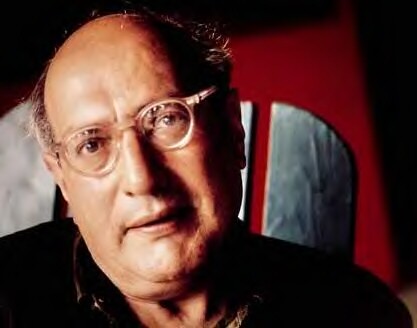
Mark Rothko, Abstract Expressionism and the Decline of Western Art, Part 1
September 21, 2011/92 Comments/in Arts and Clture and Politics, Featured Articles, Western Culture/by Brenton Sanderson

The life and career of Abstract Expressionist painter Mark Rothko is a prototypical Jewish story that encapsulates a range of themes discussed at The Occidental Observer. Central to Rothko’s story is the political radicalism of eastern European Jewish migrants arriving in the United States between 1880 and 1920; the reflexive hostility of these migrants and their descendents to the traditional people and culture of their new homeland, and how this hostility was reflected in the artistic and intellectual currents that dominated Western societies during the twentieth century. Rothko’s story also exemplifies other familiar themes including: the force of Jewish ethnic networking and nepotism in promoting Jewish interests, and the tendency for Jewish “genius” to be constructed by the Jewish intellectual establishment as self-appointed gatekeepers of Western culture.

With Jackson Pollock, Mark Rothko has been accorded a leading place in the ranks of the Abstract Expressionists. If there is such a thing as a cult artist among the liberal Jewish intelligentsia, then Rothko is probably it. Important people stand in grave silence before his empty expanses with looks on their faces that bespeak lofty thoughts. As a critic for The Times noted:

Rothko evokes all that could be criticized as most pretentious, most clannish, most pseudish about his spectators. They stand there gravely perusing something that to the outsider probably looks more like a patch of half-stripped wallpaper than a picture and then declare themselves profoundly moved. And many outsiders will start to wonder if they are being duped, if this Modernist emperor actually has no clothes on and his fans are just the blind followers of some aesthetic faith. Read more

https://www.theoccidentalobserver.net/wp-content/uploads/2018/06/TOO-Full-Logo-660x156-1.png 0 0 Brenton Sanderson https://www.theoccidentalobserver.net/wp-content/uploads/2018/06/TOO-Full-Logo-660x156-1.png Brenton Sanderson2011-09-21 23:37:232011-09-23 10:13:38Mark Rothko, Abstract Expressionism and the Decline of Western Art, Part 1

Stephen Walt on Anders Brevick, Immigration, and Western Culture

August 5, 2011/77 Comments/in Anders Breivik, Jews as a Hostile Elite, Western Culture, White Racial Consciousness and Advocacy/by Kevin MacDonald

If there’s one characteristic that defines the European nationalist parties, it is that they have eschewed racialist rhetoric in favor of cultural arguments. Geert Wilders, Marine LePen, et al. have claimed that Islam is incompatible with Western culture—that Muslims refuse to assimilate and have values that are incompatible with Western modernity, particularly on women and sexuality.

Without doubt this tactic has made nationalist parties more acceptable to mainstream voters and more difficult to attack by the left. It is not possible to tar these parties with the ultimate post-WWII pejorative—”Nazi—which is sure to come up if one breathes a word about ethnic interests of Whites.

Now Stephen Walt, of Israel Lobby fame, attempts to undercut cultural conservative arguments that he associates with Breivik—“the idea that he is defending some fixed and sacred notion of the ‘Christian West,’ which is supposedly under siege by an aggressive alien culture” (“Breivik’s Warped Worldview“). (He’d doubtless disapprove even more of Breivik’s Nordicist proclivities.)

In my review of The Israel Lobby, I made the following point about Western elites:

Confronted with the moral critique of America emanating from elite universities and the media, the old Protestant intellectual establishment quickly yielded the high ground. Many of them became avid cheerleaders of the new multicultural zeitgeist that rejected the America and even the Americanism of their ancestors, to the point that the new zeitgeist has become a consensus among elites of all stripes. They accepted their own demographic decline, and they gave up their pretensions as cultural leaders and trend setters. And they implicitly paved the way for their eventual  loss of political power to other groups, some of which have historically conditioned grudges against them—a dangerous situation to say the least. In doing so, they became the pallbearers for their own people.

Sadly, this applies to Stephen Walt. In the current main TOO article, Charles Dodgson does an excellent job of refuting Walt’s moral indictments of the West. Right now I am reviewing Ricardo Duchesne’s The Uniqueness of Western Civilization—a book that I strongly recommend for intellectuals like Walt. Duchesne, a sociologist at the University of New Brunswik, is fond of showing how the critics of the West typically presuppose ideas whose origins are uniquely Western. Read more

https://www.theoccidentalobserver.net/wp-content/uploads/2018/06/TOO-Full-Logo-660x156-1.png 0 0 Kevin MacDonald https://www.theoccidentalobserver.net/wp-content/uploads/2018/06/TOO-Full-Logo-660x156-1.png Kevin MacDonald2011-08-05 18:27:352011-08-18 23:15:05Stephen Walt on Anders Brevick, Immigration, and Western Culture

Does the Norway Atrocity Make Nationalism Illegitimate? A Reply to Stephen Walt

August 5, 2011/60 Comments/in Anders Breivik, Featured Articles, Western Culture, White Racial Consciousness and Advocacy/by Charles Dodgson

My first thoughts on learning about the mass murder committed by Anders Behring Breivik in Norway on 23rd July 2011 were mixed with emotions. That such atrocity could be committed in the name of something I also believe in–the defence of the West from Third World colonization–was sickening. Should I feel shame? Perhaps. I certainly felt fear. As a parent I could imagine how those youngsters’ parent felt and my own children being targeted for my beliefs.

Then shame or a sense of impending shame began to take over. Viewing Breivik’s video and skimming his book forced the realization that this was not an aimless rampage but an act carefully thought out to achieve a goal. Breivik may be a psychopath, but he is a psychopath with a purpose. And his purpose is also mine. I had a moral dilemma.

The dilemma was this: If defending Western identity inevitably leads to atrocity, to the killing of innocent people, how can I justify participating in identity politics? How can I be a White loyalist and live with myself? It is easy to make excuses and brush the issue under the proverbial carpet. Most nationalists are not killers. We have a just cause. The other side does bad things. Some immigrant communities are prone to violence. Etc. etc. Still, if our side descends to atrocity, that is something for which we must take responsibility. Read more

https://www.theoccidentalobserver.net/wp-content/uploads/2018/06/TOO-Full-Logo-660x156-1.png 0 0 Charles Dodgson https://www.theoccidentalobserver.net/wp-content/uploads/2018/06/TOO-Full-Logo-660x156-1.png Charles Dodgson2011-08-05 18:21:152011-08-07 01:51:27Does the Norway Atrocity Make Nationalism Illegitimate? A Reply to Stephen Walt

Roger Scruton on Beauty

July 4, 2011/29 Comments/in Jews as a Hostile Elite, Western Culture/by Kevin MacDonald

A reader, Alan, pointed out that I did not call attention to this passage from Scruton:

There is a liturgy of denunciation here that is repeated all across Europe by a ruling elite that trembles in the face of ordinary loyalties. But the fact is that national sentiment is, for most ordinary Europeans, the only motive that will justify sacrifice in the public cause. Insofar as people do not vote to line their own pockets, it is because they also vote to protect a shared identity from the predations of those who do not belong to it, and who are attempting to pillage an inheritance to which they are not entitled.

Motivation is indeed worth pondering. The EU has no motivational power for Europeans because its an artificial construct with no historic cultural, ethnic or linguistic ties. Read more

https://www.theoccidentalobserver.net/wp-content/uploads/2018/06/TOO-Full-Logo-660x156-1.png 0 0 Kevin MacDonald https://www.theoccidentalobserver.net/wp-content/uploads/2018/06/TOO-Full-Logo-660x156-1.png Kevin MacDonald2011-07-04 15:03:112011-08-20 11:01:24Roger Scruton on Beauty

Roger Scruton’s “The Rebirth of Nations”

July 3, 2011/44 Comments/in Political Correctness, Western Culture, White Anger/by Kevin MacDonald

Roger Scruton is familiar to TOO readers for his starring role in Brenton Sanderson’s wonderful series, The War on the English (see here and here). Scruton’s comments on the destruction of the English quoted by Sanderson are well worth re-reading.

Scruton recently published an article in The American Spectator that summarizes some of the successes of nationalist parties in Europe and the deep disillusionment with immigration, multiculturalism and the European Union (“The Rebirth of Nations“). It is a very heartening article with some familiar themes, particularly the point that this has been a top-down, anti-democratic revolution. The elites have systematically stifled nationalist sentiments, but these sentiments are once again “prominent in the cultural landscape of Europe. And they are the more prominent for the attempt by the Eurocrats to forbid them.” Read more

https://www.theoccidentalobserver.net/wp-content/uploads/2018/06/TOO-Full-Logo-660x156-1.png 0 0 Kevin MacDonald https://www.theoccidentalobserver.net/wp-content/uploads/2018/06/TOO-Full-Logo-660x156-1.png Kevin MacDonald2011-07-03 16:47:112011-07-03 16:47:11Roger Scruton’s “The Rebirth of Nations”

Quantum Dylan: A Double Act, Part 1

June 29, 2011/93 Comments/in Featured Articles, Jewish Influence, Western Culture/by E.R.E. Knutsson

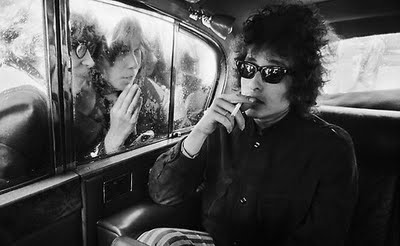
Bob Dylan’s 70th anniversary was celebrated worldwide on May 24th. Hailed as the Shakespeare of his generation, Dylan has sold more than 58 million albums, and written more than 500 songs recorded by more than 2000 artists. Dylan has described himself as “a person who owns the Sixties.”  At the same time, he has spent a lifetime “despising the nineteen-sixties — all the while being held up everywhere as its avatar.”[1] To post-1968 generations, the remarkable success of Robert Allen Zimmerman – alias Shabtai Zisel ben Avraham — remains “a riddle wrapped in a mystery inside an enigma.”  While the success of his precursors Elvis and Sinatra is easily explainable, neither looks, nor voice, nor charisma can explain Dylan’s unique and enduring iconic status.  He has been described as diffuse, ugly, even dirty — “His ‘diffuseness’ muddies all the waters whose streams make him up.”[2]

Deconstructing the binary high/low culture divide

In postmodern discourse, the status of ‘high culture’ –- perhaps reaching its historical climax with Clement Greenberg’s 1939 essay “Avant-Garde and Kitsch” –- has been undermined through exposure of its “inherently White, class-based, West-centric, and gendered elements.”[3] Postmodern discourse tends to break down distinctions between subject and object, consciousness and the unconscious, “oppressor” and “oppressed,” spectacle and spectator, “high” and “low,” etc.   The movement of “canon into kitsch, or identification into stylization or exaggeration”[4] can be seen in the art of Andy Warhol —  often seen as postmodernism’s chief avatar, “the locus classicus for the deconstruction of ‘mass production,’ and the figure who summarily disrupts every distinction there is, especially the difference between high and low.”[5] Hence, postmodernism seems to express a kind of cultural logic that sociologist Charles Lemert has described as relativistic:

The most important feature of the matrix is that, being relative, it overthrows the rationalist distinctions between the “big” and the “small,” the “greater” and the “lesser,” the “higher” and the “lower,” and so forth.  In other words, while the principles of complementarity and indeterminacy rebel against the rationalist epistemological distinction between knowing subject and known object, the relativistic principle overthrows the rationalist ontological perspective that views the natural and human world in hierarchical terms.  Relativity radically equalizes all things, persons, events, and facts in reality.  All things become platitudinous and, simultaneously, the platitude reigns supreme.[6]

Bob Dylan seems to fit into this picture as a figure heralded by intellectual elites as erasing the distinction between “high” and “low” culture.  Rock music has oftentimes (stereotypically) been portrayed as ‘low culture’ — as “anti-intellectual, concerned with the sensual, bodily effects of music rather than with rational thought.”[7] Beneath the surface, however, Dylan’s gravitas — attained from being a ”serious” folk artist — has been important for the ideology of rock as a “higher” cultural form. This ideology (or cultural strategy) has been staged through an alloy of myths, branding and cultural codes. Read more

https://www.theoccidentalobserver.net/wp-content/uploads/2018/06/TOO-Full-Logo-660x156-1.png 0 0 E.R.E. Knutsson https://www.theoccidentalobserver.net/wp-content/uploads/2018/06/TOO-Full-Logo-660x156-1.png E.R.E. Knutsson2011-06-29 11:45:222011-06-29 13:10:52Quantum Dylan: A Double Act, Part 1

“Whiteness” as a Theological Problem: J Kameron Carter on Race

June 26, 2011/98 Comments/in Featured Articles, Western Culture/by Prof. Andrew Fraser

Mainstream Christian theology today seems determined to confuse the worship of Christ with the worship of the poor, the suffering, and the marginalized.  Such confusion reflects the influence of modern Christian humanism which dissolves differences of race, class, gender, or sexual orientation into a common “humanity.”  In Theologian Daniel C. Migliore’s words (149–150), “human beings” are created in the “image of God…to be persons in communion with God and others.”  But “[i]f we are created for relationship with God who is wholly different from us, sin is a denial of our essential relatedness to those who are genuinely ‘other.’”  A sinful “human intolerance for difference” leads many to reject “the victim, the poor, the ‘leftover person.’”  In the social gospel of liberal Protestantism, as taught by Migliore, human beings deny Christ—the Word incarnate in poor, suffering flesh—when they assert the will to power over the “other.”  Black American theologian J Kameron Carter asserts (368), however, that “privileged” White folks, in particular, compounded that sin by transforming the desire for domination and mastery over others into a science; as a consequence, their communion with God can be restored only by uniting themselves with the poor, Black victims of scientific racism “since that is where Christ is.”

Naturally, Migliore, too, deplores the heavy over-representation of Black people among the underclass in American society.  He also attributes the condition of Black America to the sinful “spirit of mastery over others” (140) that is responsible for the dismal history of patriarchy, racism, and colonialism in modern Western history generally.  Carter issues a more pointed indictment, charging that the modernist political theology of “Whiteness” “created an analytics of race that tyrannically divides creation” between a Western overclass and the underworld inhabited by the “wretched of the earth” (345)—a reference to Frantz Fanon’s book of the same title. Read more

https://www.theoccidentalobserver.net/wp-content/uploads/2018/06/TOO-Full-Logo-660x156-1.png 0 0 Prof. Andrew Fraser https://www.theoccidentalobserver.net/wp-content/uploads/2018/06/TOO-Full-Logo-660x156-1.png Prof. Andrew Fraser2011-06-26 22:58:482011-06-26 23:01:26“Whiteness” as a Theological Problem: J Kameron Carter on Race
Page 26 of 27«‹24252627›
RSS Feed Logo RSS Feed Logo Subscribeto RSS Feed

Kevin MacDonald on Mark Collett’s show reviewing Culture of Critique

James Edwards at the Counter-Currents Conference, Atlanta, 2022

Watch TOO Video Picks

video archives

DONATE

DONATE TO TOO

Follow us on Facebook

Keep Up To Date By Email

Subscribe to get our latest posts in your inbox twice a week.

Name

Email


Topics

Authors

Monthly Archives

RECENT TRANSLATIONS

All | Czech | Finnish | French | German | Greek | Italian | Polish | Portuguese | Russian | Spanish | Swedish

Blogroll

  • American Free Press
  • American Freedom Party
  • American Mercury
  • American Renaissance
  • Arktos Publishing
  • Candour Magazine
  • Center for Immigration Studies
  • Chronicles Magazine
  • Council of European Canadians
  • Counter-Currents
  • Curiales—Dutch nationalist-conservative website
  • Denmark's Freedom Council
  • Diversity Chronicle
  • Folktrove: Digital Library of the Third Way
  • Human Biodiversity Bibliography
  • Institute for Historical Review
  • Mondoweiss
  • Pat Buchanan
  • Paul Craig Roberts
  • Project Nova Europea
  • Red Ice
  • Richard Lynn
  • Rivers of Blood
  • Sobran's
  • The Occidental Quarterly Online
  • The Political Cesspool
  • The Raven's Call: A Reactionary Perspective
  • The Right Stuff
  • The Unz Review
  • VDare
  • XYZ: Australian Nationalist Site
NEW: Individualism and the Western Liberal Tradition

Also available at Barnes & Noble

Culture of Critique

Also available at Barnes & Noble

Separation and Its Discontents
A People That Shall Dwell Alone
© 2025 The Occidental Observer - powered by Enfold WordPress Theme
  • Link to X
  • Link to Dribbble
Scroll to top Scroll to top Scroll to top

By continuing to browse the site, you are legally agreeing to our use of cookies and general site statistics plugins.

CloseLearn more

Cookie and Privacy Settings


How we use cookies

We may request cookies to be set on your device. We use cookies to let us know when you visit our websites, how you interact with us, to enrich your user experience, and to customize your relationship with our website.

Click on the different category headings to find out more. You can also change some of your preferences. Note that blocking some types of cookies may impact your experience on our websites and the services we are able to offer.

Essential Website Cookies

These cookies are strictly necessary to provide you with services available through our website and to use some of its features.

Because these cookies are strictly necessary to deliver the website, refusing them will have impact how our site functions. You always can block or delete cookies by changing your browser settings and force blocking all cookies on this website. But this will always prompt you to accept/refuse cookies when revisiting our site.

We fully respect if you want to refuse cookies but to avoid asking you again and again kindly allow us to store a cookie for that. You are free to opt out any time or opt in for other cookies to get a better experience. If you refuse cookies we will remove all set cookies in our domain.

We provide you with a list of stored cookies on your computer in our domain so you can check what we stored. Due to security reasons we are not able to show or modify cookies from other domains. You can check these in your browser security settings.

Other external services

We also use different external services like Google Webfonts, Google Maps, and external Video providers. Since these providers may collect personal data like your IP address we allow you to block them here. Please be aware that this might heavily reduce the functionality and appearance of our site. Changes will take effect once you reload the page.

Google Webfont Settings:

Google Map Settings:

Google reCaptcha Settings:

Vimeo and Youtube video embeds:

Privacy Policy

You can read about our cookies and privacy settings in detail on our Privacy Policy Page.

Privacy Policy
Accept settingsHide notification only


