Jews and the Left

Why are Jews exempt from being called to account for the crimes of the Bolsheviks?

Ron Asher
Who was Behind the Bolshevik Revolution?
Tross Publishing, P O Box 22-143, Khandallah, Wellington 6441, New Zealand. $30 pp within NZ.
Prices for Foreign Buyers: Aust $30, UK £15, USA $20, Can. $25, Euros €15. https://trosspublishing.com/contact/

Tross Publishing has been around for several years, during which time it has attracted numerous smears and complaints from mediocre and agenda-driven academics, and other Europhobes, resulting in some of its books being removed and banned from bookshops and libraries. Tross, owned by John McLean, focuses on reconsidering the colonial and pre-colonial histories of New Zealand, challenging the dominance of Europhobic narratives. The authors garnered by Tross are often of scholarly background, including Dr John Robinson and Dr David Round. This has not dissuaded those of lesser scholarly pedigree from denouncing the books, with titles such as The Benefits of Colonisation, and The British Empire: A Force for Good.

From a traditional Rightist position, there is a doctrinal gulf in some of the premises of Tross authors, such as the promotion of the assimilationist, “one New Zealand” outlook,[i] where we are all raceless individuals bonded by a social contract (in this case, the Treaty of Waitangi, Tross authors dissenting from the modern interpretation enforced by the dominant narrative). This leaves such neoliberals, regarded as “conservative” or “right-wing,” in the odd position of condemning apartheid[ii] in their opposition to “Māori separatism,” due to a lack of doctrinal and historical coherence.[iii]

However, the “one New Zealand” concept has come from the political fringes to being endorsed to varying degrees by the Act, NZ First and National parties, which form the present coalition Government.

Awaited Reaction: Hysteria, Indifference, Boycott?

The publication of Asher’s Who was Behind the Bolshevik Revolution? marks a radical and surprising turn. Moreso, since it deals with issues that have not been widely discussed in New Zealand since the 1930s, with lingering traces of the topic among the old guard of the Social Credit movement up until the 1950s, and the presence of the relatively large New Zealand League of Rights during the 1970s.

The subject under examination is the alleged disproportionate presence of Jews in the 1917 Russian Bolshevik coup and Soviet government. In publishing this book, one might wonder whether McLean has signed a (figurative) death warrant for Tross? While the repudiation of implicitly anti-White pseudohistory in most of Tross’s inventory has caused Tross various problems it has also gained the type of public attention that has increased book sales.[iv] However, the subject of Jews that is the focus of Who was Behind the Bolshevik Revolution? is so beyond the ken of New Zealanders that McLean is likely to undergo not only pressure and smears that are far more intense than anything hitherto experienced on questions of New Zealand’s history, but also a lack of comprehension from the public.

Whatever smears and prosecutions McLean might face are liable to bring not sympathy, as hitherto, but indifference at best. Conversely, it could be that he will instead be faced with “the silent treatment” rather than histrionics, but that has not tended to be the reaction of bodies such as the Jewish Council et al. The cry of “anti-Semitism” is just as likely to be exclaimed in New Zealand as in the USA, Australia or Europe.[v]

First Review: An Indicator?

The first review of the book comes from Peter Cresswell, apparently a libertarian blogger, claiming to be “politically incorrect,” but not to the extent of giving Asher’s book a balanced review let alone a positive one.[vi] Rather, Cresswell goes “over the top” in his eagerness to repudiate Asher’s book, to the extent that one might conclude that, to paraphrase the great bard, he “protests too much.” Is this because Cresswell has been a contributor to at least three Tross books, two on Maori issues and one on “free speech”?[vii] The irony of this is pointed out by McLean in his retort to Cresswell’s review,[viii] where Cresswell wants the book “withdrawn.” It might be concluded that the reason for Cresswell’s lengthy and vitriolic review is to undertake some personal damage control, before he gets tarred with the “anti-Semitism” brush, because of his previous writings for Tross.

So eager is Cresswell to be seen on the side of the pure and the righteous that he includes two paragraphs on this reviewer, with the claim that I am the primary current source for the long-held allegation that Jacob Schiff was the main bankroller of the Bolshevik revolution. Cresswell refers to a peer-reviewed paper I had written for The International Journal of Russian Studies, entitled “Responses of International Capital to the Russian Revolutions.”[ix] However, the focus of my paper is not on Jews, Schiff, nor solely on Bolshevism.

Yet, as pointed out by McLean in his response to Cresswell, I am not mentioned, cited or in any way connected with the Asher book, which makes Cresswell’s two paragraph diatribe against me rather odd. Of this McLean retorts:

Unable to help himself in his rage, the reviewer wrote of the “Recrudescence of Anti-Semitic feeling of which Mr. Asher’s book is an ongoing part” the usual standard smear of “anti-Semitism” and further misinformation. His barely concealed anger even resulted in him devoting two paragraphs in lashing out at Kerry Bolton, a writer who was neither mentioned nor cited in the book. Why this irrelevance?

However, Mr. Bolton was not alone in being the victim of the smear. In fact, virtually every person and authority quoted in the book has suffered the same fate. Some examples. Belloc – “the noted anti-Semite” (again, the standard smear), Denis Fahey – “a fascist, would-be theocrat”…[x]

Toing and Froing over Data

The crux of Cresswell’s critique is to argue points over the percentages of Jews in the Soviet Government. Cresswell brings forth statistics on the percentage of Jews in the Soviet apparatus that conflict with those cited by Asher, from Father Denis Fahey, Robert Wilton, et al. However, what is more significant is that the chief luminaries of Bolshevism were overwhelmingly Jewish. For example, the postcard by Moisei Nappelbaum issued in 1918 to depict the “leaders of the proletarian revolution” shows Lenin, Zinoviev, Lunacharsky, Trotsky, Kamenev and Sverdlov. Lenin was of mixed parentage, with a Jewish component, Lunacharsky a Russia. The rest…?

As McLean states, the other premise of Cresswell’s review is to offhandedly dismiss all of Asher’s sources. Father Denis Fahey, from whose book The Rulers of Russia (1938), Asher proceeds, is reduced by Cresswell to being no more than a “a fascist, would-be theocrat.” Gaining two doctorates, Fahey served as a professor of theology and Church history. His criticism of Jews, of course, was based on traditional Catholic theology. Others include Robert Wilton, Petrograd correspondent for The London Times, a careful observer who does not thoughtlessly throw about the word “Jew;”[xi] and Winston Churchill, who wrote in 1920 of Bolshevism being a “worldwide conspiracy for the overthrow of civilisation” among Jews.[xii] New Zealander A N Field, whose books were best-sellers during the Depression era, is dismissed without ado, although he was widely recognized as an authority on banking issues. One gets the impression that Cresswell has done nothing more than run the names through Wikipedia.

Jewish Communists and Jewish Bankers

At the time of the revolution, Jewish involvement was widely discussed in diplomatic, military and intelligence circles. M. Oudendyke, representative of The Netherlands in Petrograd, also representing British interests, wrote a report, cited by Asher (p. 45), in which he states that Bolshevism, “is organised and worked by Jews.”[xiii] It is notable that the original British White Paper on Bolshevism was withdrawn and Oudendyke’s report in the subsequent edition had been removed. This gave rise to a myth that “anti-Semites” had falsified the Oydendyke comments. For example, in a 1950 book on the USA between the world wars, in a chapter attacking Father Charles Coughlin, Wallace Stegner writes that Coughlin and his newspaper Social Justice lost credibility for supposedly false claims about “a British White Paper” and “an American Secret Service report”. According to Stegner there never was such a Secret Service report, and the White Paper did not state what Coughlin claimed. The material had been taken from a “Nazi propaganda agency.”[xiv] If the British Government succumbed to pressure to redact the Oudendyke comments, and perhaps others of a similar nature, then maybe McLean is correct in his retort to Cresswell that the Soviet government was also eager to obscure the disproportionate involvement of Jews when releasing its statistics?

As for the U.S. Secret Service report, which specifically identifies Bolshevism with Jews and Jewish bankers, this too really exists, and is cited by Asher (p. 42) in regard to Schiff and other bankers funding the Bolsheviks. Asher identifies the report as U.S. State Dept. Decimal File (861-00/5339). This is identified by Stanford university and Hoover Institute research specialist Professor Antony Sutton, in his Wall Street and the Bolshevik Revolution.[xv] Sutton sought to repudiate the allegations of the Jewishness of Bolshevism, while documenting the myriad links between international banking, industrial corporations and Bolshevik Russia. The document, which Sutton states was composed by an anonymous member of the U.S. War Trade Board,[xvi] includes some accurate information such as the role of Max Warburg and of Olof Aschberg of the Nye Banken in transferring funds to the Bolsheviks. The document also alludes to Jivotovsky (Abram Zhivotovsky), a banker, as Trotsky’s “father -in-law,” whom Sutton fails to identify. This mysterious banker with international connections was identified by Dr Richard B Spence, whose book Wall Street and the Russian Revolution 1905–1928 supersedes Sutton’s research,[xvii] as Trotsky’s uncle, who was involved with funding the Bolsheviks. He and his brothers acted for the Bolshevik state in financial dealings with the West. The identity of Zhivotovsky can now be readily found.[xviii]

Wartime Manoeuvres

Cresswell attempts to repudiate the role of Jewish bankers by citing the German High Command being partly responsible for the Bolshevik coup, having funded and facilitated Lenin’s return to Russia. While reproducing a page from The Life of Lenin by Louis Fischer (1964) on German involvement, no mention is made of the central role of Parvus (Alexander Israel Helphand),[xix] who combined prominence in Marxism with war-profiteering and speculation, whom Pearson calls “a millionaire Marxist,” who, although still having “socialist ambitions” “had become a caricature tycoon with an enormous car, a string of blondes, thick cigars, and a passion for champagne…”[xx] The German funds (from Warburg?) were transmitted via Aschberg’s Nye Banken in Stockholm.[xxi]

While the German High Command was attempting to manipulate Lenin, the British War Cabinet sought to cultivate Trotsky, and with assistance from the USA facilitated Trotsky’s return to Russia from New York, securing his release from detention in Nova Scotia, where he had been waylaid by British Naval Intelligence. British intelligence officer Sir William Wiseman, a banker by profession, was the principal character in this, liaising between the British and U.S. governments. After the war he entered partnership with Kuhn, Loeb & Co. [xxii] Once in Russia, Trotsky’s support for the continuation of the war with Germany, in contrast to the position of Lenin, resulted in association with the British agent, R H Bruce Lockhart, whose memoirs describe the situation.[xxiii]

Unfortunately, the question of the funding of the revolutionary movements in Russia, one of the most interesting aspects of the subject, is the weakest of Asher’s documentation, mainly relying on alleged hearsay from Jacob Schiff’s grandson, John, via a gossip columnist, that Jacob had funded the Bolsheviks with $20,000,000. Cresswell understandably challenges this source. The actual role of Schiff, which is not primarily with the Bolsheviks, but rather with the groundwork for revolt as early as 1905, has been documented by Spence in Wall Street and the Bolshevik Revolutions; and by this reviewer,[xxiv] Cresswell not citing the latter, despite his gratuitous personal quip.

Here we see various interests, Jewish, German, British, converging to topple the Czar. Above the wartime rivalries, finance-capitalism showed an innate “rootless cosmopolitanism” (to paraphrase Stalin) that is often identified with its Jewish input, one might say a global nomadism of trade. Here too one might theorise on this persistent nomadism as explaining why there is disproportionate Jewish involvement in both capitalism[xxv] and its supposed antithesis on the Left. This, I suggest, is more a matter of sociohistorical analysis[xxvi] than “conspiracy theory,” although this is not to say that “conspiracy theory” should be dismissed as a symptom of a more complex cause.

Why no accountability?

For Asher the issue is straightforward: one of Jewish conspiracy, and it is understandable that he should keep to a basic premise when trying to write for a New Zealand readership.

His purpose is limited: asking why Jews are exempt from being called to account for the crimes of the Bolsheviks when so many participated in those crimes? There has been a collective, hereditary guilt complex imposed on others, particularly generations of Germans,[xxvii] extended to the Vatican,[xxviii] Christendom[xxix] and the entirety of Western civilization.

If Christianity was responsible for the Holocaust, then might it not also be alleged that the pathological paranoia against Christians imbued by Judaism into Jewish youngsters, has contributed to the character of Bolshevist atrocities against Christians, regardless of whether Jewish Bolshevists were acting as “atheists”? Might not the messianic element in Judaism also have been transferred to Bolshevism?

Messianic Bolshevism

In this respect, regarding the bolshevization of the messianic complex, although not mentioned by Asher, a chapter might have well been included on its expression in the Bolshevik state’s League of the Godless, responsible for the anti-Christian measures under the leadership of Yemelyan Yaroslavsky (born Minei Izrailevich Gubelman). In an interesting paper on Soviet Jewry, Robert Weinberg writes on this:

Many radical Jews embraced the Bolshevik cause and spearheaded efforts to spread revolution within the Jewish community. Iaroslavskii, for example, the head of the League of the Godless, was a Jew born Minei Israilovich Gubel’man. Many of these activists came from religiously observant families, and notwithstanding their break from the world of their parents and grandparents, these Jewish Bolsheviks undoubtedly possessed first-hand experience with Jewish religious life that they could pass on to gentile colleagues.[xxx]

For every rabbi such as my grandfather who sought refuge in the United States in 1923, there was another Soviet Jew, such as my grandfather’s brother-in-law, who stayed behind and took advantage of the opportunities the Soviet regime offered to nonreligious Jews.[xxxi]

If collective, hereditary guilt is to be foisted upon different nations and ethnicities, then why not Jews for involvement in Bolshevism? On the other hand, one might urge that the entire concept of collective hereditary guilt should be repudiated as a travesty against civilized behaviour regardless of who it is aimed at. It has something of the Old Testament at its core.

While Cresswell points out that the first head of the Cheka was a Pole, Felix Dzerzhinsky, which is supposed to repudiate Asher’s comments about the disproportionate presence of Jews in the Soviet secret police, Jewish scholars have no qualms about commenting on such involvement. For example, Prof. Leonard Schapiro in his introduction to The Jews in Soviet Russia since 1917, writes:

After the Revolution, the prevalence up to the mid-thirties of Jews at all levels of the dominant, often unpopular, communist machine, and particularly in the police – the Cheka, the GPU, and the NKVD – often led to the identification of anticommunism with antisemitism.[xxxii]

Note that Schapiro alludes to “the prevalence … of Jews at all levels …” He states that until the 1930s the Soviet regime was rigorous in suppressing antisemitism; so sensitive were the Bolsheviks to the widespread perception of the character of the state. McLean’s retort to Cresswell that the Soviets skewered the numbers therefore seems credible.

The eminent Jewish Muscovite writer Arkady Vaksberg wrote of the Jews in the Red Terror, beginning with their role in the murder of the Czar and his family, “But there is no getting around the fact that the first violins in the orchestra of death of the tsar and his family were four Jews – Yanker Yurovsky, Shaia Goloshchekin, Lev Sosnovsky, and Pinkus Vainer. The concert master was Yakov Sverdlov.”[xxxiii] Vaksberg states that while Dzerzhinsky focused his attention on being head of the Higher Council on Agriculture, “Yagoda was the real chief.”[xxxiv] Yagoda assumed leadership of the OGPU during 1934-36.

Israel Protected Wanted Murderers

Although not mentioned by Asher, what could have bolstered his argument about lack of accountability is the role of Israel in providing asylum for former Soviet secret police officers wanted for atrocities after World War II, including Solomon Morel from Poland; and Nachman Dushansky and Semion Berkis-Burkov, whose extraditions from Israel were sought by the Lithuanian Prosecutor-General’s Office. Naturally, Israel refused to co-operate.

In Latvia when the Soviets invaded in 1940, Jewish secret police officers were notable in the Red Terror, including Semion Shustin as State Security commissar; Alfons Noviks, Interior Commissar NKVD; Berei Shivoshinsky, head of the concentration camps; Izak Bucinskis; organizer of the People’s Militia (Communist police), and Moses Citrons, director of the NKVD at Daugavopils. When some of these, such as Noviks, were tried, the reaction of Jewish organizations was that of outrage.[xxxv] This callous disregard by Jewish organizations for the victims of Bolshevism when Jews were the perpetrators, suggests that Asher has a valid point in questioning the lack of accountability.

Conclusion

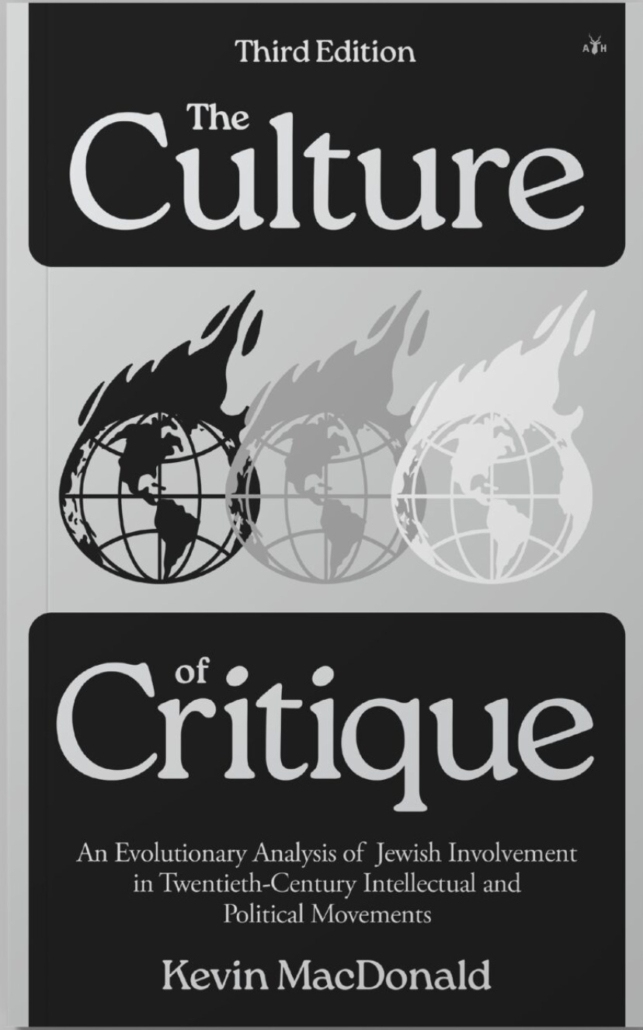
As for how one might interpret the data presented by Asher, there are various perspectives. A Catholic traditionalist might contend that the Jewish involvement in Bolshevism is the result of their rejection of Christ and hence their fall from divine grace (e.g. Father Fahey), possessed of a satanic “revolutionary spirit,” (e.g. Dr E Michael Jones)[xxxvi]  insofar that Satan is the spirit of negation; while the evolutionary psychologist Dr Kevin McDonald explains Jewish involvement in Bolshevism and other dissolutive movements, as part of an evolutionary defence mechanism.

Asher does not aim to present an interpretative analysis, but only to present data on Jewish involvement in Bolshevism, and to pose the question as to why Jews are not held accountable? Unfortunately, he overlooked a key factor that could bolster his contention: namely that Israel adamantly refused to turn over Jewish NKVD murderers when called on to do so, and indeed Jewish organizations expressed outrage at the very suggestion. Nonetheless, Asher has boldly (some will say foolishly) examined a subject that has not been considered in New Zealand since A N Field’s Depression-era best-sellers such as All These Things (1936). Whatever the shortcomings of the book, it is a brave effort that merits support.


[i] Andy Oakley, Once we were One: The Fraud of Modern Separatism (Wellington, Tross Publishing, 2017).

[ii] J McLean, “Apartheid in the 21st Century,” Tross blog, https://trosspublishing.com/tag/bumiputra/

[iii] For a dissenting pro-apartheid opinion see: Bolton, “Contra ‘One nation, one people,’” The European New Zealander, April 9, 2022; https://theeuropeannewzealander.net/2022/04/09/contra-one-nation-one-people/

[iv] “Company accused of anti-Maori publishing promoting books at schools,” TV1 News, December 12, 2021, https://www.1news.co.nz/2021/12/12/company-accused-of-anti-maori-publishing-promoting-books-at-schools/

“Racist propaganda: the undercover campaign to infiltrate school libraries,” Stuff, July 2, 2023, https://www.stuff.co.nz/national/education/300899633/racist-propaganda-the-undercover-campaign-to-infiltrate-school-libraries

[v] K R Bolton, “Anti-Semitism Downunder: Left, Right or… Imaginary?,” The European New Zealander, August 28, 2022, https://theeuropeannewzealander.net/2022/08/28/anti-semitism-downunder-left-right-or-imaginary/

[vi] P Cresswell, Book review, Not PC, https://pc.blogspot.com/2026/03/book-review-who-was-behind-bolshevik.html

[vii] Tross Publishing, https://trosspublishing.com/?s=Cresswell

[viii] J McLean, “The Smear of Anti-Semitism,” https://trosspublishing.com/blog/

[ix] K R Bolton, “Responses of International Capital to the Russian Revolutions,” The International Journal of Russian Studies, Issue 1, 2012, https://www.ijors.net/issue1_1_2012/articles/bolton.html

[x] McLean, op. cit.

[xi] Robert Wilton, Russia’s Agony (New York: Dutton & Co., 1919); online: https://archive.org/details/russiasagony02wilt/page/n9/mode/2up

R Wilton and G Telberg, The Last Days of the Romanovs (New York: Doran Co., 1920); online: https://archive.org/details/lastdaysromanov00sokogoog/page/n9/mode/2up

[xii] W Churchill, “Zionism versus Bolshevism: a Struggle for the Soul of the Jewish

People,” Illustrated Sunday Herald, February 8, 1920, p. 5.

[xiii] A Collection of Reports on Bolshevism in Russia, Presented to Parliament by Command of His Majesty, April 1919 No. 1 (1919), [with] A Collection of Reports on Bolshevism in Russia.

[xiv] W Stegner, “The Radio Priest and his Flock,” in I Leighton (ed.) The Aspirin Age 1919 to 1941 (London: The Bodley Head, 1950), p. 251.

[xv] A Sutton, Wall Street and the Bolshevik Revolution (New Rochelle: Arlington House Publishers, 1974), “The Jewish Conspiracy Theory of the Bolshevik Revolution,” pp. 186-187.

[xvi] This would seem likely to have been Boris Brasol, a prominent Russian jurist, who served on the board on behalf of Czarist Russia, and who regarded Bolshevism as Jewish.

[xvii] Richard B Spence, Wall Street and the Russian Revolution 1905-1928 (Or.: Trine Day, 2017).

[xviii] “Abram Lvovich Zhivatovsky,” https://www.geni.com/people/Abram-Zhivatovsky/6000000003209123273

[xix] Sutton, p. 41.

[xx] Michael Pearson, The Sealed Train (London: Macmillan, 1975), p. 58.

[xxi] Sutton, p. 59.

[xxii] Spence, pp. 161, 178.

[xxiii] R H Bruce Lockhart, Memoirs of a British Agent (London: Putnam, 1934), inter alia.

[xxiv] K R Bolton, “Responses of International Capital to the Russian Revolution.”

[xxv] Werner Sombart, The Jews and Modern Capitalism (London: Unwin, 1913).; online:  https://archive.org/details/in.ernet.dli.2015.152143/page/n1/mode/1up

[xxvi] Kevin McDonald, The Culture of Critique: An Evolutionary Analysis of Jewish Involvement in Twentieth-Century Intellectual and Political Movements (Antelope Hill, 2026), https://antelopehillpublishing.com/product/the-culture-of-critique-by-dr-kevin-macdonald/

[xxvii] Daniel Goldhagen, Hitler’s Willing Executioners: Ordinary Germans and the Holocaust (Alfred A Knopf, 1996).

[xxviii] John Cornwall, Hitler’s Pope (Viking, 1999).

Susan Zuccotti, Under His Very Windows: the Vatican and the Holocaust in Italy (Yale University Press, 2000).

[xxix] Simon Ponsonby, “The Shocking Truth About Christianity and the Holocaust,” Premier Christianity, https://www.premierchristianity.com/features/the-shocking-truth-about-christianity-and-the-holocaust/3934.article

[xxx] Robert Weinberg, “Demonizing Judaism in the Soviet Union During The 1920s,” Slavic Review. Volume 67, Issue 1, 2008, p. 146; https://works.swarthmore.edu/fac-history/88

[xxxi] Robert Weinberg, p. 121.

[xxxii] Schapiro in L Kochan (ed.) The Jews in Soviet Russia since 1917 (London: Inst. of Jewish Affairs, Oxford University Press, 19070), p. 9.

[xxxiii] A Vaksberg ,Stalin Against the Jews (New York: Knopf, 1994), p. 37.

[xxxiv] Vaksberg, p. 35.

[xxxv] “Around the Jewish World: Latvian Jews Troubled by ‘Genocide’ Conviction of a Former Soviet Official,” JTA, 11 October 1999, https://www.jta.org/archive/around-the-jewish-world-latvian-jews-troubled-by-genocide-conviction-of-a-former-soviet-official-2

[xxxvi] E Michael Jones, The Jewish Revolutionary Spirit and Its Impact on World History (Fidelity Press, 2008).

Jews and the May 1968 attempted revolution in France

The U.S. State Department said it is watching closely the case of a French far-right activist killed by suspected hard-left militants (i.e. supporters of Hamas, immigration etc.) suggesting it might count as terrorism, in comments that may stir fresh tensions between Paris and Washington.

And indeed, Feb 22, France will summon the US ambassador to ‌France, Charles Kushner, over comments on ‌the killing of a French far-right activist Quentin Deranque last week, French Foreign Minister Jean-Noël Barrot said on Sunday.

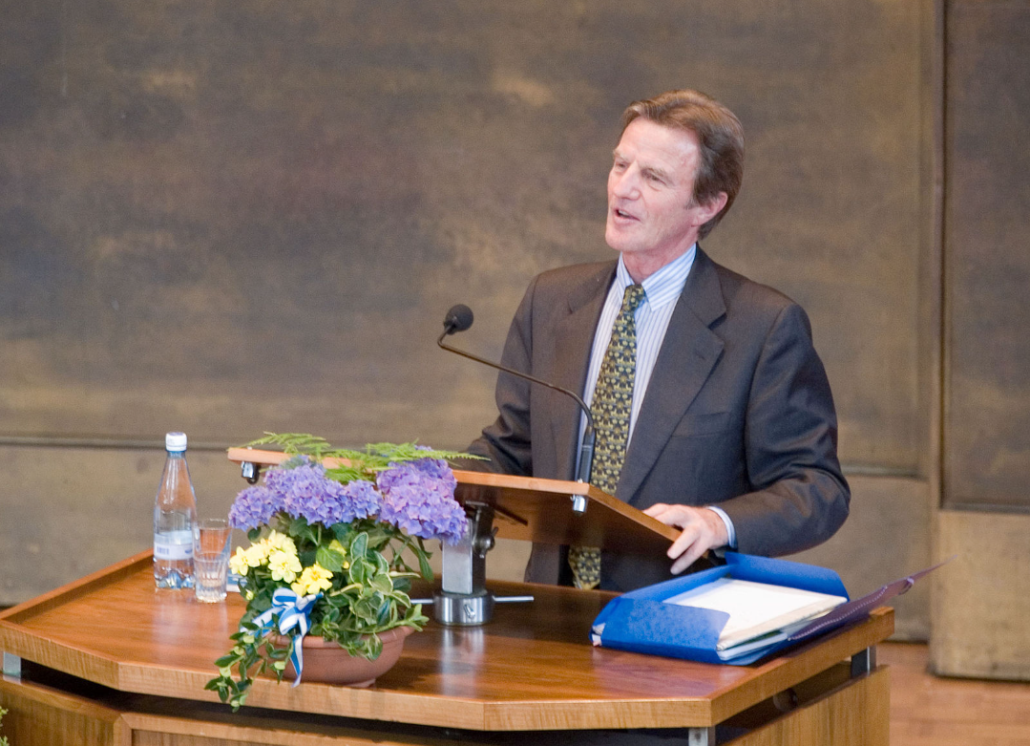
Sending in a Jewish Ambassador to France named Kushner is a bit rich, since in France, we already have one of interest: Bernard Kouchner, the French Doctor – Médecins sans Frontières.

Before becoming a prominent figure in French politics, Bernard Kouchner was a charismatic figure of May ’68.

Bernard Kouchner, the French Doctor, Médecins sans Frontières

Nowadays, a lot of French far-right activists like Quentin Deranque tend to chant “Islamo-leftists out of our universities!”. Poor Quentin was killed for this essentially Israeli slogan.

They forgot two points:

1 – In 1936, the entire nationalist right was outraged by the Jewish control of the National Education system: Léon Blum, President of the Council, was Jewish; Jean Zay, Minister of National Education, was Jewish; Cécile Brunschvicg, Under-Secretary of State for National Education, was Jewish; Jules Isaac, Inspector General of Public Instruction, was Jewish—he was also the author of the famous Malet and Isaac history textbooks, yes indeed. (Cécile Brunschvicg at least had the merit, in the eyes of schoolchildren, of serving as a benchmark for cubic meters and quintals…).

2 – In 1968, they could have chanted: “Judeo-leftists, out of our campus!” – but they didn’t

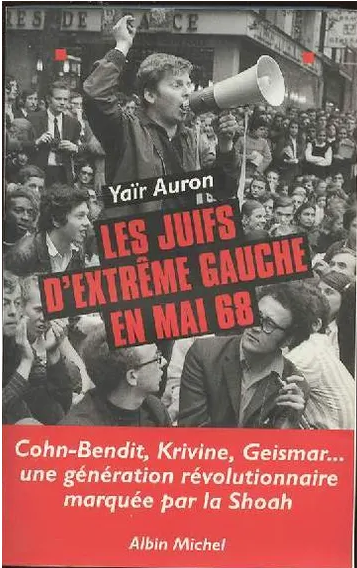
One can advise them to read the book by Yaïr Auron, translated (from Hebrew…) by Katherine Werchowski: Les Juifs d’extrême gauche en Mai 68 — The far left-wing Jews in May 68.

The book is not available as a PdF, but we can consult this short 2-minute video on the same subject: https://ok.ru/video/1491805407906

It starts like this: “As in 1917, during the Bolshevik revolution, the Jews were the leaders of the failed revolution of May 68.”

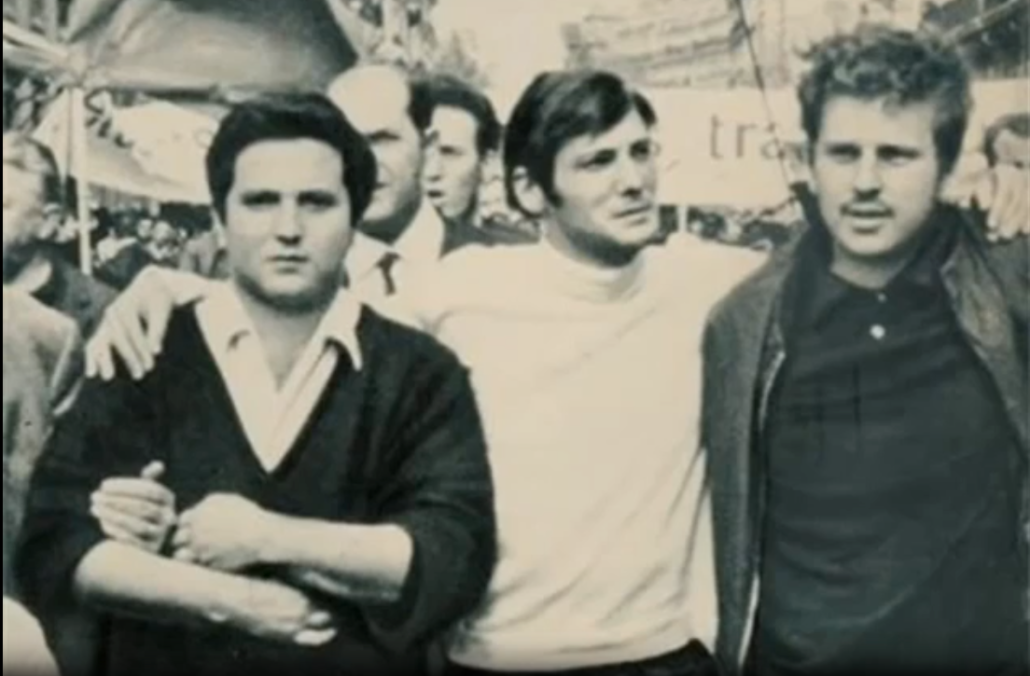
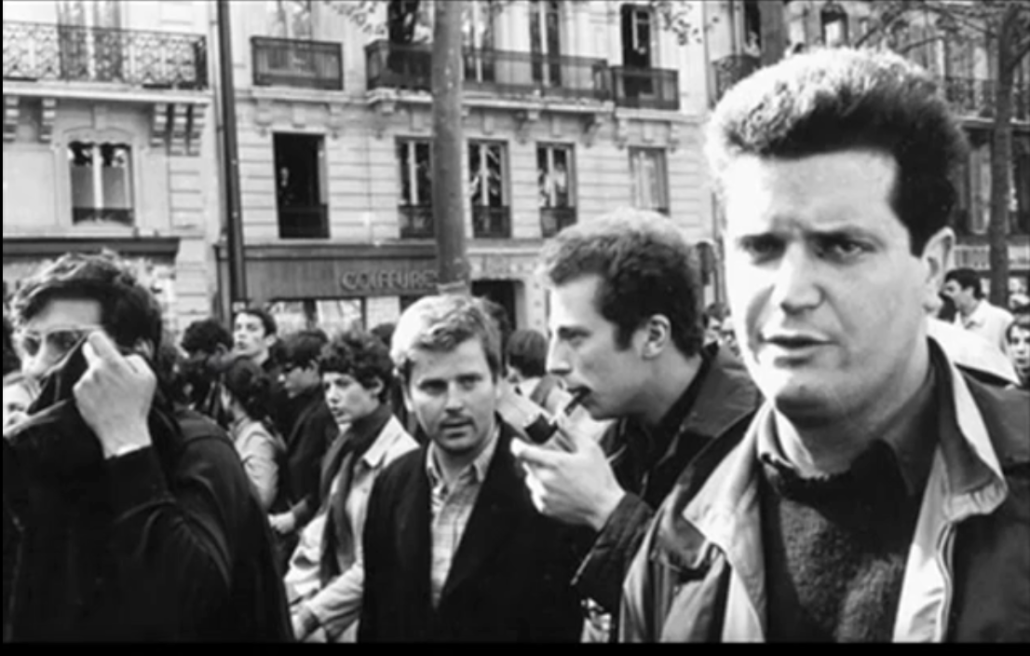
I started from this video and expanded it through the various linked sources as we went along – which also allowed us to correct two or three inaccuracies in the video. Here are the main leaders of May 68. First observation, 3 of the 4 spokespersons of the May 68 movement are Jews: Alain Geismar, Daniel Cohn-Bendit, Michel Recanati, but not Sauvageot (in the center of the photo)

Daniel Cohn-Bendit, born on April 4, 1945 in Montauban, is 80 years old. Cohn-Bendit is an emblematic figure of this period, born to German Jewish parents who had taken refuge in France since 1933. In May 1968, he was 23 years old and studying in the 2nd year of sociology at Nanterre. Nicknamed “Dany the Red”, he ended up being expelled from France to Germany, his parents’ country. He did not immediately commit himself to new political action. From 1968 to 1973, he became an educator in kindergartens in Frankfurt [a pedophile cat among the pigeons?] and then worked at the Karl Marx bookstore in that same city until 1980. He co-founded in 1970 the magazine Pflasterstrand [under the cobblestones, the beach = sous les pavés, la plage, the most famous of the slogans of May 68] and managed its editorial staff until 1984. He was deputy mayor of Frankfurt from 1989 to 1997.

Alain Finkielkraut, born June 30, 1949, in Paris, is 76 years old, the only son of a Polish Jewish leather worker deported to Auschwitz. Thinker of the movement.

Roland Castro, born in Limoges on October 16, 1940, was born to a Jewish family originally from Salonika

Militant pro FLN, member of the PSU (Parti socialiste unifié), he joined the Communist Party in 1961 before evolving in 1967 to the Maoists of the Marxist-Leninist Communist Youth Union. In May 1968, he was the representative at the School of Fine Arts.

In the video, he is mistakenly quoted as Olivier Castro, who also participated in the events of May 68, but does not seem to be Jewish.

Danièle Schulmann, girl-friend of Yves Fleischl. The video mistakenly mentioned Daniel Schulmann.

Yves Fleischl, born in Hungary, not particularly known except for being in the famous photo of Daniel Cohn-Bendit facing a CRS officer in front of the Sorbonne (CRS = Compagnies républicaines de sécurité, the anti-riot police, the other side of the barricade, during May ’68 CRS were nicknamed CRS SS).

Bernard Kouchner, born in Avignon on November 1, 1939. Activist of the Union of Communist Students, editor at Clarté, he led in May 1968 the strike committee of the Faculty of Medicine of Paris. In 1969, he left for Biafra and then judged that the Parisian May was ‘it was a comedia dell’arte’. Leader of MSF (Médecins Sans Frontières = Doctors Without Borders) in 1971, he began a political career that led him several times to the government, sometimes on the right, sometimes on the left.

Benny Lévy (alias Pierre Victor), born on August 28, 1945 in Cairo and died on October 15, 2003 in Jerusalem. A student of Louis Althusser at the École normale supérieure, he joined the Union of Communist Students, and then was one of the leaders of the Union of Leninist Marxist Communist Youth with Robert Linhart. He founded after May 1968 the Gauche Prolétarienne, whose newspaper La Cause du Peuple received the support of Jean Paul Sartre. He went into hiding in 1973 when the proletarian Left was banned, became secretary to Jean-Paul Sartre until 1980 and taught philosophy at the Sorbonne. He emigrated to Israel in 1997 and became a rabbi before dying in 2003.

André Glucksmann, born on June 19, 1937 in Boulogne-Billancourt to a Jewish Ashkenazi family; died on November 10, 2015 in Paris. He was  a philosopher, a Maoist activist between 1968 and 1974, and ardent defender of the Chinese Cultural Revolution.

Robert Linhardt, born on April 30, 1944 in Nice (and not in 1943 as indicated in the video). Linhart comes from a Jewish family of Polish origin that settled in Paris. His father, Jacob Linhart, left Poland before the Second World War and joined France after a few years spent in Italy (“chased by Mussolini’s handshake with Hitler”). He was head of the Marxist-Leninist Communist Youth Union, which tended toward Maoism. In 1966 he founded a Maoist movement whose objective was to send students to the factory in order to get closer to the workers in order to teach them to fight bourgeois ideology. In May 68, Linhart was hospitalized for overwork when the workers went on strike; the revolution took place without him. This did not prevent him from spending the following year at Citroën to manufacture 2CVs (a painful experience that he narrated in 1978 in the impressive “L’établi”). After ten years of writing, he attempted suicide in 1981, then stopped speaking for twenty-four years.

Tiennot Grumbach, born in Paris 17th on May 19, 1939 – died on August 17, 2013. (photo to the right with Cohn Bendit and Kravetz). He was a member of the Union of Communist Students (UEC) and the Union of Young Marxist Communist Leninists (founded by the disciples of Louis Althusser who were excluded from the UEC). With Roland Castro he founded the Maoist movement ‘Vive la Révolution’. Nephew of Pierre Mendès France, lawyer, he was president of the Union of Lawyers of France (SAF) and became in 1986-1987 president of the bar at Versailles. He was director of the Institute of Social Sciences of Work (ISST) in Sceaux.

Marc Kravetz, born on October 2, 1942 in Neuilly-sur-Seine and died on October 28, 2022, in Paris. Militant of the Communist Youth, general secretary of the National Union of Students of France, he made a stay in Cuba in 1967. In 1968, he was an editor at Action and a leader of action committees. Twenty years later, he was head of the foreign service at Libération (a French left wing daily newspaper).

Alain Krivine, born in Paris on July 10, 1941, from a Jewish family of Ukraine; died on March 12, 2022, in the same city. The head of the LCR (Revolutionary Communist League) is one of the few leaders of the revolt of May 1968 to have retained the same political line and the same commitment. Leader of the Sorbonne-Lettres sector of the Union of Communist Students in 1964, he founded in 1966 the Revolutionary Communist Youth (league dissolved by the government in June 1968). In 1968, he showed himself to be a supporter of escalation and continuous harassment of the police. Founder in 1969 of the Communist League (dissolved in 1973), then of the Revolutionary Communist League in 1974, he presented himself for the first time to the presidency of the Republic at the elections of 1969. Out of 12 candidates, he came in 9th, with 239 106 votes. He is the author in 2006 at Flammarion of a book beautifully titled “It will pass you with age”.

Michel Recanati, born on September 29, 1950 in Boulogne-Billancourt; died on March 23, 1978 (suicide following the death of his wife suffering from cancer). He is the eldest son of Suzanne Rodrigue, from a Jewish family. The Recanati couple mentioned their Jewishness to their children during their adolescence, after having “long lived it as a disgrace”. The grandparents, from an immigrant Jewish family from Salonika who became merchants in the 9th arrondissement of Paris, were deported in 1942 by the Vichy regime and perished in the Nazi camps.

Michel Recanati is a Trotskyist who in 1968 led the Comité action lycéen (CNAL, Lycée = High School), then became an active leader of the LCR (Ligue communiste révolutionnaire). He was acquitted by the court in the investigation of the serious burns suffered by police officers during the counter-demonstration on June 21, 1973, at a meeting of Ordre nouveau in Paris, decided by the political bureau of the Communist League and organized with three other extreme parties-left — without the PSU (Parti Socialiste Unitaire).

Daniel Gluckstein, was born on March 3, 1953, in Paris. Co-founder of the OCI (International Communist Organization)

Pierre Lambert, born Boussel on June 9, 1920 in Paris; died on January 16, 2008. He comes from a family of very poor Russian Jewish emigrants. His father, Isser Boussel, is a tailor and his mother, Sorka Grinberg, is a housewife. From 1953, he was one of the main leaders of the international Trotskyist movement and founder of the Trotskyist OCI (International Workers’ Party)

Daniel Bensaïd, born on March 25, 1946 in Toulouse; died on January 12, 2010. He is a Sephardic Jew, like Recanati; they are the only two Sephardic members of the movement. He was a Trotskyist philosopher and theorist.

Henri Weber, born in Leninabad in the Soviet Union on June 23, 1944 and died on April 26, 2020, in Avignon. In 1968, he played a very important role in the animation of the student revolts. Co-founder of the Revolutionary Communist League in 1968, he was director of its weekly Rouge until 1976. He pursued an academic career as a teacher in political science. A subject on which he himself has done many… practical works. Socialist Senator of the Seine maritime from 1995 to 2004, Member of the European Parliament since 2004, he had written, with the support of the CNPF (the representative organization of French bosses!), a book entitled Le parti des patrons: le CNPF 1946-1986. He was then a researcher at the Research Centre for Industrial Change (CRMSI).

Alain Geismar, born in Paris in July 1939 to a Jewish Alsatian family. In May 1968, he was assistant professor at the faculty of sciences in Paris and Secretary General of the SNE-Sup (National Union of Higher Education – needless to say, a hot bed of leftism) where he represented the leftist current. He was, along Cohn-Bendit and Sauvageot, one of the figures of the revolt. In 1970, condemned for reconstitution of the dissolved movement (La Gauche prolétarienne), he spent 18 months in Fresnes (a jail located in the town of Fresnes, near Paris). He then uttered a very committed sentence: “Summer will be hot and we will chase the bourgeois into their pigsty.” General Inspector of National Education since 1990 (whose function, as its name suggests, is control of the teaching world), in charge of mission or technical advisor to several ministers of National Education; he has been an advisor to the mayor of Paris since 2001, responsible for education.

Blandine Kriegel, was born in Neuilly-sur-Seine on December 1, 1943. Daughter of Maurice Kriegel-Valrimont from a Jewish family. She is the cousin of Danièle Kriegel. Her political career began with the PCF (French Communist Party). Daughter of the communist activist Maurice Kriegel (Kriegel-Valrimont, after his resistance), she was an activist in the Union of Communist Students before joining the Marxist-Leninist (Maoist) Communist Youth Union. She then collaborated at the May School and was very active in 1968 in the Maoist agitation at the École normale supérieure de Fontenay aux Roses. A renowned academic and specialist in political philosophy, this graduate of philosophy and Doctor of State in Letters was appointed to the mission at the Élysée, called in 2002 by the President of the Republic Jacques Chirac. With her husband Alexandre Adler, political columnist and director of Courrier International, she was close to Philippe Séguin, president of the National Assembly from 1993 to 1997. She advocated voting for Jacques Chirac in the presidential election of 1995, because she says, “the left disappointed me.” She is an officer of the Legion of Honor and a commander of the national order of Merit.

§§§§§

concluding remarks

1 – The video ends as it began, with a parallel with 1917: “Do the French know they have escaped the Gulag?” (but not the Migratory Gulag).

2 – In May 68, the watchword was ‘Imagination takes power’; today it is rather ‘Immigration takes power’, but the two are linked. Even if Quentin mainly had in mind the second of these watchwords, we must not forget the first one, nor those who were the authors: they are still in our schools – on both sides of the chair (see the case of Alain Geismar who becomes Inspector General of National Education!).

3 – The case of Recanati allows us to make an easy connection with Quentin: on one side, the Antifas that breaks the skull of an identity activist, on the other, a case of severely burned CRS (French anti-riot forces).

4 – Yaïr Auron puts a banner of his book A Revolutionary Generation marked by the Shoah. But apart from the case of Recanati, whose grandparents died in camps, and that of Finkielkraut, whose parents have returned from deportation (since he was born in 1949…), we are rather surprised to see all these figures of 68 born everywhere in France during the war, or a little before, or after, in families that were not even affected by the deportation.

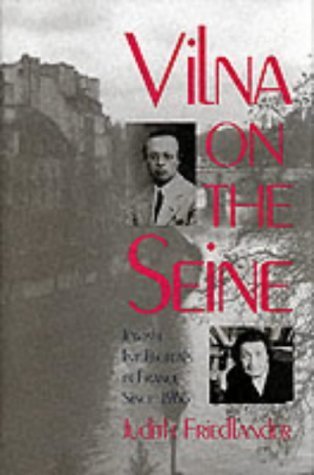
5 – Let us point out this other book signed by a Jewish intellectual, Judith Friedlander: Vilna on the Seine – Jewish intellectuals in France since 1968.

Version 1.0.0

Three Savage Jewish Communists

Introduction

In my last article (“Jewish Bolsheviks and Mass Murder: Rozalia Zemliachka and the Jews Responsible for the Bloodbath in Crimea, 1920”), I described a group of Communist Jews and the slaughter they perpetrated in the early years of Bolshevik rule in Russia. Over the thirty-five years that spanned the rule of Lenin and Stalin, there were hundreds of similar massacres, carried out by various delegations of Cheka-OGPU-NKVD officers (with significant Jewish representation or even outright leadership), operating in every region of the USSR. These massacres cry out for more attention, and I hope to write about more of them. In the meantime, however, I will describe three depraved Jewish executioners, each of them richly deserving infamy and execration: Mikhail Vikhman, Revekka Plastinina-Maizel, and Isai Berg. Vikhman was a leading Cheka commissar in Odessa and Crimea in 1919–1921, where he personally shot hundreds of victims, including some of the highest rank. (His later career features an exquisite irony.) Plastinina-Maizel was a Party official who barbarically murdered thousands in the Far North of Russia together with her consort, a mad Cheka official. She later enjoyed a career at the highest level of the Soviet judiciary, a fine commentary on the perversities of Soviet society. Berg, a leading NKVD official in Moscow and executioner in the Great Terror, already boasts some notoriety among anti-Communists because he pioneered the homicidal gas van, which was meant to help him in his regular job: organizing nearly twenty thousand executions at the Butovo killing grounds in 1937–1938. These three Jews alone are responsible for the death of over twenty thousand people, and their names should be at least as well-known as Eichmann or Mengele, and for better reasons.

MIKHAIL VIKHMAN

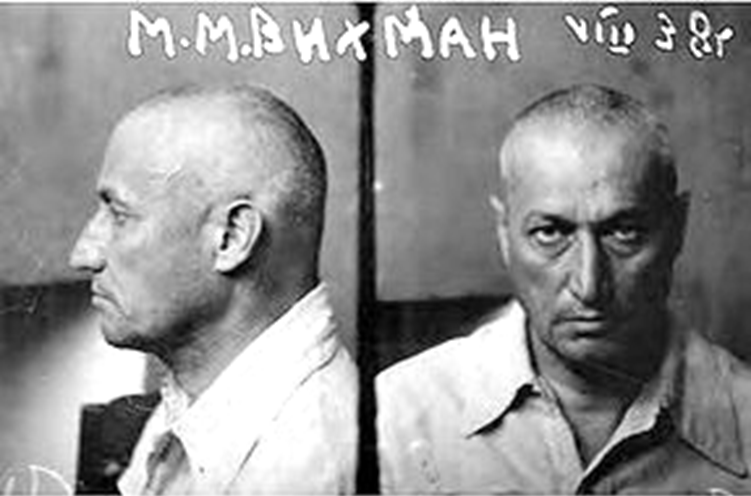
Mikhail Vikhman was born in 1888, in or near Astrakhan on the Caspian Sea. His father Moisey was a dealer in fish. Mikhail graduated from the Realschule in Astrakhan in 1907, then worked as an electrician until he was conscripted in 1912. He served in a sapper battalion,[1] fought in the World War, and won the St. George Cross (4th degree). When the Revolution came, he suddenly ascended to positions of power, initially chief of police in Tsaritsyn (Stalingrad).[2] By 1918 he had joined the Bolsheviks, become a Chekist, participated in suppressing a Cossack uprising, and, as commander of the 1st Red Partisan Regiment, fought in Ukraine against various anti-Bolshevik forces. In the spring of 1919, he became a leader of the Cheka in Odessa, the third-largest city in Ukraine. The erstwhile sapper corporal now had the power of life and death over nearly half a million people. (The city was heavily Jewish, and its Cheka was too.) Here he won fame, not as a wise administrator or promoter of the common good, but as a bloodthirsty mass murderer. Sergei Melgunov in The Red Terror in Russia tells us that Vikhman employed six executioners but “would go into the cells, and slaughter prisoners for his personal pleasure.”[3] In the summer of 1919 forty or fifty prisoners were shot every night, and former White officers were killed “by chaining them to planks and then pushing them very slowly into furnaces . . .”[4] One source states that Vikhman shot over 200 people during his time in Odessa, including the former police chief Baron Sergei Vasilyevich van der Hoeven (1865–1919) and the rector of the Novorossiysk University, Sergei Levashov.[5] Melgunov gives another story, sadly typical of the era:

. . . there is on record a case where, on the lid of a coffin slowly opening and emitting a cry of “My comrades, I am still alive!” a telephone message was sent to the Che-Ka, and elicited the reply, “Settle him with a brick,” whilst a further appeal to the head of the Che-Ka himself [Vikhman] called forth the jest: “We are to requisition the best surgeon in Odessa, I suppose?” and finally a Che-Ka employee had to be dispatched to the scene, to shoot the victim a second time with a revolver.[6]

Vikhman seems to have worked in Odessa through part of the year 1920, but in the spring of 1921 he became the chairman of the Crimean regional Cheka.[7] The Red Army had recently conquered Crimea, and Bolshevik forces under the leadership of two repulsive Jews, Bela Kun and Rozalia Zemliachka, had subjected the peninsula to a horrific scourging. Now Vikhman, another remorseless Jew, headed all Cheka forces in the peninsula, and the killing proceeded. Remnants of the White forces had taken to the hills to wage guerrilla warfare (as much to survive as to resist Communist rule) and Vikhman organized forces to wipe them out; captives were liquidated. The Communists judged many others deserving of death, and Vikhman lent his hand and his Mauser to the task. Among others, he shot the former Ukrainian ministers Alexander Ragoza and Komorny. Years later he stated that in Crimea he personally shot “many hundreds” of “enemies of Soviet power … the exact number of which is written on my combat Mauser and combat carbine.”[8]

But there was trouble: the Crimean Bolshevik Party Committee became upset with Vikhman’s haughty manner. They charged him with arresting Party members and defiance of Party authorities. He was removed from his position and sent to the Caucasus, where he worked in the Stavropol Provincial Cheka. By the end of 1921, however, the Party expelled him and cashiered him from the Cheka.[9] It was the end of the first phase of his career.

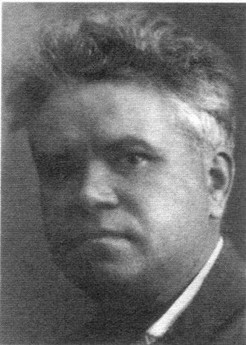
Vikhman returned to Odessa and worked in the administration of the city tram network, quite the fall for the menacing, all-powerful Cheka executioner. Before long, however, he gained readmittance to the Party and even the Cheka. After 1928 he worked in various mid-level capacities for the OGPU (successor organization of the Cheka), in Kharkov (Ukraine) and the Caucasus. He participated in suppressing peasant revolts, headed the Chernigov city department OGPU, and won the award “Honorary Worker of the Cheka-OGPU” (1932). By the year 1938 he was working in Vinnytsia as deputy head of the NKVD militia. Then there came a knock at the door. It was July 8, 1938, the height of the Great Terror, the absolute peak of the decades-long repression, and Stalin was beginning to liquidate the liquidators. Genrikh Yagoda, Jewish head of the NKVD, had been shot in March, and thousands more secret police perished in the next few years. Now it was Vikhman’s turn: the secret police searched his house, seized a cache of weapons, and took him to Lukyanivska prison in Kiev.

The Party was carrying out a major purge of the Ukrainian NKVD: Vikhman’s former boss, the Jewish head of the NKVD in Ukraine, Izrail Leplevsky, had been replaced in January, arrested in April, and shot in July. The new boss, the Russian Alexander Uspensky, had orders to clear out Leplevsky’s men, “who included large numbers of Jewish NKVD operatives.”[10] Hundreds were arrested, but not all: Leplevsky had been tortured during his interrogation by the Jewish NKVD men Lulov and Vizel,[11] and Vikhman now faced a similar experience: he was tortured by the Jews Kogan (Russian form of Cohen) and Ratner.[12] These men beat him mercilessly and forced him to stand continuously for up to four days. (How many people had Vikhman done this to?) By July 17 he gave in and admitted guilt. He was left badly damaged, even crippled, by this treatment.

Vikhman in the hands of Jewish interrogators

It was an astonishing scene: in twentieth-century Russia, a man named Cohen, descendant of the ancient Hebrew priestly line, interrogating and torturing another Jew, both avowed atheists and ruthless members of the same secret police force, serving a Georgian tyrant ruling over Russia in the name of Marxist socialism![13]

Vikhman, understandably, was outraged that he was subjected to such treatment and appealed to higher authorities. In a letter to a deputy of the Supreme Soviet, he cited his work for the socialist motherland, proudly boasted that he had shot hundreds of the enemies of Soviet rule and appealed to “justice” and “Bolshevik Stalinist truth.”[14] In his desperate straits he suddenly found verities to cling to. In the end he escaped the bullet in the neck: he was sentenced to five years (November 1939), and a few months later the State ordered him released, probably because of his physical deterioration. He spent the next year in a neurological hospital, but eventually resumed work, in the Soviet electric power industry and in a shipbuilding plant in his hometown of Astrakhan. Eventually he retired but had to sell mineral water to supplement his meager pension. He won political rehabilitation in 1956. This was a process in which the state proclaimed some of the people repressed under Stalin innocent and restored them to their rights, including pensions. The courts would look at the evidence and make a ruling, and Vikhman saw his name “cleared” before his death.[15]

One wonders what he thought about it all as he neared the end of his life, the dreams of a socialist paradise, the prestige and power he enjoyed, flashbacks of the deafening crack of his Mauser in the death-cellars, the bitterness of his own arrest and torture. And finally, penury and physical impairment. He wasn’t an intellectual; perhaps he spent little time in reflection, assuaging his grievances by cleaving to the old vision of socialism, the one thing that could make it all seem worthwhile. Like other old Stalinist apparatchiks (even Kaganovich and Molotov)[16] he lived out his life in a threadbare apartment, waiting for the monthly pension check, playing checkers and reading Pravda. He died in 1963.[17]

REVEKKA PLASTININA-MAIZEL

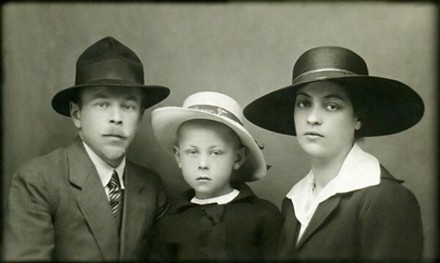
Our second subject is Revekka Plastinina-Maizel. Plastinina was her married name, Maizel her maiden name. She was born in 1886 in Grodno, a typical city of the Pale of Settlement, near the junction of Belarus, Lithuania, and Poland, with a mixed population to match, nearly half Jewish. Her parents were Kivel and Olga; her brothers Moisey and Yakov emigrated to America, and her sister Anna later lived with her children near Revekka in Moscow. In 1904 Revekka joined the underground Russian Social Democratic Labor Party (RSDLP), and a couple years later she helped her cousin Eva, imprisoned for revolutionary activity, escape from Grodno prison.[18] By the year 1909 she was married to Nikandr Plastinina, a Russian revolutionary, and they were living in Switzerland, where Nikandr helped Lenin print his newspaper Iskra. They had a son, Vladimir.[19] They were of that class of professional revolutionaries who spent their time reading, writing articles, “organizing” the workers, and dreaming of the future. Revekka’s father, a lawyer, presumably supported her lifestyle.

Nikandr Plastinina, Vladimir, and Revekka in Geneva 1916

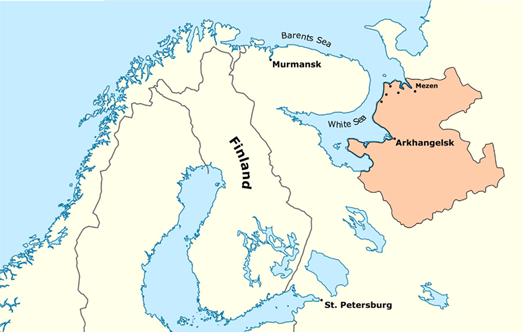
When the Tsar fell from power, they hurried back to Russia, along with thousands of other exiles. Nikandr’s hometown was Shenkursk in north-western Russia, and that became their base. By January 1918 Revekka became secretary of the Shenkursk City Soviet and in June a member of the Archangelsk Provincial Executive Committee. Archangelsk, on the White Sea, was a much bigger city, the hub of Archangelsk Province. Revekka and Nikandr worked together to establish Bolshevik power, but quite soon an Allied intervention drove the Bolsheviks out of the area. In early August Archangelsk was taken by British and American troops, who drove south as far as Shenkursk. Russian uprisings against the Communists had aided the Allies in both cities; Revekka and other members of the Executive Committee had been seized by the rebels, but Revekka escaped.[20] Revekka and Nikandr then worked as political commissars in the Sixth (Red) Army, which was fighting in that area. In early 1920 Bolshevik forces retook the area and commenced a vengeful and murderous purge, in which Revekka played a leading role. It was a wave of terror very similar to that which took place in Crimea later that year.

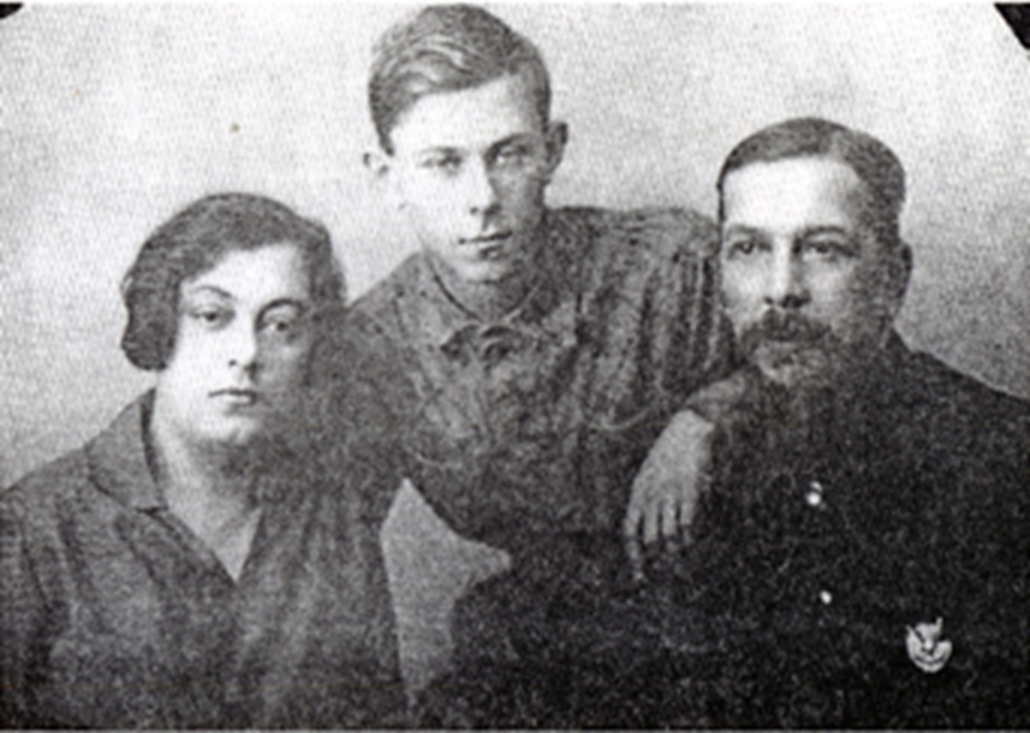
Moscow sent a top Cheka official, Mikhail Kedrov, to Archangelsk to “pacify” the area. Revekka left Nikandr and took up with Kedrov, eventually marrying him. Some sort of quarrel had broken out between Nikandr’s family and Revekka, with the result that she ordered the death of his entire family, “whom she crucified in an act of savage revenge.”[21] Apparently, the family were disgruntled when Nikandr and Revekka executed the brother-in-law of Nikandr, and evinced insufficient revolutionary ardor for the liking of Revekka. Sergei Melgunov says that she “repaid petty insults once shown her by her first husband’s family by having that family crucified en masse . . .”[22] Petty insults and lack of revolutionary ardor repaid with mass crucifixion? She was clearly a homicidal maniac, but this was only the start. The result of the family holocaust was that Nikandr fled and took up work elsewhere.[23] He did not escape Stalin, however. He died in a camp after being arrested in 1938.

Kedrov, it seems, was inflicted with hereditary madness (his father died in a lunatic asylum), although he was a highly cultured man from the lower Russian nobility, a musician and doctor. He used to play Beethoven for Lenin in exile before the Revolution.[24] He had three sons with his first wife, one of whom, Igor, became a vicious NKVD interrogator in the 1930s. Now, in March 1920, Mikhail was sent north “as a member of a commission charged with the investigation of crimes perpetrated by White Guard and Allied . . . troops. In effect this was a punitive expedition . . . and it earned Kedrov a reputation for extreme cruelty.”[25] Revekka took full part in this campaign, matching the cruelty and madness of Kedrov, who reportedly had to be confined in a mental hospital afterwards.


Revekka, Mikhail Kedrov and his son Igor

Party leaders in Moscow placed Revekka on the Archangelsk provincial Revolutionary Committee.[26] She and Kedrov held untrammeled power over the area, and the killing began. White officers who managed to flee later reported that in Arkhangelsk they shot 60-70 people a day. The ancient monasteries of Solovetsky, Kholmogory, Pertominsky were turned into concentration camps, later famous as the dreadful White Sea camps of the Gulag. Kholmogory was set up as a simple extermination center. Thousands were shot in these camps in 1920 alone.[27] Kedrov “had 1,200 White Army officers machine-gunned aboard a barge at Kholmogory, killing half of them . . . whilst his second wife, Rebeka Plastinina-Maisel, drowned 500 refugees and [White] soldiers aboard a scuttled barge …”[28] The two would travel the region aboard their train and “question prisoners from their travelling saloon at railway stations, and then and there shoot the wretches as soon as Rebekah had finished belabouring them, and shouting at them, and attacking them with her fists as . . . she cried hysterically “To be shot! Put them up against the wall!”[29] Another White Russian refugee testified that Revekka “killed eighty-seven officers and thirty-three citizens with her own hand.”[30]

Archangelsk Oblast (Province)

It was not long before the two alarmed even their superiors with their wild excesses. That summer an anti-Bolshevik uprising broke out and they suppressed it with such murderous abandon that they were removed from their posts. Kedrov was reportedly preparing to execute a schoolful of students. Party comrades noted officially that Revekka was a “sick woman” (the same diagnosis applied to Roza Zemliachka after she had descended into a bloody psychosis in Crimea a few months later.)[31] They were not punished, of course, merely reassigned. Kedrov “spent some time in psychiatric care before reemerging to work, just as cruelly, for the Cheka around the Caspian Sea. He retired from the Cheka after the civil war . . .”[32] Revekka presumably accompanied him in his various posts. Eventually they settled in Moscow, near her sister Anna and her family.

Kedrov would not live out his natural life, unlike Revekka. Kedrov had accused the new chief of the NKVD (November 1938), Lavrenty Beria, of being a double agent, and Beria arrested him in November 1939. Kedrov amazingly won an acquittal from the Supreme Court, but Beria simply ordered him shot in October 1941.[33] Revekka fared much better: she ascended to a seat on the Soviet Supreme Court in the same decade.[34] (Other than this, I found no other details of her later life.) She died at sixty in October 1946, and was buried in Donskoye Cemetery in Moscow, which was the site of secret mass burials in the Great Terror.[35] The Russian land breathed a little freer that winter.

Isai Berg

Isai Davidovich Berg was born in Moscow in 1905.[36] In the early 1920s he served in the Red Army. By 1926 he had joined the political police and completed the course at the OGPU School, after which he joined the OGPU border guards. In 1930 he joined the Communist Party, then worked undercover in several Moscow area factories, monitoring the attitudes and speech of the workers for his OGPU superiors. In 1932-35 he headed the Shchyolkovo District Department of the OGPU, just northeast of Moscow. In 1935-36 he worked in the Kuntsevo District Department of the NKVD.[37] Kuntsevo was also near Moscow, and there Berg became a member of the NKVD “clan” headed by Alexander Radzivilovski, a high-ranking officer and deputy head of the NKVD in Moscow Province. These clans, pervasive in the NKVD, were formed on the patron-client model and served to protect their members amid the dangers of the Stalinist state. Radzivilovski, you may recall, began his career in the Crimea under Zemliachka and Kun in 1920. He was a Jew, as was his right-hand man, Grigory Yakubovich. Radzivilovski’s clan included many NKVD officers—Russian as well as Jewish—in Kuntsevo, which served as a recruiting ground for higher appointments in Moscow.[38]

Berg worked in Kuntsevo until mid-1936. Radzivilovski and his henchmen often came to Kuntsevo to relax in his nearby dacha. Berg was responsible for laying on the amenities, and the officers involved later admitted under interrogation to “immorality and degeneracy.”[39] Whatever this involved, Berg played a central role, and at his next posting, as head of the Vereya District NKVD, he was caught attempting to rape a prisoner (1937). He was sentenced to 20 days’ solitary confinement, then promoted.[40] He became the assistant secretary to the head of the Moscow NKVD, Stanislav Redens (who was married to the sister of Stalin’s wife). That summer Radzivilovski recommended Berg to head the Administrative and Economic Department of the Moscow Province NKVD, and Redens approved the appointment. “Berg, who had a long history of official reprimands, went instantly from being a minor figure—the assistant secretary to the head of the province’s NKVD—to a person with considerable authority.”[41] His rank was Lieutenant of State Security, equivalent to major in the army.


Berg assumed his new duties in August 1937, the exact moment that Stalin was launching a massive new purge, later called the Great Terror,[42] which lasted until November 1938 and totaled over 700,000 executions in about sixteen months. The Politburo—prompted by Stalin—had raised the alarm in early July about “anti-Soviet elements” causing sabotage and crime, and called for preemptive mass arrests and executions.[43] Each NKVD jurisdiction was directed to prepare quotas for arrests and executions.[44] These were collated and finalized by Ezhov, head of the NKVD, whose resulting formal order, “Operational Order No. 00447,” called for 270,000 arrests and 75,000 executions. “Eighteen months later these targets had been exceeded ninefold,”[45] as the purge acquired a horrifying momentum, the NKVD officers terrified to be seen as lacking in vigilance. Killing and burying people on this scale was a massive project,[46] and Redens assigned Berg the job for Moscow (the quota for which had been set at 5,000). He was responsible for finding suitable execution sites, moving the prisoners from the jail to the site, managing the executions, and burying the bodies. The now-famous Butovo shooting range, about fifteen miles due south of the Kremlin, became the biggest execution site/burial ground in the Moscow area, and Berg managed most of the massacre that took place there.[47]


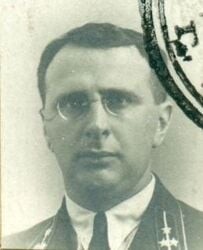
NKVD Lieutenant Isai Berg  

Upon the receipt of Operational Order No. 00447, the NKVD went into action. In each district of the vast country, officers began arresting people, based on long-accumulated files, or social standing, or other information. They then forced the prisoners to confess to

a fictitious crime. Officers obtained confessions using various tactics, most often through torture and beatings . . . during the [Great Terror] the NKVD undertook falsification [of confessions] on an industrial scale. Agents had to create a huge number of documents each day …[48]

One officer stated, “During the day we . . . made up fabricated interrogations for the accused and at night we made them sign under compulsion.”[49] Some people were forced to sign blank sheets of paper. Agents then sent these signed confessions up the chain of command, where they landed on the desk of the “troika,” a special body erected for the purpose. The troika in each province consisted of the head of the NKVD, the prosecutor, and the local Communist Party secretary. (Because Moscow was the capital, it had three troikas, plus several other sentencing bodies, all extra-judicial.) The troikas would process hundreds of cases at a time, passing sentence (death or gulag) on each person with little deliberation. Almost all of them involved Article 58, counterrevolutionary activity. Radzivilovski’s ally Grigory Yakubovich chaired the second Moscow troika, and Berg later stated, “Semyonov competed with [Y]akubovich to see who was the faster.. . . Semenov always went over to [Y]akubovich’s room and boasted that he had dispatched fifty cases more than him . . . and they were both delighted to have been able to pass sentence so quickly without even having glanced at the dossiers.”[50]

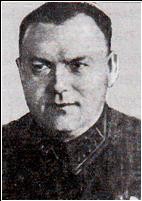
Two other Jews sat for a time on one of the various Moscow troikas, and also condemned hundreds or thousands to death: Vasili Karutsky and Vladimir Tsesarsky.[51]

Grigory Yakubovich

Vasili Karutsky

The NKVD photographed the unfortunate people fated to die at Butovo from the front and side (as in Vikhman’s photo above), and had their names entered on a list; Berg had a copy of the list and the photos. Around midnight, prison vans or trucks holding up to fifty people each were dispatched from the Moscow prisons to Butovo. The area, wooded and secluded, had searchlights and a long wooden building. A deep, long ditch had been prepared beforehand with earth-moving equipment. NKVD personnel or militia herded the people into the building, where each person’s identification was carefully checked, a lengthy process. Then the prisoners were led out of the building one at a time towards the trench, where an executioner would shoot them in the back of the head and cast them into the pit. The executioners, a special small team of Russians, were given as much vodka as they wanted. After a final round of paperwork, the job was done and the killers were driven back to Moscow.[52] The next day the bodies were covered with a layer of earth and the operation was repeated. From August 1937 through July 1938,[53] there were an average of 1645 executions a month or about 55 a day, but a few nights the number exceeded 400, and once reached 562.[54] Berg’s role in the actual killing is unclear; one historian states he “took part in the executions,” which does not necessarily mean he shot people.[55] Given the fact that he was responsible for the operation (and worked practically under the nose of Stalin), he probably would have been on site, ensuring the operation proceeded smoothly and finalizing paperwork. It is at least possible he participated in the shooting, for there was a lot of shooting to be done—almost 21,000 people were executed at Butovo between August 1937 and October 1938.[56]

Vladimir Tsesarsky  

Whether or not Berg personally shot people at Butovo, he was interested in making the process as efficient as possible. He oversaw the introduction of a van designed to gas its inmates on the way to Butovo.[57] Berg felt pressure to accelerate the rate of executions to keep up with the avalanche of names coming down from the troikas. He also desired to relieve the strain on the executioners, who may have been called upon to shoot forty or fifty people a night, and reduce the possibility of resistance among the prisoners. Sources do not indicate whether Berg himself originated the idea, nor how many of the vans were utilized. (The vans were described as trucks disguised as bread-delivery vans.) In the Soviet Union at the time there was a general mania for technology, which probably gave some impetus to the desire to find a cleaner and more efficient method of killing than drunken killers and revolvers.

One version has NKVD personnel taking the condemned from the prisons, stripping them naked, binding and gagging them, and throwing them into the van before driving off.[58] On reaching Butovo, some of them might still be alive, albeit not much, and had to be finished off, or thrown alive into the pit. Later investigation showed that some of the dead had been buried while still alive; perhaps these were from the gas van.[59] We know that there was at least one group of people buried there who had no gunshot wounds:

[W]e know from limited archaeological excavations at Butovo in 1997 that there was at least one van load of victims since 55 . . . bodies found . . . don’t have the standard bullet wound to the back of the head/neck that is the hallmark of NKVD executions of this period and thus are almost certainly victims of Berg’s gas van(s).[60]

One author speculates that Berg may have operated multiple gas vans, over the space of months, with as many as five or even ten thousand victims.[61] Logistical problems, however, lead me to believe their use was quite limited. First, if the secret police bound people and threw them into the van, fifty people would not fit inside without great pains being taken to stack them. This would reduce the numbers and efficiency. The best method would be to jam people in, standing upright. Next, arriving at the site, they would have to laboriously unload the dead and dying by hand and throw them into the ditch, a very difficult task, much harder than having victims walk to the ditch under their own power. If they unloaded the bodies in this way, they could make prisoners do it, but the sources do not mention it, and the task would have to be overseen by NKVD personnel.[62]

The most likely and optimal scenario would be to jam the maximum number of people into the van, drive roughly 40 minutes to the site, back up to the ditch, and have prisoners unload them. Gathering, identifying, and loading the prisoners at Butyrka or Lubianka prisons, driving to Butovo, unloading, and driving back would take at least two and a half hours. Realistically, this means that only two trips could be done in a night. If, say, three trucks were in use, they could dispatch 300 victims a night, but with mechanical breakdowns and other problems, that number would often be lower. Meanwhile, in six hours or so 500 prisoners could be transported, examined, shot, and cast into a ditch, with no need of help from other prisoners. Gas vans were simply not as efficient as shooting, and the proof comes from the aftermath. There is no evidence that such gas vans were ever utilized again, not at Katyn or Vinnitsia, nor anywhere else the NKVD wanted to kill many people quickly. In addition, had Berg deployed fifteen or twenty trucks and killed many thousands with them, it would have represented a major phenomenon, with a very high likelihood of showing up clearly etched in the documentary record, which, as it is, has all the earmarks of recording something ephemeral: vague references, few details, few witnesses even remembering it. In the final analysis, the Berg gas van could have been nothing more than a short-lived novelty.

Nevertheless, Isai Berg the Jew stands guilty before all mankind of pioneering this infernal killing machine.

Berg would not oversee the final ten weeks of killing at Butovo, for he was arrested on August 4, 1938. The ostensible reason was drunkenness and indecent behavior, but the real reason was the breakup of his NKVD clan and the loss of its protection. Radzivilovski and Yakubovich had been transferred away from Moscow and the new superiors began to notice the pervasive corruption in the Kuntsevo district NKVD. The head of that district was arrested, and Berg was hauled in too because of his connections to Kuntsevo. Berg was interrogated—continuing with our theme—by a Jewish officer, Matvei Titelman, who demanding he confess merely to abuse of authority and not the dreaded “counterrevolutionary activity.”[63] After Beria took over the NKVD in November 1938, however, the attitude of the leadership hardened. (Stalin had called an end to the Terror and needed scapegoats to blame for the massacre getting so far out of hand.) Berg and many of his clan members were now accused of operating a counterrevolutionary conspiracy in the NKVD in the Moscow area, which was nonsense, like all the other accusations that year. Titelman was arrested in late November and his successor beat Berg with a truncheon to make him confess.[64] On March 7, 1939, Berg was sentenced to death by the Military Collegium of the Soviet Supreme Court and executed. Titelman had been shot a few days before; Yakubovich was shot in late February; Radzivilovski was shot in January 1940. The era of Jewish domination of the NKVD was crashing to an end, but the damage had been done.

Conclusion

The three persons described above, bloodthirsty as they were, had innumerable counterparts in the Bolshevik state. The number of Jews in the top-level leadership of the Soviet Union has been the subject of much debate, but far more important for ordinary Russians was the huge number of Jews in power all over the country, in mid-level positions, particularly in the secret police, with its power over life and death.[65] Few of these Jews had definitively cut their ties with the Jewish nation, although they attempted to hide that fact, and worked in and through the Russian nation and under the guise of international socialism.[66] Yet they could no more cast off their Jewish identity and motivation than a leopard can shed its spots. They were bent on revenge not only for the wrongs they believed they had sustained in Russia, but also because of the deeply-ingrained hatred for non-Jews they had developed and nourished since ancient times. Once they gained a foothold in power in Russia, no matter how lowly or tenuous, they began killing, and they continued killing for three decades or more, because it was rooted in their nature. When the Soviet state began crimping the power of the Jews and phasing out massacre as a tool of governance, the Jews suddenly lost their enthusiasm for Communism, Russian style.

In the end, there were few Jewish Communists, only Jews.

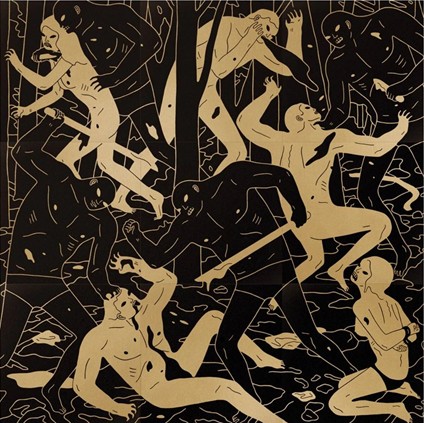
The Soviet Union and Jewish Bolshevism have passed away, but the Jewish nation—loaded with its grim memories and expectations—is stronger than ever. It has moved on to new venues and tactics, but the deep hatred still burns. We can see it in action almost everywhere in the modern world, at a time when the West is poised on the brink of dissolution. What will the next quarter century look like? If the Jews gain the power they dream of, it will look like this—

Rothschild-commissioned painting by Cleon Peterson

Fortunately, the West is awakening rapidly, largely because of the Jews themselves, who, with typical insolence, have exhibited their inner essence for the whole world to see. Their arrogance is stunning, their malice breathtaking, their power brazen. Events are clearly coming to a head. If God permits justice to triumph, the Jews will sustain a conclusive defeat in the coming war. The alternative is too terrible to contemplate. “If . . . the Jew conquers the nations of this world, his crown will become the funeral wreath of humanity . . .”[67]


[1] Sappers are combat engineers, building roads, bridges and fortifications, laying and clearing minefields, handling demolitions, etc.

[2] The sources on Vikhman are scant and can be contradictory. I’ve relied on the following:

a) Alexandra Polyak, Михаил Вихман — палач Одесской ЧК и жертва коммунистического режима (Mikhail Vikhman, Executioner of the Odessa Cheka and Victim of the Communist Regime) Jan 2020. https://zaodessu.com.ua/articles/mihail-vihman-palach-odesskoj-chk-i-zhertva-kommunisticheskogo-rezhima/

b) D. Sokolov, Чекист Вихман в необычной для себя роли (Chekist Vikhman in an Unusual Role) https://d-v-sokolov.livejournal.com/2189489.html?es=1

c) Tumshis M. and V. Zolotaryov. ЕВРЕИ В НКВД СССР 1936-1938 (Jews in the NKVD of the USSR, 1936-1938). 2nd edition, revised and expanded. Moscow: Dmitry Pozharsky University, 2017. Pages 192-94.

d) Abramov, Vadim. Евреи в КГБ (Jews in the KGB). Moscow: Izdatel Bystrov, 2006. Pages 142-43.

Abramov, Tumshis, and Polyak identify Vikhman as a Jew.

[3] The Red Terror in Russia (Westport CT: Hyperion Press, 1976), 203. Melgunov was a Russian writer and politician who opposed Bolshevik rule, was imprisoned and sentenced to death, then reprieved, whereupon he went abroad. He gathered information from Russian exiles (often witnesses to these events) in the voluminous Russian expatriate press in Western Europe and published it in 1924.

[4] George Leggett, The Cheka: Lenin’s Political Police (New York, 1981), 200, 198.

[5] This information appears in Polyak.

[6] Melgunov, Red Terror in Russia, 213.

[7] Two characteristics of early Communist rule in Russia were the rapid ascension of mediocre Jews to positions of power, and the constant shifting of personnel to different jobs and regions.

[8] Tumshis and Zolotaryov, Jews in the NKVD, 193.

[9] The sources give no details that might illustrate the story behind these events.

[10] Lynne Viola, Stalinist Perpetrators on Trial (New York: 2017), 27.

[11] Shimon Briman, “Stalin’s terror: Jewish victims and executioners,” at Forum Daily, https://www.forumdaily.com/en/politicheskie-repressii-evrei-zhertvy-i-palachi/

[12] Sokolov, “Chekist Vikhman in an Unusual Role.”

[13] It is amazing the permutations that the Jewish messianic ideal can go through when its one true object is overlooked.

[14] Sokolov.

[15] Cleared according to Soviet ideas of justice, of course. I doubt many of his own victims were rehabilitated.

[16] Kaganovich lived out his life alone in a sixth-floor apartment in the Frunze Embankment in Moscow. Like Molotov, his pension was a meager 120 rubles a month. His flat was described as “poor,” and he had no car or dacha. Certainly, Vikhman fared no better than that. From E. A. Rees, Iron Lazar: A Political Biography of Lazar Kaganovich (Anthem Press, 2013), 268.

[17] I found no hint of a wife or children for Vikhman.

[18] The sources I was able to access on Plastinina-Maizel were even scantier than those for Vikhman.

[19] Vladimir later worked for the NKVD, served in World War Two, and became an academic at Voronezh State University. He died in 1973. From Andrei Zhukov at Memorial: https://nkvd.memo.ru/index.php/Пластинин,_Владимир_Никандрович

[20] Natalia Golysheva, “Red Terror in the North “Did the civil war never end?” Dec 2017

https://www.bbc.com/russian/resources/idt-sh/red_terror_russian

[21] Orlando Figes, A People’s Tragedy: The Russian Revolution 1891-1924 (New York: Penguin Books, 1998), 647.

[22] Melgunov, 200.

[23] Rokiskis Rabinovičius, “Revekka Kedrova-Plastinina-Maizel” at his blog: http://rokiskis.popo.lt/2011/06/06/revekka-kedrova-plastinina-maizel/

[24] Leggett, The Cheka, 270.

[25] Leggett, 270.

[26] Alexander Solzhenitsyn, Zwei Hundert Jahren zusammen: Der Juden in der Sowjetunion (München, 2003), 141.

[27] Natalia Golysheva, “Red Terror in the North.”

[28] Leggett, The Cheka, 431 note 13.

[29] Melgunov, 199.

[30] Melgunov, 200.

[31] D. Sokolov, Михаил Кедров и Ревекка Пластинина (“Mikhail Kedrov and Rebeka Plastinina”) Sept 8, 2009 https://d-v-sokolov.livejournal.com/9061.html

[32] Donald Rayfield, Stalin and His Hangmen: The Tyrant and Those Who Killed for Him (New York: Random House, 2004), 84.

[33] Rayfield, 358.

[34] Solzhenitsyn, 141.

[35] It is also the site of Solzhenitsyn’s grave.

[36] Berg is a name common among Germans as well as Jews; Tumshis and Zhukov identify him as Jewish. Another note: two of our three subjects were born outside the Pale of Settlement, the vast area in which the Jews lamented they were “imprisoned.” Many Jews in Imperial Russia had the privilege of living outside it, and many more did so illegally.

[37] Tumshis and Zolotaryov, Jews in the NKVD, 125. The NKVD was the People’s Commissariat for Internal Affairs, equivalent to an Interior Ministry. It was established in July 1934 and absorbed the OGPU (the “Joint State Political Directorate”), the former Cheka, which became the GUGB (the “Main Directorate for State Security”). A Jew, Yakov Agranov, headed the GUGB, and another Jew, Genrikh Yagoda, headed the NKVD. Technically the OGPU/GUGB and the NKVD were separate but the terms are often used interchangeably.

[38] Alexander Vatlin, Agents of Terror: Ordinary Men and Extraordinary Violence in Stalin’s

Secret Police. (Edited & translated by Seth Bernstein. University of Wisconsin Press, 2016), 12-13.

[39] Vatlin, Agents of Terror, 14.

[40] Tumshis and Zolotaryov, 125.

[41] Vatlin, 15.

[42] By Robert Conquest, in his magisterial work, The Great Terror. This phase of Stalinist rule, 1937-38, came after an exhaustive succession of Communist massacres and upheavals: the Red Terror under Lenin, the destruction of the Church and murder of the clergy, forced collectivization of the farmers, breakneck industrialization with its dislocations, the vast expansion of the gulag and press-ganging its inmates into vast economic projects, and the Holodomor, to name just the highest peaks in the mountain range of Soviet atrocities.

[43] For a discussion of Stalin’s motives for the purge, see Vatlin, xi-xii and xxvi. Stalin wanted to eliminate a potential fifth column in case of war, which was considered imminent, clear out the old Bolshevik bureaucracy in favor of young Stalinist cadres, and cow the populace afresh to instill obedience.

[44] Seth Bernstein, Introduction, in Vatlin, Agents of Terror, xxiii. For the table of quotas for each region, see Karl Schlögel, Moscow 1937 (Polity Press, 2013), 495-96. It should not escape notice that a quota system for executions is the height of barbarity.

[45] Rayfield, 308.

[46] Unlike certain other genocides, a high percentage of the remains of the victims of the Great Terror have been found and identified. For information on burial sites, see “Map of Memory” at https://en.mapofmemory.org/

[47] There were several other major execution/burial grounds in the Moscow area: Donskoye Cemetery had a crematorium and thousands of executed prisoners were cremated there and buried in mass graves. Kommunarka was the site of over 6000 executions, mainly of high-ranking Bolsheviks.

[48] Vatlin, xiv.

[49] Vatlin, 31.

[50] Karl Schlögel, Moscow 1937, 482.

[51] Nérard François-Xavier, “The Butovo Shooting Range,” https://www.sciencespo.fr/mass-violence-war-massacre-resistance/fr/document/butovo-shooting-range

[52] Schlögel, 482-84.

[53] After early August, Berg was no longer involved.

[54] Schlögel, 472, 474.

[55] Schlögel, 482.

[56] 973 people were shot for being Christian Orthodox believers, including hundreds of priests, bishops, and abbots. Forty-nine priests were shot on one day, 10 December 1937. For comparison, two rabbis were killed. Schlögel, 487.

[57] At least five historians have stated that Berg used gas vans: Yevgenia Albats in The State Within a State: The KGB and its Hold on Russia—Past, Present, and Future (1994), Timothy Colton in Moscow: Governing the Socialist Metropolis (1998), Catherine Merridale in Night of Stone: Death and Memory in Twentieth Century Russia (2002), Alexander Solzhenitsyn in 200 Years Together (2002), and Robert Gellately in Lenin, Stalin, and Hitler: The Age of Social Catastrophe (2007). Merridale gives Colton as her source, but Colton quotes no source. Albats, Gellately, and Solzhenitsyn cite a 1990 Russian article by Evgeni Zhirnov, who read the original investigative record of Berg (when he was arrested by the NKVD) and provided details. A relevant portion of that article appears here, in a later article by Zhirnov: https://www.kommersant.ru/doc/1265324

In addition, at least six high-ranking Soviet secret police officers, from Berg’s time up to the 1990s, testified to the existence of Berg’s gas van. Karl Radl reviews the statements of five of them in “Stalin’s Willing Executioners: The Jewish Origin of Stalin’s Gas Vans,” https://karlradl14.substack.com/p/stalins-willing-executioners-the?utm_source=publication-search

[58] Tumshis and Zolotaryov, 126, citing the testimony of E. Zhirnov, who details the investigative record of Berg and testimony from contemporary NKVD men.

[59] Schlögel, 476.

[60] Karl Radl, “Stalin’s Willing Executioners.”

[61] Radl.

[62] A far-fetched idea: hydraulic dump-truck style vans, which could back up and dump the dead into the ditch automatically. There is no hint of such a truck in the sources, which all mention a vehicle disguised as a bread van. A dump truck would pose much greater technical problems to build than the described gas vans, and dump trucks were not widespread in Russia in 1937.

[63] Vatlin, 157-58, note 156.

[64] Vatlin, 67 and 157-58, note 156.

[65] For three decades I have collected data on Jewish Communists, and can testify that the number of Jews who held positions in the middle ranks of the Soviet State is immense. These were the people who governed the country on a day-to-day basis. The number of Jews in academia was equally large.

[66] Kevin MacDonald discusses this point cogently in the third chapter of The Culture of Critique.

[67] Adolf Hitler, Mein Kampf (Reynal and Hitchcock, 1941), 84.

Culture of Critique Expanded and Updated

The Culture of Critique: An Evolutionary Analysis of Jewish Involvement in Twentieth-Century Intellectual and Political Movements, 3rd edition
Kevin MacDonald
Antelope Hill Publishing, 2025 (recently banned on Amazon)
666+c pages, $39.89 paperback

In the later half of the twentieth century, the United States of America—hitherto the world’s most powerful and prosperous country—opened its borders to hostile foreign multitudes, lost its will to enforce civilized standards of behavior upon blacks and other “minority groups,” began enforcing novel “antidiscrimination” laws in a manner clearly discriminatory against its own founding European stock, repurposed its institutions of higher education for the inculcation of radical politics and maladaptive behavior upon the young, and submitted its foreign and military policy to the interests of a belligerent little country half way around the world. In the process, we destroyed our inherited republican institutions, wasted vast amounts of blood and treasure, and left a trail of blighted lives in a country which had formerly taken for granted that each rising generation would be better off than the last. One-quarter of the way into the twenty-first century, the continued existence of anything deserving the name “United States of America” would seem very much in doubt. What on earth happened?

While there is plenty of blame to go around, including some that rightfully belongs with America’s own founding stock, the full story cannot be honestly told without paying considerable attention to the rise of Eastern European Jews to elite status.

This population is characterized by a number of positive traits, including high verbal intelligence and an overall average IQ of 111. They typically have stable marriages, practice high-investment parenting, and enjoy high levels of social trust within their own community. In their European homelands they lived for many centuries in shtetls, closed townships composed exclusively of Jews, carefully maintaining social and (especially) genetic separation from the surrounding, usually Slavic population. This was in accord with an ancient Jewish custom going back at least to the Biblical Book of Numbers, in which the prophet Balaam tells the children of Israel “you shall be a people that shall dwell alone.”

If one wants to preserve social and genetic separation, few methods are more reliable than the cultivation of negative affect toward outsiders. This is what was done in such traditional, religiously organized Jewish communities: gentiles were considered treif, or ritually unclean, and Jewish children were encouraged to think of them as violent drunkards best avoided apart from occasional self-interested economic transactions.

Following the enlightenment and the French Revolution, Jews were “emancipated” from previous legal disabilities, but ancient habits of mind are not changed as easily as laws. One consequence was the attraction of many newly-emancipated Jews to radical politics. Radicals by definition believe there is something fundamentally wrong and unjust about the societies in which they live, which disposes them to form small, tightly-knit groups of like-minded comrades united in opposition to an outside world conceived as both hostile and morally inferior. In other words, radicalism fosters a social and mental environment similar to a shtetl. It is not really such a big step as first appears from rejecting a society because its members are ritually unclean and putative idolaters to rejecting it for being exploitative, capitalist, racist, and anti-Semitic. Jews themselves have often been conscious of this congruence between radicalism and traditional Jewish life: the late American neoconservative David Horowitz, e.g., wrote in his memoir Radical Son: “What my parents had done in joining the Communist Party and moving to Sunnyside was to return to the ghetto.”

By the end of the nineteenth century, the Eastern European Jewish population had grown beyond the capacity of traditional forms of Jewish economic activity to support it, resulting in widespread and sometimes dire poverty. Many turned to fanatical messianic movements of a religious or political character. Then, beginning in the 1890s, an increasing number of these impoverished and disaffected Jews started migrating to the United States. Contrary to a widespread legend, the great majority were not “fleeing pogroms”—they were looking for economic opportunity.

Even so, many Jews brought their radicalism and hostility to gentile society with them to their new homeland, and these persisted even in the absence of legal restrictions upon them and long after they had overcome their initial poverty. Jewish sociologist Seymour Martin Lipset has written colorfully of the countless wealthy and successful American Jewish “families which around the breakfast table, day after day, in Scarsdale, Newton, Great Neck, and Beverly Hills have discussed what an awful, corrupt, immoral, undemocratic, racist society the United States is.”

Over the course of the twentieth century, these smart, ambitious, and ethnically well-networked Eastern European Jews rose to elite status in the academy, the communications media, law, business, and politics. By the 1960s, they had succeeded in replacing the old Protestant ruling class with an alliance between themselves, other “minorities” with grudges against the American majority, and a sizeable dose of loyalty-free White sociopaths on the make. Unlike the old elite it replaced, the new rulers were at best suspicious of—and often actually hostile toward—the people they came to govern, and we have already enumerated some of the most disastrous consequences of their rule in our opening paragraph.

Kevin MacDonald’s The Culture of Critique describes several influential movements created and promoted by Jews during the twentieth century in the course of their rise. It is the best book you will find on the Jewish role in America’s decline. First published by Praeger in 1998, a second paperback edition augmented with a new Preface appeared in 2002. Now, twenty-three years later, he has brought out a third edition of the work through Antelope Hill Publishing. In addition to expanding the earlier editions’ accounts of Boasian Anthropology, Freudian Psychoanalysis, various Marxist or quasi-Marxist forms of radicalism, and Jewish immigration activism, he has added an entirely new chapter on neoconservatism. As he explains:

I argue that these movements are attempts to alter Western societies in a manner that would neutralize or end anti-Semitism and enhance the prospects for Jewish group continuity and upward mobility. At a theoretical level, these movements are viewed as the outcome of conflicts of interest between Jews and non-Jews in the construction of culture and in various public policy issues.

This edition is fully 40 percent longer than its predecessor, yet a detailed table of contents makes it easier for readers to navigate.

*   *   *

We shall have a detailed look at the chapter on “The Boasian School of Anthropology and the Decline of Darwinism in the Social Sciences,” since it is both representative of the work as a whole and significantly augmented over the version in previous editions.

Anthropology was still a relatively new discipline in America at the beginning of the Twentieth Century, but it enjoyed a promising theoretical foundation in Darwinian natural selection and the rapidly developing science of genetics. Darwinists and Mendelians, however, were opposed by Lamarckians who believed that acquired characteristics could be inherited: e.g., that if a man spent every day practicing the piano and then fathered a son, his son might have an inborn advantage in learning the piano. This idea was scientifically discredited by the 1930s, but long remained popular among Jewish intellectuals for nonscientific reasons, as a writer cited by MacDonald testifies:

Lenz cites an “extremely characteristic” statement of a Jewish intellectual: “The denial of the racial importance of acquired characters favours race hatred.” The obvious interpretation of such sentiments is that Jewish intellectuals opposed the theory of natural selection because of its negative political implications.

In one famous case a Jewish researcher committed suicide when the fraudulent nature of his study in support of Lamarckism was exposed.

Franz Boas was among the Jewish intellectuals to cling to Lamarckism long after its discrediting. He had what Derek Freeman describes as an “obscurantist antipathy to genetics” that extended even to opposing genetic research. This attitude was bound up with what Carl Degler called his “life-long assault on the idea that race was a primary source of the differences to be found in the mental or social capabilities of human groups.” He did not arrive at this position as a result of disinterested scientific inquiry. Rather, as Degler explains, he thought racial explanations “undesirable for society” and had “a persistent interest in pressing his social values upon the profession and the public.”

Boas appeared to wear his Jewishness lightly; MacDonald remarks that he “sought to be identified foremost as a German and as little as possible as a Jew.”  Anthropologist and historian Leonard B. Glick wrote:

He did not acknowledge a specifically Jewish cultural or ethnic identity. . . . To the extent that Jews were possessed of a culture, it was . . . strictly a matter of religious adherence. . . . He was determined . . . not to be classified as a member of any group.

Yet such surface appearances can be misleading. From a very early age, Boas was deeply concerned with anti-Semitism and felt alienated from the Germany of his time. These appear to have been the motives for his emigration to America. He also maintained close associations with the Jewish activist community in his new homeland. Especially in his early years at Columbia, most of his students were Jewish, and of the nine whom Leslie White singles out as his most important protegés, six were Jews. According to David S. Koffman: “these Jews tended to marry other Jews, be buried in Jewish cemeteries, and socialize with fellow Jews, all core features of Jewish ethnicity, though they conceived of themselves as agents of science and enlightenment, not Jewish activists.”

Boas was also dependent on Jewish patronage. In the 1930s, for instance, he worked to set up a research program to “attack the racial craze” (as he put it). The resulting Council of Research of the Social Sciences was, as Elazar Barkan acknowledges in The Retreat of Scientific Racism (1993) “largely a façade for the work of Boas and his students.” Financial support was principally Jewish, since others declined solicitations. Yet Boas was aware of the desirability of disguising Jewish motivations and involvement publicly, writing to Felix Warburg: “it seemed important to show the general applicability of the results to all races both from the scientific point of view and in order to avoid the impression that this is a purely Jewish undertaking.”

One of Boas’s Jewish students remarked that young Jews of her generation felt they had only three choices in life—go live in Paris, hawk communist newspapers on street corners, or study anthropology at Columbia. The latter option was clearly perceived as a distinctively “Jewish” thing to do. Why is this?

Many Jews have supplemented Jewish advocacy with activism on behalf of “pluralism” and other ethnic “minority groups.” Boas himself, for example, maintained close connections with the NAACP and the Urban League. David S. Lewis has described such activities as an effort to “fight anti-Semitism by remote control.” And anthropology itself as conceived by Boas was not merely a scholarly discipline but an extension of these same concerns.

Much of the actual fieldwork conducted by Boas and his students focused on the American Indian. In a passage new to this edition, MacDonald quotes from David S. Koffman’s The Jews’ Indian (2019) on the Jewish motivations that frequently lay behind their work:

Jewishness shaped the profession’s engagement with its practical object of study, the American Indian. Jews’ efforts—presented as the efforts of science itself—to salvage, collect, and preserve disappearing American Indian culture was a form of ventriloquism. [Yet they] assumed their own Jewishness would remain an invisible and insignificant force in shaping the ideas they would use to shape ideas about others.

Boasian anthropologists did not draw any sharp distinction between their professional and their political concerns:

Political action formed a part of many anthropologists’ sense of the intellectual mission of the field. Their findings, and the framing of distinct cultures, each worthy of careful attention in its own right, mattered to social existence in the United States. Their scholarship on Native American cultures developed alongside their personal and political work on behalf of Jewish causes.

Koffman highlights the case of Boas’s protegé Edward Sapir:

Sapir’s Jewish background continuously influenced and intersected with his scholarship on American Indians. Sapir’s biography shows a fascinating parallel preoccupation with both Native and Jewish social issues. These tracks run side by side, concerned as both were with parallel questions about ethnic survival, adaptability, dignity, cultural autonomy, and ethnicity.

Some Jews from Boas’s circle of influence even went to work for the US government’s Bureau of Indian Affairs, where they “consistently linked Indian uplift with an articulation of minority rights and cultural pluralism.” In this way, writes Koffman, “Jewish enlightened self-interest impacted the course of American Indian life in the middle of the twentieth century.”

Boas had a number of gentile students as well, of course, especially in the later part of his career. Yet some observers have commented upon differences in the thinking and motivations of his Jewish and gentile followers. While the rejection of racial explanations was a moral crusade for many of the Jews, as it was for Boas himself, his gentile students were more inclined to view the matter simply as a theoretical issue. Alfred Kroeber, for example, once impatiently remarked that “our business is to promote anthropology rather than to wage battles on behalf of tolerance.”

Two of Boas’s best known gentile disciples were Margeret Meade and Ruth Benedict, and it may not be an accident that both of these women were lesbians. As Sarich and Miele write in Race: The Reality of Human Difference (2004): “Their sexual preferences are relevant because developing a critique of traditional American values was as much a part of the Boasian program in anthropology as was their attacks on eugenics and nativism.” More generally, they note, “the Boasians felt deeply estranged from American society and the male WASP elites they were displacing in anthropology.” Jewish or not, they saw themselves as a morally superior ingroup engaged in a struggle against a numerically superior outgroup. In this respect, they formed a historical link between the radical cells and shtetls of the old world and the hostile elite ruling America today.

Boas posed as a skeptic and champion of methodological rigor when confronted with theories of cultural evolution or genetic influence on human differences, but as the evolutionary anthropologist Leslie White pointed out, the burden of proof rested lightly on Boas’s own shoulders: his “historical reconstructions are inferences, guesses, and unsupported assertions [ranging] from the possible to the preposterous. Almost none is verifiable.”

MacDonald writes:

An important technique of the Boasian school was to cast doubt on general theories of human evolution . . . by emphasizing the vast diversity and chaotic minutiae of human behavior, as well as the relativism of standards of evaluation. The Boasians argued that general theories of cultural evolution must await a detailed cataloguing of cultural diversity, but in fact no general theories emerged from this body of research in the ensuing half-century of its dominance of the profession. Leslie White, an evolutionary anthropologist whose professional opportunities were limited because of his theoretical orientation, noted that because of its rejection of fundamental scientific activities such as generalization and classification, Boasian anthropology should be classed more as an anti-theory than a theory of human culture.

Boas brooked no dissent from his followers:

Individuals who disagreed with the leader, such as Clark Wissler, were simply excluded from the movement. Wissler was a member of the Galton society, which promoted eugenics, and accepted the theory that there is a gradation of cultures from lowest to highest, with Western civilization at the top.

Among Boas’s most egregious sins against the scientific spirit was a study he produced at the request of the US Immigration Commission called into being by President Theodore Roosevelt in 1907. This was eventually published as Changes in Bodily Form of Descendants of Immigrants. It maintained the extremely implausible thesis that the skulls of the children of immigrants to the US differed significantly from those of their parents—in spite of the influence of heredity, and due entirely to growing up in America. The paper came to be cited countless times by writers of textbooks and anyone who wished to deprecate the importance of heredity or stress that of environment.

Ninety years later, anthropologists Corey S. Sparks and Richard L. Janz reanalyzed Boas’s original data. While they stop short of accusing him of deliberate fraud, they did find that his data fail to support his conclusions. In MacDonald’s words:

Boas made inflated claims about the results: very minor changes in cranial index were described as changes of “type” so that Boas was claiming that within one generation immigrants developed the long-headed type characteristic of northwest Europeans. Several modern studies show that cranial shape is under strong genetic influence. [Sparks and Janz’s] reanalysis of Boas’s data indicated that no more than one percent of the variation between groups could be ascribed to the environmental effects of immigration.

In short, Boas’s study was not disinterested science but propaganda in a political battle over immigration. At a minimum, he was guilty of sloppy work inspired by wishful thinking.

Boas’s actual anthropological studies, such as those on the Kwakiutl Indians of Vancouver Island, contributed little to human knowledge. But this was not where his talent lay: his true achievement was in the realm of academic politics. He built a movement that served as an extension of himself long after his death, capturing and jealously controlling anthropological institutions and publications, and making it difficult for those who dissented from his scientifically groundless views to achieve professional success. As MacDonald writes:

By 1915 his followers controlled the American Anthropological Association and held a two-thirds majority on its executive board. In 1919 Boas could state that “most of the anthropological work done at the present time in the United States” was done by his students at Columbia. By 1926 every major department of anthropology was headed by Boas’s students, the majority of whom were Jewish.

Boas strenuously promoted the work of his disciples, but rarely cited works of people outside his group except to disparage them. A section new to this third edition explains how his influential student Melville Herskovits also blocked from publication and research funding those not indebted to him or not supporting his positions. Margaret Meade’s fairy tale of a sexually liberated Samoa, on the other hand, became the bestselling anthropological work of all time due almost entirely to zealous promotion by her fellow Boasians at prominent American universities.

Among the more obvious biases of anthropological work carried out by Boas’s disciples was a nearly complete ignoring of warfare and violence among the peoples they studied. Their ethnographic studies, such as Ruth Benedict’s account of the Zuni Indians in Patterns of Culture (1934), promoted romantic primitivism as a means of critiquing modern Western civilization. Works like Primitive War (1949) by Harry Holbert Turney-High, which documented the universality and savagery of war, were simply ignored. As MacDonald explains:

The behavior of primitive peoples was bowdlerized while the behavior of European peoples was not only excoriated as uniquely evil but also as responsible for all extant examples of warfare among primitive peoples. From this perspective, it is only the fundamental inadequacy of European culture that prevents an idyllic world free from between-group conflict.

Leslie White wrote that “Boas has all the attributes of the head of a cult, a revered charismatic teacher and master, literally worshiped by disciples whose permanent loyalty has been effectively established.” MacDonald describes his position as closer to that of a Hasidic Rebbe among his followers than to the leader of a genuinely scientific research program—the results of which can never be known in advance.

Due to the success of Boas’s mostly Jewish disciples in gaining control of institutional anthropology, by the middle of the twentieth century it became commonplace for well-read American laymen to refer to human differences in cultural terms. Western Civilization was merely different from, not better than, the ways of headhunters and cannibals. A vague impression was successfully propagated to the public that “science had proven” the equality of the races; few indeed understood that the “proof” consisted in the scientists who thought otherwise having been driven into unemployment. Objective research into race and racial differences largely ceased, and an intellectual atmosphere was created in which many imagined that the opening of America’s borders to the world would make little practical difference.

*   *   *

Space precludes us from looking in similar detail at all the book’s chapters, but we must give the reader an idea of the material new to this third edition. Some of the most important is found in an 85-page Preface, and concerns the rise of Jews in the American academic world. Boasian anthropology may be seen in hindsight as an early episode in this rise, but Boas died in 1942 and our main story here concerns the postwar period. As MacDonald writes:

The transformation of the faculty was well under way in the 1950s and by the late 1960s was largely complete. It was during this period that the image of the radical leftist professor replaced the image of the ivory tower professor—the unworldly person at home with his books, pipe, and tweed jacket, totally immersed in discussions of Renaissance poetry.

The old academic elite had been better educated than the public at large, of course, but saw themselves as trustees of the same Christian European civilization, and did not desire radical changes to the society in which they lived. Today’s representative professor “almost instinctively loathes the traditional institutions of European-American culture: its religion, customs, manners, and sexual attitudes.”

This matters, because the academy is a crucial locus of moral and intellectual authority:

Contemporary views on issues like race, gender, immigration are manufactured in the academy (especially elite universities), disseminated throughout the media and the lower levels of the educational system, and ultimately consumed by the educated and not-so-educated public. Newspaper articles and television programs on these issues routinely include quotes from academic experts.

By 1968 Jews, who made up less than three percent of the US population, constituted 20 percent of the faculty of elite American colleges and universities, with overrepresentation most pronounced among younger faculty. Studies found Jewish faculty well to the left of other academics, more supportive of student radicals, and more likely to approve relaxing standards in order to recruit non-White faculty and students. By 1974, a study of articles published in the top twenty academic journals found that Jews made up 56 percent of the social scientists and 61 percent of the humanities scholars.

A possibly extreme but telling example of left-wing bias is Jonathan Haidt’s informal 2011 survey at a convention of social psychologists, reputedly the most left-leaning area of academic psychology. Haidt found only three participants out of 1000 willing publicly to label themselves “conservative.” He acknowledges that this discipline has evolved into a “tribal moral community” that shuns and ostracizes political conservatives, with the result that research conflicting with its core political attitudes is either not performed or is likely to be excluded from peer-reviewed journals.

MacDonald devotes considerable attention to a widely discussed 2012 paper “Why Are Professors Liberal?” by Neil Gross and Ethan Fosse. The authors argue that academics are more liberal than the population at large for three reasons. First and most importantly, due to the higher proportion of academics with advanced educational credentials, an effect they consider independent of the role IQ plays in helping obtain such credentials. MacDonald remarks that this liberal shift may be due either to socialization and conditioning in the graduate school environment or to perceived self-interest in adopting liberal views and/or identifying with an officially sanctioned victim group.

Second, Gross and Fosse believe liberalism results from academic’s greater tolerance for controversial ideas. MacDonald is dismissive of this proposal, writing that in his observation such tolerance does not exist outside the professoriate’s self-conception.

Third, they find that liberalism corelates with the larger fraction of the religiously unaffiliated in the academy. MacDonald points out that many of the religiously unaffiliated are probably Jews, and remarks that the study would have been more informative if race and Jewish ethnic background had been included as variables alongside religious affiliation.

Gross and Fosse acknowledge that their data can be interpreted in a number of ways, but their own argument is that

the liberalism of professors . . . is a function . . . of the systematic sorting of young adults who are already liberally—or conservatively—inclined into and out of the academic profession, respectively. We argue that the professoriate, along with a number of other knowledge work fields, has been “politically typed” as appropriate for and welcoming of people with broadly liberal political sensibilities, and as inappropriate for conservatives.

In other words, academic liberalism is the product of a natural sorting process similar to that which has resulted in a career such as nursing being typecast as appropriate for women. It should be emphasized, however, that much of this sorting is done by the academy itself, not by prospective academics: many professors unhesitatingly acknowledge their willingness to discriminate against conservative job candidates.

The Gross and Fosse study also fails to explore the way the meaning of being liberal or left wing has changed over the years. The academy was already considered left-leaning when the White Protestant ascendency was still intact. But in those days being liberal meant supporting labor unions and other institutions aimed at improving the lot of the (predominantly White) working class.

The New Left abandoned the White working class because it was insufficiently radical, desiring incremental improvements of its own situation rather than communist revolution. The large Jewish component of the New Left, typified by the Frankfurt School, was also shaken by Hitler’s success in gaining the support of German labor. So they abandoned orthodox Marxism in a search for aggrieved groups more likely to demand radical change. These they found in ethnic and sexual minority groups such as Blacks, feminists, and homosexuals. They also advocated for massive non-White immigration to dilute the power of the White majority, leave Jews less conspicuous, and recruit new ethnic groups easily persuadable to cultivate grievances against the dwindling White majority.

Today’s academy is a product of the New Left of the 1960s. While it is more “liberal” (in the American sense) than the general public on economic issues, what makes it truly distinctive is its attitudes on social issues: sexual liberation (including homosexuality and abortion), moral relativism, religion, church-state separation, the replacement of patriotism by cosmopolitan ideals, and the whole range of what has been called “expressive individualism.”

Sorting can explain how an existing ideological hegemony within the academy maintains itself, but not how it could have arisen in the first place. To account for the rise of today’s academic left, Gross and Fosse propose a conflict theory of successful intellectual movements. In particular, they cite sociological research indicating that such movements have three key ingredients: 1) they originate with people with high-status positions having complaints against the current environment, resulting in conflict with the status quo; 2) these intellectuals form cohesive and cooperative networks; and 3) this network has access to prestigious institutions and publication outlets.

This fits Kevin MacDonald’s theory of Jewish intellectual movements to a T. Indeed, since the academic left is so heavily Jewish, we are in part dealing with the same subject matter. Even Gross and Fosse show some awareness of this, as MacDonald writes:

Gross and Fosse are at least somewhat cognizant of the importance of Jewish influence. They deem it relevant to point out that Jews entered the academic world in large numbers after World War II and became overrepresented among professors, especially in elite academic departments in the social sciences.

So let us apply the Gross and Fosse three-part scheme to radical Jewish academics. First, Jews do indeed have a complaint against the environment in which they live, or rather two related complaints: the long history of anti-Semitism and the predominance of White Christian culture.

As MacDonald notes, “it is common for Jews to hate all manifestations of Christianity.” In his book Why Are Jews Liberals? (2009), Norman Podhoretz formulates this Jewish complaint as follows:

[The Jews] emerged from the Middle Ages knowing for a certainty that—individual exceptions duly noted—the worst enemy they had in the world was Christianity: the churches in which it was embodied—whether Roman Catholic or Russian Orthodox or Protestant—and the people who prayed in and were shaped by them.

Anti-Jewish attitudes, however, by no means depend on Christian belief. In the nineteenth century Jews began to be criticized as an economically successful alien race intent on subverting national cultures. Accordingly, the complaint of many Jews today is no longer merely Christianity but the entire civilization created by Europeans in both its religious and its secular aspects.

From this point it is a very short step to locating the source of anti-Semitism in the nature of European-descended people themselves. The Frankfurt School took this step, and the insurgent Jewish academic left followed them. MacDonald writes:

This explicit or implicit sense that Europeans themselves are the problem is the crux of the Jewish complaint. [It] has resonated powerfully among Jewish intellectuals. Hostility to the people and culture of the West was characteristic of all the Jewish intellectual movements of the left that came to be ensconced in the academic world of the United States and other Western societies.

The second item in Gross and Fosse’s list of the traits of successful intellectual movements is that their partisans form cohesive, cooperative networks. All the Jewish movements studied by Kevin MacDonald have done this, as he has been at pains to emphasize. Group strategies outcompete individualist strategies in the intellectual and academic world just as they do in politics and the broader society. It does not matter that Western science is an individualistic enterprise in which people can defect from any group consensus easily in response to new discoveries or more plausible theories. The Jewish intellectual movements studied by MacDonald are not scientific research programs at all, but “hermeneutic exercise[s] in which any and all events can be interpreted within the context of the theory.” These authoritarian movements thus represent a corruption of the Western scientific ideal, yet that does nothing to prevent them from being effective in the context of academic politics.

Finally, Gross and Fosse note that the most successful intellectual movements are those with access to prestigious institutions and publication outlets. This has clearly been true of the Jewish movements Kevin MacDonald has studied, as he himself notes:

The New York Intellectuals developed ties with elite universities, particularly Harvard, Columbia, the University of Chicago, and the University of California-Berkeley, while psychoanalysis and Boasian anthropology became entrenched throughout academia. The Frankfurt School intellectuals were associated with Columbia and the University of California-Berkeley, and their intellectual descendants are dispersed through the academic world. The neoconservatives are mainly associated with the University of Chicago and Johns Hopkins University, and they were able to get their material published by the academic presses at these universities as well as Cornell University.

The academic world is a top-down system in which the highest levels are rigorously policed to ensure that dissenting ideas cannot benefit from institutional prestige. The panic produced by occasional leaks in the system, as when the University of Chicago’s John Mearsheimer teamed up with Harvard’s Stephen Walt to offer some cautious criticisms of the Israel lobby, demonstrate the importance of obtaining and monopolizing academic prestige.

Moreover, once an institution has been captured by the partisans of a particular intellectual perspective, informal scholarly networks become de facto gatekeeping mechanisms, creating enormous inertia. As MacDonald writes: “there is tremendous psychological pressure to adopt the fundamental assumptions at the center of the power hierarchy of the discipline. It is not surprising that people [are] attracted to these movements because of the prestige associated with them.”

What MacDonald calls the final step in the transformation of the university into a bastion of the anti-White left is the creation since the 1970s of whole programs of study revolving around aggrieved groups:

My former university is typical of academia generally in having departments or programs in American Indian Studies, Africana Studies (formerly Black Studies), American Studies (whose subject matter emphasizes “How do diverse groups within the Americas imagine their identities and their relation to the United States?”), Asian and Asian-American Studies, Chicano and Latino Studies, Jewish Studies, and Women’s, Gender, and Sexuality Studies. All of these departments and programs are politically committed to advancing their special grievances against Whites and their culture.

Although it is difficult to specify the exact linkage, the academic triumph of Jewish radicals was followed in short order by the establishment of these other pillars of the cultural left within the university.

As MacDonald notes, women make up an important component of the grievance coalition in academia, and not only in the area of “Women’s Studies.” They make up around 60 percent of PhDs and 80 percent of bachelor’s degrees in ethnic, gender and cultural studies.

Overall, compared to men, women are more in favor of leftist programs to end free speech and censor speech they disagree with. They are more inclined toward activism, and less inclined toward dispassionate inquiry; they are more likely to agree that hate speech is violence, that it’s acceptable to shout down a speaker, that controversial scientific findings should be censored, and that it should be illegal to say offensive things about minorities.

Such differences are likely due to women’s evolutionary selection for empathy and fear. No amount of bravado about “smashing the patriarchy” can conceal women’s tendency to timid conformism, and that is precisely what leads to success in academic grievance studies.

Although MacDonald does not consider feminism a fundamentally Jewish movement, many Jewish women have unquestionably played a prominent role within it, and it is marked by the same disregard of biological realities we observed in Boasian anthropology. The new Preface accordingly offers some brief remarks on Jewish lesbian and academic gender theorist Judith Butler. One of her leading ideas is that gender identity is “performative,” and unconstrained by genetic or hormonal influences. This leaves us free to rebel against the patriarchy by engaging in “subversive performances of various kinds.” Obviously, the contemporary transgender movement would count as an example of such a performance.

Jews have been greatly overrepresented in the student bodies of elite American universities for several decades, to a degree that their intelligence and academic qualifications cannot begin to account for:

Any sign that the enrollment of Jews at elite universities is less than about 20 percent is seen as indicative of anti-Semitism. A 2009 article in The Daily Princetonian cited data from Hillel [a Jewish campus organization] indicating that, with the exception of Princeton and Dartmouth, on average Jews made up 24 percent of Ivy League undergraduates. Princeton had only 13 percent Jews, leading to much anxiety and a drive to recruit more Jewish students. The result was extensive national coverage, including articles in The New York Times and The Chronicle of Higher Education. The rabbi leading the campaign said she “would love 20 percent”—an increase from over six times the Jewish percentage in the population to around ten times.

According to Ron Unz:

These articles included denunciations of Princeton’s long historical legacy of anti-Semitism and quickly led to official apologies, followed by an immediate 30 percent rebound in Jewish numbers. During these same years, non-Jewish white enrollment across the entire Ivy League had dropped by roughly 50 percent, reducing those numbers to far below parity, but this was met with media silence or even occasional congratulations on the further “multicultural” progress of America’s elite education system.

The Preface to this new edition of The Culture of Critique also contains additions on the psychology of media influence and Jewish efforts to censor the internet, along with an updating of information on Jewish ownership and control of major communications media.

Chapter Three on “Jews and the Left” includes a new sixteen-page section “Jews as Elite in the USSR,” as well as shorter additions on Jews and McCarthyism, and even the author’s own reminiscences of Jewish participation in the New Left at the University of Wisconsin in his youth. The additions incorporate material from important works published since the second edition, including Solzhenitsyn’s Two Hundred Years Together (2002), Yuri Slezkine’s The Jewish Century (2004), and Philip Mendes’s Jews and the Left (2014).

Chapter Four on “Neoconservatism as a Jewish Movement” is new to this edition, although its core has already appeared in the author’s previous book Cultural Insurrections (2007) and elsewhere. MacDonald’s account of how the neocons maintained a self-image as a beleaguered and embattled minority even as they determined the destiny of the world’s most powerful country is an impressive testament to the unchanging nature of the Jewish shtetl mindset.

Chapter Five on “Jewish Involvement in the Psychoanalytic Movement” has been expanded with material on Freud’s Hungarian-Jewish disciple Sándor Ferenczi and the Budapest school of psychoanalysis.

Chapter Six on “The Frankfurt School of Social Research and the Pathologization of Gentile Group Allegiances” includes new biographical sketches of the major figures and cites extensively from the recently published private correspondences of Horkheimer and Adorno. A new section on Samuel H. Flowerman (based on the research of Andrew Joyce) throws light on the nexus between the Frankfurt School and influential Jews in the communications media. There is also expanded coverage of Jaques Derrida and the Dada movement.

Chapter Eight on “Jewish Shaping of US Immigration Policy” has been updated and corroborated using more recent scholarship by Daniel Okrent Daniel Tichenor, and Otis Graham, as well as Harry Richardson and Frank Salter’s Anglophobia (2023) on Jewish pro-immigration activism in Australia. MacDonald makes clear that Jewish pro-immigration activism was motivated by fear of an anti-Jewish movement among a homogeneous White Christian society, as occurred in Germany from 1933–1945) Moreover:

Nevertheless, despite its clear importance to the activist Jewish community [and its eventual tranformative effects], the most prominent sponsors of the Immigration and Nationality Act of 1965,

did their best to downplay the law’s importance in public discourse. National policymakers were well aware that the general public was opposed to increases in either the volume or diversity of immigration to the United States. . . . [However,] in truth the policy departures of the mid-1960s dramatically recast immigration patterns and concomitantly the nation. Annual admissions increased sharply in the years after the law’s passage. (Daniel Tichenor, Dividing Lines: The Politics of Immigration Control in America, Princeton University Press, 2002, p. 218)

The Conclusion, “Whither Judaism and the West?” is heavily updated from the previous version. MacDonald speculates on the possible rise of a new non-Jewish elite that might challenge Jewish hegemony in three key areas: the media, political funding, and the academy. He sees Elon Musk, with his support for Donald Trump’s populism and (relatively) free speech, as a possible harbinger of such an elite. Musk has commented explicitly on Jewish hostility to Whites and taken heat for it.

Regarding the media, MacDonald writes:

If the 2024 election shows anything, it’s that the legacy mainstream media is distrusted more than ever and has been effectively replaced among wide swaths of voters, especially young voters, by alternative media, particularly podcasts and social media. […] The influence of the legacy media, a main power base of the mainstream liberal-left Jewish community, appears to be in terminal decline.

A recent sign of the times was the eviction of the New York Times, National Public Radio, NBC and Politico from their Pentagon offices to make room for outlets such as One America News Network and Breitbart.

Jewish financial clout is still in place, but may be of diminishing importance as well. As of August 2024, twenty-two of the twenty-six top donors to the Trump campaign were gentiles, and only one Jew—Miriam Adelson at $100 million—made the top ten. (Musk eventually contributed around $300 million. The author quotes a description of all the wealthy people in attendance at Trump’s second inaugural, and only one of the six men named was Jewish. MacDonald notes that “most of these tycoons were likely just trying to ingratiate themselves with the new administration, but this is a huge change from the 2017 and suggests that they are quite comfortable with at least some of the sea changes Trump is pursuing.”

The university is the most difficult pillar of Jewish power to challenge, as MacDonald notes, “because hiring is rigorously policed to make sure new faculty and administrators are on the left.” There has recently been a challenge to Jewish interests in the academy by students protesting—or attempting to protest—Israeli actions in the Gaza strip. But Ron Unz vividly describes what can happen to such students:

At UCLA an encampment of peaceful protestors was violently attacked and beaten by a mob of pro-Israel thugs having no university connection but armed with bars, clubs, and fireworks, resulting in some serious injuries. Police stood aside while UCLA students were attacked by outsiders, then arrested some 200 of the former. Most of these students were absolutely stunned. For decades, they had freely protested on a wide range of political causes without ever encountering a sliver of such vicious retaliation. Some student organizations were immediately banned and the future careers of the protestors were harshly threatened.

Protesting Israel is not treated like protesting “heteronormativity.” Two Ivy League presidents were quickly forced to resign for allowing students to express themselves.

Despite this awesome display of continuing Jewish power, anti-White “Diversity, Equity and Inclusion” policies are now under serious attack at American universities. MacDonald also notes that the academy is a less important a power base than either the media or political funding.

The Conclusion has also been updated with a consideration of whether multiculturalism may be backfiring on its Jewish creators as some members of the anti-White coalition turn to anti-Semitism.

It should be acknowledged that the insertion of new material into this updated edition required the deletion of a certain amount of the old. I was sorry to note, e.g., the removal of the table contrasting European and Jewish cultural forms, found on page xxxi of the second edition. So while everyone concerned with the question of Jewish influence should promptly procure this new third edition, I am not ready to part with my copy of the second.

Jewish Bolsheviks and Mass Murder: Rozalia Zemliachka and the Jews Responsible for the Bloodbath in Crimea, 1920

The fact that roving squads of Jewish terrorists—atheistic, hate-filled, and revenge-minded—liquidated millions of people over a period thrice the lifespan of the Third Reich places twentieth-century history in much better perspective. … On November 15 Red troops moved into Sevastopol “led by an armored car marked with a red star insignia and in large red letters, the word “Antichrist,”[61] a flourish highly characteristic of Jewish commissars in the early days of Communist rule.

12,702 words

Introduction

It is well known in some circles that Jews were responsible for a long list of atrocities in the Soviet Union. The sheer magnitude of the enormities committed in that era is staggering. Between 1917 and 1953, millions of Russians suffered arrest, torture and murder, millions more perished in the Gulag, and yet more millions expired in state-engineered famines. Among the people responsible for these horrors were many Jews. Yet the connection between specific perpetrators and specific crimes is often vague.[1] This paper aims to delineate the connection between a certain group of Jews and a particularly notorious massacre: that in Crimea in late 1920. As background, we will take a look at the career of one of the main actors in this tragedy, an acutely fanatical Bolshevik named Rozalia Zemliachka. This woman, an odious hardline communist, had a lengthy revolutionary career. She entered the movement as a young woman in 1896, joined Lenin’s Bolshevik faction, participated in the revolutions of 1905 and 1917, acted as political commissar of armies during the Russian Civil War, and later thrived under Stalin’s regime, which corresponded so well with her own convictions. She garnered the highest of state honors, and died naturally—quite the accomplishment for the era—in 1947. She was buried in Red Square alongside other leading figures of the regime. She carried out the massacre that is the subject of this essay in 1920, at the close of the Russian Civil War, when Lenin sent her to the Crimea, with a group of other high-ranking Jews, to liquidate elements hostile to Communist power. Historians believe that the death toll—in only a few months—amounted to more than 50,000 people. Let us take a look at a vicious group of Communist Jews and the great tragedy they visited upon the people of Crimea.

Rozalia Zemlichka

Early Life. Rozalia Samoilovna Zalkind, who later took the underground name Zemliachka (“fellow countrywoman”), was born in 1876 into a Jewish family.[2] Her father, Samuil Markovich Zalkind, was a wealthy merchant based in Kiev. The family sympathized with the burgeoning Russian revolutionary movement—which was, to a remarkable degree, Jewish[3]—and all the sons and daughters joined revolutionary parties.[4] When Tsar Alexander II fell victim in 1881 to a conspiracy in which a Jewess played a key role,[5] the Zalkind family approved of the murder and may have had some distant connection with the regicides. “Later that year the police searched their house, looking for illegal pamphlets.”[6] As a young girl, Rozalia witnessed the arrest of two of her brothers for revolutionary activity.[7]

Rozalia attended Gymnasium in Kiev, graduating at fifteen. By this time the precocious revolutionary, under the influence of her older brothers, already viewed herself as a populist, but she soon switched to Marxism, delving into the required texts. It is quite likely she made the switch because the Populist movement stressed a connection to Russian culture and the peasants; as a Jew she would have sympathized much more with the internationalist and “scientific” Marxist model. She had also identified the industrial workers as more likely than the peasants to lend themselves to the destruction of the existing order.[8] Like Marx and many other radicals, she proceeded from the imperative of revolution to the plight of the workers, not vice versa.[9]

Rozalia as a young revolutionary, attractive and feminine

Revolutionary Career

Her father sent her to Lyon to study medicine, but by 1896 she was back in Russia; the sources conflict on whether she earned a degree. She committed herself body and soul to the revolutionary movement. In that year she “made her debut as a Marxist. She spoke to a clandestine meeting on “the workers’ movement in western Europe.” Shortly thereafter she was arrested and sent to prison, where she studied Marxism still more diligently. Zemliachka’s career as a Social Democrat had begun.”[10] (The Russian Social Democratic Labor Party later became the Bolshevik Party.) She spent over two years in prison (1899–1901) and emerged a hardened communist, a stance from which she apparently never wavered. She cultivated an implacable persona, and used the pseudonym Tverdokamennaia, “Hard as a rock.” Another underground name she used was “Demon,” which makes one wonder what the soul of this young woman was experiencing.[11]

Before long she came to the attention of Nadezhda Krupskaya, Lenin’s wife, who was helping direct Party operations. Lev Bronshtein, who soon began calling himself “Trotsky,” had forwarded a glowing report on his friend Rozalia, praising her revolutionary temper and energy, although cautioning that she was domineering and lacked tact. Krupskaya (the Lenins were in exile in Western Europe, the Party being illegal in Russia) sent Rozalia to organize the underground Party group in Odessa. Soon,

Zemliachka became a leader in the underground. By March 1903 the Odessa party committee was firmly in the hands of the [pro-Lenin group] and she had been elected their delegate to the upcoming Second Party Congress. . . . Zemliachka proved herself to be commanding, energetic, and hard-working.[12]

Zemliachka’s friend Lev Bronshtein-Trotsky

In mid-1903 Zemliachka attended the fateful Second Congress of the Russian Social Democratic Labor Party (RSDLP) in Brussels. (The founding congress had transpired in 1898 in Minsk, essentially under the auspices of the Jewish Labor Bund, which was by far the largest socialist organization in Russia. Four of that congress’s nine delegates were Jews.) Of the forty-three delegates attending the Second Congress, twenty were Jews.[13] At least until the Belgian police deported her, Zemliachka was able to meet Lenin and Krupskaya and take part in the debates in which she supported Lenin’s decidedly non-Marxist idea to form a small conspiratorial coterie of professional revolutionaries to “lead” the working masses to drink at the correct well: violent revolution. Lenin’s intransigence on the point led to a bitter break with the more orthodox Marxist moderates, who became known as Mensheviks (“the minority”).[14] Lenin seized upon a favorable vote during the debates to proclaim his faction the Bolsheviks, “the majority.” The split between the two groups became permanent, and Zemliachka committed herself fully to Lenin. Others adhering to Lenin were Joseph Stalin, Yakov Sverdlov, and Lev Kamenev (real name Rosenfeld), three men destined for major roles. Trotsky, however, drifted away with the Mensheviks, then struck off on his own (he was notoriously arrogant) until joining forces with Lenin shortly before the Bolshevik Revolution of November 1917.

After the Congress, the Central Committee co-opted her as a member, demonstrating her new prominence. She was one of the most important Bolsheviks working in Russia as an agent of Lenin. She did political work in St. Petersburg and attended meetings of Bolsheviks in Switzerland and London. She asserted herself forcefully in the debates on policy at these meetings, urging stronger measures to build up the Party and speed the revolution, not shying away from speaking sharply to those she disagreed with.[15] Meanwhile, the Revolution of 1905 was mounting steam. After a quarrel with party members in St. Petersburg, Rozalia moved to Moscow and became secretary of the Moscow Party Committee, making her one of the top Bolsheviks in the city. She argued against an uprising because she thought it would fail, but when a strike-cum-revolt began in December, she “fought on the barricades” and deployed armored street cars in the futile struggle against the powerful government forces sent to restore order.[16] (The sources on Zemliachka are frustratingly sparse; even Barbara Evans Clements, who utilized Russian sources, gives us few details: “fought on the barricades” is all we get. A Russian-language article says she fired weapons in the course of the revolt.[17])

In the government crackdown that followed, Zemliachka was arrested and imprisoned in St. Petersburg. She contracted tuberculosis (of which her husband, Schmuel Berlin, had died in 1902) and a heart ailment, and the government granted her a medical release. She then went abroad (1909) until the outbreak of the First World War, staying mostly in Switzerland. Barbara Evans Clements says she avoided any contact with the other émigré revolutionaries (thousands of whom were in Western Europe), but another source says she worked closely with Lenin.[18] She “was profoundly depressed by the outcome of the 1905 uprisings and blamed her comrades, who, in her opinion, had bungled the great opportunities the revolutionary year had offered . . .”[19] She only returned to Russia in 1914, quietly resuming party work in Moscow.

After the February Revolution in 1917 toppled the Tsar she supported Lenin’s radical demands for “all power to the Soviets” and an immediate withdrawal from the war against Germany. At this time virtually all the socialists, including a majority of the Bolsheviks, assumed that the goal was supporting the new democratic Provisional Government and preparing for a Constituent Assembly to form a constitutional republic. This would represent (in Marxist theory) the “bourgeois revolution” that Russia, with its small industrial establishment, needed to develop an advanced capitalist system and pave the way for a Marxist dialectical showdown between the “oppressed workers” and the “capitalists.” This might take decades, however, and Lenin was not prepared to wait; neither were Trotsky and Zemliachka. They could see that the Provisional Government was weak and power was there for the taking. Th preponderant weight they gave Marxist dogma in their writing and rhetoric evaporated when they whiffed the possibility of taking power. “By mid-summer [Rozalia] was calling on the Moscow party committee to gather weapons and organize a militia in preparation for a seizure of power.”[20] Lenin and Trotsky goaded the reluctant Bolsheviks in Petrograd to do the same. As soon as Trotsky seized power in Petrograd that November, the Bolsheviks in Moscow prepared a coup, erecting a Military-Revolutionary Committee (patterned on that of Petrograd) to direct it. The secretary of the Committee was Arkady Rozengolts, and he appears to have played the leading role in the uprising.[21] Zemliachka led the takeover in one of the districts of the city (again, no details). After a few days of fighting, they overcame the small detachments defending the Provisional Government, and the two main cities of Russia fell to the Bolsheviks, largely through Jewish initiative.

Zemliachka in the Revolution  

Zemliachka worked in the Moscow Party Committee for much of 1918. (Lenin had moved the capital from Petrograd to Moscow in March, and so all power coalesced there.) All that year, the Bolshevik regime faced immense problems: civil war was heating up on several fronts, the economy was virtually at a standstill, and there was massive domestic unrest. The populace was hungry and unemployed; they were also angry at being bullied and despoiled by commissars and Jews, and were not afraid of saying so. Incensed workers shouted down Grigory Zinoviev, Jewish boss of Petrograd (real name Radomyslsky), at mass meetings several times.[22] This was not an isolated incident, either. Lenin tried to placate the workers in the same city, but “he was booed off the stage, along with Zinoviev, to cries of “Down with Jews and commissars!”[23] Even units of the Red Army were mutinying, carrying out pogroms, and demanding the removal of Jews from the government.[24] All this contributed to produce a siege mentality among the Bolsheviks, who had, by late summer, already resorted to mass executions and concentration camps. Several assassinations of Bolshevik officials—both Jews—and an attempt on the life of Lenin, would provoke the regime to launch an extended bloodbath, the Red Terror, beginning in September.[25] This Red Terror would bleed into and exacerbate the Civil War that lasted well into 1920.

Zinoviev-Radomyslsky, boss of Petrograd

In this atmosphere, with the Bolshevik regime in grave danger, Zemliachka decided to join the fight to secure the future socialist Elysium. She requested a posting to the front to combat the White Armies taking the field against the Bolsheviks. At the age of forty-two, however, she was not going to lead men into battle. What could a middle-aged female Bolshevik do? Why, she could be a political commissar in the Red Army. That way, she could harangue the soldiers about politics, supervise operations, and boss the officers around. She could also order the execution of anyone opposed to the rule of “Jews and commissars.”

Because they did not trust the peasants and former Tsarist officers that made up their army, the Bolsheviks created a system of political control over military units: political commissars.[26]

They embedded trusted party men in major military units to carry out political indoctrination of the troops and exercise control over the officers. In fact, operations could only proceed with the approval of the commissar, who was equal in status to the commanding officer, and who countersigned all orders. Needless to say, a large number of the commissars were Jews.[27]

Between late 1918 and late 1920, Zemliachka filled the high-profile role of commissar of two armies: the Eighth and the Thirteenth (consecutively), both of which operated on the Southern Front in Ukraine. In this role she headed a “political department” of a dozen or more activists, and had great power over perhaps 80,000 fighting men, virtually equal to the commanding general. She had an opportunity to display her fanaticism and energy in the crucial arena of the Civil War, wearing men’s garb and a leather jacket to display her Bolshevik toughness: “[n]ow in her forties, the only vestige of her bourgeois origins was the pince-nez that she wore in grotesque contrast to her short hair, boots, pants, and leather coat.”[28] She was “[h]ardworking and efficient . . . a demanding commander who issued instructions on everything from speech-writing to personal hygiene.”[29] She was eager to destroy the enemies of Red rule, saying, “We need pitiless, unceasing struggle against the snakes who are hiding in secret . . . We must annihilate them, sweep them out with an iron broom from everywhere.”[30] This echoed the infamous call of Zinoviev, who stated in a public speech in September 1918 that “[w]e must carry along with us 90 million out of the 100 million of Soviet Russia’s population. As for the rest, we have nothing to say to them. They must be annihilated.”[31]

Zemliachka in the Revolution  

Heaven only knows how many men perished under Zemliachka’s orders in those two years, which were the height of the Red Terror and Civil War. Doubtless it was a great many. The terror would reach an apocalyptic phase when the Bolsheviks moved into Crimea in late 1920, after the evacuation of the last White Army. Then the world would see an example of pitiless Jewish blood-lust, exercised against a defenseless population, whose only sin was desiring a life free of Jewish domination.

The Massacre in Crimea

Baron Wrangel and the Evacuation from Crimea. By the fall of 1920, the Bolsheviks had secured their power; the Civil War was essentially over. There was, however, an enclave of White forces under Baron Wrangel holding out in Crimea. Peter Wrangel, scion of a renowned Baltic-German noble family with a history of service in Prussia and Russia, was a towering former Tsarist general, a man of ability and force of character.[32] Wrangel’s small force was not a threat to overthrow the regime in Moscow, but he did intend to hold a territory as a refuge for anti-Bolshevik Russians and as a political model for a future non-Communist Russia. Hundreds of thousands of political refugees, fleeing the Red Terror, gathered in Crimea under his protection. The Bolsheviks, naturally, had no intention of permitting Wrangel to hold any part of Russian soil. When the Civil War wound down and the war with Poland ended, the Reds gathered large forces to clear Crimea.


Peter Wrangel, the Black Baron

General Mikhail Frunze was the commander of the Southern Front tasked with clearing Wrangel’s forces from Crimea. His boss was Trotsky, Commissar of War since March 1918 and creator of the Red Army. A three-man Revolutionary-Military Council directed the operations of the Southern Front: assisting Frunze on the panel were the Jews Bela Kun and Sergei Gusev. (We will take a look at these men below; they were soon to direct the bloodbath that is the subject of this paper.) Frunze gathered over 300,000 men to oppose Wrangel’s 70,000. The Whites were confident because the only entrance to Crimea was the narrow Isthmus of Perekop, which they had heavily fortified. However, weight of numbers decided the issue, and after launching two offensives (October 28 and November 7), the Reds broke into the Crimea.[33] Wrangel had already carefully planned an evacuation, and he directed his army via a fighting withdrawal to various ports, where most of them, along with thousands of civilian refugees, were evacuated, using all available shipping, to Constantinople. “It was brilliant evidence of Wrangel’s ability to control troops and civilians that the evacuation took place with a minimum of panic and disorder.”[34] Almost 150,000 people were able to escape, but unfortunately—tragically—tens of thousands were stranded. Piteous scenes transpired on the docks as their last hope disappeared over the horizon and Red troops approached.

Bela Kun (left), Trotsky (center), Frunze (rear) and Sergei Gusev (right)

The Jewish Terrorists. To understand the role of the Jews who directed the Red Terror in Crimea, we must look at the organs of political and military control the Bolsheviks set up. The supreme body controlling Soviet military affairs was the Revolutionary-Military Council of the Republic, headed by Trotsky; his deputy was the capable, chain-smoking twenty-seven-year-old Jewish doctor Ephraim Sklyansky. A Bolshevik from 1913, Sklyansky participated in the November coup in Petrograd and caught the eye of Trotsky, under whom he exercised great authority, running affairs at the center while Trotsky was away directing armies during the Civil War. Trotsky and Sklyansky monitored the situation in Crimea closely, as it was the sole arena of combat at that time. Directly subordinate to this Council was the Revolutionary-Military Council (RMC) of the Southern Front, which directed the Red Army in the occupation of Crimea. Sergei Gusev continued to sit on this body, while Bela Kun stepped down to take a more direct role.

Ephraim Sklyansky  

The Bolshevik state erected various temporary regional Revolutionary Committees (distinct from Revolutionary-Military Councils), holding complete power to oversee the transition from war zones to regular civil administration. One was now set up for Crimea.[35] Two Jews sat on this panel: Bela Kun, who was chairman, and Samuel Davydovich Vulfson. This position made Kun the most powerful man in Crimea. Some sources list Zemliachka as a member of the committee, but the more scholarly ones do not; I follow the latter. There were also four non-Jewish members.

There were two other arms of the Communist regime active in Crimea: the Bolshevik Party Committee of the Crimea and various detachments of the Cheka, the dreaded secret police. Noteworthy components of the Cheka were “special departments” assigned to the Red Army at the divisional and army level; these were counter-intelligence units that had wide responsibilities, including suppression of counter-revolution. These detachments would have a large part in the looming massacre. Lenin named Zemliachka Executive Secretary of the newly-erected Party Committee, making her the top Party official in the region, and a number of Jews, including Semyon Dukelsky and Ivan Danishevsky, held important posts in the Crimean Cheka (although it appears that Jews were a minority in the leading positions).

Let us take a look at these men.

Bela Kun (real name Kohn) is the figure that most sources depict as the main driver in this episode, along with Zemliachka. This man had already garnered lasting infamy as the head of the brief Jewish dictatorship over Hungary in 1919, which historians call the “Hungarian Soviet Republic.”[36] Born in 1886 in Transylvania into an assimilated Jewish lower-middle-class family, he joined the Hungarian Social Democratic Party before the age of seventeen and began writing for the socialist press. He studied law but did not earn a degree. In the war he served as a lieutenant in the Austro-Hungarian Army before Russian forces captured him in 1916. When the revolution came, he immediately joined the Bolsheviks (the POWs having been radicalized in the camps by socialist agitators), went to Moscow, met Lenin, and founded the Hungarian Section of the Bolshevik Party. He commanded a Red brigade during the Russian Civil War, before Lenin sent him and 100 “comrades” to Hungary to make a revolution in November 1918. The bacillus of Jewish Communism, having ripened in Russia, now began to erupt outward. In Budapest he founded and led the Hungarian Communist Party, and in March 1919 entered a Social-Democrat-Communist coalition government, which he headed in reality though not in name. As Commissar of Military Affairs, he “pursued an ultra-Leftist line, nationalizing all property, attempting to create collective farms . . . instigating a regime of Red Terror, and invading Slovakia.”[37] This Red Terror claimed about 500 people in just a few weeks. The group responsible was the “Lenin Boys,” commanded by the diminutive Jew Tibor Szamuely. The government quickly lost all domestic support and fell to a Romanian invasion (August 1, 1919). Kun fled and eventually made his way to Russia, where he became political commissar of a division, then joined the Revolutionary-Military Council of the Southern Front, where we met him earlier. Now he would vent his spleen upon helpless Gentiles as Lenin’s man in Crimea—Chairman of the Revolutionary Committee of Crimea. 

Bela Kun-Kohn                                 

Kun could inspire visceral disgust. Angelica Balabanoff, a highly experienced international Jewish revolutionary,

I had heard so much of Kun’s devious personal and political record, that I had been surprised . . . to hear that he had been sent to Hungary to “make a revolution.” The mere fact that the man was said to be a drug addict seemed to me sufficient reason for not trusting him with revolutionary responsibilities. This first meeting with him confirmed my most disagreeable impressions. His very appearance was repulsive.[38]

Victor Serge, another veteran revolutionary who wrote copiously on the movement, wrote that Kun was “a remarkably odious figure. He was the incarnation of intellectual inadequacy, uncertainty of will, and authoritarian corruption.”[39] Serge relates an episode in which, after Kun botched an attempted revolution in Germany in 1921, Lenin excoriated him in a meeting, in his presence, repeatedly referring to him as an “imbecile.”[40] It appears, however, that his talents were sufficient to oversee a massacre.

Samuel Vulfson, born in 1879 in Vilna province, was a chemical engineer. He joined the revolutionary movement around the turn of the century and soon adhered to Lenin’s faction. He worked in the underground Party in Russia for years, organizing and writing, suffering arrest and exile. He retired from revolutionary work for a spell, but the February Revolution galvanized him and he resumed Party work in Moscow, where he would collaborate with Zemliachka. He also worked in Crimea in the first phase of Communist occupation, requisitioning food as regional Commissar of Food and Trade (1919), before the Whites drove out the Bolsheviks. With the fall of Wrangel he returned, working with Kun on the Revolutionary Committee, and with Zemliachka on the Party Committee.[41]

Sergei Gusev, born Yakov Davidovich Drabkin in 1874, was a very prominent Bolshevik. He joined the revolutionary movement in St. Petersburg in 1896, working closely with Lenin. He crossed paths with Zemliachka frequently, beginning with the Second Congress of the RSDLP in 1903, and continuing with political work in St. Petersburg and Moscow. During the Bolshevik seizure of power he was secretary of the original Military-Revolutionary Committee (of Petrograd) that had directed the November coup.[42] His daughter Elizaveta had been secretary to the very important Jew Yakov Sverdlov, who essentially ran the Bolshevik Party (and was titular head of state) until his death in March 1919.[43] The Hungarian historian Georgy Borsanyi gives a favorable opinion of Gusev: “a Bolshevik intellectual who had visited the libraries and museums of Western Europe, spoke several languages, and had his own opinion on theoretical and practical issues of the revolution. He was an instant military leader just like Kun.”[44] Victor Serge, on the other hand, wrote: “I heard Gusev speaking to big Party meetings. Large, slightly bald and well-built, he got at his audience through the degrading hypnotism which is associated with systematic violence. In order to argue in this particularly foul manner one must, first, be sure of having force at one’s elbow, and, secondly, make up one’s mind to stop at nothing . . . Not a single word of his won conviction.”[45] In the summer of 1920 Gusev was appointed to the Revolutionary-Military Council of the Republic alongside Trotsky and Sklyansky, and then joined the Revolutionary-Military Council of the Southern Front, from which post he would play a role in the Crimean tragedy, directing the Red Army in the conquest and occupation of the peninsula.[46]

Semyon Dukelsky, very prominent in the Crimean Cheka the autumn of 1920, was born in 1892 in Kherson Province, southern Ukraine. He studied music and played piano in theaters in various Ukrainian cities. He served in the Tsarist Army in World War One, apparently as a musician, and joined the Bolsheviks after the February Revolution.[47] Superiors assigned him to work in the administration of the Red Army despite a lack of military expertise. Before long, Sklyansky sent him packing, disgusted at his lack of qualifications. He was appointed, some sources say, “head of the Cheka” in Crimea, but the various Cheka units there were not gathered under central administration until the spring of 1921. A more detailed source indicates that he served as head or deputy head of the special department of the Southern Front.[48] This was a powerful position, one that could be construed as the leading post of the secret police in that area. From this position he could oversee the lower-level special departments over the whole of Crimea, although I found no description of his actions during that time.

Ivan Danishevsky was another high-ranking Jewish Chekist. Born in 1897, he joined the Socialist-Revolutionary Party in 1916. When the February Revolution broke out, he threw himself into action, helping create a detachment of Red Guards in Kharkov and fighting in various capacities in the Civil War in Ukraine. He joined the Bolshevik Party and the Cheka (October 1919), filling various roles in the Communist government of Ukraine. In September 1920 he became head of the special department of the Thirteenth Army, which occupied Crimea after the evacuation of White forces. He was thus the leader of one of the major forces carrying out executions, and we do have details on the role he played. He was only twenty-three years old.[49]


Sergei Gusev-Drabkin 

Semyon Dukelsky

Donald Rayfield, author of Stalin and His Hangmen, names two other Jews who were involved in the massacre: Lev Mekhlis, political commissar in the Red Army and friend of Zemliachka, and the sixteen-year-old Chekist Alexander Radzivilovski (given name Israel), who was born in the capital of Crimea, Simferopol, in 1904. Rayfield does not detail the actions of these men, saying simply that Radzivilovski began his career there, and that Mekhlis “helped Rozalia Zemliachka murder captured White officers in the Crimea.”[50]

Lev Zakharovich Mekhlis was born in Odessa in 1889, and worked as a teacher and clerk as a young man. After a spasm of anti-Jewish violence in Odessa in October 1905, he joined a Jewish self-defense unit, and then the revolutionary Zionist party Poale Zion. He was conscripted into the Tsarist Army and served in World War One. After the Revolution he deserted the Army, joined the Bolsheviks, and became a political commissar in the Red Army—nice work if you can get it—in which role he worked in Crimea under Kun.[51]

A sidenote: Donald Rayfield states that Zemliachka was Kun’s “consort” at this time, without giving a source.[52] Kun had married a Hungarian woman, Iren Gal, in 1913 and had two children, the second of which was born in early 1920.[53] However, after he fled from Hungary upon the collapse of his “Soviet Republic,” he was separated from his family, which only rejoined him in Russia in the autumn of 1921.[54] Zemliachka’s first husband, Shmuel Berlin, had died in 1902, and some sources say that she married again, to a certain Samoilov, but I have found no further reference to this man. No further comment seems appropriate here.

Other Jews played a role in these events—many of them lost to history, or hidden in archives—but a few have come into view: Moisey Lisovsky, N. Margolin, and Israel Dagin. We have some information about the actions of Lisovsky and Margolin, but not for Dagin. For Mekhlis, Radzivilovski, and Dagin, I found nothing more than statements that they were “involved.” Of two others, Dukelsky and Vulfson, we know the posts they held but have no details of their actions. Here is a list of the Jews who played some role, in rough order of importance:

Trotsky: Commissar of War, head of all armed forces
Sklyansky: Trotsky’s powerful deputy
Gusev: member RMC Southern Front, overseer of Red Army in Crimea
Kun: Chairman Revolutionary Committee of Crimea, top official in the region
Vulfson: member Revolutionary Committee of Crimea and Party Committee
Zemliachka: head of Bolshevik Party Committee in Crimea
Dukelsky: major figure in the Cheka
Danishevsky: major figure in the Cheka, killed thousands
Mekhlis: political commissar; specific actions unknown
Lisovsky: political commissar 9th Rifle Division; organized executions
Dagin: Cheka officer; specific actions unknown
Radzivilovski: Cheka officer; specific actions unknown
Margolin: commissar, threatened Whites with “merciless sword of the Red Terror”

This group of Jews is noteworthy for loathsome personalities and a special aura of brutality. Descriptions applied to them by historians or acquaintances include “atrocious,” “odious,” “vicious scorpion,” “legendary for cruelty,” “sadist,” “arrogant,” “cretin,” and “monster.” And this group was just one of dozens—perhaps hundreds—of similar gangs (mixed personnel with Jewish leadership or a powerful Jewish contingent) operating all over Communist Russia for more than three decades. The fact that roving squads of Jewish terrorists—atheistic, hate-filled, and revenge-minded—liquidated millions of people over a period thrice the lifespan of the Third Reich places twentieth-century history in much better perspective.

Israel Radzivilovski as older Chekist    

    Lev Mekhlis, Zionist turned Stalinist hatchet-man

Jewish Treachery: A Fake Amnesty. Before Wrangel had completed his evacuation, Sklyansky played a dirty trick upon the White officers, offering them a false amnesty in order to capture and kill as many as possible. He used the prestige of General Alexei Brusilov as bait. Brusilov, one of Russia’s best generals of World War One, had come over to the Bolsheviks (hoping to outlast Lenin’s shaky regime and keep the empire intact). Brusilov

had been approached by [Sklyansky] . . . who claimed that a large number of Wrangel’s officers did not want to leave Russia and might be persuaded to defect to the Reds if Brusilov put his name to a declaration offering them an amnesty. Sklyansky offered him the command of a new Crimean Army formed from the remnants of Wrangel’s forces. Brusilov was attracted by the idea of a purely Russian army made up of patriotic officers. It would enable him to . . . save the lives of many officers. He agreed . . . Three days later he was told the plans had been cancelled: Wrangel’s officers, Sklyansky told him, had not proved willing to defect after all. Brusilov later found out that this was not true. During the final evacuation at Sevastopol the Reds had distributed . . . thousands of leaflets offering an amnesty in Brusilov’s name. Hundreds of officers had believed it and stayed behind to surrender to the Reds. All of them were shot.[55]

Soon after this, Sklyansky sent a telegram to the Bolsheviks in Crimea, urging them to get on with the killing: “Let the struggle continue until not a single White officer remains alive on Crimean soil.”[56] For his part, Trotsky let Kun and Zemliachka know that he would not visit Crimea as long as there was a single “counterrevolutionary” left on its soil.[57] Lenin also made his views known: “It is necessary to make short shrift of them . . . mercilessly.”[58] Kun and Zemliachka could not mistake what Lenin and Trotsky expected of them.

The Massacre Begins. By November 17, 1920 the Bolshevik occupation of Crimea was complete. The peninsula, about the size of Massachusetts, historically had a very mixed population; besides Russians and Ukrainians, there were Turkic Tatars (Muslims), Germans, Greeks, and Armenians. The population at that time was about 800,000, a number swollen by large numbers of political refugees. Roughly 50,000 White officers and troops remained behind after Wrangel’s evacuation; so did well over 200,000 political refugees. Bela Kun sealed off the peninsula and the entire population was at his mercy. Hardline Bolshevik cadres and Cheka forces poured in, ready to apply the Red Terror to a populace they feared and loathed.

Peninsula of Crimea

The first city the Red Army entered was Simferopol, the capital (November 12). For several days soldiers rampaged, looting, raping, and shooting. Within a week, Red Army and Cheka units executed 1,800 people, and within a few months, the number exceeded 10,000 in the city and surrounding area.[59] They repeatedly drove batches of several hundred White officers and leading citizens out of town, forced them to dig large graves, and mowed them down. They shot many others and dumped them into ravines. General Danilov, a former Tsarist officer who served with the Red Fourth Army, reported that the

outskirts of the city of Simferopol were full of the stench from the decomposing corpses . . . which were not even buried . . . The pits behind the Vorontsov Garden and in the Krymtaev estate . . . were full of the corpses of the shot, lightly sprinkled with earth . . . The total number of those shot in Simferopol alone from the day the Reds entered the Crimea until April 1, 1921, reached 20,000 . . .[60]

On November 15 Red troops moved into Sevastopol “led by an armored car marked with a red star insignia and in large red letters, the word “Antichrist,”[61] a flourish highly characteristic of Jewish commissars in the early days of Communist rule. The “remnants of the Russian refugees that got stuck in Crimea stood on the shores in the cold wind . . . when the Red cavalrymen appeared at the jetties. When these barefoot Red soldiers in rags met with this people, they could still feel in their nerves . . . the rattle of the machine-guns. . . . The troops . . . felt they deserved some reward. It was obvious what this reward would be.”[62] The author does not describe what this “reward” was, but we can assume it was the usual soldierly fare. Rape “took on gigantic proportions, particularly in the . . . Cossack regions of the Crimea in 1920.”[63]

The rapes, however, faded from memory because of the massive scale and horrific manner of the executions that soon began. Sergey Melgunov, a meticulous contemporary chronicler, says that 8,000 perished in Sevastopol in just the first week, and that the Reds arbitrarily hanged people on a mass scale: “Nakhimovsky Prospekt became simply festooned with corpses of officers and private soldiers and civilians who, arrested then and there in the street, had been executed on the spot of arrest . . . with no previous trial.” (testimony of a witness).[64] The Reds hung victims not just on Nakhimovsky Prospekt, but all over the city, on lanterns, poles, trees, and statues. The city became a hellscape with the citizens cowering in cellars and basements, afraid to appear in public.[65]

Communists took hundreds of sick and wounded—not only White officers—from hospitals and shot them. They did the same to the nurses and doctors because they had provided care to the White soldiers; the names of seventeen Red Cross nurses appear on one death-list published by the Bolsheviks. Hundreds of stevedores were shot because they had helped embark Wrangel’s men. Melgunov estimates that the Reds executed over 20,000 people in the Sevastopol area.[66] In late November the Red authorities in Sevastopol published two lists of victims (an occasional practice of the Cheka). Such lists were never complete, but these totaled 2,836 names. Disturbingly, 366 of the names were female.[67]

At Feodosia thousands of White soldiers surrendered in expectation of leniency:

After being disarmed, many White soldiers offered to join the Red Army, but instead, soldiers of the Red Army 9th Rifle Division, under the direction of [Nikolai] Bistrih’s Chekists, executed 420 wounded White soldiers and put the rest in two concentration camps. As it turned out, this was just the opening act in a five-month terror campaign.[68]

The political commissar of this 9th Rifle Division was the Jew Moisey Lisovsky. He participated in the action just related, ordering the shooting of about a hundred wounded White soldiers at the railroad station on the night of November 16.[69] Heaven only knows how many others he had shot in the following months, but we have hints. We do know that thousands more perished in this city:

At first the corpses were disposed of by dumping them into the ancient Genoese wells; but in time even these wells became filled up, and the condemned had to be marched out into the country during the daytime . . . and there made to dig huge graves before daylight should fail, and then be locked into sheds for an hour or two, and, with the fall of dusk, stripped except for the little crosses around their necks, and shot. And as they were shot they fell forward in layers. And as they fell forward their own layer of quivering bodies speedily became covered with the following layer and so on until the graves lay filled to the margin.[70]

Many of these people would not have been killed by the gunfire, and faced an agonizing death after being buried alive amidst bloody corpses.

In Feodosia we also find the high-ranking Jewish Chekist Ivan Danishevsky. He headed the special department of 13th Army, working in Feodosia and in nearby Kerch with youthful, demonic energy. In December alone he sentenced 609 people to death in Kerch, and 527 people in Feodosia. Extant documents make clear that he was responsible for the deaths of over 2,000 people. On November 27, he reported that “273 White Guards were detained and sentenced in a day, including: 5 generals, 51 colonels, 10 lieutenant colonels, 17 captains, 23 staff captains, 43 lieutenants, 84 second lieutenants, 24 officials, 12 police officers, 4 bailiffs.”[71] In a day.

In Kerch (and elsewhere) the Communists loaded people onto barges, drove them into the sea, and sank them. Some accuse Zemliachka of wanting to save the cost of bullets. This was a “technique” from the French Revolution that the Cheka had previously used, for example, by the demented Cheka Jewess Rebecca Plastinina-Maizel in the far north.[72] (She later sat on the Supreme Court of the Soviet Union.)[73]

The head of the Cheka in Kerch was a certain Joseph Kaminsky, of whom I have no further information; the name Kaminsky was common among both Russians and Jews. Some of the other executioners in Feodosia/Kerch include Zotov, N. Dobrodnitsky, Vronsky, Ostrovsky, and I. Shmelev, some of whom may well have been Jewish.[74]

Registration of the Populace

Within a few days, Kun issued an order for Crimean residents to register with the authorities. All adults were ordered, on pain of death, to

present themselves to the local Cheka to fill in a questionnaire containing some fifty questions about their social origins, past actions, income, and other matters, especially their . . . their opinions about . . .  Wrangel, and the Bolsheviks. On the basis of these inquiries, the population was divided into three groups: those to be shot, those to be sent to concentration camps, and those to be saved.[75]

The principle of action here was that already pronounced by Martin Latsis, a member of the ruling body of the Cheka (the Collegium), in November 1918:

We are out to destroy the bourgeoisie as a class. Hence, whenever a bourgeois is under examination the first step should be, not . . . to discover material of proof . . . but to put to the witness the three questions: “To what class does the accused belong?” “What is his origin?” and “Describe his upbringing, education, and profession.” Solely in accordance with the answers to these three questions should his fate be decided. For this is what “Red Terror” means.[76]

The results of this registration can be gauged in Feodosia, where “soldiers from the 9th Rifle Division arrested 1,100 people who registered, of whom 1,006 were shot, 79 imprisoned, and only 15 released.”[77] Moisey Lisovsky, the political commissar of this division, certainly played a part in this particular massacre. In Kerch, Cheka patrols cordoned off the town during the registration, marked out 800 persons, and shot them. Townspeople thought the number was much higher than that.[78] In Sevastopol the Cheka turned a city block into a temporary guarded camp and filtered all the registrants through it; hundreds or thousands were taken outside the city, forced to dig mass graves, and shot.[79] In all the main cities of Crimea the Reds carried out mass shootings as a result of this registration. It later came to light that all these shootings were the result of a direct order countersigned by Kun and Zemliachka.[80]

Zemliachka the Demon. The Russian writer Ivan Shmelev, who lived through these events—the Communists shot his son, a White lieutenant—and penned the wrenching novel The Sun of the Dead about them, gave testimony about Zemliachka (with impressionistic touches) before a Lausanne court in 1923:

She rushed from village to village, with a sickly pale face, a lipless mouth, faded eyes; In a leather jacket . . . small in stature, with a huge Mauser. . . . It was her finest hour. Here Zemlyachka-Zalkind managed to surpass everyone. . . . “Shoot, shoot, shoot …” she repeated incessantly, receiving satisfaction of a long-accumulated passion for murder. . . . Rozalia Samuilovna showed herself in the Crimea as the most loyal dog of her master Lenin. She did all this not counting on [reward] – she had enough meat and blood – the process itself was dear to her. She organized such a brutal epic in the Crimea that “the mountains were drenched in blood, and the Black Sea near the coast became red.”[81]

This portrait of “the Demon” finds resonance from a top Bolshevik official sent to Crimea in the spring of 1921 to investigate conditions there. Mirsaid Sultan-Galiev, a Muslim Communist Party official, said about Zemliachka:

Comrade Samoylova (Zemlyachka) was an extremely nervous and sick woman, who denied any system of persuasion in her work. . . . Unnecessary nervousness, too high a tone in conversation with almost all comrades, extreme demands . . . undeserved repressions against everyone who had at least a little courage to “dare to have their own judgment.” . . . When Comrade Samoylova was in the Crimea, literally all the workers trembled before her, not daring to disobey even the most stupid or erroneous orders.[82]

I have refrained from retelling the more lurid descriptions of Zemliachka because they lack solid sources, but these two accounts give an indication of her homicidal madness. Some writers say that she manned machine guns, tortured captives, and fell into fits. Perhaps she did. A modern Russian-Jewish writer (Arkady Vaksberg) who knows a great deal about these Communist Jews calls her “a sadist and a monster,” without details, unfortunately.[83] We can only await deeper work in the Soviet archives.

The Massacre Proceeds. Meanwhile, on December 5 a certain N. Margolin published an article in the paper Krasny Krim (“Red Crimea”):

With the merciless sword of the Red Terror we shall go through the whole of the Crimea and purge it of all the executioners, exploiters and tormentors of the working class. But we will be smarter and will not repeat the mistakes of the past! We were too generous after the October revolution. We, having learned from bitter experience, will not be generous now.[84]

He calls the victims of this great massacre “executioners”! Was this the same “N. Margolin” that Solzhenitsyn describes as a ruthless Jewish commissar, a requisitioner of grain, “famous for whipping the peasants who failed to provide grain. (And he murdered them too.)”?[85] I believe it was.

The killing in Crimea ran all the way into the following spring. In addition, tens of thousands of people were interned in makeshift concentration camps before being sent out of Crimea to bigger camps. 50,000 Muslim Tatars were sent to Turkey or to camps in Russia. There are later reports that 37,000 men from Wrangel’s army were languishing in terrible conditions in camps in the Kharkov area.[86] Unfortunately, given the conditions in Russian camps, many of those men certainly died. When the local Cheka sent a missive to Lenin asking what could be done to improve the conditions there, he did nothing, merely noting on the paper, “to the archive.”[87]

Recall of Kun and Zemliachka. After a month of bloodletting, tensions among the killers rose to a breaking point. Some officials became discontented, believed the purge was spiraling out of control, with the murder detachments running amok, thieving, keeping harems, killing for personal reasons. These officials also chafed under the fanatical intensity of Zemliachka and Kun, who were liquidating the entire Crimean middle class, including experts the Bolsheviks needed to help run the area after they established order. One of the non-Jewish members of the Revolutionary Committee, Yuri Gaven, wrote a letter to a friend on the Central Committee in Moscow (December 14), saying that Kun had turned into a “genius of mass terror” and needed to be confined in a mental hospital. Gaven protested that he, too, was for mass terror, but too many useful people were being killed.[88] That same day Zemliachka wrote a long letter to Moscow, complaining about the “softness” and worthlessness of local cadres, saying she was forced to do all the work.[89] (She had been writing very similar letters to Lenin since 1904.[90]) She demanded the recall to Moscow of a number of local officials, not one of them a Jew (including Lenin’s younger brother, Dmitry Ulyanov, who sat on the Crimean Party Committee). There is a possible ethnic component to this controversy, with some of the non-Jews advocating a moderation of the terror, and the Jews supporting maximum terror. In the event, Moscow replied by recalling Zemliachka and Kun, in early January 1921. They had been in Crimea only seven weeks.

Zemliachka and Kun were thus not responsible for all the 50,000 deaths, since some of these killings occurred after their recall. However, the sources do seem to indicate that the bulk of the deaths did occur while they were in the Crimea.

There is no evidence that Lenin reprimanded the two homicidal maniacs, or that they fell into disgrace. They quickly found employment elsewhere, Zemliachka in the Party Committee in Moscow and Kun in the presidium of the Comintern. Zemliachka was awarded the Red Banner for exemplary “service” in the Civil War.[91]

Of interest is the account of the Universal Jewish Encyclopedia, published in New York in the 1940s, of Zemliachka’s activities during the Russian Civil War. Zemliachka, it said, “made herself useful at the front.” [Emphasis added] A nice piece of Jewish historiography.

The Aftermath

After arriving in Constantinople, Baron Wrangel struggled to keep order and unity among the White Russian exiles. In 1924 he established the All-Russian Military Union for that purpose, and to keep alive the possibility of overthrowing Communist rule in Russia. In 1927 he moved his family to Brussels, living in near-poverty. He wrote his memoirs, Always with Honor, which was published after his death. He died unexpectedly in April 1928, leading many to suspect he was poisoned by Bolshevik agents, who later kidnaped and killed the two men who succeeded him at the head of the All-Russian Military Union, Generals Kutepov and Miller.[92] Wrangel’s remains lie in the Church of the Holy Trinity in Belgrade.

In Crimea. Although the Communist authorities tightened up their organization and discipline, they continued killing into the spring. More Jews came in; Alexander Rotenberg took command of the consolidated Crimean Cheka in September 1921.[93] At that point, however, famine, often a concomitant of Bolshevik rule, was already beginning. The above-mentioned Mirsaid Sultan-Galiev reported to the Central Committee in April 1921:

The food situation is getting worse every day. The entire Southern district, inhabited mainly by the Tatar population, is literally starving at this time. Bread is given only to Soviet employees, and the rest of the population . . . receives nothing. Cases of starvation are observed in Tatar villages. . . . At the regional conference . . . Tatar delegates indicated that Tatar children are “dying like flies.”[94]

The overall situation in Crimea was terrible, but the main factor in the development of the famine, which killed about 100,000 people, was Bolshevik misrule, particularly food requisitioning and confiscation of landed estates to form (inefficient) state farms. By March 1922 the Crimean Cheka was reporting that cannibalism “is becoming common.” Meanwhile children were disappearing, and “in Karasubazar in April 1922, a warehouse with 17 salted corpses, mostly children, was discovered.”[95] Only in 1923 did a measure of normality return to Crimea, as much as was reasonably possible under Communist rule.

The Red takeover of Crimea was a horrific bloodbath that put the entire population of Crimea into a state of shock and horror, with a deep hatred of Bolshevik rule. Much of the population went over to the Germans in the Second World War, sparking further repression and waves of deportation when Stalin’s forces retook the area in the spring of 1944.

Here we must leave this unfortunate people and look at the later history of the butchers who had soaked their land in blood.

Later Lives of the Murderers. Of the figures introduced here, I found no further information about Lisovsky and Margolin.[96] Presumably they went on to careers as low-level apparatchiks, perhaps earning a bullet in the nape of the neck in the Great Terror.

Alexander-Israel Radzivilovski, the teenage killer, had a long career in the Cheka/NKVD, rising to the rank of Senior Major of State Security (a rank equivalent to army general) and deputy head of the Moscow NKVD, 1935-37. In 1936 he became a deputy of the Supreme Soviet, ostensibly the highest body of the Soviet Government. He won the Order of Lenin in 1937 shortly before accompanying Lazar Kaganovich to Ivanovo, where they applied the Great Terror to the Communist leadership of that province, an event remembered as “the black tornado.”[97] (Here at least Communists were the victims.) He was arrested in September 1938, accused of being a Polish spy, and shot in January 1940.[98]

Israel Dagin, another Cheka officer active in Crimea, also had a long career in the punitive organs. He rose to even higher rank than Radzivilovski, Commissar of State Security Grade 3, equivalent to corps commander. He worked in many different cities, arresting, purging, killing—the constant routine for Cheka officers. In 1937, at the height of the Great Terror,

Dagin and his men were . . . to supervise one of the most notorious of the mass terror operations. On 28 July 1937 E. G. Evdokimov assembled the local Party leaderships [in the Caucasus] and gave instructions for the long-projected mass purge. Dagin, in close co-operation, carried out the police operation proper. . . . Dagin had long since elaborated a plan, with lists of names in every locality.[99]

In just the first small region of this large operation, Chechen-Ingush, “5,000 prisoners were crammed into the N.K.V.D. prisons in Grozny, 5,000 in the main garage of the Grozny Oil Trust, and thousands of others into various . . . buildings. [Altogether] about 14,000 were arrested, amounting to about 3 per cent of the population.”[100] All these people were either shot or sent to camps. Same perpetrators, different victims, more individual tragedies. Dagin won the highest state decorations, but was also arrested, in November 1938, and shot a few days before Radzivilovski.[101]

Lev Mekhlis went on to have a long career under Stalin as his personal secretary, editor of Pravda, deputy of the Supreme Soviet, and member of the Central Committee. (The Central Committee was the ruling body of the Communist Party; the Politburo, Orgburo and Secretariat were technically subdepartments within it.) He directed various purges at Stalin’s behest, inspiring terror especially in officers. In 1937 Stalin made him head of the Main Political Directorate of the Army (making him political commissar over the entire army), in which role he helped carry out the notorious purge of the Red Army. He “was able to find “enemies” everywhere and played a special role in the political repressions of that period.”[102] In the Second World War, Mekhlis “raced thousands of miles across the fronts, killing as many Red Army generals as the Germans. His cruelty was legendary . . .”[103] In September 1940 he crossed paths with his friend Zemliachka again, succeeding her as Minister of State Control, a watchdog body placed over the Party and government bureaus. Mekhlis can be summed up by the fact that he could serve Joseph Stalin loyally and also be chummy with the likes of Rozalia Zemliachka, two of the most evil people of the twentieth century. Mekhlis retired in 1950, holding the highest honors, and died of natural causes in February 1953, less than a month before the death of Stalin.

Ivan Danishevsky, the youthful Cheka executioner, was awarded a gold watch after his “work” in Crimea. Within months he was sent to the Caucasus on a similar assignment, liquidating people of intelligence and worth—the natural enemies of Bolshevik rule—in a region newly conquered by Red forces. Before the end of 1921 the Party moved him to civilian work, in trade and finance. By the 1930s he was an engineer working on aircraft engines, and head of a major engine plant (the Soviet industrial plants were massive). During the Great Terror, he narrowly escaped arrest, denounced many others, and was finally arrested in August 1938. Tortured, he confessed to bogus charges and was sentenced to death, but was unaccountably spared and sent to the gold mines in Kolyma, where he survived until 1955, when he was freed and allowed to return to Moscow. He wrote a number of books on Soviet history and worked energetically to defend pure Communist doctrine to the very end of his life.[104] He died in 1979.

As for Semyon Dukelsky, the musician and Cheka killer, he soon left Crimea to take command of the Cheka in Odessa, replacing the Jew Max Deich, who had earned a “reputation for cruelty and drug addiction” and had to be recalled.[105] He worked in various Cheka and governmental positions until 1938—several times being transferred or reprimanded because of incompetence—when the Politburo put him in charge of the Cinematography Department of the Central Committee; his predecessor, the Jew Boris Shumiatsky, was shot. People who worked under him have left their memories of his management style: stiff, eccentric, doctrinaire, arrogant. Conforming to the pattern of his career, he was there only a year. From 1939 to February 1942 he was Commissar of the Navy (or merchant marine; the sources are unclear); then, until his retirement in 1952, he was Deputy Commissar/Minister of Justice. He began to issue denunciations of other officials, which soon became more and more implausible, so much so that he was confined to a psychiatric hospital. He died in 1960.[106]

Samuel Vulfson, collaborator with Kun on the Revolutionary Committee of Crimea, returned to Moscow in 1921. He sat on the Moscow Party Committee (with Zemliachka) and, after 1924, he worked in the Commissariat of Foreign Trade and as a trade representative in Western Europe. In 1929 his tuberculosis worsened and he went abroad, dying in Berlin in 1932.[107]

Sergei Gusev-Drabkin continued working in the political administration of the Red Army, for a time as head of the department, before Trotsky got him removed—Gusev was Stalin’s man. Gusev then worked in the Party, as candidate member of the Central Committee and secretary of the Central Control Commission (1923), which was a disciplinary body placed over the Party and government. In the mid-1920s Stalin sent him to work in the Comintern, in which role he visited the United States to arbitrate a dispute in the U.S. Communist Party, under the name “P. Green.” Gusev entered the controversy over literature in Russia, arguing (with Zemliachka and other hardliners) that writers must propagate pure Communist doctrine at the expense of literary freedom. In a speech at the Fourteenth Party Congress in December 1925 he said, “Lenin used to teach us that every Party member should be a Cheka agent—that is, that he should watch and inform,” and concluded that “[i]f we suffer from one thing, it is that we do not do enough informing.”[108] Chilling. The main advocate of the opposing viewpoint, the writer Alexander Voronsky, fell out of favor and was shot in 1937. Gusev continued working in high positions in the Comintern until his death in 1933.[109]

Ephraim Sklyansky, Trotsky’s young assistant who lured thousands of White officers into captivity and death, did not live long. In April 1924 he lost his position in the Revolutionary-Military Council because of the hostility of Stalin, whom he had strongly criticized in the Civil War. He moved to the economic sphere, heading a textile trust. In 1925 he toured Europe and America to gather information on industrial production, but drowned in a suspicious boating accident. Arkady Vaksberg, among others, blames Stalin:

Sklyansky was drowned in a lake during a business trip to the United States along with the director of Amtorg (the Soviet-American trading corporation), Isaiah Khurgin. . . . The murder of two Jews whom Stalin hated had been organized by two other Jews, Kanner and Yagoda.[110]

Grigory Kanner was one of Stalin’s secretaries; Genrikh Yagoda was at this time de facto head of the OGPU, successor to the Cheka. Another historian notes that Kanner “had been in charge of [Stalin’s] dirty tricks against Trotsky and others,”[111] but there is no hard evidence of Stalin’s guilt; it was an accusation first made by Boris Bazhanov, Stalin’s erstwhile secretary. Whatever the case may be, we return to our two remaining killers, the two ringleaders.

Bela Kun, who was essentially dictator of Crimea during the massacre, went from Crimea directly to the Presidium of the Comintern (which was headed by Grigory Zinoviev until late 1926). Lenin then sent him, as Comintern agent, to Germany, along with another Jewish Hungarian Communist, Joseph Pogany (real name Schwarz), to direct the revolutionary takeover of Germany. Expectations were high; Lenin had always viewed the success of the revolution in Russia being dependent upon Germany joining the world revolution. Imagine that terrifying prospect—Communist Russia joined with a Communist Germany! The result was the March Action, a very badly-planned uprising that quickly met defeat. Kun was roundly criticized and sent to the Urals to work in a local Party committee, though without losing his place in the Comintern. In the 1920s he worked undercover as Comintern operative in Germany, Austria, and Czechoslovakia, until an arrest in Vienna in 1928, after which he remained in the Soviet Union, still heading the Hungarian Communist Party in exile. He continued working in the upper echelons of the Comintern into the mid-1930s.[112] In June 1937, his turn came for denunciation and arrest. His NKVD torturers, quite possibly Jewish thugs, beat him and forced him to stand on one foot for up to twenty hours; when “he returned to his cell after interrogation, his legs were swollen and his face was so black as to be unrecognizable.”[113] He was shot in August 1938, along with practically the entire contingent of Hungarian Communist emigres. After World War Two Communist rule was reestablished in Hungary under the repulsive Matyas Rakosi (who served in Kun’s Hungarian government in 1919), and again it was heavily Jewish.

We finally return to Rozalia Zemliachka. Forty-four years old in 1920, she lived another twenty-seven years, serving in many different capacities in the Soviet state. She was a natural Stalinist, and avoided arrest—indeed, she did the purging. She “had always been the sort of Bolshevik to whom Stalin appealed because she shared his Manichean view of the world as a place of deadly struggle between allies and enemies.”[114]

After “making herself useful” in Crimea, she returned to Moscow in January 1921, working as secretary of one of the district Party Committees. In the succeeding years she worked in the Urals and the northern Caucasus, “responsible for training subordinates, supervising the production of pamphlets, and holding lectures and classes among factory workers.”[115] She carried out this work largely on behalf of Stalin, supporting him against the opposition, whether Trotsky or Kamenev and Zinoviev. In 1926 Stalin made her a member of the board of the Central Control Commission, which meant that “she had achieved the rank of senior enforcer of party discipline. It was a role she would continue to play for the rest of her career.”[116] In this role she worked with the NKVD:

There is no question that Zemliachka worked closely with the NKVD. Her jobs required that she turn over reports of infractions to them. Moreover, it is likely that she was their willing ally. . . . A believer in the plots alleged to be menacing the party, Zemliachka became an adroit participant in destroying them. She also managed to protect herself from the Purges that swept through the ranks of the NKVD itself. . . . Instead of falling victim, Zemliachka won promotions. In September 1936 she was awarded the highest Soviet civilian decoration, the Order of Lenin.[117]

In 1937 she became a deputy of the Supreme Soviet, and two years later, member of the Central Committee. That same year she became Deputy Chairman of the Control Commission and Deputy Chairman of the Council of People’s Commissars (a post analogous to deputy prime minister). She was very near the pinnacle of power. She spent the war years in Moscow, writing polemical reminiscences of Lenin and carrying out various minor tasks. She retired in 1943 and died at the age of seventy in January 1947.

The Russia that existed in the year of her birth had been transformed utterly in the course of her lifetime. From a fruitful land of general peace and order and development, governed to a significant degree by the tiny German community,[118] Russia had been turned into a land of turmoil, fear, murder, denunciation, and concentration camps, governed to a large degree by its Jewish minority. Zemliachka serves as a great symbol of that transformation, embodying the power of Jewish hatred and perverted zeal.

The older Zemliachka

Zemliachka presiding at a purge trial

Summary

The question arises, how many more people did these Jews kill after Crimea? Most or all of them continued in their chosen profession—Communist terrorist—and they operated for many years in a system whose very basis was terror. It would be very difficult to obtain a realistic estimate of the number, but without doubt it is very large. The only mitigating factor is that their later victims included many Communists.

To properly appraise the Crimean tragedy, we must get an idea of the numbers involved. Estimates range from 12,000 to 120,000, but many researchers think the true number was 50,000—60,000, including modern Russian writers with access to at least some of the archives.[119] Crimea thus suffered 50,000 dead in the Kun-Zemliachka massacre, perhaps 20,000 dead in camps, and 100,000 dead in the famine, in the span of only eighteen months, and in a very small area. This pattern repeated itself literally everywhere the Bolsheviks ruled, and it continued from 1917 into the mid-1950s, with only periodic and brief lulls. Communist rule in Russia was a colossal, interminable tragedy, perpetrated by a criminal, deranged, largely Jewish clique, informed by ideology that was nothing less than satanic in its effects. It is highly disturbing to think that similar savage potentialities—driven by similar people—seethe in the midst of our society today, constantly threatening to erupt into a similar awful maelstrom, as is happening to the Palestinians in Gaza and the West Bank.


[1] For instance, many assert that “the Jews” were responsible for the Holodomor, or the Katyn massacre of Polish officers. I do not doubt that Jews were involved in these episodes—respectively, Lazar Kaganovich and Leonid Raikhman, of course—but documentation is scarce, beyond the major figures. One example of a well-documented Jewish massacre is the murder of the Tsar and his family—the perpetrators being Sverdlov, Goloshchekin, Yurovsky, etc.

[2] The family was certainly Jewish; the sources are unanimous

[3] A perusal of Erich Haberer’s Jews and Revolution in Nineteenth Century Russia (Cambridge University Press, 2004) will amply demonstrate the fact

[4] Barbara Evans Clements, Bolshevik Women (Cambridge University Press, 1997), 37.

[5] Namely, Hesia Helfman. See Haberer, Jews and Revolution, 198-99.

[6] Clements, Bolshevik Women, 23-24. It is Clements’ speculation that the family may have had some tie to the assassins.

[7] Kazimiera Janina Cottam, Women in War and Resistance: Selected Biographies of Soviet Women Soldiers (Nepean, Canada: New Military Publishing, 1998), 426.

[8] Clements, 24

[9] Arthur Rosenberg, the German Marxist historian, says “Marx did not proceed from the misery of the workers to the necessity of revolution, but from the necessity of revolution to the misery of the workers.” The History of Bolshevism (Oxford University Press, 1934), 24. Among the radicals of the American New Left, this was an open secret, taking form in the slogan, “the issue is not the issue.”

[10] Clements, 24.

[11] Rozalia’s new idol Karl Marx also delved into demonic imagery and themes. When he was just eighteen his troubled father asked him in a letter, “That heart of yours son, what’s troubling it? Is it governed by a demon?” See Paul Kengor, The Devil and Karl Marx (Tan Books, 2020), chapters 2-4

[12] Clements, 76

[13] Arno Lustiger, Stalin and the Jews: The Red Book (Enigma Books, 2003), 17. At least one other delegate had some Jewish blood: his maternal grandfather was named Israel Moses Blank. I speak of Lenin, of course.

[14] The top leaders of the Mensheviks were Jews: Julius Martov (real name Tsederbaum), Fedor Dan (real name Gurvich), and Pavel Axelrod. Wikipedia lists eight founders/most important members of the Menshevik faction, and five were Jews. The others were Trotsky and Alexander Martinov (real name Pikker).

[15] Clements, 77-78.

[16] Barricades: Clements, 79. Armored street cars: Richard Stites, The Women’s Liberation Movement in Russia: Feminism, Nihilism, and Bolshevism, 1860-1930 (Princeton University Press, 1991), 275.

[17] Pyotr Romanov, Демон по имени Розалия Самойловна (“A Demon Named Rozalia Samoilovna”). Accessed May 20, 2025. https://ria.ru/20180817/1524692966.html

[18] Universal Jewish Encyclopedia, Isaac Landman, editor. 1943. “Zemlyachka, Rozalia.”

[19] Clements, 79.

[20] Ibid, 142

[21] See Slezkine, House of Government, 138-39.

[22] Richard Pipes, The Russian Revolution (Vintage Books, 1991), 564. This incident took place in the summer of 1918. Zinoviev was boss of Petrograd by virtue of his post as Chairman of the Petrograd Soviet, which was a revolutionary council that the Bolsheviks appropriated for their own use.

[23] This happened a bit later, March 1919, but is indicative of the growing feeling. The Black Book of Communism: Crimes, Terror, Repression. Edited by Stephane Courtois, Nicholas Werth, et. al. (Harvard University Press, 1999), 86.

[24] Pipes, The Russian Revolution, 611-12. In The Black Book of Communism, page 87, we read, “In Orel, Bryansk, Gomel, and Astrakhan mutinying soldiers joined forces with [striking workers], shouting “Death to Jews! Down with the Bolshevik commissars!”

[25] The assassinations were of powerful Petrograd-based Jewish Bolsheviks: Vladimir Volodarsky (real name Moisey Goldshtein) was commissar of the press, censorship and propaganda, a “terrorist” and hated figure according to his fellow Bolshevik Lunacharsky; he was shot down June 20. The head of the Cheka in the city, Moisey Uritsky, was shot and killed the same day as the attempt on Lenin, August 30.

[26] The “military commissar was one of the key military innovations of the Reds during the civil wars. These commissars acted as the representatives of the Russian Communist Party (Bolsheviks) and the Soviet government and were attached to military formations . . . at all levels, so as to ensure political control over them . . . When, over the course of 1918, the Red Army became a mass conscript army, dominated by peasants, the military commissars (or voenkomy) assumed also a larger ideological and agitational role . . .” Jonathan D. Smele, Historical Dictionary of the Russian Civil Wars, 1916 – 1926 (Rowman & Littlefield, 2015), 746. These were the political commissars that Hitler later targeted in his 1941 Commissar Order.

[27] “A Red brigade commander named Kotomin who defected in 1919 reported “that [the ranks of the commissars] included . . . ‘of course, almost a majority of Jews.’” Evan Mawdsley, The Russian Civil War (Pegasus Books, 2008), 62.

[28] Stites, Women’s Liberation Movement, 321

[29] Clements, 182.

[30] Bruce Lincoln, Red Victory: A History of the Russian Civil War (Simon and Schuster, 1989), 386

[31] George Leggett, The Cheka: Lenin’s Political Police (Clarendon Press, 1986), 114.

[32] Alexis Wrangel describes the family and the Baron charmingly in General Wrangel: Russia’s White Crusader (New York: Hippocene Books, 1987).

[33] Lincoln, Red Victory, 443-48.

[34] Ibid, 448.

[35] For Revolutionary Committees, see Smele, Historical Dictionary of the Russian Civil Wars, 938 and 1378.

[36] The Frenchmen Jerome and Jean Tharaud wrote a book about it, giving it the apt title When Israel is King. It is back in print, available at Antelope Hill Books. A long review appeared on the Occidental Observer in April 2024. The man writing under the name “Karl Radl,” whose research on Jews is prolific, gives a detailed examination of the Jewish personnel involved here: https://karlradl14.substack.com/p/the-jewish-role-in-the-hungarian

[37] Most of the information in this paragraph comes from Smele, Historical Dictionary of the Russian Civil Wars, 640-41.

[38] Angelica Balabanoff, My Life as a Rebel (New York, 1968), 224.

[39] Victor Serge, Memoirs of a Revolutionary (New York Review of Books, 2012), 220.

[40] Serge, 163.

[41] “Samuil Davydovich Vulfson,” in Russian-language Wikipedia. Accessed May 17, 2025. https://fi.wiki7.org/wiki/Вульфсон,_Самуил_Давыдович. I do not have a source that identifies this man as a Jew, but I am confident he is, mainly because of the name. “AI Overview” states: “Vulfson is a surname of Jewish origin, specifically Ashkenazi . . .”

[42] Branko Lazitch and Milorad Drachkovitch, Biographical Dictionary of the Comintern, revised edition (Stanford: Hoover Institution Press. 1986), 160.

[43] Slezkine, The House of Government, 289.

[44] Georgy Borsanyi, The Life of a Communist Revolutionary, Bela Kun, (Columbia University Press, 1993), 236. Borsanyi was a Jewish Communist.

[45] Serge, 248.

[46] Clements, 184. Georgy Borsanyi also depicts him as taking an active role,  241.

[47] Wikipedia (https://en.wikipedia.org/wiki/Semyon_Dukelsky) and A. N. Zhukov, Memorial Society, “Semyon Dukelsky.” https://nkvd.memo.ru/index.php/Дукельский,_Семен_Семенович

[48] From Russian-language Wikipedia, Дукельский, Семён Семёнович, “Semyon Dukelsky” https://ru.wikipedia.org/wiki/Дукельский,_Семён_Семёнович

And a Belarusian website on Human Rights: https://protivpytok.org/sssr/antigeroi-karatelnyx-organov-sssr/dukelskij-s-s

[49] Alexei Teplyakov, Иван Данишевский: чекист, авиастроитель, публицист (“Ivan Danishevsky: Chekist, Aircraft Builder, Publicist”) Accessed May 26, 2025.  https://rusk.ru/st.php?idar=57915

[50] Rayfield, Stalin and His Hangmen, 311 and 396.

[51] Jews in the Red Army: “Lev Mekhlis.” Yad Vashem. Accessed June 6, 2025. https://www.yadvashem.org/research/research-projects/soldiers/lev-mekhlis.html

[52] Donald Rayfield, Stalin and His Hangmen: The Tyrant and Those Who Killed for Him (Random House, 2004) 83, 358. Rayfield is not a historian, but a professor in Russian and Georgian literature. This book is quite interesting, being larded with information about the men—often Jews—who killed millions for the Communist regime.

[53] Borsanyi, Bela Kun, 31 and 212.

[54] Borsanyi, 275.

[55] Orlando Figes, A People’s Tragedy: A History of the Russian Revolution (Viking, 1997), 720.

[56] Sergey Melgunov, The Red Terror in Russia (London: J. M. Dent & Sons, 1926), 76-77.

[57] Ibid, 76

[58] Vladimir Brovkin, Behind the Front Lines of the Civil War (Princeton University Press, 1994), 345-46.

[59] Russian-language Wikipedia, “Red Terror in Russia,” (https://ru.wikipedia.org/wiki/Красный_террор_в_Крыму) citing Авторский коллектив. Гражданская война в России: энциклопедия катастрофы (“Civil War in Russia: Encyclopedia of Catastrophe,” 2010) Editor D. M. Volodikhin. Volodikhin claims his estimates are based on official Soviet sources.

[60] Dmitry Sokolov, “Карающая рука пролетариата” Деятельность органов ЧК в Крыму в 1920-1921 гг (“The Punishing Hand of the Proletariat”: Activities of the Cheka in the Crimea in 1920-1921) Accessed May 28, 2015. https://ruskline.ru/analitika/2009/11/16/karayuwaya_ruka_proletariata/

[61] Robert Forczyk, Where the Iron Crosses Grow: The Crimea 1941-44 (Oxford, United Kingdom: Osprey Publishing, 2014), 24

[62] Borsanyi, 241

[63] Courtois, Black Book of Communism, 105.

[64] Melgunov, Red Terror in Russia, 81.

[65] Courtois, 107.

[66] Ibid, 80-81.

[67] Courtois, 106-07 and Melgunov, 81.

[68] Forczyk, Where the Iron Crosses Grow, 25.

[69] A. Bobkov, Красный террор в Крыму. (“The Red Terror in Crimea”). Accessed June 2, 2025. rovs.atropos.spb.ru/index.php?view=publication&mode=text&id=277

[70] Melgunov, 78.

[71] Alexei Teplyakov, Иван Данишевский: чекист, авиастроитель, публицист (“Ivan Danishevsky: Chekist, Aircraft Builder, Publicist”)

[72] For Kerch, Forczyk, 26. For Plastinina-Maizel, Melgunov, 200.

[73] Solzhenitsyn, Ch. 16.

[74] Russian-language Wikipedia, “Red Terror in Russia,” (https://ru.wikipedia.org/wiki/Красный_террор_в_Крыму)

[75] Courtois, 107.

[76] Melgunov, 39-40.

[77] Forczyk, 25-26.

[78] Melgunov, 80.

[79] Dmitry Sokolov, Месть победителей (“Revenge of the Victors”). Accessed May 27, 2025. https://rusk.ru/st.php?idar=112133

[80] Melgunov, 77

[81] Pavel Paganuzzi, Красный террор в Крыму (“Red Terror in Crimea”). Accessed May 25, 2025. https://www.belrussia.ru/page-id-3316.html. The court was trying the killer of a Soviet diplomat, Vatslav Vorovsky. The defense turned the trial into a referendum on Soviet atrocities.

[82] Dmitry Sokolov, “The Punishing Hand of the Proletariat.”

[83] Arkady Vaksberg, Stalin Against the Jews (Alfred Knopf, 1994), 23.

[84] Russian-language Wikipedia, “Red Terror in Crimea.” (https://ru.wikipedia.org/wiki/Красный_террор_в_Крыму)

[85] Solzhenitsyn, Ch. 16.

[86] For the Tatars, Forczyk, 27. For Wrangel’s troops, Richard Pipes, Russia Under the Bolshevik Regime (Vintage Books, 1995), 135.

[87] Pipes, 135

[88] Russian-language Wikipedia, “Red Terror in Crimea.” Accessed May 17, 2025. https://ru.wikipedia.org/wiki/Красный_террор_в_Крыму

[89] Andrey Sorokin, “Красный террор омрачил великую победу Советской власти…”

(“The Red Terror Overshadowed the Great Victory of Soviet Power …”) Accessed June 3, 2025. https://rodina-history.ru/2016/08/10/rodina-krymu.html

[90] Clements, 77.

[91] Cottam, Women in War and Resistance, 434.

[92] Kutepov was kidnaped off the street in Paris by the Jewish Chekist Yakov Serebryansky and his wife, who posed as French police. His body has never been found. Pavel Sudoplatov, Special Tasks: The Memoirs of an Unwanted Witness – A Soviet Spymaster (Little, Brown and Co., 1994), 91.

[93] “Alexander Rotenberg,” Accessed May 20, 2025. https://www.hrono.ru/biograf/bio_r/rotenberg.html

[94] Mykola Semena, “A forgotten tragedy. One hundred years since the mass famine in the Crimea in 1921–1923.” Accessed June 4, 2025. https://holodomormuseum.org.ua/en/news/a-forgotten-tragedy-one-hundred-years-since-the-mass-famine-in-the-crimea-in-1921-1923/

[95] Ibid.

[96] Neither appear in Heinrich Schulz’s Who was Who in the U.S.S.R. (Scarecrow Press, 1972), which has data on 5,015 prominent personalities of the Soviet Union, nor in the on-line Jewish Encyclopedia of Russia, which has basic but minimal data on 8,500 Jews born in Russia: (https://www.jewishgen.org/Belarus/misc/JewishEncycRussia/a/index.html).

[97] Robert Conquest, Inside Stalin’s Secret Police: NKVD Politics 1936-39 (Hoover Institution Press, 1985), 38.

[98] Zhukov, Memorial Society, “Alexander Radzivilovski.” Accessed May 22, 2025. https://nkvd.memo.ru/index.php/Радзивиловский,_Александр_Павлович

[99] Conquest, Inside Stalin’s Secret Police, 38.

[100] Robert Conquest, The Great Terror: A Reassessment (Oxford University Press, 1990), 261.

[101] Zhukov, “Israel Dagin.” Accessed June 12, 2025. https://nkvd.memo.ru/index.php/Дагин,_Израиль_Яковлевич

[102] Boris Morozov, “Mekhlis, Lev Zakharovich,” in The YIVO Encyclopedia of Jews in Eastern Europe. Accessed May 10, 2025. https://encyclopedia.yivo.org/article/852

[103] Rayfield, Stalin and His Hangmen, 398.

[104] Teplyakov, op. cit.

[105] Leggett, 447.

[106] Russian-language Wikipedia, “Semyon Dukelsky.” Accessed May 13, 2015. https://ru.wikipedia.org/wiki/Дукельский,_Семён_Семёнович

[107] See note 41.

[108] Slezkine, House of Government, 291.

[109] Lazitch and Drachkovitch, Comintern, 160-61.

[110] Vaksberg, Stalin Against the Jews, 28

[111] Simon Sebag Montefiore, Stalin: The Court of the Red Tsar (Alfred Knopf, 2004), 234–35. Montefiore is Jewish, like most of the major historians of Soviet Russia. They really seem fascinated by Soviet history for some reason.

[112] Lazitch and Drachkovitch, 239-41; also Wikipedia, “Bela Kun,” Accessed May 12, 2025.

[113] Conquest, The Great Terror, 403.

[114] Clements, 242.

[115] Ibid, 242.

[116] Ibid, 243.

[117] Ibid, 286.

[118] Thomas Sowell says that the tiny German minority in Tsarist Russia accounted for forty percent of the high command of the Army, 57 percent of the Foreign Ministry, and nearly all of the St. Petersburg Academy of Sciences. These numbers would roughly flip in favor of the Jews after the Bolshevik Revolution. In fact, the Jews would drive out or exterminate the ruling German stratum. In Migrations and Cultures (Basic Books, 1996), 57.

[119] Melgunov—at least 50,000. Bruce Lincoln—about 50,000. Courtoi—at least 50,000. Volodikhin—at least 52,000.

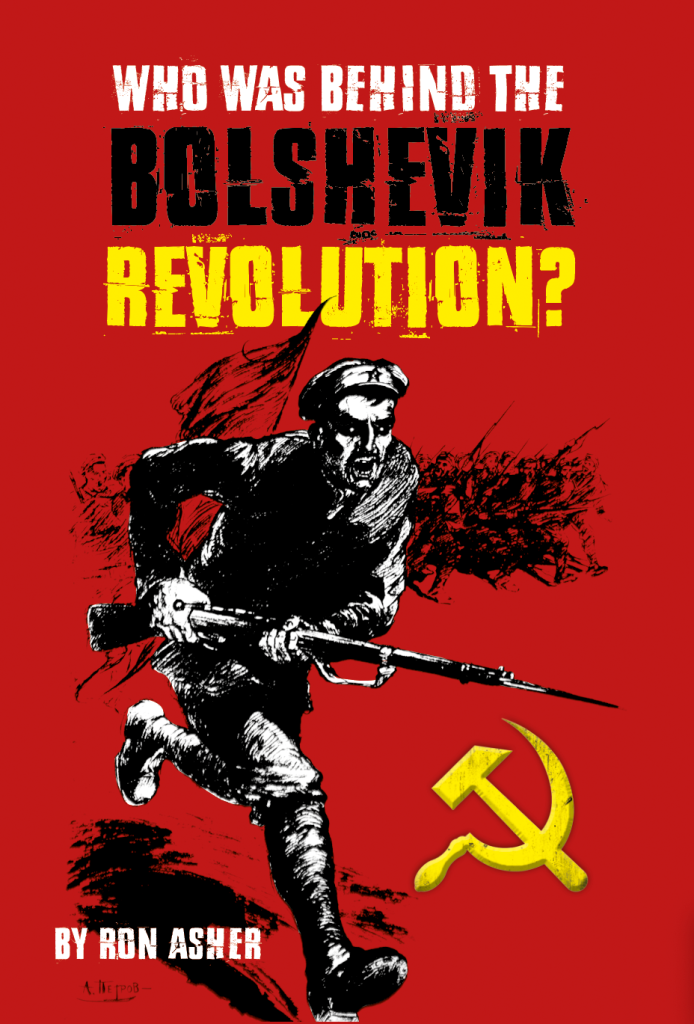
From Red Diaper to Red State: The Political Odyssey of David Horowitz

David Horowitz’s death on April 29, 2025 closes the chapter on a figure who embodied the neoconservative phenomenon: a Jewish intellectual who, like many of his generation, abandoned the Left when he perceived its ideals as incompatible with Jewish interests and American security.

Horowitz was born on January 10, 1939, in Forest Hills, Queens, New York, to Phil and Blanche Horowitz, both Jewish high school teachers and committed members of the Communist Party USA. His father taught English, and his mother taught stenography. Horowitz’s family background deeply shaped his early political outlook — his mother’s family had emigrated from Imperial Russia in the mid-19th century, while his father’s family fled Russia in 1905 during pogroms. In 1940, the family moved to the Long Island City section of Queens.

Growing up in a staunchly communist household, Horowitz was the quintessential “red diaper baby.” He attended Columbia University, where he earned his Bachelor of Arts degree in 1959, and later received a master’s degree in English literature from the University of California, Berkeley.

After completing his graduate studies, Horowitz moved to London in the mid-1960s to work for the Bertrand Russell Peace Foundation. There, he became involved in anti-war activism, helping to form the Vietnam Solidarity Campaign in 1966 alongside members of the Trotskyist International Marxist Group. During this period, he wrote The Free World Colossus: A Critique of American Foreign Policy in the Cold War, establishing himself as a voice in the New Left movement.

Horowitz returned to the United States in January 1968 and became co-editor of Ramparts magazine, an influential publication of the New Left based in California. During the early 1970s, he developed a close friendship with Huey P. Newton, founder of the Black Panther Party. Horowitz assisted the Panthers with their community initiatives, including raising funds for a school for “disadvantaged” children in Oakland.

The turning point in Horowitz’s political journey came in December 1974, when Betty Van Patter, a bookkeeper whom Horowitz had recommended to work for the Black Panthers, was found murdered in San Francisco Bay. Her body had been severely beaten, and Horowitz became convinced that members of the Black Panther Party were responsible for her death.

This tragedy profoundly traumatized Horowitz. According to Hugh Pearson, author of Shadow of the Panther: Huey Newton and the Price of Black Power in America, Horowitz “totally went berserk with regard to the left-liberal community” following Van Patter’s murder. The incident shattered his belief in the moral righteousness of the radical left and catalyzed his political transformation.

Increasingly disillusioned with left-wing politics through the late 1970s and early 1980s, Horowitz underwent a gradual but decisive shift to the right. In 1985, he publicly announced that he had voted for Ronald Reagan in the previous year’s presidential election. Along with his writing partner Peter Collier, Horowitz published an essay in The Washington Post titled “Lefties for Reagan,” formally declaring their break with the left. They wrote that voting for Reagan was “way of finally saying goodbye to all that… to the self-aggrandizing romance with corrupt Third Worldism; to the casual indulgence of Soviet totalitarianism; to the hypocritical and self-dramatizing anti- Americanism which is the New Left’s bequest to mainstream politics.”

Following his political conversion, Horowitz dedicated himself to challenging what he saw as the dangerous influence of the left in American culture and politics. In 1988, he founded the Center for the Study of Popular Culture (CSPC) in Los Angeles, which aimed to “establish a conservative presence in Hollywood and show how popular culture had become a political battleground.” The organization was later renamed the David Horowitz Freedom Center (DHFC) in 2006.

Horowitz chronicled his ideological journey in his 1996 memoir Radical Son: A Generational Odyssey, which became one of his most significant works. This deeply personal account detailed his disillusionment with the left and his embrace of conservative principles. It was quoted by Kevin MacDonald in Chapter 3 of The Culture of Critique illustrating the point that leftist Jews remained committed, ethnocentric Jews despite their declared internationalism:

David Horowitz (1997, 42) describes the world of his parents who had joined a “shul” run by the CPUSA in which Jewish holidays were given a political interpretation. Psychologically these people might as well have been in eighteenth-century Poland:

What my parents had done in joining the Communist Party and moving to Sunnyside was to return to the ghetto. There was the same shared private language, the same hermetically sealed universe, the same dual posturing revealing one face to the outer world and another to the tribe. More importantly, there was the same conviction of being marked for persecution and specially ordained, the sense of moral superiority toward the stronger and more numerous goyim outside. And there was the same fear of expulsion for heretical thoughts, which was the fear that riveted the chosen to the faith.

One of Horowitz’s primary focuses as a conservative activist was challenging what he perceived as liberal bias in American universities. He published The Professors: The 101 Most Dangerous Academics in America in 2006, criticizing professors he believed were engaging in indoctrination rather than education. He also created the “Academic Bill of Rights,” aimed at eliminating political bias in university hiring and grading practices.

Horowitz organized numerous campaigns on college campuses, including “Islamofascism Awareness Week” in 2007, which sought to alert students about what he viewed as the threat posed by radical Islam. These events often generated controversy and resistance from students and faculty.

After the September 11, 2001, terrorist attacks, Horowitz’s activism took on a new dimension. He became increasingly focused on what he called “the efforts of the radical left and its Islamist allies to destroy American values.” Horowitz pushed the envelope by advocating for racial and ethnic profiling of “potential terrorists-and that does mean Islamic and Palestinian terrorists.” He likely would have loved The Heritage Foundation’s Project Esther.

Horowitz, much like many of his peers in the largely Jewish neoconservative movement, was deeply affected by the 1967 Six-Day War and unsettled by the anti-Israeli rhetoric of Black nationalist groups in the 1960s and 1970s, steering him toward a strong pro-Israeli position. Though Horowitz publicly maintained that he was not a hardcore Zionist, his tendency to defend Israel at every opportunity suggests a deep alignment. In fact, he once argued, “If the Arabs disarm there will be peace, if the Jews disarm there will be a massacre,” contradicting his statement about being a lukewarm Zionist.

His stance on Israel became particularly pronounced after 9/11, as he increasingly claimed to view criticism of Israel as part of a broader anti-Western agenda. Horowitz became a fierce critic of Democrats who he claimed “empowered” Israel’s enemies, including “Iran, the Muslim Brotherhood, Hezbollah, ISIS and Hamas.” In 2016, he published a controversial essay in Breitbart News accusing conservative Jewish writer William Kristol and other “Never Trumpers” of trying “to weaken the only party that stands between the Jews and their annihilation, and between America and the forces intent on destroying her.” Kevin MacDonald in VDARE (2016):

One of the more spectacular examples of an MSM frenzy over supposed anti-Semitism: the reaction to the attack by David Horowitz against his fellow Jew Bill Kristolleader of a campaign to destroy Donald Trump [Bill Kristol: Republican Spoiler, Renegade JewMay 15, 2016] The headline, written by Horowitz, alluded to Kristol being Jewish.

As Jonathan S. Tobin [Email him] notes in Commentary,

[T]he real offense here is … his attempt to wrap him in the Star of David and to somehow brand his opponents as traitors to the pro-Israel cause. …

[H]is invocation of “America First” and the use of a term like “renegade Jew” in the headline (though not in the text of the article) seems to echo the smears of the pro-Trump alt right racists who have attacked conservative critics of the candidate with an avalanche of anti-Semitic invective.

[Breitbart’s ‘Renegade Jew’ DisgraceMay 16, 2016]

Horowitz’s offense was not simply criticizing Kristol’s campaign against Trump. Lots of people have done that without incurring the wrath of Commentary. And even saying that Kristol’s views are not good for Jews and Israel is commonplace:  MondoweissJ Street, and Mearsheimer and Walt in The Israel Lobby argue that neoconservatives and the Israel Lobby have a tragically mistaken view of Jewish and Israeli interests—also discussed in Charles Bloch’s and Steve Sailer’s VDARE posts.

The unforgivable offense: implying Kristol’s being a Jew had something to do with his opposition to Trump. After all, there would have been exactly zero upset if instead the headline was “Bill Kristol: Republican Spoiler, Renegade Republican.”

But putting ‘Jew’ in the headline was guaranteed to bring out immediate charges of anti-Semitism by the likes of Michelle Goldberg [Email her] in Slate :

To define someone as a ‘Renegade Jew’ in a column about scheming elites written for an audience full of white nationalists is to signal to the sewers. … A narrative is taking shape, an American Dolchstoßlegende that will blame a potential Trump loss on conniving Semites.

[Breitbart Calls Trump Foe “Renegade Jew.” This Is How Anti-Semitism Goes MainstreamMay 16, 2016]

Of course, we are supposed to engage in the fiction that the opinions of Bill Kristol et al. have nothing to do with being Jewish or what is good for Israel, but everything to do with their perception of what is good for America.

David Horowitz’s life trajectory from dedicated Marxist to conservative firebrand encapsulates much of the ideological turbulence of the latter half of the twentieth century and early twenty-first century. His dramatic political conversion, sparked by personal trauma and disillusionment, led him to become one of the most vocal critics of the movement he once championed.

However, Horowitz’s political career should not be viewed through an ideologically reductionist lens.  Mike Peinovich of The Right Stuff aptly observed that Horowitz was first and foremost a Jewish ethnic strategist with a history of changing his political positions to align with what he perceived as Jewish interests. And Jared Taylor pointed out Horowitz’s hypocrisy on identity politics:

Mr. Horowitz is simply wrong when he writes of “going back to the good old American ideal” of multi-racialism. I am certain that if all the prominent Americans I have quoted could rise from their graves, they would endorse the American Renaissance view of race and nation, and would be shocked at the idea of a multi-hued America in which we are to pretend race can be made not to matter. It is American Renaissance that is faithful to the original vision of America. Walt Whitman perhaps put it most succinctly when he wrote, “[I]s not America for the Whites? And is it not better so?” Yes, it is.

Mr. Horowitz deplores the idea that “we are all prisoners of identity politics,” implying that race and ethnicity are trivial matters we must work to overcome. But if that is so, why does the home page of FrontPageMag carry a perpetual appeal for contributions to “David’s Defense of Israel Campaign”? Why Israel rather than, say, Kurdistan or Tibet or Euskadi or Chechnya? Because Mr. Horowitz is Jewish. His commitment to Israel is an expression of precisely the kind of particularist identity he would deny to me and to other racially-conscious whites. He passionately supports a self-consciously Jewish state but calls it “surrendering to the multicultural miasma” when I work to return to a self-consciously white America. He supports an explicitly ethnic identity for Israel but says American must not be allowed to have one.

Not long before he was assassinated, Yitzhak Rabin told U.S. News and World Report that as Prime Minister of Israel he had worked to achieve many things, but what he cared about most was that Israel remain at least 90 percent Jewish. He recognized that the character of Israel would change in fundamental-and to him unacceptable-ways if the non-Jewish population increased beyond a small minority. Equally obviously, the character of the United States is changing as non-whites arrive in large numbers.

Throughout most of its history, white Americans took the Rabin view: that their country had a distinctly racial and ethnic core that was to be preserved at all costs. When Mr. Horowitz writes about the “good old American ideal,” that is what he should have in mind, not a historically inaccurate view that drapes a radical new course with trappings of false tradition.

Horowitz was a foundational figure in neoconservatism, but not as a defender of Western Civilization as some of his supporters like Turning Point founder Charlie Kirk have made him out to be. At the end of the day, Horowitz was an opportunist who shifted political stripes to serve Jewish and Israeli interests.
The way conservatives now praise him is unsettling, but it reveals a harsh truth: their movement owes its current form to him and his cadre of ex-Trotskyist Jews, who effectively turned American conservatism into a vehicle for Zionism. Horowitz’s lifework reveals that any nationalist movement lacking strong gatekeeping against Jewish influence is vulnerable to being co-opted and redirected to serve the interests of world Jewry much to the detriment of White interests.

The Power of Pudenda: Surveying Sex from the Sublime to the Sordid

Vigor Vaginae Veneris. Latin says in three words what can take seven words in English: “The Vigor of the Vagina of Venus.” Or V3 for short. It’s V3 that powers one of the most remarkable images I’ve ever seen. It’s so remarkable, in fact, that I’ve sometimes wondered whether it’s a modern fake. And what is it? It’s a painting on a twelve-sided table that shows a naked blonde Venus from whose vulva golden rays are extending to the faces of six young knights kneeling in worship.

Vigor Vaginae Veneris: a beautiful blonde goddess beams golden vulva-rays at six white knights

Painted by an anonymous medieval artist and currently held in the Louvre in Paris, its full name is Le Triomphe de Vénus vénérée par six amoureux légendaires (Achille, Tristan, Lancelot, Samson, Pâris et Troïle)The triumph of Venus, worshipped by six legendary lovers (Achilles, Tristan, Lancelot, Samson, Paris and Troilus). However, you could sum it up in two words: Pussy Power! But that’s vulgar and the painting isn’t in the slightest vulgar or pornographic. Instead, it’s beautiful. It wasn’t created to raise a snigger or pump a penis, but to venerate the vulvina of Venus, goddess of sex and love (vulvina is my blend of vulva-and-vagina).

Maiden, Mother, Matriarch

That vulvina-veneration is obvious in the painting, but there’s a lot of more subtle symbolism there too. Venus stands inside a mandorla, an almond-shaped aura that here represents the labia (and that often appears around the Virgin Mary in Christian art). And what are the fruit-bearing trees below and to left and right of Venus? They’re almond-trees. And the young knights are in quest of the Holy Grail, the awe-inspiring chalice that brims with blood and that is, on some gynocentric interpretations, another symbol of the female pudenda.

Those gynocentric interpretations say that Christianity became paganized as it spread into Europe from its austere Semitic roots. The Virgin Mary isn’t prominent in most of the New Testament and the virgin birth isn’t mentioned at all by St Paul. Nor does the New Testament formally define and name the Trinity of Father, Son and Holy Ghost. But Mary is very prominent in Catholicism. So is the male Trinity. However, it’s a woman’s life, not a man’s, that falls naturally into three stages: maiden, mother, matriarch, or the pre-menstrual girl, menstrual woman, and post-menstrual crone who stand behind triple goddesses like Artemis, Hera, and Hecate. That image of naked blonde Venus, with her golden-rayed vulva, was painted in Christian Europe about an ostensibly Christian legend, but it’s pagan, not Christian, and openly expresses pussy-power.

Jewish porn as cultural terrorism

That power is submerged and sublimated in Catholicism, and altogether absent in true Protestantism, which is Pauline in its attitude to the Virgin Mary. She doesn’t matter there, which helps explain one of H.L. Mencken’s best and funniest lines: “The chief contribution of Protestantism to human thought is its massive proof that God is a bore.” Yes, God is boring — lifeless, sterile, uninspiring — when the female principle is stripped away from religion. But what happens when religion is stripped away from the female principle? You can see the answer all around you in the modern West. Pussy-powered paganism in the past and pussy powers pornography in the present. That is not a good thing. The central role of Jews in pornography has often been described and decried by White nationalists. See, for example, Kenneth Vinther’s article “Oppression by Orgasm? The Porn Industry as Jewish Anti-Fascist Action and Cultural Terrorism” at Counter Currents. Pornography degrades and exploits the special beauty and sexual power of White women. What’s not to like for anti-White, money-hungry Jews?

Jews in pornography

But one White-harming aspect of Jewish pornography hasn’t been extensively discussed by White nationalists: its role in encouraging, first, mass migration by non-Whites and, second, the rape and harassment of White women by non-Whites after their arrival. For example, the young non-White men pouring across the English Channel into Britain or across the Mexican border into America are, of course, economic migrants seeking White money. But they’re also erotic migrants seeking White women. It’s absolutely certain that a large or even overwhelming majority of those men have consumed pornography featuring White women and have been conditioned by that porn to see White women as promiscuous and readily available. This does not promote the welfare of White women, to put it mildly. But do feminists ever mention the pull of porn for non-Whites in their critiques of pornography and the patriarchy?

From veneration to vulgarity

Of course not. But if pussy powers porn, it also powers the solipsism and self-worship so obvious in feminism. You’ve seen vagina-veneration from the fourteenth century above. Now here’s some vagina-vulgarity from the twenty-first century:

Vagina-vulgarity and a bushy-haired Black: the book V

That book by the biologist Florence Schechter is subtitled “an empowering celebration of the vagina and vulva.” In fact, it’s a self-worshipping celebration. By saying “V-V-V,” Schechter is really saying “Me-me-me.” And if you’re wondering about her surname, yes, the vulgar, self-worshipping creatrix of the Vagina Museum and author of V does indeed seem to be Jewish:

Self-worshipping vagina-fan Florence Schechter

But Schechter’s self-worship isn’t the simple and satisfying thing it would once have been. The cult of leftism to which she belongs is ever-restless and ever-evolving. That’s why the cover of Schechter’s book features a bushy-haired Black woman standing on her hands and doing the splits. As a White racist, I will freely admit that the Black woman presenting her pudenda makes me feel queasy rather than quim-curious. I am not interested in or attracted to Black vulvas and vaginas. But White feminists would not freely admit that the Black woman also makes the book less attractive to them.

A White woman on the cover would have been much better for a solipsistic White feminist. But the self-worship of feminism has been hijacked by the self-worship of Blacks, which is why Florence Schechter collaborated on V with the Afro-autolatric Nadia Akingbule, “an illustrator from London, working predominantly with themes relating to minority representation and activism. Alongside colourful editorial illustration, she specialises in portraiture, often referencing her experience as a person of dual heritage in her practice.”

“The female penis

As I said: celebrating “V-V-V” really means celebrating “Me-me-me.” But Black women want to celebrate “B-B-B” too or, as John Derbyshire puts it: “Blackety Blackety Black Black Black Blackety-Blackness.” Yet another self-obsessed group wants to celebrate “T-T-T.” That’s why Florence Schechter’s Vagina Museum had to market itself as “trans-inclusive.” I’ve never visited the Vagina Museum, so I don’t know how it pandered to the egomania of so-called transwomen, with their fake (and fetid) vaginas. And I’ve never read the book V, so I don’t know how it avoids the blasphemous assertion that vulvas and vaginas are in any way central to or defining of womanhood. As mainstream leftism now proclaims: any human being with a penis and testicles can be just as much a woman as any human being with a vagina and ovaries, if the penis-possessor claims to be a woman. This being so, vulvas and vaginas are not central to womanhood. Not for mainstream leftists, anyway.

But leftists are lunatics in thrall to a pernicious ideology based on fantasy and egomania, not on reality and objective science. The ideology is pernicious by design — Jewish design. Just as Jews have been central to pornography, so they’ve been central to translunacy, as Kenneth Vinther describes at Counter Currents in his review of Scott Howard’s The Transgender-Industrial Complex (2020). The godfather of translunacy was the Jewish “sexologist” Magnus Hirschfeld (1868–1935), who was energetically promoting pornography, transgenderism and homosexuality well before the Second World War.

“There are a lot of Jews”

Jews like Hirscheld have been central to the promotion of all three things and all three have been harmful to the West. That isn’t to say that all Jews and only Jews promote harmful things like those. But Jews have been necessary, if not sufficient, in the noxious growth of porn, transgenderism, and homo-cultism. That’s why the hyperbolic meme “Every. Single. Time.” works so well when applied to Jews. It isn’t every single time, of course, but it’s often enough for the meme to work. Jews themselves have openly admitted their central place in the promotion of sexual perversion and subversion. Take the Jewish academic Dr Nathan Abrams. He has argued in the Jewish Chronicle that “It’s not just Kubrick and Sellers who made Lolita a Jewish film” and that Lolita has a “Jewish appeal” because pedophiles and Jews both embody “the outsider who is passionately committed to action against the social order.”

And take the Jewish pediatrician and apparent “transwoman” Dr Ilana Sherer. He has proposed “renaming … clitorises as ‘dicklets’” and claimed in the Jewish News of Northern California that puberty-blockers are “fully reversible.” He has also proudly acknowledged that “there are a lot of Jews” in the field of translunacy and has described how “we [in a transgender group] were trying to schedule our next meeting and realized that everyone in the room but one person was Jewish.” Mark Steyn’s resident Jewish mother, the highly ethnocentric Laura Rosen Cohen, didn’t mention Sherer’s Jewishness when she asked of him: “Why do they all look like that?” Indeed, Sherer looks both demented and depraved in typical transgender fashion.

The revolutionary power of zoophilia

Another trans-skeptic Jew, James Esses, didn’t mention Jewishness either when he used the following as the first example in a list of the perversion and subversion promoted by “queer theory”:

In 2020, the elite academic publisher, Cambridge University Press, published an article titled ‘LGBTQ…Z’. In case you were wondering, the ‘Z’ stands for ‘zoophilia’, another term for bestiality — human beings sexually abusing animals. The article argued that the ‘Z’ should be brought into queer theory, in order to bring about “the revolutionary power of love”. (“Our societies must not be ‘queered’,” James Esses at Matt Goodwin’s Substack, 18th November 2024)

The two leading figures in queer theory are the Jewish-lesbian academics Judith Butler and Gayle Rubin. I think another Jewish-lesbian academic was behind the zoophilia-friendly article highlighted by James Esses. It was written by the lesbian queer-theorist M. Kathy Rudy (also known as Mary K. Rudy and born 1956), an “American women’s studies professor and theologian.” However, to be fair to Esses, Kathy Rudy’s Jewishness is much less obvious than Ilana Sherer’s. In fact, I can’t prove that she is Jewish. But she looks Jewish, has a surname that can be “eastern Ashkenazic,” and has a Wikipedia biography in six languages, one of which is Hebrew. She also got a positive review of her book Loving Animals: Toward a New Animal Advocacy (2011) from her fellow academic Frances Bartkowski, who has based her career on “years of reading, writing, and teaching about the Shoah,” has written a novel about two Polish Jews fleeing the Shoah, and has a promotional page at the Jewish Book Council. I conclude that Kathy Rudy is Jewish, although I can’t yet prove it. Here’s the abstract for her promotion of zoophilia in the feminist journal Hypatia:

In this essay, I draw the discourses around bestiality/zoophilia into the realm of queer theory in order to point to a new form of animal advocacy, something that might be called, in shorthand, loving animals. My argument is quite simple: if all interdicts against bestiality depend on a firm notion of exactly what sex is (and they do), and if queer theory disrupts that firm foundation by arguing that sexuality is impossible to define beforehand and pervades many different kinds of relations (and it does), then viewing bestiality in the frame of queer theory can give us another way to conceptualize the limitations of human exceptionalism. By focusing on transformative connections between humans and animals, a new form of animal advocacy emerges through the revolutionary power of love. (“LGBTQ…Z?”, Hypatia, Volume 27, Issue 3, Summer 2012, pp. 601-615)

Zoophilia-friendly M. Kathy Rudy at Youtube

As you can see from the video-still of Kathy Rudy above, I started this article with a beautiful blonde and have ended it with a bloated bull-dyke. That’s a brutal description, I know, but it’s also an accurate one. Kathy Rudy is an ugly woman promoting an ugly ideology. That’s part of why I conclude she’s Jewish. Sex and sexuality can be both sublime and sordid. When Whites controlled and created Western culture, the sublime suppressed the sordid. Now that Jews control and create Western culture, the sordid submerges the sublime.