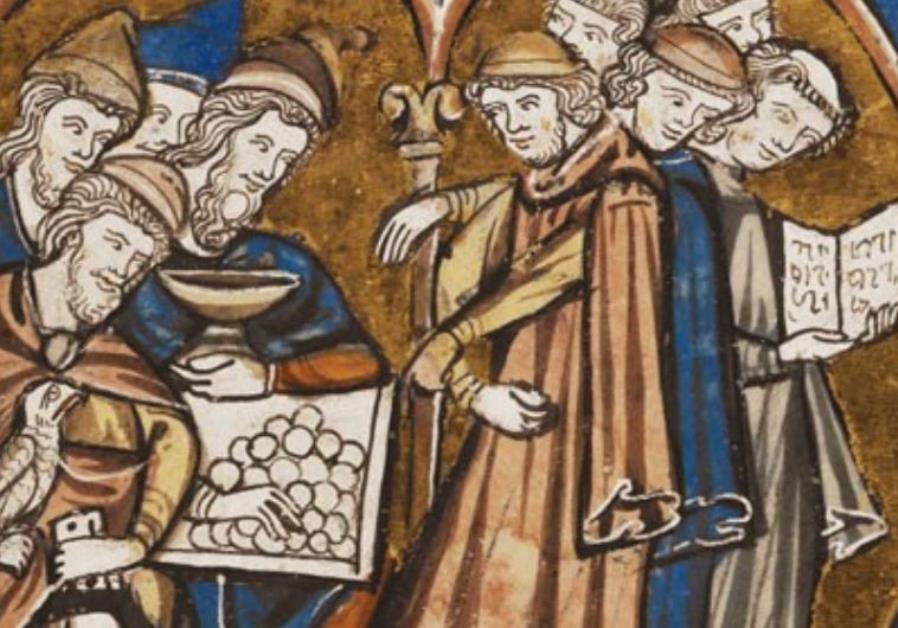
Perceptions of Jewish History Drive the War of the Hostile Elite Against the Trump Presidency
I begin with a thumbnail sketch of Jewish perceptions of their own history as a prologue to thinking about why a long-term goal of the organized Jewish community has been to make alliances with other groups with grievances against the traditional American nation. Jewish perceptions of their own history reflect traditional Jewish fear and loathing of outgroups with power, particularly given their perceptions of their “lachrymose history” among Europeans as nothing but a vale of tears.
This lachrymose view has major implications for understanding contemporary Jewish political behavior in the Diaspora. It proposes that, beginning with an unfortunate theological belief (that Jews killed God), Jews have been passive, innocent victims of marauding non-Jews. The lesson that Jews learned from the Middle Ages carries down to today: [According to Norman Podhoretz,” the Jews
“emerged from the Middle Ages knowing for a certainty that — individual exceptions duly noted — the worst enemy they had in the world was Christianity: the churches in which it was embodied — whether Roman Catholic or Russian Orthodox or Protestant — and the people who prayed in and were shaped by them. It was a knowledge that Jewish experience in the ages to come would do very little, if indeed anything at all, to help future generations to forget” (Review of Norman Podhoretz’s Why Are Jews Liberals?, p. 29).
These perceptions are fundamental to Jewish education and to Jewish identity. Jews therefore—far more than non-Jewish Europeans—have an overwhelming sense of their own history. From far left to the neoconservative right, Jews socialized in the Jewish community imbibe a history of what they see as vicious persecution of blameless Jews in the West going back even prior to Christianity—to the Roman destruction of the Second Temple in 70 A.D.
Within this worldview, the Middle Ages were a period of completely unjustified expulsions from many areas on Western Europe, motivated not at all by Jewish behavior but by vicious, fundamentally anti-Semitic Christian theology. The Enlightenment resulted in “Jewish emancipation” in the sense that the paradigm had shifted from a corporate Christendom with its anti-Jewish theology to an individualist model of society where each citizen was to be stripped of group allegiances.
Jews were welcomed into these newly reconstructed Western societies, but the tensions remained. Jews were now accused of remaining Jews in societies of individualists—of remaining a “state within a state,” failing to shed their ethnic identities, and continuing to engage in ethnic networking, not only in business and professional relationships, but also establishing organizations in the West dedicated to helping Jews in foreign lands, at times against the perceived interests of the nations they were residing in. Read more