Man, Beast and Enlightenment: The Special Place of Humans in Nature

It is said that Pythagoras could recognize, by means of certain signs, when the soul of a friend had been reincarnated in an animal. Belief in the transmigration of souls was common in antiquity; even Plato toyed with the notion in the myth of Er. But the Pythagoreans used it to support vegetarianism and even an early form of animal liberation. Here’s a cautionary tale from a likeminded contemporary. A farmer’s son dies and is reincarnated as an animal. The farmer chooses this animal for a sacrifice. The killing makes the farmer a filicide even as he desecrates his offering and angers the gods. Then, in the Greek way, the farmer burns the fat and organs and he and his remaining family eat the meat. Now they are all cannibals. So put down that hamburger, you never know who might be in there.

What interests me about this argument is how it is framed. Ancient philosophers took for granted that men are superior to animals. The discovery that the animal was a friend or relative makes it an exception to that general rule. But the exception comes at the cost of incoherence. It isn’t clear what it means to say that the dead friend and the living animal are the same person, since they share no memories, dispositions or abilities. That’s why it’s so easy to generate absurd counterexamples. If the farmer’s son dies before I repay him the $10 I borrowed, do I owe $10 to the animal? I am persuaded, contra Pythagoras, that a person is his mind (sometimes called his soul) and his body, so if both are different, replaced with those of an animal, there is nothing of the person left over.

If ancient animal liberationists tried to lift a few animals up to the level of human beings, nowadays animal liberationists press for the full admittance of animals to the moral community. The reason for this change in tactics is that between the ancient and the modern world falls the long shadow of the period that named itself “the Enlightenment.” The Enlightenment’s understanding of community is still with us today: a community is a group of equals. A nation-state made up of citizens is such a community of equals, for nobody is more of a citizen than anybody else. Enlightenment ethics mirror Enlightenment politics. The moral community is like a nation state, with each member possessing moral citizenship. What makes one a moral citizen? The Enlightenment and its heirs supplied many answers, from the experience of pleasure and pain (Bentham, Mill) to being an end in oneself (Kant) to having rights (Paine) to having ‘dignity’ (I am sorry to say that the Church is to blame for this last one). That there really is a slippery slope that leads from Enlightenment ethics to animal liberation was never clearer than when Thomas Paine wrote his Rights of Man. The book was followed almost immediately by Mary Wollstonecraft’s Vindication of the Rights of Woman, and then by the anonymous Vindication of the Rights of Brutes. Although the last was satire, all three made the same point: if rights alone make you a ‘citizen’ of the moral community, then we can’t exclude anyone, including animals.

One of the crucial differences between conservatives and reactionaries is that conservatives embrace the Enlightenment picture of the moral and political community of equals. That’s why conservatives invariably lose arguments to animal liberationists. To win, conservatives would need to find a way to exclude animals from moral citizenship. They can only do this if they find a morally significant criterion which makes all humans moral citizens but which not even a single animal possesses. Animal liberationists only need one counterexample to blow the whole thing up.

Every five years or so, some conservative will charge into the argument about the place of animals, confidently waving a new or rediscovered criterion of the moral uniqueness of human beings, and then the game of finding a counterexample begins. Aristotle said that men have reason and animals don’t. Could the criterion be reason? But lots of research shows that some animal species have quite sophisticated reasoning ability. For example, New  Caledonia  crows  are  able  to  develop  a  causal rule that enables them to solve novel problems and learn from watching other birds use tools (here, p. 45).
Read more

American Free Press Interviews Glen Allen On His Lawsuit Against the SPLC

This interview first appeared in American Free Press, April 14,2019.

Glen K. Allen, an attorney in Baltimore, Maryland, is the plaintiff in a lawsuit he filed in December 2018 in federal court in Maryland against Heidi Beirich, Mark Potok, and the Southern Poverty Law Center (SPLC). Recently, Allen sat down with AFP to talk about his case as well as free speech in the current political environment in the United States.

* * * * *

AFP: Mr. Allen, could you give us a summary of your lawsuit?

Allen: Sure. In August 2016, Heidi Beirich and the SPLC improperly orchestrated my termination as an attorney for the City of Baltimore, where I was doing competent and ethical work.

The SPLC, in its remarkable arrogance, not only does not deny it did this but has boasted about it on one of its so-called “hate maps,” together, of course, with the most unflattering photo of me it could find. I have brought suit in federal court alleging three federal and six state law claims.

My claims are based on the SPLC’s actions against me but also on its conduct over decades that I contend is inconsistent with its status as a law firm and a purported 501(c)(3) nonprofit dedicated to an educational mission. So, in essence, I’m seeking to redress the harms done to me but also to vindicate basic principles of free expression and the rule of law.

AFP: You mentioned free expression. Did you have an interest in that subject prior to this case?

Allen: Yes, for half a century I have seen our American traditions of free expression and free assembly as unique and fragile and have advocated constant vigilance to preserve them. I have tried to do my part to protect them. Read more

Hyper-Whites with Hyper-Privilege: Jews Are Losing their Status as Persecuted Victims

Jonathan Portes is a Jewish economist and a big fan of mass immigration. In collaboration with the Jewish immigration minister Barbara Roche, he was central to New Labour’s successful conspiracy to open Britain’s borders to Eastern Europe and the Third World. The conspiracy was very bad for Labour’s traditional supporters in the White working-class, but very good for the rich Jewish businessmen who funded Tony Blair and dictated New Labour’s policies.

Inflammatory nonsense

But while Portes (pronounced “Port-iz”) believes in open borders, he also believes in closed mouths. In other words, he’s a big fan of censorship and doesn’t like Whites discussing racial differences and the effects of mass immigration. When the conservative philosopher Roger Scruton was sacked from a government committee for alleged anti-Semitism, Islamophobia and racism, Portes welcomed his departure and condemned him for peddling “inflammatory nonsense,” “tabloid-level ignorance and straightforward falsity.” He then went on to peddle some inflammatory nonsense of his own when he praised the heavily Jewish “Race Relations Act of 1968,” claiming that the Act “outlawed direct discrimination in housing or employment, as exemplified by signs saying ‘No blacks, no dogs, no Irish’.”

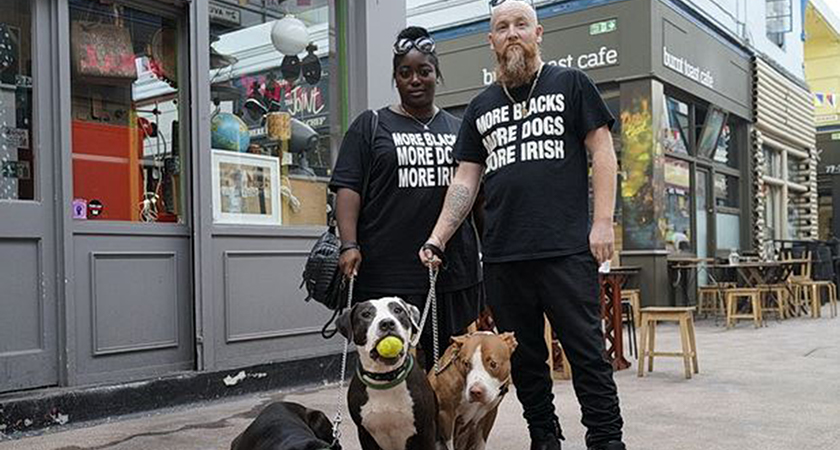
“More Blacks, More Dogs, More Irish”: SJWs exploit an urban myth

That’s how hate-filled the White English were in the 1950s and ’60s, you see: when they were offering houses or rooms for rent, they put up signs saying “No blacks, no dogs, no Irish.” Thousands of signs up and down the land. Well, hundreds, anyway. Well, they were a common sight. So common, in fact, that there’s no solid proof that they ever existed. The Irish Studies Centre (ISC) at London Metropolitan University (LMU) has a single photograph of “somewhat uncertain” “provenance” donated in the 1980s. And when the academic Steve Bruce was researching the topic in the 1990s, he “tried without success to find one and had to fake one for a book cover.” Writing in 2015, Bruce issued a “plea to Guardian readers. If ‘No Irish’ signs were as common as is asserted, there should be plenty of them remaining in private collections, local archives and the like. … Can we please see some?” No, we can’t. Instead, we need to have faith. Dr Tony Murray, Director of the ISC at LMU, says that: “Ample evidence exists in numerous oral history interviews with both Caribbean and Irish migrants that such signs existed well into the 60s.” Read more

Jews and the Left by Philip Mendes: Review, Part 3

Go to Part 1.

Go to Part 2.

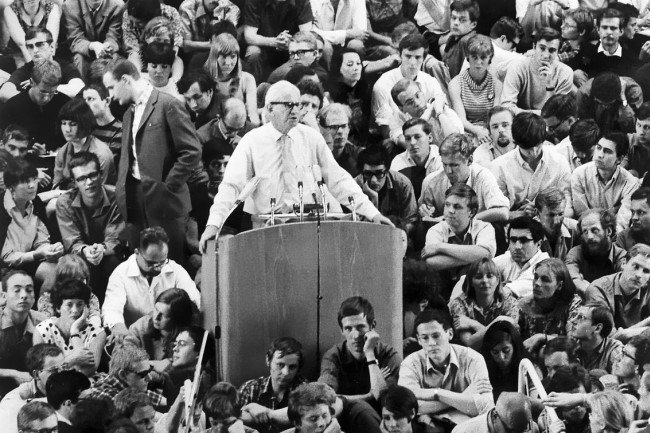
Herbert Marcuse addressing American students in 1968

Jewish involvement in the New Left

In Jews and the Left, Mendes recounts the disproportionate Jewish involvement in the New Left—a political movement that began in the early 1960s when students travelled to the southern states to support the emerging “civil rights” movement. In the mid-1960s, the movement switched to northern campuses to advocate student rights, free speech and opposition to the Vietnam War. This was the time when the ideas of Frankfurt School intellectuals like Erich Fromm and Herbert Marcuse began to displace orthodox Marxism in leftist movements throughout the West. Mendes notes that:

Jews contributed significantly to the theoretical underpinning of the New Left. From 30 to 50 per cent of the founders and editorial boards of such New Left journals as Studies on the Left, New University Thought, and Root and Branch (later Ramparts) were of Jewish origin. Radical academic bodies and think tanks such as the Caucus for a New Politics, the Union of Radical Political Economists and the Institute for Policy Studies were overwhelmingly Jewish. A number of the key intellectual gurus of the New Left such as Paul Goodman, Noam Chomsky, Howard Zinn, and Herbert Marcuse were also Jewish.[i]

The Jews who flooded the ranks of the New Left in the early-to-mid 1960s “appear to have been largely assimilated third-generation Jews from Old Left backgrounds [i.e., “red diaper babies”], although some had participated in Labor Zionist Groups.” Studies of American Jewish New Left activists reveal many had grown up in highly politicized left-wing family environments. Jews made up around two-thirds of the White Freedom Riders who went south in 1961, and about one-third to one-half of committed New Left activists in the USA, including key leaders such as Abbie Hoffmann and Jerry Rubin. In 1964 they represented from one-half to two-thirds of the volunteers who flooded Mississippi to help register black voters. At Berkeley in 1964, around one-third of the leaders of the Free Speech Movement (FSM) demonstrators were Jewish, as were over half of the movement’s steering committee, including Bettina Aptheker, Suzanne Goldberg, Steve Weisman, and Jack Weinberg who coined the famous phrase “You can’t trust anyone over thirty.[ii] Moreover:

In 1965 at the University of Chicago, 45 per cent of the protestors against the university’s collaboration with the Selective Service System were Jews. At Columbia University in 1968 one-third of the protestors were of Jewish origin, and three of the four student demonstrators killed at Kent State in 1970 were Jewish. Jews comprised a large proportion of the leaders and activists within Students for a Democratic Society (SDS). Some of the key leaders included the founder Al Haber, Todd Gitlin and Mark Rudd. Approximately 30 to 50 per cent of the SDS membership in the early–mid 1960s were Jewish.[iii] At one point in the late 1960s, SDS presidents on the campuses of Columbia University, University of California at Berkeley, University of Wisconsin (Madison), North Western University, and Michigan University were all Jews. Jewish participation in SDS was particularly high at Pennsylvania University and the State University of New York. There was also a number of Jews in the violent Weathermen group.[iv]

Read more

Jews and the Left by Philip Mendes: A Review — Part 2

Go to Part 1.

Denying the Jewish role in the Ukrainian famine

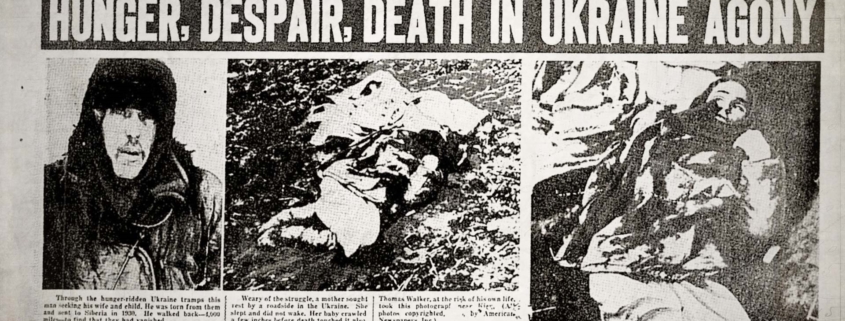
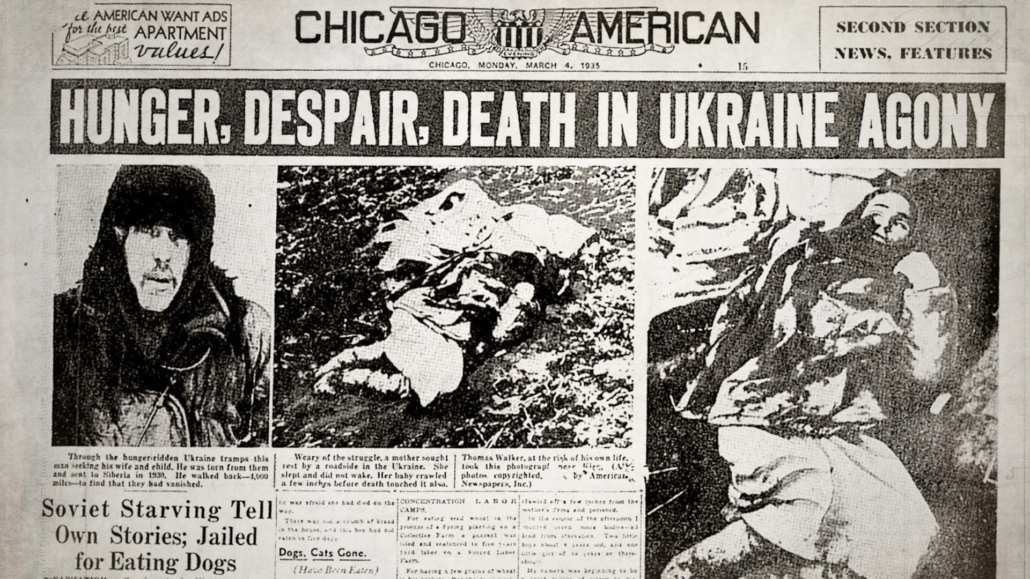
Mendes sees a revival of “the Judeo-Communist theory” in Australian author Helen Darville’s 1994 novel, The Hand That Signed the Paper, which posited that the collaboration of some Ukrainians with the Germans in World War II could be attributed to the role played by Jewish Bolsheviks in imposing the genocidal Ukrainian famine of the 1930s. For Darville’s central characters, anti-Jewish massacres were understandable revenge for earlier Jewish actions. For Mendes, Darville’s book provides a “classic example of the way in which the Judeo-Communist theory both reverses the cause and effect of anti-Semitism and communism, and acts as a self-fulfilling prophecy. … In short, it provides no explanation of the factors that drove many Jews to join the socialist movement. The historical context of anti-Semitism creating Jewish sympathy for Bolshevism is simply omitted.”[i] This is a disingenuous analysis given Mendes’ own gross misrepresentation of the context for Ukrainian anti-Jewish sentiment (i.e., casually dismissing centuries of economic predation).

In Jews and the Left, Mendes even asserts that “the argument that Jews as an ethnic group or even Jews as individual Bolsheviks played a significant role in the Ukrainian famine lacks any concrete evidence.”[ii] He evades discussion of the role of the Jewish Soviet leader in the Ukraine, Lazar Kaganovich, in overseeing the forced collectivization of 1932–33, conceived as part of an “assault on the Ukrainian nationalist intelligentsia.” The country was sealed off and all food supplies and livestock were confiscated, with Kaganovich leading “expeditions into the countryside with brigades of OGPU troopers” who used “the gun, the lynch mob and the Gulag system to break the villages.”[iii]

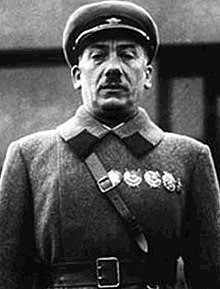
Similarly omitted is any mention of the role of the Jewish-dominated secret police in the Ukraine led by Genrikh Yagoda (also Jewish) in exterminating all “anti-party elements.” In his book The Jewish Century, Yuri Slezkine notes how “the Soviet Secret Police – the regime’s sacred center, known after 1934 as the NKVD – was one of the most Jewish of all Soviet Institutions.”[iv] Furious that insufficient Ukrainians were being shot, Kaganovich set quota of 10,000 executions a week for his secret police in Ukraine. Eighty percent of Ukrainian intellectuals were shot—the familiar pattern in which communist governments murdered the previously influential intelligentsia and other elites (see Tom Sunic’s “The Dysgenics of a Killing Field”; also a theme of Yuri Slezkine’s The Jewish Century, see here, p. 69). During the winter of 1932–33, 25,000 Ukrainians per day were being shot or left to die of starvation.[v]

Genrikh Yagoda

Read more

Jews and the Left by Philip Mendes: Review — Part 1

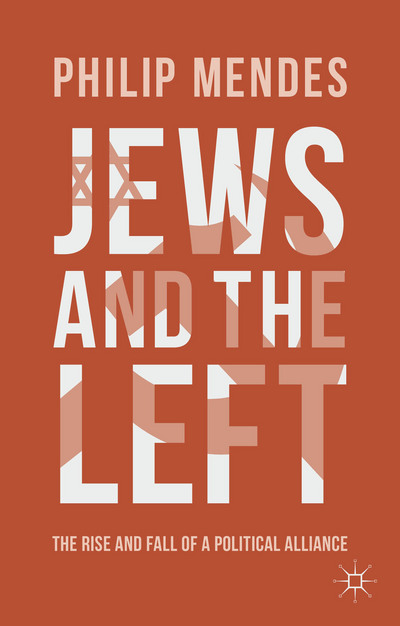
Jews and the Left: The Rise and Fall of a Political Alliance
Philip Mendes
Melbourne, Victoria: Palgrave MacMillian, 2014

Introduction

In 2018 I reviewed Alain Brossat and Sylvie Klingberg’s Revolutionary Yiddishland: A History of Jewish Radicalism, a shameless apologia for (and indeed glorification of) Jewish involvement in radical political movements in the early- to mid-twentieth century. Jews and the Left: The Rise and Fall of a Political Alliance by the Jewish Australian academic Philip Mendes covers much of the same ground, rehashing many of the same apologetic tropes.

Mendes, an Associate Professor at Monash University in Melbourne, describes his book, published in 2014, as “the first publication to provide a systematic historical and political overview of the relationship between Jews and the left.”[1] Largely ignoring scholarly literature on the subject emanating from non-Jewish and non-philo-Semitic sources, Mendes insists that “With the exception of Arthur Liebman’s outstanding 1979 text, Jews and the Left, there has been little systematic analysis of the Jewish—Left relationship.”[2] Such an ideologically-selective survey of the literature leads him to conclude that “the phenomenon of Jewish radicalism seems to have been seriously under-researched by both general students of sociology and history, and Jewish studies specialists.”[3]

Unlike some of the more egregious Jewish propagandists and apologists who have contributed to the topic, Mendes makes no attempt to deny disproportionate Jewish involvement in political radicalism, stating:

The disproportionate historical contribution of Jews to the political Left has been well documented. Both as individual theorists and activists of the stature of Marx, Trotsky, Rosa Luxemburg, Léon Blum and Emma Goldman, and as organized mass labor movements in, for example, revolutionary Russia and early—mid 20th century Warsaw, Amsterdam, Paris, Toronto, Buenos Aires, New York and London, Jews have been conspicuous for their socialist and communist affiliations.[4]

Indeed, Mendes points out that from around 1830 until 1970, an “informal political alliance existed between Jews and the political Left.”[5] Read more