Featured Articles

Witnessing the Death of a Turkish Secular State, Part 1

stream_img

It was a few hours past midnight when we were awakened by the insane blaring of countless cars’ horns directly outside of our apartment building. It was Friday night of July 15, 2016; the location was one of newest districts of Istanbul.

We jumped out of bed and stared out of the window. What we saw looked like a river of headlights, myriad of cars, buses, taxis and heavy trucks — in fact, every sort of vehicle imaginable, loaded with men, yelling excitedly, waving huge national flags, jumping up and down, and all this mass of extremely agitated humanity was moving slowly in the direction of the city center. We had continued to watch traffic for some moments, mesmerized by the spectacle when we heard a call for Jihad emanating from the minaret of the nearest mosque. Immediately, all other mosques in vicinity picked up the call for ‘the holy war,’ and it went on and on seemingly for hours. Around that time my wife received a phone message from one of her students which ran as follows: “Hodja! (The teacher) Are you all right? Are you safe? There is a military coup in progress! Stay at home, and please be careful.”

In the morning we learned some details about the coup that apparently went on for the whole night. According to the media, 240 or so people were killed. The President’s palace was bombed, but the President wasn’t there. In the morning the rebels surrendered. The coup failed. The President of the Republic Recep Erdogan was still in power. All the Turkish media talked excitedly about main culprits — followers of Fethullah Gulen, whose political and religious movement had infiltrated the whole of Turkish society, including military and police. Now the day of reckoning finally arrived. Read more
Minority Malice: The Curious Case of Daniel Quilp

Chaucer, Shakespeare and Dickens are perhaps the three central figures of English literature. Representing respectively poetry, drama and prose, they have been hugely influential for centuries, read, analysed and quoted by countless millions around the world in every language from English and Afrikaans to Hindi and Mandarin.

Viral Vectors

But in modern times all three of them have also been condemned as vectors of an ancient and deadly ideological virus: anti-Semitism. In the Prioress’s Tale (c. 1390), Chaucer wrote of a saintly Christian child murdered by evil Jews. In The Merchant of Venice (c. 1596), Shakespeare brought life to Shylock, a vengeful and cunning Jewish merchant. In Oliver Twist (1838), Dickens portrayed Fagin, the corrupter, tutor and fence to a gang of child-thieves:

In a frying-pan, which was on the fire, and which was secured to the mantelshelf by a string, some sausages were cooking; and standing over them, with a toasting-fork in his hand, was a very old shrivelled Jew, whose villainous-looking and repulsive face was obscured by a quantity of matted red hair. He was dressed in a greasy flannel gown, with his throat bare; and seemed to be dividing his attention between the frying-pan and the clothes-horse, over which a great number of silk handkerchiefs were hanging. (Oliver Twist, chapter 8)

Dickens began his hate-stereotype as he meant to go on: sluicing Fagin with millennia’s-worth of gentile malice, from the red hair of Judas to the venality and ruthlessness ascribed to Jewish moneylenders in the Middle Ages. Fagin looks villainous because he is villainous: selfish, cunning, and manipulative. And his villainy is inseparable from his race and religion. Dickens refers to him as “the Jew” more than three hundred times in early editions of Oliver Twist.

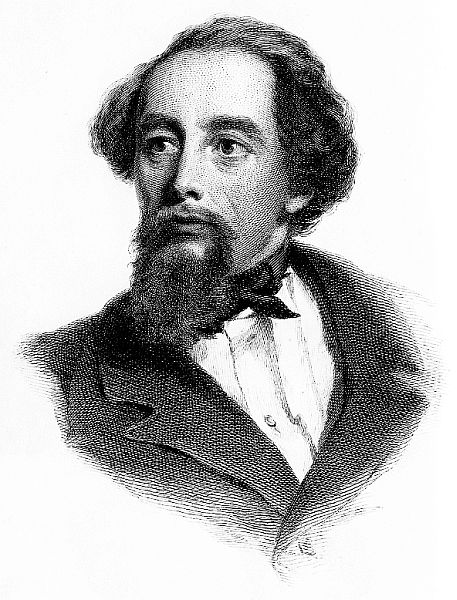
Charles Dickens (1812–1870)

Charles Dickens (1812–1870)

Because Fagin is a hate-stereotype, there is no need to ask whether he also is an accurate portrayal of how some Jews behaved in Victorian times. Some scholars have claimed that Fagin was based on the Jewish criminal Ikey Solomon, whom Dickens observed when he worked as a journalist. Dickens himself claimed: “Fagin in Oliver Twist is a Jew, because it unfortunately was true of the time to which that story refers, that that class of criminal almost invariably was a Jew.”

These claims are irrelevant. As I pointed out in “Reality is Racist,” if an accusation invokes a hate-filled stereotype, the accusation can be dismissed out of hand. All decent people know this. When the playwright Alan Bennett came across a British cartoon from World War II that portrayed “black marketeers” as “strongly Semitic in features,” he condemned it instantly as unacceptable, without pausing to consider whether it was based on a statistical reality. Read more

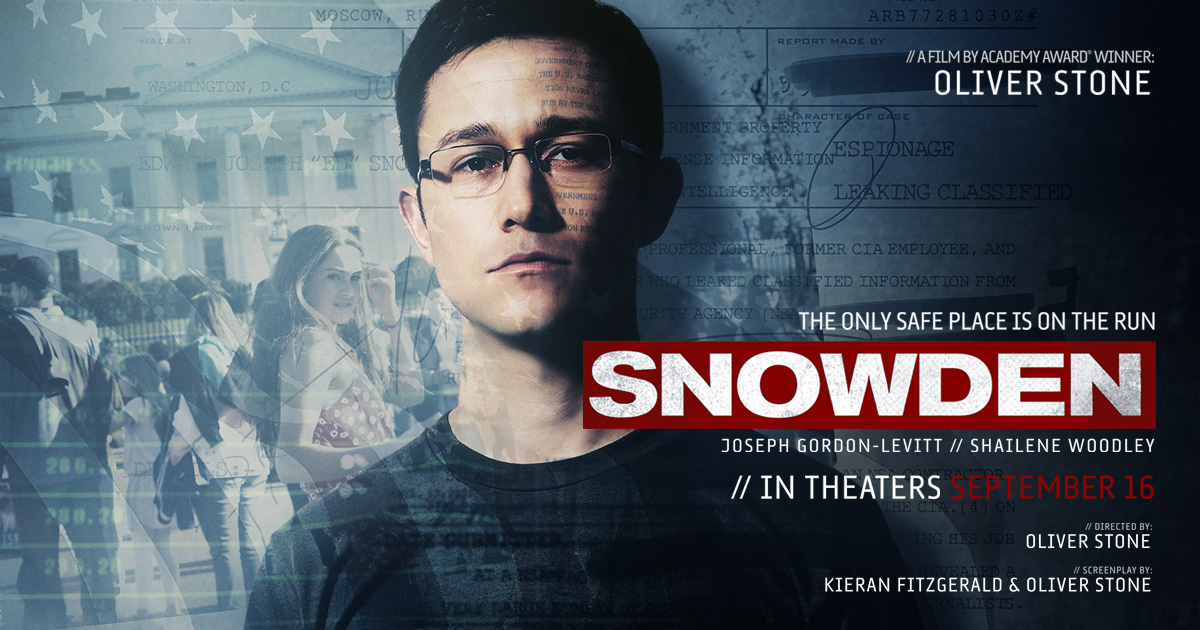
A Review of Snowden (2016)

snowden

I’m caught in a whirlwind
I’m going to heaven
I’m standing on trial and it’s painted on canvas
An eternal testament to how we are so animalistic

– Ashamed, by Deertick

Oliver Stone has quite the track record when it comes to biopics. With three films based on former United States Presidents (JFK, Nixon and W.), and an additional feature about the man who is arguably the most influential leader in the history of Western Civilization (Alexander) he is no stranger to the complexity of the human spirit caught in flight between the firmament of absolute truth and the gravity of the world as it is, with mankind’s’ jealousy and corruption dragging down the state. These men all stood on the precipice of a great decline — a potential implosion of their societies — and in their own respective ways tried to arrest the social decay and abuses they saw eating at their population.

So too, Snowden. The character studies his previous films became have been criticized by some for being sympathetic. But for his own part, Stone has insisted sympathy was never his goal. In an industry that has relied on the formula of the Hero’s Journey, Oliver Stone has attempted many times to break the mold and create a fresh perspective for informed audiences of his historical dramas. With Snowden we finally watch this alternate narrative truly flourish. The audience isn’t left loving or hating Edward. Instead we gain an understanding of the weight of this man’s convictions. This understanding forces viewers to question themselves and in that way develop empathy for the subject. Could you stand up against the great beast? How would you endure, not knowing if you’d be destroyed by a seemingly all-powerful super state or exonerated by the people it was supposed to protect?

During a recent interview at the Harvard Institute of Politics Stone told Pulitzer Prize-winning journalist Ron Suskind that he initially had turned down the option to make the film. It’s not usually a good investment to tell the story of someone who is still making headlines. The potential for us to come to a conclusion about the subject that will later be abrogated by some startling and unforeseen revelation is too great. If such details unfold, the integrity of the film you’ve made is irreparably damaged. It was only after being contacted by Ed Snowden’s Russian lawyer — who has also authored an untranslated spy novel about a conflicted whistle blower — he began to warm up to the idea. Meeting Snowden in Moscow several times the director learned there was an opportunity to tell a story that would persuade theater goers to question both themselves and the government. Read more

T.S. Eliot and the Culture of Critique, Part Two

eliot

‘We must discover what conditions, within our power to bring about, would foster the society that we desire. … Reasons of race and religion combine to make any large number of free-thinking Jews undesirable.’
 T.S. Eliot, After Strange Gods, 1934.

One of the most striking features of Julius’s T.S. Eliot, Anti-Semitism, and Literary Form is that it is no mere literary critique. This basic and relatively short work is a multi-pronged and vicious ad hominem masquerading, with odious pretentiousness, as criticism. Eliot, the man, is attacked in multiple, often scurrilous, forms throughout.

These are subtle attacks, perpetrated under the cover of a flimsy, indeed petulant, thesis. This thesis, such as it exists, is two-dimensional. Summed up, it consists of two basic arguments. The first is that Eliot drew on “anti-Semitic” themes for some of his poetry, themes that were characterized by their disdainful attitude towards Jews. The second is that “anti-Semitism” was an intrinsic part of Eliot’s art, and therefore Eliot himself was ‘anti-Semitic.’ Of course, in and of itself, the accusation that Eliot wasn’t fond of Jews is hardly damning. However, in the hands of Jewish ethno-activists the accusation of “anti-Semitism” is often loaded with deeper and more insidious aspersions. As such, the thesis and the ad hominem nature of its arguments and content are bound up intricately via a single common thread: Julius’s own corrupt understanding of what “anti-Semitism” is.

Julius’s professed understanding of anti-Semitism is identical to that of other Jewish ethno-activists. In this perception, “anti-Semitism” is a mixture of “incoherent” discourses riddled with “internal contradictions.”[1] It arises, at worst, in the sick, irrational mind. At best, it develops ex nihilo, since, as Julius puts it, “no external factor can induce it.”[2] In this remarkable psychological bubble, Jews are entirely blameless. Ever passive, they lack all agency. They exist merely to register the irrational mental undulations of “the nations,” that confused, miasmic mass of humanity they have been tasked by Jehovah to act as a “light unto.” The problem with such a perception, of course, is the existence of an overwhelming amount of contradictory evidence. Read more

The Winds of Change: Update on European Elections

Just six short months ago President Obama and Chancellor Merkel, presided over a formidable coalition of globalists committed to transforming the Western world, including also Britain’s Prime Minister David Cameron, France’s President François Hollande, and Italy’s Prime Minister Matteo Renzi. United by a common ideology, these Western leaders were busy ushering in a  transformative era of unfettered and massive migration of Arab Muslims and Africans into Europe and the US.

Now Merkel stands alone.  Obama exits the world stage next month, Cameron resigned after the Brexit vote, Hollande announced last week that he would not seek re-election, and as of the weekend, Renzi has also announced his resignation.

According to the NY Times, Merkel

once untouchable, now seems vulnerable in next year’s elections. And far-right parties are also seeking power in France. In Austria, the Green Party stalled the advance of populist forces on Sunday by defeating the presidential candidate of the far-right Freedom Party, which was established by former Nazis. The result in Austria might have calmed some nerves, but it was the rejection of Mr. Renzi that most sent shivers through Europe and the world.
In a strategic blunder that echoed David Cameron’s call for a “Brexit” referendum, Mr. Renzi had tied his government’s tenure to Sunday’s vote when he was flying high in the polls. But his support eroded, and world leaders anxiously watched the vote in Italy, the fourth-largest economy in Europe and a key player in the European Union, as a referendum on Mr. Renzi’s centrist government and as a barometer on the strength of anti-establishment winds blowing across both sides of the Atlantic.

Sunday’s rejection of Renzi’s referendum and his subsequent resignation has created a political crisis in Italy that could spread across the Eurozone. Like Americans last month, Italian voters were furious about their dismal economic prospects and the migrant crisis that has engulfed them, as it has all of Europe.  Voters were emphatic in expressing their anger and opposition to establishment elites, globalization, open borders and the overreach of the EU. Read more

T.S. Eliot and the Culture of Critique, Part One of Two

ts-eliot

“My house is a decayed house,
And the Jew squats on the window-sill”
T.S. Eliot, Gerontion, 1920.

In a previous article I explored the nature of academic ethno-activism in the deconstruction of the cultural legacy of Ezra Pound. The article adopted the approach of a broad overview, emphasizing the scale of successive critiques and, to some extent, illuminating the psychology of those whose caustic attentions had been aroused by the interplay of Pound’s genius and politics. It was argued that these individuals exhibited a psychological duality of both attraction and hatred. The academic activists drawn to figures like Pound were “appalled because they perceived an unjustified critique upon their ethnic group, and they perceived this critique all the more keenly because of their ethnocentrism. They were impressed because they appreciated, and were threatened by, the talent of their target, often despite themselves. The ‘attraction’ arises from the desire to deconstruct and demean that talent, and thus avenge or assuage the critique.”

Although the previous article fulfilled its purpose of providing a succinct overview of the forms of the critical assault on ostracized cultural figures, in this article I wish to present a more thoroughgoing treatment of the psychology underpinning these forms. Included also are reflections on what this reveals about “anti-Semitism” as it exists in the socio-cultural consciousness of strongly-identified Jews. In order to explore this matter on a deeper level, and to keep our material fresh, we now turn our attention to the academic deconstruction of Pound’s associate, and fellow Modernist poet, T.S. Eliot. Read more

Richard Spencer, Dallas, and Texas A&M

What’s been going on in Texas since the end of the NPI conference, Richard Spencer’s much-commented-on speech, and “Hail-gate,” is hard to believe. An absolute media meltdown by the Dallas Morning News, followed by Texas Aggies fleeing to the world’s largest “safe-space,” 100,000 seat Kyle Field (A&M’s giant football stadium), when it was announced that Richard would be speaking to a couple hundred people elsewhere on campus.

I would put this in the Comedy section if TOO had one, but this will have to do.

Immediately before the conference, articles started appearing in the Dallas Morning News about the rich-kid, preppie, White-nationalist from St. Mark’s (Dallas’ most prestigious private boys school and Richard’s alma mater) who was now one of the chief leaders of that dangerous, hateful new group — the Alt-right — earnestly denounced by Hillary as an egregious threat to the Republic in a widely publicized speech during the campaign.

After the NPI conference, all hell broke loose. Angry mothers of current St. Mark’s students wrote letters to the DMN editor, bewailing that the same “wonderfully diverse” school their darlings attended could inexplicably produce such a monster, and begging the paper not to associate Richard’s name with St. Mark’s, lest it queer their sons’ chances of being accepted at Big Ticket U. The St. Mark’s headmaster publicly disavowed Richard, the first time the school has ever done this to one of its graduates. Feeling especially in need of atonement, the St. Mark’s class of 1997 launched a campaign to support refugees in order to repudiate Spencer, raising around $40,000.

Other anti-Alt-right articles have been appearing daily. Yesterday there was a long complaint, “I won’t let neo-nazis dictate what little fashion sense I have,” where some manlet reporter whined about Richard and his buddies making the “fashy haircut” (long on top, very short on the sides) a symbol of “white-supremacy,” but he would bravely go ahead and retain his own fashy haircut, because it looks nice. Also yesterday there was a general rant against White racism by DMN’s “culture critic.” Both articles included pictures of Richard in various poses, in various outfits. They all hate him, but they all admit he’s photogenic.

Photo accompanying manlet reporter's article on Alt Right fashion

Photo accompanying manlet reporter’s article on Alt Right fashion

Read more