Jews in the Economy and Finance

SEC’s Becker joins Senator Schumer in deceit over Madoff

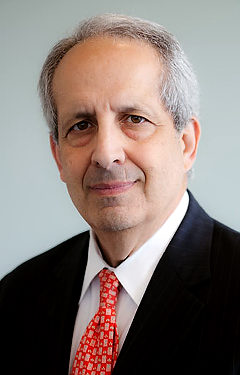
David M. Becker

The news that the General Counsel of the SEC, David M. Becker, is being sued with his brothers by the Madoff trustee to recover $1.544 million in “fictitious profits” reaped from a Madoff account they inherited from their mother has caused a sensation. Not everyone believes Becker’s sudden return “to the private sector” announced on February 1st is coincidental. No new employer has been named. (See Madoff victims’ trustee seeks payouts from family of David Becker, SEC general counsel by David S. Hizenrath The Washington Post February 23, 2011.)

Valuable fresh light is shed on the Madoff scandal by the Becker news, but not in the dramatic ways some assume. Read more

The Smell of Money

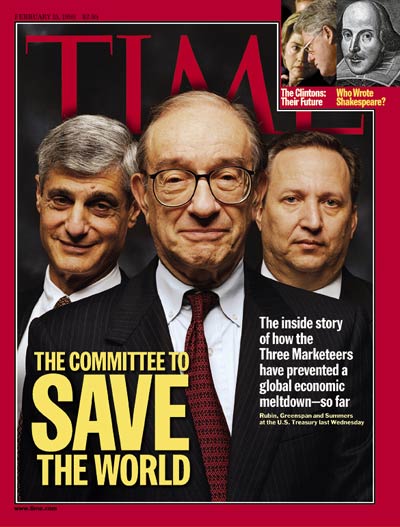
Time Magazine’s Entry in the “Most Ironic Story of the Year” Category

John Graham’s writing on Jews and financial misbehavior is priceless, beginning with the must-read article he co-wrote with Kevin MacDonald, Is the Madoff Scandal Paradigmatic?. This week Graham brings us Did Schumer Shill for Madoff?, which strongly suggests that New York Senator Charles Schumer was complicit in the massive financial swindle perpetrated by co-ethnic Bernie Madoff.

If Graham is correct, it wouldn’t be surprising if Schumer was not alone among high-level Jews in the American government whose actions benefited the financial sector — an area where it is widely acknowledged that Jews predominate — at the expense of the American economy as a whole.

Here I’m going to use work by trade expert Clyde Prestowitz on Larry Summers, Robert Rubin and Alan Greenspan. Prestowitz came to the world’s attention with his 1988 book Trading Places: How We Allowed Japan to Take the Lead. This was followed by other big books such as Rogue Nation: American Unilateralism and the Failure of Good Intentions (2003), Three Billion New Capitalists (2005), and The Betrayal of American Prosperity: Free Market Delusions, America’s Decline, and How We Must Compete in the Post-Dollar Era (2010). I’ll be splicing together information from the three books written after 2000. Read more

The Picower/Madoff settlement: Fooling some of the people all of the time…

Basically, my headline The Picower Madoff settlement: A $7.2 Billion Whitewash is proving correct. As I write this, the 5th most popular article on the webzine of influential Jewish periodical The Forward is In New Madoff Filings, Largest Beneficiary of Fraud Was Possibly Unaware of Ponzi Scheme by Josh Nathan-Kazis December 22, 2010

Jeffry Picower, the late investor who earned more than even Bernard Madoff did from the fraudster’s huge Ponzi scheme, has long been accused by the court appointed trustee in the Madoff case of knowing the operation was a fraud. But a new filing by the trustee following his settlement with the Picower estate suggests that Picower may just have been an innocent Madoff victim after all. Read more

The Picower settlement: Racketeering Rewarded

At The Daily Beast Allan Dodds Frank has supplied a valuable perspective on the Picower settlement – although you need to be alert to see it.

Payday for Madoff Victims” (December 18 2010) first of all refutes Barbara Picower’s tendentious assertion:

“I want to underscore the fact that neither the Trustee nor the U.S. Attorney has charged him with any illegal conduct.”

Picower could not be charged for a simple reason — he conveniently died.

Asked about Picower’s role in Madoff’s scheme and whether the settlement cleared Picower’s name, U.S. Attorney Bharara said, “Mr. Picower passed away a year ago and so the question of whether he had a role—as a criminal matter—is now moot.” Bharara refused to say more… Read more

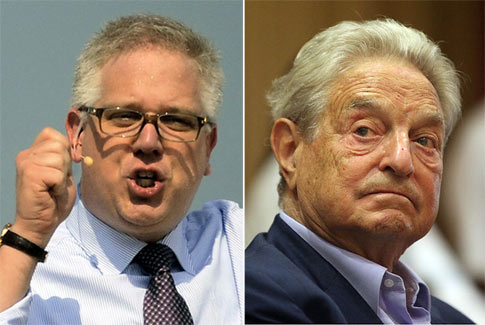
Glenn Beck on George Soros

Glenn Beck has not exactly been a favorite around here (see herehere, and here), but his series on George Soros is intriguing to say the least. Beck has honed in on Soros as the root of all evil, and he has emphasized the point that Soros is Jewish. Beck seems have two main complaints: that Soros is a major funder of the left and that he is a currency manipulator poised to take down the dollar and foment revolution in the US.

Soros is well-known for funding the left, but Beck sees Soros as orchestrating the entire show:“For months, Glenn has been pulling back the structure progressives have worked decades to put in place. Beneath every layer lies one common thread: George Soros.” Beck’s team highlights Soros’ self-image as a messianic figure who believes he is able to change the world in his image: “If truth be known, I carried some rather potent messianic fantasies with me from childhood which I felt I had to control, otherwise I might end up in the loony bin. But when I made my way in the world, I wanted to indulge myself in my fantasies to the extent that I could afford.” Beck’s website shows how Soros funds the left, including Moveon.org, ACORN, Center for American Progress, the Tides Foundation, the Open Society Institute, and the National Council of La Raza. Read more

Is the Madoff Scandal Paradigmatic?

The current TOO article by John Graham and me, “Is the Madoff Scandal Paradigmatic?,” reviews 8 books on the Bernie Madoff scandal. From the beginning, there was a pronounced Jewish angle to the media coverage of the scandal—mainly emphasizing that Madoff was a Jew who stole from other Jews. However, this review (for which the lion’s share of the credit goes to Mr. Graham), explores the far greater depth of Jewishness apparent in the incident. Here I review several important themes.

Contrary to the image in the media, the scandal in fact was a large scale transfer of wealth from non-Jews to Jews. The big money that entered the fund beginning in the 1990s was predominantly from non-Jews, and especially from Europe. In the end, according to whistle blower Henry Markopolos,the European losses were substantially more than losses in the United States.” We suggest that the attraction of wealthy, aristocratic Europeans may have been an example of the “court Jew” phenomenon: “For centuries it was customary for aristocratic landowners, particularly in Eastern Europe, to delegate the task of managing the businesses operations on their estates to Jews, sometimes using the same families for generations.”

Madoff succeeded for so long because he had become a classic Jewish rabbi/guru who was idolized as God-like by the Jewish community. The Jewish community regarded Bernie like a messiah. He was spoken of as if godlike.This is a common feature of Jewish social structure generally—and much emphasized in The Culture of Critique. Just as people who questioned the Oedipal Complex were expelled from psychoanalytic societies and labeled as having various character flaws, an Israeli woman who questioned Madoff’s genius was called an “anti-Semite.”

Interestingly, quite a few of Madoff’s Jewish clients seem to have believed that it was a fraud or at least based on illegal activity such as “front-running” (trading ahead of client orders). “Many Madoff accounts thought they were safely benefitting from illegal activity — and did not care.” They seem to have thought of themselves as benefiting from Jewish ethnic networking where there has been a long tradition of failing to report illegal activities of other Jews— an offence known as Mesirah (informing).

Perhaps most explosively, we suggest that Madoff was protected because of the power of the Jewish community:

The Bernard Madoff matter was one about which a significant segment of Jewish America cared very much — some for financial reasons, others, perhaps, because of community pride and loyalty. Challenging this group was well known to be extremely dangerous. As in other matters, they awarded themselves a veto, and they used it — as it happened in this case, to their cost. All in all, the Madoff affair and the cover-up is another indication of Jewish power in America.


For example, Henry Markopolos, in his aptly titled No One Would Listen, comments


In my mind, at least, I was convinced that someone high up at the [Wall Street] Journal had decided it was too dangerous to go after Bernie Madoff. … I was finally beginning to consider the possibility that Bernie Madoff was untouchable — that he was simply too powerful to be brought down.


Madoff was investigated eight times by the SEC, but each investigation was inexplicably stopped. Sen. Charles Schumer seems to have been part of the power structure protecting Madoff. Madoff and his sons maxed out their contributions to Schumer. Schumer phoned the SEC on Madoff’s  behalf,  and he treated Markopolos with incredible rudeness during Senate hearings — not exactly the expected treatment toward someone who was right all along.

What has been portrayed as SEC incompetence now looks quite a bit like corruption. “We submit that the SEC failed to stop Madoff not because it was incompetent, but because it was afraid — of the Jewish Establishment.” It seems likely that even greater corruption was involved in the financial collapse that has been such an ongoing disaster for the country. The fact that Goldman Sachs managed to settle its involvement in one particular deal with a slap on the wrist.

Consistent  with the corruption thesis, it appears that Madoff’s accomplices will get off easy. Amazingly, an article that appeared too late to include in the print version questioned whether anyone will be criminally charged with being an accomplice to the fraud. Bernie is taking the fall all by himself, but it wouldn’t be too surprising if there’s lots of money stashed for his family members.

Perhaps in the back of Madoff’s mind was the idea — possibly the instinct — that after a few years, perhaps in a different country, maybe speaking a different language, his family would live on, possibly with a new name (surname changes are under way among the Madoff kin) and perhaps with some portion of the loot.


Bookmark and Share

Does Jewish financial misbehavior have anything to do with being Jewish?

As expected, the fraud charges brought against Goldman Sachs by the SEC and now the Senate hearings are producing a lot of anxiety in Jewish quarters. Back in January, Michael Kinsley wrote an article telling us how to think about the Jewish angle in the financial meltdown (“How to Think About: Jewish Bankers”). The question for Kinsley isn’t whether negative qualities of Jewish bankers or the bad behavior of Jewish firms like Goldman have anything to do with being Jewish.

The question is whether anyone who criticizes Goldman is an anti-Semite:

Because Goldman is thought of as a “Jewish” firm, and because it dominates the financial industry, criticism of Goldman, or of bankers generally, is often accused of being anti-Semitic. Commentators including Rush Limbaugh and Maureen Dowd have been so accused. When, if ever, are such accusations fair?”

So Kinsley passes his Geiger Counter over non-Jews like Limbaugh and Dowd and passes judgment on their moral worthiness. Any link between Jewishness and misbehavior is automatically out of bounds for serious discussion: “Certainly any explicit suggestion that Goldman’s alleged misbehavior and its Jewishness are related in any way is anti-Semitic.”

This statement draws on a general reluctance to ascribe negative traits as being reasonably associated with a certain group. But this can easily be seen to be just another example of political-correctness think. What if indeed a particular group is more likely to engage in some sort of bad behavior? For example, J. Philippe Rushton and Glayde Whitney have claimed on the basis of a rather powerful theory and a considerable amount of data that Blacks are prone to criminality and this is true wherever there are Blacks — whether in Africa, North America, South America, or the Caribbean.

If indeed that is true or at least reasonable, then it would also be reasonable to say being Black contributes to the likelihood that a certain group of Blacks are criminals — that a considerable part of the explanation for the criminality of these particular Blacks stems from their group membership. It would certainly not imply that all Blacks or even anywhere near all Blacks are criminals. Just that Blacks are more likely than other groups to be involved in certain kinds of crime — Rushton and Whitney would argue for a strong role of their common genetic ancestry.

Or take a presumably benign example: It’s well known that the Ashkenazi Jewish mean IQ higher than the European mean. If then one finds that Jews are highly overrepresented in a particular high-IQ occupation, say among mathematicians, then it is certainly reasonable to explain this as partly due to the general traits of the group, as writers ranging from Charles Murray, Henry Harpending and Greg Cochran, and I have argued

Can such an argument be made Jewish involvement in financial scandals has something to do with being Jewish? Back in the 1980s a major financial scandal revolved around Michael Milken. Much of the discussion of the Jewish role in this financial scandal centered around the book Den of Thieves by James B. Stewart. Jewish activist Alan Dershowitz called Den of Thievesan “anti-Semitic screed” and attacked a review by Michael M. Thomas in the New York Times Book Review because of his “gratuitous descriptions by religious stereotypes.”  Thomas’s review contained the following passage:

James B. Stewart . . . charts the way through a virtual solar system of peculation, past planets large and small, from a metaphorical Mercury representing the penny-ante takings of Dennis B. Levine’s small fry, past the middling ($10 million in inside-trading profits) Mars of Mr. Levine himself, along the multiple rings of Saturn — Ivan F. Boesky, his confederate Martin A. Siegel of Kidder, Peabody, and Mr. Siegel’s confederate Robert Freeman of Goldman, Sachs — and finally back to great Jupiter: Michael R. Milken, the greedy billion-dollar junk-bond kingdom in which some of the nation’s greatest names in industry and finance would find themselves entrapped and corrupted.

Thomas was attacked as an anti-Semite simply for mentioning so many Jewish names all in one paragraph. His defense was to note that “If I point out that nine out of 10 people involved in street crimes are black, that’s an interesting sociological observation. If I point out that nine out of 10 people involved in securities indictments are Jewish, that is an anti-Semitic slur. I cannot sort out the difference. . . .”

I can’t sort out the difference either. And once again, the current financial meltdown has revealed a large role for Jewish companies and Jewish money managers who engineered the meltdown and profited handsomely from it.

Kinsley acknowledges that Jews predominate on Wall St. and it’s okay to criticize a Jewish firm like Goldman Sachs — but only if there is no mention that Jewishness has anything to do with it.

Sometimes the stereotype about Jews and money takes a harsher form: Jews are greedy, they lie, cheat and steal for money, they have undue influence with the government, which they cultivate and exploit ruthlessly, and so on. In recent weeks, many have said this sort of thing about Goldman Sachs, but with no reference to Jews. Are they all anti-Semites? No. It ought to be possible to criticize Goldman in the harshest possible terms–if you think that’s warranted–without being tarred as an anti-Semite.

So is it possible to frame an argument that bad behavior in the financial realm does indeed have something to do with Jewishness? Note that this is quite different from showing that Jewishness is involved in the creation of culture — the argument of The Culture of Critique. There it was only necessary to show that a movement was dominated by Jews who identified as Jews and saw their work as advancing Jewish interests.

As I see it, the argument has two parts:

1.)    Judaism as a group evolutionary strategy has always had a strong element of ingroup/outgroup thinking. Entirely different moral standards are applicable inside and outside the group. The result is that the Jewish moral universe is particularistic and the attitude toward non-Jews is purely instrumental — aimed at maximizing personal benefit with no moral concerns about the consequences to non-Jews. For example, a common pattern in traditional societies was that Jews allied themselves with exploitative non-Jewish elites.

The evolutionary aspects of this situation are obvious. Jews were the ideal intermediary for any exploitative elite precisely because their interests, as a genetically segregated group, were maximally divergent from those of the exploited population. Such individuals are expected to have maximal loyalty to the rulers and minimal concerns about behaving in a purely instrumental manner, including exploitation, toward the rest of the population. (A People that Shall Dwell Alone, Ch. 5)

2.)    One would then have to show that actual Jewish behavior reflected the double moral standard that is ubiquitous in Jewish religious writing. There is in fact a long history of anti-Jewish attitudes focused around the charge that Jews are misanthropes with negative personality traits who are only too willing to exploit non-Jews. This history is summarized in Ch. 2 of Separation and Its Discontents, beginning with the famous quote from Tacitus, “Among themselves they are inflexibly honest and ever ready to show compassion, though they regard the rest of mankind with all the hatred of enemies.” Among the more illustrious observers are the following (see here for the complete passage, p. 46 ff):

  • Immanual Kant: Jews are “a nation of usurers . . . outwitting the people amongst whom they find shelter. . . . They make the slogan ‘let the buyer beware’ their highest principle in dealing with us.”
  • Economic historian Werner Sombart: “With Jews [a Jew] will scrupulously see to it that he has just weights and a just measure; but as for his dealings with non-Jews, his conscience will be at ease even though he may obtain an unfair advantage.”
  • Jewish historian Heinrich Graetz: “[The  Polish Jew] took a delight in cheating and overreaching, which gave him a sort of joy of victory. But his own people he could not treat in this way: they were as knowing as he. It was the non-Jew who, to his loss, felt the consequences of the Talmudically trained mind of the Polish Jew.”
  • Sociologist Max Weber: “As a pariah people, [Jews] retained the double standard of morals which is characteristic of primordial economic practice in all communities: What is prohibited in relation to one’s brothers is permitted in relation to strangers.”
  • Zionist Theodor Herzl: Anti-Semitism is “an understandable reaction to Jewish defects” brought about ultimately by gentile persecution: Jews had been educated to be “leeches” who possessed “frightful financial power”; they were “a money-worshipping people incapable of understanding that a man can act out of other motives than money.”
  • Edward A. Ross: “The authorities complain that the East European Hebrews feel no reverence for law as such and are willing to break any ordinance they find in their way. . . . The insurance companies scan a Jewish fire risk more closely than any other. Credit men say the Jewish merchant is often “slippery” and will “fail” in order to get rid of his debts. For lying the immigrant has a very bad reputation. In the North End of Boston “the readiness of the Jews to commit perjury has passed into a proverb.”

Edmund Connelly has reviewed the work of two academic historians, Paul Johnson (A History of the Jews) and Albert Lindemann (Esau’s Tears: Modern Anti-Semitism and the Rise of the Jews), who “have shown that this pattern of Jewish deception and fraud in pursuit of wealth and its legitimacy within the Jewish community have a long history.”

The key point is the legitimacy of fraud within the Jewish community. Successful fraudsters are not shunned but rather become pillars of the  community:

Reflecting the legitimacy of white collar crime in the wider Jewish community in the contemporary world, [Michael] Milken is a pillar of the Jewish community in Los Angeles and a major donor to Jewish causes. Indeed, this is part of a pattern: Ivan Boesky donated $20 million to the library at the Jewish Theological Seminary. And the notorious Marc Rich has donated millions of dollars to a wide range of Jewish causes, including Birthright Israel, a program designed to increase Jewish identification among young Jews. The list of people supporting Rich’s pardon by Bill Clinton was “a virtual Who’s Who of Israeli society and Jewish philanthropy.” A rabbi concerned about the ethics of these practices notes, “it is a rare Jewish organization that thinks carefully about the source of a donor’s money. … The dangerous thing is not that people make moral mistakes, but that we don’t talk about it.”

The idea is that the Jewish financial elite sees the non-Jewish world in instrumental terms — as objects with no moral value. As I noted earlier,

there is a strong suggestion that the financial elite behaved much more like an organized crime syndicate than as an elite with a sense of civic responsibility or commitment to the long term viability of the society. Whereas organized crime stems from the lower levels of society, this meltdown was accomplished at the very pinnacle of society — the Ivy League grads …, the wealthy financial firms and investment rating agencies, the strong connections with government that facilitated the bailout and failed to provide scrutiny while it was happening. It seems highly doubtful that all this would have happened with the former WASP elite.

In psychological terms, these Jews are behaving in a sociopathic manner toward the non-Jewish world. That is, they have no concern for the moral consequences of their actions — no empathy or concern for victims. Recent neuroscience data shows that people are quite capable of having a great deal of empathy and concern for people in their ingroup while having no empathy at all toward outsiders, especially if they are highly ethnocentric. This implies that a strongly identified Jew could be the epitome of a well-socialized, empathic group member when he is among Jews, but treat the rest of the world in a cold and calculating manner and have no remorse or empathy for the victims.

Nor would such a person have any concerns about the long-term future of the society he lives in. Richard Spencer discusses the fact that so many of our politicians are sociopaths (my favorite example is Winston Churchill), noting that “Aristocrats governed with a healthy, long-term goal in mind: they wanted their great grandchildren to inherit a prosperous, powerful realm.”

It can safely be asserted that concerns about the long-term health of the society are not uppermost in the minds of our financial elite.

Concerns that Wall Street is socially irresponsible are widespread now. Just last week I saw CNBC reporter David Faber asking Lloyd Blankfein of Goldman Sachs whether Wall Street was good for America. Is it serving any positive social function? — with the implication that it’s at least reasonable to think it isn’t. Such a question would have been inconceivable a couple years ago. Rather than producing any tangible goods or allocating financing in a way that benefits good businesses, Matt Taibbi’s analogy seems to hit home:  “The world’s most powerful investment bank is a great vampire squid wrapped around the face of humanity, relentlessly jamming its blood funnel into anything that smells like money.”

As Kinsley notes, this analogy was immediately deemed anti-Semitic by the usual thought police: “This sentence, many have charged, goes beyond stereotypes about Jews and money, touches other classic anti-Semitic themes about Jews as foreign or inhuman elements poisoning humanity and society, and—to some critics—even seems to reference the notorious ‘blood libel’ that Jews use the blood of Christian babies to make matzoh.”

It also conjures up a strong image of economic parasitism, another ancient anti-Jewish theme: the financial sector as not producing products or wealth, but extracting wealth to the detriment of the society as a whole.

The problem for Kinsley and like-minded people is trying to seriously rebut the claim that the socially destructive behavior of the  predominantly Jewish financial elite does in fact fit a strong historic pattern of Jewish ethical behavior vis á vis the non-Jewish society — behavior that is well grounded in Jewish religious ethics.

In any case, it is a very troubling sign indeed for the  US that the financial sector is vastly outpacing the rest of the economy in corporate earnings as well as in executive compensation — especially when it’s being run by a group of people who have sociopathic attitudes toward non-Jewish America.

Bookmark and Share