Friedrich Georg Jünger: The Titans and the Coming of the Titanic Age
Translated from the German and with an Introduction by Tom Sunic

Friedrich Georg Jünger (1898-1977)
Introduction: Titans, Gods and Pagans by Tom Sunic
Below is my translation of several passages from the last two chapters from Friedrich Georg Jünger’s little known book, Die Titanen, 1943, 1944 (The Titans). Only the subtitles are mine. F.G. Jünger was the younger brother of Ernst Jünger who wrote extensively about ancient Greek gods and goddesses. His studies on the meaning of Prometheism and Titanism are unavoidable for obtaining a better understanding of the devastating effects of the modern belief in progress and the role of “high-tech” in our postmodern societies. Outside the German-speaking countries, F.G. Jünger’s literary work remains largely unknown, although he had a decisive influence on his renowned brother, the essayist Ernst Jünger. Some parts of F.G Jünger’s other book, Griechische Götter (1943) (Greek Gods), with a similar, if not same topic, and containing also some passages from Die Titanen, were recently translated into French (Les Titans et les dieux, 2013).
In the footsteps of Friedrich Nietzsche and along with hundreds of German philosophers, novelists, poets and scientists, such as M. Heidegger, O. Spengler, C. Schmitt, L. Clauss, Gottfried Benn, etc., whose work became the object of criminalization by cultural Bolsheviks and by the Frankfurt School in the aftermath of WWII, F. G. Jünger can also be tentatively put in the category of “cultural conservative revolutionaries” who characterized the political, spiritual and cultural climate in Europe between the two world wars.
Ancient European myths, legends and folk tales are often derided by some scholars, including some Christian theologians who claim to see in them gross reenactments of European barbarism, superstition and sexual promiscuity. However, if a reader or a researcher immerses himself in the symbolism of the European myths, let alone if he tries to decipher the allegorical meaning of diverse creatures in the myths, such as for instance the scenes from the Orphic rituals, the hellhole of Tartarus, or the carnage in the Nibelungen saga, or the final divine battle in Ragnarök, then those mythical scenes take on an entirely different meaning. After all, in our modern so-called enlightened and freedom-loving liberal societies, citizens are also entangled in a profusion of bizarre infra-political myths, in a myriad of weird hagiographic tales, especially those dealing with World War II vicitmhoods, as well as countless trans-political, multicultural hoaxes enforced under penalty of law. Therefore, understanding the ancient European myths means, first and foremost, reading between the lines and strengthening one’s sense of the metaphor. Read more
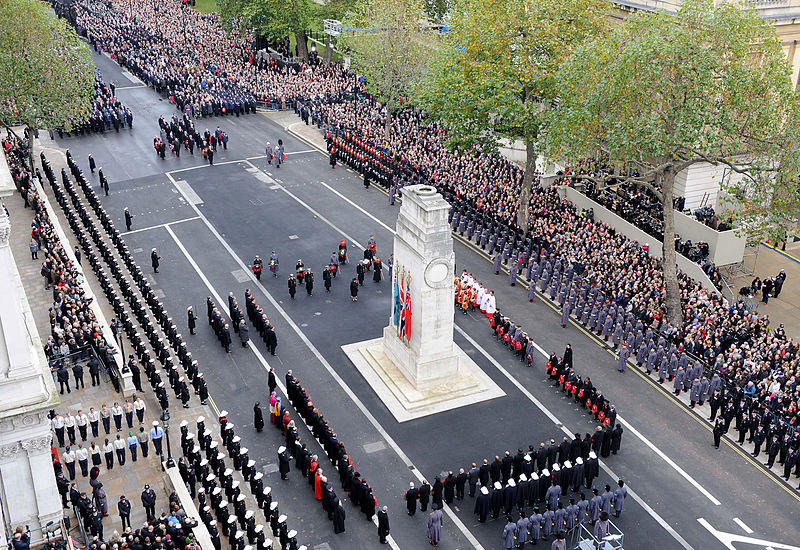
 There is no more heartfelt symbol of traditional feeling in Britain than the poppy. and this is why two recent government funding decisions revealed such an astonishing shift in cultural priorities. The first was a refusal to fund a
 Indeed, cultural Marxism is now all-pervasive. Most people believe cultural Marxism is synonymous with political correctness. But it is more than that. Cultural Marxism, after the ‘work’ of Antonio Gramsci, is about getting Marxist and neo-Marxist ideas ingrained in the public consciousness and even subconsciousness via subversion of the national culture. One way is to imprint Marxist ideology on cultural texts for public reception. Thus, the more texts are received and absorbed by the public, the more sympathetic to Marxist ideas they become.
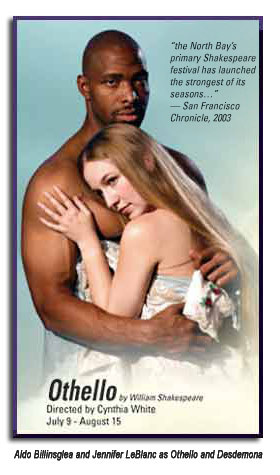 Editor’s note: A theme of TOO is that the entire culture of the West has been corrupted. This includes essentially all the arts and academic fields in the social sciences and humanities. It is therefore not surprising that Shakespeare criticism has been influenced by the reigning culture of the academic left. This essay is an abbreviated version of the second chapter of George F. Held’s ebook,
 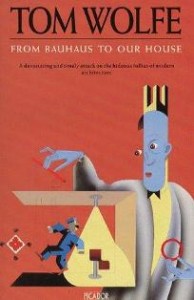 From Bauhaus to Our House, a critique of modern architecture, can be considered a companion volume to Painted Word. Wolfe charges modern architecture with causing “sensory deprivation” due to “the whiteness & lightness & leanness & cleanness & bareness & spareness of it all.”[1] Beyond aesthetic criticism, Bauhaus again makes explicit the link between modernism in the arts and left-wing politics. And once again a turning point in the U.S. was the Second World War. After the war the American elites were “willing to accept that glass of ice water in the face, that bracing slap across the mouth, that reprimand for the fat on one’s bourgeois soul, known as modern architecture.”[2]