The Supremacy of Stupid: How Dumb Ideas about Race Flourish on the Left

An ant is an amazing creature, a marvel of miniaturization and compressed complexity. With only a tiny brain, it absorbs and interprets a flood of data from its myriad sense-organs, navigating a complex and constantly changing world, co-operating and communicating with its nest-mates, collaborating in prodigies of architecture, engineering and logistics. No human robot can even come close to matching the abilities of an ant, let alone at such a minute size and on such a small budget of energy.

Dumb beats clever

But the highly sophisticated ant meets its master in the form of a mindless organism far lower in the evolutionary scale. As I described in “How to Cure a White Zombie,” the fungus Ophiocordyceps unilateralis can subvert the complex nervous system of an ant, turning the ant into a zombified spore-spreader. You can sum up the behaviour of the fungus in two words: sitting and floating. It sits in its victims and then, in the form of spores, floats off to new victims. The behaviour of ants, by contrast, is endlessly subtle and varied. Ant-behaviour has filled entire libraries and fuelled long scientific careers. But the simple fungus beats the complex ant.

The complexity of an ant

Another parasite, the microscopic protozoan Toxoplasma gondii, overcomes an even bigger evolutionary gulf and subverts the even more complex brains of rats and human beings. The fungus and the protozoan have no minds, no consciousness and no purpose but self-propagation. They’re dumb, but they’ve been beating clever for millions of years. That’s why we shouldn’t be surprised at the success of stupid ideologies in the world of politics. In competition and warfare, it doesn’t matter how you win: the only criterion of success is, well, success. The fungus and the protozoan are unconscious experts at chemical warfare, because they interfere with the brain-chemistry of their victims. In the world of human politics, parasites and predators interfere with brains by using words and ideas instead. Read more


On White Genocide: A Reply to Critics

My recent TOO essay A Rejoinder on White Genocide generated a relatively large number of comments, some positive but mostly critical.  Editor Kevin MacDonald has kindly allowed me to publish this follow-up essay to address some of the many issues raised.  It’s an important topic for the alt-right, and it deserves more discussion than short blog comments can allow.  Hence the need for this essay.

By way of short recap:  I argued previously that ‘White genocide’ is a relatively useless concept.  The term ‘genocide’ has Jewish origins, arising out of Nazi actions in World War Two, and is hopelessly vague.  The formal UN definition includes “intent to destroy,” “in whole or in part,” a national or ethnic group.  It covers killing, of course, but also “serious bodily or mental harm”, and the imposition of harmful “conditions of life”, whatever those may be.  Rather than talk about some amorphous ‘White genocide,’ I suggested dealing in a concrete way with the threats facing Whites.  I defended a present figure of 800 million Whites globally—a number that will likely decline gradually, to 655 million in 2100 and to 510 million in 2200, under present assumptions.  I closed with a modest plan to rationally and humanely restore an 80% White majority in the US, primarily by incentivizing non-White emigration and birth-rate reduction.

But attacking the whole notion of ‘White genocide’ proved hazardous!  Clearly there is a diversity of views on this matter, which is both normal and healthy.  Concepts and strategies need to be debated.  Whites everywhere are undoubtedly under assault, and we need to understand this phenomenon, its causes and potential cures, if we are to move ahead.  TOO is an intellectual forum for discussion of concepts and theories related to White interests, rather than an activist site per se.  Still, the two realms are not independent; thoughts and ideas have natural implications for policy, politics, and social action.  My original piece attempted to sketch out basic governmental principles that would best serve White interests.  They were, of necessity, general and conceptual.  Below I will say a bit more about the pragmatic aspect of implementing such policies.

First, though, it may be best to begin with areas of common agreement.  I think it’s safe to say that there is broad consensus on the following points:

  • The White race is of inherent value to humanity, and as such deserves protection and defense.
  • Whites globally are under threat, due to (a) declining numbers, (b) declining physical, mental, and moral health, and (c) loss of political autonomy and self-government.
  • Some of the threats are sociological, economic, or environmental in nature, but others arise from deliberate and intentional actions.
  • The global Jewish lobby has an intrinsic interest in seeing a general decline in White well-being and a loss in White political power. They and their non-Jewish supporters pose the primary direct threat.
  • Racial and cultural diversity has a net negative effect on human society.
  • All humans are, by nature, best suited to live in social and environmental settings from which they evolved—societies that are broadly uni-racial and monocultural. Humans have little or no evolutionary experience living with diverse races or ethnicities, and doing so causes inevitable problems.
  • From the early Industrial Revolution, modern society has enabled the mass movement of people from indigenous to foreign lands. Left to their own initiative, people will always attempt to move from ‘worse’ to ‘better’ societies, but if this happens en masse, it will contribute to the decay of the very societies that they seek out.  Such movement must therefore be stopped.
  • The only long-term solution for many present-day problems is to restore human society to its natural and original conditions—uni-racial and monocultural, broadly speaking. This entails political separation and/or repatriation of minority peoples to their native lands.

Perhaps this qualifies as a ‘manifesto’ of White Nationalism.  It should garner something approaching universal consent. Read more

Tucker Carlson: “White Supremacy” is a “Hoax”

Tucker Carlson stated that “White Supremacy” is a “hoax.” Should we care? I posted a Twitter rant consisting of 5 linked tweets:

Patriots, Identitarians, Nationalists and Sovereignists: They must all be positive

What follows is the text of my speech given at the Generation Identity conference in London, UK, July 27, 2019.

Words such as “sovereignty” and “identity,” both belonging to the family of patriotism, have become trendy words among European nationalists of different stripes. They are even used as synonyms along with their new derivatives “sovereignists” and “identitarians” respectively. Many of these verbal derivatives did not even exist in the English language until recently. In the German language these words, which are of Latin origin, have also come into use recently—words such as der Patriot, der Identitäre and der Souveränist, although they often sound odd and un-German to traditional German ears. These replacement words for the old word “nationalist” owe their birth to two political and historical factors: 1) The German language, shortly after World War II, was subjected to a profound cleansing process carried out by the occupying Allied forces and their re-educational apparatchiks, the latter mostly recruited among academics of the newly re-established, Jewish-dominated Marxist Frankfurt school. Their task was to impose on the German people a new political vocabulary, a new way of communication — and a new identity. 2) The old German words associated with the notion of patriotism such as the German adjective “völkisch” or the compound noun “Volksgenosse,” which stands for a fellow patriot, or the unique German word “artfremd,” which means an alien of different biological stock, or the word “gleichrassig,” meaning someone of the same racial stock, vanished overnight in 1945. Ever since they have become crimethink words banned from public discourse. Henceforth many modern German and other European nationalists, burdened by the stigma of the National-Socialist past, prefer to use imported words such as “patriots” or “identitarians” instead, well aware that these new words can provide them with a modicum of political legitimacy in the mainstream media.

The new word “identitiarian” sounds quite romantic and is often used by patriots today all over Europe and America although it is not specific enough. Our identity cannot be unitary; it can have multiple facets. How should we define our identity? In singular or in plural? For example, in my case, which identity comes first and which one comes second? Am I first a Croat or an American? Or a hyphenated Croat-American? Or a European-White-American? On the professional level I can also display triple or quadruple identities; I can first define myself as a writer, as a professor, a translator, or as a political activist. On the religious level, my identity may first be Catholic or agnostic. And finally, there is also my racial identity, which is being dismissed as a social construct today by the majority of System-friendly scholars and the mainstream media. There are, fortunately, a few prominent scholars today who consider race the first marker of man’s identity. Even a half-blind man when stepping out of this London hotel can notice swarms of individuals of different races milling around.

So which identity should I pick first in my case? Should it be based on my racial, national, political, religious, sexual, or professional preferences? Read more

The Legacy of the Left, Part II

Those who cannot remember the past are condemned to repeat it.
     -Santayana

Despite the abject accounts of Marxist “progressive” historians, the catastrophic events associated with the rise of the left are clear beyond all doubts—from the unprecedented savagery of Robespierre’s Reign of Terror to the fanaticism and obscene murderousness of the Communist regime under Lenin and Stalin, to Khmer Rouge Cambodia and Red China. Courtois estimates the global total of Communism’s innocent victims at between 85 and 100 million in the twentieth century. During the two years of the Great Purge alone, the NKVD [Secret Police the Soviet Union] executed 850,000 victims under the notorious Section 58 of their Communist penal code. But as Robespierre famously said, “You can’t make an omelette without cracking a few eggs.” Stalin said the same thing.

Santayana’s quote at the top of this article is totally relevant to today’s politics where Democrats are debating amongst themselves for the title “Champion of the Left.” In a funny, but not-so-funny PragerU video, people on the streets of New York City were asked whether or not a statement read by PragerU Host Ami Horowitz stemmed from the “Communist Manifesto” or the Democratic Party’s platform.

In the latest media offering to the American people, Donald Trump has been cast to play the roles originally played by King Louis XVI and Czar Nicholas II. Unfortunately for the studio, the ratings for their TV sitcom “The Mueller Show Trial” have fallen off as of late. But for the first two years of the Trump presidency the gullible general public tuned in for every twist and turn in the longest running, most boring sitcom ever aired on TV. But the slightest possibility of seeing Trump guillotined (okay, carted off to prison) kept them glued to their favorite device.

Make no mistake about it. The Mueller investigation was a show trial in the long tradition of the left. Stalin would have likely regarded it as a bit beneath his standards because Trump wasn’t guillotined, but it had a lot of the same ingredients. As Mark Levin noted, “There was no reply by the president that was permitted, no contrary witnesses, no contrary documents, no contrary evidence, no cross-examinations, no challenges of any type.”

Despite the fact that Mueller’s investigation into the alleged Trump-Russian collusion dominated CNN (and MSM in general) headlines since before Trump’s election, there was not a mention of Mueller by the CNN hosts of the Democratic debates in Detroit. After all that reporting they simply pretended nothing had happened. Of course, in a very real sense nothing did. None of the charges made against Trump or his associates that were related to any sort of collusion panned out. No evidence of collusion has ever been uncovered. Even the initial premise for the investigation and certainly its long, tired run were dubious at best. After two years of their “investigative journalism”, we now learn that Mueller himself was merely a puppet of a political witchhunt controlled by Anti-Trump Democrats, notably Andrew Weissman. MSM journalists never bothered to uncover or disclose the basic fact that the Mueller investigation was dominated by some very partisan Democrats.

And no one seemed to notice that the obscure Logan Act, never enforced in its 218 years of existence, became the pretext “to entangle the new administration in a criminal investigation as soon as it walked in the door of the White House.” Read more

The Legacy of the Left: Then and Now, Part 1

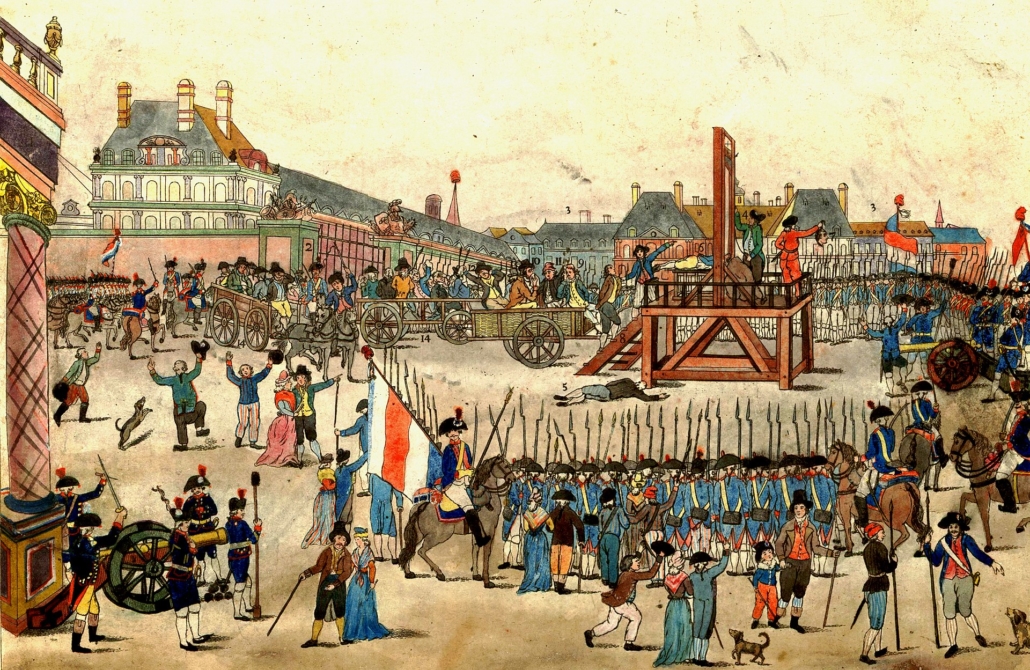
The execution of Robespierre

In “The Tragedy and Triumph of Lyndon Johnson” Joseph Califano describes LBJ’s view of the left wing of his own party. “A liberal is intolerant of other views. He wants to control your thoughts and actions,” Johnson declared. Califano then describes the president moving forward in his chair to deliver his punch line:

You know the difference between cannibals and liberals?
Cannibals eat only their enemies.”

Using LBJ’s insightful quip as a starting point I set out to explore the history of leftist politics from the Reign of Terror to the Stalin’s Great Purge in Part I and compare it with the ‘Resistance’ we see from today’s angry and intolerant leftists in Part II.

Part I: Highlights of the Old Left

Leftwing French radicals led by lawyers like Danton, Robespierre and others laid a foundation for leftist thought and action that has resurfaced throughout history. Here I provide a synopsis of the two revolutions that have most shaped modern leftist thought in the West: France in the late 18th century and Russia in the early to mid-20th century.

After the fall of the Bastille and the arrest of the King, the French insurrectionists were facing the decision of what to do next, specifically what to do with Louis XVI. Robespierre argued that the dethroned king could function only as a threat to liberty and national peace and that the members of the Assembly were compelled to execute the king as part of their duty to protect the public safety, rather than administer justice by trying the King according to the law in a fair and impartial manner:

The critical question concerning you must be decided by these words alone: Louis was dethroned by his crimes; Louis denounced the French people as rebels; he appealed to chains, to the armies of tyrants who are his brothers; the victory of the people established that Louis alone was a rebel; Louis cannot, therefore, be judged; he already is judged. He is condemned, or the republic cannot be absolved. To propose to have a trial of Louis XVI, in whatever manner one may, is to retrogress to royal despotism and constitutionality; it is a counter-revolutionary idea because it places the revolution itself in litigation. [138]

In essence Robespierre argued that the King must die so that the nation may live and his view carried the day.[140] Without trial Louis XVI was voted guilty of conspiracy and attacks upon public safety by the Convention and sentenced to death by guillotine.

During the insurrection Robespierre had scrawled a note in his memorandum-book:

What we need is a single will (il faut une volonté une). It must be either republican or royalist. If it is to be republican, we must have republican ministers, republican newspapers, republican deputies, a republican government. The internal dangers come from the middle classes; in order to defeat the middle classes we must rally the people. … The people must ally itself with the Convention, and the Convention must make use of the people.[163][164]

Robespierre’s brief statement about the need for a single will provides insight into the dynamics of his brief tenure at the helm of the Reign of Terror. He did not just debate with fellow revolutionaries and let a majority of diverse voices rule. Instead, he carefully hunted down anyone who disagreed with him and plotted to have them guillotined. Read more

Trump’s ‘Thatcher Effect’: Obstacle to White Nationalism?

“While anti-fascists had eroded the organisational capacity of the National Front in the late 1970s, Margaret Thatcher had stolen their ideological clothing. As prime minister, she had successfully held together a coalition of support with her blend of jingoism and watered-down Powellism.
Daniel Trilling, Bloody Nasty People: The Rise of Britain’s Far Right (2012)

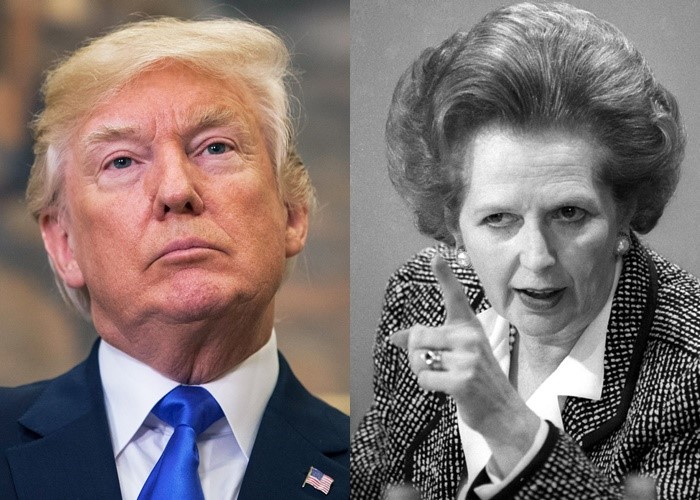
A rising White Nationalist movement that is somehow stunted in what should be its greatest moment of opportunity. A politically incorrect candidate for office, seemingly unafraid to discuss immigration, and who uses controversial rhetoric touching on race to attract mass support and move victoriously into government. An anti-fascist and left-liberal coalition driven to apoplexy by the repeated intrusion of “racist” arguments and ideas into the national discourse. And a mass influx of coloured migration that somehow continues unabated, perhaps even getting worse. This would be a useful and accurate summary of Donald Trump’s first term in office, which continues to frustrate and confuse those looking for tangible results. As discussions continue on Trump’s putative utility for the anti-immigration cause and on the alternative possibilities of “accelerationism” under a radical left-wing Democrat government, the following essay attempts to offer some advice and lessons from history — a relatively recent history, and one in which all of the important aspects of the Trump phenomenon listed above can be clearly seen. As will be demonstrated from the example of Margaret Thatcher and Britain’s National Front, it is argued here that Trump is an obstacle, and not the way, to the advancement of the Dissident Right.

A Movement on the Rise

The years 2014–16 may in some sense be regarded as a watershed in the recent history of Dissident Right ideas in the United States, and yet they were truly dwarfed by the progress of the Dissident Right in 1970s Britain. Founded in 1967 from a union of the British National Party and the League of Empire Loyalists (and later, the Greater Britain Movement), the National Front was a vehicle for racial thinking and anti-immigration viewpoints at a time when Britain was being swamped by successive floods of coloured migrants from former British colonies. Much like today’s political context, there was a relative neglect of immigration and race-related issues by the mainstream political parties. In yet another important similarity, British industry was beginning to undergo dramatic changes, with the emergence of increasingly troubled and alienated classes of Whites forced to live alongside growing Black and Pakistani enclaves. Simmering inter-racial tensions were being managed, barely, via the gagging of Whites under an increasing number of “race relations” laws, devised almost exclusively by a body of Jewish lawyers. The National Front was able to exploit this context and force its way into the political arena, taking voters from both the Conservative Party and the Labour Party throughout the 1970s.[1] During the period 1972 to 1974, the Front boasted an active and paying membership somewhere between 14,000 and 20,000, and achieved advancement during local elections in 1973, 1976, and 1977. Its electoral influence has been described by scholars as “significant,”[2] and its cultural impact was such that every voter in Britain knew exactly what the movement was, as well as the basic thrust of its ideological trajectory. It was a movement on the rise, and confidence was high. Read more