Frederick the Great’s Jewish Policy: Between Containment and Profit, Part 1
Frederick the Great’s Jewish Policy: Between Containment and Profit
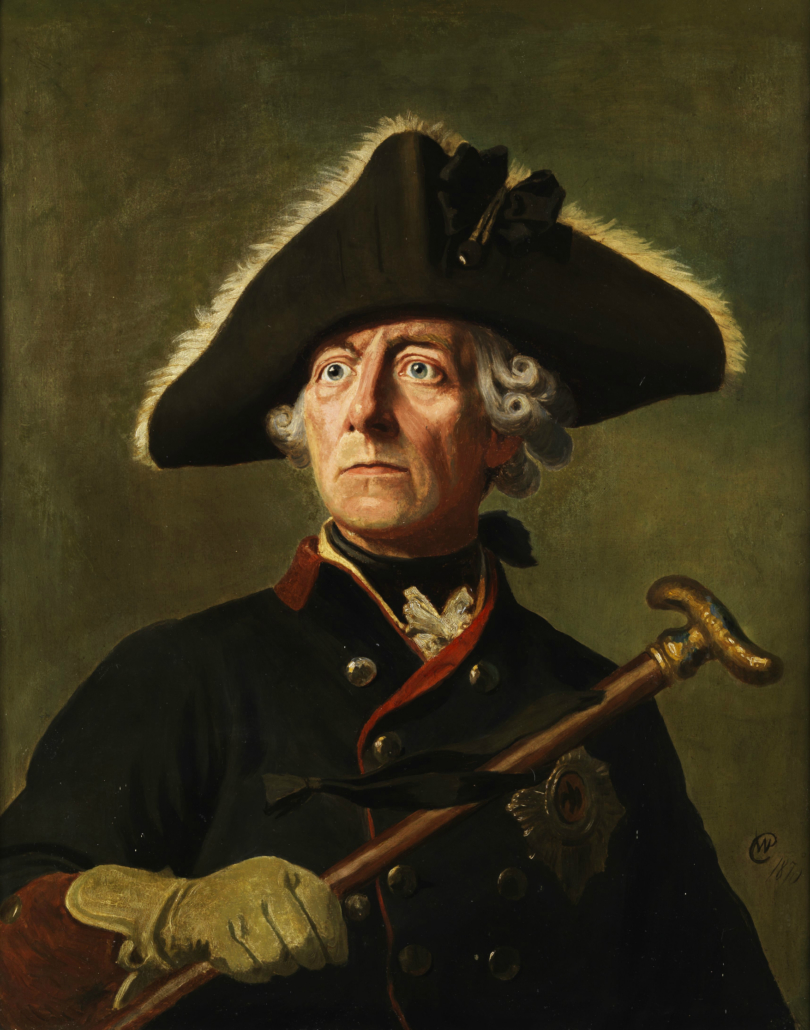
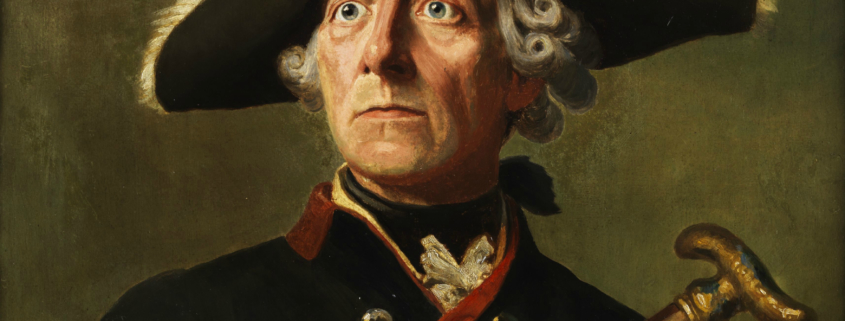
Frederick II of Prussia, known as “the Great,” is one of the celebrated figures in Western history. On the one hand, he was an accomplished statesman and military leader, who through skill and dogged determination in wars with far larger states, doubling the size of his vulnerable and relatively poor north-German realm, turning Prussia into one of Europe’s great powers. But Frederick was also an almost unique example in history of a statesman who was also a genuine intellectual, the paradigmatic “enlightened despot,” who undertook reasonable reforms and could converse with the great minds of his day.
Frederick’s political works are a classic statement of autocratic good government.[1] Certainly, while the republican tradition is in a sense characteristically and almost uniquely Western, we should not forget that for most our history we have been governed by monarchs. Roman emperors and medieval and early-modern kings certainly presided over as many our great achievements as did the Hellenic city-states or the modern republics.
In this article, I would like to detail a little-known aspect of Frederick the Great’s government: Jewish policy. Frederick had inherited somewhat contradictory policies from his forefathers: on the one hand preventing the growth of the Jewish population (notably by limiting the right of residence), for Jews were considered to be involved in illicit trade and would drive Christians out of business, and on the other hand exploiting Jewish business acumen, whether by taxing them, getting loans from them, or using their skills for complex, and sometimes dubious, monetary transactions.
Frederick’s attitude towards this inheritance is of interest because, as monarch of the Enlightenment, he held no religiously-motivated hostility towards the Jews, nor was he affected by the anti-Semitic racial theories which would become popular in the nineteenth century. Instead, the Prussian king’s policies were determined by his classical education, which informed his outlook in general, political pragmatism, and his actual personal experience with Jews.
Frederick essentially upheld his predecessors’ approach, justifying hard-headed population policies limiting Jewish growth by the need to protect the economic balance, mores, and well-being of Prussia as a whole. In this, Frederick’s approach appears reminiscent of the muscular communitarian population policies of Plato and Aristotle, two philosophers whom he had carefully studied. As we shall see, while Frederick maintained and reinforced the policies of his predecessors, he was not able to overcome their contradictory character, paving the way for their dismantlement under his successors. Read more