
A Review of “Revolutionary Yiddishland: A History of Jewish Radicalism” — PART 2
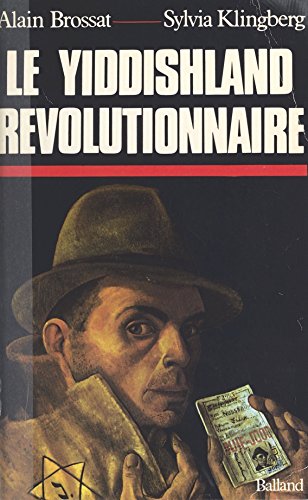
Cover of the original 1983 French edition of Revolutionary Yiddishland
The Pale of Settlement
The Revolutionary Yiddishland of the book’s title refers to the former Pale of Settlement which was comprised of twenty-six governorships in Eastern Europe where Jews were allowed to live, but only in cities and towns. Out of the eleven million Jews in the world in the early twentieth century, Russia held more than five million, and of these, four and a half million resided in the cities and towns of the Pale. For the authors, this “Yiddishland” was not just a geographical territory, but a “social and cultural space, a linguistic and religious world.”[i] According to historian John Klier, the much-maligned Pale of Settlement was the only response the tsarist authorities could come up with when faced with how to deal with the “fanaticism of ultra-Orthodox Jewry” which was “unassimilable to official purposes.”
The social hierarchy of Jews in the Pale was, according to Brossat and Klingberg, made up of a wealthy financial bourgeoisie, a middling bourgeoisie which was “intellectual and commercial,” and “an immense Jewish proletariat.”[ii] The use of the term “proletariat” to describe poorer Jews in the Pale is questionable given that they typically operated as petty traders rather than industrial employees. Jewish peddlers were notorious throughout the Pale as smugglers of contraband (as referenced in Gogol’s Dead Souls). This large number of poorer Jews was the direct result of the Jewish population explosion in Eastern Europe in the nineteenth century when their numbers grew from about 1.5 million at the beginning of the century to almost eight million by 1913.
This Jewish “proletariat,” a hotbed of radicalism characterized by “powerful organization,” played a “decisive part” in the “strikes and insurrections that broke out right across the Pale in the course of the 1905 Revolution.” Regarding revolutionary agitators at this time, Tsar Nicholas II claimed that “nine-tenths of the troublemakers are Jews” who also dominated the newspapers where “some Jew or another sits … making it his business to stir up passions of people against each other.”[iii]
The late nineteenth and early twentieth centuries saw millions of these poorer Jews migrate to destinations as diverse as North and South America, France, South Africa, Australia and Palestine. The ideological zealotry of these Jewish migrants directly influenced American immigration policy around this time, with Muller noting:
The image of the Jew as Communist played an often overlooked role in the history not only of Jews in America, but of the millions of Jews in Eastern Europe who would have liked to emigrate to the United States after World War I, but who were prevented from doing so by the immigration restrictions enacted in the early 1920s, culminating in the Reed-Johnson Act of 1924. For those restrictions were motivated in part by the identification of Jews with political radicalism.’[iv]
The prominent Jewish intellectual and writer Chaim Bermant observed that “To many minds, at the beginning of this [twentieth] century, the very words ‘radical’ and ‘Jew’ were almost one, and many a left-wing thinker or politician was taken to be Jewish through the very fact of his radicalism.”[v] Read more
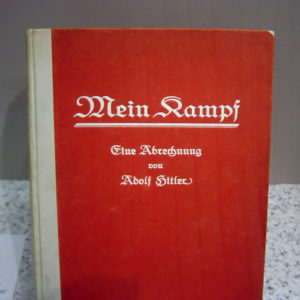 All my life, it’s been Hitler this and Hitler that. For me, it was like the Norm Macdonald joke, the more I heard about the guy, the more I didn’t care for him. Finally, I took it upon myself to read Hitler’s magnum opus, Mein Kampf, and see what I could pick up about him for myself.
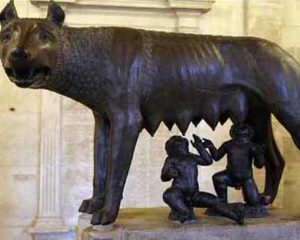 In his monumental tome, The History of Rome, the historian Titus Livius wrote, “There is nothing man will not attempt when great enterprises hold out the promise of great rewards,” and in the annuals of human history nowhere is this aphorism truer than when one examines the nature of Faustian Europe and its rich diversity of constituent peoples.[1] In more specific terms, and as articulated quite definitively by Prof. Ricardo Duchesne, the uniqueness of Faustian Europe lays not with its institutions, but with the primordial drive of Faustian Man to overcome all that constrains him in the eternal quest for immortal fame. [2] Returning to Titus Livy, in his history of Rome the historian was exploring not only the meteoric rise of ancient Rome, but rather attempting to ascertain the exact reasoning behind the nature of Roman hegemony. Livy’s Rome was one of transition, the historian himself being born in 64 B.C. and dying 17 A.D., and as such had lived through the tumult of the Late Republic and bore witness to Rome’s imperial rebirth under Augustus Caesar. [3] Moreover, the nature of the age that Livy had lived through was a period of “transition” not only of governmental forms, from republic to empire, but more importantly was the beginning of Roman deviation from the racio-cultural values which underpinned the Faustian nature of Europe. When European man is truest to himself, it is when he and his civilization exist in harmony with his Indo-European, Faustian nature. When deviation from this historical, dare I say cosmic reality occurs, it is a prerequisite for civilizational chaos. In the historical context of Republican Rome, it was the transition from republic to empire, and the accompanying degenerative racio-cultural changes, which deviated from the Indo-European nature of the Faustian soul of Europe, which laid the foundation for Rome’s future collapse.


