Paul Craig Roberts made anintriguing reference the other day. He wrote that “a noted philosopher wrote an article in which he suggested that Americans live in an artificial or virtual reality. Another noted philosopher said that he thought there was a 25% chance that the philosopher was right. I am convinced that he is right. Americans live in the Matrix. Nothing that they know or think that they know is correct.” I agree.
The media, of course, is a constituent part of that Matrix, and I am particularly interested in the Hollywood branch of the media. Needless to say, most TOO readers are probably aware of Hollywood’s pronounced anti-White, anti-Christian bias and are clued in to the ways they subvert traditional White Christian culture.
One of my favorite essays unpacking Hollywood’s subversion has always been Kevin Beary’s “Adorno’s Bastards: Pleasantville and the Frankfurt School,” which parses the storyline of the anti-White film Pleasantville. Unfortunately, Beary’s colorful site with film stills has disappeared, leaving only this truncated version on another site.
Readers know I have done readings of many films and may also know that I’ve written quite a bit about Jewish involvement in finance and deception in that field (seehere, here, and here). Today I’d like to write a review of a movie that encompasses both.
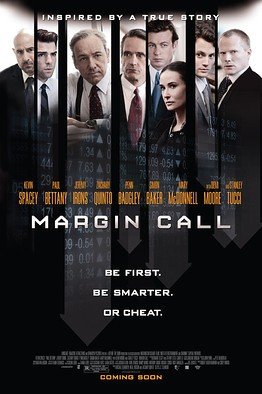
J.C. Chandor’s 2011 filmMargin Call tells a story that loosely mirrors the fall of Wall Street giant Lehman Brothers. Even for Hollywood, however, the deception in this movie is staggering, and it occurs on many levels. It terrifies me to think that the masses will swallow this tale, particularly the images that will have such a powerful subliminal impact. Read more
https://www.theoccidentalobserver.net/wp-content/uploads/2018/06/TOO-Full-Logo-660x156-1.png00Edmund Connelly, Ph. D.https://www.theoccidentalobserver.net/wp-content/uploads/2018/06/TOO-Full-Logo-660x156-1.pngEdmund Connelly, Ph. D.2012-05-27 17:41:162012-05-27 17:43:49How They Lie to Us: the film Margin Call
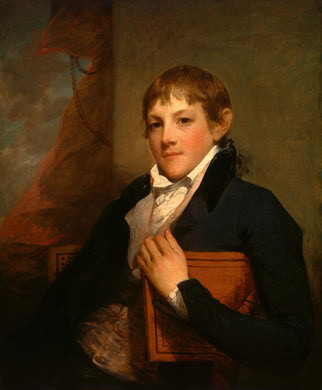
John Randolph of Roanoke as a youth, Gilbert Stuart, 1804–1805
The rhetorician who practices “amplification” is not thereby misleading his audience, because we are all men of limited capacity and sensitivity and imagination. We all need to have things pointed out to us, things stressed in our interest. The very task of the rhetorician is to determine what feature of a question is most exigent and to use the power of language to make it appear so.
–RichardWeaver,Language is Sermonic, pp. 219–220
Richard Weaver’s writing lays an ideal groundwork for a counter movement against the status quo modernist worldview, which has hitherto dominated ethnic discourse in the United States, towards a more authentic American conservative position able to embrace the racial concerns of Whites. Weaver teaches us how to persuade without exploiting, in a format conducive to the natural tendencies of the rural conservative mentality, the largest cross-section of the American populace—a constituency that we must win. Neutrality is not an option. If we don’t inspire this group’s allegiance, it will be fielded into the ranks of our enemies.
In “The Cultural Role of Rhetoric” Weaver argues that it is important to point out the distinctions between dialectic and rhetoric because their respective functions have been confused in modern times. Dialectic thinking is logical in an abstract vacuum of perception. When applied to human endeavor it tries to use a rational technique to solve problems that are also deeply entwined with history, custom, and culture. However, it is ill-equipped to think in these terms. For example, think of how out of touch a computer would be if it was given the task of solving humanity’s problems. It may have a superior grasp of logical principles, but in the absence of an understanding of human nature and human interests and desires, it could not possibly generate adaptive solutions. Likewise, dialectic taken out of its proper function does not deliver an accurate holistic picture of man and his condition in time. Weaver suggests that this may have been a contributing factor in the Athenian justification of Socrates’ execution: too much dialectic. Read more
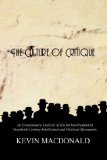
Stephen Jay Gould is definitely high on the list of ethnically motivated pseudoscientists that populate The Culture of Critique. In reading over the section on Gould from Chapter 2(see pp. 30-37), I was struck by how many evolutionary biologists viewed Gould as a charlatan and were willing to say so in public. John Maynard Smith’s comment gets it exactly right: Gould “has come to be seen by non-biologists as the pre-eminent evolutionary theorist. In contrast, the evolutionary biologists with whom I have discussed his work tend to see him as a man whose ideas are so confused as to be hardly worth bothering with. . . . All this would not matter were it not that he is giving non-biologists a largely false picture of the state of evolutionary theory.”
Gould’s importance comes from his position at Harvard as well as his access to the media. (Gould’s Chair for Politically Correct Popularization of Evolutionary Biology at Harvard is now held by Steven Pinker.) My treatment in Culture of Critique emphasized his obvious political motivation and his defamations of various 19th- and early 20th-century scientists, such as Samuel George Morton.
But Gould is a Jewish intellectual hero, so it’s not surprising to see attempts to rehabilitate him. An article by Benjamin Ivry in the Forward attempts to do just that—badly, beginning with the implication that Gould’s only intellectual sin was his defamation of Morton. But in the process he provides some good material showing Gould’s strong Jewish identity. Indeed, the title, “Evolutionary Biology after Auschwitz,” only makes sense if there is indeed a deep connection between Gould’s work as an evolutionary biologist and his Jewish identity. Read more
https://www.theoccidentalobserver.net/wp-content/uploads/2018/06/TOO-Full-Logo-660x156-1.png00Kevin MacDonaldhttps://www.theoccidentalobserver.net/wp-content/uploads/2018/06/TOO-Full-Logo-660x156-1.pngKevin MacDonald2012-05-21 14:00:222012-05-25 14:14:11Stephen Jay Gould’s Jewish motivation: Natural selection by any other name
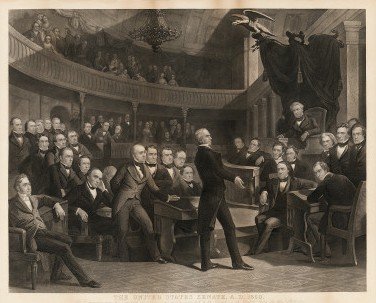
The U.S. Senate Chamber, 1850 – Robert Whitechurch
A world is supported by four things…the learning of the wise, the justice of the great, the prayers of the righteous and the valor of the brave. But all of these are as nothing…without a ruler who knows the art of ruling. Make that the science of your tradition!
-Frank Herbert, Dune
The Old South was far ahead of the New World Order. What it lacked in technological development, it made up for in a concrete understanding of human nature that was grounded in reality. That reality was firmly rooted in two principles based upon experiential observation: the existence of ineradicable distinctions between different races and the danger of concentrating power in one unitary source that could arbitrarily determine the outcome of local domestic issues from afar. Indeed it may be stated unequivocally, that American civilization cannot truly go forward at all if its interpretation of human relationships and psychology deniesthese two points. It is for this reason that the philosophic fountainhead of resistance to the New World Order in the United States must inevitably begin with an endorsement of Southern rhetoric.
The term “rhetoric” has come to mean one of two things in contemporary culture: artificial speech or dishonest propaganda. This is a sorry state of affairs. It represents, in part, the overwhelming distortion that a purely nominal and positivistic machine age has introduced into human discourse. The ancients had a much more elevated conception of the term, viewing it as a necessary analogue to the process of dialectic. Rhetoric was the high art of persuasion and the power of a particular style. Elsewhere I have addressed the polarization between the scientific and poetic modes of discourse and the need for redressing a balance between the two. The original ideal concept of rhetoric represents another evolutionary component of the poetic mode, a category that I previously dubbed the Bardic Dynamic. Read more
We continue our series of essays examining the Russian Pogroms with this essay on the part played by Jews in provoking the disturbances. As stated in Part Two, one of the key problems with existing historiography on the pogroms (and ‘anti-Semitism’ generally) is that these narratives invariably argue that the plight of the Jews was the result of nothing more than irrational hatred. Jews adopt a meek and passive role in this narrative, having committed no wrong-doing other than being Jews. There is no sense of Jewish agency, and one is left with the impression that Jews historically have lacked the capacity to act in the world. In almost every single academic and popular history of the pogroms, the author blindly accepts, or willfully perpetuates, the basic premise that Jews had been hated in the Russian Empire for centuries, that this hatred was irrational and rootless, and that the outbreak of anti-Jewish riots late in the 19thcentury was a ‘knee-jerk’ emotional response to the assassination of the Tsar and some blood libel accusations.
This is of course far from the truth, but the prevalence of this ‘victim paradigm’ plays two significant roles. Firstly, Jewish historiography is saturated with allusions to the “unique” status of Jews, who have suffered a “unique” hatred at the hands of successive generations of Europeans. In essence, it is the notion that Jews stand alone in the world as the quintessential “blameless victim.” To allow for any sense of Jewish agency — any argument that Jews may have in some way contributed to anti-Jewish sentiment — is to harm the perpetuation of this paradigm. In this sense, the ‘victim paradigm’ also contributes heavily to the claim for Jewish uniqueness and, as Norman Finkelstein has pointed out, one can clearly see in many examples of Jewish historiography the tendency to focus not so much on the “suffering of Jews” but rather on the simple fact that “Jews suffered.”[1] As a result, the paradigm offers no place to non-Jewish suffering. Simply put, the ‘victim paradigm’ is a form of secular “chosenness.” This aspect of the narrative is seen, quite rightly, as a useful tool in the here and now. There is perhaps no race on earth which uses its history to justify its actions in the present quite like the Jewish people. From seeking reparations to establishing nation states, Jewish history is one of the foundation stones propping up Jewish international politics in the present. As such, Jewish history is carefully constructed and fiercely defended. The interplay between Jewish history and contemporary Jewish politics is plain to see — I need only make reference to the terms “revisionist” and “denier” to conjure up images of puppet trials and prison cells.
Secondly, the omission of the Jewish contribution to the development of anti-Semitism (be it in a village setting or a national setting), leaves the spotlight burning all the more ferociously on the ‘aggressor.’ Within this context, the blameless victim is free to make the most ghastly accusations, basking in the assurance that his own role, and by extension his own character, is unimpeachable. The word of this untainted, unique, blameless victim is taken as fact — to doubt his account is to be in league with the ‘aggressor.’ In Part Two we explored the manner in which the RJC took full advantage of this construct to purvey appalling, and unfounded, atrocity stories. More generally, exaggerated tales of brutality by non-Jews are commonplace in Jewish literature and historiography, and go hand in hand with images of dove-like Jews. For example, Finkelstein has pointed to Jerzy Kosinski’s The Painted Bird, a work now widely acknowledged as “the first major Holocaust hoax,” as an example of this “pornography of violence.”[2] The twin concepts of Jewish blamelessness and extreme Gentile brutality are inextricably bound up together, and supporters of one strand of the ‘victim paradigm’ are invariably supporters of the other. Take for example that high priest of Jewish chosenness, Elie Wiesel, who praised Kosinki’s pastiche of sadomasochistic fantasies as “written with deep sincerity and sensitivity.”[3] Read more
https://www.theoccidentalobserver.net/wp-content/uploads/2018/06/TOO-Full-Logo-660x156-1.png00Andrew Joyce, Ph.D.https://www.theoccidentalobserver.net/wp-content/uploads/2018/06/TOO-Full-Logo-660x156-1.pngAndrew Joyce, Ph.D.2012-05-13 08:28:462012-05-17 02:06:19Myth and the Russian Pogroms Part 3 – The Jewish Role
Having grounded ourselves in the history of Russia’s Jewish Question, it is now time for us to turn our attention to the anti-Jewish riots of the 1880s. The following essay will first provide the reader with the standard narrative of these events advanced by Jewish contemporaries and the majority of Jewish historians — a narrative which has overwhelmingly prevailed in the public consciousness. The latter half of the essay will be devoted to dissecting one aspect of the Jewish narrative, and explaining how events really transpired. Other aspects of the Jewish narrative will be examined in later entries in this series. While a work like this can come in for heavy criticism from certain sections of the population who may denounce it as ‘revisionist,’ I can only say that ‘revisionism’ should be at the heart of every historical work. If we blindly accept the stories that are passed down to us, we are liable to fall victim to what amounts to little more than a glorified game of Chinese whispers. And, if we taboo the right of the historian to reinterpret history in light of new research and new discoveries, then we have become far removed from anything resembling true scholarship.
The Jewish Narrative.
In 1881 the ‘Russo-Jewish Committee,’ (RJC) an arm of Britain’s Jewish elite, mass-produced a pamphlet entitled “The Persecution of the Jews in Russia,” and began disseminating it through the press, the churches, and numerous other channels. By 1899, it was embellished and published as a short book, and today digitized copies are freely available online.[1] By the early 20th century, the pamphlet had even spawned a four-page journal called Darkest Russia – A Weekly Record of the Struggle for Freedom, ensuring that the average British citizen did not go long without being reminded of the ‘horrors’ facing Russian Jews.[2] The fact that these publications were mass produced should provide an indication as to their purpose: It is clear that these publications represented one of the most ambitious propaganda campaign in Jewish history, and combined with similar efforts in the United States, they were aimed at gaining the attention of, and ‘educating,’ the Western nations and ensuring the primacy of the ‘Jewish side of the story.’ Implicit in this was not only a desire to provoke anti-Russian attitudes, but also copious amounts of sympathy for the victimized Jews — sympathy necessary to ensure that mass Jewish chain migration to the West went on untroubled and unhindered by nativists. After all, wasn’t the bigoted nativist just a step removed from the rampaging Cossack? Read more
https://www.theoccidentalobserver.net/wp-content/uploads/2018/06/TOO-Full-Logo-660x156-1.png00Andrew Joyce, Ph.D.https://www.theoccidentalobserver.net/wp-content/uploads/2018/06/TOO-Full-Logo-660x156-1.pngAndrew Joyce, Ph.D.2012-05-11 01:27:282012-05-13 12:48:52Myth and the Russian Pogroms, Part 2: Inventing Atrocities
The anti-Jewish riots, or “pogroms” of late 19th-century Russia represent one of the most decisive periods in modern Jewish, if not world, history. Most obviously, the riots had demographic implications for western countries – around 80% of today’s western Diaspora Jews are descendants of those Jews who left Russia and its environs during the period 1880–1910. But perhaps the most lasting legacy of the period was the enhancement of Jewish “national self-awareness,” and the accelerated development of “modern, international Jewish politics.”[1]
The pogroms themselves have consistently been portrayed by (mainly Jewish) historians as “irrational manifestations of hatred against Jews,”[2] where peasant mobs were the unwitting dupes of malevolent Russian officials. Other explanations are so lacking in evidence, and so devoid of logic that they stretch credulity to breaking point. For example, University of British Columbia Professor, Donald G. Dutton has asserted that the mobs were not motivated by “the sudden rapid increase of the Jewish urban population, the extraordinary economic success of Russian Jews, or the involvement of Jews in Russian revolutionary politics” but rather by the “blood libel.”[3]
Little or no historiography has been dedicated to peeling back the layers of “refugee” stories to uncover what really happened in the Russian Empire in the years before and during the riots. This lack of historical enquiry can be attributed at least in part to a great reluctance on the part of Jewish historians to investigate the pogroms in any manner beyond the merely superficial. In addition, historical enquiry by non-Jewish historians into the subject has been openly discouraged. For example, when Ukrainian historians discovered evidence proving that contemporary media reports of Jewish casualties in that nation were exaggerated, the Jewish genealogy website ‘JewishGen,’ responded by stating: “We believe that [these facts] are more than irrelevant because it redirects public attention from the major topic: the genocidal essence of pogroms.” Read more
https://www.theoccidentalobserver.net/wp-content/uploads/2018/06/TOO-Full-Logo-660x156-1.png00Andrew Joyce, Ph.D.https://www.theoccidentalobserver.net/wp-content/uploads/2018/06/TOO-Full-Logo-660x156-1.pngAndrew Joyce, Ph.D.2012-05-08 16:20:312012-05-13 12:46:15Revisiting the 19th-Century Russian Pogroms, Part 1: Russia’s Jewish Question
We may request cookies to be set on your device. We use cookies to let us know when you visit our websites, how you interact with us, to enrich your user experience, and to customize your relationship with our website.
Click on the different category headings to find out more. You can also change some of your preferences. Note that blocking some types of cookies may impact your experience on our websites and the services we are able to offer.
Essential Website Cookies
These cookies are strictly necessary to provide you with services available through our website and to use some of its features.
Because these cookies are strictly necessary to deliver the website, refusing them will have impact how our site functions. You always can block or delete cookies by changing your browser settings and force blocking all cookies on this website. But this will always prompt you to accept/refuse cookies when revisiting our site.
We fully respect if you want to refuse cookies but to avoid asking you again and again kindly allow us to store a cookie for that. You are free to opt out any time or opt in for other cookies to get a better experience. If you refuse cookies we will remove all set cookies in our domain.
We provide you with a list of stored cookies on your computer in our domain so you can check what we stored. Due to security reasons we are not able to show or modify cookies from other domains. You can check these in your browser security settings.
Other external services
We also use different external services like Google Webfonts, Google Maps, and external Video providers. Since these providers may collect personal data like your IP address we allow you to block them here. Please be aware that this might heavily reduce the functionality and appearance of our site. Changes will take effect once you reload the page.
Google Webfont Settings:
Google Map Settings:
Google reCaptcha Settings:
Vimeo and Youtube video embeds:
Privacy Policy
You can read about our cookies and privacy settings in detail on our Privacy Policy Page.