Featured Articles

A Commentary on the film “Quisling: The Final Days”

“Minister President Quisling addresses the nation.”

“Men and women of Norway, a few days ago, the world received the news that Adolf Hitler, the Führer and Chancellor of the German Reich, had died, as befitting a hero, at his command post in Berlin during his heroic effort to prevent the Bolshevik destruction of his country and of Europe.  With Adolf Hitler’s passing, we have lost an historic character capable of creating an era in the history of humankind.  If Europe does not go under, surely the future will acknowledge that the salvation of European cultural civilization was due to Adolf Hitler.  His National Socialism made Germany into a mighty bulwark capable of breaking the red wave of Bolshevism.  His life’s greatest tragedy was that he, despite all his efforts, was unable to bring about peace between England and Germany.  Such an alliance would have ensured world peace and neutralized Bolshevism.   I will not betray our cause.  Nor will I let it succumb to lawlessness and Bolshevism.”

So begins the 2024 Norwegian language film, “Quisling: The Final Days.”  Here’s a poster.

In the center is Vidkun Quisling, Norway’s head of state from 1940 to 1945, played by a Norwegian actor who looks remarkably like the real Quisling.  On our left is his wife Maria, and on our right is Pastor Peder Olsen, whose diaries, the filmmakers inform us, inspired parts of the film.

I was struck by the favorable take on Hitler in Quisling’s speech. Where else have I seen Hitler put in a positive light in a film, fiction or documentary?  Leni Riefenstahl’s 1935 documentary, “Triumph of the Will” came to mind and that was it.

The part about Hitler trying to bring about peace with England doesn’t square with the officially sanctioned story about him.  If Hitler didn’t want war with England, that would imply that the bombing of London was really the result of Churchill’s warmongering.  What would have been Churchill’s motive to go after Germany as he did, including was he bought and paid for—the word is he was in major debt and needed help with that.

I came upon the Quisling film browsing Kanopy, a service of my local library.  It’s an excellent list of both current and older films, including classics, to stream for free, four to six films a month dependent on how I use it.  You can check to see if your local library subscribes to Kanopy.

The title caught my eye.  I knew of Quisling.  A notorious figure. Treasonous collaborator with the Nazis during the German occupation of Norway, sold out his country, persecuted Norwegian Jews.  Executed after the war.  He even has his own word: a quisling is a traitor.

I noted that the film has a top director, Erik Poppe, whose films include “The King’s Choice,” 2021, about three days in 1940 when the King of Norway is given a German ultimatum to surrender or die.  Pastor Olsen is played by Anders Danielsen Lie, who was superb in the fine Norwegian film, also 2021, “The Worst Person in the World.”

I was drawn to the WWII setting.   WWII, especially in Europe, is a monumentally significant historical event.  Making sense of it contributes to a better understanding of the present time, including our (I’m an American) pre-occupation with Israel, a distant and small country 263 miles long and from 71 to 6.2 miles wide.

I streamed “Quisling: The Final Days” and was knocked out by it. Artistically top of the line—direction, cinematography, tour-de-force acting performances by the three leads, and a believable, engaging, and thought-provoking screenplay.

I find it intriguing how little attention has been paid to this film.  It’s attracted very few reviews: Variety reviewed it and that’s it among major reviewers.   The New York Times, Washington Post, The Guardian, the Roger Ebert site, nothing.  If I hadn’t stumbled upon it browsing Kanopy, I wouldn’t have known about it.

I compare this Quisling film favorably to another foreign film, “Parasite,” a Japanese film that won the 2020 Academy Awards for Best Picture, Best Direction, and Best Original Screenplay.  I write film reviews at Amazon under the pseudonym “Green Wave.”  In my Amazon review of “Parasite,” I called it “expertly crafted, glossy, politicized tripe.”1  The Rotten Tomatoes site, which aggregates published film reviews, lists six reviews for “Quisling: The Final Days” and 495 for “Parasite.”  Why the discrepancy?  Figuring out how the public flow of information and ideas works, who controls it, will contribute to a better understanding of what things and people we attend to and what we make of them.  Quick, name one Russian other than Putin.

Besides from Kanopy, “Quisling: The Final Days” is available for rental at Google Play.  Amazon Prime has it free with ads, though personally, I prefer paying money to anticipating ads and dealing with interruptions.  It’s also other places, check around.

If you plan on watching “Quisling: The Final Days,” you might want to stop reading this post after this paragraph and perhaps come back to it after you’ve seen it.  The rest of this writing is a series of comments on the film.  They include extended quotes from the screenplay and a lot of spoilers.  I don’t want to get in the way of your fresh experience with the film more than I might already have with these preliminary remarks.

Personally, I stay away from reviews and analyses before I watch a film or read a book.  I want to start cold, as it were, let whoever created it take me where they will and come to my own conclusions.  If something particularly interests me, I go to what other people have had to say about it and compare what they offer to what I took from it.

One of the reasons I’ve taken the time to write up this post about the Quisling film is I found the few reviews and analyses of it I’ve read to be perfunctory and shallow.  Whether I’m up to it or not, this fine film deserves careful and insightful consideration.

In what follows, I offer some disparate observations with the hope that they add up to something of worth.  Incidentally, the wheels of justice turned much faster in those days than they do now.  Quisling was arrested on May 9th, 1945 and executed on October 24th of that same year.  This week as I’m writing this, mid-October, 2025, I read of the execution in the U.S. of a man convicted of murder in, I’m serious, 1993.

*   *   *

Lutheran Pastor Peder Olsen, a hospital chaplain who has not previously worked with prisoners, is assigned by his church superior to provide religious counsel and guidance to Quisling, whom they know to be a Christian.

Pastor Olson goes to see Quisling in prison.  As he nears Quisling’s cell, the guard responsible for watching over Quisling remarks to him, “If he hangs himself, we can’t shoot the bastard.”

Peder peers into the dark, gloomy, barren cell at Quisling dressed in casual clothes sitting alone at a small wooden table.   He introduces himself and says he has come to provide pastoral service, to be “someone to talk to, to help you clear your mind and find peace.”

“I am innocent,” responds Quisling firmly.  “I have no unfinished business with church, God, or country.  Psychiatrists seriously consider everyone in our movement as permanently mentally impaired.  These so-called investigators want me to admit to being some sort of opportunist, a spineless Peer Gynt character with only self-interest in mind.  I fought for my country for five long years, day and night.  You don’t believe me?  You think I only fought for riches, titles, salutes, stuff and nonsense?  The armor of an insecure man?   I couldn’t care less about any of that, I have acted according to my convictions.  For that, I feel no shame.”

Attempting to establish a relationship with Quisling and knowing he has met with Hitler, Peder asks Quisling, “What was Hitler like?”

“A passionate man.  You can always question the outcome, but he believed in something.  You can’t say that about everyone.”

“Is that something you admire?”

“Belief?  Of course.  But I admire certainty even more.  You can’t, like Hitler did, base your politics on belief.  You need to know.  Spend time finding the sources.  To know.  I’ve worked all my life on my philosophy, Universism.  The actual truth.  I’ve given myself the mission of lighting a candle for humankind.  To find the true philosophy of life.  In accordance with both science and empiricism.

“I’m sure Universism is very interesting,” says Peder.  But what we really should aspire to are the words and deeds of Christ.   Love.”

“Universism is the same thing, just greater,” says Quisling.  It concerns—”

“Mr.  Quisling, greater than love?  What is greater than love?”

Quisling remains silent for several seconds, apparently unable to think of a reply, and the scene ends.

During Quisling’s silence, I pondered Peder’s question, which was really an assertion, that there isn’t anything greater than love.  What came up for me during those moments is that, depending on the context, indeed there are other values or personal attributes, whatever to call them, that are at least on an equal plane with love, among them, honor, integrity, decency, generosity, respect, protectiveness, accomplishment, insight, and wisdom.  Just now writing these last couple of sentences, I flashed on the title of an old song popularized by The Mills Brothers vocal quartet, “You Always Hurt the One You Love.”

Here’s a head of state talking about philosophy.  I tried to imagine an American president—FDR, Truman, Eisenhower, Ford, Nixon, Reagan, the Bushes, Clinton, Obama, Biden, Clinton, Trump, any of them—expounding on philosophical precepts.  It reinforced my impression that these days our political system is going to give us the likes of Kamala Harris and Donald Trump to choose from—no Jeffersons and Madisons.

This initial meeting between Quisling and Peder set up the relationship that is the spine of the film.  Peder is bent on getting Quisling to acknowledge and confess his sins to God.  A characteristic exchange between the two men:

“The Jews rejected Jesus Christ for Barabbas, a robber,” Quisling points out.   “The same choice the world faces today.  Many would prefer a Barabbas to a Messiah any day.  I cannot accept such a thing.  I need to fight to the very end!  I’ll be more dangerous after my death.”

“You’re no Messiah, Vidkun.   You’re a human being, a sinner, just like the rest of us.  Do you have the courage to trust in the Lord?   Do you trust me?  Then you should ask the Lord to forgive your sins.  Say, ‘God have mercy on me, a sinner.’  Say that to God.  Don’t be afraid to say it.  God will not forsake you.  I will not forsake you. “

Most certainly, this is not Quisling’s wife Maria’s message to him.  Maria’s contrasting outlook to Peder’s is a central element in this drama.

Peder goes to Maria and Quisling’s luxurious home—Quisling is in prison– to introduce himself.  He asks her how she and Quisling met.

“We met in the Ukraine, my homeland,” she replies.  “He was very famous.  Captain Quisling.  He saved thousands of lives during the great famine.  Look at these.  [Pictures of starving children and bodies piled up.]  Thousands.   Jews as well.  I saw him for the first time through my office window.  [She was a secretary.]  I could tell straight away that this man could achieve anything.  He was to be my destiny.”

During a visit to her husband in prison:

“Do not bow down!  You hear me? Do not let anyone break you.  There’s no one as strong as you.  I knew that as soon as I laid eyes on you.  ‘There’s a man who will not be broken,’ that’s what I thought.  You are Captain Quisling.  My Captain Quisling.”

Maria’s talking about the prosecutors in his court trial, but she’s also talking about Peder.  This film raises the question of whether Christianity as a religion and Christian clergy promote what amounts to bowing down among adherents.  It can be assumed that Peder has every good intention, but is he diminishing Quisling, making him self-deprecating and self-doubting, humbling him, making him compliant, subordinate to what arguably is an imaginary god, a young Jewish political insurrectionist from two millennia ago who never himself claimed to be divine, and to Peder himself.  Was Quisling being pressured by both the legal process and a Christian minister to become less of a man?  To director Erik Poppe and his screenwriter’s credit, based on their film, this question can legitimately be answered both yes and no, which puts “Quisling: The Final Days” on a higher artistic plane than something like the sophomoric, pedantic “Parasite.”

*   *   *

“Quisling: The Final Days” deals directly with the Jewish issue.  What was Quisling’s culpability with respect to the treatment of Norwegian Jews during the occupation?   It is a central aspect in Quisling’s court trial.

To help me make sense of this aspect of the film, I looked for a book that dealt with Quisling and Jews.  A number of books have been written about Quisling, including in recent years, but from what I can tell, just about all of them are extremely biased against him.  I did find one published back in 1966 that is reputed to be sympathetic toward Quisling, Quisling: Prophet Without Honor by journalist and biographer Ralph Hewins.2  I’ve read that Hewins got a lot of static for saying good things about someone who had said good things about Hitler.  I obtained the Hewins book and found it a thoughtful and balanced account of its subject.  It’s available in college libraries and Amazon sells reasonably priced used copies.

According to Hewins, Quisling was antisemitic, largely prompted by his deadly fear of an international Marxist conspiracy in which Jews played a central role.  As for Jews’ place in Norway, Hewins quotes Quisling as affirming that

There are many who say that a Jew cannot be expelled from Norway simply because he is a Jew.  In my opinion, no such reasoning could be more superficial.  A Jew is not Norwegian, not European.  Jews have no place in Europe.  They’ve are an internationally destructive element.  The Jews create the Jewish problem and cause antisemitism, and it is not difficult to understand why. The only possible solution is for Jews to leave Europe and to live in some area as far away as possible, preferably an island [he was thinking of Madagascar].3

Hewins reports that on October 26th, 1942, Quisling introduced a law confiscating Jewish property which was implemented in 126 cases.  On November 17th of that same year, he decreed that all full-Jews, half-Jews, and quarter-Jews register with the nearest authorities.

According to Hewins, Quisling’s antisemitism did not run to genocide.  In fact, he had saved thousands of Jewish lives during the Ukrainian famine during the 1930s.  Hewins believes Quisling’s claim that he was unaware of the Nazi’s “final solution,” and that he was not forewarned of the deportation of around 1,000 Jews to Germany by the German SS and took no part in it.  However, asserts Hewins, Quisling did not attempt to counteract the German initiative, and arguably that negligence as head of state was criminal.  The major question in Hewins’ mind is whether it deserved a sentence of death.

In the film, there is this exchange in the court trial between Quisling and the prosecutor:

“It’s foul to accuse me of persecuting the Jews.  I who have done such extensive humanitarian work.  I am bold enough to say I’ve helped more Jews than anyone else in Norway.”

“Yet in various accounts you claim that Judaism in to blame for everything.  And that the ‘Jewish troll’ must be conquered.  What part did you play in the deportation of Norwegian Jews, Mr. Quisling?”

“I knew nothing.”

“You knew nothing?  As head of the police, you knew nothing of the nature of this mission?”

“There was talk of them being sent to Poland.  That’s all I knew.”

“You must have known something.  You said on record that you visited the camps where thousands of Jews were sent in 1942.”

“Yes, and they appeared to be regular labor camps, work places.  Nothing out of the ordinary.  Nothing that left an impression on me.”

“Nothing that left an impression?   Who knows what he must have seen!”

Peder didn’t believe Quisling about Norwegian Jews:

“How can you say you knew nothing?   That’s your approach, twisting the story to fit your worldview.  It doesn’t matter to you who gets sacrificed along the way, who dies.

“Are you referring to the deportation?”

“Of course I am!  You knew!  You held a fiery speech about the ‘Jewish problem’ shortly after the Donan [the ship carrying the Jews] left Oslo. You defended your actions.”

“The issue was complex.  Much more complicated than you make it.  First, I didn’t know everything.”

“You were Minister President!”

“Under great political pressure!”

“Innocent people were murdered.  That is indefensible!”

“War has other rules!  People die in wars! The Bolsheviks were much worse.  I have proof with my own eyes. I spent eight years up to my knees in dead bodies!  Who are you to teach me about suffering?”

Did Quisling know that the Norwegian Jews’ fate was not good and repressed it or chose to think otherwise?  Or did he really not know?  Did Roosevelt know about the fate of the Jews, did Churchill?  To what extent do we have the capability to deny the truth about the world and about ourselves?  To its credit, this film poses these questions.

*   *   *

In court, near the end of the trial.

“That I, who faithfully served my country, should be accused of treason while those who are truly responsible for this misfortune, who sabotaged the armed forces, who drove us into the war, go free!  They may rejoice and say ‘Hah! we got him in the end.’  I know I aimed to do good.  My actions have been solely for the good of my own people, and for the advancement of the Kingdom of God on Earth that Jesus Christ came to establish.  I am not aware of doing anything to harm the people of Norway.  I have done my utmost to keep the Nordic countries from becoming a theatre of war.  [Norway had 324 war deaths.  Finland’s total was around 80,000.   England’s around 383, 000.  The Roosevelt administration shipped enough young Americans to distant realms to run the total of deaths up to 405,000.]  I have prevented civil war, tried to remedy the invasion and occupation, limit the enormous misfortune they caused the Norwegian people.”

“Vidkun Abraham Lauritz Quisling is hereby sentenced to death for crimes against the Military Penal Code.”

*   *   *   ·

In a recent writing, I contrasted the way the 2024 film “The Order” portrayed events I dealt with in a book I wrote.4   My purpose was to get across that different storytellers can tell very different stories, and that we need to keep that in mind when we take in what anybody tells us.  It’s especially important to keep in mind that we are prone to give credibility to visual portrayals of something—film, television, YouTubes—because we can see it happening.   With fictional depictions, we realize those are actors and there’s a screenplay and it’s been edited, but there it is going on right in front of us.  The same with documentaries: those pictures are the real thing, but the order in which they are shown and the meaning they are given in a voice-over and what isn’t shown can lead us to conclusions that aren’t warranted.

To illustrate my point in this recent writing, I contrasted the way “The Order” and my book depicted the death of a man named Bob Mathews back in 1984.  I’ll do the same thing here with two accounts—the film’s and the Hewins book’s—of the execution by firing squad of Vidkun Quisling in 1945.

First, the account in “Quisling: The Final Days.”

The day of the execution, it’s just Peder and Quisling in Quisling’s cell.

In the evening, Peder shaves Quisling with a straight-edged razor, which adds an intimacy to their relationship.

Well after midnight, uniformed men enter the cell.

“It’s time.”

Quisling and Peder ride together in a van to the execution site.

During the drive, partly voice-over and partly in Quisling’s spoken words, from the Gospels of Mathew, Mark, and Luke:

“Behold the Son of Man is betrayed into the hands of the sinners.”

“And the soldiers led him away into the castle and they called together the whole band of guards.  And they clothed him with purple and planted a crown of thorns which they put on his head.”

“And they led me out to crucify me.  And they betrayed me into the place of Golgotha.  It was the third hour and they crucified me.”

“And in the ninth hour, Jesus cried with a loud voice, ‘My God, my God, why has thou forsaken me?’”

“Father, forgive them for they know not what they do.”

They arrive at the execution site.

A uniformed official takes off Quisling’s handcuffs.  Quisling turns and reaches back and hands his hat to Peder and says quietly, “Goodbye.”

Quisling’s arms are strapped to a wooden wall.

A blindfold is put in place.  Quisling doesn’t want it.  “I wish to look death in the eye,”

“These are the rules.”

A white circle is pinned to his chest.

The ten-man firing squad marches into place.

A long silence, the camera close up, just Quisling’s head and shoulders, a light shining on him.  When will the shots ring out?  The tension mounts.

Quisling shouts, “I am innocent!  You are about to shoot an innocent man!”

From a distance, we see Quisling strapped to the wooden wall and the firing squad in place.  They take aim.  Shots.  Quisling twitches and slumps, held upright by the straps.  A soldier strides forward and shoots him in the head with a pistol.

Sometime later, Peder sitting in a field of grass holding the hat Quisling had handed him.

The film ends.

The Hewins book’s account of Quisling’s last day:

Quisling is informed that he will not be pardoned and will be executed that night.  Hewins doesn’t say that it was Peder who gave him the news.  In fact, Peder Olsen isn’t mentioned at all in Hewins’ book on Quisling.

Quisling spends part of his last hours writing a twenty-page summary of his philosophy of Universism.

He reads the Bible.

He speaks with the Bishop of Tønsberg, whom he tells, “I handed Norway to the King in good order. What would Norway have done without me?”

He writes a message to be sent to his followers. “Do not handicap yourselves with the idea of revenge, because the trend of events will avenge the wrongs you suffered, not only from those who initiated the prosecutions but also with the society that has permitted this lawlessness.”

When he was taken from his cell at 2:00 a.m. Oct 24th, 1945, he leaves his Bible open with this text underscored: “He shall redeem their souls from defeat and violence and precious shall their blood be in His sight.”

He shakes hands with each of the ten-man firing squad.  He tells them, “Don’t allow your conscience to bother you in later years.  You are acting under orders and doing your duty as soldiers.”

He is tied to a stake.

The bullets strike his heart.

When they take off his blindfold, his eyes are open.


Endnotes

  1. The Amazon review of the film “Parasite.” https://www.amazon.com/gp/customer-reviews/R1ZIKM6G7ARUP0/ref=cm_cr_getr_d_rvw_ttl?ie=UTF8
  2. Published by New York: The John Day Company.
  3. Hewins, p. 326.
  4.  The writing: Robert S. Griffin, A Commentary on the Movie “The Order,” The Occidental Observer, posted June 21, 2025.   My book: Robert S. Griffin, The Fame of a Dead Man’s Deeds: An Up-Close Portrait of White Nationalist William Pierce, Indianapolis: 1stBooks Library, 2001.


The Forrestal Curse

From a rational point of view, the two tragedies that will be discussed here obviously have nothing to do with each other: that of James Forrestal, who went to his death out of a window, and that of the aircraft carrier that bears his name, the greatest disaster of the US Navy during the Vietnam War.

Rationally, no; metaphysically, who knows? Coincidences are the language of surrealities, aren’t they?

1892–1949 (59 years old)

I – The strange “suicide” of James Forestal, who opposed the creation of the State of Israel

James Forrestal was a considerable military and political personality. He served as secretary of the Navy from May 1944 to September 1947, and then became the first to hold the brand new position of Secretary of Defense, from September 1947 to March 1949.

He was a strong advocate of naval battles fought by aircraft carriers, opposing the USAF’s preference for air operations from land bases.

He was personally opposed to the unification of the War, Navy and Aviation departments into the newly formed Ministry of Defence, and yet he was the first person appointed to head it.

He was a staunch anti-communist who oversaw the development of American forces to confront the USSR at the beginning of the Cold War. In this, he was fully in agreement with the Truman geopolitical doctrine presented on March 12, 1947 to Congress by the President, which advocated that the United States should support democratic regimes against authoritarian regimes; this speech marked the beginning of the Cold War.

On the other hand, he opposed in vain, as did the State Department, the recognition of Israelby the United States. For this reason, he was dismissed in March 1949 by Truman, whose sympathies are well-known, not only in favor of Israel in foreign policy, but also of the influence of the Jewish community in the United States (e.g., the role of Jewish intellectuals in the reform of immigration laws in the United States, with, in 1952, the establishment of the President’s Council on Immigration and Naturalization, chaired by the Jew Emmanuel Celler).

As a bonus, this handsome, successful man is supposed to have gone through a depressive episode that warranted a stay at Bethesda Military Hospital. On the morning of May 22, he was found dead on a rooftop sixteen floors below his room: suicide or episode in Ben-Gurion’s underground war against American anti-Zionists/anti-Semites?

However, there are legitimate reasons to question the suicide theory:

New evidence in the report indicates that Forrestal was assassinated.  Pulitzer prize-winning American history professor, Martin Sherwin told us, “I have always thought Forrestal committed suicide, but this is not because I investigated the manner of his death.  You are doing that and I look forward to reading the results.” …

The Willcutts Report offers new evidence of a struggle in Forrestal’s room.  Broken glass was found on his bed and photographed on the floor of his room.  This could explain why the sash from his dressing gown was knotted around his neck.

Initial news reports contained speculation that Forrestal used the sash in an attempt to hang himself out of the16th-floor window from which he fell.  None of them even hinted at the much more plausible notion that the sash had been wrapped around his neck to subdue him.

Be that as it may, a year after his death, the Korean War validated his theories about the essential role of aircraft carriers in future wars. The aircraft carrier USS Forrestal, commissioned in 1955, was named in his honor.

II – The Launch of the USS Forrestal, the Titanic of Aircraft Carriers

The USS Forrestal is the heaviest combat ship built since the construction of the Japanese aircraft carrier Shinano. It gives its name to the Forrestal class which includes the Saratoga, the Ranger, and the Independence.

It is, of course, named after former Secretary of Defense James Forrestal, including his nickname, “First In Defense,” affectionately abbreviated to “F.I.D.”, in reference to the fact that he was the first to hold this new position. This is why “First In Defense” appears on its insignia and patches.

Built with lessons learned from the Korean War in mind, it was launched on December 11, 1954, at the Newport News shipyard in Virginia, in the presence of Josephine Forrestal, the widow of James Forrestal, and was commissioned on October 1, 1955.

It was the first American aircraft carrier to be built from the ground up with a sloping deck, steam catapults, and illuminated landing aids.

It has 19 decks and more than 2,000 compartments.

A transport aircraft like the C-130 is capable of landing and taking off there, allowing logistical support of the aircraft carrier by air.

But more ironically, the Forrestal is also nicknamed “USS Zippo”, “Forest Fire” or even “Firestal”, notably because of the 1967 tragedy that we see now.

III – July 29, 1967, a flight deck accident that turned into a disaster

The USS Forrestal arrived in the area of operations named Yankee Station in the Gulf of Tonkin off the coast of North Vietnam on 24 July 1967 for its first, and what would be its last, combat operation.

On July 29, as part of Operation Rolling Thunder at 10:45, the aircraft carrier was taking the air route to allow the catapulting of the second wave of attacks of the day after that of 7:00 which has already returned; the preparation is in full swing.

At 10:50 a.m., a Zuni air-to-ground rocket, strapped to the underside of a McDonnell Douglas F-4 Phantom II aircraft, ignited following a power surge that accidentally spread to the rocket when it switched to the aircraft’s internal power supply after starting its engine.

The rocket, slightly deflected by the impact with a sailor, hit the Douglas A-4 Skyhawk 405 piloted by Lieutenant Fred D. White, which was awaiting launch; it tore through the left external tank without exploding. The JP-5 fuel spilled onto the flight deck and ignited.

At 10:54, 94 seconds after the fire began, the first bomb exploded. The flight deck was blown apart by the chain of explosions from the fighter jets loaded with fuel and weapons. A total of twelve bombs, weighing 225 and 1,000 kg, detonated on the armored flight deck. The latter was breached and the fire spread to the lower floors, causing numerous deaths. The first explosion killed the group of firefighters, the only ones with firefighting training. Surrounded by flames, Lieutenant John McCain, future presidential candidate of the United States, managed to escape by jumping from the nose of his Douglas A-4 Skyhawk 416.

At 10:59, the ship was in Zebra condition, with all watertight bulkheads and doors closed and the ammunition bunkers ready for flooding. The aircraft hangar below the deck was sprayed with sprinklers. The most damaged aircraft closest to the fire were pushed overboard by hand or forklift.

The death toll from this disaster was 134 (including 90 in the dormitories located under the flight deck), 161 injured, 21 aircraft from Carrier Air Wing Seventeen (CVW-17) destroyed (seven F-4 Phantom IIs; eleven A-4E Skyhawks; three RA-5 Vigilantes; and 43 damaged), and 72 million dollars in repairs for seven months of work.

And so Josephine Forrestal, the fatal beauty, wife of James Forrestal and sponsor of the aircraft carrier, found herself twice widowed.

Josephine Forrestal 1899–1976

Francis Goumain

Source:

James Forrestal — Wikipédia

USS Forrestal (CV-59) — Wikipédia

Accident de l’USS Forrestal — Wikipédia


Purging America First: Inside the GOP’s Zionist Vetting Machine

In the dimly lit corridors of Capitol Hill, where backroom deals shape American foreign policy, House Speaker Mike Johnson recently conducted what can only be described as a strategic war council. On the afternoon of September 17, 2025, Johnson gathered with a who’s who of pro-Israel organizations for a private meeting ostensively designed to eliminate dissenting voices within the Republican Party. What emerged from this closed-door session reveals a coordinated effort to ensure ideological orthodoxy on Israel.

The meeting itself reads like something out of a tired political thriller. Johnson, who described himself to the assembled group as a “Reagan Republican” focused on “peace through strength,” went on to make a startling admission that isolationism is rising within the Republican Party and that a major debate on the issue is likely once President Donald Trump leaves office.

But Johnson’s most revealing statement came when he told the group that in his candidate-recruiting efforts, he’s working to filter out isolationists to prevent that wing of the party from growing more prominent in the House. Four people who attended the meeting confirmed this extraordinary pledge to Jewish Insider.

“The speaker was very, very direct about the U.S. role with Israel and in the world and understands that there are voices that don’t agree in both parties, on both extremes, and urges us all to be involved in fighting back against those extremes,” Eric Fingerhut, CEO of the Jewish Federations of North America, told the publication.

The guest list for Johnson’s gathering was a who’s who of America’s most powerful pro-Israel organizations. In attendance were representatives from The Louis D. Brandeis Center for Human Rights Under Law, the Republican Jewish Coalition, Agudath Israel of America, AIPAC, the Simon Wiesenthal Center, Conference of Presidents of Major American Jewish Organizations, National Council of Jewish Women, Synergos Holdings, CUFI Action, the Orthodox Union, the U.S.-China Economic and Security Review Commission, Standard Industries, the American Jewish Committee, Zionist Organization of America, National Debt Relief, Jewish Institute for National Security of America, the Deborah Project, Foundation for Defense of Democracies, Coalition for Jewish Values and the Endowment for Middle East Truth. This comprehensive coalition represents the full spectrum of pro-Israel advocacy, from religious organizations to political action committees to think tanks—a formidable alliance with vast resources and influence.

The Hunt for Republican Heretics

The Israeli lobby’s crosshairs have settled on several prominent Republicans whose independence on foreign policy has made them targets. Chief among them is Rep. Thomas Massie (R-KY), whose voting record has made him perhaps the strongest opponent of Israel in Congress according to Jewish advocacy groups.

Massie’s legislative actions against pro-Israel interests are extensive and well-documented. In December 2023, at the height of Israel’s war against Hamas, Massie shared a social media post implying that Congress was more interested in “Zionism” than “American patriotism.” In October 2023, following the Hamas attack, Massie was the only Republican to vote against a bipartisan resolution standing with Israel. He was also the sole Republican to vote against the Iron Dome Supplemental Appropriations Act and the only member of either party to vote against a resolution honoring Jewish American heritage and denouncing antisemitism.

“Antisemitism is deplorable, but expanding it to include criticism of Israel is not helpful,” Massie wrote on X, explaining his vote against a resolution reaffirming Israel’s right to exist. Even more provocatively, Rep. Marjorie Taylor Greene (R-GA) has emerged as an unexpected critic from the MAGA wing. In a dramatic departure from her previous pro-Israel stance, Greene has characterized Israel’s actions in Gaza as “genocide.”

Her transformation has prompted a furious response from AIPAC, which issued a fundraising message comparing her to progressive Democrats Rashida Tlaib and Ilhan Omar:

Let’s call this what it is: Marjorie Taylor Greene is the newest member of the anti-Israel Squad. She may think this earns her praise from the far-left or online radicals — but we see it for what it is: a betrayal of American values and a dangerous distortion of the truth.

In response to AIPAC’s attack against her, Greene has doubled down, telling One America News Network that AIPAC should register as a foreign lobbyist and posting a photograph of a sign on her office door reading “no foreign lobbying.” She has accused Israel of having “incredible influence and control” over nearly every member of Congress, exposing pro-Israel lobby trips that she argues amount to foreign lobbying without accountability.

Perhaps nowhere is the Israeli lobby’s intervention more telling than in Texas’s 23rd Congressional District, where gun rights YouTuber Brandon Herrera mounted a formidable challenge against moderate Republican incumbent Tony Gonzales last election cycle. Herrera, known as “the AK Guy” to his 4.4 million YouTube subscribers, came within 354 votes of unseating Gonzales in the 2024 primary runoff.

Gonzales, a 20-year Navy veteran and cryptologist who rose to the rank of Master Chief Petty Officer, built his political résumé through Washington’s national security circles. He served as a legislative fellow in Senator Marco Rubio’s office and was a National Security Fellow at the pro-Israel Foundation for Defense of Democracies (FDD), a neoconservative think tank known for its hawkish foreign policy stance. In Congress, Gonzales has reflected that worldview by backing aid to Ukraine and Israel, stating that “if we fail to support our allies, China, Russia, and Iran will only become more powerful” with regard to a military aid spending package pending final passage in the U.S. House in April 2024.

The closeness of this race terrified pro-Israel groups, who saw Herrera as a genuine threat to their influence. AIPAC’s United Democracy Project spent $1 million opposing Herrera in a two-week ad buy, while the Republican Jewish Coalition added $400,000 in attack ads.

More significantly for the lobby’s concerns, Herrera had stated he would have voted against supplemental aid to Israel and other U.S. allies. “I would absolutely vote AGAINST the new proposed spending package for $95+ billion for foreign conflicts, while spending $0 on our southern border,” Herrera posted on X on April 19, 2024. “Any Republican who claims to be America first CANNOT vote for America last legislation.”

When asked directly whether he would pledge to end foreign aid, including to Israel, Herrera reiterated his position: “We can’t claim to be ‘America First’ while pushing spending bills like the most recent foreign aid package that gave almost $100 billion to every country except the US.”

The combined $1.4–1.5 million in spending by AIPAC and RJC helped Gonzales narrowly survive with 50.6% to 49.4%—a margin so slim it demonstrated the growing threat posed by America First candidates to the establishment’s foreign policy consensus. Herrera has already announced his intention to challenge Gonzales again in the 2026 Republican primaries, setting up another expensive battle. This time, the political winds may finally shift in Herrera’s favor.

The most audacious display of the Israeli lobby’s power may be their campaign against Thomas Massie. Pro-Israel Republican megadonors have established the MAGA Kentucky super PAC with $2 million specifically to oust the congressman. Paul Singer contributed $1 million, John Paulson added $250,000, and Miriam Adelson’s Preserve America PAC provided $750,000.

This goes far beyond normal political opposition; it’s a declaration of total war against foreign policy dissent among Republican ranks. AIPAC has already demonstrated this approach works. During the 2024 election cycle, AIPAC’s independent spending arm, the United Democracy Project, spent over $300,000 on Fox affiliate ads criticizing Massie’s voting record. UDP spokesperson Patrick Dorton did not mince words about UDP’s attacks against Massie: “We are not playing in the primary, but we are trying to shine a light on the radical anti-Israel record of Tom Massie. We want every single voter in the state of Kentucky to know about his anti-Israel actions.”

The Post-October 7 Reality

The October 7 Hamas attacks fundamentally transformed the Israeli lobby’s strategy and urgency. AIPAC increased its political spending nearly threefold in the months following the attacks, with average weekly spending jumping from $275,000 to over $740,000.

“Our focus in the 2024 election is to broaden and strengthen the bipartisan pro-Israel majority in Congress — and to defeat anti-Israel detractors,” AIPAC spokesman Marshall Wittmann told Capital News Service. “In the aftermath of the Hamas barbaric attack and the mounting threats of Iranian terrorist proxies, the importance of a pro-Israel Congress standing with our ally is clearer than ever.”

This represents more than increased spending; it’s a systematic campaign to ensure ideological conformity. The Israeli lobby’s post-October 7 mobilization has created what one Democratic donor adviser called “a huge, underappreciated change to the landscape.” Thousands of smaller donors who weren’t previously engaged have been activated, providing the financial foundation for an unprecedented intervention in American electoral politics.

Johnson’s pledge to “filter out isolationists” in candidate recruitment represents the institutionalization of ideological screening within the Republican Party leadership. This transcends opposing candidates in primaries and is mostly focused on preventing them from running in the first place by controlling access to party resources, endorsements, and financial networks.

The vetting process appears comprehensive. As the Jewish Insider report noted, Johnson is working to prevent the isolationist wing from “growing larger in the House” through his recruiting efforts. This suggests a systematic review of potential candidates’ positions on Israel and foreign aid, with those deemed insufficiently supportive being denied party backing.

This represents a fundamental shift in how American political parties operate. Rather than allowing primary voters to choose between competing visions, party leadership, at the behest of the Israel lobby, is pre-selecting candidates based on their adherence to specific foreign policy positions. The Israeli lobby has essentially outsourced candidate vetting to organizations whose primary loyalty is to world Jewry.

The Israeli lobby’s campaign to purge non-interventionist candidates and incumbents is part of a comprehensive campaign to eliminate legitimate foreign policy debate within the Republican Party. The success of this strategy in cases like the Gonzales-Herrera race demonstrates its effectiveness in the short-term. By deploying overwhelming financial resources against grassroots candidates, the lobby can overcome significant popular support for America First policies. Herrera’s near victory despite being outspent by millions shows the genuine appeal of his message and precisely why American Jewry views such candidates as existential threats.

The implications extend far beyond individual races. If successful, this campaign will fundamentally re-shape the Republican Party by eliminating voices that prioritize American interests over foreign commitments. With “unlimited” resources pledged against figures like Massie and systematic vetting of new candidates, Israeli interests are working to ensure that future Republican leaders never can question America’s relationship with Israel.

This endeavor may not be a walk in the park for organized Jewry, however. New trends point to younger voters souring on Israel. A University of Maryland Critical Issues Poll conducted between July 29 and August 7 showcased a dramatic generational divide within the Republican Party. While 52 percent of Republicans aged 35 and older sympathize more with Israel, that figure drops to just 24 percent among those aged 18 to 34.

The split grows even wider when it comes to Gaza. Among older Republicans, 52 percent view Israel’s actions as justified. Among younger ones, only 22 percent agree. “The change taking place among young Republicans is breathtaking,” said Shibley Telhami, the poll’s principal investigator. “While 52 percent of older Republicans (35+) sympathize more with Israel, only 24 percent of younger Republicans (18–34) say the same—fewer than half.”

This generational realignment accelerated after Operation Al-Aqsa Flood on October 7, 2023. Pew Research Center data show that unfavorable views of Israel among Republicans under 50 climbed from 35 percent in 2022 to 50 percent in 2025 — a striking 15-point jump. In contrast, Republicans over 50 shifted only slightly, from 19 percent to 23 percent.

Even evangelical Republicans, once Israel’s most reliable allies, are showing signs of fatigue. Among older evangelicals, 69 percent express sympathy for Israel, compared to only 32 percent among younger ones. Just 36 percent of younger evangelical Republicans consider Israel’s actions in Gaza justified.

In a broader rebuke of bipartisan orthodoxy, a September 2025 AtlasIntel poll found that only 30 percent of Americans support continued financial aid to Israel, underscoring how Washington’s “blank check” is increasingly out of step with public opinion. An increasing share of Republicans now argue that U.S. policy serves Israeli interests more than America’s.

The question now is whether the Republican Party belongs to its voters or to Tel Aviv. The battle lines are drawn, and the outcome will reveal who truly holds power in Washington.

Mark’s Manchester Mendacity: And Gideon’s Guide for Gullible Goyim

Mark Steyn can’t help himself. When he talks about Jews, he tells lies. He was at again after two Jews were killed when a Muslim attacked a synagogue in Manchester. Steyn had a stern warning for his readers: “Dead Jews are, ever and always, merely the warm-up act for dead infidels more generally.” That was two lies in one: first, the lie that Muslims harm Jews before they harm non-Jews; second, the lie that Steyn has no special concern for Jews. In fact, he always works to advance Jewish interests and misleads goyim about Jewish behavior. But he said that Jews are “merely” the ones harmed first.

22 Dead Goyim, Manchester 2017: “Don’t look back in anger…”

First? Does that mean time is running in reverse in Manchester? As I described in “Manchester Malady,” twenty-two people died in a Muslim suicide-bombing there in 2017. Not one of them was Jewish. And is time running in reverse in London too? Fifty-two people died in four Muslim suicide-bombings there in 2005. Again, none were Jewish that I’ve ever heard. Then you’ve got the eight people killed by Muslims on London Bridge in 2017 and the three killed by a Muslim in Reading in 2020. Plus all the other goyim murdered in ones and twos by Muslims down the decades, like the White schoolboy Kriss Donald, incinerated by Muslims in 2004, and the White schoolgirl Charlene Downes, chopped up by Muslims in 2003.

Two Dead Jews, Manchester 2025: “Jews are the canaries in the coal-mine! Strong action now!”

That’s hundreds of dead goyim and no or very few dead Jews by 2025. But Mark Steyn still claims that “dead Jews are merely the warm-up act.” He also claims that imported Muslims “pose challenges that would otherwise not have existed — for uncovered women in Oslo, for gays in Amsterdam, for Jews everywhere.” Tell me, Mark: Where are the Jews being “challenged” in the rape-gang redoubts of Rotherham, Telford and Rochdale? Did you meet any Jews when you visited Rotherham to interview a few of the thousands of young shiksas who have been raped and tortured there by Muslims? You know, the White girls you described as being “doused in [gasoline]” while Muslim men “danced around” them “taunting [them] with lit matches”?

Jews first, Goyim nowhere

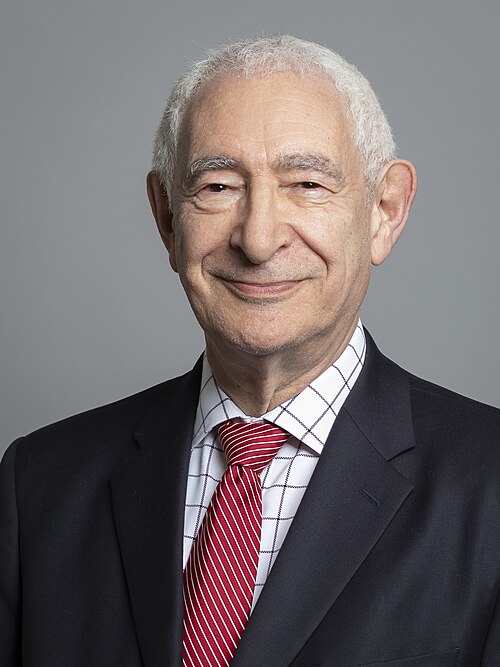
Mark Steyn couldn’t interview Laura Wilson, of course, because she had been murdered by her Muslim abusers in 2010. Time is running in reverse in Rotherham too. It’s not a Jewish place and very few Jews live there or even pass through. Strangely enough, however, Jews were foremost in the concerns of the Labour MP for Rotherham, the slug-like Denis MacShane. Indeed, for MacShane Jews came first and goyim came nowhere. When he was jailed for fraud in 2013, the Jewish Chronicle saluted him as “one of the community’s greatest champions.” That’s the Jewish community, of course. Does the Chronicle care that MacShane ignored the rape-gangs and betrayed the White working-class “community” he was elected to serve?

Dr Denis MacShane, Rotherham MP and Jewish champion; Laura Wilson, Rotherham shiksa abused and murdered while MacShane worked for Jews (images from Wikipedia and London Times)

Not in the slightest. After all, who matters but Jews? However, Jews and their shabbos goyim will often feign concern for others in order to advance Jewish interests. The part-Jewish shabbos goy Mark Steyn did that after Manchester when he said dead Jews are “merely the warm-up act.” The fully Jewish Gideon Falter did it after Manchester too. He’s the Chief Executive of the Campaign Against Antisemitism and he was feigning concern in the Daily Telegraph. Here is his guide for gullible goyim on how to think about the Manchester murders:

In the early days of coal mining, canaries were placed in mineshafts to warn miners of the build-up of dangerous gases that affected the birds shortly before the humans, giving the miners a chance to save themselves. If the canaries fell silent, there was no time to lose.

It has long been said that Jews are civilisation’s canaries in the coal mine. That adage has been proven right almost exactly as many times as it has been ignored.

While miners had no trouble grasping that if the canaries ceased to breathe, soon they would too, it seems harder to explain the truth of the warning that “What begins with the Jews never ends with the Jews”.

Many in Britain have noticed that something is awry lately. Extreme ideologies are increasingly expressed more confidently, with young people espousing politics that cast Britain as the villain and those who wish our country harm as heroes.

Society’s canaries have warned of these dangers for over a decade. When we founded Campaign against Antisemitism in 2014, it was amidst a wave of hatred fuelled by Islamist and far-Left extremism, and emboldened by police and regulators that were more likely to appease than use their powers. That wave of hatred and appeasement never subsided; it has built up, not organically, but through the determination of well-organised extremists whose entryism and propaganda our institutions are too gentle to repel. (“What Jews are facing today will face the whole country tomorrow,” The Daily Telegraph, 6th September 2025)

Gideon guides the gullible goyim (image of Gideon Falter from Good Morning, Britain)

Ah, the good old “canaries in the coal mine.” You see, the poor, powerless Jews always suffer first from Muslim hatred and violence, which is why they selflessly warn currently unharmed Whites that Muslims will attack Whites next. That’s why Gideon Falter solemnly tells us “What begins with the Jews never ends with the Jews” and “What Jews are facing today will face the whole country tomorrow.” Like Mark Steyn, he’s telling obvious and easily disprovable lies. Falter says: “Many in Britain have noticed that something is awry lately.” Do the 1950s count as “lately”? That was when Muslims were already conducting outreach to White girls in London and other British cities: “That night Mary had her first clients. She was auctioned as a virgin, and the highest bidder got her first, with eight others following after.” And what about 1960? Does that count as “lately” too?

On New Year’s Day 1960, three men were shot and killed and two wounded in a mass shooting at the East House public house in Sheffield, England. The killer was Mohamed Ismail, [an unemployed Somali labourer] from the colony of British Somaliland. Ismail had earlier expressed a desire to end his life but thought that suicide was not an option due to his religious beliefs. He committed the shooting in the hope that he would be arrested and sentenced to death by a British court.

[After the shooting,] Ismail barricaded himself into the pub’s toilet and was arrested there by two unarmed police constables, Gilbert Robertson and Denis Hastings. After being remanded in custody, he was determined to be insane and detained at Broadmoor Hospital for 22 months. Ismail was deported to Somalia after his release, and there he went on to shoot a judge before being killed following another mass shooting in which he killed several people. (“East House mass shooting,” Wikipedia)

Three Dead Goyim, Sheffield 1960, victims of a psychotic Somali (image from Sheffield Star)

Britain learned in 1960 that Somali Muslims are very good at two things: violent crime and living off welfare. So what happened at the turn of the century when “more than 200,000” Somalis sought residence in Britain? Well, because “most were untrained and would be dependent on welfare, the Home Office could have refused them entry.” But the immigration minister Barbara Roche granted them “exceptional leave to remain.” Does Roche care that the Somali newcomers promptly followed the lead of their Pakistani Muslim forerunners and began to form rape-gangs in cities like Bristol? Again, not in the slightest. Non-White predation on Whites is a feature, not a bug, for migration mavens like Roche. After all, she “entered politics — she still emphasises this today — to combat anti-semitism and xenophobia in general.” In other words, she’s one of the many Jews who regard Muslims as “natural allies” against historically Christian Whites.

Sue Berelowitz, the Jew “paid off with £134k after failing to speak out about” Pakistani rape-gangs, then “rehired as a consultant on £1k a DAY” (image from The Jewish Chronicle)

Another of those Islamophile Jews is Sue Berelowitz, the so-called Children’s Commissioner who did her best to conceal the huge over-representation of non-White Muslims in sex-crimes against White girls. Muslims and other non-Whites have been murdering, raping, parasitizing and generally blighting the lives of Whites for many decades. Jews have played a central role both in organizing the non-White immivasion and in suppressing White resistance to it. It’s no coincidence that Whites arrested during the so-called Notting Hill race-riots in 1958 found themselves up before a Jewish judge called Cyril Salmon (1903–99), who sent them off to years in jail for resisting the invasion of their homeland by low-IQ Black criminals and tax-eaters. Salmon was later made into a Baron, rising even higher in the hostile elite that imposed non-White migration on unwilling British Whites.

Rapists and wife-beaters

That was an example of how, in the lying words of Jake Wallis Simons at Spiked, “Jews have always stood up for Britain.” No, Jews like Simons have always stood up for Jewish interests, from importing non-Whites as “natural allies” to censoring, demonizing and jailing White dissidents to looting the pension funds of Whites in Britain while working tirelessly for Mossad and Israel. The pension-fund looter was Binyamin Hoch, who operated under the nom de goy of Robert Maxwell. Hoch was also a wife-beater, child-beater and sexual predator. All of those traits — financial predation, cruelty and rape — are characteristic of the “community” from which Hoch emerged. It’s a community that was spotlighted by the Jewish Chronicle a few days before the attack on Jews in Manchester:

Israeli brides are being lured to Britain and matched with violent sex abusers

Dozens of Israeli women living in the UK’s strictly Orthodox community have been brought to Britain to marry abusive men, the JC [Jewish Chronicle] can reveal. These women, some as young as 19, come from Israeli families unable to secure them a match at home and end up in the UK, married to British men with known backgrounds of abuse, violence or severe mental illness. The women are typically born into poorer families affected by illness, disability or divorce — factors that can count against them in the strictly Orthodox shidduch (matchmaking) process. The men, by contrast, belong to wealthier families — but have struggled to find a match because people in their community know their history of abuse, violence, mental health conditions or questions around their sexuality. Matchmakers present the marriages as generous opportunities for the Israeli brides; a chance for women to wed into comfort and stability abroad. […]

In the past six months, six such cases have come to light — but insiders believe the true number could be far higher. One expert helping domestic abuse survivors in the community said she has supported 12 women in similar circumstances in the last year. In written testimony shared with the JC with the women’s permission, three Israeli survivors of abuse at the hands of their strictly Orthodox British husbands share their stories.

Newlywed Chaya [name changed] arrived in the UK for what she thought was her honeymoon. The plan had been to take a short trip to meet her husband’s Dovid’s [name changed] family, then go back to Israel to continue her studies and start married life. “We met and got engaged within weeks,” Chaya said. “Dovid came from a wealthy and respected family in London — that’s what I was told.” Her family was impressed by her new husband’s status: “It seemed important to my father,” Chaya said.

But once the couple landed in London, everything changed. Chaya was taken to a grimy flat and told she would not be returning to Israel. Her passport was taken; there was no phone in the flat; and she was forbidden to drive. Chaya was trapped. Then the violence started. “He told me the UK was our new home and that I should thank him for putting a roof over my head,” Chaya said. “I was so scared of him. Every time I mentioned Israel, he would grow angry and physically assault me, so I learned that if I wanted to stay safe, I should not bring it up.”

But silence was no protection against her husband’s violence, which was worse on Shabbat, when Dovid routinely raped her, she said. […] “He wanted me to have a kid with him so I would never be able to escape him in this lifetime.” After the baby was born, the abuse continued in front of the child; sometimes Chaya was carrying the baby in her arms while Dovid beat her and threw objects at her.

When she finally mustered the courage to show other women her bruises, they rejected her pleas for help and told her to put her arms away — it was not “tznius” (modest) to show her body. Though she maintained an abiding faith in God, Chaya said her faith in the community faded. Because it was not just Dovid who abused Chaya — her husband forced her to have sex with other men for money, she said: “He would tell me that I wasn’t contributing financially to the marriage, and this was the least I could do. He made me watch him have sex with a friend’s wife and told me this was normal behaviour. He was so violent sexually, it was like watching me in pain gave him oxygen to breathe. It made him high.” […]

Rabbanit Ramie Smith has spent the past five years advocating for women like Chaya and others struggling to receive their gets [Jewish divorces]. While awareness of abuse and coercive control is growing, Smith told the JC that Israeli women brought to the UK for strictly Orthodox marriages are especially vulnerable.

“Because these girls have no family or friends to support them here, the culture is vastly different, there’s a language barrier and the majority of them do not even have access to their finances. One thing compounds on top of another which adds to their vulnerability, making them perfect victims for coercive control.”

Smith says the violent sexual abuse to which some women are subjected might leave bruising, “but without an internal examination, and with the stigma of disclosing abuse, the damage often goes unseen.” […]

Marrying a man with severe mental health needs can mean women feel additional layers of entrapment. One woman said her husband sat on a rooftop threatening to jump every day. Another was told by her husband that his clinical psychosis was caused by her desire to wait to have a child, preventing him from fulfilling the mitzvah of procreating.

“My young clients tell me, ‘I’m not a mental health nurse or psychologist, I am not staying with someone to be their carer,’” Smith said. These mental health conditions are often known about within the communities to which the men belong: “When you speak to relatives or friends, or rabbis and teachers, it’s often the case — though not always — that people will say, ‘We knew he was violent. We knew he had mental health issues,’” Smith said.

Yet the matches are arranged by families who believe they are making the right decision for their daughters. Some are deeply troubled when they realise they have guided their children towards an abuser. […]

Responding to the investigation, the victims’ commissioner, Claire Waxman, said: “Too often I hear of women from other countries trafficked into abusive marriages when they do not speak the language, have no support system to turn to and are trapped in violence.

“Perpetrators regularly weaponise their victims’ insecure immigration status, using the threat of arrest or deportation as a means of control. For the Jewish community, the get is harnessed as another form of coercive control, used to perpetuate abuse.”

Waxman said the fear of family courts, “where many women endure further harm and the terrifying prospect of losing their children,” is also troubling. “This is why I have long called for a firewall between the police and immigration enforcement, so victims can report abuse without fear of reprisal. I have also urged for reform of family courts, so abuse is properly identified and women and their children are protected.”

Waxman added, “Rabbis and the community have a crucial role to play in opening pathways to safety for these women. I urge anyone experiencing abuse to seek support. Help is available through organisations such as Jewish Women’s Aid and Lighthouse.”

Meanwhile, Jess Phillips, the minister responsible for safeguarding and violence against women and girls, said: “My thoughts are with the victims whose stories have come to light in this investigation — no one should be trapped in an abusive marriage, isolated from support or denied basic freedoms. That’s why, as part of our mission to halve violence against women and girls, we are introducing new statutory guidance and a legal definition of ‘honour’-based abuse to help identify and respond to these crimes.” (“Israeli brides are being lured to Britain and matched with violent sex abusers,” The Jewish Chronicle, 25th September 2025)

As Kevin MacDonald noted when he saw that story, a very important word is missing. The word is “inbreeding.” Like Muslims, Orthodox Jews are highly inbred, which explains why both “communities” suffer from disproportionate rates of mental illness and other pathologies. All of that imposes huge costs on the White majority and means that Orthodox Jews, like Muslims, are a blight on Britain, not a blessing. But that inbreeding will never be mentioned by officials like Claire Waxman and Jess Phillips, who are, of course, mouthing pious platitudes about the abuse. Nothing will be done and both the abuse and the inbreeding will be ignored when politicians are heaping praise on Jews according to the central principle of minority worship: “Every ethnic minority blesses the vile and undeserving White majority more than every other ethnic minority.”

Claire Waxman, yet another Jewish gatekeeper in high places (image from We Are Survivors)

But there’s more to note in that story. Like the “children’s commissioner” Sue Berelowitz, the “victims’ commissioner” Claire Waxman is Jewish. She’s yet another example of how Jews so often occupy strategic, gatekeeping roles in politics, bureaucracy and the media. And that’s true across the West. These gatekeeping Jews work tirelessly for Jews and against Whites. That helps explain why Orthodox Jews, like Muslims, will have license to continue preying both on their own and on the White majority. Here are some more interesting stories from the Jewish Chronicle and elsewhere (“Charedi” and “Chasidic” refer to Ultra-Orthodox Jews):

Charedi father and son accused of laundering millions through illegal sale of Viagra

Charedi man sentenced to nine years in prison for fraud, theft and laundering more than £10 million

Chasidic leaders approved scam for families to fraudulently claim housing benefit

Man jailed for laundering more than £10m through Jewish charity

Orthodox charities investigated over £22m cheque-cashing scandal

Police make fourth arrest in London over alleged [Charedi] crypto-scam

Rabbi is jailed for £5m fraud

The same kind of psychology, and same kind of genetics, are at work in secular Jewish fraudsters like Bernie Madoff and Robert Maxwell. Such predatory behavior is what is known in Yiddish as a shande far di goyim, “a scandal before the goyim,” so some embarrassed secular Jews try to shame the perpetrators into stopping it. Their efforts are always in vain. Nothing happened after this attempt at shaming appeared in the Jewish Chronicle back in 2021:

In the UK, benefit fraud appears to be endemic in parts of Charedi communities, with housing benefit in particular being manipulated through bogus shell companies and the like in order to support an otherwise unattainable lifestyle [of intense religious study without gainful employment]. This is incompatible with the fundamental Jewish principles of truth, yashrus (being straight) and avoiding falsehood of any kind. […] The biggest problem in all this is that Charedim look so very Jewish. Their obsession with the externals means that to themselves, to the outside world, and even to many other Jews, they appear to be the quintessence of Jewish life. In fact, many of them are the antithesis of fundamental Jewish principles in so many ways. (“The lifestyle of many Charedim has become incompatible with Judaism,” The Jewish Chronicle, 28th January 2021)

The author, Daniel Greenberg, is claiming that the most Jewish Jews are in fact the least Jewish Jews. He’s wrong: those “fundamental Jewish principles of truth, yashrus (being straight) and avoiding falsehood of any kind” are perfectly compatible with benefit fraud, because it isn’t the Jewish in-group who are being defrauded. No, it’s the goyish out-group, responsible, in Jewish eyes, for millennia of anti-Semitic oppression, persecution and massacre.

The biggest Jewish scams of all

However, the worst Jewish scams don’t involve money. Instead, they involve words and laws. Across the West, Jews have run huge and deadly scams telling goyim that they live in a “nation of immigrants,” that “race does not exist” and that “diversity is our strength.” At the same time, Jews have opened the borders to non-Whites, praised, privileged and prioritized the immivaders, demonized White resistance, and passed harsh laws to suppress that resistance. All problems caused by non-Whites are simultaneously blamed on Whites and used to strengthen the security and surveillance state run by Jews.

These massive Jewish scams continue now that non-Whites are harming Jews too, many decades after they began harming Whites. After the attack in Manchester, Jews and their shabbos goyim plugged ludicrous lines like “Jews are the canaries in the coal-mine” and “Dead Jews are, ever and always, merely the warm-up act for dead infidels more generally.” They also bewailed a plague of “anti-Semitism” that was created by Jews themselves. Jews have imported Muslims as “natural allies” and it was a Jew-founded “anti-racist” organization called the Runnymede Trust that popularized the notion of “Islamophobia” in Britain.

Little refugee with interesting name

That’s why Jews and their leftist allies would have said that it was “racist” and “Islamophobic” to oppose the granting of asylum to a family from Syria in 1996. A child in that family had an interesting name: Jihad Al-Shamie, which means “Jihad of Syria” in Arabic. Little Jihad grew up and became the vile anti-Semite who attacked the Manchester synagogue in 2025 and was shot dead by the police. He was on bail for repeatedly raping one of his three wives at the time. He had very probably a police record for other crimes. And if he’d confined himself to raping non-Jewish women and breaking White laws, Jews would have seen absolutely no problem in his presence on British soil.

As it is, Jews now see a big problem with Jihad Al-Shamie, because he finally harmed people who matter, namely Jews. Not that I detected any genuine grief in the response of Jews like Gideon Falter and Jake Wallis Simons to the murders at the synagogue. No, I detected only solipsism, selfishness and a determination to exploit the murders to strengthen Jewish power and control. It was a textbook example of Jewish antifragility. When an ideology or entity is antifragile, it benefits from being attacked and from experiencing adversity. Fragile things break under pressure; antifragile things get stronger.

A house without termites

Jews are exploiting antifragility and increasing their own power when they wail about being victims of the very Muslims they have themselves imported into the West. At Jewish behest, the Labour government will now further attack free speech in Britain and order the police to restrict pro-Palestinian marches. Nick Griffin also suggests that some Jews hope to benefit from the civil wars they’re encouraging between Whites and Muslims in the West.

A few of those fascinating insects known as termites (image from Wikipedia)

If so, it would be yet another example of an officially unspeakable truth: “Jews don’t bless Britain — Jews blight Britain.” The same goes for the non-White “natural allies” whom Jews have imported to predate, parasitize and paralyze Whites. Jake Wallis Simons wouldn’t agree, of course. “What is the West without Jews?” he asked in the Spectator, as he continued to exploit the Manchester murders. His answer: “Sorry, but you can’t have one without the other.” My answer: “The West without Jews is like a house without termites.”

Appendix: How British Jews created the Manchester murders they are now exploiting

What Happens When a Spoilt and Not Very Bright Man Has the Wrong Position in Society? The Answer? Prince Andrew


The new book Entitled: The Rise and Fall of the House of York is so much more than a biography of Prince Andrew (the Queen’s second, and favourite, son) and his ex-wife (and current girlfriend) Sarah Ferguson. Especially considering all of the publicity surrounding it, and its serialisation in The Mail Online, I am surprised its psychological revelations haven’t received more attention. The fact that Prince Andrew and “Fergie” have had every aspect of the lives scrutinised to the extent that they have is almost akin to child cruelty.

This may seem like hyperbole, so let me explain why. These two people are extremely famous, one since birth and the other upon marrying a senior royal. As I’ve discussed in my new book, Genius Under House Arrest: The Cancelation of James Watson, in general, high status is predicted by a combination of intelligence and a pro-social personality, and this is what marks out the middle class. Extremely high status appears to be associated with very high intelligence (although this is much less the cases, as here, when status is inherited rather than earned) combined with optimally anti-social traits which render you an original thinker or optimally Narcissistic and Machiavellian. Intelligence is about 80% genetic, personality is around 50% genetic and people tend to marry those who are genetically similar. The result is that, across time, social classes are like castes; socioeconomic status is about 80% heritable across time. Intelligence, for example, is associated with the social class into which you are born, not merely the one you achieve.

Now, just as a scientific genius, such as James Watson, can be born to normal range intelligent people due to unlikely genetic combinations, an unintelligent person can be born to intelligent parents. However, we also have an environmental leeway of 20% which includes factors such as luck and nepotism. It takes far less intelligence to protect the fortune with which you’re born that to build up that fortune. Your successful ancestor, like the genius, may reflect unlikely genetic and environmental combinations, meaning there is bound to be “regression to the mean” in his offspring and the offspring will sexually select for mediocre people like themselves. It is via this means that two people of relatively low intelligence and of relatively anti-social personality – in other words, people who are rather like children – find themselves in the upper class and associating with the kinds of people who have made their way into that class due to very high intelligence and optimally anti-social personality.

The obvious case in point, as set out in Entitled, is their relationship with the convicted under-age girl trafficker, paedophile and financier Jeffrey Epstein. The book proves beyond doubt that the photo of Prince Andrew with the 17-year-old Virginia Roberts (Guiffre), who Epstein employed as a “masseuse,” is genuine and that Prince Andrew’s supporters were lying when they said it was a forgery, and that Andrew was lying when he claimed he had no memory of it and that he doesn’t put his arm round members of the public. The photo had a serial number on it, Roberts had the other photos in the sequence, and the serial number allowed the photo to be dated to year 2000, when one of the meetings between Andrew and this trafficked girl (with whom Andrew had sex three times, according to her) occurred. Andrew rebuffed Virginia’s allegation that they danced together in a London club and that he was sweating by telling a notorious BBC interviewer that he cannot sweat due to a medical condition. But as the book points out:

Experts said there was no known medical condition that made humans unable to sweat and pictures were produced from 2001 showing Andrew perspiring. After he  said the picture with Giuffre must have been doctored because he always wore a suit and tie in London, pictures were produced of him photographed at events in casual clothes.

What emerges is a man who was very impressed by Epstein’s wealth and connections and who, by all accounts, is a sex addict who had allowed his ego to be massaged by Epstein. Andrew is not intelligent enough to foresee the possible damage his behaviour might do and he is so Narcissistic – so “entitled” – that this overwhelms any intelligence he does have. Like a child in the early stages of development, Andrew tells lies, lacking the wits to realise that other people are likely to investigate him in depth and, so, prove them to be lies.

From a very young age, the book reports, Prince Andrew, in contrast to his siblings, was a spoilt brat who would behave appallingly and was indulged in so-doing. At school, he was a bully and a braggart, and, unlike his siblings, his royal status was especially important to him; to his self-esteem. The book reports numerous examples of his insisting on being addressed properly, failing to turn up to roll call at school (and this being tolerated because of who he was), breaking military protocol (with this, only on occasion, not being tolerated), his rudeness to his staff and his assorted tantrums and outrageous, childish acts, such as spraying journalists with paint in Los Angeles or ramming his car into palace gates when they were too slow to open.

Despite the best education money could buy, Andrew performed so poorly at school that there was no question of his going to university, as did his two brothers, albeit with lower grades than would usually be acceptable. This is a Narcissistic man of, possibly, slightly below average intelligence having to live the kind of exposed life that a high-status person lives when usually armed, at the very least, with high intelligence. That it would be a disaster, especially in the media age, is no surprise at all. Andrew’s hereditary wealth allowed him to be spoilt and of high status with low intelligence. Genetics or childhood environmental insults may have done the rest in terms of distinguishing him from his brothers.

Sarah Ferguson comes across as tragically similar, though, perhaps, less unpleasant than Andrew. Her father was so dull that he failed his leaving exams at Eton and she inherited this lack of intelligence, leaving her prestigious school with very few qualifications and becoming a secretary. Though socially skilled, fun and ebullient, we find her to be fantastically wasteful of other people’s money, lazy when it comes to royal duties, utterly indiscrete, and sexually incontinent. Infamously, photographs were published in the UK press of her having her toes sucked by her paramour.

Children, compared to adults, are entitled (selfish) and of low intelligence (as opposed to IQ which compares children of the same age; intelligence increases with age). This is one of the many reasons why we tend to protect children from themselves, why we guide them. Prince Andrew and Fergie, compared to normal adults of their age, are like children and yet they are world-famous and subject to intense scrutiny by virtue of being senior royals who are paid for out of the public purse. With Prince Harry, whom the book reveals had a physical fight with Andrew over Andrew’s cutting remarks about Meghan, we see the same phenomenon: a low-IQ person made to live his life in the public gaze.

As a Brit, this book made me realise that there can be something especially cruel about our system of royalty. Some of these people would be best fitted to an average job, sitting in an office or, maybe, working in a supermarket. But they live their lives in public meaning that their stupidity, and their other flaws, are on display, leaving them humiliated and wounded in a way that would never be so if their position in society was consistent with their abilities.

They Really Think They’ll Be Able To Propagandize the World Into Liking Israel Again

They Really Think They’ll Be Able To Propagandize the World Into Liking Israel Again

Propaganda is an effective tool of mass-scale psychological manipulation, but it isn’t magic. It isn’t going to miraculously erase what people know in their bones to be true.

It’s cute how the Zionists think they’ll be able to manipulate and propagandize the world into liking Israel again.

Yeah, saturate all online platforms with weird-faced influencers telling us Israel is awesome. That’ll make us forget those years of genocidal atrocities.

Sure, buy up the social media platforms that young people are using so you can censor criticism of Israel. That’ll convince them that Zionism is cool.

Go on, take control of CBS and make Bari Weiss the boss. That’ll make us forget all those videos of mutilated Palestinian children.

Right, use Zionist oligarchs and influence operations to manipulate governments and institutions into crushing free speech which opposes a genocidal apartheid state. That’ll get everyone supporting the genocidal apartheid state.

Propaganda is an effective tool of mass-scale psychological manipulation, but it isn’t magic. It isn’t going to miraculously erase what people know in their bones to be true.

In order to successfully propagandize people you need to first get them to trust you, and then you need to feed them narratives which appeal to the cognitive biases they already hold. Nobody trusts Israel apologia anymore, and people’s biases are now stacked squarely against the Zionist entity. They’ve got nothing to work with and nowhere to start from.

If a coworker you hate came up to you and started stealing stuff off your desk while telling you he’s your friend and that he would never steal from you, you’re not going to believe him no matter how many words he says to you. No matter how skillful a manipulator he is, no matter how eloquent his words are, nothing he says will trump your first hand observations of your material reality.

That’s what it’s like at this point. They’re trying to throw a bunch of language at us in order to convince us that we haven’t seen what we’ve seen, haven’t experienced what we’ve experienced, and don’t know what we know. And they assume it will work because the language they’re throwing at us is being circulated in high volumes and costs a lot of money.

It won’t work, though. Even if propaganda could convince us that we haven’t seen what we’ve seen and don’t know what we know, propaganda only works if you don’t know it’s happening to you. These past two years have made even relatively apolitical members of the public acutely aware that there is an aggressive campaign to manipulate their perception of the state of Israel, and that anyone pushing them to support that state is untrustworthy. Nobody’s going to buy into the propaganda if they don’t trust the source.

Now that everyone’s aware that Israel is paying influencers $7,000 per post to churn out propaganda on its behalf, whenever you see a video online of some young social media-savvy personality promoting pro-Israel narratives you see their replies flooded with memes and jokes about their $7k jackpot. From now on whenever some sunglasses-wearing zillennial shows up going “Israel is surrounded on all sides by Islamofascists and you think JEWS are the problem? Uhh, no babe. Walk with me,” everyone’s going to go “Found one of those posts. It just doesn’t work. Psychological manipulation only goes so far. There’s only so much that clever language can do to decouple someone’s mind from their direct experience of material reality.

It just doesn’t work. Psychological manipulation only goes so far. There’s only so much that clever language can do to decouple someone’s mind from their direct experience of material reality.

This is where Israel went wrong in alienating the liberal Zionists. They needed people at the table who understood how normal human beings think, who could help the Israel project walk the delicate line between apartheid abuses papered over with propaganda and full-scale atrocities which would alienate the world. Instead they decided to go all in with the Smotriches and Ben-Gvirs, trusting that the propaganda machine which had served them so well all those decades would continue to carry them through any international upset they might cause.

It hasn’t turned out that way. The world’s eyes are open to what Israel is, and they are never going to close again. You can’t take off the Mickey Mouse mask, show the kids the snarling Freddy Krueger face underneath it, and then put the mask on and hope they start calling you Mickey again. Nobody’s going to forget what you showed them.

________________

The best way to make sure you see everything I write is to get on my free mailing list. My work is entirely reader-supported, so if you enjoyed this piece here are some options where you can toss some money into my tip jar if you want to. Click here for links for my social media, books, merch, and audio/video versions of each article. All my work is free to bootleg and use in any way, shape or form; republish it, translate it, use it on merchandise; whatever you want. All works co-authored with my husband Tim Foley.

Melvin Lasky: How a Bronx-Born Jew Engineered America’s Soft Power in Postwar Europe

Melvin Lasky (1920–2004)

​​If you’ve ever wondered why American ideas travel farther and faster than American armies, the answer isn’t just Hollywood or Harvard. You can thank Melvin Lasky for that. From Berlin’s lecture halls to London’s literary circles, he perfected the art of wrapping geopolitics in glossy prose, making soft power feel like common sense while keeping the funding streams in the dark.

In battered postwar Berlin, the short, stocky New Yorker of Jewish extraction with the pointed beard made a career of seizing microphones—literally and figuratively—and turning literature into a weapon. He looked, as British historian and journalist Frances Stonor Saunders memorably put it in her book The Cultural Cold War: The CIA and the World of Arts and Letters, “a young American with a pointed beard and looking strangely like Lenin stormed the platform and grabbed the microphone” at the 1947 Berlin Writers’ Conference. This scene, according to some accounts, earned him the title “Father of the Cold War in Berlin.” That tableau captures the man: a militant anti-Stalinist operator who could switch tactics on a dime and function as a cultural arm of U.S. power.

From the Bronx Trotskyist to Cultural Cold Warrior

Melvin Jonah Lasky, born in 1920 to Polish Jewish immigrants in the Bronx, moved through the vibrant world of mid-century New York intellectual life. He studied at City College alongside figures like Irving Kristol and Seymour Martin Lipset, earned a history degree from the University of Michigan, and later served as literary editor at The New Leader.

As a young man he flirted with Trotskyism before, by his own account, turning decisively against Stalinism at age 22. The move from Communist dogma to the anti-Communist Left signaled more than a change in ideology. It revealed how Jewish intellectuals, once deeply embedded in revolutionary movements, could recalibrate their politics as global realities shifted. In doing so, they helped fuse anti-Stalinist ideals with the emerging priorities of American power.

World War II placed Lasky inside the U.S. 7th Army as a combat historian. His diaries from Germany, only published posthumously, revealed his shock at the Allies’ devastation of German cities and captured the moral ambiguities that would haunt postwar reconstruction. When the guns fell silent, Lasky stayed in Germany as a correspondent and subsequently as a builder of institutions.

Germany: Lasky’s New Home Base

If Lasky had a stage, it was Berlin. Saunders’ portrait is vivid, describing him as “short, stocky man” who was “given to drawing his shoulder blades back and pushing out his chest, as if primed for a fight,” using “his oriental-shaped eyes to produce deadly squints.” He brought the brusque City College manner to a city split by ideologies and armies. Saunders viewed him as “a staunch anti-Stalinist with a taste for intellectual — and occasionally physical — confrontation,” “as unmovable as the rock of Gibraltar.” Extraverted, self-confident, and aggressive — a type not at all uncommon among Jews.

Saunders highlighted some of Lasky’s flaws too, observing that he was “headstrong,” marred by “wilful deafness” and “failure to imagine the consequences of his words and actions.” In Berlin those traits cut both ways: they made him effective, and they made him dangerous.

The 1947 Writers’ Conference confrontation led directly to what became known as “The Melvin Lasky Proposal.” Addressed to General Lucius D. Clay on December 7, 1947, it dispensed with sentimental American assumptions about “shedding light” and trusting Europe to find its way:

The time-honored U.S. formula of ‘shed light and the people will find their own way’ exaggerates the possibilities in Germany (and in Europe) for an easy conversion. . . . It would be foolish to expect to wean a primitive savage away from his conviction in mysterious jungle-herbs simply by the dissemination of modern scientific and medical information . . . We have not succeeded in combatting the variety of factors—political, psychological, cultural—which work against U.S. foreign policy, and in particular against the success of the Marshall Plan in Europe.

The solution, Lasky argued, was a high-grade cultural offensive. With Marshall Plan backing, he founded Der Monat in 1948, airlifted into Berlin during the Soviet blockade. It was a German-language “bridge” journal intended to cultivate the educated classes, who tended to be socially progressive but anti-communist, on terms that would, in his words, “support the general objectives of U.S. policy in Germany and Europe by illustrating the background of ideas, spiritual activity, literary and intellectual achievement, from which the American democracy takes its inspiration.”

Der Monat quickly turned into a hub for leading intellectuals such as Hannah Arendt, T. S. Eliot, Saul Bellow, Theodor Adorno, Arthur Koestler, Ignazio Silone, and Heinrich Böll. Bundles were smuggled past East German censors. But the glossy cosmopolitan surface sat atop the murkier hydraulics of the early Cold War.

As CIA official Ray S. Cline later conceded, Der Monat “would not have been able to survive financially without CIA funds.” Ford Foundation money also flowed. Frank Wisner, the CIA’s operations chief, even rebuked Lasky for making American sponsorship of the 1950 West Berlin conference too obvious, briefly expelling him from the newly formed Congress for Cultural Freedom (CCF) before rehabilitating him in 1953 to shape editorial policy across Der Monat, Preuves, and Encounter.

Encounter: Liberal Anti-Communism With Teeth

In 1958 Lasky moved to London to co-edit Encounter, inheriting a masthead built by Irving Kristol and Stephen Spender and turning it into the flagship of “liberal anti-communism.” It was, as Ferdinand Mount later said, “amazingly catholic,” open to almost any writer “with the exception of ‘Soviet hacks’.” Thomas Mann, Albert Camus, W. H. Auden, Bertrand Russell, Alexander Solzhenitsyn, and William Faulkner all passed through its pages. The magazine attacked totalitarianism, criticized U.S. missteps when it chose, and functioned as a prestige amplifier for a particular Atlanticist common sense.

Then came the controversy. In 1966–67 Ramparts magazine and The New York Times exposed the CIA’s covert financing of the CCF and its publications, including Encounter, with annual sums reportedly approaching the high six figures. A lot of money in those days.

Lasky’s reputation would be sullied by these revelations.  Soon contributors to his magazines would flee, circulation dipped before recovering, and many on the New Left would treat him as a tool of U.S. imperialism. Historian Christopher Lasch argued that “the very men [such as Lasky in this case] who were most active in spreading this gospel were themselves the servants… of the secret police.”

The Architect’s Mind: Program, Network, Doctrine

Saunders’ research found that Lasky was not merely an editor, but also a systems builder. She noted that Lasky “worked at giving the Congress for Cultural Freedom a permanent footing,” drew the organizational charts, and anchored the German affiliate in Der Monat’s office. François Bondy called him “the editorial adviser of our time par excellence.” That judgment fits what we now recognize about the early Cold War. At that point in history, the decisive contest was not just armies and tanks, but syllabi, reading lists, salons, and prizes—cultural capital marshaled to ensure the primacy of the liberal capitalist order.

This is also where Lasky’s biography meets a longer arc of political adaptation. Many Jewish intellectuals moved from the radical Left to the anti-Communist Left without losing the moral fervor that had energized their youth. Lasky’s switch was not a retreat from politics; it was a redeployment. He had no illusion about the stakes. As he told General Clay, “whilst the Soviet lie was travelling round the globe at lightning speed, the truth had yet to get its boots on.” If the United States wanted to win, it needed institutions that could run just as fast as the lie.

From CCF to NED: The Template That Wouldn’t Die

The CCF collapsed in scandal, but its playbook lived on. During the Reagan era, Washington’s neocon-staffed National Endowment for Democracy (NED) (founded by Allen Weinstein and Carl Gershman who was president from 1983 to 2021) and its satellite institutes were widely understood—even by supporters—as a way to do in the open what the CIA once paid for in the shadows, such as funding parties, unions, media, conferences, and “civil society” to shape political outcomes abroad. As one critical account put it, NED and the broader democratization push sought to revive the post-WWII international networks of congresses and publications that the CIA had quietly underwritten—networks in which Irving Kristol and Melvin Lasky were leading figures.

The line from Der Monat and Encounter to color revolutions and NGO-sponsored regime change may be neither straight nor singular, but the family resemblance is impossible to miss. Put bluntly, the CCF taught Washington how to launder persuasion as culture, and subsequent institutions perfected the method.

That is why Encounter is often called the intellectual forefather of both modern neoconservatism and large swaths of mainstream liberalism. From 1953 onward, backed by covert American and British funds, it forged a cosmopolitan sensibility that treated Atlantic alignment as common sense and nationalism or neutralism as atavism. Even admirers who stood outside those camps have conceded its power; political writer Michael Lind once called it “the best magazine of ideas ever, full stop.” Influence on that scale is not accidental. It is engineered.

The Man and the Method

What, then, is the fairest verdict on Lasky? He could be generous; he could be ruthless. He also accepted, and at times helped structure, covert state funding that compromised the very independence he professed to advance.

Saunders captured Lasky’s true nature, observing he was “lupine, grittily determined” and had “an irritating habit of grinning ‘like a Cheshire cat’ every time he scored a rhetorical point.” He relished the fight. But his “willful deafness” to the downstream consequences of secrecy helped hand his enemies a cudgel. In the end, his magazines did more than critique totalitarianism; they naturalized a pro-American worldview inside Europe’s thinking classes. That outcome served U.S. imperial interests exquisitely—exactly the effect a consummate asset is supposed to deliver.

Lasky died in Berlin in 2004, having edited Encounter until the Cold War’s dusk and received civic honors from the city he once tried to rewire. His legacy is not simple, and it shouldn’t be sanitized. He shows how swiftly Jewish political operators can pivot when circumstances change — interests, not principles. Moreover, Lasky demonstrated how, in the crucible of the Cold War, a cohort of Jewish intellectuals who once trafficked in radical critique repurposed that same energy for an anti-Communist project inseparable from American power. That agility was not hypocrisy; it was strategy. It built the infrastructure—journals, congresses, fellowships—that later reappeared, more openly branded, in institutions like NED.

In Berlin, Lasky learned that ideas win when they come wrapped in glamour and when the check clears. He also learned that the public will forgive many things—except discovering, years later, who signed the check. The lesson for our era is not to moralize after the fact, but to recognize the method when we see it. Culture is never neutral. And in the long war of ideas, Melvin J. Lasky was less a bystander than a field officer, calibrating tone and talent to keep Europe inside the American orbit.

The record shows a man who blurred every line between journalist, propagandist, and agent of influence. Call him editor if you like; in practice, Lasky did the work of a Jewish operator—constantly at odds with gentile society.