
How to Win Power and Riches by Betraying Your Own
After a crowded jet-liner was deliberately crashed in the Alps earlier this year, many journalists talked about the need for psychological screening of pilots. It’s a good suggestion. But if we screen the pilots of planes, why don’t we screen the pilots of nations? Why aren’t aspiring politicians tested for dangerous traits like narcissism and psychopathy?
If we had tests like that, Tony Blair, Bill Clinton , and Barack Obama would never have achieved high office. They are true children of the television age: all surface, no substance. At this time, there is literally no country in the West where a politician can achieve power without the support of Jewish interests. This article necessarily just scratches the surface (so I’m not even going to mention Sheldon Adelson, Haim Saban, the Republican Jewish Coalition, etc., or Hillary Clinton‘s long association with powerful Jews). Supporting Jewish interests is a great career move, whether it’s as a politician, making Hollywood movies, or writing for a neocon think tank. The war against Whites is massively incentivized. Read more
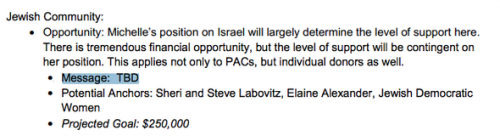 This is getting spun in certain circles as a damning indictment of Nunn or her staff, as if she is planning to tailor her entire foreign policy around fundraising concerns. But really it’s just people doing their jobs. Sheri and Steve Labovitz are wealthy individuals who are active in the Atlanta Jewish community, as is Elaine Alexander. The author of the memo is informing the campaign that these individuals are likely sympathetic to Nunn’s broad policy outlook, and are promising candidates to help Nunn raise money. But they are also cautioning that taking the appropriate line on Israel is likely to be a litmus test for these donors. It’s not the place of a finance memo writer to come up with Nunn’s Israel policy, but the memo cautions that there are fundraising implications to what Nunn chooses to say about this. To anyone who’s familiar with Democratic Party fundraising — particularly for non-incumbent underdogs, who typically have trouble raising money — this won’t be too surprising.


