White Racial Consciousness and Advocacy

Vanishing Anglo-Saxons: Jared Taylor’s White Identity and the Crisis “We” Face, Part 2

The Sin of Americanism

From birth, the American Adam was stained by the original sin of the American Republic.  Loyalist writers, many of whom were royal officials or Anglican clergymen, warned that the colonial rebellion was spawning an embryonic system of anarcho-tyranny.  They saw clearly that the revolutionary republic undermined “deference for established leaders and institutions.”  By playing upon popular passions, radical leaders reduced the colonies to anarchy, ripe for a novel “democratic tyranny” controlled, behind the scenes, by an ambitious, avaricious, and utterly self-interested elite of so-called Patriots.

The Loyalists knew that such a regime was bound, sooner or later, to end in tears.  Unfortunately, American White nationalists still invest their hopes for the future in the Patriot tradition of Constitutional Republicanism.  Racial realists such as Jared Taylor also struggle to endow the cult of the Constitution with an explicitly White identity.

Indeed, almost all of the many WASPs on the alternative Right—for example, Peter Brimelow, Richard Spencer, and Greg Johnson—hope “to salvage as much as possible from the shipwreck of their great republic.”  But they owe it to their Anglo-Saxon ancestors to recognize at long last that the Loyalists were right to oppose rebel colonists while defending the unity of the British race.  Read more

Whites versus Anglo-Saxons

In the current main article, “Vanishing Anglo-Saxons”, Andrew Fraser frames his appeal to Anglo-Saxons rather than to the “‘thin’ statistical abstraction” of White.” Further, in his book The WASP Question he argued that the concept of Whiteness “always implied the inherent equality of anyone passing” for White (p. 222), a logic that repelled conservatives who were attracted to the talented of other races and capitalists who cared more about the cost of their workers than their race. Fraser advises WASPs to shed the label of ‘White’ in favor of reasserting their ancestral identity as Anglo-Saxons.

I do think that quite often White subgroups should continue to remain separate, particularly in Europe where it would be a very large loss to lose the different languages and cultures of the various European groups. In the former colonies of England that were settled predominantly by people of British stock (i.e., Canada, Australia, New Zealand), a good argument can be made that a resurgence of Anglo-Saxon ethnic identity is the key to reclaiming their rightful inheritance. Until the very recent upsurge in immigration, as Fraser points out, these societies had a very strong ethnic and cultural identity as Anglo-Saxon. Even at this late date, a successful appeal to these identities would have powerful political implications. Moreover, non-Anglo-Saxons of European descent have seen themselves in opposition to an Anglo-Saxon Australia. In Part 2 he notes that in Australia, Irish Australians “played a militant role in the rise of the Australian republican movement” aimed at severing ties with the British monarchy. One is reminded of Teddy Kennedy. Read more

Vanishing Anglo-Saxons: Jared Taylor’s White Identity and the Crisis “We” Face, Part 1

Introduction

Jared Taylor is a racial realist.  He believes that racial differences are real and not merely a social construct.  He has spent decades defending the White race, as distinct from the Blacks, Hispanics, and Asians who share his American citizenship.

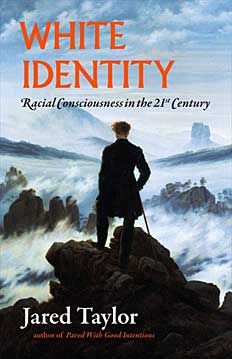
But Taylor is not just a generic White man.  He is also an Anglo-Saxon Protestant whose English ancestors arrived in America in the seventeenth century.  Indeed, having married an Englishwoman, his children, too, are pure-bred WASPs, to use the snide acronym favoured if not invented by American Jews.  Curiously, however, Taylor suffers from the pandemic WASP disease that I call Anglo-Saxon Anglophobia.  Like most WASPs, he refuses to recognize his own people as a race with its own distinctive bioculture.  Indeed, his recent book, White Identity: Racial Consciousness in the 21st Century, contains not a single reference to WASPs.  Instead, he reduces America’s founding race to the lowest common denominator of Whiteness allegedly shared with sundry ethno-religious groups as disparate as Germans, Italians, Lebanese, Armenians, and Jews.

The higgledy-piggledy category of Whiteness sits oddly alongside Steve Sailer’s more finely-tuned definition of race as “a large, partly-inbred extended family.”  Sailer’s approach is more sensitive to the socially-constructed element of racial identity.  Accordingly, it is not just major, continental population groups such as Blacks, Whites, and Asians that count as “races;” even the Hutus and Tutsis in Rwanda or Loyalists and Republicans in Northern Ireland fit into Sailer’s concept of race. Read more

Anti-White racism condemned by a mainstream French politician

Two months before the election of the new chairman of the French centre-right party UMP, its secretary-general and candidate for the chairmanship, Mr. Jean-François Copé, published a manifesto with the title ‘Manifesto for a Right unhibited’. Le Figaro, a leading French newspaper associated with the right, has published some abstracts. I have translated one of the abstracts because it deserves to be shared among a wider audience. It illustrates the point that the multicultural utopia is just that—an unrealistic, impossible dream promoted by elites that are completely out of touch with the lives of ordinary people. 

Meaux as an example

If I have inherited a love for France and a desire to serve her, it is at Meaux [Copé is the mayor of Meaux and deputy for the department in which Meaux is located] where this love came about, developed in the complexity of life, because the France of which I have been talking about across these pages is not a France which is abstract, conceptual or romantic. It is also not the France of the beautiful neighbourhoods and the elite. (…) The ‘reality shock’ is also this mother who came to see me recently. She lives alone with her son in a flat in the Beauval district where she feels threatened after she stood up against agression. Her son was playing his portable video game in front of the building, when it was stolen from him by a youngster. The mother knew the youngster and the mother went to see the parents and the neighbours to claim back the object, which she had bought after months of saving money. She was told: “If you are not satisfied here, move away, Gaul…” Thereafter, this woman felt being watched, she feels like a stranger in the neighbourhood where she has lived for many years. An ‘anti-White racism’ is developing in the districts of our towns where individuals – some of them have French citizenship – have contempt for Frenchmen, which they call ‘Gauls’, under the pretext of not having the same religion, the same skin coloror the same origin as them.

I am hearing more and more residents of Meaux complaining and that particular racism is also unacceptable like all other forms or racism: we have to denounce it, like we condemn all other discriminations. I know that I am breaking a taboo by using the term ‘anti-White racism’ but I do it with a purpose, because it is the truth is in which some of our citizens live and the silence is just making the trauma worse. These phenomena are impossible to see from ‘Paris’, in the media and political circles where the overwhelming majority of the leading people are White Frenchmen born from French parents. In these microcosms, the lack of diversity limits the presence of people of color or foreign origin. But let’s face reality: the situation in completely inverse in a lot of neighbourhoods of our suburbs.”

I await with interest the longer version of Mr. Cope’s Manifesto, to be published on October 3. 

United States Congressman stands tall during live interview on The Political Cesspool Radio Program

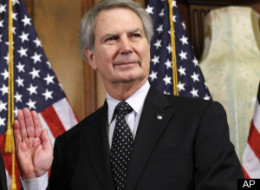
On Saturday night we had the privilege of hosting the Honorable United States Congressman Walter Jones (R-NC) on our award-winning talk radio program. Rep. Jones has long been a principled leader who, like us, allows his life to be guided by his faith in God.

Congressman Walter Jones

His thirty minute live appearance was both cordial and enthusiastic. During the interview we focused on House Concurrent Resolution 107, which proposed that Congress should consider waging wars without an Act of Congress as grounds for impeachment of the President for High Crimes and Misdemeanors according to the Constitution of the United States of America. This piece of legislation was originally introduced by Congressman Jones.

Also appearing on the September 8 installment of The Political Cesspool Radio Program was Sheriff Richard Mack, former sheriff of Graham County, Arizona, and founder of the Constitutional Sheriffs and Peace Officers Association (CSPOA).

Sheriff Mack is most famous for successfully challenging the 1993 federal Brady handgun control act in a landmark case that went all the way through the United States Supreme Court. Mack has been an outspoken champion of constitutionally limited government and a critic of federal usurpation and abuse of police powers. Read more

Grammy winner Ray Stevens interviewed by James Edwards

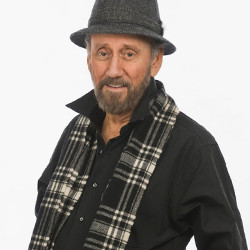
Earlier this week I had the opportunity to go into the studio and tape an interview with Ray Stevens, who now joins a long list of entertainers, such as Ted Nugent, that have appeared on our award-winning show. They have appeared despite the fact that our show has had many well-known guests who explicitly advocate for the legitimate interests of White Americans. It is very encouraging that celebrities like Ray Stevens are willing to brave the likely attacks by the SPLC and others groups that routinely attempt to police the media to prevent public discussion of our core ideas.

The pastor of my Southern Baptist church has been a fan of Ray’s music all of his life. As such, I invited my pastor to participate as a guest host in the interview, which was truly a delight. We will be playing our conversation with the legendary singer/songwriter during the second hour of tonight’s live broadcast.

Ray Stevens has become increasingly politically outspoken on behalf of conservative causes in recent years and his new song, “Obama Nation,” takes direct aim at the White House. Read more

The Southern Point: Rhetorically Speaking

The U.S. Senate Chamber, 1850 – Robert Whitechurch

A world is supported by four things…the learning
of the wise, the justice of the great, the prayers of
the righteous and the valor of the brave. But all of
these are as nothing…without a ruler who knows the
art of ruling. Make that the science of your tradition!

                                      -Frank Herbert, Dune

The Old South was far ahead of the New World Order.  What it lacked in technological development, it made up for in a concrete understanding of human nature that was grounded in reality. That reality was firmly rooted in two principles based upon experiential observation: the existence of ineradicable distinctions between different races and the danger of concentrating power in one unitary source that could arbitrarily determine the outcome of local domestic issues from afar. Indeed it may be stated unequivocally, that American civilization cannot truly go forward at all if its interpretation of human relationships and psychology deniesthese two points. It is for this reason that the philosophic fountainhead of resistance to the New World Order in the United States must inevitably begin with an endorsement of Southern rhetoric.

The term “rhetoric” has come to mean one of two things in contemporary culture: artificial speech or dishonest propaganda. This is a sorry state of affairs. It represents, in part, the overwhelming distortion that a purely nominal and positivistic machine age has introduced into human discourse.  The ancients had a much more elevated conception of the term, viewing it as a necessary analogue to the process of dialectic. Rhetoric was the high art of persuasion and the power of a particular style. Elsewhere I have addressed the polarization between the scientific and poetic modes of discourse and the need for redressing a balance between the two. The original ideal concept of rhetoric represents another evolutionary component of the poetic mode, a category that I previously dubbed the Bardic Dynamic. Read more