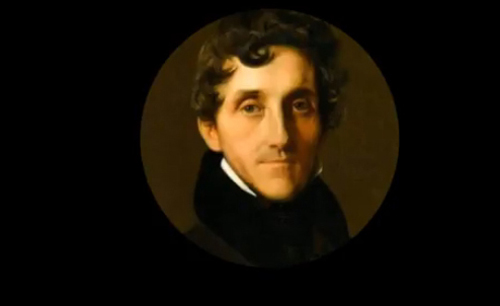
Pariah to Messiah: The Engineered Apotheosis of Baruch Spinoza, Part 1 of 3
Editor’s note: This is a classic article by Andrew Joyce published originally in March, 2013 on how Jewish academic activists created the image of Spinoza as a great philosopher and father of the Enlightenment. I interviewed Andrew Joyce on TOQLive on May 6, 2019. Great discussion!
A recurring theme here at TOO has been the monitoring of ethnic networking in efforts to establish Jewish figures in positions of scientific, academic, artistic or cultural pre-eminence. Erudite studies by several writers, particularly Kevin Macdonald (a major theme of The Culture of Critique) and Brenton Sanderson, have shed light on individual cases (e.g., Boas, Freud, Trotsky, Rothko, Mahler) as well as the more generic processes involved in these efforts (e.g., promotion in the elite media and the academic world). Typically these efforts can be said to begin with the veneration by a group of Jews of a Jewish intellectual or artist, and is followed by the creation of an authoritarian cult-like aura around his or her personality. The process reaches its completion, in some cases after the death of the guru figure, in an aggressive Jewish marketing effort to convince society at large that this figure, together with his or her ideas, is or was of national or international—if not cosmic—significance. It is predominantly by this process that the notion of “Jewish Genius” is perpetuated.
Although in some respects the pattern is slightly different in the case examined in this article, where the effort only began centuries after the death of its subject, I argue that the essence and goal of the campaign is consistent with previous cases. I explore what is arguably the most ambitious effort yet attempted to create a Jewish icon for the non-Jewish world. In this, the case of Baruch Spinoza, I will outline the history of the Jewish effort to place him at the very heart of the Enlightenment, and to crown him as nothing less than the founder of the modern West, and even of modern democracy itself.
Although I had been aware for some time of the Jewish emphasis on Spinoza as a prominent and significant Enlightenment figure, I only began to appreciate the scale and complexity of the Jewish effort to canonize him recently when Jonathan Israel’s 2001 Radical Enlightenment: Philosophy and the Making of Modernity, 1650–1750 was brought to my attention. In this extravagantly praised tome and its 2006 sequel Enlightenment Contested: Philosophy, Modernity, and the Emancipation of Man, 1670-1752, Israel rejected strictly national interpretations of the Enlightenment, and argued that it was a single, highly integrated intellectual and cultural movement. At the centre of this single movement he posits the ideas of the 17th-century Jewish philosopher Baruch Spinoza, whom Israel argues we should view above Descartes, Hobbes, Locke, Voltaire, Newton and other non-Jews, as the source of modernity. In Israel’s words: Spinoza and Spinozism were “the intellectual backbone of the European Radical Enlightenment everywhere.”[1]
At least compared with the works of ethnic activists like Anthony Julius, Israel’s work is representative of a more subtle and sophisticated way of shaping ‘ways of seeing.’ Much of what he says is at least factually correct. In some cases his assertions are beyond dispute, and are liberally furnished with references to archival documentation. However, Israel’s basic thesis over-reaches the sum of its parts. While his work is meticulously researched, very detailed, and replete with copious amounts of primary and secondary source material, there remains significant doubt about the basic argument of the book — that the support of over seventy 18th-Enlightenment figures for modern democracy, separation of Church and State, freedom of expression, social justice, equality, fairness, and tolerance can be directly linked only to the ideas of Baruch Spinoza.
The aim of this essay is not to explore the Enlightenment, nor even to directly challenge Israel’s theory of there being one single ‘Radical Enlightenment’. Instead, this essay simply and modestly aims to demonstrate that the effort to place Spinoza at the center of the Enlightenment is much older than the work of Jonathan Israel, and that it has been, and remains, a specifically Jewish effort. On a deeper level, I explore its mechanisms and the motivations underlying it. Read more
 “Why not make the Jew a bounder in literature as well as in life? Do Jews always have to be so splendid in writing?”