Featured Articles

Immigrant Crime Has Turned the Netherlands Into a Narco-state

Ridouan Taghi and Saïd Razzouki: just two of the drug dealers, gangsters, and murderers who have ‘culturally enriched’ the Netherlands.

On 18 September 2019, the well-known Dutch lawyer Derk Wiersum was shot and killed in front of his house in Amsterdam. The 44-year-old attorney was representing a crown witness in an affair that has become known as the Mocro-oorlog, which roughly translates into ‘Moroccan War.’ Wiersum was yet another victim in the gangland war that has cost many lives in the Netherlands.

The murder did not come as a surprise. One month earlier, government sources and independent researchers argued the Netherlands has become a narco-state. Every year, hundreds of millions of illicit euros — possibly billions — are being poured into the Dutch economy. The Netherlands produces an astonishing amount of marijuana, as well as synthetic drugs such as amphetamines and ecstasy.

The drug culture is not new to the Netherlands. Most people are aware of the country’s liberal drug policies. Soft drugs including marijuana and certain types of mushrooms are practically legal and the possession of small amounts of hard drugs is tolerated. These policies derive from the early 1970s, when many cultural-Marxist revolutions took place in the Western world.

Just like the mainstream of Dutch society, the criminal underworld got ‘diversified’ with the onset of mass immigration. The infrastructure, access to the sea, liberal drug culture, and rather soft sentences makes the country very attractive to criminals worldwide. Initially, criminals from China, Turkey, and Yugoslavia set up shop in the Netherlands, mostly in the larger cities.

Ever since the turn of the century, crime has become extremely violent, often leading to situations typical of the Third World. There are two reasons for this development: the very lucrative cocaine trade and the increasing role of Third-World criminals, mostly from Morocco and the Caribbean.

It is generally believed that the Moroccan War started around 2012, when a shipment of 200 kilograms of cocaine went missing. The criminals involved turned on each other, leading to a series of killings that continues to this day. Read more

The Way Life Should Be? Vol X: A Bridge Too Far

“Neoliberalisation and globalisation generate and utilise the mobility of both capital and labour. Meanwhile, labour migration is presenting a challenge to the observance of labour rights. Present-day methods of capital accumulation rely on the search for cheap labour and the relocation of production to territories that do not protect workers’ rights.” —Piotr and Pawel Zuk

It is a well-documented but much-ignored phenomenon that parts of the rural Midwest have been totally transformed due to meatpacking companies’ employment of almost exclusively Hispanic migrant labor to drive down labor costs. The effects were already stark in the early stages of America’s “browning”:

Meatpacking wages fell sharply after peaking in 1980. In Iowa, the average hourly earnings of meatpackers in 1981 was $11.33, 50 cents less than the US average $11.83. Wallace Huffman of Iowa State University noted that real meatpacking earnings fluctuated between 1963 and 1988, but were lower in 1988 than in 1963. An INS agent in 1995 estimated that almost 25 percent of the workers in 222 meatpacking plants in Nebraska and Iowa were illegally in the US. …  According to meatpackers, there is very high turnover among 10 to 30 percent of the work force, so that a plant with 500 employees may issue 1,000 to 1,200 W-2 statements at the end of the year. Some critics of the meatpacking industry argue that the companies encourage high turnover to keep most workers at the low end of the wage scale. … In Albert Lea, Minnesota, city officials were not sure that they wanted a meat packing plant employing 700 that was closed for a year reopened. According to one official, “a meatpacking plant can butcher public budgets as well as hogs.” One study found that, despite new payrolls, per capita income declines in some small communities that attract meatpacking plants.[1]

From 1990 to 1996, many Midwestern localities witnessed their Hispanic populations grow anywhere from 200% to 500%, largely at the behest of major meatpackers and other corporate interests facilitating their new labor force’s re-settlement, though not without substantial assistance from the government, social advocacy groups and law firms, and religious charities. The movement of huge numbers of alien peoples into formerly high-trust, tight-knit communities might help companies’ bottom lines in terms of labor costs and general product consumption, but it splinters and ravages these communities—which is also by design. The Democrat Party benefits from a bumper crop of new voters, the religious charities get to feel righteous, the Chamber of Commerce gets its profits, and the assorted “social advocacy groups” get to act out particular ethnic grievances—often via the witting or unwitting accomplices in the Christian charities—under the guise of humanitarianism. The list of winners definitely does not include the locals:

Given their small populations, rural towns can be transformed almost overnight by immigration, leading to issues that range from an inability to communicate with public authorities to non-English speaking children in school. Lexington, Nebraska went from a population that was five percent Latino in the 1990 Census to nearly 45 percent Latino in 1994, on a Census re-check. The growth of the Latino population is attributed to IBP, a meat packer that employs 2,500 workers, and has a $58 million annual payroll, in a town of 9,000. The transformation of Lexington has drawn mixed reviews. On the one hand, business, especially in the downtown area, is up. However, some established residents complain that Spanish-speaking meatpackers and their families drive old cars without licenses and insurance, and that the needs of their children lower the quality of the schools. The crime rate in Lexington has doubled. … According to one Nebraska police chief, “where you have the meatpacking plants, you have an immigration of Hispanics, and you are seeing an increase of gangs.”[2]

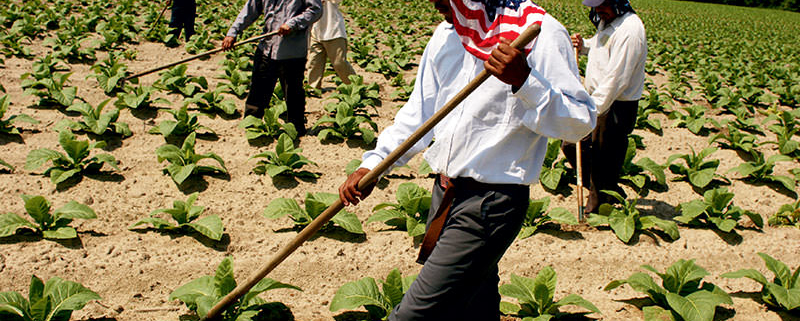
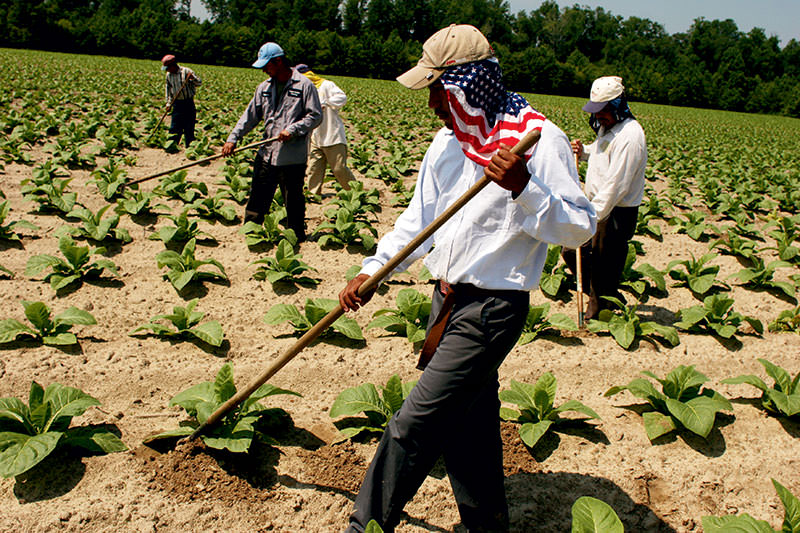
This phenomenon has been replicated across the country in different industries, from Wisconsin’s dairy industry[3] to Georgian poultry.[4] In Maine, it is the blueberry, broccoli, forestry, egg, seafood, and apple industries.

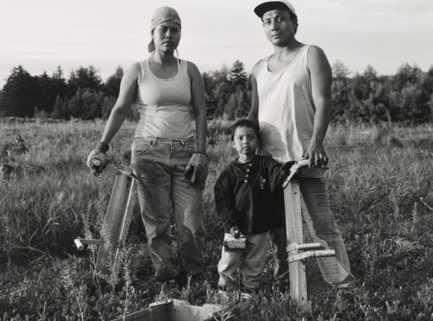
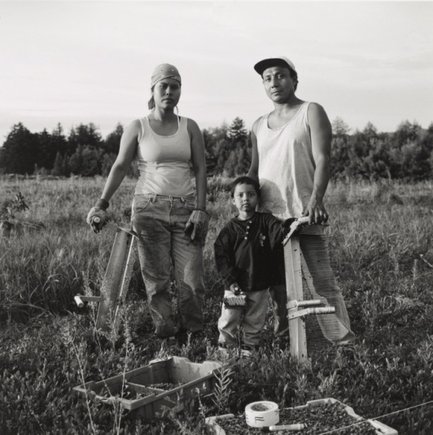
Let us consider tiny Milbridge, Maine, home to the Mano en Mano organization first profiled in Volume III, as a starting point. Hispanics first started to come to the area when a sea cucumber processor used a labor contractor to hire migrant labor in 1997; sea cucumbers are similar to starfish and their meat is highly-prized in Asia. The first workers were former blueberry rakers, and network hiring subsequently led to more Hispanic migrants. Consequently, Milbridge, a town of 1,300, is mostly White, but 24% of the student body is now Hispanic. Wild lowbush blueberries in Maine are “raked” from barrens in the coastal forests of the northeastern (“Down East”) part of the state. Cherryfield Foods, Inc. is one of the largest blueberry producers in Maine and provides free housing to its predominantly Mexican workers. Cherryfield is owned by Oxford Foods in Nova Scotia, Canada. Maine produces about $85 million worth of blueberries a year. Throughout the 1990s and well into the 2000s, most of the seasonal harvesters were Hispanic immigrants or migrant laborers complemented by Micmac Indians from Maritime Canada. According to Maine’s Department of Labor, 18% of farm workers in the state are migrants, defined as those who traveled too far from their usual residence to return at the end of the workday. Ed Flanagan, president of Jasper Wyman and Son, a berry harvester,[5] told the Washington Post on April 10, 2006 that Hispanic workers are “like migratory birds. I mean, we don’t have to do much and they show up every year.” Washington County had almost no Hispanics in 1990, but today they dominate the harvest crews that “rake” berries from their bushes, not to mention the labor force of Aroostook County’s major broccoli farms, the coastal seafood processing plants, and other agricultural or seafood-related industries. The initial batch of migrant workers showed up because, “They say that they left California or Texas to enjoy the higher wages and better benefits associated with fewer newly arrived Mexican workers.”

The increased use of farm labor contractors is another major factor in the increased use of migrant Hispanic, mostly mestizo, labor in Maine’s agricultural industries, but the presence of advocacy groups such as Mano en Mano which are, in their own words, “working hard to alleviate impediments to settlement in the region,” is also a contributing factor to be considered. All of the laborers’ (and their families’) health care (including dental, eye care, and psychological care), transportation, and translation needs are provided for by another 501(c)(3) called the Maine Mobile Health Program, Inc. (MMHP), which is focused on “equitable healthcare and social justice.” Do you get free housing, healthcare, transportation, and psychological support through your job? MMHP gets a small subsidy from the US Department of Agriculture, and, according to the most recent financial statements I could find, over $1.4 million from the US Department of Health and Human Services. It was recently announced that MMHP—along with twenty other organizations, many of which we have covered such as MEJP, MIRC, and the like—would be receiving a $1.17 million grant from Maine Health Access Foundation.

In a joint project between Mano en Mano and Colby College entitled, “From Sojourner to Settler,” published in April 2017, we learn that when Mano en Mano conducted its first HUD-designed (Housing of Urban Development) needs assessment in 2011, “The organization found that 78.5% of the respondents of the HUD survey were born in Mexico; 89% self-identified as Hispanic/Latino. In that year, 93% were employed in farm-work.” Further, from the joint study conducted by Mano en Mano and Colby itself:

When asked, 98% of all respondents identified the town in which they live as “home” implying these sojourners have in fact become settled…[of respondents] under the age of 18 years. … 87% of these were born in the U.S. … Eighty percent of respondents to our survey identify as Latino or Hispanic. Eighteen percent identify as having two or more racial identities and 1% identify as White. Forty-three percent of respondents report speaking only Spanish in their household, while 45% report speaking both Spanish and English. Nine percent of households reportedly speak English only at home (my note: this is not “diversity,” this is an ethnic enclave)…22% of households don’t feel comfortable interacting or calling with police (my note: we can probably guess why).

What we can see here is that “documented” or not, the migrants are putting down roots and becoming settled, which is an ominous sign for Maine’s demographic future. The workers surveyed are already averaging over three children per family, which is well over the US average, but only slightly higher than the local average of 2.7. It doesn’t take much imagination to see where this is going, however.

One by-product of the reliance on predominantly Mexican-mestizo labor is that these families have coalesced into communities with a shared culture and language—which has made their ability to organize and demand better working conditions, benefits, and higher wages much easier, especially as, 1) their only competition locally is Whites who would demand even more and greater protections, and 2) there is a paucity of readily-available scab labor to replace these workers. In the late-1990s and 2000s, we began to see push-back against serious labor abuses as Mexican workers started to understand their rights and interface with local groups about unionization. Let’s use the saga of Jack DeCoster, farm magnate, as a filter, with a timeline combined from UC Davis’s catalogue Rural Migration News and Marler Clark’s website:

·         1996: DeCoster was fined $3.6 million for health and safety violations at the family’s Turner egg farm, which then-Labor Secretary Robert Reich termed “as dangerous and oppressive as any sweatshop we have seen.” Regulators found that workers had been forced to handle manure and dead chickens with their bare hands and to live in filthy trailers.

·         1996: In Turner, Maine, Mexican immigrants dominate the work force at the DeCoster Egg Farm, the largest brown-egg producer in the US…was fined $ 2 million by the federal Occupational Safety and Health Administration for violations of health and safety laws. This fine and publicity resulted in boycotts of DeCoster eggs, and a law approved in Maine that permits workers on large farms to unionize under state laws. Most farm workers are not covered by the NLRA.

·         1997: In December, the NLRB announced that it would issue complaints charging that DeCoster unlawfully interfered with workers engaged in union activities, spied on workers and fired union supporters; the United Paperworkers International is attempting to organize DeCoster workers. The charges were filed against the two successor companies, Maine Ag and Quality Eggs of New England. DeCoster paid $2 million to settle a $5.8 million federal fine for health and safety violations, and split into two companies…In the 1980s and 1990s, DeCoster was fined repeatedly for violations of workplace safety laws.

·         1999: The company paid $5 million to settle wage-and-hour claims involving 3,000 workers.

·         2002: The Occupational Safety and Health Administration fined the family’s Maine Contract Farming operation $345,810 for an array of violations. The same year, DeCoster Egg Farms of Maine paid $3.2 million to settle a lawsuit filed in 1998 by Mexican workers alleging discrimination in housing and working conditions. Afterward, DeCoster subdivided into eight smaller firms on 1,300 acres near Turner.

·         2008: Maine Contract Farming LLC of Turner, Maine, the successor to DeCoster Egg Farms, was fined $150,000 by OSHA for ordering workers to retrieve eggs from a building with a partially collapsed roof.

·          Jack DeCoster’s Turner and Winthrop Maine egg farms were sued in August 2011 by a plant manager who alleged that DeCoster treated Mexican-born as “virtual slaves.” The manager said that DeCoster told him to “get rid of the gringos” because Mexicans accepted his authority.[6],[7]

These abuses are just from DeCoster’s Maine farms; his farms in Iowa were shockingly worse.[8] What you’ll notice is that the suits and fines, with the one exception of the plant manager in 2011, have seemed to dry up over the last decade. Is it that DeCoster suddenly became a responsible and ethical human being, or is it that as the 2000s progressed, Hondurans, Guatemalans, Haitians, Jamaicans, and sub-Saharan Africans started arriving in Maine in appreciable numbers? The uniform ethnic make-up of the migrant workers in Maine throughout the 1990s and into the 2000s allowed the workers to band together and attempt to unionize as well as file class-action law-suits. Clearly this is not beneficial for the agricultural industry, so a more diverse work force had to be imported. Each success wave breaks the bargaining and organizational power of the group that comes before and keeps wages low. It also harms the domestic population for the aforementioned reasons. I’ll say it again: this has nothing whatsoever to do with humanitarianism.

The Mexican enclave in and around Milbridge will not last. Already Mano en Mano is listing Haitian Creole alongside Spanish for the translation services offered, and you will find large numbers of guest workers along the coast from Jamaica and Eastern Europe. This is before considering the huge influx of sub-Saharan Africans or the other mestizo groups from Central America. The Maine Department of Labor has started to organize job fairs targeting African immigrant communities in Lewiston and Portland, bringing together translators, NGOs, and prospective employers. From the “Immigrant and Refugee Integration and Policy Development Working Group Final Report” for the City of Lewiston, December 2017:

According to the 2017 Maine Chamber of Commerce report, new immigrants and their children are anticipated to account for 83% of growth in the U.S. workforce between 2000 and 2050…However, as the writers of the report indicate, to incentivize immigrant participation in the Maine economy, “we need to be receptive to the fact that many of the people who will grow our population, workforce, and economy will look different than most of us and have different backgrounds and cultures.”… Several area employers, including Staff Management, Aramark, L.L. Bean, Barber Foods, Pionite, Labor Ready, Central Maine Meats, Commonwealth Poultry, Cozy Harbor Seafood, the Harraseeket Inn, Clover Manor, Conform, St. Mary’s Regional Medical Center, HW Staffing, Central Maine Medical Center, TJ Maxx, J.C. Penney, Kohl’s, Lowe’s, Home Depot, BJ’s Wholesale Club, Wal-Mart (both retail and distribution), K-Mart, Hannaford, Shaw’s, Belanger Farms, Pineland Farms, and Goodwill, have adopted practices and policies to hire and support a diversified workforce.[9]

What all of this really means is that each successive wave of immigrants breaks the backs of the organizing attempts of the collected group before them, but the power brokers seem finally to have grasped that if you can’t even understand or communicate with the person working next to you, you sure as hell cannot propose unionizing to them. Thus, the more diverse a workforce, the less likely it is to be able to take collective action, and this is before considering long-standing ethnic grievances in addition to linguistic and cultural barriers. When they say “diversity is our strength” they mean “diversity is their strength,” for they envision a state of unlimited immigration from every nook and cranny of planet earth keeping things perpetually in the black.

Reposted with permission from The Anatomically Correct Banana.


[1] https://migration.ucdavis.edu/rmn/more.php?id=126

[2] Ibid.

[3] “Some Wisconsin dairy farmers, claiming that 40 percent of hired workers on dairies are immigrants, were quoted as saying: ‘If E-Verify passes, it will kill the dairy industry in Wisconsin.’ John Rosenow of Rosenholm-Wolfe Dairy asserted that ‘60 percent of the milk that’s harvested is harvested by immigrants, and the vast majority are probably undocumented.’”

[4] “The Washington Post on April 3, 2006 profiled immigration to Gainsville, Georgia, the self-proclaimed ‘poultry capital of the world.’ Between 1990 and 2005, the city’s population almost doubled to 32,000, while the number of Hispanics quadrupled, so that the town is now 50 percent Hispanic. Gainsville’s demographic change was induced by poultry processors such as Fieldale Farms, Koch Foods and Pilgrim’s Pride. About 3,000 of Fieldale’s 4,700 workers are Hispanic and earn $10 an hour. About 70 percent of the pupils in Gainesville Elementary are Hispanic, and 90 percent qualify for subsidized meals.”

[5] Berry farm Jasper Wyman and Sons paid $118,000 to the Immigration and Customs Enforcement Agency in November 2010 for failing to properly complete I-9 forms on the 900 seasonal workers hired each year.

[6] https://migration.ucdavis.edu/rmn/more.php?id=250

[7] https://www.marlerblog.com/case-news/wright-county-egg-owner-decoster-seems-to-be-one-bad-egg/

[8] “In 2001, the Iowa Supreme Court ruled that DeCoster was a “repeat violator” of state environmental laws, citing violations involving the family’s hog-farming operations. The family was forbidden to expand its hog-farming interests in the state. Also in 2001, DeCoster Farms of Iowa settled, for $1.5 million, a complaint brought by the Equal Employment Opportunity Commission that DeCoster had subjected 11 undocumented female workers from Mexico to a “sexually hostile work environment,” including sexual assault and rape by supervisors… n 2003, Jack DeCoster paid the federal government $2.1 million as part of a plea agreement after federal agents found more than 100 undocumented workers at his Iowa egg farms. It was the largest penalty ever against an Iowa employer. Three years later, agents found 30 workers suspected of being illegal immigrants at a DeCoster farm in Iowa. And in 2007, raids in Iowa uncovered 51 more undocumented workers.” https://www.marlerblog.com/case-news/wright-county-egg-owner-decoster-seems-to-be-one-bad-egg/

[9] https://www.lewistonmaine.gov/DocumentCenter/View/8885/REPORT—ImmigrantandRefugeeIntegrationandPolicyDevelopmentWorkingGroupFinalReport


 

Brexit: The Banality of Treason

“We have no real democracy at the present time, because again and again the people have voted for decisive action, yet again and again their will has been thwarted by obstruction in the talking shop at Westminster. Democracy only begins when the will of the people is carried out.”
Sir Oswald Mosley, 1931

One of my all-time favourite fictional stories about the nature of political belief is Flannery O’Connor’s The Barber, published in 1948. This remarkable short story, written when O’Connor was just 20 years old, follows a number of interactions in the life of George Rayber, a college professor who decides to visit a new barber just prior to a governor’s election. Rayber is a typical liberal, blindly convinced of his progressive beliefs and his own intellectual powers. In contrast to Rayber, the Barber and his other customers are supporters of the racial status quo. As Rayber sits for a shave, and discussion moves to the election, the interaction between college professor and barber becomes a masterful allegory for competing political philosophies and behaviors. Rayber finds himself arguing with an audience that is grounded in reality, immune to abstraction, and who seem to understand the economic interests he has in the election better than he does. It is the Barber who repeatedly reminds the conceited, and self-deceiving, college professor to really “think” and to use his “horse sense” rather than blindly follow progressive fantasies and intellectual fashions. Rayber, incensed by the reactionary views of the Barber, is nevertheless unable to offer an articulate, factual rebuttal, sitting mute and angry. Frustrated and embarrassed by someone he sees as an ignorant bigot, he then neurotically spends the night writing a “systematic analysis” for why voting for his candidate is a good idea, and plans to confront the Barber with it before the election. The story reaches a climax when Rayber finally gives his impromptu lecture in the barbershop, is greeted with laughter and derision, and subsequently lashes out by punching the Barber — confirming, with his violent loss of self-control, his own ideological, intellectual and personal defeat.

Although it’s been noted by biographers that she enjoyed “racist jokes,” O’Connor was politically ambiguous and her precise intentions in this story went with her to the grave when she died of lupus aged 39. In this case, however, I subscribe to the school of formalist criticism in that I see The Barber as possessing a life and existence beyond its author and her intentions. Regardless of what O’Connor intended, or how other critics have interpreted it, the story remains one of the most profound and succinct fictional portrayals of modern left-liberalism. We know, for instance, from several scientific studies that although leftists believe themselves to be agents of rationality they are in fact more likely than Rightists to be swayed by emotion.[1] They are also prone to weaker levels of emotional regulation and to “extreme acts of solidarity … with groups to which they do not belong originally.” The ongoing tragicomic presence of Antifa, recently filmed screaming “Nazi” at a milquetoast female conservative approaching her eighties, and the growing culture of censorship, are surely proof that the spirit of George Rayber is alive and well. The Left continues to evade debate, forfeiting argument in order to punch the “ignorant” in the smug belief that the Left, and the Left alone, are both intellectually and morally correct. Read more

Minority Control: From the Neolithic to the Present

In my hate-article “Booty without Scrutiny,” I looked at the media silence that greeted the knighthood given by Theresa May to Ehud Sheleg, the Israeli treasurer of the British Conservative Party. It’s plain that mainstream journalists in Britain are too frightened to ask some very important questions about the consequences of a foreign national controlling the finances of Britain’s governing party.

Second to Israel, of course

Indeed, mainstream journalists are too frightened to mention Ehud Sheleg’s knighthood at all. However, that silence didn’t extend to the Jewish Chronicle, which published an article saying that the “Tel Aviv-born Tory treasurer” was “surprised but delighted” by his “knighthood from Theresa May.” The article quoted this very significant admission by Sheleg:

Discussing his upbringing he has said: “I was brought up, albeit in Israel, with the sentiment of very strong ties to Britain. In the family of nations, this has to be my favourite one. Second to my homeland, of course.” (Ehud Sheleg, Tel Aviv-born Tory treasurer ‘surprised’ by knighthood from Theresa May, The Jewish Chronicle, 16th September 2019 / 16th Elul 5779)

Sheleg is expressing a vile anti-Semitic “trope” that is explicitly condemned by the International Holocaust Remembrance Alliance (IHRA) in its list of “contemporary examples of antisemitism.” According to the IHRA, it is anti-Semitic to accuse “Jewish citizens of being more loyal to Israel, or to the alleged priorities of Jews worldwide, than to the interests of their own nations.” Sheleg has added British citizenship to his natal Israeli citizenship, which makes him a “Jewish citizen” of Britain. And now he openly admits, in Britain’s main Jewish newspaper, that he is “more loyal” to Israel than to Britain.

Rule of the few, not the many

How on earth can this be acceptable in a genuine democracy? Sheleg’s primary loyalty is to his “homeland” of Israel, so he will always ensure that any conflict between the interests of Israel and Britain (or anyone else) is settled in favour of Israel. This isn’t acceptable in a genuine democracy, from which we can conclude that Britain isn’t a genuine democracy. Instead, it’s an oligarchy, from the Greek oligo– “few” and arkhia, “rule.” An oligarchy is a political system in which a small number of people exercise control for their own ends and without reference to the wishes of the majority. Read more

The Way Life Should Be? Vol. IX: Cheap Labor is the Opiate of Dying Nations

“The [labor] shortage is so acute … other companies have gone so far as to offer higher wages to entice locals.”—Martha Searchfield, Bar Harbor Chamber of Commerce

You may remember that several years ago, Disney became notorious for hiring imported H-1B visa workers to replace their higher-paid American counterparts, and threatening to withhold severance packages if the outgoing American employees refused to train their new replacements. This then-new policy was overseen by Partnership for a New American Economy (NAE) member and Disney CEO Bob Iger. Recall the sheer number of powerful executives, major economic players, and prominent politicians among NAE’s ranks, as catalogued in the previous piece, and understand that it is no surprise that there has been virtually no resistance to the mass importation of scab labor from either the public or private sectors outside of organized labor and the odd Bernie Sanders (although the “new and improved” Sanders has changed his tune).

NAE’s entire raison d’etre is to pad corporate profits, and one of the ways they do that is to advocate for increased foreign worker visas. In fact, NAE founder Michael Bloomberg has publicly called for the removal of any cap on H-1B visas issued by the federal government, a sentiment echoed by Bill Gates and others. The H-1B visa worker program is just one of over twenty such worker visas allowing companies to push out American workers in favor of foreign ones. Regarding H-1B visas specifically, Ron Hira and Bharath Gopalaswamy write:

Technology and financial services firms have taken the lead in the public advocacy, spending millions of dollars on lobbying, creating numerous issue-specific advocacy organizations, and funding favorable studies at think tanks. Unlike traditional policy advocacy—which is typically left to the government affairs departments of corporations—pushing for H-1B expansion has seen CEOs be highly visible. Celebrity CEOs such as Bill Gates, Mark Zuckerberg, Eric Schmidt, Jamie Dimon, and Michael Bloomberg have publicly advocated for expanding the H-1B program—through op-eds, speeches, sponsoring news organizations’ events designed to influence lawmakers’ views of the program, letters to shareholders, and congressional testimony.[1]

Further, in true Woke Capital fashion, the authors continue, “To broaden the appeal of expanding the program, they have linked their messages to broader advocacy efforts on behalf of Deferred Action for Childhood Arrivals (DACA) recipients and the undocumented.” With few exceptions, the entire capitalist structure is in favor of unlimited immigration so long as it serves their needs; organizations such as NAE, the George Soros-funded National Immigration Forum, the American Action Network, FWD.us, and the US Chamber of Commerce are the rule, not the exception. In 2013, 450 businesses, chambers of commerce, advocacy groups, immigration attorney groups, and other organizations issued a letter to Congress calling for “Immigration Reform NOW.” The letter’s signatories demanded a doubling of immigration into the country and full amnesty for all illegal aliens. Disney was of course represented—as were NAE, FWD.us, the American Action Network, and the National Immigration Forum—and also present were a slew of tech companies from Dell to Google to Microsoft to Facebook to Cisco Systems. Also well-represented were companies that thrive on the cheap labor provided by H-2A and H-2B visas. The H-2A is designed to import agricultural labor and the H-2B is for general non-agricultural labor (think maids, restaurant employees, etc.). As Jon Feere relates:

The companies apparently looking for more H-2A visas (i.e. cheap agricultural labor from overseas) include the Sun-Maid Growers of California, Welch Foods Inc., the New England Apple Council, Sweet Potato Council of California, National Christmas Tree Association, and various state nursery, landscape, and farm bureau organizations. The companies apparently looking for more H-2B visas (i.e. cheap non-agricultural labor from overseas) include Hilton Worldwide, Marriott International, and the National Council of Chain Restaurants. Many state Chambers of Commerce also signed on. … Santa Clara University also signed on to the letter, the only school on the list. The school bills itself as “The Jesuit University in Silicon Valley,” so they likely received pressure from both the Jesuits and the IT industry to support amnesty. And perhaps being the alma matter of Janet Napolitano had something to do with it.[2]… Also on the list is FWD.us, a pro-amnesty group created by Facebook’s Mark Zuckerberg. The group created an off-shoot called “Americans for a Conservative Direction” aimed at selling amnesty from a conservative perspective (despite the fact that the organization is run by Obama-supporting liberals). It is this group that created the deceptive amnesty ad that starred Sen. Marco Rubio (R-Fla.) earlier this year.[3] …

The quaint notion that employers will self-regulate has been shattered by dozens of stories of household names replacing US workers with H-1Bs. This common practice has reportedly been used by Disney, Southern California Edison, New York Life, Abbott Labs, Fossil Group, and many other leading firms. Perhaps the most stunning case was when UCSF forced Robert Harrison and his colleagues to train their H-1B replacements. UCSF is part of the University of California (UC) system, one of the largest public university systems in the country. According to Senator Dianne Feinstein (D-CA), the UC system received $8.5 billion in grants and subsidies from the federal government. More astounding, Janet Napolitano, UC’s president, previously served as secretary of the Department of Homeland Security, the agency that administers the H-1B program. During an oversight hearing before Congress in 2009, Senator Durbin asked then-Secretary Napolitano what she was doing to ensure that US workers were not being displaced by H-1B workers. She responded, “Our top obligation is to American workers, making sure American workers have jobs…We are going to keep at this to make sure that the intent of that program is fulfilled.” Remember, the intent is that H-1B workers are filling positions for which there is a bona fide labor shortage. After the UC H-1B scandal became public in late 2016, about a dozen members of Congress sent letters to Napolitano, urging her to reverse course. In spite of this public admonition, she went forward with replacing her US workers with H-1Bs. The lure of lower-cost, hassle-free workers was too tempting for even for a public university like UC to pass up.

Immigration law firms were well-represented on the list because, as Ron Hira and Bharath Gopalaswamy explicate:

Immigration attorneys, who have expert knowledge about how the H-1B program operates, have also advocated for H-1B expansion and argued that current safeguards are more than adequate. This should come as no surprise, since H-1B cases are often a large source of revenue for immigration law firms. The more H-1Bs issued, the greater the revenue earned by them.[4]

Outsourcing firms also make billions of dollars in revenue from the current system, and a removal of the cap on foreign worker visas would be a financial windfall. Many businesses enjoy these visas not simply because of the lower advertised wages they pay and the fact that the workers typically demand and receive fewer benefits; an unfamiliarity with labor rights and often a language barrier enables employers to exploit these workers by underpayment either through position re-classification or through undocumented overtime, as well as a failure to reimburse workers for expenses normally covered by the employer, such as uniforms. Bread and Roses Bakery, Inc. in Maine is one such business that checks all of those boxes, and when caught last year, the owner flippantly commented that she thought the government had “more important things to do” than to enforce labor law—and in a sense, she’s right. The abuses go much further than this one bakery, however; I will go into much greater depth in the next installment of this series, but it is vital to understand that the issue is systemic:

U.S. H-2B employers and the U.S. recruiters they hire often partner with foreign recruiters, and then deny knowledge of the foreign recruiters’ tactics when fraud and abuse are alleged. U.S. courts have not shown a willingness to try cases of abuse when the violations occur outside the United States, even if the case involves a job being performed in the United States…Despite credible allegations and even convictions for fraud and abuse of both H-2B workers and the program in general, neither the Department of Labor (DOL) nor the Department of Homeland Security (DHS) has ever barred a U.S. company from filing H-2B petitions. Some repeat offenders continue to have their petitions approved to this day.[5]

Furthermore, write Hira and Gopalaswamy:

Most of the abuses—whether the low wages for H-1Bs or even the replacement of US workers with H-1Bs—are legal under the current laws and regulations. Increased efforts at enforcement are ineffective when abuse is legal. Even in the high-profile cases of Disney and Southern California Edison, where US workers had to train their H-1B replacements, government investigations found the practices perfectly legal, leaving US workers with no recourse. Any government investigation of the widespread use of the H-1B for cheap labor would prove similarly fruitless since it too is legal.[6]

And there’s the rub: of course illegal migration into the United States is a massive issue, but even its full curtailment, while necessary, is not sufficient to stop the demographic destruction of the United States and its transformation—already well underway—from a nation to an economic zone. We live in a market. If you think the push for open borders has anything to do with humanitarianism, you’re being naïve at best. The Central Bank of Ireland admitted as much: they need a certain intake of people to keep wages from rising. There are other reasons for the mass importation of alien peoples as well, but as regards wages, it’s primarily considerations of supply-and-demand and collective bargaining, or lack thereof.

In the antebellum South, indentured servants and slaves filled the labor needs of many major landholders, whereas in the North child labor was prevalent. As the mid-nineteenth century approached, immigrants from countries like Ireland joined the Yankees in laboring in factories and mills in the rapidly-industrializing Union. Freed Blacks filled this role during the Great Migration when immigration was restricted in the 1920s, and soon thereafter women were “liberated” from their “burdens” of home-making and child-rearing to depress wages and provide a financial windfall of tax revenue to the federal government. Immigrant populations arriving in the United States have typically come in waves, and these waves very often served to provide cheap, disposable labor for the expanding industrial economy as the nineteenth century progressed, and the de-industrialized service-sector economy post-1965. This model has been adopted across the West at various intervals in the immediate aftermath of World War II (aka, Year Zero, per Dharmakirti). Immigrants, women, and now sexual identity groups (although the latter two are more white-collar phenomena) have been a boon to capitalists looking to keep wages as low as possible and break the collective bargaining power of organized labor, which has also traditionally been the bulwark against mass immigration, not just in the United States but in countries like Canada, Australia, and others. The specific context of Maine will be explored in my next piece, but it is important to understand this economic motivation on the part of Money Power in order to see the big picture. Without grasping the economics, much of what the “elites” are doing remains obscured. Returning once more to Hira and Gopalaswamy:

Labor markets work like other markets. When there is growth in demand for a particular good or service, prices (and, in this case, wages) rise, sending a signal to supplyEmployers can fill a position with an H-1B worker without ever attempting to recruit a US worker for the job…The rationale for not requiring active recruitment of US workers was to expedite the hiring process for an H-1B worker. The assumption was that employers would only use the program when they couldn’t find an American worker, but that assumption has proven wildly incorrect. Many employers actually set aside jobs for H-1B workers through preferential hiring practices, and even replace US workers with H-1Bs. Such practices may surprise some, but they are perfectly legal—and, more importantly, perfectly logical because employment norms and firm behaviors are far different today than they were in 1990. The rise of shareholder-value-driven management means that the logic of the firm is to maximize profits. If hiring an H-1B worker instead of an equally qualified US worker increases profits, then the firm’s executives will choose to do so.[7]

Once again, there are no legal disincentives to do so, only moral ones, and given where we’re at…well, you get it. Even if there was a moral objection to replacing your countrymen in the name of profit, the nature of most industries would quickly see that company go out of business. The libertarian notion that industries self-regulate in the absence of government is laughable—and destructive. Beyond the false Judaic construct of the “free market,” which would see the state run by corporations for the benefit of corporations, laissez-faire economics marginalizes such “externalities” as blood and soil. Both wind up exploited, polluted, and ultimately destroyed.

More next time.

Reposted with permission from The Anatomically Correct Banana.


[1] https://www.atlanticcouncil.org/images/publications/Reforming_US_High-Skilled_Guestworkers_Program.pdf

[2]

[3] https://cis.org/Feere/Yelp-Gives-FiveStar-Review-Amnesty-So-Do-Virgin-America-Overstockcom-EBay

[4] https://www.atlanticcouncil.org/images/publications/Reforming_US_High-Skilled_Guestworkers_Program.pdf

[5] https://cis.org/Dirty-Work-InSourcing-American-Jobs-H2B-Guestworkers

[6] https://www.atlanticcouncil.org/images/publications/Reforming_US_High-Skilled_Guestworkers_Program.pdf

Bronze Age Mindset: In Praise of Spirited Men

Man is born straight and free, but everywhere he is in fuzzy rainbow handcuffs. Heroes in ancient times boasted to friends of sacking and plundering cities; today they brag to strangers of buttock-burglary or cutting off balls to impersonate woman. Man has lost his natural virility and with it his purpose, beauty, and joy in life. Bronze Age Pervert has come to save you from a great faggotry.

Superficially, Bronze Age Mindset is a book of political philosophy or even of “ancient Greek history,” as Amazon classifies it. But BAM is a book of spirit! BAP is not concerned with the spirit in any abstract theological sense; as he puts it, you are your body and nothing else, and anything purely “of the spirit” is “fake and gay” (90). Instead he is concerned with the instincts and inclinations which exist “only in the blood” and show themselves “in daily life and daily needs” (90).

Various factors affect the spirit in the modern world. One of the most important is a feeling of confinement, which is extremely degrading to spirited men. As the author puts it, “No kind of distress is worse than the feeling you are trapped. My worst nightmares are about opening a door only to find myself in the same aluminum cell, over and over” (20). This feeling of confinement is expressed in one of the most moving passages of the book:

I saw once a jaguar in a zoo, behind a glass, so that all the bugs in hueman form could gawk at it and humiliate it. This animal felt a noble and persistent sadness, being observed everywhere by the obsequious monkeys, not even monkeys, that were taunting it with stares. He could tell—I saw this! He could tell he was living in a simulated environment and that he had no power to move or live. His sadness crushed me and I will always remember this animal. I never want to see life in this condition! (21)

Along with the beautiful description of the feelings of powerlessness which afflict so many men today, the concept of being “observed everywhere” is relevant here. BAP has elsewhere discussed the importance of anonymity, explaining that it is not only a matter of avoiding bullying by angry mobs or authority figures. Although he does not put it in these terms, using a pseudonym is necessary for true freedom of expression because separation from one’s real identity protects one from the feeling of being watched, a feeling which is confining in itself. Under their own names, realizing they are being observed not only by enemies but by friends and family, anyone could be tempted to self-censor.

Even a clearly illusory sense of being watched alters people’s behavior. Researchers at a university in the UK have displayed pictures of eyes above an “honesty box” and found that faculty become much more generous under such “observation,” while others have found that images of eyes on signs make bicycle theft less likely. Read more

The Way Life Should Be? Vol. VIII: In Case the Cleaning Lady Has Found My Head


“According to neo-classical economic theories, income inequality is not a problem — ‘because the rich can invest in new business that generates more jobs and so on’ — and thereby everybody gains. … Problem is — This is not what has happened. To a very large extent the 5% very rich have instead invested in speculation within the finance sector or credit-activity for the other 95% and thus only increased the debt — creating, more or less, a ‘Perpetuum-Mobile’…When looking at the income gap it is almost ‘scary’ how well the macro-economic model used for the last 30 years fits with the income-gap development during the same period. Productivity per employee has increased considerably during this period, but wages have not. Profits and remunerations to corporate executives on the other hand have increased enormously and the income gap has never been wider.” — Soren Andersson

“Just heard there’s an ICE checkpoint in Hollywood, just a few blocks from where I live. Everyone better give their housekeepers, nannies, and landscapers a ride home tonight…”-Amber Heard

The most vociferous supporters of mass immigration into the United States are almost to a person among the nation’s most privileged. The advocates who proclaim their support for “social justice” in Maine are no different, but far from their motives being pure, they desire the importation of a new serf class of hyper-consumers with lower IQs, high time-preference, and a greater willingness to work for low wages in poor conditions. As we shall see in an upcoming installment of this series, however, the latter isn’t always the case, which creates a problem the ruling class has, for now at least, the ability to solve. The establishment machinery is entirely geared toward the entrenchment, perpetuation, and expansion of neo-liberalism, which necessitates breaking down any obstacles to the free movement of people, goods, and capital. Along with the exponential growth model, this is the defining characteristic of neo-liberalism. Any appeals to humanity or compassion or invocations of the Holocaust are mere sophistry. In addition to the profit motive, the Jewish contingent of the “elite” has the added motivation to enact their bizarre revenge fantasies on Whites through immigration, certainly, but also through other mechanisms such as legal warfare, censorship, and various other anarcho-tyrannical practices. We now continue to investigate the Gordian knot of Jewish ethno-religious in-group advancement at the expense of cohesive White societies and the false god of neo-liberal capitalism, using Maine as a microcosm. Read more