Featured Articles

Populist-Socialism: The Economy of the White Ethno-State

Abstract
Little consideration is given to the economic foundations of a White ethno-state. While many in the Alt-Right know conceptually what an ethno-state should be like in the abstract sense of demographics, the minutia of public and economic policy to obtain or maintain such a state is lost. While not exhaustive, the following paper is intended to steer conversations into more concrete terms addressing the economy of a White ethno-state. That is, an anti-materialist economy that serves the nation, versus the nation serving the economy in materialistic capitalism and socialist-communism. A Third Position meshing of populist and socialism is proposed.

The demagogues on the left and right both use the terms populist and socialist to malign their political opponents. Populism has become synonymous with right-wing authoritarianism to the left. The same argument is used by conservatives to associate socialism with communism. Indeed, the populist primacy of the people and the socialist primacy of the class are seen as contradictory ideals. In reality, elements of populism and socialism can be complementary to one another in a dynamic economy. Socialism’s securing the welfare of the people and populism’s emphasis on the common man’s economic growth and interests are not antagonistic to one another, but complimentary.

To many, the concept of socialism is distinctly leftist. Historically, Socialism has been associated with Marxism and “from each according to his ability, to each according to his need.” This Marxist Socialism aims at the elimination of all hierarchy which is natural to man. Communism aimed at the flattening out of wages and elimination of class distinctions altogether. Read more
Ancient Sparta: The First Self-Conscious Ethnostate? Part 3: The Virtuous Circle of Spartan Power

Go to Part 1.

Go to Part 2.

The Virtuous Circle of Spartan Power: Discipline Through Lordship

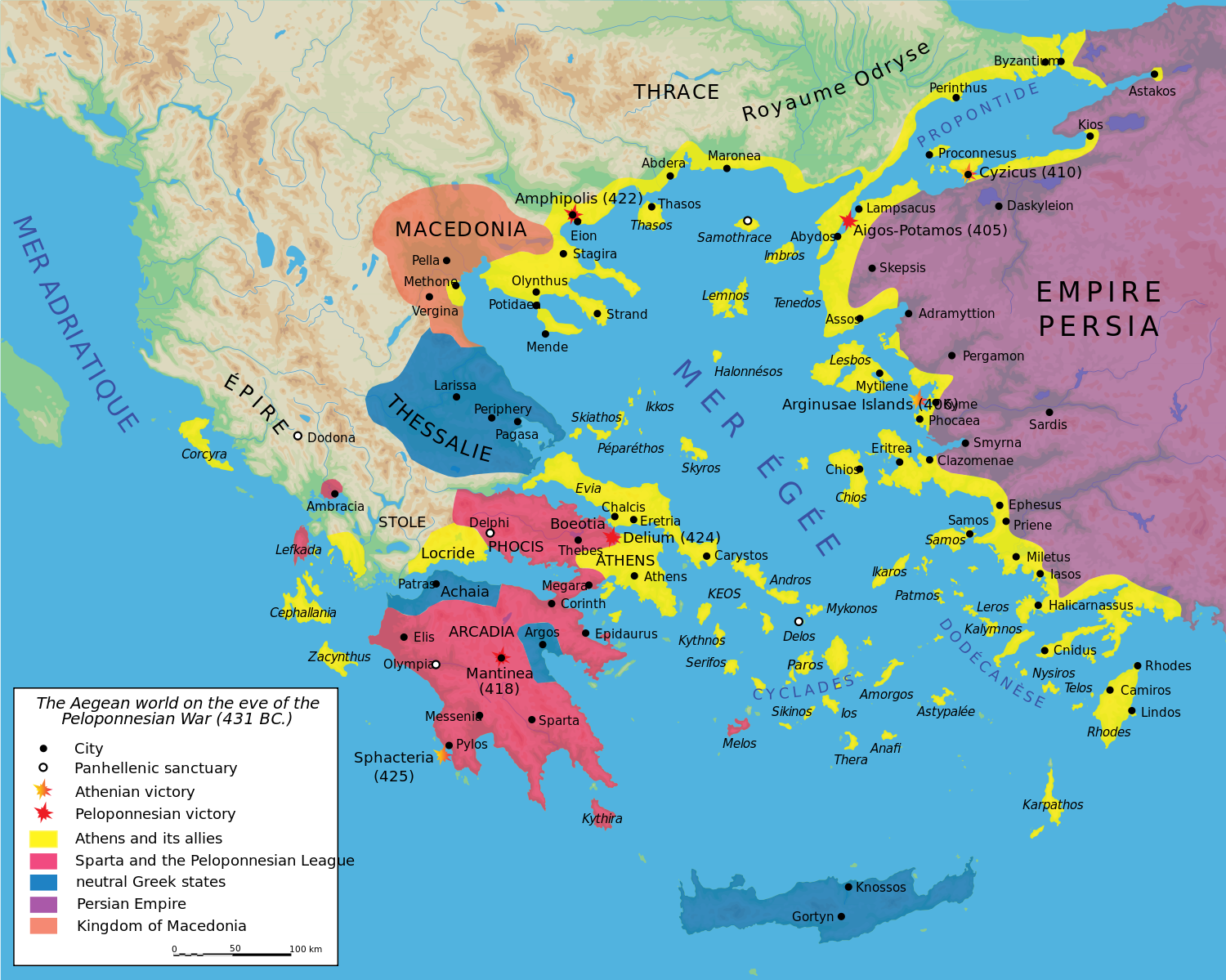
The defining fact of Spartan life was the hard-won conquest of neighboring Messenia in the eighth century and the enslavement of its population as Helots. This victory had launched the virtuous circle of Spartan power. The subjugated Helots provided the Spartan citizen-soldiers with both the leisure and the imperative need to dedicate themselves to martial prowess in the face of a constant threat of rebellion at home. The entire social organization of Sparta came to reflect this state of affairs. Thucydides noted: “most Spartan institutions have always been designed with a view to security against the Helots.”[1]

The system instituted by Lycurgus proved remarkably successful for centuries. The organization and training of the—at their height—around 8,000 Spartan citizen-soldiers to suppress the Helots also translated into international military power, which in turn allowed Sparta to secure allies and thus yet more military power in the Peloponnese. Xenophon opens his account of the Spartan regime saying: “Sparta, despite having one of the lowest populations, had nonetheless clearly become the most powerful and most famous state in Greece.”[2] The unsentimental Thucydides says of Sparta: ‟its system of good order is very ancient and it has never been subject to tyrants. Read more

Ancient Sparta: The First Self-Conscious Ethnostate? Part 2: Commitment to Collectivism

Go to Part 1.

There is a sense in which all life for Spartan citizens was communal and hierarchical. Even once one had completed the agoge, Spartiates would eat together in common mess halls, again creating common feeling. The ages were mixed, so that the older could teach the young, and citizens were expected to discuss noble deeds. In the gymnasium, the oldest man would supervise, and citizens were expected to train regularly. Xenophon claims that “it would certainly not be easy for anyone to find men healthier or more physically apt than Spartiates.”[1]

Lycurgus reputedly had accompanied his basic law with a land reform giving each of those in the small citizen class an equal property, although economic inequality gradually accumulated over time. A positive consequence of the Spartans’ systematically communal lifestyle was an extremely high degree of trust among citizens. They shared each other’s hunting dogs and horses, the latter being extremely valuable property in those days. Citizens even trusted others to beat their own children if they had done wrong, for “there was a sense in which everyone regarded himself as father, tutor, and commander of each boy.”[2]

The entire society was oriented towards inculcating martial valor and unity. Cowards were severely stigmatized—so much so that they could be beaten freely—and “the citizens considered an honorable death preferable to a life of disgrace.”[3] Read more

Ancient Sparta: The First Self-Conscious Ethnostate? Part 1: Educating Citizen Soldiers

If in Athens we have ethnopolitical aspects, insofar as the democracy was tempered by Hellenic virtue, in Sparta we have a State wholly dedicated to systematic organization of the society according to a biopolitical ideal. Sparta’s mixed system of government and fiercely communitarian and hierarchical customs were supposed to have been created by the semi-legendary lawgiver Lycurgus, who perhaps lived in the ninth century B.C. Virtually nothing can be said for certain about his life. Lycurgus was, in later ages, rumored to have traveled to Egypt, Ionia, Crete, and even India, where “he talked with the Gymnosophists,”[1] before establishing Sparta’s constitution. What is clear, in any case, is that the basic law and way of life attributed to Lycurgus, and credited for Sparta’s success, were emphatically biopolitical.

Spartan law and culture were obsessed with systematically ensuring good breeding, martial education, and group unity. Spartan ethics and law considered that what was good was whatever was good for the community. During a debate as to whether a commander had abused his authority, the Spartan king Agesilaus argued: “The point to be examined . . . is simply this: has this action been good or bad for Sparta?”[2] Kevin MacDonald has argued that the law instituted by Lycurgus – featuring in-group altruism, relative egalitarianism, separation from and unity in the face of out-groups, specialization in warfare, and communally-determined in-group eugenics – qualifies as a genuine “altruistic group evolutionary strategy.”[3]

Few forms of government have so drawn the admiration of both liberals and ‘totalitarians’ as that of Sparta. Many republicans, both ancient and modern, have been impressed by the Spartans’ ‘mixed’ system of government, with its combination of monarchic, aristocratic, and democratic elements, as conducive to social unity, stability, and the rule of law. The Founding Fathers of the United States sought to emulate Read more

Edward Dutton on The Culture of Critique: The importance of Jewish ethnocentrism

Edward Dutton, who is affiliated with Richard Lynn’s Ulster Institute for Social Research, has written an article supporting the main contention of my book, The Culture of Critique in an academic journal, Evolutionary Psychological Science: “MacDonald’s model is the more plausible hypothesis due to evidence that people tend to act in their ethnic group interest and that group selectedness among Jews is particularly strong, meaning that they are particularly likely to do so.” This is a most welcome development, and I agree with Dutton’s comments. Here I note some elaborations and a possible anomaly.

Dutton defends the multi-level selection model. The argument that group selection applies to Judaism is contained in the first book, A People That Shall Dwell Alone: Judaism as a Group Evolutionary Strategy (APTSDA). The argument there really has two parts—a cultural group selection model described in Chapter 1, and the idea that Jews are high on ethnocentrism, discussed in Chapter 8. Both aspects are important in thinking about how group selection applies to traditional Jewish groups. Read more

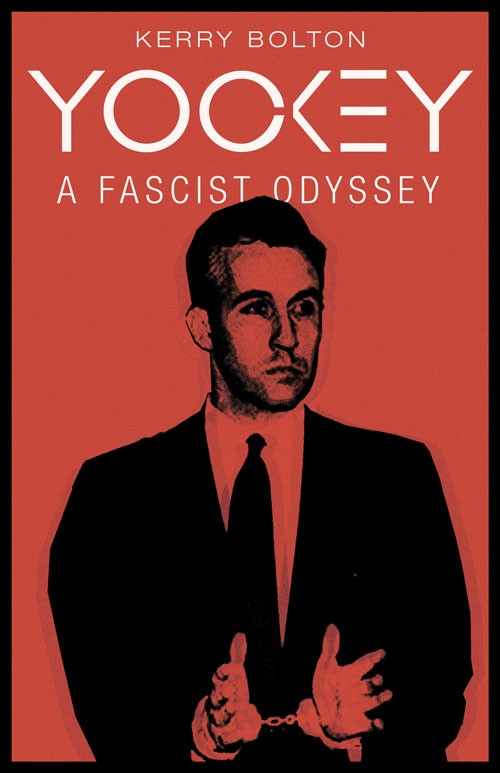
Review of Kerry Bolton’s “Yockey: A Fascist Odyssey”

Kerry Bolton, Yockey: A Fascist Odyssey (Arktos, 2018)

What follows is my foreword to Kerry Bolton’s recently released book on Francis Parker Yockey.

This is the first time an exhaustive work on the prominent Euro-American Fascist activist and philosopher, Francis Parker Yockey, is being offered to a wide readership in the English-speaking world.  Naturally, for starters, a big question that comes to mind immediately is, “what’s the point of reading Bolton’s thick book and how relevant is Yockey’s anti-Communism and anti-Liberalism in dealing with the ongoing decay of the multicultural West, which is currently subject to an open invasion of non-European masses?” Since Bolton often uses the German word “Zeitgeist” in his description of the dominant political ideas of Yockey’s time, a neophyte might likewise wonder if and how Yockey’s political prognoses are being validated by the dominant political ideas of our time. For many nationalist old-timers, both in Europe and America, Yockey is a household name that is indispensable in studying the intellectual developments of cultural Fascism, yet, for many young identitarians today, regardless whether they sport the name Alt-Right, New Right or Traditionalists, the name Yockey, along with his magnum opus Imperium, may sound a bit outdated. Read more

Ireland’s Abortion Referendum: a Move to Halal Irish Stew

Sixty six per cent of the Irish people voted in May’s referendum to ‘Repeal the Eighth’. They have emphatically overturned the Eighth Amendment to the Irish constitution which declares that the life of the unborn child is equal to that of the mother, so outlawing abortion in almost all circumstances. The Catholic Church in Ireland made a point of keeping out of the acrimonious national debate. But the symbolism of this couldn’t be more obvious. Ireland is no longer a Catholic country. And this is crucial, because religious countries stand up for themselves against the enemies at the gate; secular countries let themselves get invaded.

The research on this is quite clear. People in countries that are religious are prepared to make huge sacrifices for the country they see as divinely-ordained while the same time repelling the Devil-inspired invader. When religiousness collapses, ethnocentrism has no religious underpinning and it collapses as well . . . and the floodgates open. May’s vote was as clear as symbol as there could be that the famous Irish craic will be giving way to ghettos and division.

Abortion, far more so than gay marriage, is a ‘Catholic’ issue. Long before gay marriage was even thought of, opposing abortion was a sign of being a committed Catholic. But Ireland’s break-neck secularization means that these devotees are bullied into silence. Ireland’s expatriate young have been flying home just to vote against the Church’s teaching. For them, in particular, Rome is part of the Ireland of the shameful past, not of the vibrant future.  

Since gaining formal independence in 1922, Catholicism has been at the heart of the Irish state. Read more