
Review: “Israel’s Lobby: America in the Grip of a Foreign Power”
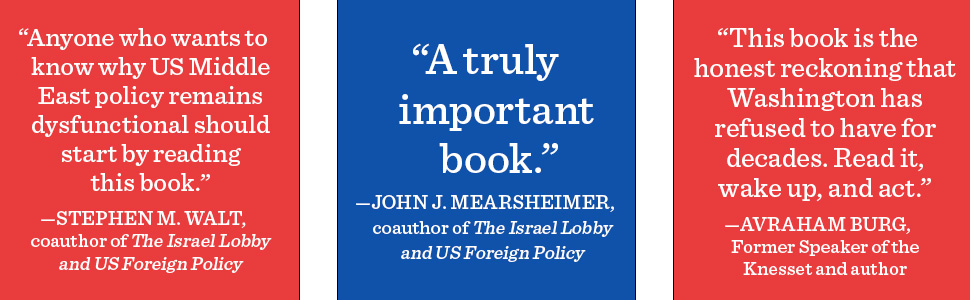
Israel’s Lobby: America in the Grip of a Foreign Power
Eli Clifton & Ian Lustick
Simon & Schuster, 2026
A few years ago, Yuri Slezkine, a Jewish UC-Berkeley professor wrote a book titled The Jewish Century, meaning the twentieth century. All the important events had major Jewish involvement from the Bolshevik Revolution, World War II, and we can add the rise of a Jewish elite in the post-World War II West and the consequent counter-cultural revolution, massive non-White immigration, and multiculturalism as a norm in all Western societies.
And now it’s becoming apparent that the same can be said about the twenty-first century. Trump’s catastrophic war in Iran obviously had a very large Israeli component—blackmail or ego-flattery from his advisors (saying things like “we can wrap this up in a week or two, and you’ll be a hero”). As discussed below, Jewish-Americans produced faked intelligence on non-existent weapons of mass destruction to persuade Pres. George W. Bush to pursue his disastrous war in Iraq.
We’re seeing how Israel and the US’s relationship with Israel is becoming a litmus test in numerous American primary elections, both on the left and on the right. We saw that it was a litmus test in Michigan where the pro-Israel candidate received $60 million, including $30 million from AIPAC but still lost—and Mike Rogers, the Republican candidate, has refused direct AIPAC money despite a history of strong support for Israel. (However, he welcomes money from pro-Israel donors but does not want AIPAC to air ads supporting him—the AIPAC brand has become a political liability, at least in Michigan.) It was also a litmus test in Kentucky in Thomas Massie’s primary election where Massie’s opponent was showered with millions and won.
So, we’re entering a completely new phase in American politics in which supporting AIPAC’s position is going to be politically costly in many elections in a manner that never has been the case in U.S. history. Even if politicians recognized clearly that this was bad policy, it was nevertheless good politics, because it kept members of Congress safe and it kept the presidents safe. That is now changing, and it’s a complete gamechanger for America’s domestic politics and also for its foreign policy in the Middle East.
And just in time for documenting the need for this evolving revolution is Israel’s Lobby: America in the Grip of a Foreign Power, by Eli Clifton and Ian Lustick. Clifton and Lustick are clearly not on our side. They are liberals—Clifton is a journalist who has published in places like The Guardian, Huffpo, the Daily Beast, and The Nation. Lustick is Jewish and an emeritus professor of political science at the University of Pennsylvania; he worked in the Carter administration as State Department expert on Israel-Palestine affairs, and he founded and was president of the Association for Israel Studies. Overall, this is a worthy successor to Mearsheimer and Walt’s Israel Lobby and U.S. Foreign Policy.
The Israel Lobby as a Creature of the Mainstream American Jewish Community
That’s not to say there are no shortcomings. They are keen to absolve the American Jewish community of complicity in Israel’s behavior, including the recent genocide in Gaza (and yes, they use the word ‘genocide’ to describe Israel’s destruction of Gaza). They note that support for Israel ranked only ninth out of 11 issues for Jews in the 2024 election, citing a poll by the Jewish Democratic Council of America which describes itself as “the political voice of Jewish Democrats. JDCA advocates for Jewish values and priorities within the Democratic Party and for the Democratic Party within the Jewish community.” It is thus clearly an activist organization at a time when Jewish support for Israel and American wars on behalf of Israel have become controversial. They ignore the poll’s finding in the same sentence that “American Jews feel emotionally attached to Israel (75 percent).”
Moreover, a 2024 survey by the American Jewish Committee (AJC) found that 85 percent of American Jewish adults believe it is important for the U.S. to support Israel in the aftermath of October 7, and 57% of American Jews report feeling more connected to Israel or their Jewish identity after October 7 than before—unsurprising given the general finding that Jewish identity and commitment increase in times of perceived threat. (Similarly, Whites in the United States and in Canada who are given explicit demographic projections of a time when Whites are no longer a majority tend to feel angry and fearful. They are also more likely to identify as Whites and have sympathy for other Whites.[1])
The gap between American Jews and other Americans can be seen by findings that 68 percent of connected American Jews supported the Iran war at the beginning, declining to 62 percent recently—quite different results from general polls of Americans that found around 31 percent support the war while 55 percent oppose it.
Moreover, the Israel Lobby is vast: They note that there are “scores of organizations, institutes, philanthropies, committees, PACs, and foundations that make up the Lobby” (124); “By one count, in October 2025, there were 160 organizations and initiatives devoted to countering the onslaught against Jews and Israel.” (178) And they refer to “a dense network of Israel advocacy organizations using accusations of antisemitism to remove critical discussion of Israel policies from the public domain” (174).
And it’s worth noting that there has been no effective pushback by the Jewish community against the power of the Lobby—groups like the Jewish Voice for Peace and Mondoweiss have virtually no role in the mainstream American Jewish community. Clifton and Lustick make it sound like it’s really a matter of a few super-wealthy Jews who dominate the Lobby. One wonders why they never mention any super-wealthy Jews who oppose the Lobby. And one wonders how many of the 5 million members claimed by AIPAC (18) (which they note is often termed “the 800-pound gorilla” of lobbies and the main pro-Israel lobbying group in the U.S.), are Jews—likely a high percentage. And recall the AJC survey that found 85 percent of American Jewish adults believe it is important for the U.S. to support Israel in the aftermath of October 7.
This shows that the Lobby is a product of the mainstream Jewish community as a collective—although it’s certainly not the case that all American Jews support the Lobby. They portray the Lobby as a “small but highly motivated segments of the community, led by an extremely wealthy group of Jewish donors who publicly acknowledge their prioritization of Israel’s interests, play an outsized role in the American campaign finance and political advocacy ecosystem.” (7) “[T]heir motivations and actions are consistent with a group working in a concerted manner to promote an American foreign policy serving the interests of a foreign power.” (9)
Clifton and Lustick acknowledge that Israeli officials send what they call
signals that guide the behavior and rhetoric of Lobby leaders and thousands of activists, and many within these organizations have loyalties to both Israel and the United States. Some, such as Jonathan Pollard, may even put Israel’s interests above those of the United States. But the argument and evidence presented here are not an indictment of those American citizens whose passionate efforts and dedication to their beliefs have contributed to the Lobby’s success. (39)
But it’s hard to believe that prominent American Jewish activists don’t have direct contact with Israeli officials given what we know about the behavior of many Jewish activists, including credible accusations of spying on behalf of Israel. For example, a 2003 Guardian article noted “The exchange of information continued a long-standing relationship Mr Feith [i.e., Douglas Feith neoconservative Undersecretary for Policy in the George W. Bush administration] and other Washington neo-conservatives had with Israel’s Likud party” (see also below).
The Citizens United and SpeechNow.org Rulings
Clifton and Lustick note that the power of the Lobby has been much enhanced by the 2010 Citizen’s United ruling which has allowed super-wealthy individuals to contribute unlimited money to political campaigns and super PACs. Moreover, the SpeechNow.org v. Federal Election Commission case, also decided in 2010, has allowed non-profits which are not required to list donors to contribute “unlimited dark money.” (133) These decisions have resulted in huge increases in the amounts of money available to the Israel Lobby.
The Israel Lobby Supports the Current Genocidal Government of Israel
Politics in Israel has seen the rise of Orthodox, ultra-Orthodox and ethnic nationalist Israelis to political dominance in Israel while continuing to be supported by the Israel Lobby. This illustrates what I have discussed in a paper titled “Zionism and the Internal Dynamics of Judaism” that appeared in 2003 in The Occidental Quarterly.
At all the turning points [in Jewish history], it is the more ethnocentric elements—one might term them the radicals—who have determined the direction of the Jewish community and eventually won the day. As recounted in the Books of Ezra and Nehemiah, the Jews who returned to Israel after the Babylonian captivity energetically rid the community of those who had intermarried with the racially impure remnant left behind. Later, during the period of Greek dominance, there was a struggle between the pro-Greek assimilationists and the more committed Jews, who came to be known as Maccabeans.
The Maccabeans won. When Zionism first appeared in the late nineteenth century, it was seen as a radical movement, and most Jews worried about being charged with “dual loyalty.” But by 1944, thousands of non-Jewish associations would pass pro-Zionist resolutions as a result of Zionist activism, and both Republican and Democratic platforms included strong pro-Zionist planks, even though the creation of a Jewish state was strongly opposed by the Departments of State and War. But Zionism became incorporated as policy for both Democrats and Republicans in the 1940 election.”[2] Within Israel, there has been a transformation in the direction of the most radical, ethnocentric, and aggressive elements of the population. During the 1920s–1940s, the followers of Vladimir Jabotinsky (the “Revisionists”) were the vanguard of Zionist aggressiveness and strident racial nationalism, but they were a minority within the Zionist movement as a whole. The Labor Party dominated Israeli politics from its inception until Menachem Begin’s Likud Party won in the 1970s. While the Labor Party was democratic-socialist and secular, Likud reflects the views of Vladimir Jabotinsky and is affiliated with the ethnonationalist and religious right.
The continuing trend toward ever greater extremism can be seen in the current government which is the most extreme in Israel’s history and includes people like Itamar Ben-Gvir, Minister of National Security, who recently advocated killing 30–40 Palestinians every day no matter whether they are a threat or not. Another prominent member of the government is Bezelel Smotrich, Minister of Finance. He is a strong supporter of expanding Israeli settlements on the West Bank, opposes a Palestinian state and denies the existence of a Palestinian people.
The radicals are definitely in charge in Israel, so it’s not at all surprising that the Israel Lobby has fallen in line with the radicals in Israel—AIPAC support for Labor governments morphed to support for Likud when the latter gained power. Again, in the end, it’s the radicals who determine the direction of the Jewish community. As noted, 75 percent of American Jews have an emotional attachment to Israel. Opposition to Israel essentially removes one from the mainstream Jewish community.
The Lobby and Free Speech
Beyond the catastrophe of the Iran war, Clifton and Lustick document that “[t]he Lobby’s ascendancy has produced a wave of repression and a constriction of free speech rights of Americans unmatched since the anticommunist hysteria of the McCarthy period.” (10) This is especially true in the Trump administration which has seen repeated attacks on pro-Palestinian protests on college campuses and attempts to deport pro-Palestinian non-citizens.[3]
Clifton and Lustick cite George Washington’s Farewell address where he noted “Sympathy for the favourite nation, facilitating the illusion of an imaginary common interest, in cases where no real common interests exists, and infusing into one the enmities of the other, betrays the former in a participation in the quarrels and Wars of the latter.” (11) They note the ecstatic receptions of Netanyahu in 2024 when he addressed Congress (53 standing ovations in 53-minute speech despite some Democrats absenting themselves because of the Gaza genocide) and that from 1973–2013 there were 938 nonappropriation bills and resolutions supporting Israel. For example in 2024 a 412–9 House vote declared that Israel is “neither racist nor an apartheid state” (16)—which any informed person knows is false. “Virtually every other week members of Congress faced an AIPAC litmus test in the form of voting on nonbinding resolutions,” (19) and Thomas Massie claimed that every Republican member has an AIPAC minder; “Everybody but me has an AIPAC person. It’s like your babysitter, your AIPAC babysitter, who’s always talking to you for AIPAC.”
Establishing close ties with each and every Congressperson was a goal at least since 1991 when AIPAC executive director Tom Dine expressed the goal of having a relationship with every member of Congress. Clifton and Lustick provide the famous Netanyahu quote from 2001 with the camera turned off: “I know what America is. America is a thing you can move very easily in the right direction. They won’t get in the way” [in this case, of Israeli control over the West Bank and Gaza]. (20) And of course, the U.S. has not gotten in the way.
The Role of Money in Jewish Activism
In the end, it’s all about the Benjamins, as Ihlan Omar famously said. Congress is infinitely corruptible because of Lobby’s ability to fund candidates who support their positions and run credible opponents against candidates who opposed their positions. Clifton and Lustick claim that pro-Israel contributions account for 10–15 percent of each member’s campaign, but clearly the percentage is much higher if there is danger that an anti-Israel politician could win—again, $60 million against what turned out to be a successful Arab candidate in the recent Michigan Democratic Senate primary and $45 million to defeat two Black representatives, Cori Bush and Jamaal Bowman. This goes back to 1984 when Sen. Charles Percy (R-IL) was defeated because he supported selling AWACSs to Saudi Arabia. Tom Dine AIPAC head from 1980–1993 noted that the power of the lobby comes down to Jewish money. (21)
Jewish power in general is intimately linked to Jewish money. In his 2009 book, Why Are Jews Liberals?, Norman Podhoretz noted that Jewish money is the financial engine of the left—including organizations like the ACLU and the SPLC, and the Democratic Party likely receives at least 50 percent of its money form Jewish donors. On the other side of the aisle, the Republican Jewish Coalition is an important group funding Republican politicians, and the GOP likely receives at least 25 percent of its money form Jewish donors. David Skirbina notes that “This is astonishing, given that there are some 13,000 special interest lobbies in Washington; for one lobby to provide 50% of all funding is simply amazing. But it certainly explains congressional votes that are 70%, 80%, or 90% in favor of Jewish interests.”
Activist groups supported by Jews are typically well funded. For example, neoconservatives have been able to set up compatible think tanks and other groups, like the Washington Institute for Near East Policy (WINEP) that provide careers for like-minded people whether Jewish or not. (An AIPAC staffer claimed WINEP was created to “disseminate the AIPAC line in a way that would disguise its connections. [37]) The research of Franz Boas and the Frankfurt School was funded by the American Jewish Committee (also listed by Clifton and Lustick as part of the Lobby), and Boas also received financial support from wealthy Jews like Felix Warburg, his brother Max, and Jacob Schiff (The Culture of Critique [CofC], Ch. 2; all references to CofC are to the 2025 Antelope Hill edition). Supporting psychoanalytic therapy became entrenched in the Jewish community by the 1950s (CofC, Ch. 5), and at present Wikipedia lists around 45 psychoanalytic institutes in the U.S. funded in part by community donations. During the 1950s pro-immigration organizations were organized, funded and staffed by Jews, leading to the disastrous 1965 immigration law (CofC, Ch. 8). All of these movements actively attempted to recruit non-Jews to lessen the perception that they were Jewish movements. For example:
An important part of this effort was to recruit then-Senator and future President John F. Kennedy to attach his name to A Nation of Immigrants (1958) and to recruit Senator and future Vice-President and 1968 Democratic presidential candidate Hubert Humphrey for his Stranger at Our Gate (1954).[4] Kennedy was recruited by former ADL National Director Ben Epstein,[5] the book was published by the ADL which also supplied a historian, Arthur Mann (a doctoral student of Oscar Handlin at Harvard[6]) for the project,[7] and was ghost-written by Myer Feldman who was influential in the Kennedy/Johnson administration.[8]
The Lobby and the Media
Besides money, the Lobby’s power also is boosted by the media, “their ties to certain newspapers and magazines and individuals in the media are substantial and intimidating” in the words of one Congressman (27). Jews as owners and content producers of media is well known—for example all the television networks except Fox are owned by Jews, and Fox is well known to take neocon positions, as on the Iran war. A recent example is David Ellison’s purchase of Skydance Paramount ultimately with the wealth created by his father, Larry Ellison who founded Oracle; the Ellisons also control TikTok which appeals to young people and was a major problem for Jews: “Netanyahu called TikTok ‘the most important purchase going on right now,’ suggesting its control could be “consequential.”
The Ellisons are friends of Trump, and Bari Weiss, a fanatic pro-Israel partisan was placed in charge of CBS, a subsidiary of Skydance Paramount. It can be confidently assumed that CBS will now be purged of anything embarrassing to Israel. The Ellisons are also attempting to purchase Warner Brothers Discovery which, depending on whether they win antitrust suits brought by Democratic Attorneys General of 12 states, would give them control of CNN as well as increase their movie and television capabilities.
Controlling Public Discourse
As Clifton and Lustick note, a major tactic now is not to defend Israel with fact-based talking points (impossible post-Gaza) but to censor speech on Israel, smear enemies by calling them Nazis, make them lose their jobs, etc. “… the Lobby is more accurately understood to be dedicated to establishing, and enforcing strict limits on the range of opinion that can be publicly voiced by American politicians, journalists, and academics on topics pertaining to Israel and Palestine.” (38) Among these topics are “levels of US aid to Israel, fealty to the idea of an American-Israeli ‘special relationship,’ US commitments to Israeli security, the scale of acceptable violence and collateral damage against all Arabs, Israel’s character as a Jewish and as a democratic state, implications for US Law and policy of Israeli nuclear weapons, boycotts as a legitimate expression of political disappointment (if directed at Israel), and the status of Jerusalem as Israel’s ‘eternal and united’ capital city.” (38)
And the lobby has been successful in getting pro-Israel activists into policy positions in various administrations who are then cited as “experts” on Israel in the media: Dennis Ross, Martin Indyk, neocon Elliott Abrams, and Samuel Lewis, ambassador to Israel in the Carter and Reagan administrations among them. For example, Indyk began his career working for AIPAC and was a founding executive director of the Washington Institute for Near East Policy, a premier pro-Israel lobbying organization. He became ambassador to Israel in the Carter and Reagan administrations.
Dennis Ross’s resumé is even more impressive:
Dennis Ross, a senior fellow at WINEP and a frequent New York Times op-ed contributor, was director of Near East and South Asian Affairs for the National Security Council in the Reagan administration, special Middle East envoy in the George H. W. Bush and Clinton administrations, and special assistant to the president for the Central Region (including the Middle East) during the Obama presidency. He continues to be a talking head on NPR and cable news. (37)
Clifton and Lustick reject the argument that Israel benefits the U.S. by arguing that aid to Israel did not become less after the Cold War when Israel was supposedly an asset to the U.S. campaign against the Soviets.
Loyalty?
Despite all this, Clifton and Lustick deny that in general these Jewish activists put Israel’s interests above those of the US (except perhaps for the obvious case of Jonathan Pollard, the notorious spy who sold US secrets to Israel which then sold them to the USSR and was pardoned by Trump). “[T]he argument and evidence presented here are not an indictment of those American citizens whose passionate efforts and dedication to their beliefs have contributed to the Lobby’s success.” (39) The problem lies with “the founding fathers.” “The citizens active in Israel’s Lobby have behaved exactly as the founding fathers expected them to behave: selfishly, strategically, and with a narrow vision of the problems confronted by the overall community.” (39)
Okay, but clearly George Washington and other founding fathers deplored this, with I suppose the implication that we should do all we can to oppose such people. And yes, they are prioritizing their perception of Jewish interests over the interests of the United States, implying that they are more loyal to Israel than the United States. After all, the end result has been that America is “in the grip of a foreign power.”
Regarding loyalty and the Iraq war, Clifton and Lustick note the “cooked intelligence reports prepared by the office of the Vice President and a new Pentagon ‘Office of Special Plans’ created by Deputy Secretary of Defense Paul Wolfowitz.” (64) Clearly these cooked intelligence reports were fashioned to support a war on behalf of Israel. The Office of Special Plans (OSP) may have been under Dick Cheney’s ultimate authority and created by Wolfowitz, but it was under the direct authority of Undersecretary for Policy Douglas Feith and headed by Abram Shulsky. Wolfowitz, Feith, and Shulsky are all neoconservative Jews closely associated with Richard Perle. David Wurmser, also a protégé of Richard Perle, was a member of the OSP, and Michael Ledeen was a consultant—both were prominent neoconservative Jews. There was also connections to Israeli intelligence:
The OSP was an open and largely unfiltered conduit to the White House not only for the Iraqi opposition. It also forged close ties to a parallel, ad hoc intelligence operation inside Ariel Sharon’s office in Israel specifically to bypass Mossad and provide the Bush administration with more alarmist reports on Saddam’s Iraq than Mossad was prepared to authorise.
“None of the Israelis who came were cleared into the Pentagon through normal channels,” said one source familiar with the visits [of Israelis to the Pentagon]. Instead, they were waved in on Mr Feith’s authority without having to fill in the usual forms.
The exchange of information continued a long-standing relationship Mr Feith and other Washington neo-conservatives had with Israel’s Likud party.
Clifton and Lustick mention the 1996 “Clean Break” paper authored by American neocons, including Richard Perle, David and Mayrav Wurmser, Douglas Feith, and advocating an intransigent, aggressive Israeli policy and submitted to the Netanyahu government, including “ending the peace process, shelving attempts to solve the Palestinian problem, escalating Israel’s nationalist mission, and ramping up its use of military force throughout the region to ‘manage’ rather than end the Arab-Israeli conflict.” (65) “Clean Break” also recommended that “Saddam would have to be destroyed, and Syria, Lebanon, Saudi Arabia, and Iran would have to be overthrown or destabilised, for Israel to be truly safe.” We are now witnessing the attempt to produce a regime change in Iran or at least destabilize the regime. Other authors of “Clean Break” included: Robert J. Loewenberg who founded Institute for Advanced Strategic & Political Studies (IASPS-Jerusalem) in Jerusalem in 1984 “after making aliyah to Israel from the U.S., where he remains a citizen”; James Colbert was policy director was Policy Director of the Hudson Institute, a neoconservative think tank.
You have to wrap your mind around the fact that a group of American Jews advocated all this but, according to Clifton and Lustick, they are not at all disloyal to America. Indeed, the authors of the report write as Jews and Israelis, not as U.S. citizens: “Our claim to the land—to which we have clung for hope for 2,000 years—is legitimate and noble.”
A major part of my chapter on neocons was simply to document their intense commitment to Israel. For example, Douglas Feith has a strong Jewish identity that motivates his activism. In They Knew They Were Right: The Rise of the Neocons, Jacob Heilbrun writes that Feith “told me in an interview that because of his family history [i.e., decimated by the Holocaust], he understands the true nature of foreign policy, unlike the ‘WASPs’ in the State Department” (p. 12). Feith sees foreign policy from a Jewish, Holocaust-centric perspective that the WASPs can never understand. He was at the center of power during recent American history, but he sees himself as an outsider, his enemies are the evil WASPs whose fathers didn’t allow Jews into their country clubs.
Feith is typical in his hatred for the WASPs who formerly dominated the State Department. They assume an almost legendary role in the demonology of neoconservatism—consigned to the lowest reaches of hell. Their unforgiveable sin was to fail to see the world fundamentally in terms of Jewish interests, beginning with their opposition to recognizing Israel during the Truman administration.
Like many of his cronies, Feith has been credibly accused of spying for Israel, although, not surprisingly, in all cases the charges were dropped. Other neocons accused of spying for Israel discussed in The Culture of Critique include Abram Shulsky, Michael Ledeen, and Richard Perle. Nevertheless, Clifton and Lustick reject the idea that, with the possible exception of the notorious Jonathan Pollard, American Jews are more loyal to Israel than to the interests of their own nations, thereby exonerating the neocons and many others.
Clifton and Lustick deplore the now-standard International Holocaust Remembrance Association definition of antisemitism but they don’t mention the following example of supposed anti-Semitism: “Accusing Jewish citizens of being more loyal to Israel, or to the alleged priorities of Jews worldwide, than to the interests of their own nations.”
Other prominent Jews with questionable loyalty include major Republican donor Sheldon Adelson who served in the U.S. military, but his wife is Israeli and was in the IDF, and he wanted his son to be. Clifton and Lustick quote him: “All we care about is being good Zionists, being good citizens of Israel, because even though I am not Israeli born, Israel is my heart.” (135) “Israel is at the core of everything he does,” Fred Zeidman, a friend of Adelson, confirmed to the [Jerusalem] Post.” (136) Sheldon Adelson has died but his wife Miriam is a dual citizen of the U.S. and Israel and continues to be a prominent donor, including $100 million to Donald Trump for the 2024 election.
In a speech to the Knesset, President Trump (surprisingly) said that he once asked Miriam Adelson whether she is more loyal to the U.S. or Israel.
“She’s got 60 billion in the bank-60 billion! And she loves Israel,” Trump said. “I actually asked her—I’m going to get her in trouble with this—but I actually asked her once, I said: So Miriam, I know you love Israel. What do you love more, the United States or Israel? She refused to answer. That means… [Laughter]
That might mean, I must say—
We love you. Thank you, darling, for being here. That’s a great honor. Great honor. She’s a wonderful woman.”
This was not covered by Clifton and Lustick.
But they mention major Democrat donor Haim Saban ($5–10 million to the Clinton Foundation; $7 million to Hillary Clinton’s 2016 campaign) as criticizing Obama for being insufficiently pro-Israel, but Clifton and Lustick don’t get to the depths of his commitment to Israel. The following is from an interview with Haaretz in 2006; Saban’s comments are in quotes.
“When we approach Israel I always ask the pilots of my plane to let me sit in the chair between them. [W]hen I see the coast coming up my heart starts to go boom, boom, boom.”
[Interviewer:] Is Israel also part of your everyday life here, in Los Angeles?
“[T]hroughout the day, if I see something about Israel on one of the four channels that are always on in my office, on mute, I immediately turn on the sound. And I have Israeli music on my computer, classics and contemporary singers, too.
Haim Saban is a dual American-Israeli citizen, but can there really be any question where his loyalty lies?
Israel as a “Crazy State”—and Diaspora Jews as a Crazy Ethnic Group
In Chapter 3 Clifton and Lustick describe Israel as a “crazy state,” meaning “aggressive pursuit of far-reaching goals harmful to others; radical and intense commitment to achieve those goals; and adoption of a morally superior posture even when grossly contradicting international norms.” (70) Israel has become radicalized, with 4–5 times the percentage of Jews calling themselves rightwing compared to leftwing in a context where rightwing means “overt discrimination against Palestinian citizens, annexation measures that would exclude Palestinians from citizenship, use of extrajudicial punishment against Arabs, and preference for military action over negotiation for advancing Israeli interests in the region,” (72) even if that results in international isolation. All this goes back to David Ben Gurion in the 1950s, described as “leader of the left”: “risk-acceptant, transformational, and ruthless military adventures.” Today, Netanyahu “is the epitome of Israeli craziness.” (76) “Utter contempt for world opinion” (98)
The craziness and grandiosity of Israel can be seen in the Greater Israel project which is well underway with de facto seizure of the West Bank and Gaza, parts of Syria and Lebanon, a presence in Iraq, and a clear desire to expel the Palestinians or simply murder them. There is at least a tacit and increasingly overt subtext that Jews are entitled to all the land between the Nile and the Euphrates, as promised by God in Genesis 15:18 and affirmed as legitimate by U.S. Ambassador Evangelical Christian Mike Huckabee.[9] Clifton and Lustick note that this ambition includes “Jewish rule over virtually the entire fertile crescent” (77), which includes Iraq, Israel, Jordan, Lebanon, and Syria, together with northern Kuwait, south-eastern Turkey, and western Iran. Quite an ambition.
These ideas have moved from activists and ideologues “to the center of Israeli politics and policymaking,” mentioning the notorious Ben-Gvir and Smotrich, both ministers in the present government. (77) This includes rebuilding the Temple on the site of the Al-Aqsa Mosque, the resumption of sacrifices, and the evacuation and repopulation of Gaza.” (77)
Jews are also a crazy ethnic group in the U.S. and throughout the West. The Jewish effort to change the demography of the U.S. meets the definition of craziness proposed by Clifton and Lustick—it is definitely transformational, risky, and presented as morally superior. Imagine a group amounting to 2–3 percent of the population acting over at least 70 years from the early twentieth century to radically change the demography of the U.S in their favor, believing that Jews would be safer in a multiethnic, multicultural society at a time, especially after World War II when memories of what happened in Germany, at the time a homogeneously White, Christian society beginning in the 1930s, were fresh in the minds of Jews (CofC, Ch. 8).
The transformation ushered in by the 1965 immigration law obviously compromises White interests, and I suppose it could be said to have been risky. Jews certainly would never have emphasized that they desired to change the ethnic balance of the United States—although the desire to make the U.S. into a multiethnic, multicultural society obviously entails demographic change. Indeed, in the debates over the 1965 law it was explicitly stated that the law would not change the ethnic balance of the United States, which is why all mention of it is suppressed now.
However, the law was presented as morally superior. For example, as one of its biggest proponents, Sen. Jacob Javits (D-NY), proclaimed in the U.S. Senate, “both the dictates of our consciences as well as the precepts of sociologists tell us that immigration, as it exists in the national origins quota system, is wrong and without any basis in reason or fact for we know better than to say that one man is better than another because of the color of his skin” (Cong. Rec., 111, 1965, 24469).
This illustrates what I emphasized in the preface of the revised edition of The Culture of Critique as background traits for Jewish activism: Aggressiveness and psychological intensity. Clearly advocating immigration from all over the world is an aggressive move against the interests of what was then an overwhelmingly White, Christian population. And such an ambition is grandiose given that Jews were a tiny minority of the population attempting to alter U.S. demography in what they perceived to be in their favor.
Clinically, psychological intensity is related to cyclothymia (i.e., alternate periods of elation and depression), bipolar affective disorder (i.e., manic‑depressive psychosis), neurotic symptoms, and somatic complaints (nervousness, feeling uneasy, shortness of breath). Affect intensity is also linked to creativity and the manic phase of bipolar affective disorder which seems to be more common among Jews and a more robust component of manic-depressive illness among Jews.[10] During episodes of mania the person has a grandiose self-image ([“Despite being a small country, we Israelis will conquer the entire fertile crescent with the help of the United States”]), goal-directed activity like obsessively working on a project all night, excessive involvement in pleasurable activity like buying sprees and sexual gratification, and racing thoughts which the manic person thinks are brilliant. The depressive part is just the opposite.
But many people may be high on emotionality but not meet the criteria for psychopathology. It’s easy to see that people moderately high on positive emotionality—hypomanic or normal but close to the manic range—would be high achievers; they would work persistently toward goals, and they would be very self-confident and have high self-esteem. Such people gravitate to leadership positions in whatever organization they are in. And it’s easy to see that they might become gurus, establishing a devoted following, like charismatic rabbis in traditional Jewish communities—Jewish gurus like Freud, Boas, Trotsky, etc. discussed in Culture of Critique.
For example, Albert Lindemann notes that many of Trotsky’s personality traits are stereotypically Jewish:
If one accepts that anti-Semitism was most potently driven by anxiety and fear, as distinguished from contempt, then the extent to which Trotsky became a source of preoccupation for anti-Semites is significant. Here, too, [Paul] Johnson’s words are suggestive: He writes of Trotsky’s “demonic power”[11]—the same term, revealingly, used repeatedly by others in referring to Zinoviev’s oratory or Uritsky’s ruthlessness [Zinoviev and Uritsky were two other prominent early Jewish Bolsheviks]. Trotsky’s boundless self-confidence, his notorious arrogance, and sense of superiority were other traits often associated with Jews. Fantasies there were about Trotsky and other Bolsheviks, but there were also realities around which the fantasies grew.[12]
Israeli Apartheid
Israel has shifted from a de facto apartheid society to “embrace a version of apartheid increasingly reliant on the use of official and legal means rather than administratively concealed or indirect techniques of control to enforce Jewish privileges and the subordination of non-Jews.” (85) Yet calling Israel an apartheid state is considered antisemitism by the IHRA definition accepted by 35 states and many countries, although this is not mentioned by Clifton and Lustick.
However, they do note that after the IHRA definition came out, “The ADL suddenly and vastly increased the amount of antisemitism it reported.” (171) Astonishingly, what’s critical now is whether expressions could have “a negative impact on one or more Jewish individuals.” (173). “What leads to an ADL judgment of ‘expressions’ as antisemitic is if they “could be perceived” as supporting terrorism or attacks on Jews, Israelis or Zionists.” (173) Perception, not reality, is critical.
Clifton and Lustick acknowledge antisemitism still exists and blame “the dark corners of American life” (178), including especially “far-right, Christian, and white nationalist groups who are not the main target of the accusations of antisemitism based on opposition to Israel’s policies.” (179)
Collective Punishment and Dealing with Palestinian Resistance
Collective punishment where entire families or neighborhoods are punished has become the Israeli norm (89). This is a profoundly non-Western practice—completely opposed to Western individualism which punishes the individual who commits the crime, not the family. But Judaism is nothing if not collectivist, so it’s not at all surprising.
Rather than seeing Arab resistance as understandable, “All Palestinian resistance was understood as illegitimate, evidence of intransigence, and often as akin to Nazi antisemitism.” (90) “Mowing the grass” became the new metaphor—grass keeps growing, so you have to cut it once in a while so that there is a period when the grass is at a tolerable length, “all the while knowing the grass will grow back and again require cutting.” (90) Reflecting this policy the ratio of Israeli to Arab deaths went from 1 to 7 up to 1973 but is has been 1 to 44 since 2009 and far higher than that in the Gaza genocide.
Defending Israel: Facts Are Irrelevant
It’s noteworthy that the Lobby no longer tries to defend Israeli actions, opting instead to simply label critics as anti-Semites and use whatever legal means are available against them, based on the IHRA definition of antisemitism. Trump’s 2019 executive order made the IHRA definition of antisemitism part of Title VI of the Civil Rights Act. Activists are told to “engage the emotions and downplay rationality” (168). ADL has officially declared that “antizionism is antisemitism.” (171) “The enemy is not falsehood that must be corrected by truth, or ideas, to be deflected or spun into incoherence. It is the people themselves who question Israeli policies, criticize Zionism, object to unconditional American aid, or support Palestinian rights; they must be neutralized.” (175) “Insisting antisemitism is present whenever some Jews, Israelis, or supporters of Jews and Israelis say it is, they free themselves to attack and demonize their critics while ignoring the criticism.” (177)
Israel is “abandoning even the pretense of avoiding harm to noncombatants.” Included in the new rules of engagement “was a general authorization to strike high-rise apartment complexes and private homes,” (94) “along with ending or greatly reducing warnings of attacks by phone calls or “roof-knocking.” (95) A retired Major General stated: “Who are the ‘poor’ mothers of Gaza? They are all the mothers, sisters, or wives of Hamas murderers.” (95) Speaker of the Knesset: “There are no innocents there.” (96) Cabinet ministers and leaders “used even more extreme language, often invoking the commandment in the Bible that Jews should remember their archenemy Amelek and their responsibility in every generation, to kill every surviving Amelekite man, woman, and child—‘to blot out the memory of Amelek.’ (96).” A rabbi said when leaving Khan Yunis in Gaza that “we killed them, tens of thousands of Amelekites.” (97)
The self-conception of Zionists increasingly accepted that Jews are a “people that shall dwell alone, and will not be reckoned among the nations” (100)—freeing Israel from any concern about the opinions of non-Jews. “Zionism and the state of Israel are vehicles for an intrinsically peculiar people to pursue its unique mission in an inevitably hostile world, suffering isolation and injustice but with faith in eventual redemption and universal recognition of Jewish specialness.” (100) Again, Netanyahu: “Utter contempt for world opinion” (98)
Seventy-four percent of Israelis believe “world criticism of Israel stems from anti-Semitism.” (101). What the October 7 attack produced was to “bring into full and florid view how intense are the fears of so many Israeli Jews, how radical are their beliefs, and how ready they are to accept savagery as a standard solution to the problems they see themselves as facing.” (101).
Israeli media are totally on board, shielding the public from “graphic images ‘of children being harmed and of women and families becoming refugees.’” (102) Educated Israelis who were less crazy began leaving, making the remaining population more extreme.
American unquestioned support for Israel has helped “radicalize Israeli politics and extremized its leadership.” (103) Moderate Israeli politicians could not get any traction when there was no cost to extreme Israeli policies. Almost all delegates left the Assembly Hall when Netanyahu was going to speak to the UN in 2025. So it’s no surprise that supporting Israel isolates the United States: “[T]he image [of UN delegates leaving] epitomized the reality of an American foreign policy yoked to almost anything Israel governments say or do, even if that means isolating the United States from world opinion, defying US allies, dragging the US into Israel’s wars, and exposing it to charges of flagrant hypocrisy.” (104) From 1995–2017, the U.S. was the sole vote against 14 UN Security Council resolutions critical of Israeli treatment of Palestinians (103), and since the Gaza war the U.S. vetoed eight UNSC resolutions calling for a ceasefire in Gaza.
Conclusion
Now, despite the centuries of Jewish hatred of the West due to perceived persecution beginning in the Roman Empire with the destruction of the Second Temple and extending through the holocaust, the refrain is that an alliance between Jews and the West will save “Judeo-Christian” civilization (210)—this despite the aggressively hostile move by the mainstream Jewish community to alter the demographic balance of Western countries to make them more like the Third World.
Despite Israel’s barbarity and despite the inability of the Lobby to defend Israeli actions, the Lobby is intensifying its efforts, not backing down. The ADL is investing in “arms and technology firms [like Palantir, Lockheed Martin, etc.] whose products have been used to surveil, target, or kill Palestinians in Gaza and the West Bank.” (217) “Enormous sums of money and the power and funds of the federal government, are being mobilized in unprecedented ways to constrain and limit speech critical of Israel across all venues of public debate.” (219)
But Clifton and Lustick conclude by stating that “The Israel Lobby is scared” (224); ultimately they believe that the Lobby can’t sell Israel due to its policies. They have “overplayed their hand.”
We’ll see, but at this point what’s obvious is that the Lobby is exerting an awesome display of its power. It will never back down or change course, and ever more extreme radicals will obtain power while being supported by the Lobby in the U.S. We can expect: 1.) increasing propaganda (e.g., propaganda aimed at Evangelical Christian churches via geofencing; paying social media influencers 2.) censorship and propaganda via media influence (e.g., via the Jewish-owned television, newspapers, and social media platforms); 3.) attempting to enforce criminal penalties enabled by the IHRA definition of anti-Semitism in combination with the Trump administration’s making anti-Semitism a violation of Title VI of the Civil Rights Act.
Welcome to yet another Jewish century.
[1] H. Robert Outten, Michael T. Schmitt, and Daniel A. Miller, “Feeling Threatened about the Future: Whites’ Emotional Reactions to Anticipated Ethnic Demographic Changes,” Personality and Social Psychology Bulletin 38 (2011): 14–25.
[2] Bendersky, J. W., The “Jewish Threat”: Anti-Semitic Politics of the U.S. Army (New York: Basic Books, 2000), 325.
[3] As another indication of Trump’s fealty to Jewish interests, he opposed the National Endowment for the Humanities, rescinding most of their grants, but he gave the largest grant in its history to the Jewish Civilization Project of Tikvah, a radical pro-Israel group “dedicated to promoting the communal interests and special ‘covenantal’ status one group, the Jews.” (211)
[4] Daniel J. Tichenor, Dividing Lines: The Politics of Immigration Control in America (Princeton University Press, 2002), 205.
[5] Jonathan Greenblatt, Foreword to the reprint of the 2008 edition of A Nation of Immigrants (Harper Perennial, 2018). https://www.amazon.com/Nation-Immigrants-John-F-Kennedy/dp/0061447544
[6] Mae M. Ngai, “Oscar Handlin and Immigration Policy Reform in the 1950s and 1960s,” Journal of American Ethnic History 32, no. 3 (2013): 62–67.
[7] Otis Graham, Unguarded Gates: A History of America’s Immigration Crisis (Rowman & Littlefield, 2004), 67.
[8] Tichenor, Dividing Lines, 205.
[9] (He recently labeled what he claimed was a “tiny minority”) of “these settlers as a ‘band of terrorists’ engaged in ‘criminal activity.’”)
[10] D. M. Tucker, K. Vanatta, & J. Rothlind, “Arousal and Activation Systems and Primitive Adaptive Controls on Cognitive Priming,” in Psychological and Biological Approaches to Emotion, S. L. Stein, B. Leventhal, & T. Trabasso (eds.) (Lawrence Erlbaum, 1990): 145–166.
[11] Lindemann here refers to Paul Johnson, author of A History of the Jews (Perennial Library, 1988; orig. pub.: 1987).
[12] Albert Lindemann, Esau’s Tears: Modern Anti-Semitism and the Rise of the Jews (Cambridge University Press, 1997), 448.
 United States Capitol Building in Washington, DC (Photo: David Maiolo / Wikimedia)


