Jewish Influence

Differences between the Eastern European immigrant community in the US and the older German-Jewish establishment — and their commonalities

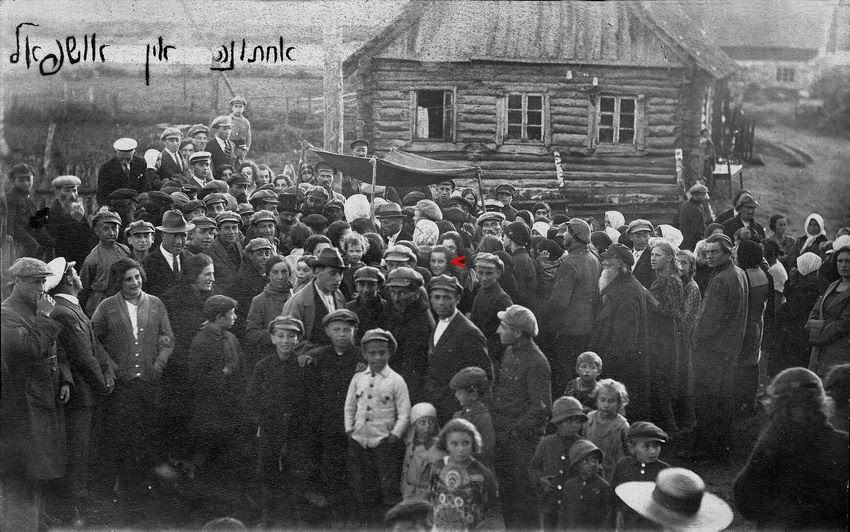
Eastern European Shtetl Jews; photos from “Rare Photographs and Images of Shtetl Life

In his VDARE article of April 22, “Eastern European Jews And The Case Of the Marginalized Elite,” Paul Gottfried claims that I fail to make important distinctions among Jewish groups:

Though Kevin MacDonald argues his theory about Jewish group behavior ably, I believe it is unwarranted to generalize about the social behavior of all Jews simply because of the behavior of Eastern European Jews. …We are clearly dealing with a group that embraces all kinds of Leftist causes, most of which have a destabilizing effect on what remains of a traditional Christian society. Let me repeat: I don’t find anything about this behavior that has characterized all Jews at all times (unlike MacDonald).

This article summarizes some of my comments on different groups of Jews, some of which may have gotten a bit lost in the shuffle. In fact, beginning with my first two books on Judaism, I have repeatedly discussed differences among Jewish groups (e.g., IQ differences between Ashkenazi and Sephardic groups in chapter 7 of A People That Shall Dwell Alone). This includes the important distinction between Eastern European Jews and Western European Jews, beginning with Chapter 6 of Separation and Its Discontents (1994) on Jewish strategies to minimize anti-Semitism.

It has often been critically important for Jews to be able to present a divided front to the gentile society, especially in situations where one segment of the Jewish community has adopted policies or attitudes that provoke anti-Semitism. This has happened repeatedly in the modern world. A particularly common pattern during the period from 1880 to 1940 was for Jewish organizations representing older, more established communities in Western Europe and the United States to oppose the activities and attitudes of more recent immigrants from Eastern Europe (see note 20). The Eastern European immigrants tended to be religiously orthodox, politically radical, and sympathetic to Zionism, and they tended to conceptualize themselves in racial and national terms—all qualities that provoked anti-Semitism. In the United States and England, Jewish organizations (such as the American Jewish Committee [AJCommittee]) attempted to minimize Jewish radicalism and gentile perceptions of the radicalism and Zionism of these immigrants (e.g., Cohen 1972; Alderman 1992, 237ff). Highly publicized opposition to these activities dilutes gentile perceptions of Jewish behavior, even in situations where, as occurred in both England and America, the recent immigrants far outnumbered the established Jewish community.

This difference between the Eastern European immigrant community and the German-Jewish establishment in the US is a central theme of “Jews, Blacks, and Race” (in Samuel Francis (Ed.), Race and the American Prospect: Essays on the Racial Realities of Our Nation and Our Time [The Occidental Press, 2006]):

Anti-Jewish attitudes that had been common before [World War II) declined precipitously, and Jewish organizations assumed a much higher profile in influencing ethnic relations in the U.S., not only in the area of civil rights but also in immigration policy. Significantly this high Jewish profile was spearheaded by the American Jewish Congress and the ADL, both dominated by Jews who had immigrated from Eastern Europe between 1880 and 1920 and their descendants. As indicated below, an understanding of the special character of this Jewish population is critical to understanding Jewish influence in the United States from 1945 to the present. The German-Jewish elite that had dominated Jewish community affairs via the American Jewish Committee earlier in the century, gave way to a new leadership made up of Eastern European immigrants and their descendants. Even the AJCommittee, the bastion of the German-Jewish elite, came to be headed by John Slawson [in 1943], who had immigrated at the age of 7 from the Ukraine.

The AJCongress, a creation of the Jewish immigrant community, was headed by Will Maslow, a socialist and a Zionist. Zionism and political radicalism typified the Jewish immigrants from Eastern Europe. As an indication of the radicalism of the immigrant Jewish community, the 50,000- member Jewish Peoples Fraternal Order was an affiliate of the AJCongress and was listed as a subversive organization by the U.S. Attorney General. The JPFO was the financial and organizational “bulwark” of the Communist Party USA after World War II and also funded the Daily Worker, an organ of the [Communist Party USA], and the Morning Freiheit, a Yiddish communist newspaper. Although the AJCongress severed its ties with the JPFO and stated that communism was a threat, it was “at best a reluctant and unenthusiastic participant” in the Jewish effort to develop a public image of anti-communism—a position reflecting the sympathies of many among its predominantly second- and third-generation Eastern European immigrant membership. Concern that Jewish communists were involved in the civil rights movement centered around the activities of Stanley Levison, a key advisor to Martin Luther King, who had very close ties to the Communist Party (as well as the AJCongress) and may have been acting under communist discipline in his activities with King.


Read more

The Alt Right and the Jews

Certainly the most basic issue of the Alt Right is that it is entirely legitimate for Whites to identify as Whites and to pursue their interests as Whites, such as resisting attempts to make White Americans a minority.

Ethnic and racial identities are common among all other groups, and, despite constant propaganda emanating from centers of media and academic power, Whites should be no exception. Voluntarily ceding political and cultural power is the ultimate foolishness, particularly in an atmosphere of non-White grievance and the hostility towards Whites, their history and their culture, that is so apparent today.

Another important issue is to accept that there are genetic influences on race differences in intelligence and impulse control. When these are kept out of the discussion and only environmental influences are allowed, it’s inevitable that Whites will be unfairly blamed for the failure of Blacks, Latinos, and similar groups.

However, another issue that is central to the world view of many on the Alt Right (but by no means unanimous) is the issue of Jewish power and influence. Ultimately, this stems from an understanding of the role of Jews in White dispossession, both historically and in the contemporary West. Accounting for around 2% of the U.S. population, Jews have never had much power as a result of sheer numbers. What counts is Jewish power in the media, in the academic world, and in government. Read more

Chancellor Adenauer on Jewish Power

Adenauer_Bouserath2

“The power of the Jews even today, especially in America, should not be underestimated.” – Konrad Adenauer, 1965.

A recurring theme in my writing is documenting the comments of mainstream European statesmen on Jewish power and influence. Given my background, this has primarily focused on French leaders. In general, as these figures approach retirement or indeed death, their tongues loosen somewhat.

In the aftermath of the Six Day War, General Charles de Gaulle publicly called the Jews “an elite people, self-confident, and dominating” and, almost in passing, noted that the Israelis enjoyed “vast support in money, influence, and propaganda [. . .] from the Jewish circles of America and Europe.” Though largely forgotten today, Jewish groups then widely attacked De Gaulle, claiming his comments would lead to “discrimination,” and even Raymond Aron, the otherwise unflappable critic of Jewish ethnocentrism, lost his composure.

Other top French politicians have complained of suffering from pressure and defamation at the hands of ethnocentric Jewish media-political networks. This is, in a word, the unmentionable “lobby-which-doesn’t-exist. Prime Minister Raymond Barre, nearing the end of his life, spoke out on the radio: “The Jewish lobby, not only concerning myself, is able to organize operations which are disgraceful. And I want to say it publicly!” President François Mitterrand spoke in private, on his last day in office, of “the powerful and harmful influence of the Jewish lobby in France.” Read more

In Praise of James Petras

I’m thrilled to see that retired scholar James Petras is still punching above his weight. Last month he published yet another powerful essay on his website, this one explicitly bringing to our attention the whopping over-representation of one particular ethnic group at the top of America’s power structure. He begins: “Obama’s nomination of Merrick Garland to the Supreme Court marks a continuation and deepening of the lopsided ethno-religious representation in the US judicial system. If Garland is appointed, Jewish justices will comprise 45% of the Court, even though they represent less than 2% of the overall population.”

PowerPetras, retired Bartle Professor of sociology at Binghamton University whose views are generally on the left, came to my attention nearly a decade ago when he released three books that were extremely critical of not just Israel but Jewry as a whole. First was the 2006 book The Power of Israel in the United States, followed a year later by Rulers and Ruled in the US Empire: Bankers, Zionists and Militants. Then, in 2008, came Zionism, Militarism, and the Decline of US Power. (For those interested, my forty-two-page review of The Power of Israel and Rulers and Ruled appeared in the Winter 2007–2008 issue of The Occidental Quarterly.)

Obviously, it’s rare to see such critical prose from an academic. Despite his stature and wide exposure, Petras has continued to this day his principled criticism of Jews and Zionism — and has not been silenced by the usual tactics. I’m impressed. Read more

Jewish thinking about Syrian refugees — again

Apropos of Douglas Murray’s warning the the Jewish community, this if from the JTA: “For Jewish groups, Syrian refugees are a reminder — not a threat

American Jewish organizations don’t see the Syrian refugees as a threat; they see them as a reminder.

With rare unanimity on an issue that has stirred partisan passion, a cross-section of the community has defended the Obama administration’s refugee policy in terms recalling the plight of Jews fleeing Nazi Europe who were refused entry into the United States.

“The Jewish community has an important perspective on this debate,” the Orthodox Union said in its statement. “Just a few decades ago, refugees from the terror and violence in Hitler’s Europe sought refuge in the United States and were turned away due to suspicions about their nationality.”

Echoed the Conservative movement’s Rabbinical Assembly: “We can sadly remember all too well the Jews who were turned away when they sought refuge in the United States on the eve of, and during, World War II.”

Eleven Jewish organizations joined another 70 groups in pleading with Congress to keep open the Obama administration’s program, which would allow in 10,000 refugees over the next year from among the 200,000 to 300,000 in Europe. Neither the Orthodox Union nor the Rabbinical Assembly signed the letter.

Among the signatories were mainstream bodies like the the Reform movement, the Anti-Defamation League, the American Jewish Committee and the National Council of Jewish Women, as well as HIAS, the lead Jewish body dealing with immigration issues, and the Jewish Council for Public Affairs, the umbrella body for Jewish public policy groups.

Read more

Hungarian PM Orban rejects Merkel’s “moral imperialism” in refugee crisis

Hungarian Prime Minister Viktor Orban’s most recent comments on the invasion are beautifully stated in terms of the “moral imperialism” of countries like Germany that are imposing their sense of morality on other EU member states. A theme at TOO is that the anti-White revolution that is displacing Whites from areas they have dominated for hundreds or thousands of years has been rationalized intellectually as a moral imperative. The most important moral imperative in the West today is the evil of any sense of ethnocentrism among Whites. A strong sense of racial identification and pride was common and even dominant in the early twentieth century, but became a victim of the rise of the left and the disaster of World War II. All of the Jewish intellectual movements discussed in The Culture of Critique resulted in moral critiques of the West, particularly centered around the absolute evil and even psychopathology of identifying as Whites and having a sense of White interests. This ideology has occupied all the moral and intellectual high ground in the West for at least the last 50 years and is constantly disseminated throughout the media and educational system. Read more

Ann Coulter’s Faux Pas: Calling Attention to Jewish Influence

Ann Coulter understands that immigration is the greatest question of the age, not only for America but for the Republican Party. After all, as she tweeted:

If you really think that immigration is the big issue — and it is, you are understandably upset when so many Republican candidates want to make the big issues Israel, abortion, and their worship of Ronald Reagan — even including Israel in visions of what America will be like if elected. Reagan and abortion may indeed tap into the GOP base but, let’s face it, obsessing about Israel is first and foremost an attempt to appease Sheldon Adelson and the rest of the Republican Jewish Coalition. Trump is succeeding precisely because he is not seen as needing to pander to anyone.

And when the pundits say that Carly Fiorina did really well, what they really mean is that she made an impassioned condemnation of Planned Parenthood which they hope will change the focus of the campaign to issues like abortion that are really sideshows.

For those of us who see immigration is the one and only real issue, this is a red herring. The real issues are the political, economic, and cultural effects of immigration that amount to a morally untenable assault on the traditional people and culture of America. It’s no surprise that Republican elites are happy for anything that changes the subject away from Trump’s populist appeal on immigration even if they have nothing but disdain for the attitudes of the Republican base on abortion, gay marriage, etc. Read more