Race

Race Is Real

Science and common sense have long since disproved most of the dogmas of the dominant culture of Semitic correctness. But the will for power being stronger than reason and reality, the Jews and their non-Jewish allies persist in promoting their false ideas without any concern for the consequences.

Take race for example, how many times have you heard that races do not exist, that race is a social construct, a category of the mind, that every person, regardless of colour, is the same as every other person, that we are all one in Christ Jesus? So, let’s be colour-blind and for the sake of egalitarianism let’s join hands and sing along with Michael Jackson: “It don’t matter if you’re black or white!”

So don’t be surprised if we see mixed-race couples everywhere, race-mixing encouraged by deceitful propaganda works!

In the United States, since the 1950s, approval of interracial marriages has risen from 5% to 80% (Gallup, 2007). Their percentage has tripled in thirty years (Pew Research Institute, 2012). It’s even worse in England, where nearly half of English people born African-Caribbean would have a partner from a different ethnic group (Bland, 2005), and where mixed-race children under the age of ten would outnumber black children by two to one (The Economist, February 10, 2014). According to geneticist Steve Jones, “we are seeing miscegenation leading to considerable genetic change in London,” where “almost half of the population is not of European origin.”[1]

If everyone is the same under the skin, why bother? Let’s mix, let’s get married. Long live the mixture of colours! It was United Colours of Benetton, remember, one of the first to promote this idea. There was also Jewish director Stanley Kramer’s movie Guess Who’s Coming to Dinner… starring the charming Sidney Poitier, whom every parent would want as a son-in-law. More recently, there was the Jewish producer Romain Rojtman’s movie Serial (Bad) Weddings (Qu’est-ce qu’on a fait au Bon Dieu? What Have We Done to the Good God?) a hilarious film that makes you want to give your daughter’s hand in marriage to the first Chinese man you see.[2]

Always ahead of his time, in 2014, Jewish globalist Jacques Attali, the advisor to several French presidents, saw emerging, beyond the chaos that the mixture of races could sow “the promise of a planetary miscegenation, of an Earth hospitable to all travellers of life.”[3]

Well, I am sorry to disappoint these dangerous dreamers such as J. Attali and Catholic intellectual Dr. E. Michael Jones, but things have changed a lot since Jewish leftist and pseudoscientist Franz Boas first pushed the idea in the 1920s that race is merely a category of the mind or a social construct not found in nature, and that behaviour is strictly shaped by environment. “In political terms,” writes Sam Francis in his article, Franz Boas—Liberal Icon, Scientific Fraud, “if human beings have few or no ‘fixed characters’ and are shaped by the social environment, then what we know as modern liberalism is in business. So is communism, aka Christianity without a God, which also assumes that human beings can be transformed by manipulating the social environment.”[4]

Then there was the enormous influence of Noam Chomsky’s theory of language which claimed, according to Canadian professor Dr. Ricardo Duchesne, “that the general principles underlying the structure of particular languages across the world, the rules which determine the form of their grammar, in such languages as English, Turkish, Yoruba, or Chinese, are indistinguishable in their degree of sophistication.” Chomsky’s goal, notes Dr. Duchesne, “was to offer a theory of language consistent with the ideological claim that all humans are genetically equal, in order to encourage the integration of non-White races in the West and make Whites feel there was nothing special about their cultural achievements, by reducing all languages down to their lowest common denominator.[5]

Truth be told, no geneticist or anthropologist worthy of the name would dare say today that races do not exist, that we are all equal, and that behaviour is mostly shaped by the environment. As Wiktor Stoczkowski, director of studies at the École des hautes études en sciences sociales (EHESS) and researcher in social anthropology at the Collège de France, says:

Until the beginning of the 2000s, population genetics, which was then in vogue, seemed to demonstrate that human races do not exist. The situation changed at the beginning of the 21st century, with the invention of new methods for exploring the human genome.[6]

Thus, if we are equal before God and the law, we are not at all equal before disease and medicine. As a consequence of inbreeding (endogamy), the Jewish race, for example, is plagued by some 40 typically Jewish diseases such as Tay-Sachs, Gaucher, Muco-lipidosis IV, and Niemann-Pick; the prevalence of breast and ovarian cancer is moreover particularly “racist” in this population.[7] Prostate cancer is “racist” in that it strikes Blacks three times more often than other races. Similarly, the cholesterol drug rosuvastatin is “racist” against Chinese, Vietnamese, Japanese, Koreans, and Filipinos because these races, which are part of the Asian sub-species, formerly known as the “yellow race,” react very badly to this drug. Finally, BiDil, a drug for heart failure, is also “racist” because it is the first drug to be reserved for only one category of human beings that of Blacks. Blacks themselves have been the first to call for race-specific studies and clinical trials, as reactions to drugs vary from one subspecies to another, and even from one race to another.[8]

The reason that disease and drugs act differently on different human races is because races exist and are genetically different. This is not an invention of racists who want to introduce discrimination between men, but a scientifically demonstrated reality. And this biological difference is not limited to drugs and diseases.

As Robert Plomin, the world’s leading expert in behavioural genetics, has shown, heredity also plays a major role in behaviour, intelligence, and cognitive abilities in general. Differences in DNA can even be used today to predict a person’s psychological traits, its chances of success in school and in life. More importantly, Plomin has shown that nothing changes the genetic predispositions we inherit.[9], [10]  If you have no musical talent, no education will make you a Mozart. John Locke and Jean-Jacques Rousseau are wrong: man is not a blank slate at birth on which one can write whatever one wants, provided that the social circumstances are appropriate.[11] Not just anyone can be an engineer… nature is much stronger than we are![12]

On the subject of racial differences, here is what the honourable Canadian scientist J. Philippe Rushton says:

For the past twenty years, I have studied the three major races of Orientals (East Asians, Mongoloids), Whites (Europeans, Caucasoid), and Blacks (Africans, Negroids). What I’ve found is that in brain size, intelligence, sexual behaviour, fertility, personality, maturation, life span, crime and family stability, Asians fall at one end of the spectrum, blacks fall at the other end, and whites fall in between. Asians are slower to mature, less fertile, and less sexually active, have larger brains and higher IQ scores. Blacks are at the opposite end in each of these areas. Whites fall in the middle, often close to Asians. I’ve shown that this three-way pattern is true over time and across nations, which means that we can’t ignore it.[13]

The truth is that not all races and individuals are interchangeable. There are indeed more competent races and individuals within races who are more intelligent than others, more docile or more genetically inclined to violence and crime.[14], [15], [16], [17] This is obvious to most serious researchers and people who deal with racial reality on the ground, so why deny it?

Even Jewish scientists, who are usually on the frontline defending racial denial and egalitarianism, are forced to admit, albeit reluctantly,[18] that racial reality and inequality can no longer be denied. Dr. David Reich, for example, Professor of Genetics and Professor of Human Evolutionary Biology at Harvard Medical School, one of the most foremost scientists studying ancient DNA, says the following:

I have deep sympathy for the concern that genetic discoveries could be misused to justify racism. But as a geneticist I also know that it is simply no longer possible to ignore average differences among “races.” Groundbreaking advances in DNA sequencing techniques have been made over the last two decades. […] I am worried that well-meaning people who deny the possibility of substantial biological differences among human populations are digging themselves into an indefensible position, one that will not survive the onslaught of science. […] It will be impossible — indeed anti-scientific, foolish and absurd — to deny those differences. [19]

Since inequality is a law of nature written into our genes, you are not going to make it go away by miscegenation, affirmative action, and dumbing down educational outcomes. Instead, you are going to undermine the most intelligent and most deserving, and by doing so, weaken society, make it less competitive and impoverish it in every way.[20]

Here is what a group of authors specializing in this field has to say about this:

It appears that the advocates of the essential determination of ability by environment or “culture alone” are above all ideologues locked into their false ideas, indifferent to the repeated lessons of experience, always ready to implement policies that are fraught with all sorts of frustrations for the races concerned (in the United States, above all, Whites and Blacks); policies that inevitably result in a catastrophic mix of loosely controlled welfare chaos, dystopian effects for the population as a whole, and totalitarianism through invasive state intervention, as if to obliterate all traces of what a free and orderly society is.[21]

In Brazil, for example, one of the world’s most racially mixed countries, violence, recidivist crime, and poverty, are the norm. In fact, the most racially mixed countries are among the most chaotic in the world. Why on earth would we want to emulate them? Instead, let’s emulate the most racially homogeneous countries like China, Japan, South Korea, and Malaysia, countries with the highest security and average standard of living in the world. There is no country in the world where miscegenation has reduced inequality, communitarianism or xenophobia the littlest bit.[22]

The public ignores these facts, which are supported by renowned scientists such as Henry Garrett, Arthur Jensen, J. Philippe Rushton, Richard Lynn, Charles Murray, Richard J. Herrnstein, and Ricardo Duchesne because they are obscured by the ruling globalist authorities, the media and other social agents that have been duped into thinking that races don’t exist. According to journalist John Derbyshire:

The core ideology of our Ruling Class, which citizens contradict at the peril of losing their livelihood, is Race Denialism. Statistical differences in outcomes by race cannot possibly be biological in origin. The only reasons for those differences you may discuss in public are social: poverty, oppression, lack of self-esteem. And in fact, all of those reasons have a single root cause: “systemic racism” on the part of whites towards other races.

Of course, there are at least two problems with this Race Denialism.

Problem one: Half a century of efforts, including massive favouritism towards blacks, expenditures of trillions, and the election of a black president, have made only a slight dent in the differences of outcome.

Problem 2: East and South Asians, who are now richer and more successful on average than whites.

You might therefore think that the evidence against Race Denialism is now so glaringly obvious as to force denialists to some reconsideration—some doubts as to the soundness of their theory.

That, however, would be to underestimate the fanaticism of the Race Denialists.[23]

Root of the Race Denial Fanaticism

There are people, including certain elites, who are genuinely convinced that races don’t exist. This idea has been massively promoted in every cultural institution of society for ages. Like kindhearted John Lennon, they imagine a peaceful future world where love will reign supreme; a world without races, borders, religions, or injustice; a world where all violence will have disappeared and where “all creatures will be reconciled”; a world “where the wolf will live with the sheep, the tiger will rest with the kid; the calf, the young lion, and the ram will live together and a young child will lead them.”

And then there are those who know very well that race is real. They promote race denial in order to make White people accept whole heartily replacement immigration, multicultu-ralism, and race mixing. Their goal is also the Garden of Eden but for completely different reasons outlined by Count Coudenhove-Kalergi, the founder and President for 49 years of the Pan-European Union, the forerunner of the European Union.[24]

The ultimate goal of bringing to Europe and White countries in general, millions of Muslims, Africans, Indians, and Asians, is the forced coordination of all the countries of the world. This will be achieved by mixing the races in order to create a light brown race.

The result will be a population with an average IQ of about 90, a population too stupid to understand anything, but smart enough to work. White countries will never again be competitive in the fight for survival. A culture that is thousands of years old will be destroyed. The “irrational” people who will fight against this mixing of races, and who will resist the global world order, will simply be eliminated in the name of human rights like the Jacobins did in France and the Bolsheviks in Russia.[25]

One Last Thing to Wrap Up the Question of Race!

Liberal pro-pit bull advocate, Anne-Marie Goldwater — who was obviously raised with the fake Boasian idea that races are a social construct — makes several errors in the following citation:

We use derogatory words to identify a certain subgroup of dogs (pit bulls) which does not form a “race.” Like blacks, Latinos, Arabs… these aren’t races. Just like there is only one race, the race of human beings, there is only one “race” of dogs, it’s called dog: Canis lupus familiaris.[26]

First error: The dog is in fact a domesticated subspecies of the wolf, itself divided into more than 450 breeds or variants, i.e., races in humans, easily identified by their morphology (phenotype) and able to predictably produce offspring true to type. No one has ever seen a couple of registered pit bulls such as the American Staffordshire Terrier produce a litter of poodles.

Second error: Breeds in dogs, just like races in humans, are an inescapable reality, and this reality is not limited to appearances, but also concerns behaviour.[27], [28], [29], [30], [31]

Third error: Miss Goldwater wrongly assumes that if dogs are breed blind, humans are also race-blind. Contrary to dogs and all domesticated species, humans were in fact naturally selected to recognize those of their race, i.e., breed in animals. So, if you mix a bunch of people from different races, in a city, room, jail, or in a high school cafeteria, for instance, unless they are forced not to do so for ideological reasons, they will eventually live and mingle with those that are genetically similar to them (theory of genetic similarity by Philippe Rushton: people are naturally attracted by people who have similar genes, likes attract likes).

This is not at all the case for dogs in dog parks, for instance, or any other domestic animal. These are Frankenstein animals fabricated by man as opposed to natural selection, they were not selected to recognize their own breed. But wild animals will mingle according to their breed. There are dozens of breeds of ducks, for example, they are all ducks first, but if several breeds find themselves together on a lake for example, they divide naturally into their respective breeds because of natural selection. They evolved in different ecological niches and have developed by selection certain physical characteristics that other ducks of the same breed, for survival reasons, will recognize such as diet, flight patterns, colour of the feathers, wings or head, size of beak, body size, type of call, etc.

The same for humans, as Jean Raspail says in The Camp of the Saints, the phenomenal book in which he predicted, way ahead of his time, the present replacement immigration:

Man has never loved the whole of humanity in one block, all races, religions, and cultures as one, but only those that he recognizes as belonging to his own kind, those of his group, no matter how vast it is. For the rest, he forces himself to love everyone and he has been forced to do so, and in the end, when the evil has been done, there will be nothing left of him.[32]


[1] Laurent Obertone, La France interdite : La Vérité sur l’immigration, Ring, 2018, p. 368.

[2] Hervé Ryssen, Satan in Hollywood, Bitchute, 2016.

[3] Cited by laurent Obertone, work cited, p. 372.

[4] Sam Francis, “Franz EEA – Liberal Icon, Scientific Fraud,” VDare, October 14, 2002.

[5] Personal communication from Dr. Duchesne taken from Noam Chomsky, Language and Politics, Black Rose Books, 1988. Apparently, Chomsky’s academic career was completely astroturfed by the media and Jewish nepotism.

[6] Wiktor Stozkowski, L’antiracisme doit-il craindre la notion de race ? Maison des sciences de l’homme (MSH) Alpes, YouTube, October 17, 2018.

[7] Jon Entine, “DNA Links Prove Jews Are a ‘Race,’ Says Genetics Expert”, American Enterprise Institute, May 7, 2012.

[8] Wiktor Stoczkowski, article cited.

[9] Robert Plomin, John Defries, Gerald McClearn and Michael Rutter, Des gènes au comportement : Introduction à la génétique comportementale, adaptation et traduction de la 3e édition américaine par Patricia Arecchi, Université De Boeck, 1999.

[10] Robert Plomin, Blueprint: How DNA Makes Us Who We Are, Allen Lane, 2018.

[11] Steven Pinker, The Blank Slate: The Modern Denial of Human Na-ture, Penguin, 2003.

[12] Edward O. Wilson, On Human Nature, Harvard University Press, 2004.

[13] J. Philippe Rushton, Race, évolution et comportement, Institut de recherche Charles Darwin, 2015.

[14] Helmuth Nyborg, The Scientific Study of General Intelligence: Tribute to Arthur N. Jensen, Elsevier, 2003.

[15] Charles Murray, Human Diversity: The Biology of Gender, Race, and Class, Twelve, 2020.

[16] Arthur Kemp, The War Against Whites: The Racial Psychology Behind the Anti-White Hatred Sweeping the West, Ostara Publications, 2020.

[17] Robert J. Sternberg (editor), The Nature of Human Intelligence, Cambridge University Press, 2018.

[18] Jared Taylor, article cited : “I bet you didn’t think there was anything to mock about ancient DNA, but the main author of the study is a study himself: a study in absurd efforts to make the science of race and genetics conform to egalitarian fantasy. But, so far as I can tell, he is a very good scientist, and even if he’s afraid of where his data lead, I’m not. Science is always on our side.”

[19] David Reich, PhD, Who We Are and How We Got There. Ancient DNA and the New Science of the Human Past, Pantheon, 2018. See also by the same author: “How genetics is changing our understanding of ‘Race,’ The New York Times, March 28, 2018.

Citation taken from Jared Taylor, article cited.

[20] Laurent Obertone, « Les conséquences d’une baisse nationale du QI (chapter 6)”, La France interdite : La Vérité sur l’immigration, Ring, 2018, p. 351 à 374.

[21] Collectif, QI et races : Le Cauchemar des multiculturalistes devant le réel, avec un texte d’Henry Garrett et une présentation des recherches d’Arthur Jensen, J. Philippe Rushton, de Richard J. Herrnstein, de Charles Murray, de Richard Lynn, de Tatu Vanhanen and other authors, Akribea, 2019.

[22] Laurent Obertone, Work Cited, p. 370.

[23] John Derbyshire, “Race Denial Fanatics vs. Law Enforcement, Academic Reality,” The Unz Review, December 12, 2020.

[24] Richard Coudenhove-Kalergi, Practical Idealism, Paneuropa Publishing, 1925.

[25] Kerry R. Bolton, The Tyranny of Human Rights. From Jacobinism to the United Nations, Antelope Hill Publishing, 2022.

[26] Thomas Gerbet (September 21, 2016). L’avocate Anne-France Goldwater défend les pitbulls à Longueuil. Radio Canada (site consulted November 12, 2016).

[27] Edward O. Wilson, On Human Nature, Harvard University Press, 2004.

[28] Steven Pinker, The Blank Slate. The Modern Denial of Human Nature, Penguin Books, 2002.

[29] Steven Pinker, Fear of Race Realism and the Denial of Human Differences, Conference on YouTube.com, 2012.

[30] Robert Plomin, Blueprint. How DNA makes us who we are, Allen Lane (Penguin), 2018.

[31] Charles Murray, Human diversity. The Biology of Gender, Race, and Class, Hachette Book Group, 2020.

[32] Jean Raspail, The Camp of the Saints (translated by Norman Shapiro), 1975. A free copy is available on the Internet Archive.
Recent Research on Race Realism

Race and Evolution: The Causes and Consequences of Race Differences
Stephen K. Sanderson
Self-published, 2022

Stephen Sanderson is the author, coauthor, or editor of sixteen books in twenty-two editions and some seventy-five articles in journals, edited collections, and handbooks. He is a retired professor of sociology and is quite unusual within his discipline for applying evolutionary principles to the study of society. His latest offering, dedicated to J. Phillippe Rushton, Richard Lynn and Tatu Vanhanen, combines a useful summary of the best in recent research and theory regarding human racial differences (seven chapters) with applications to such topics as the history of slavery, liberal stereotype theory, social stratification by color, the history of human accomplishment, the rise of Northeast Asia, and the decline of Africa (six chapters); a final chapter discusses policy options. Being an American, the author devotes special attention to Whites and Blacks, but includes information on other races wherever helpful.

Sanderson begins his book with several epigraphs that indicate his awareness that he is stepping into a very politically incorrect minefield. These two are well worth pondering in the present context where woke ideology—an ideology based on moral judgments and equitable outcomes rather than science and facts—reigns supreme in universities, the media, and corporate culture:

A good society is one that permits a maximum amount of objective pursuit of truth and beauty, and this pursuit should be undertaken “irrespective of the consequences.” Such inquiry may lead to the discovery of “inconvenient facts,” but it must be undertaken nonetheless. We cannot know in advance whether the knowledge we create or discover will support or contradict certain moral positions already held. And “philosophies incongruent with the pursuit of a reduction in misery should be permitted since the basis of rationality is strengthened through argument,” and “all opinions, however obnoxious or however passionately held, [should] be heard and subjected to the test of rational criticism.” Barrington Moore, Jr.

Political thinking, especially on the left, is a sort of masturbation fantasy in which the world of fact hardly matters. George Orwell

The first section of the book, entitled “Foundations of Race Realism,” will be well-trodden ground for regular readers of The Occidental Observer, so I shall be brief. The first chapter defends the biological reality of races by providing a point-by-point refutation of two high-profile formal statements of social constructivism, one issued by the American Anthropological Association (AAA) in 1998 and the other by the American Association of Physical Anthropologists (AAPA) in 1999. The author explains what is wrong with “Lewontin’s fallacy,” i.e., the inference of the unreality of race from the fact of greater genetic variation within than between racial groups. He quotes some older texts to show that the concept of race was not invented by eighteenth century European colonialists, as the AAA and many antiracists maintain. A good example of the lengths to which some people will go to deny reality is the AAPA’s declaration that “human traits known to be biologically adaptive do not occur with greater frequency in one population than in others.” Sanderson marvels that this is “obviously false and a rather astonishing statement for a biological anthropologist to make,” giving a few simple examples. The chapter closes with an account of how cluster analysis of population genetic data can reliably identify “four to six major racial groups.”

Chapter Two explains the inadequacy of non-biological explanations for differences in racial outcomes, including discrimination, the lingering effects of slavery, and systemic racism. The best of these theories focuses on the higher rates of fatherless households among Blacks than Whites, but the explanation for this difference lies ultimately in racial biology after all.

Chapter Three summarizes evidence for genetically based racial differences in average intelligences. American psychometric data showing an average White IQ of about 100 and an average Black IQ of 85 has now accumulated for over a hundred years. In the course of childhood, the degree to which environment can explain such differences steadily declines, disappearing entirely by around age fourteen. Most damning for the social constructivist position, however, is that Genome-Wide Association Studies (GWAS) now make it possible to identify specific genes that contribute to intelligence, meaning that intelligence can be reliably (albeit not perfectly) predicted from biological data alone. One particularly telling statistic Sanderson cites is the correlation between the average IQ of the nations of the world and the percentage of their population that is Black: .808.

Many Black-White socioeconomic gaps disappear once IQ is controlled for, but one difference that does not is out-of-wedlock births. In his fourth chapter, Sanderson explains race differences in sex, reproduction and family patterns, summarizing Rushton’s evidence for high mating effort/low nurturance among Blacks and low mating effort/high nurturance among Northeast Asians, with Whites intermediate. He demonstrates that fatherless homes are common in Africa and among Blacks worldwide, not something unique to post-World War II America.

Chapter Five discusses race differences in personality and temperament. In the American context, the most important are that Blacks have significantly higher levels of antisocial personality as well as higher time preference than Whites (i.e., Blacks are more likely to place less value on returns receivable or costs payable in the future and hence more likely to accept immediate rewards rather than wait for larger returns at a later date and more likely to take out disadvantageous long-term loans with immediate up-front payouts). Confusingly, the author systematically switches the terms “high” and “low” time preference; one hopes this mistake can soon be corrected through the print-on-demand system.

Chapter Six explains racial differences in law-abidingness, including violent crime, civil disorder (mob violence), and political corruption. Such differences are in large part a consequence of differences in intelligence and time-preference.

Chapter Seven outlines the historical development of racial differences following the migration of early humans out of Africa and into colder climates where getting through the winter required planning ahead. There is also a discussion of Life History Theory and the r-K continuum (basically the continuum from high mating effort/low nurturance to low mating effort/high nurturance).

The six chapters which make up Part 2 of Race and Evolution apply the race realist perspective to particular issues. Chapter Eight provides a brief history of New World slavery, including regional comparisons, arguing it was fundamentally an economic rather than a racial institution: “Europeans did not choose Africans as slaves because they considered them biologically inferior, but because Africa provided a huge supply of labor that could be transported to the New World more cheaply than slaves drawn from, say, India or China.”

Chapter Nine discusses racial stratification around the world, showing that Blacks have the lowest average socio-economic status in multiracial societies everywhere. The author explains that the phenomenon of “pigmentocracy”—where increasingly light skin is found the higher one goes up the socio-economic scale—results from a hierarchy of ability: “Lighter skinned people are regarded more highly because they are more talented.”

Ever since psychologist Gordon Alport published The Nature of Prejudice in 1954, “stereotypes” have been a staple of social constructivist discourse, the assumption being that they are unreliable. But this has never been demonstrated. In Chapter Ten, Sanderson summarizes the findings of a series of studies published since 2012 by social psychologist Lee Jussim and colleagues. They found a high positive correlation between racial, ethnic, and gender stereotypes and empirical reality. For instance, in one study comparing stereotypes with US Census data, correlations ranged from .27 (already moderately significant) to .96, with a mean as high as .83. Jussim et al. write that “stereotype accuracy correlations are among the largest and most replicable effects in all of social psychology.” This is no doubt because, over human evolutionary history, accurate knowledge of behavior patterns of social groups within one’s environment must have had considerable survival value, and thus been favored by natural selection.

Chapter Eleven demonstrates that the bulk of scientific discovery and other advances in human knowledge have been the work of European and European-descended men. Northeast Asians may have somewhat higher average intelligence, but they tend to produce highly conformist cultures where copying from accepted “masters” is inculcated and originality is frowned upon. Africa, of course, has produced nothing notable in scientific discovery.

Chapter Twelve discusses the recent rapid economic development of Northeast Asia and the dominance of Southeast Asian economies by the overseas Chinese.

Chapter thirteen contrasts this with the catastrophic fate of sub-Saharan Africa since decolonization and demonstrates the inadequacy of anti-colonial theories to explain it. The late Ghanaian economist George B. N. Ayittey has described the typical African post-colonial regime as a “vampire state.” Sanderson summarizes:

A vampire state is one run by crooks and gangsters who come to power either through rigged elections or coups d’état. Their leaders are functional illiterates who debauch all major government institutions: civil service, military, judiciary and banking system. They transform their countries into personal fiefdoms for the benefit of themselves, their cronies and tribesmen.

The author offers a brief tour of the continent filled with collapsing public services, universal corruption and bribery, civil wars, cannibalism, torture, a five hextillion percent rate of inflation (in Zimbabwe a few years ago) and outright genocide (in Rwanda). As he explains:

Before colonialism Africans had indigenous political institutions that were much simpler and more easily used to maintain order than those established by the colonists. The new colonial institutions were not natural to Africans and proved beyond their ability to manage effectively. Indeed, it took Europeans thousands of years to develop such institutions, . . . so it is no wonder that Africans did not understand them.

To this must be added that many who succeed in the ruthless world of African power politics have extremely antisocial personalities and are not really interested in economic development or the general welfare. They concentrate their efforts on enriching themselves at the expense of the countries they govern, displaying “a massive failure to adhere to social norms, no regard for truth, a lack of remorse or feelings of guilt, extreme aggressiveness, impulsiveness and recklessness, and an unusually weak moral sense.”

The final chapter of Race and Evolution is devoted to policy, explaining the failure of racial preferences, the lack of any evidence for the alleged benefits of “diversity,” and the many powerful objections to slavery reparations. Sanderson agrees with law professor Amy Wax’s position that “outsiders’ power to change existing [dysfunctional Black family] patterns is severely limited; the future of Black America is now in its own hands.” Yet he notes that the choices Blacks have to make are constrained by their own biological nature. Some Blacks do make good choices and prosper as a result, but these are generally those with above-average intelligence and an absence of antisocial character traits. Many others are unlikely ever to make better choices than they are making now.

Sanderson agrees that America needs a “national conversation on race,” as advocated, e.g., by Bill Clinton and Howard Schultz (the CEO of Starbucks), but unlike them he understands that it will do no good as long as knowledgeable race realists are banned from participation. As Arthur Jensen and J. Phillippe Rushton have written:

There is a need to educate the public about the true nature of individual and group differences, genetics, and evolutionary biology. Ultimately, the public must accept the pragmatic reality that some groups will be overrepresented and others groups underrepresented in various socially valued outcomes. The view that one segment of the population is largely to blame for the problems of another segment can be harmful to racial harmony. Equating group disparities in success with racism on the part of the more successful group guarantees mutual resentment.

Racial equality of outcome is not achievable, but race relations could be greatly improved if the biological reality of racial differences were understood by more people.

There is not a lot of original material in Sanderson’s Race and Evolution, but I am not aware of any other single volume which summarizes so much useful information about race between two covers. It could do a great deal of good if made widely available. Is there any chance it will be? The author is currently trying to get an e-book version published on Amazon. For the time being, you can order the book directly from him for $12 US plus $4 US shipping (domestic) or 10 EUR plus 7 EUR shipping (outside the United States). Write to:

Stephen Sanderson
460 Washington Road, Apt. G-3
Pittsburgh, PA 15228

E-mail: sksander999@gmail.com

The author also maintains a website at www.stephenksanderson.com.

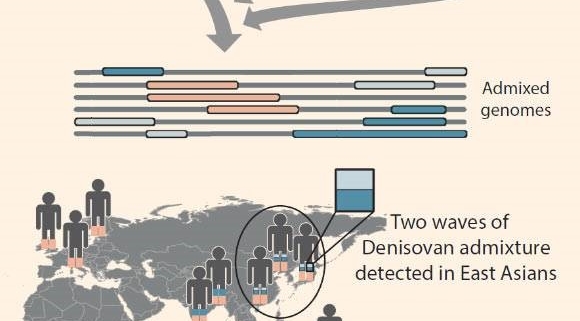
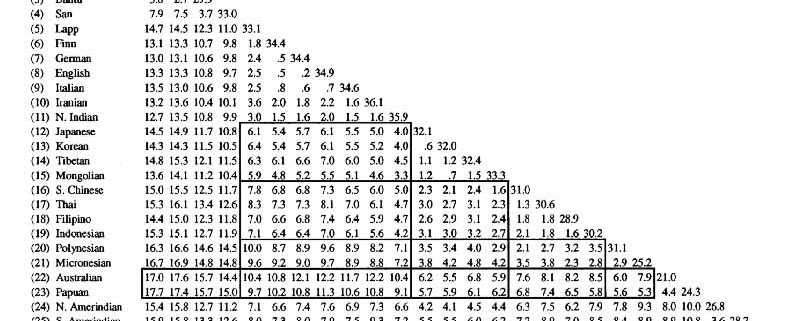
Human Pre-History and the Making of the Races, Part 2: Genetic Distances

Confirmation by modern genetic studies of the traditional racial classification categories

What are the percentages of genetic differences between the human races, indicating their relationships? Perhaps the best global scale study to date on this subject is still that of Masatoshi Nei and Arun K. Roychoudhury from Evolutionary Relationships of Human Populations on a Global Scale (1993). Subsequent studies, which have included increasing numbers of alleles but have usually been regional rather than global in scale, have been consistent with Nei and Roychoudhury’s results. The following table (Fig. 1 below) of estimates of genetic differences between human populations is from their study.

Read more

Human Pre-History and the Making of the Races, Part 1

Since the 1950 UNESCO Statement on Race there has been an increasing tendency to claim, based on Boasian anthropology and in promotion of a multiracialist agenda, that the human races are “socially constructed” and their existence is not supported by science, meaning not biologically and genetically real. This essay is an account, consistent with current scientific knowledge, of how the human races we know historically and today were really constructed.

The human species is blessed with great variety and diversity. Its rich diversity resulted from its global distribution, which caused the different populations of humanity to be geographically separated and thus reproductively isolated. Reproductive isolation enabled divergence — the process of divergent evolution — to occur, causing the isolated populations to evolve in different directions, developing their own distinct ensembles of genetic traits and characteristics.

Divergent evolution is the process by which new life forms are created by the division and separation of life into different branches. Human evolution has seen its share of divergent branching. The generic name commonly used to refer to the genetically different populations—that share a common biological ancestry that distinguishes them from other populations — is race. But in the human species, as in any species enjoying a great degree of variety, the constant branching and dividing that characterize the process of divergent evolution have created many different divisions, each of which possesses a genetic signature which distinguishes it from other divisions at the same level. For purposes of taxonomic accuracy each of these levels should have its own specific name and definition. The first or highest level is the species, and it is simply and objectively defined as including all those populations which are capable of interbreeding with each other and producing fully fertile offspring. The term race is commonly used to refer to a branch or division of the species possessing genetically transmitted physical traits (e.g., skin color) which distinguish it from other branches or divisions of the same level. Adding to this definition, it will here also be defined as including only those persons who are capable of reproduction with each other without alteration of the racially-distinctive genetic traits of either parent stock; that is, the genetically transmitted traits which distinguish a race from other divisions at the same level (i.e., other races) should not be diminished or lost by reproduction within the race. If racially-distinctive traits are lost or diminished by within-group reproduction then the population group is at a level of division too broad and inclusive to be accurately defined as a race. If it is too narrow to be defined as a species, as it does not include all those populations capable of interbreeding, then it is at a level between race and species, which will here be referred to as a subspecies. Read more

The Supremacy of Stupid: How Dumb Ideas about Race Flourish on the Left

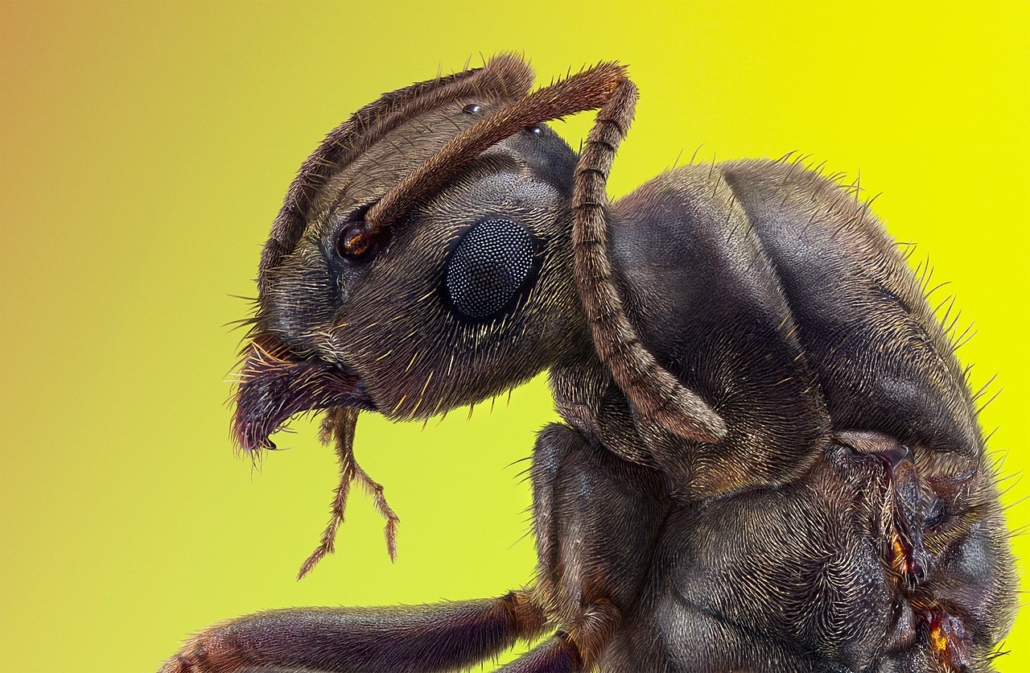
An ant is an amazing creature, a marvel of miniaturization and compressed complexity. With only a tiny brain, it absorbs and interprets a flood of data from its myriad sense-organs, navigating a complex and constantly changing world, co-operating and communicating with its nest-mates, collaborating in prodigies of architecture, engineering and logistics. No human robot can even come close to matching the abilities of an ant, let alone at such a minute size and on such a small budget of energy.

Dumb beats clever

But the highly sophisticated ant meets its master in the form of a mindless organism far lower in the evolutionary scale. As I described in “How to Cure a White Zombie,” the fungus Ophiocordyceps unilateralis can subvert the complex nervous system of an ant, turning the ant into a zombified spore-spreader. You can sum up the behaviour of the fungus in two words: sitting and floating. It sits in its victims and then, in the form of spores, floats off to new victims. The behaviour of ants, by contrast, is endlessly subtle and varied. Ant-behaviour has filled entire libraries and fuelled long scientific careers. But the simple fungus beats the complex ant.

The complexity of an ant

Another parasite, the microscopic protozoan Toxoplasma gondii, overcomes an even bigger evolutionary gulf and subverts the even more complex brains of rats and human beings. The fungus and the protozoan have no minds, no consciousness and no purpose but self-propagation. They’re dumb, but they’ve been beating clever for millions of years. That’s why we shouldn’t be surprised at the success of stupid ideologies in the world of politics. In competition and warfare, it doesn’t matter how you win: the only criterion of success is, well, success. The fungus and the protozoan are unconscious experts at chemical warfare, because they interfere with the brain-chemistry of their victims. In the world of human politics, parasites and predators interfere with brains by using words and ideas instead. Read more

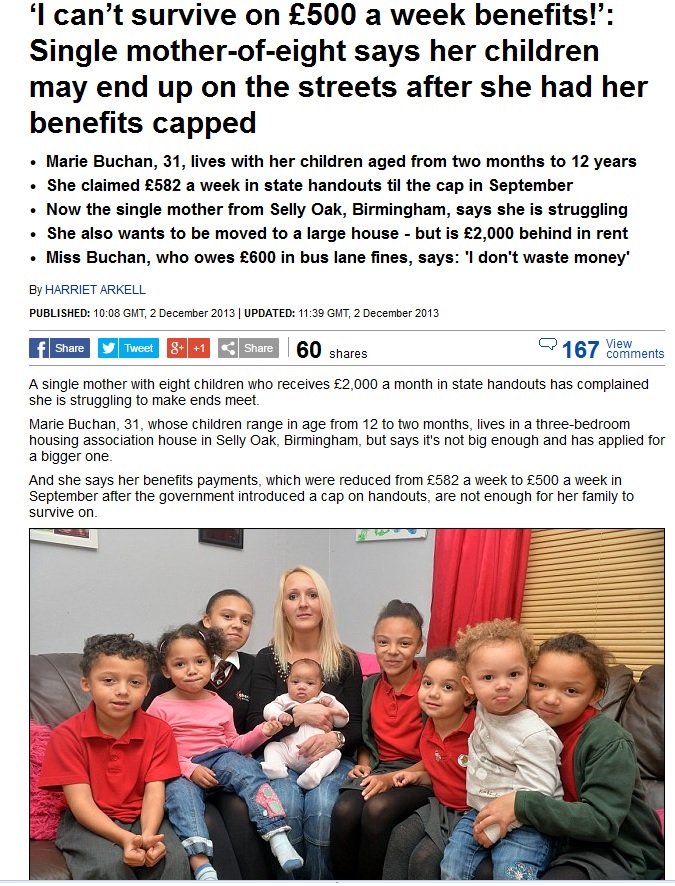
On the Rise of Mixed-Race Britain

“The intermarriage of nations gradually extinguishes the characters, and is, despite any pretended philanthropy, not beneficial to mankind.”
          Immanuel Kant

The recent engagement of Britain’s Prince Harry to a mixed-race actress of Black and Jewish origins has delivered something of a propaganda coup to the promoters of miscegenation. It’s been hailed as a “great day for interracial relationships and mixed race girls everywhere.” It’s been claimed that it will “change Britain’s relationship with race forever.” The New York Times has even suggested it will “save the monarchy.”

While hyperbole saturates each one of these statements, they all betray the truism that, in a ‘celebrity culture,’ such events can spark ill-informed attempts at imitation among the dedicated and dim-witted followers of fashion.

The excitement over the racial status of Meghan Markle is all very reminiscent of similar propaganda in the wake of London’s 2012 Olympic Games, when a number of mixed-race athletes, Jessica Ennis in particular, were singled out and promoted as the ‘new face of Britain.’ According to a celebratory report published shortly after the Olympics by British Future, a ‘think-tank’ funded by George Soros’s Open Society Foundation, Ennis and other mixed-race celebrities had “helped to change perceptions about interracial relationships.” This seemed to have been largely borne out by the 2011 census, which revealed “the mixed race population is the fastest growing in Britain with more than one million people born of interracial parentage.” British Future point out, probably with good justification, that this figure “is only half the story of the rapid growth of mixed Britain. Twice as many people have ethnically mixed parentage – but over half of them choose other census categories, such as black or white.” Ennis, in some senses the precursor to Markle as the darling of miscegenation propagandists, was chosen by British Future to grace the front page of its report, The Melting Pot Generation: How Britain Became More Relaxed About Race, and opened it with the line: “Jessica Ennis was not just the face of the Olympics this summer; she could stake a fair claim to be ‘the face of the census’ too.”

One of those most concerning aspects of the report, if accurate, concerns the statement that “it is Britain, not America, which has the stronger claim to be a “melting pot” on race.” The rationale here is that those of mixed racial parentage tend not to marry or reproduce with American Whites — those of mixed race normally become absorbed into the minority ethnic group. By contrast, those of mixed race in Britain marry heavily into the White majority. We might therefore state that while America currently has the more pressing demographic concern in terms of the White share of the population, miscegenation may be considered a greater concern in Britain. The report explains:

“On no other country on earth is my story even possible,” said Barack Obama, a product of Kenya and Kansas, as he burst onto the US political scene in 2004. His is a great story, but he was wrong about that. Mixed marriages are more likely in Britain, where the dynamics of mixing are different too, and accelerate faster in Britain. That is because most Americans from mixed parentage marry somebody from a minority group, as Obama himself did. By contrast, three-quarters of Britons from mixed parentage marry somebody from the majority white group (it does contain over three-quarters of the population, after all)…10% of African Americans are in mixed marriages [with Whites]…compared to over 40% for British born black Caribbeans.

It is difficult to make a full assessment of the true scale of the problem because the Black population of Britain (including those described as “African/Caribbean/Black British”) is roughly 3% of the overall population of England and Wales. One might be tempted to conclude that, while the number of Black men marrying or reproducing with White women is very high, their relatively small percentage of the overall population means that the number of White women entering relationships with Black men is also relatively small. However, these relationships are almost exclusively forming at the lower end of the socio-economic scale, and often at the very bottom. Read more

Richard Spencer interviews Kevin MacDonald on the European origins