Featured Articles

Amy Biehl, Forgiveness, And the Nature of ‘Hate’

Amy Elizabeth Biehl (1967–1993)

In 1993, an idealistic American graduate student of Stanford University, Amy Biehl, was brutally murdered by four Black males in the township of Gugulethu, near Cape Town South Africa during her visit whose purpose was to end Apartheid. Amy, the only White occupant in a car with South African Blacks, was immediately targeted by a large Black mob shouting anti-White slurs. Amy was quickly pulled from the car, stabbed repeatedly, and stoned to death.

Amy’s four attackers were subsequently arrested and placed on trial. The defendants claimed that their actions were politically motivated. In his 1998 book, One Miracle Is Not Enough, Rex van Schalkwyk painted a less than sobering picture of the court proceedings when he wrote: “Supporters of the three men accused of murdering [her]… burst out laughing in the public gallery of the Supreme Court today when a witness told how the battered woman groaned in pain” (pp. 188–89). Each of the defendants, however, was convicted for their murderous crimes. They were later granted amnesty by the ‘Truth and Reconciliation Commission’ in 1998 after having served only four years in prison.

Amy’s parents, Peter and Linda Biehl, fully supported the release of the murderers and were quite vocal about it too. Peter, in fact, shook their hands and stated: “The most important vehicle of reconciliation is open and honest dialogue. . . . We are here to reconcile a human life [that] was taken without an opportunity for dialogue. When we are finished with this process we must move forward with linked arms” (Wikipedia). Numerous articles were published praising Amy’s parents’ decision to forgive her daughter’s murderers appeared in both American and South African newspapers. One wonders how self-debased a father can get that he would shake the hands of those who stabbed and stoned to death his own daughter?!

A charity foundation was created in 1994, the ‘Amy Biehl Foundation Trust.’ Adding insult to injury, two of the men who had murdered Amy were hired to work for the foundation! Seventeen years after Amy’s death, a bronze plaque mounted on a stone was unveiled by the U.S. Ambassador, Donald Gips and Linda Biehl, at the Cape Town site where she was murdered.

None of this, of course, did a bit of any lasting good. Since Apartheid ended, South Africa has morphed into a cesspool of government corruption, staggering levels of violent crime, and a rabid anti-White ethos has gripped most of the nation. Racially naïve Whites like the Biehls will never attain the racial Utopia they want despite the best of intentions and endless funding they may receive because of the natural proclivities of Blacks and their dysfunctional cultures. Blacks cannot change who they fundamentally are, and neither can Whites. This is why every effort to make them like us and to erase our innate differences has failed repeatedly, wherever Blacks are found around the world.

Former U.S. Ambassador Donald Gips and Linda Biehl

Peter and Linda Biehl, no doubt, thought that in all of this they were doing their ‘Christian duty,’ that it was the ‘right thing’ to do. But was it? Did the men who murdered Amy express any remorse after what they had done? Seems to me that they tried to excuse their actions as merely political. Did the defendants take the initiative and seek forgiveness from the Biehls, or were the Biehls, like so many well-meaning but foolish Christians of our era, ready and eager to forgive them even though it was never asked for?

The Biehls may have thought that Jesus’s words to “love your enemies” and to “forgive others for their transgressions” were intended to exhaustively cover every conceivable occasion of malicious crime, treason, and murder. Yet is this really what he meant? What many Christians fail to understand is Jesus’s use of hyperbole in such sayings as above — that is, exaggeration for the sake of emphasis. It’s a way of overstating a point in order to drive home a lesson or an important concept that we want our listeners to comprehend. The same thing occurs when Jesus spoke of hating one’s parents. Hyperbole, then, is something that we all do when conversing with others. Many of Jesus’s sayings are framed in this manner, and it’s something many Christians miss.

Moreover, Jesus’s teachings were intended as general lessons about God, life, and how we should treat others. They were never intended to cover every possible situation in life with absolutely no exceptions or qualifications. They were never intended to be military strategy or even social policy for democratic societies. We must ask ourselves: Did Jesus really expect his followers to embrace with loving arms and to pronounce forgiveness upon an intruder who just ruthlessly murdered his or her family? Did Jesus expect the same mindset to be carried out onto the battlefield against national enemies in a time of war? What would the Biehls think of King David’s hateful expressions in Psalm 139:22: “Do I not hate those who hate you, O’ Lord? And do I not loathe those who rise up against you? I hate them with the utmost hatred; they have become my enemies”? Or how about the parable of the money usage in Luke 19:27 where Jesus says: “But these enemies of mine, who did not want me to reign over them, bring them here and slay them in my presence”? Sounds a bit hateful, eh?

Hate, then, is not treated in the biblical record as something necessarily bad. It’s treated as a basic human emotion that can be used for good or for bad depending on the circumstances. And yet the failure to understand this most basic premise has caused Christians to engage in some very foolish and harmful things over the years. In this regard. Peter and Linda Biehl are no different and they continue to be the poster children for all that is wrong with a Christianity that has embraced multiculturalism.

In 1993, 12-year-old Polly Klaas was kidnapped at knifepoint from her home in Petaluma, California by long-time felon, Richard Allen Davis. He later strangled the little girl to death and left her in an open field. Davis never asked for forgiveness for his horrific crimes from the family and has remained defiant to this day. In fact, after the verdict was read at his trial in 1996 in which he was sentenced to death row, Davis stood up and gave the middle finger with both hands. Later, at his formal sentencing, he read a statement claiming that Polly had said to him right before she was killed, “Just don’t do me like my dad.”

Should our hearts bleed for a puke like Davis? Is Polly’s father required by Christian duty to ‘forgive’ Davis, even to the point of seeking his release from prison? Hardly. It’s one thing to personally forgive those who genuinely seek forgiveness for their offenses, and who see themselves as justly condemned for their actions, but it’s quite another to offer forgiveness to those who will gladly spit in your face. And why should forgiveness for the most heinous crimes committed against the innocent nullify justice? Forgiven or not, why should any society release those who have willfully taken the life of an innocent victim, especially when the possibility of a repeat crime is always present?
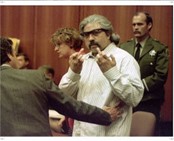
Richard Allen Davis

In this respect, the parents of Amy Biehl, have managed to make a mockery of their daughter’s tragic death, pervert justice, as well as dishonor their own Christian faith. Forgiveness, then, is just one of many areas where modern Christians have grossly misunderstood their own religion.

It staggers the mind when one considers how a very natural emotion such as hate has been so badly misunderstood and vilified. Jewish activist groups such as the Anti-Defamation League and Southern Poverty Law Center have made it their mission in life to stamp out “hate” and “hate groups” throughout America. In their ‘Intelligence Report,’ the SPLC mentions “hate” no less than seven times when describing what they do. One soon discovers that the “hate” they seek to monitor and expose is almost exclusively directed at “hard right extremist groups.” Their goal is to “push white supremacy out of the mainstream.” Jews want Whites as docile and non-threatening as possible so that their goal to deracinate us and ultimately dilute our European bloodline is achieved uninterrupted.

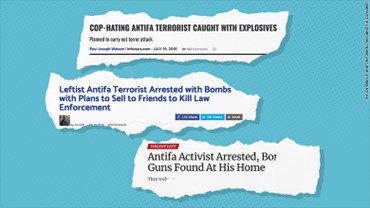
Incidentally, I could find nothing on the SPLC website about the truly violent Antifa — a hate group if ever there was one — that was in any way negative. In fact, one article under their ‘Hate Watch’ category openly condemned designating Antifa as a domestic terrorist group, stating it was both “dangerous” and “threatens civil liberties” (June 6. 2020). It’s apparent, then, that “hate” only goes one direction when it comes to Jewish activist groups claiming to be eradicating it. All forms of White racial identity and interests are vehemently denounced, including organizations that are to the political and social right (e.g., anti-abortion groups).
This is all very typical of the age in which we live where the term “hate” is applied to everything people don’t like or find disagreeable. There is no middle ground. Yet confusion abounds regarding the term and nature of hate itself. The Oxford Dictionary defines “hate” as “to feel intense dislike for” or “to have a strong aversion for.” This definition shows clearly that there’s nothing irrational, bizarre, or uniquely evil about “hate” per se. It is treated as a common and normal human expression. Which one of us hasn’t at one time or another hated something or someone in their lives? And was it really hate as commonly understood or just an intense dislike? How many of us have hated someone and never took any steps to harm them? And what if hate is fully justified in some instances? Is it then still morally wrong?

Dr. Michael Hurd:

You cannot rationalize away the need for justice and proper judgment of others for their actions by saying, ‘Hate is mean, and you become the enemy if you engage in it.’ That’s beyond ridiculous. If what you’re really trying to say is, “Don’t let those who hate you destroy you,” then that’s certainly good advice. But you don’t keep hateful people from destroying you by pretending that you love them, or by giving them back anything other than what they deserve. (“In Defense of Hatred,” January 14, 2014)

It should be obvious by now that when one starts to think deeper about the term ‘hate’ and its application to White racialists who oppose their own racial and cultural displacement by foreign groups, that simply describing them as “haters” is horribly misplaced, especially when they have good reason to express their aversion and dislike for what is occurring to them.

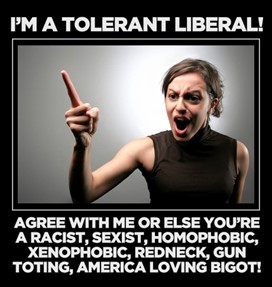
Not so surprisingly, the people who shout the loudest about “haters” are often the most hateful. Leftists always scream about ‘love’ and ‘tolerance,’ and yet haven’t the slightest qualms about destroying property, disrupting meetings not their own and preventing others from attending, as well as physically attacking their political opponents. Antifa thugs wouldn’t think twice about swiftly applying a boot to the face of anyone who ideologically differs from them. Edward Dutton rightly refers to them as “spiteful mutants.”

The Left, then, is not really against “hate” as they claim. They’re quite satisfied in expressing their hateful rage against those who don’t see life as they do. Their actions really tell us that it’s okay for them to hate, but not for us.
Jews have weaponized the expression ‘hate’ just as they have done with the term’s ‘racism’ and ‘racist’. Anyone who espouses views contrary to liberal Jewish activists is described as a “hater” and “hateful.” They paint their opponents in this way because it conjures up images of people who are backward in their thinking, country bumkins of sorts, and deeply prejudicial. It implies such person are irrational, filled with rage, and even evil at heart. It is ad-hominem in nature because rational discourse is not permitted.

It’s also a way of shutting down discussion or debate. Jews know that to allow an open discussion on mass immigration and its social and economic impact on White Americans would not be beneficial to them — especially when the same arguments that Whites use to defend limiting immigration or setting in place a moratorium (and perhaps expelling illegals [at least]) for fear of becoming a despised minority in one’s own country could just as equally be applied to Jews in Israel. The very things Jews want in terms of preserving their national and ethnic identity, including a secure border free from invasion are exactly what a growing number of White Americans want. And all White Americans would want if they weren’t programmed by the mainstream media and educational system and intent on presenting themselves as virtuous do-gooders.

The concerns that racially conscious Whites express, then, are perfectly reasonable. There’s nothing “hateful” about it in the least. What racial or ethnic group, after all, wants to decrease its influence, standing, and national identity within what was their own nation? What racial group would want to be taken over by foreigners with foreign cultures and foreign values? Most people would view opposition to a foreign invasion as perfectly reasonable regardless of whether it happens legally or illegally. Jews know this too, and this is why it’s easier for them to simply label Whites who care about their race as “white supremacists” and “haters” than to engage them in reasoned discourse which could automatically backfire before a rational audience of White people.

I don’t even think that most Whites who oppose non-White immigration and who follow the advice of “Dilbert” creator Scott Adams to “get the hell away” from Blacks actually hate Black people — at least not in the way many people think. They simply want to be left alone. They don’t want to see their country become the squat house for every Third-World migrant. They don’t enjoy seeing their once grand cities become another version of Detroit or Chicago with their skyrocketing levels of Black crime. They don’t want their clean communities turning into Mexican barrios with all the filth and gang problems that Mexicans bring. This is not a matter of hating other racial groups per se, but in Whites wanting to preserve what they have created for themselves and for future generations. This is perfectly natural and normal, and every racial and ethnic group throughout the world wants the very same things for their own people – including Jews!

Informed Whites don’t deny that there are good and decent people within every racial and ethnic group. I have met Blacks, Hispanics, Asians, and people from every place in the world who were honorable and decent persons. But I wouldn’t want any of them here flooding my country despite all that. Let them be good and decent in their own countries. I’m sure they would feel the same about me and my people so there’s nothing hateful about saying it.

Is there ever a time when hate is wrong? Yes, I think so. It’s not so much that feelings of hate by themselves are wrong, but how we handle or control them. I think it’s wrong, for instance, when it consumes you and prevents you from living a healthy and emotionally balanced life. It’s wrong when a root of bitterness sets in and overtakes you. It’s wrong when you are unable to focus on anything else. It’s wrong when it leads you to think and act irrationally. Hate, then, is an emotion we have been created or evolved with. The issue, then, is not so much shall we hate, but how shall we manage it in a way that does not lead to our self-destruction nor the ruin of our families and loved ones.

Finally, it’s common for well-meaning but naïve people to argue that we should only hate the actions of wicked people and never the people themselves. We are urged to hate only the evil that motivates them. We are told to hate the destructive results of their evil deeds, but never the person who chooses to commit them. But this is a ridiculous distinction when one considers that their evil deeds do not occur independently from the heart and mind of the person doing them. It’s both a conscious and willful choice on their part. Their deeds spring from who and what they are; their choices reflect what they think and feel.
On the Nature of Racial Slurs

Is it ever ok to use the so-called ‘N-word’ in a scholarly context? This year, a university tutor in Australia found out the hard way that the answer in our current political climate is probably no. Whilst teaching an undergraduate class on Ethnic Identity at Monash University, tutor Gary Lacey used the word ‘nigger’ numerous times whilst leading a classroom discussion on the history of the word.[1] Multiple students ended up complaining and Lacey was suspended, despite him using the opportunity to point out that he isn’t a racist and used it purely for the purposes of education, and that he has a Kenyan wife. An internal review later conducted by the overseeing department – the Australian Centre for Jewish Civilisation – found that the principle of academic freedom had been breached and later re-instated him, however such scenarios have occurred in universities across the West as of late[2] with varying consequences for the academic staff involved.

What gives a racially-based slur its power? And what gives the mere repetition of these words a license to target another person in such a way? The standard explanation of the nature of racial slurs one typically finds in academia focuses on the user, of the slur, namely that the power of a slur is derived from the racial prejudice or disrespect intended by them, which is then encoded into the word. The user is presumed to have a negative disposition towards a target and is using the slur to purposely denigrate or to assume a position of unwelcome superiority over others. Slurs are therefore used to generate a power-imbalance, and using the formula ‘Racism equals Prejudice plus Power’, a racist incident has thus occurred.

Yet the case of Gary Lacey and the countless others who have been subjected to similar controversies demonstrates this explanation to be lacking. The simple utterance of the word in a scholarly or educational context, absent from any malice or displays of prejudice, is apparently enough to suspend a university employee from their job. Being secretly recorded saying a racial slur in private for the sake of one’s own amusement, and then having the incriminating footage uploaded to social media, can easily result in employment termination. Reading aloud classic novels like Adventures of Huckleberry Finn or singing along to a rap song loaded with racial epithets is an ethical minefield for Whites in the current climate. Even mis-heard or mis-interpreted words can result in similarly dire consequences, as others have found out when using expressions like ‘tar-baby’ or ‘niggardly.’ Linguistics scholars contort themselves into all sorts of absurd positions to explain the phenomenon, theorising concepts such as an “invisibility of contempt”, that one can somehow be blind to your own contemptuous regard towards others when using a slur in a neutral sense.[3] However, this essay offers a far more cogent mechanism to explain this state of affairs and why it is that there is such a disparity between slurs used against Whites and those used against all other races.

The fact that lack of offensive or prejudicial intent towards others seemingly has no impact on a resulting accusation of racial prejudice from the use of a slur, points to the truth that the power of a racial slur is created not by the user of the slur, but instead by the receiver. Whether the receiver is the direct subject (the word or phrase was used directly towards them) or the indirect subject (the word or phrase was spoken without specific direction to the subject, but the subject nevertheless overheard it), a racial slur has power because the receiver has taken offense and has given it power. I posit that process is initiated by three triggers:

  1. Internalised Inferiority: The receiver of the slur, whether direct or indirect, has an internalised sense of inferiority vis-à-vis the person using the slur, or a wider group the user is a member of;
  2. Guilt Complex: The slur is able to tap into a sense of guilt within the receiver, either regarding their own behaviour or the behaviour of a group they are a member of; and
  3. Self-doubt: The receiver of the slur is worried that the slur could be true, or actually secretly believes it to be true.

If it is able to draw from one or more of these triggers, the slur is given power by the receiver and the racial insult (whether intended or not) will be successfully delivered. Alternatively, if no triggers occur, the internal state of the receiver is unchanged and the slur is not successful. Utterance of even the nastiest, most vile string of racial insults imaginable will have no effect unless a trigger has occurred. The above three triggers may also apply to class, age, sexuality, religious and sex-based slurs, however it is beyond the scope of discussion contained in this essay, nor do I explore the closely related phenomenon of taking offence to racial slurs on behalf of others.

Internalised Inferiority

The existence of trigger #1 is easily demonstrated when looking at the large catalogue of racial slurs that exist in the English language and the enormous discrepancy in power and consequence that exists between slurs used against Whites versus those used against non-Whites. Plenty of derogatory terms used for White people exist, usually referencing light skin tone, but none of them will generally arouse more than a mild sense of amusement or a raised eyebrow when used against the intended victim. ‘Whitey’, ‘mayo’, ‘vanilla’, or ‘gweilo’ have close to no insulting power, nor will any negative consequences from Whites collectively occur when they are utilised by non-Whites. Words like ‘nigger’, ‘chink’, ‘coon’, ‘spic’ or ‘kike’ are of course to varying degrees taboo unless uttered by those the slur applies to, and are spoken only with the knowledge that serious reprisal in some form or another can occur when used within earshot of others.

This discrepancy between “the West and the Rest” results largely due to Whites not being able to internally visualise themselves in an inferior position racially when confronted with a racially-based slur. The achievements of White civilisation stand so far above all others, that the inferiority of White people implied by a racial slur against Whites is absurd on the face of it. None of this is to say that all Whites have an ingrained sense of “White Supremacy” (defined as the belief that Whites should rule over others), only that Whites collectively don’t ascribe any negative or historically inferior connotations to their existence and achievements as Whites and thus take no offense to words that do nothing more than identify them as White, no matter how much hatred or prejudice the user pours into it. Put simply, Whites don’t think it’s a negative thing to be a ‘honkey’. This means that the marker of the truly self-hating White – as opposed to the performative one going along with the ideological climate in order to blend in – is someone that genuinely takes offense at such slurs and is truly convinced of the inferiority of White society or of its negative impact.

Trigger #3 is most commonly found in slurs that attack someone’s character or their physical features. Calling a wealthy and powerful man who is confident of his own abilities a ‘loser’ is likely to have no effect and cause no real offense. Calling an unemployed, unmarried, down-on-his-luck man a loser is almost guaranteed to tap into his self-doubt and his internal fear that he *is* actually a loser. Examples when it comes to race include the slur ‘monkey’ when applied to sub-Saharan blacks or the Chinese term ‘gweilo’ (literally meaning ghost) applied to Whites. The simple biological fact that members of the sub-Saharan race do share more physical parallels with great apes than other races — to the extent that AI  programs have accidentally identified pictures of blacks as primates — is enough to tap into the thought process that there may be some truth to the comparison that sits behind the slur. Meanwhile, no White person is genuinely worried that they physically resemble a mythical creature such as a ghost, and thus the slur is given no power (unless it is combined with trigger #1.)

White Guilt and its Uses

This leads us to the question, when do racial slurs against Whites actually work? The answer is primarily when they are not slurs against Whites as a whole, and directed instead towards a specific socio-economic class (‘redneck’, ‘chav’, ‘bogan’) or to an ethnic sub-category.[4] ‘Nazi’ is a slur to Germans as it taps into both German war guilt and the reality that many Germans do have ancestors that were members of the NSDAP or supporters of the party. Though less potent than they once were, ‘dago’, ‘greaser’ or ‘wog’ are slurs to those with Southern European ancestry who share a lingering sense of being second class citizens in an Anglo-Saxon country, never quite living up to the cultural standards WASPs expected them to assimilate into. The term WASP itself would otherwise be the perfect candidate for a taboo slur – an ethnic descriptor that is phonetically identical to the name of an unpleasant insect. Yet it is not, for no WASPs themselves can reasonably believe that WASPs were historically persecuted or disadvantaged in the history of the West.

The sense of internalised inferiority towards the user of a racial slur (trigger #1) is malleable and can change or be negated based on the circumstances in which the slur was uttered. A racial slur thrown by a group of physically intimidating Blacks towards a single White passer-by can result in a successful insult, as the position of external inferiority from being physically outnumbered overrules the natural internal disposition towards the slur if it was said in a neutral environment. The same effect can occur to a hypothetical lone White audience member singled out and abused whilst attending a Nation of Islam conference or a meeting of Aboriginal elders. The concept of an “N-word pass”, meaning that a Black person has given permission to a non-Black person to use the word, implies that no internalised inferiority exists within the former towards the latter (at least at that present moment in time). The vexing question of why the slur ‘nigger’ is non-derogatory when uttered intra-racially is easily accounted for by trigger #1, as the user and receiver are in a position of equality, at least racially, though such a slur can be successfully delivered when used across class lines, for example if a wealthy Black man uses it against his ghetto dwelling compatriots.

Perhaps the only racially-based slurs that currently seem to have any power against Whites as a whole (as opposed to inter-ethnic or situational-dependent slurs described above) are ones relating to guilt over colonisation or abuses that occurred during the colonial period to indigenous peoples – triggers #2 and #3. The slew of anti-White propaganda on the history of colonisation that Western youth are currently subjected to throughout their schooling years appears to be bearing fruit, as racial slurs based around colonisation have become common amongst the vanguard of the anti-White left, suggesting that this weakness has specifically been identified.

To conclude with a warning, the instinct to attack the use of such would-be racial slurs against Whites as a double-standard, even when no offense is taken, should be avoided. By pointing out your opposition to it, thus your susceptibility to the slur, you only serve to alert people of its power. Had leading black abolitionists in America like Hosea Easton not publicly drawn attention to the insulting perception of the word nigger in the early 1800s[5], would it have simply died a natural death, just like so many other antiquated terms used to describe a disliked outgroup eventually did? For a more contemporary example with a newly minted slur, the rapid rise in popularity of the slur ‘Karen’ used against White women was fuelled by the mass denials and anger over the inappropriate application of the word, signalling to others its viability as a slur.[6] The day that Whites start to take these slurs seriously is the day that Whites collectively no longer believe in their pre-eminence in world history. Mock the use of words like ‘colonizer’ and ignore and joke about the silly labels like ‘gammon’ being flung around, for if you stop laughing, that means it’s already too late.


[1] Precel, N & Gamble, J 2023, ‘Monash Uni teaching associate investigated for repeatedly using N-word in class’, March 2nd, The Age, retrieved from: https://www.theage.com.au/national/victoria/monash-uni-teaching-associate-investigated-for-repeatedly-using-n-word-in-class-20230302-p5covp.html

[2] A google web-search for ‘university professor suspended n-word’ results in a dozen such cases within the last 5 years alone.

[3] See Jeshion, R. 2018, ‘Chapter 4: Slurs, Dehumanization, and the Expression of Contempt’, in Sosa, D (ed.) Bad Words: Philosophical Perspectives on Slurs, Oxford University Press, p.77-107.

[4] Furthermore, compound slurs such as ‘White trash’ or ‘White devil’ are given power not by the reference to Whites, but by the inclusion of the additional insulting word.

[5] See: https://www.washingtonpost.com/wp-srv/style/longterm/books/chap1/nigger.htm

[6] The recent popularity of self-applying the words ‘goy’ and ‘goyim’ within the dissident right should also be approached carefully. Self-application of the words ‘nigger’ or ‘queer’ by their respective communities has so far failed to undercut the power of the words when used by the out-group.

“Hatred of Anglos is a core feature of multicultural ideology in Anglosphere societies”: A review of Anglophobia: The Unrecognized Hatred

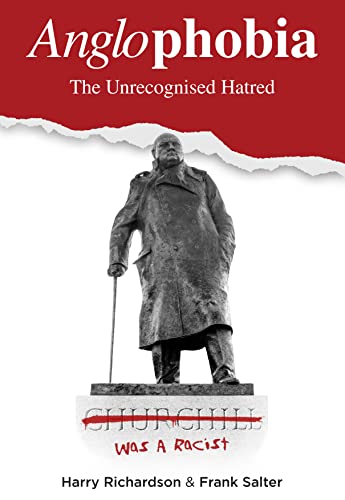
Anglophobia: The Unrecognized Hatred, by Harry Richardson and Frank Salter, is an excellent exposition of the hatred and dispossession of native White populations that is sweeping Western societies. Focusing particularly on Australia as a prime example, it is a valuable contribution to the effort to both inform European-descended peoples of the danger and injustice of the present situation and to motivate them to action on behalf of their legitimate interests.

Frank Salter needs no introduction to readers of The Occidental Observer (e.g., here and here). His theory of ethnic genetic interests develops a perspective that should be essential reading for a sophisticated understanding of ethnicity and multiculturalism; it is foundational to the book under review. His co-author, Harry Richardson is the author of The Story of Mohammed: Islam Unveiled and editor-in-chief of The Richardson Post. They have written a highly readable book that, at around 200 pages, does not require a major investment of time.

Focusing on Anglos may be off-putting to some because it may seem to exclude European-descended groups not descended from the British Isles. However, the authors apply the term widely, to “people descended from the indigenous population of the British Isles in Australia and overseas as well as those who have assimilated into those populations. It can include people of European descent and western civilization as a whole” (5). Anglophobia, then, is hatred or mistrust directed at those populations. As they document in detail, Anglophobia is rife throughout the Western world, and often emanates from prominent figures in the elite media and academic world. Clearly Anglos and their interests are being systematically compromised.

As noted, this is a highly readable book, but it is also intellectually rigorous. Chapter 5, “Psychological and Biological Dimensions of Racism” notes that ethnocentrism is a biological universal that evolved for group living—likely in small groups of close kin. However, ethnocentrism spans a spectrum of variation, and “Anglos are among the world’s most individualist and least collectivist (in other words, non ‘racist’) cultures.” (16) Indeed, Western individualism is unique among the cultures of the world. But that doesn’t imply that Westerners have no tendency toward ethnocentrism at all, only that it is less central to Anglo cultures and more difficult to arouse. And when allegiance to the group is aroused, it is less likely to be directed at a group of co-ethnics, as we see with the phenomenon of civic nationalism—perhaps a fatal flaw in today’s multicultural West.

Underlying the theoretical basis of the book is Salter’s theory of ethnic genetic interests—that genetic diversity creates conflicts of interest between people and hence between people organized into ethnic groups, with the result that multiethnic, multicultural societies are prone to conflict: “As ethno-religious diversity increases, cohesion falls and conflict rises. Most people choose to live among their own people and to marry and make friends among them [as noted in their discussion of J. Philippe Rushton’s Genetic Similarity Theory]. Ethnic identity is adaptive because it allows people to defend their ethnic cultural and genetic interests” (22).

Chapter 6, “Sociological Dimensions of Racism,” discusses the costs of multiculturalism, citing some of Salter’s own research: “ethnic conflict sometimes leading to civil war, a loss of public trust and cooperation, reduced democracy, reduced economic growth, the emergence of ethnic criminal gangs, and psychological and social costs to majorities who become minorities” (24). Around the world we see societies racked by ethnic and religious conflict. The civil war in Syria pitted Sunnis against Shiites, and within these larger groupings there are particular ethnic groups, such as Alewites, Arabs, Kurds, Druze, and Assyrians. Then there’s China and the Uyghurs, Israelis and Palestinians, Hindus, Christians, and Muslims in India, and the Hutu and Tutsi in Rwanda. And then there are also the recent battles between Muslim migrant-descended groups versus the police in France and the Black Lives Matter riots in the U.S. in 2020. One would think that the reality of ethnic conflict would be obvious to anyone with or without any training in evolutionary biology, but this has not stopped our pro-multicultural elites from imposing it throughout the West.

Regarding the loss of public trust, the problem with collectivist, kinship-based cultures is that they do not produce high trust apart from close kin, resulting in much higher levels of corruption because individuals with power have a tendency to help their relatives; in Western cultures people readily trust and cooperate with non-kin on the basis of reputation (e.g., as honest or competent), not kinship connections.

The authors note that ethnic groups have common ancestors, that race is real, and that different races have different traits because they evolved in response to local environmental challenges. A nation, then, “is an ethnic group living in its homeland”—a definition that would imply, say, that ethnic Germans living in Germany constitute a nation. And it would also apply to settler societies like the U.S. and Australia that “developed as nation-states with unambiguous ethnic origins and identities” (28). Nationalism, then, reflects “the desire of a people for their own state” (29). Importantly in the current state of the West, “this analysis of nationalism … implies that they also wish their elites to share the nation’s identity” (30).

Such definitions would likely infuriate the left—for example, the Wikipedia article for ‘nation’ notes that “The consensus among scholars is that nations are socially constructed, historically contingent, and organizationally flexible”—ethnicity need have nothing to do with it. And it’s quite clear that Western elites typically do not identity with the ethnic identity of the native peoples. These elites desire top-down control of political institutions and utterly reject popular attitudes aimed at establishing the sovereignty of native, European-descended peoples.

Chapters 7, 8, and 9, describe the various types of Anglophobias. Chapter 7 “Examining Types of Anglophobia, Vilification” is by far the longest chapter, constituting 130 pages—~65 percent of the book. It is an exhaustive and well-sourced compendium of the hatred and distrust of native European-descended peoples throughout the West, with an emphasis on Australia. It begins with what is now standard wisdom among Western elites, that contemporary White people are responsible for any and all sins of their co-ethnics throughout history.  This phenomenon of being able to blame contemporary Whites for past imagined or real grievances naturally leads to hatred of Whites, such as crude Anglophobic statements by Aboriginal activists (e.g., “in 2012 [Noel Pearson] was reported accusing government officials and a female journalist, to their faces of being ‘f***king racist white c***s’” (32).

But Aboriginals didn’t get to the point where such crude denunciations of government officials would become mainstream by themselves. They were aided by academic activists, such as Colin Tatz, perhaps the most egregious example of an academic with a major role in making anti-White hate mainstream in Australia (see Brenton Sanderson’s four-part article, “Colin Tatz and the Genocide Charge”).  And in the U.S., we have Nicole Hannah-Jones, of the elite New York Times “1619 Project” fame, stating “the white race is the biggest murderer, rapist, pillager, and thief of the modern world” (34). Similar quotes can be found from anti-White activists in other Western societies. Clearly Western elites have no problem disseminating and condoning anti-White hate.

These points particularly struck me:

  • Whites detract from but never enhance diversity: “Diversity in art requires reducing the number of white male artists whose work is shown in galleries.” (38)
  • “Western colonialism is falsely portrayed as failing to provide any benefit to those who experienced it. In contrast, non-western colonizers such as the Ottomans, Moors, or Chinese, are mostly ignored or given mostly favorable coverage for their artistic, literary, musical, and architectural accomplishments.” (41–42)
  • “Uniquely, Anglo and white people are blamed for slavery, despite the British being the first power to voluntarily end slavery, a process that began over 200 years ago.” (53)
  • “For decades now, schools and universities in Australia and elsewhere in the Anglosphere have been teaching children to be ashamed of their history, culture, and people.”
  • Andrew Jakubowicz, a Jewish professor of sociology and “seminal influence” on Australian multicultural education, preaches anti-White hate in the supposedly conservative Murdoch press, e.g., urging non-Whites to organize on behalf of their interests while condemning any attempt to do the same by White Australians. He also accuses “Australian journalists of suffering from too much ‘whiteness’ and ‘advancing white-only narratives.” (57–58)
  • As always, media influence is important, so it’s noteworthy that the Murdoch empire also owns the Fox News Network in the U.S., the most widely viewed conservative network, the Wall Street Journal (also politically conservative), and multiple media outlets in the U.K., Australia, and throughout the world. The authors seem to have a special ire against Murdoch media and its woke political correctness while dominating conservative opinion. They also note that a column appeared in an Australian subsidiary of Murdoch’s empire stating “I just want to see less white mediocrity rewarded.” (63)
  • “Critical Race Theory has enabled Structural Anglophobia,” in which people are rewarded for anti-Whites slurs. The entire reward-punishment structure of society is arrayed against Whites. (63)
  • Any advocacy of White interests is routinely labeled “White Supremacy.” (69) “Today, anyone indicating even the mildest defence or advocacy of white or Anglo people risks being accused of a laundry list of epithets.” (69) For example, multiethnic immigration has resulted in loss of political and cultural power for Whites (74). Yet mentioning this critical interest of Whites is nothing more than “White Supremacy” in the eyes of our politically and culturally dominant hostile elites—elites that mandated or at least enabled these policies without popular support. Cultural change in the West is from the top down, and any sign of emerging populism is vigorously combatted.
  • “Any differences in wealth, health, or education are … assumed to be due to ‘disadvantage’ which includes racism by the assumed ubiquitous power of whites.” (80) This ignores genetic and cultural causes for population differences, but bringing up issues such as race differences in IQ—a trait that is linked to a wide variety of outcomes associated with social mobility—would of course be immediately labeled as White supremacist pseudoscience, no matter how strong the evidence. The authors cite Charles Murray’s The Bell Curve and Arthur Jensen’s research in arguing that race is not a social construct and that genes are important for social class differences as mediated by traits like intelligence. (88, 90)
  • But when you have media and academic power, there is no need to have real science on your side. And again, the “conservative” Murdoch empire spouts the leftist line, publishing a “Senior Journalist” who reviewed The Bell Curve as “morally offensive” and likened it to “Nazi pseudoscience”—“a mumbo jumbo amalgam of pseudo-science and highly dodgy statistics with, so far as I can see, zero intellectual credibility.” (92)
  • While firmly coming down on the side of White ethnic genetic interests, the authors state that assimilation would solve the conflicts created by these population differences, but that elites favor multiculturalism in which different groups are encouraged to retain their identities and interests while Whites are condemned for doing so (95)—essentially a prescription for war against Whites and their interests. It should also be noted that some groups have resisted assimilation into Western culture. Particularly noteworthy are Muslim groups that are such an important aspect of European immigration. Other groups, such as Chinese who retain links to China or Jews involved in the powerful Israel Lobby in the U.S., may be highly assimilated to American culture but retain loyalties to other countries, resulting in potential conflicts of interest with the wider society. Still other groups, such as African-descended peoples, may have difficulty becoming part of the mainstream of Western societies because of low average IQ and proneness to crime.
  • The authors examine motivations for Anglophobia. These are mainly progressive ideology, but include tribal sentiment. The authors note the Jewish community has taken a leadership role in promoting multiculturalism and immigration, for example by making alliances with more poorly organized, less motivated ethnic groups. “In Australia, Jewish organisations sometimes act as de facto peak bodies for the multicultural sector as a whole, rallying, organizing, coordinating, and supporting the actions of other minority advocates.” (117) This leadership phenomenon also occurs in the US, where Jewish organizations have made alliances with a wide variety of non-White ethnic activist organizations.
  • Irish-Catholics are another group with longstanding animosity to the Anglo-Australians. Their hostility toward Anglos stemmed from English colonial rule over Ireland, hostilities which were transported to Australia after Irish immigration. Discussion mainly features one Greg Sheridan, a journalist since the late 1970s for The Australian, another Murdoch publication. Like many multiculturalism advocates in the West, he has praised other countries, like India and China, for taking steps to ensure their cultural homogeneity. Influenced by his father, as a child he refused to stand for God Save the Queen or any other expression of British sovereignty in his school days. However, as in America, where such multicultural activism motivated by Irish hostility toward the British is residual at best, Jewish activism and its organizing influence on other imported minorities is quite clearly much greater than the residual anti-Anglo sentiments of some contemporary Irish-descended Australians. “Examples of Anglophobia can be found among Irish Catholics but that sentiment has not been general or inevitable.” (141) Examples can be found, but the organizational infrastructure, elite overrepresentation (implying the ability to make influential political donations and to fund NGOs), academic influence, and media ownership and influence are simply not there.
  • The authors note that the colorblind, implicit ethnic activism typical of Anglo conservatives phrased in terms of abstract principles has repeatedly been defeated by explicit assertions of ethnic interests by those favoring multiculturalism and, I would argue, by the deluge of moralizing messages spewed out by the media (with the blessing of academia) that appeal to many Whites, especially women. I have presented the case that Western cultures create moral communities based on reputation rather than on kinship, and that conforming to messages disseminated by the elite media and educational system results in inclusion within a moral community that is now constructed and maintained by hostile elites, while ostracism and other penalties await those who dissent from these attitudes. And because of the weakness of such principle-based activism, a common thread among non-White activists throughout the West has been to promote the idea that Western nations are based on principles like egalitarianism with powerful moral connotations rather than the ethnic interests of their native peoples. However, these activists also advocate for some Western principles, such as freedom of expression, being sacrificed for moral reasons, the usual argument being that they might cause offense to “vulnerable groups,” thus preempting any discussion of race differences that may result in differences like IQ or criminality.
  • Multicultural advocates never specify an end to immigration that would preserve a White majority, and the topic of the legitimacy of White identity itself is off limits for public discussion because of the power of hostile elites able to expunge opposing views from the media and academic world.
  • The inevitable loss of White power that non-White immigration entails has not resulted in a utopian society of racial harmony but in ever greater levels of anti-White hate—an entirely predictable result. “Anglos face the prospect of becoming hated and powerless minorities in countries they established.” (149) All the utopias dreamed up by the Left inevitably lead to bloodshed—because they conflict with human nature. The classical Marxist Utopian vision of a classless society in the USSR self-destructed, but only after murdering millions of its own people. Now the multicultural utopian version that has become dominant throughout the West is showing signs of producing intense opposition and irreconcilable polarization.
  • The authors make an important distinction between normal, legitimate ethnocentrism and hate. Thus, in discussing comments of Margaret Thatcher warning that Australia would become like Fiji where Indian immigrants had taken over, they note “She did not express dislike of Asians. She simply expressed affection and concern for white Australians.” (156) Similarly, as Salter has often noted, parents typically have a special love for their children without hating other children.


The long chapter on vilification leads into two brief chapters describing more extreme measures against the Anglo majority: hostile discrimination and violence. The many examples of vilification provide a warrant for hostile action. After all, if a group is indeed genocidal and intent on oppressing people unlike themselves, then aggressive measures against them are warranted. Hostile discrimination is indicated by governments ignoring examples of Anglo disadvantage (e.g., a higher rate of deaths in custody) while funding the ethnic activist infrastructure arrayed against the White majority and simultaneously excluding Anglo advocates from formulating policy, a phenomenon that began during the mid-1970s. White advocates are completely excluded from the mainstream media, including the conservative media.

Anti-White violence is fairly minimal in Australia, but there are ethnically constituted criminal gangs and Whites are fleeing some schools because of violence and hatred directed against Whites.  A more extreme example comes from the U.K. where Muslim rape gangs have systematically preyed on disadvantaged White girls, with the authorities ignoring the problem for decades for fear of stoking racial tensions; a similar phenomenon is well known in Sweden where a 2018 study found that men with a migrant background constituted 58 per cent of rape convictions. The authors note that in the U.S., the vast majority of interracial crime is committed against White Americans.

The authors make special note of the sociopathic personalities of two of the Anglo leaders of the multicultural revolution, noting their criminal ties and the personal benefits they have received by championing multiculturalism. The same can be said about the many White politicians who have championed White dispossession while achieving fame and fortune in the process.

Finally, as predicted by Prof. Andrew Fraser, African immigrants have much higher rates of criminality in general than White Australians (e.g., Sudanese migrants are 22 times more likely to commit serious assault, 129 times more likely to commit aggravated burglary, and 17 times more likely to commit sexual assault than native-born Australians) (189). Fraser was convicted for making statements offensive to the African-Australian community.

*   *   *

To conclude, the anti-White revolution throughout the West is an elite project directed against the White majority. The main actors are:

  • well-funded and well-organized ethnic minorities with historical or imagined grudges against the White majority;
  • well-intentioned Whites who have optimistic views of the multicultural future and guilt about the past induced by the media and educational system that are hostile to White identity and interests;
  • other Whites who conform to the reward-punishment structure of society established by these hostile elites and are loathe to suffer the consequences of dissenting from the establishment narrative;
  • sociopathic Whites who are only too eager to betray their people to enhance their own fame and fortune.

This is an important book for White advocates to promote. It is a compendium of the anti-White hatred that has been unleashed by multiculturalism throughout the West and a terrifying glimpse into a future where formerly White majorities will inevitably become vulnerable, powerless, and hated minorities in the countries they built unless there is a sea change in the culture of the West that acknowledges the legitimate interests of White people.

How to be a neo-Nazi or a White Supremacist Suspect

Whenever an article appears in the mainstream media dealing with Croatia or Germany in World War II, the reader must be prepared for a deluge of surreal stories about the past Fascist epoch in general. Even Virgil’s Aeneid or Homer’s Odysseus visit to Hades pales in comparison with netherworld tales of modern court historians. Croatia in those troubled European times is regularly portrayed as a Nazi-run Ustasha puppet state responsible for the killing of over half a million Serbs, Jews and Gypsies. Hand in hand with antifascist victimhood tales unfolds the process of demonizing scholars who critically examine the official WWII body counts. The process of political demonization of rightwing and nationalist dissenters has gained additional traction in the media and legislatures in all EU states. This is best illustrated by the German government’s  decision in 2020 to allocate 1 billion euros for the “fight against the right.” Nor does the US administration lag behind. President Joe Biden, in his May 2023 address at Howard University, also evoked the specter of  “white supremacy as the “most dangerous terrorist threat” to the nation.

Legal Legacy of the Sovietspeak

Vague lexical constructs with ill-defined meanings, such as “fighting hate speech” feature in the school curriculum and the criminal code of most EU countries, Canada and Australia, while slowly inching their way into the US judiciary. Speaking in tongues is no longer a trade mark of Southern Bible zealots; unclear legal palaver has become by now a badge of honor for many US government prosecutors and their sidekicks in major media outlets. Special counsels heaping indictments after indictment on Donald Trump use verbal qualifiers that mirror the discourse of former Soviet prosecutors. In practice, this means that the much vaunted First Amendment rights guaranteeing freedom of speech will depend on those who define it as they best see it fit. Small wonder that many DA’s in the US like decorating themselves with crypto-Soviet locutions with multiple meanings, such as how “the defendant’s free speech is subject to the rules,” or piously asserting that “no one is above the law,” or claiming that countries need to abide by a “rules-based order.” Those phrases—phrases that are rife with double standards in practice—are exact replications of the former Sovietspeak, except that in lieu of talking about rules, the Soviets used the word ‘ukase’ which, unlike the English word ‘rules’, has the connotation of a proclamation or edict from on high. The French have a potent expression, la langue de bois  (“wooden language”), for the communist-inspired, unintelligible discourse pervading EU legal documents, an expression which sorely lacks an equivalent in the English language.

While blaming White nationalists for allegedly indulging in lurid conspiracy theories, the mainstream media resort to their own baggage of conspiratorial language. Seldom do they tire of evoking the ever lurking “neo-Nazis” or “white supremacists” bent on destroying the liberal democratic order. One wonders what would happen if all newly fabricated neo-Nazis disappeared into thin air. One cannot rule out that the EU/US judiciary and the condescending media would likely need to reinvent them — similar to the Soviet Union and its former client states who, in order to justify their repressive existence, kept resurrecting over and over again the postmodern myth of the Absolute Fascist Evil. The problem with all conspiracy theorists, regardless whether they originate from the bureaucrats employed by the Deep State or from its opponents, is that they can never be refuted. The more one struggles to refute them the more one lends credence to their conspiratorial claims.

What strikes one is the following double standard: while one may critically downplay the circumstances leading to the Ukrainian Holodomor in 1933, or minimize the Gulag sewage  system in the Soviet Union, or shrug off large-scale intellectual purges in Europe in the wake of  World War II, let alone ignore the figure of millions of killed German civilians and “enemy combatants” following the war, without facing legal or professional troubles, any critical debate about the Holocaust narrative  must stay off limits.

Case in Point: Croat usual suspects

Empirical sources on Croatia’s alleged plans to annihilate over half a million Serbs, Jews and Gypsies during World War II are missing. Forensic research or excavation at the Ustasha-run Jasenovac concentration camp, which serves today as a prime Balkan memorial center for World War II victims of fascism, are not permitted. The irony of antifascist victimology is that present-day Croatia, although largely manned by the progeny of former Yugoslav communist apparatchiks, rejects Serbia’s official claims of 300,000 to 500,000 Serbs killed by the Croat Ustasha regime from 1941–45. The present Croat government, which boasts of her antifascist legacy at top of their lungs, claims that no more than 80,000 Serbs, Jews and Gypsies were killed by Croat fascists during World War II. Revisionist scholars in Croatia, however, go a step further by reducing the number of the Jasenovac dead to a meager figure of several hundreds. The question then comes to mind: If official antifascist Serbia and official antifascist Croatia can’t agree on the exact number of the killed at the Jasenovac camp, one wonders where must one dig up the real tally of the dead.

The Age of Wokeness and academic self-censorship knows no geographic bounds. As of June 2023 the government of Australia announced plans to monitor nationalist activists and criminalize the display of National Socialist symbols. A large and relatively influential Croat community in Australia, mostly made up of descendants of anticommunist and nationalist refugees fleeing communist Yugoslavia after World War II, has long been vilified by diverse local virtue-signaling elites. Several decades ago the Australian judicial system charged half a dozen Australian Croat nationalists to long prison sentences — only to admit relatively recently that the verdict was a judicial error based on false intelligence reports from the Yugoslavian communist regime. Recently, there was another smear campaign claiming Australian Croat soccer fans had Nazi links.

The judiciary in the entire West is now in the process of using similar communist “normative agitprop locutions,” or Soviet-styled “double-talk,” as witnessed in the latest indictment of Donald Trump. Technically speaking any person in the US or the EU belonging to a small conservative group or an unwoke party or some church denomination could fall into the category of a person aiding and abetting a criminal enterprise and therefore be dealt with by the authorities very severely. Similar to EU states, the Australian and American judiciaries seem to be now on the lookout for the proverbial neo-Nazi and White supremacist scarecrows — even if there are no resurgent National Socialist or White supremacist mass movements on the horizon.  The ultimate goal of the Western judiciary, similar to that of the defunct Soviet Union, is to keep the imagery of timeless Fascist Evil alive and use it as a legal warning sign against any dissent. What comes to mind is the joke popular among Croat dissidents in communist ex-Yugoslavia: “even when a fly farts in Zagreb, the Yugoslav communist authorities must blame Croat fascists.”

Croatian history—– and, for that matter, European history as a whole — is not black and white. The head of World War II Croatia, Ante Pavelic, had a number of Bosnian Muslim ministers in his government, with a number of Croats of Jewish extraction serving as high-ranking officers in Ustasha military units. The intellectual founder of the Croatian Ustasha movement was a Jewish attorney Josip Frank (1844–1911) who converted to Catholicism.

The study of modern history is essentially a victimhood contest, except that communist killing fields are not allowed to be featured on prime-time news channels. In the months following World War II, hundreds of thousands of disarmed Axis soldiers, as well as Croatian, German, Hungarian, Italian,  and Serbian civilians, were summarily killed by Yugoslav communist strongman Josip Broz Tito and his partisans — courtesy of their Western Allied enablers. Similar scenarios played out from the Baltics to the Balkans in the immediate aftermath of World War II. A handful of those surviving communist perpetrators in Croatia and elsewhere in Eastern Europe have never been brought to justice. The largely ineffective Croat diplomacy, mostly staffed by the progeny of former Yugoslav communist officials seems to be more interested in parroting liberal Western slogans than in countering liberal fake news and poisonous ideology.  In an effort to better hide their former communist pedigree, they have rebranded themselves into big-time liberals and apostles for human rights in order to be players in the new game in town: Western-sponsored globalism.

Instead of wasting time on portraits of a few silly US Hollywood Nazis and a few right-arm-stretching White dimwits, serious research should be done on how Western powers provided intelligence to communist strongmen in Eastern Europe during the Cold War. The fascism label has by now completely lost its original meaning, as one can witness in the mutual Nazi name-calling by Russian president Vladimir Putin and Ukrainian president Volodymir Zelensky.  Zelensky and Putin seem to ignore that prior to 1990 both were komsomoltsi, i.e., members of the Soviet communist youth league.

The Island of Slave-Keeping Cannibal Saints: Neglected History and Anti-White Ideology in New Zealand

I love islands. Real ones, metaphorical ones. I’ve spent happy holidays on Iceland, Malta, and Hawaii. I’m fascinated by linguistic isolates like Basque and Sumerian, which are islands in a sea of unrelated languages (“isolate” is from Latin insula, meaning “island”). And part of my interest in groups like Jews, Gypsies, and homosexuals comes from the way that they too are like islands. They’re minorities in a sea of majorities.

The birth of the Moriori

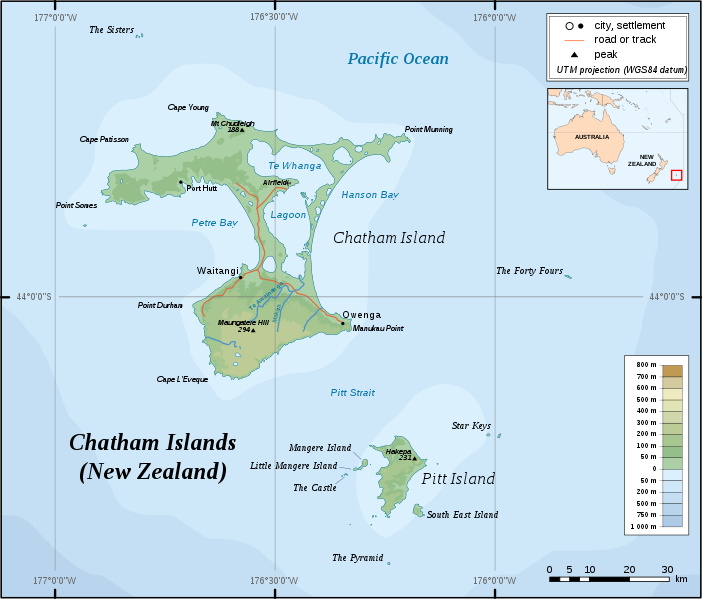
Given all that, how could I not be interested in the Moriori? They were a minority of a minority living on islands off the coast of an island. Their homeland was the Chatham Islands, which lie in the Pacific about 800 kilometers east of New Zealand’s South Island. The Chathams were uninhabited until about 1500 A.D., when they were settled by tribes of New Zealand’s indigenous Māori. As the Māori settlers adapted to the colder climate and harsher living of their new home, they developed a distinct identity and language, those of the Moriori, and adopted what would prove a very dangerous new code of ethics. Sometime in the first century after their arrival, their chief Nunuku-whenau “outlawed bloodshed” and the Moriori abandoned three great traditions of their Māori ancestors: warfare, slavery, and cannibalism.

The Chatham Islands, homeland of the pacifist Moriori (image from Wikipedia)

In a word, the Moriori became pacifists. And there were an estimated 2000 of them when Whites first discovered their islands in 1791. If leftist lies about Whites were correct, it would have been a fatal encounter for the pacifist Moriori. Cruel Whites would have enslaved this gentle brown-skinned race, slaughtering the men, raping the women, and erasing a unique culture on the very site of its birth. But leftist lies about Whites aren’t correct and that didn’t happen. The White newcomers had no hostile intentions and although they did some harm to the Moriori by introducing European diseases like influenza and by competing with them for natural resources, the Moriori still numbered about 1600 by the 1830s.

The death of the Moriori

No, the pacifism of the Moriori was exploited by a group from much closer home: their own Māori kinsfolk. In 1835 a hijacked European ship brought 900 members of the Ngāti Mutunga and Ngāti Tama iwi, or tribes, to the Chatham Islands from mainland New Zealand. They were in effect refugees from the so-called Musket Wars, in which new European weapons allowed the martial traditions of the Māori to burst forth in an orgy of bloodshed and cannibal feasting:

In December, 1831, a taua [war-party] of nearly 4000 Waikatos made a descent on Waitara, inhabited by Ngatiawa. Several small parties of these latter fell into the hands of the enemy, and were killed and eaten; while the bulk took refuge in the strong pa, Pukerangiora. There they held out for twelve days, and then, overcome by famine, the wretched garrison tried to break out and escape. Unfortunately this was attempted in the day time. The Waikatos perceiving this, pursued and captured numbers of half-famished wretches. Mothers threw their children over the precipice which surmounts here the Waitara River, and leaped after them to avoid a more dreadful fate at the hands of their sanguinary foes. The captives were driven into whares [wooden huts], and guarded by sentries armed with sharp tomahawks. On that day the Waikatos glutted themselves with the flesh of the slain, and on the following morning nearly 200 prisoners were brought out. Those who were well tattooed were beheaded on a block for the sake of their heads; some of the remainder were slain by a blow or cut on the skull; on others every refinement of cruelty was practised, particularly the thrusting of a red-hot ramrod up the bowels. Children and youths were cut open, eviscerated, spitted, and roasted over fires made from the defences of the dismantled pa. In the afternoon a similar massacre took place, and so greedily did some of these monsters gorge, that they died from the effects of their gluttony. The feast was graced with the tattooed heads of the slain, which were stuck on short poles and placed vis-a-vis to their captors, who would at times pause in their feasting to address them with the most insulting expressions. (From a 19th-century European text on Maori cannibalism)

The same orgy of bloodshed took place on the Chatham Islands after the hijacked ship arrived. The Moriori greeted the Māori with goodwill and friendship; the Māori greeted the Moriori by killing a 12-year-old girl and hanging her butchered flesh on posts. They then embarked on what is today called the Moriori Genocide, which “included staking out women and children on the beach and leaving them to die in great pain over several days.” The Moriori outnumbered the invaders and might have fought them off, but it was decided in a council that Nunuku-whenau’s prohibition on bloodshed could not be overturned.

The same council provoked the full genocide, because the Māori invaders naturally enough assumed, from their own bloodthirsty culture, that it was a council of war and that the Moriori would now begin resisting the invasion. After the slaughter was over, the enslavement and colonialism followed. The Māoris systematically crushed Moriori culture and nationhood. As even leftist Wikipedia admits: “the Māori invaders forbade the speaking of the Moriori language. They forced Moriori to desecrate their sacred sites by urinating and defecating on them. Moriori were forbidden to marry Moriori or Māori or to have children.” By the 1860s, there were only about 100 Moriori left alive. Today there are effectively none: Tommy Solomon, the last known full-blooded member of the tribe, died in 1933. Pacifism in the face of Māori aggression resulted in extinction. And that is the sad story of the Moriori. It’s also a little-known story, because it doesn’t conform to leftist lies about the uniquely evil and destructive nature of Whites and Western civilization.

Māoris fail: Whites to blame

Contact with Whites was harmful but not fatal for the pacifist Moriori. What proved fatal was contact with their own kinsfolk, the Māori. If those Māori tribes had never gone to the Chatham Islands, the Moriori people and language would still exist today. The harm done to them by Whites was unintentional and Whites did not exploit the pacifism of the Moriori, let alone slaughter and enslave them. Nor did Whites follow Māori codes of war on the New Zealand mainland. When Whites arrived there, the Māoris were living in the Stone Age and had never seen weapons like the musket. It was the Māoris themselves who eagerly adopted White technology to attack and oppress Māoris — or rather, to attack and oppress other tribes, because there was no unified Māori identity before the arrival of Whites. Yes, there was a shared language and culture, but you can say the same of the mutually hostile Blood and Crip Black gangs in America. Māoris are in effect the Blacks of the South Pacific: primitive, violent, and woefully unequipped to succeed in an advanced industrial civilization.

For example, although Māoris are 16% of New Zealand’s population, they are 53% of those in jail there. And their crimes are disproportionately violent and sexual in nature. New Zealand has a Māori equivalent of the remarkable Black Jamaican Delroy Easton Grant, who committed dozens of rapes against elderly White women in the British capital of London. The Māori Joseph Thompson committed dozens of rapes against White women and girls in the New Zealand capital of Auckland. But the mainstream media don’t mention his race or discuss the possibility that he was practising the rape-culture of the American Black Eldridge Cleaver (1935–1998), who boasted like this in 1968:

Rape was an insurrectionary act. It delighted me that I was defying and trampling upon the white man’s law, upon his system of values, and that I was defiling his women — and this point, I believe was the most satisfying to me because I was very resentful over the historical fact of how the white man has used the black woman. I felt I was getting revenge. From the site of the act of rape, consternation spreads outwardly in concentric circles. I wanted to send waves of of consternation throughout the white race.

But the mainstream media in New Zealand do, of course, endlessly discuss the over-representation of Māoris in jail and the failure of Māoris in education and employment: “once you disaggregate the PISA scores, Pakeha [White] students are second in the world and Māori are 34th.” The media blame these Māori pathologies on White racism. After all, what else could be to blame? Nothing else, according to leftism. If there is only one human race, all groups are equally capable of high achievement and there’s no reason a Māori shouldn’t one day follow in the footsteps of the great White New Zealander Ernest Rutherford (1871–1937), who won a Nobel Prize for Chemistry in 1908. In fact, contra the lies and fantasies of leftism, there’s a big obstacle to anyone with substantial Māori ancestry winning a Nobel Prize for science. Pure-blooded Māoris have low average IQ and an evolutionary history that has selected for physical prowess, not for intellectual endeavor.

Conquering the Pacific

The Māoris reached New Zealand after about 1250 A.D. as one of the last acts of a truly remarkable diaspora, which saw the prehistoric non-Chinese inhabitants of Taiwan spread their genetics and languages to islands separated by vast stretches of featureless ocean, from Madagascar in the west to Easter Island in the east. The greatest Taiwanese-descended sailors of all were the Polynesians, who used their hard-won knowledge of night skies, ocean currents, and other natural phenomena to conquer the Pacific. The Māoris are Polynesians, like the Tongans and Samoans who also swell New Zealand’s prison population while remaining stubbornly absent from cognitively demanding fields like science and mathematics.

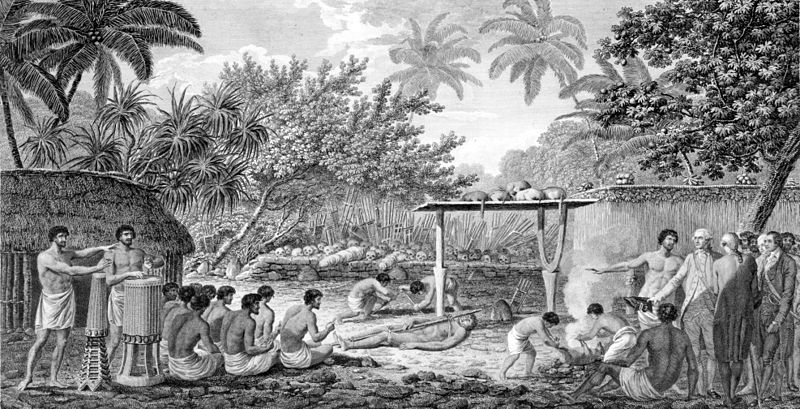
James Cook witnesses human sacrifice in Tahiti, c. 1773 (image from Wikipedia)

But who would expect Polynesians to succeed at science and flourish in an advanced industrial civilization? They were all still in the Stone Age when White Europeans began their even more remarkable diaspora, navigating all of the world’s oceans and literally putting Polynesia on the map. The Dutchman Abel Tasman (1603–59) discovered New Zealand in 1642, naming the islands after the Dutch province of Zeeland. Then came the great Briton James Cook (1728-79), who was once celebrated as one of the greatest explorers and self-made men in history. He rose from humble origins in north Yorkshire to become an expert navigator and favorite in the Royal Navy. By the time of his murder in Hawaii at the age of 50, he had made three astonishing voyages in the Pacific, gathering invaluable scientific and ethnographic data and creating maps that were still being used in the twentieth century.

Ruling the ruins

But it’s precisely because Cook achieved great things that he now is a prime target in the leftist war on the West. As Nietzsche sardonically explained, envy and resentment are at the heart of leftism. So is the drive to create guilt and self-doubt in those who are capable of high achievement and noble deeds. Leftists can’t add to the greatness of Western civilization, but they can do what is, in their minds, the next best thing: rule the ruins. In Pacific nations, Cook is now denounced as an instigator and agent of White colonialism, which cruelly oppressed and exploited the Māoris and other Indigenous peoples. As the Guardian put it in 2019: “Cook’s arrival was a disaster for Māori.” But nowhere near as big a disaster as the arrival of the Māori was for the Moriori. The Māori invasion of the Chatham Islands refutes leftist lies about White villainy and non-White virtue.

Victims of Maori ecocide: four species of moa compared with a human being (image from Wikipedia)

The Māori invasion would also be a highly teachable moment if leftists were sincere about their dogma of “Only one race — the human race.” Leftists claim that humans are all the same under the skin, which means that all groups can ascend the same heights of achievement — and plumb the same depths of evil. Māoris and other Polynesians were practising slavery, cannibalism, and human sacrifice long before any contact with Whites. Māoris were also energetic practitioners of the horrible modern sin of ecocide. When they arrived in New Zealand, they found a flourishing population of giant flightless birds which they called moa. Now those birds are gone: the Māoris slaughtered them even more effectively than they would later slaughter the Moriori. I greatly regret the disappearance of both the moas and the Moriori, but I don’t blame the Māoris for what they did. They were true to their own standards and pursued their own interests in a hostile world. Nevertheless, it is solid history that all the so-called sins of the West, from slavery to genocide to colonialism to ecocide, existed in microcosm among the Māori. If leftists were sincere about the oneness of humanity, they would stress that the genuinely great achievements of the Māori — the dangerous and daring discovery and settlement of a new landmass — are accompanied by some genuinely horrible misdeeds.

Whites are an island too

But leftists aren’t sincere about their pious dogmas. If they taught that Māoris and other non-Whites can also be villains, they would frustrate the real aim of their ideology: to denigrate Whites, overthrow Western civilization, and rule the ruins. That’s why leftist propaganda portrays pre-colonial New Zealand as what you might call a land of slave-keeping cannibal saints. Māoris are non-Whites, which renders them innately virtuous in leftist eyes and superior to innately villainous Whites. That leftist fantasy of innate White villainy and innate non-White virtue contradicts the leftist dogma of absolute human equality, but so what? Leftists are pursuing power, not principle, when they elevate melanin-enriched Māoris over stale pale Pākehas (as Whites are called in New Zealand). But there’s an even deeper level to leftist duplicity, because their supposedly pro-minority policies do great harm to the Māoris whom they claim to be so concerned about. Like all Western nations, New Zealand is ruled by traitors who have opened the borders to mass immigration against the wishes of the White majority.

This means that New Zealand is filling with groups like Asians, Blacks, and Muslims, who are not susceptible to guilt about the supposed colonial sins committed against the Māoris. Open borders are bad for Māoris in New Zealand just as they’re bad for Blacks in America. But leftists don’t care. What matters to them is that open borders are bad for Whites and Western civilization. The sad story of the Moriori is also a prophecy of what will happen to Whites if they remain passive in the face of non-White invasion. I said at the beginning of this article that part of my interest in minorities like Jews and Gypsies came from the way that they are metaphorical islands, minorities in a sea of goyim or gorjas (the Gypsy word for non-Gypsies). Whites are now an island in the same sense, a minority in a sea of non-Whites. Whites are also an island of unique achievement and unique potential. Leftists want to see the island of Whites invaded, conquered, and destroyed.

Moriori as memento mori

But that won’t happen. The iron law of leftism will apply to the ideology itself. And what is the iron law of leftism? Simple: the law states that leftists always most harm what they claim to care about most. Leftists in America claim to care deeply about Blacks and their welfare. Sure enough, as Steve Sailer has tirelessly and irrefutably demonstrated, leftist policies have been responsible for a horrible rise in the number of Blacks murdered and maimed by other Blacks. And also in Blacks killed by dangerous Black driving.

That’s the iron law of leftism at work. It’s also at work in the way the self-proclaimed Labour party in Britain has overseen the impoverishment and ethnic cleansing of the White working class, including the mass rape of White working-class girls in staunch Labour constituencies like Rotherham. But the same law will destroy leftism itself in the end. In the meantime, the Moriori are a gruesome memento mori of what happens to those who are passive in the face of invasion.

Review of Black Britain  

Black Britain
Chris Mullard
London: George Allen and Unwin, 1973

Black Britain, published in 1973, is the memoir of a Black man born in Britain in 1944, when Black people were a rarity here. It contains much evidence that as a boy Chris Mullard was encouraged by all around him, but he could not accept that they did not despise him. Out of his racial self-hatred, projected onto others, he forged an identity and career as an anti-racist. He has a violent disposition. All the time he was writing the book, he says, he felt “a disturbing desire to break, smash and riot, to bellow: ‘Whitey! One day you’ll have to pay!’”[1]

The book’s main interest lies in the light it throws on what happened after it was published, when many other anti-racists took Mullard as a model. All with the same aim of destroying White society, they built on his success in promoting the anti-racist programme, which eventually became public policy.

Mullard clearly had hang-ups about his race from an early age. He writes that as a child he was taught that the colour of his skin was ugly, but, he says, the message was conveyed in an extremely subtle way. No one mentioned it.[2] Instead, references were made to Britain’s role in civilising Black people in far-off lands. The only reason the British Empire appeared in the curriculum, Mullard thought, was to put him down.

He claims to have been paraded for all to see because he was Black but also to have been hidden away for this reason: “I found myself in school plays because I was black; I took a back row seat whenever dignitaries visited the school because I was not white”.[3]

He was told that if he did well at school he would get the same chances as anybody else and be respected. He took this to mean that, being Black, he was inadequate.[4] The worst thing he could do, his headmaster told him, was develop a chip on his shoulder about his race. Mullard writes: “I had truly learned the school’s lesson — my skin colour was ugly and to be despised”. We see that we are dealing with a fantasist when we read that Mullard was repeatedly told that “wicked black people … were responsible for all the troubles in the world”.[5]

As a young man Mullard was a social climber. “I courted the daughters of reactionary conservatives. I dined at distinguished places”. As he also puts it: “I associated with bigots”.[6] Just as freely as he calls people bigots, he talks about “oppression”, “exploitation” and “racism” without ever saying what for him makes something qualify for such descriptions. But if he deplores oppression, exploitation and racism, what does he desire? Freedom, justice and equality, of course!

He had a letter published in the Times. “Get out of our country, black rubbish!” someone wrote back. “Blacks are lazy, immoral, savage, drug-taking, stinking bastards.”[7] At last, Mullard had encountered someone who hated Black people. “If I could not find and accept myself I would always have to depend upon the mercy of racists like the author of the note”, he decided, and so began his journey of self-discovery.

Once, he went into a café and ordered some chips. The atmosphere seemed pleasant enough until he noticed a “group of neatly dressed men [who] wore large boots which began a few steel inches beyond their toes and ended abruptly buckled below their knees”.[8] One of them whispered something, then “Abuse electrified the room, punctuated with indelicate commas such as ‘nigger’, ‘ape’, ‘wog’ and ‘Black bastard’”. By the time Mullard had finished his chips, the men were ready to leave. “They pointed at me, laughed and then kicked me as hard as they could. Any objection I made was met with blows to my knees as they violently pushed their chairs under the table”. “Frustrated”, Mullard watched them go to the counter and get their bill.

Did this really happen? If the men were at their table when they pointed to Mullard, didn’t they have to walk over to his before commencing to kick him? How could their chairs, pushed in under one table, have dealt blows to Mullard’s knees as he sat at another? If anything like what he describes occurred, how could Mullard have found it merely frustrating? Shouldn’t he have been doubled up in pain? More likely, as the men left, one of them pushed Mullard’s shoulder to make him spill his tea. Offended that he wasn’t attacked, he made the story up. Although he has said that he had finished his chips, he writes that after the men left, he finished his chips.

But this was another crux: “From that day onwards I knew I could not go on as before”. He entered a period of prolonged thought, which led him to himself: a “new self which was cynical, bitter, full of hate for whites”.

At length, his “longing to hate and destroy” started to abate when he began to associate with other Blacks, which gave him a sense of security — “spiritual rather than intellectual” — unlike anything he had known. Now he could build his identity. But his destructive urge did not entirely disappear. He resolved not to be “turned into garbage like so many black people” but to “fight, hate or even kill”.[9]

He joined an international friendship group, but it showed friendship to Whites. An Indian praised the British, who had given India roads, introduced a system of government and improved the nation’s health before withdrawing. No, they hadn’t, Mullard thought; they had plundered villages, exploited the natives and forced them to accept Western values.[10]

In 1966 he set up his own group to “try and foster a realistic approach towards racial harmony”.[11] The media saw it as revolutionary, but he saw it as concerned with civil rights. It helped him to find himself, giving him a “reason for living”. It also showed him that it was his “duty to organize black rebellion against exploitation and oppression”. His cry was: “I am black, I am proud of it, I pledge my life to killing white racism!”[12]

In 1967, unemployed, he volunteered as a race advisor, having come highly recommended by the person who had put him forward for the role, namely himself: “I thought myself pre-eminently suited for my new advisory job”.[13] Statutory and voluntary bodies started sending people to him, but he saw a problem. He was “working within the system”.

Mullard believes that when West Indian immigration to Britain began, it was because the country had invited West Indians to come and join the workforce. He thinks that people were required who would “accept bad conditions, heavy dirty work, low wages, and long or unattractive hours”.[14] In fact, the immigrants were responding to advertisements put up in the West Indies by companies wanting passengers for their eastbound voyages.

Mullard insists that mass immigration to Britain was nothing new. He thinks the country’s history was one of successive waves of immigration. But although he says that immigrants were habitually abused, sometimes to the point of death, he opposes any restriction on immigration.[15] Let them come and meet their fate!

He feels that White people misunderstand Black people. They think of them as uncivilised and unintelligent when they are just the opposite. Nor are they in any way parasitic; it is just that White people don’t give them enough money.[16] Also, Whites should understand that the right people to determine race policy in a place like Britain are Blacks.[17]

Relativism was already current in 1973, for Mullard thinks that truth comes in different colours. Throughout the book, he says, he insists on “Black truth as opposed to white truth”.[18]

If there is one thing an anti-racist cannot stand it is the races receiving equal treatment. If a Black person joins a queue, nothing could be more unjust than expecting him to stay in it until he reaches the front; he must be placed at the front immediately. In Britain, many Black people, like many White people, found it hard to obtain accommodation. Getting a council house took years. “This was no good for a black with nowhere to live on arrival”, Mullard says,[19] appearing to think that a system was needed whereby as soon as a Black person set foot in the country, everyone else would understand that they would have to wait a little longer for a house.

But what if a Black person got a house that he didn’t entirely like? Mullard cites the case of a Black man who was given a house that was run down.[20] No doubt he was aware that most of Britain’s housing stock was run down, but come on! This man was Black!

It was the same with jobs. Black people could get them but they weren’t necessarily good jobs. They might have to drive buses, sweep factories or do other menial tasks.[21] Menial tasks, for Black people? A scandal!

There were also problems with the schools. Indian children did well, seeing school as a place in which to work, but Black children found it difficult to settle.[22] Moreover, many books were out of date, which made them feel inferior. They might have to sing songs mentioning little brown children, brothers and sisters dear, who hadn’t heard of the Lord in Heaven or been told that God was near.[23] How could they cope? Some sought “solace in aggressive activity” aimed at the “bigoted reluctance” of Whites to accept them as equals.

Mullard opposes the research put out by the “race relations industry”, which concentrated on the “immigrant problem”.[24] Was someone suggesting that immigrants were a problem? Moreover, all the industry preached was brotherly love and equal opportunities.[25] Mullard opposes racial integration, seeing it as liable to “produce more hostility”.[26] He regrets that universities have “jumped on to the bandwagon of promoting good race relations”.[27] Too much time was spent seeking facts, he feels, which he doubts can be presented in an objective fashion.[28] How could people see brotherly love and equal opportunities as desirable, Mullard seems to wonder. Why don’t they realise that the way forward is to incite racial conflict and subvert the dissemination of facts? Above all, why don’t they realise that Blacks must “play an active, if not a majority role in the formation of race policy”?[29]

He opposes the Community Relations Commission and with it the whole concept of community relations. At least, he did until someone made him a community relations officer, at which point he decided that community relations officers were an excellent idea. The only problem was that not everyone wanted to see him in the role. One commissioner wrote that a militant like Mullard was “hardly the kind of person to make a good community relations officer”. The Dean of Manchester thought him immature and lacking in moral sincerity.[30] Filled with “indescribable rage”, Mullard realised that he was involved in “a black versus white battle”.

Mullard finds crime a natural reaction for Blacks to the White denial to them of decent jobs and equal opportunities, although he admits that it has an allure for them. “It is a way of getting our own back on society [and] forging an identity for ourselves”.[31]

But if Blacks are prone to crime, other negative descriptions of them are calumnies: “we are not lazy; we do not live off the dole … we are not the cause of this country’s social and political problems … we are not maladjusted; we are not educationally subnormal”.[32] Rather: “Our habits, customs and cultures are just as civilised as anybody else’s. … We are just as intelligent as others. We are industrious. We possess a sense of morality”. Then again, maybe not, for it isn’t quite clear whether Mullard is talking about what Black people are like here or about their self-conception. This might be a “Black truth”.

He quotes a race official describing exponents of Black Power as “working towards destroying our society. … They’re the cause of bad relations between the coloured community and the host community”; they must be stopped before they ruin race relations beyond repair.[33] But according to Mullard, only “bigoted whites” criticise Black Power. When they refer to Black people committing murder or burning or smashing White property, they fail to see that Black people are fighting for their lives. Blacks “feel that white society is knifing us in the back”.[34]

As Black people resisted race relations policy, causing communication increasingly to break down, Mullard sees passive resistance possibly giving way to more violent forms of behaviour.[35] He expects riots within ten years.

In the meantime, he advocates a massive programme of social change. Every industry “should be given a minimum quota of Black employees”.[36] He denies that this will involve preferential treatment for Blacks, for if there is discrimination against them, then they are underprivileged, and “in order to bring this underprivileged group to the same level as whites it becomes necessary to discriminate positively.” In other words, yes, his programme will involve preferential treatment for Blacks, but this is just what society needs.

He wants such policies to be promoted by the media, the churches and the trades unions so that a “new climate of opinion towards race” is created.[37] It must be accepted that to treat all the same without regard to race is no longer good but bad. To achieve this “complete reversal in attitude and policy”, existing expenditure must be increased by at least twenty times, “with provisions for further increases to possibly five times even this figure”. Thus no limit must be placed on the potential cost to the taxpayer of funding his own demise. Should the White man’s “pathological desire to hold on to the reins of power” persist, it must be contested.[38]

This would all occur under the direction of Black people, with Whites in an assisting role, doing “any job however menial … without expecting gratitude”.[39] This “fight against all forms of racism” would “foster a black British identity” and “destroy once and for all the dubious concept of community relations by using conflict as a tool”.[40]

The media must cease to give publicity to Black violence under the “pretence of only informing their audience”.[41] They must attack society’s “racist framework”, not support it. Films must cast Black actors in all kinds of roles, not just as bus-drivers, entertainers or sportsmen. All institutions must improve race relations, which “can only be done, ultimately, by giving support to the demands of black Britain”.

Mullard sees a bloody battle coming. It will start with Blacks using pressure, demonstrations and scorching resentment, and then, when peaceful means fail, it will “explode into street fighting, urban guerrilla warfare, looting, burning and rioting”.[42] To those who think this can never happen, Mullard says: “Watch out, whitey, nigger goin’ to get you!”[43]

In Chris Mullard we therefore have an aggressive, race-obsessed megalomaniac full of paranoid delusions. Everything he imagines to be true of Whites with regard to Blacks, he wishes to make true of Blacks with regard to Whites.

But for an insight into the character of Britain, consider this. In the 1970s Mullard was put in charge of a unit at the London Institute of Education, England’s premier teacher-training establishment, and in 2004 he was made a Companion of the British Empire for his work in race relations.[44]

It is therefore unsurprising that his programme, whether espoused by him or those who came after him, was implemented almost to the letter. It is now decades since Britain last tolerated fair competition. Rather, in the name of “diversity”, “inclusion” and “equity”, it is decided before a competition starts what proportion of the rewards will go to members of which races regardless of their performance.

In 1973 Mullard’s idea that Whites are bad and Blacks are good seemed like something out of a sick cartoon. Now, question it and you will be shunned.

He wanted the media to keep quiet about Black crime. They had already started doing this by the time his book came out. When years later the Home Office stated that the media must do nothing to encourage feelings of racial antipathy (meaning antipathy to non-Whites), the decree was unnecessary.[45] As for attacking society’s “racist framework”, what else do the media do, and how long is it since a film has failed to show an astrophysicist or saviour of society as Black?

Reflecting Mullard’s view that forming racial policy should be kept out of the hands of Whites, Britain’s Home Secretaries are invariably non-White these days. Two recent commissions on matters concerning race were both chaired by Black men.[46] When the BBC reported on one of them, it invited only non-Whites to comment. We had already seen a special committee on race questions chaired by another Black man.[47] Today, the idea that a White person might have something to say about race or racial policy would be considered ludicrous.

As for Mullard’s prediction of riots within ten years, it came true in Bristol in 1980 and Brixton in 1981.

Mullard wanted no restrictions on immigration. Every year now, the numbers of immigrants to Britain set new records, apparently as a matter of government policy.

All told, we are living in pretty much the country Mullard dreamed of.

[1] Black Britain, p. 7

[2] Ibid., p. 14.

[3] Ibid.., p. 14.

[4] Ibid.., p. 15.

[5] Ibid.., p. 14.

[6] Ibid.., p. 16.

[7] Ibid.., p. 17.

[8] Ibid.., p. 20.

[9] Ibid.., p. 24.

[10] Ibid.., p. 29.

[11] Ibid.., p. 29-30.

[12] Ibid.., p. 34.

[13] Ibid.., p. 31.

[14] Ibid.., p. 38.

[15] Ibid.., p. 40. Mullard refers to Irish immigrants as slaves: “Many of Britain’s canals and roads were built by the navvy gangs of Irish slaves”.

[16] Black people suffer from “inadequate provision” (Ibid.., p. 159).

[17] “Throughout I have taken the view that race policies should be dictated by Blacks, not by Whites”, p. 7. See also p. 56.

[18] Ibid.., p. 7.

[19] Ibid.., p. 41.

[20] Ibid.., p. 42.

[21] Ibid.., p. 43.

[22] Ibid.., p. 45.

[23] Ibid.., p. 44.

[24] Ibid.., p. 66.

[25] Ibid.., p. 65.

[26] Ibid.., p. 52.

[27] Ibid.., p. 67.

[28] Ibid.., p. 69.

[29] Ibid.., p. 72.

[30] Ibid.., p. 107.

[31] Ibid.., p. 151.

[32] Ibid.., p. 152.

[33] Ibid.., pp. 153-54.

[34] Ibid.., p. 156.

[35] Ibid.., p. 156.

[36] Ibid.., p. 163.

[37] Ibid.., pp. 164-67.

[38] Ibid.., p. 155.

[39] Ibid.., p. 169.

[40] Ibid.., p. 168.

[41] Ibid.., pp. 171-73.

[42] Ibid.., p. 176.

[43] Ibid.., p. 176.

[44] ChronicleLive, June 12th 2015, “Race activist Chris Mullard talks of his time in North East”, https://www.chroniclelive.co.uk/news/north-east-news/race-activist-chris-mullard-talks-9443844.

[45] A statement from 1989, quoted in The Response to Racial Attacks and Harassment: Guidance for the Statutory Agencies, a report of the Home Office Inter-Departmental Racial Attacks Group, quoted in Rae Sibbitt, 1997, The Perpetrators of Racial Harassment and Racial Violence, Home Office Research Study 176, http://www.homeoffice.gov.uk/rds/pdfs/Hors176.pdf, p. 85.

[46] I mean David Lammy’s report on racial disparities in the criminal justice system (2020) and Tony Sewell’s Commission on Race and Ethnic Disparities (2021).

[47] This was Simon Woolley’s Race Disparity Audit Advisory Group (2018).

Whitewashing Ethnicity in the Ancient World: Erich S. Gruen’s Ethnicity in the Ancient World — Did It Matter?


Ethnicity in the Ancient World — Did It Matter?
Erich S. Gruen
Walter de Gruyter GmbH, 2020

Erich S. Gruen is a Vienna-born Jewish classics professor who taught at Berkeley for more than 40 years.  He is 88 years old.

As a demonstration of the persistence of the Jewish project — comparable to George Soros cranking away at 92 — his late-in-life recent work is a collection of essays aiming to deny the importance of ethnicity in the ancient world.  Without saying so, he seems to be attempting to answer the White advocacy interest in classics — and the race realist interest in how inherent racial characteristics drive human events.

Ethnicity in the Ancient World — Did it Matter? surveys Western history from early Greece through Rome.  Considerable attention is paid to Jews as portrayed in the Old Testament, ancient Jewish writers like Philo of Alexandria, and Christianity.

In the introduction, Gruen rejects inherent racial characteristics.

“The idea of an immutable character determining the nature of a people or an ethnic group finds few takers today,” he tells us.  Never mind, of course, that to be a “taker” of this view is to be exiled from modern academia, which might explain why there are “few.”

Gruen says his purpose is to demonstrate that “ancient societies generally shunned the sense of ethnicity as an undeviating marker of distinctiveness stemming from descent, and that they were therefore open to change, adaptation, intermingling, and incorporation.  In our contemporary age when ethnic identity has become increasingly fraught and divisive, those characteristics can offer a salutary corrective.”

In other words, the ancients were woke.

But to style them as such, Gruen sets the bar where he needs it set to validate this thesis:   an ancient must have openly and repeatedly declared a belief in inherited — i.e., group genetic — inferiority.  And must have made this a central principle.  For ethnicity to “matter,” apparently, the only sufficient proof would be the frequent deployment of a centuries-old and heretofore unknown racial slur.

Of course, the ancients weren’t like this.

But even with this sleight of hand, Gruen struggles to overcome what’s apparent even to someone new to study of the ancient world:  ethnicity did matter.

In a chapter titled “Were Barbarians Barbaric?,” Gruen discusses Aristotle’s assertion that “barbarians” (non-Greeks, so called because their languages sounded like “bar-bar-bar” to Hellenic ears) are synonymous with slaves, and are the proper object of Greek rule.  He also references Plato’s account of Socrates saying something similar:  Greek states should not enslave each other, but to enslave barbarians is the ancient prerogative of warfare.

None of this mattered, in Gruen’s view, because they didn’t declare barbarians to be inherently inferior — simply the enemy, or the outsider.

Yet the grand triumvirate of Greek philosophy demonstrate in these passages not only recognition of the importance of nationality, but race — and how the latter is more important than the former.  They make a distinction that your average American Republican can’t seem to wrap his head around:  a Black American is less a brother than a White European.

In one speech quoted in the book, Herodotus has an Athenian spokesman declare that Greekness “rests on common blood, common language, shared shrines and sacrifices, and similar ways of life — which they would not betray”.

Could there be a more powerful affirmation of racial-national solidarity?  Gruen says no.  First, he says, Herodotus made the speech up.  Perhaps, though Herodotus was a man of his time and must have had strong basis for the speech.  Second, he says, the speech is more about inspiring Greek vengeance on Persia than an assertion of racial pride.

Incredibly, Gruen says, “it can hardly carry the weight of a serious and sweeping expression of Hellenic identity.”

Read the quote again and see if you agree.

Herodotus, sometimes known as the “father of history,” is often described as the world’s first ethnographer.  Indeed, his writings are replete with his observations — sometimes first-hand, other times heard from others — about the races and ethnicities of the world.

And, as Guillaume Durocher notes:

Herodotus’ world certainly featured peaceful commerce, cultural exchange, and ethnic intermarriage among these peoples — the historian is quite broad-minded and free of chauvinism in this respect. But, as Herodotus makes clear, this was also a world of extreme ethnocentrism and brutal wars. as Herodotus makes clear, this was also a world of extreme ethnocentrism and brutal wars.

This view is expanded in Durocher’s The Ancient Ethnostate: Biopolitical Thought in Ancient Greece.

Gruen tells us, in a pattern that repeats itself throughout the book, “Herodotus mentions black men of smaller than normal stature in Libya, presumably pygmies, but only in passing and makes nothing of it.”  In fact, Herodotus’ ethnic discussions aren’t “only in passing” — they’re a mainstay of his work.

Elsewhere, Gruen employs the technique of setting up a quote that damns his thesis, only to blithely follow up by saying this particular ancient only said that once.  Therefore, we should discount it.

God, in Genesis, said “let there be light” only once, though that doesn’t mean it wasn’t important.

To thoroughly refute Gruen’s conclusion that “ethnicity didn’t matter” in the ancient world might take years of reading the texts.  Or, you could just read the first few lines of a given work.

Take Tacitus’ The Agricola and the Germania.  The Roman writer’s tract on the German tribes bordered by the Rhine and the Danube jumps right in with a detailed description of ethnicity:

“I think it probable that they are indigenous and that very little foreign blood has been introduced either by invasions or friendly dealings with neighboring peoples… For myself, I accept the view that the peoples of Germany have never contaminated themselves by intermarriage with foreigners but remain of pure blood, distinct and unlike any other nations.  One result of this is that their physical characteristics, in so far as one can generalize about a large population, are always the same:  fierce-looking blue eyes, reddish hair, and big frames — which, however, can exert their strength only by means of violent effort.  They are less able to endure toil or fatiguing tasks and cannot bear thirst or heat, though their climate has inured them to cold spells and the poverty of their soil to hunger.”

I ask:  does talk of “contamination” of the blood square with a view that “ethnicity didn’t matter”?

Gruen mentions The Agricola and the Germania, but doesn’t quote the passage above.  Yet in an entire essay on these Germans, it’s the first thing Tacitus writes.  That indicates to me that ethnicity was important to him.

It should go without saying that for ancient Jews, ethnicity was crucial, just as it is for them today.  Gruen, perhaps to his credit, lays out some of the more pungent examples of this, but manages to be just as dismissive of their interest as he is of Greeks and Romans.

Gruen recounts the episode in the Book of Numbers where Phinehas, a grandson of Aaron, Moses’ brother, is so outraged by a Jewish man and Midianite woman having sex that he runs his spear through the two of them mid-act, like a miscegenation shish-kebob.  To top it off, God blesses the act.

It would be hard to imagine a more “racist” act, but Gruen goes on to insist that the only reason for disapproving race-mixing is that non-Jewish women will tempt Jewish men into worshipping foreign idols.  It was about religious purity, not racial purity.

Yet one can question which came first — was racial purity needed to keep religious purity, or was religious purity leading racial purity?  Gruen also seems to ignore the fact that many mixed marriages by Jewish Old Testament males were more a sign of conquering another people and absorbing them inward than a free-spirited exogamy.

The Book of Tobit, likely written during the Second Temple period, is a Jewish work sometimes deemed part of the Apocrypha (i.e., for most denominations, not included in the Bible).  Its central theme is the need for Jews to marry other Jews.

Gruen at least acknowledges this, but goes so far as to use examples of over-emphasis on racial kinship to prove his point.  The repeated use of the terms “brother” and “sister” for Jews leads him to say, “The Book of Tobit reads less like advocacy for the idea of Jewish identity as a descent group than like a parody of that idea.”

Of course, it was no such thing, and Gruen’s unscholarly observation seems almost desperate.

Gruen’s discussion of how prominent Romans viewed Jews trots out some zingers:  To Cicero, they were superstitious barbarians; for Seneca, “a most pernicious race.”  Tacitus called them “a race of men hated by the gods, with base and wicked practices, sordid and ridiculous rites, xenophobic, despised, and the vilest of nations.”

But these disparagements, Gruen assures us, were mere rhetorical heat.

There are several impediments to Gruen’s theory that ethnicity didn’t matter in the ancient world.

The first is that the peoples of the ancient Mediterranean were likely closer to each other genetically than, say, American Whites and sub-Saharan Black Africans.

The scholarship on the actual race of ancient Greeks and Romans is mostly unknown to me, but the sculptures and busts at the Metropolitan Museum of Art in New York, combined with Homer’s references to Athena’s gray eyes, Achilles’ blond hair and Menelaus’ red hair, leave me satisfied that prominent ancients looked pretty close to modern Whites.

Would the Greeks at the Battle of Thermopylae have looked slightly whiter than their Persian enemies?  I don’t know.  It is difficult to imagine that Athenians and Spartans looked markedly different as they squared off during the Peloponnesian War.  If ancients were discounting ethnicity, they had more reason to do so than a White Englishman being told that a black African from Zimbabwe is his equal.

In addition to closer genetics, the scientific insights about genetics — as well as intelligence and behavior — did not arise until some two thousand years later.  So ancients would not have had the opportunity to ponder, or dwell upon, how these differences might affect social policy.

The second impediment to Gruen’s theory is that the politics were different.  Mass immigration by one racial group to the welfare-state apparatus of another wasn’t something happening in the ancient world.  Movements of people happened by conquest or exploration, and the driver was likely simple power:  the Romans were either able to conquer Gaul, or not.

A conquering race had little reason to spend time thinking about whether it was “superior,” because it just proved it.

Relatedly, the concept of “equality” was a political one that only arose centuries on.  It was only when the insistence that all human beings are “equal” was presented in the West that anyone needed to refute it.  Natural differences in strength, beauty or intelligence were simply accepted.

The third impediment is that the evidence that ethnicity mattered still overwhelms the evidence that it didn’t.  Much of Gruen’s book, in fact, is simply the laying out of just such examples — which he proceeds to downplay.

Gruen clearly has the modern West marked as his enemy.  His comparison point is presumably the White nation-states that, through colonization and slavery on the one hand, and mass immigration and affirmative action on the other, have a racial dynamic unlike any other in the world.

In other words, we are (or were) head-caliper obsessed Nazis, while the ancients were mellow.

Gruen says that “the ancients were not absorbed in examining, analyzing, or agonizing over the concept.”  I personally may not have, either, but I was born into a society in which I am told that I cannot have a job because I am White.  Therefore, I will spend some time “agonizing” over the concept.

So, is the book of any value to White advocates?  The discussions do discuss actual writings of ancients, so for what’s that’s worth, yes.  His bibliography could serve as a model.

I suppose that Gruen has spent his life poring over these texts from the classical world.  I am humbled to realize that I have not, but am making up for lost ground later in life by setting up my own classical library at home.  I think all White advocates should do the same, and see to it that their children learn classical history, too.


Christopher Donovan has been a White advocate for at least 20 years, and believes Whites have no choice but to be positive about our prospects even in an obviously declining United States and Europe.  He is a practicing lawyer.