Featured Articles

Review: Jewish Tradition and the Challenge of Darwinism, Part 2

Go to Part 1.

Zionist Eugenics

Notions of race and racial competition pervaded Zionist thinking in the early to mid-twentieth century, a time when “volkisch conceptions were firmly established among Zionist intellectuals.”[i] Raphael Falk notes how “Zionist writers appealed to biological conceptions of race and nation and displayed an awareness of their responsibility not only to serve this biologically circumscribed ethnic group but also to propagate and improve it.”[ii] Many Zionists viewed evolutionary theory “as a conceptual framework for understanding the detrimental effects of Diaspora life and argued for the positive benefits that would accrue to Jews in Palestine.” Weikart observes that many “Jewish physicians, feminists and sexual reformers embraced eugenics,” and that leading Jewish anthropologists “embraced scientific racism” in the early twentieth century.”[iii] 

Several leading Jewish physicians and educators became flag bearers of a campaign to promote the eugenic aspects of Zionism. In 1922, the Zionist physician Mordechai Bruchov emphasized that: “In the struggle of nations, in the clandestine ‘cultural’ struggle of one nation with another, the one wins who provides for the improvement of the race, to the benefit of the biological value of the progeny.”[iv] Parental guidance articles and books published in Palestine from the 1920s emphasized “the purity of the race and the quality of children required to improve the nation,” which “subsequently shifted to the need to increase the birthrate in order to catch up with the high birthrate of the neighboring nations.”[v] Jewish biologist Fritz S. Bodenheimer (1897–1959), the son of one of Theodor Herzl’s closest allies, likewise stressed “the external threat posed by the faster reproductive rate of the Arab population.”[vi] Child care in Israel has long been conceived “as part of a national project” where “every mother who raised her child in Israel, in the past and at present, is conscious that this is not only her personal task, but rather a national task the climax of which – at the age of eighteen – is the recruitment of the Zionist baby to the nation’s army.”[vii] Read more

Review: Jewish Tradition and the Challenge of Darwinism, Part 1


Jewish engagement with evolutionary theory is an important dimension of modern Jewish history and thought. While Jewish leaders and intellectuals have used the science of evolution to bolster notions of Jewish identity, they have also confronted and (often fiercely resisted) the use of evolutionary theory to conceptualize conflict between Jews and non-Jews. Published in 2006, Geoffrey Cantor’s Jewish Tradition and the Challenge of Darwinism,  by Geoffrey Cantor and Marc Swetlitz, explores the ways Jews – singly and communally – have engaged evolutionary thought in a variety of historical contexts, and the role it has played in modern Jewish history. A central focus of the book is exploring how evolutionary ideas have been deployed, by Jews and others, in the domains of race, anti-Semitism, and Zionism, and the recurrent use over the last century and a half of evolutionary ideas to characterize Jews.

Darwin’s Origin of Species (1859) postulated natural selection as the driving force for biological evolution: that individuals in any species show a diversity of inherited characteristics and compete for the scarce resources needed to survive and reproduce. If certain characteristics benefit them in that competition, these are more likely to be passed on to the next generation and, consequently, the species will evolve over time. By the time Darwin’s book was published the transformation of species was a familiar theme, but Darwin was the first to publicly explicate the precise mechanism. While socialists and communists soon deployed Darwinian evolution in their antireligious polemics, it also attracted conservative and nationalistic thinkers. Darwin’s theory could, for example, be seen to justify unfettered capitalism. Indeed, the centrality of competition in the process of natural selection raised a host of moral issues for a Christian West. The advent of Darwinism also spawned a new way of conceptualizing race and racial competition. Read more

Jews in Edmund Burke’s Political Philosophy

The story of Jews in England begins with the Norman Conquest of 1066. Jews from Normandy, following in the footsteps of William the Conqueror, traveled to England to make their fortunes in a land that had always been, as far as they were concerned, terra borealis incognita. England was an ideal location for Jews; it was among the few places in Western Europe unaffected by the Crusading frenzy sweeping the continent, a state of affairs that lasted until the middle of the twelfth century  and often involved violence against Jews. Jewish immigration began as a trickle, but their numbers perceptibly increased with the establishment of permanent communities in metropolitan areas.  In medieval England, Jews influenced the English economy was far out of proportion to their small numbers. A growing Jewish population combined with their main occupation of money lending inevitably led to ethnic tensions with the Anglo-Saxon majority (see Andrew Joyce’s article on Jews in medieval England). The Jews practiced strange rites in an unknown tongue and deliberately segregated themselves from the general populace. This created an atmosphere of hostility, leading to occasional eruptions of sporadic anti-Jewish violence.

The Plantagenets, wishing to safeguard an important source of revenue, protected the Jews. The Jew was made a privileged foreigner, who answered to no one else but the king. Unlike the Anglo-Saxon peasant, the Jew had complete freedom of movement. As the king’s property, the royal sheriffs were obligated to ensure the Jew’s safety at all times and enforce collection of unpaid debts from gentile borrowers. Compared to the common people, Jews possessed great wealth and made enormous contributions to the Royal Exchequer. This mercenary relationship between English Crown and Jewry was not to last forever.

The Anglo-Saxon peasant saw the Jew as a predatory, money-grubbing foreigner. The Jew’s narrow- minded focus on the acquisition of wealth and power, regardless of cost, were always at the expense of the wider community. The church saw the Jews as a class of infidel moneylenders who actively resisted conversion to the Christian religion. The lesser barons also came to resent the Jews; they had to surrender land as collateral to Jewish financiers, otherwise they would not be able to cover their expenses while accompanying the king on his foreign military adventures. Many could not pay their loans back in full and became indebted to the Jews. Together, all three estates pressured Edward I into taking action. In 1275, the king enforced the ecclesiastical prohibition against usury; as a result, the Jews were banned from engaging in the practice on English soil. In 1286, Pope Honorius IV issued a bull to the Archbishop of Canterbury and his suffragans warning of the dangers of Jewish proselytism. In 1290, Edward, eager for a chance to display his Christian piety, ordered the expulsion of the Jews from England. They were not to return again until 1656, when they were invited back by Oliver Cromwell.

This medieval episode in English history is crucial to understanding Edmund Burke’s scathing denunciation of Richard Price’s 1789 speech on the Glorious Revolution of 1688. The Jew as the quintessential moneylender, without national allegiance of any kind, was a popular stereotype that had arisen during the Middle Ages. This conception of Jewish character served as the historical template for Burke’s negative characterization of Jews as greed personified. Like most ethno-racial and sex stereotypes, it was highly accurate. According to Gavin I. Langmuir, who cannot be accused of being biased against Jews:

“Jews had not been known as moneylenders in antiquity, but starting in the twelfth century, they became stereotyped as usurers. Like the Christ-killer stereotype, the usurer stereotype, although obviously an exaggeration, had a solid basis in reality. While medieval Jews were not all moneylenders and also engaged in other kinds of conduct, from the twelfth century onward they were in fact disproportionately concentrated in lending money at interest.”1

Of significance for Burke was Price’s delivery of his pro-Jacobin speech in a Protestant Dissenter’s meeting-house, colloquially known as the Old Jewry, in a part of London historically known by the same name. This was the main road in London’s medieval ghetto, which had been home to the Jews since the time of William the Conqueror, up until their expulsion in 1290. The Great Synagogue of London was located in the Old Jewry, an indication of the ghetto’s importance in medieval Jewish ritual and commercial life. Read more

Dugin Viewed from the Right


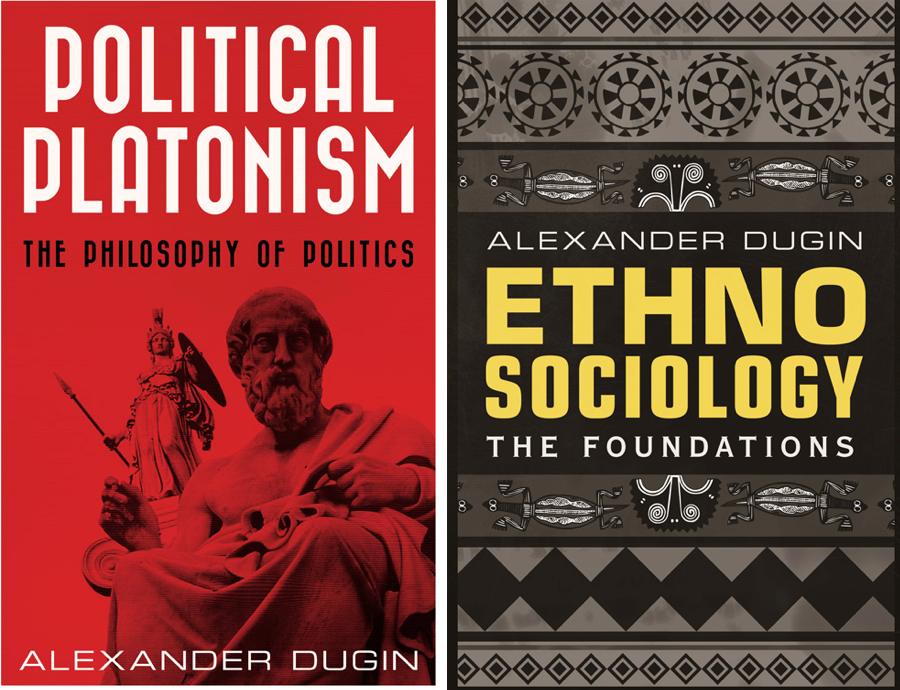
Political Platonism: The Philosophy of Politics
Alexander Dugin
Arktos, 2019.

Ethnosociology: The Foundations
Alexander Dugin
Arktos, 2019.

Until a few months ago, I knew very little about Alexander Dugin despite coming across references to him with increasing frequency. This ignorance was partly the result of the nature of those very references, which have been ambiguous to say the least. “National Bolshevik,” “NazBol,” and “Eurasianist,” were just three of the terms I’d heard in relation to Dugin, each rather arcane yet retaining the definite air of an epithet. I’ll be quite honest that I didn’t really know what a “Eurasianist” was apart from the fact I was somehow pretty sure I didn’t want to be one. In May, however, prompted by the publication by Arktos of two of his latest books, I decided to investigate Dugin and come to my own conclusions. The following essay is not intended as a comprehensive analysis of Dugin and the entirety of his thought (impossible given the duration of my study to date), but rather as a review of these two books and an honest “View from the Right” on the thought contained therein.

I don’t consider myself an overtly political thinker. I have an interest in politics, I have studied political history, and I understand the vast majority of the concepts and ideas involved. But I have very rarely occupied myself with the philosophy of politics, or with conceptualisations of what might constitute the “ideal” political situation. If anything, I have long considered myself a “political anti-Semite” in the same trajectory as the organised anti-Semitic leagues of late nineteenth-century Europe. In the belief of these organizations, politics remains fundamentally distorted and inorganic as long as certain social, cultural, and economic conditions, proceeding from wealthy Jewish lobbies and associated cultural activities, are permitted to prevail. Political anti-Semitism is thus concerned less with the philosophy and mechanics of politics, than with social criticism, the promotion of national-ethnic unity, and the achievement of a small number of very broad political objectives based on ethnocentric principles. Read more

“Once Upon a Time in Hollywood”: Tarantino on Masculinity

Once Upon a Time in Hollywood is not an homage to the Hollywood of the ‘60s but rather a paean to masculinity using Hollywood as a foil. This fairy tale was created not to praise Hollywood but to censure it.

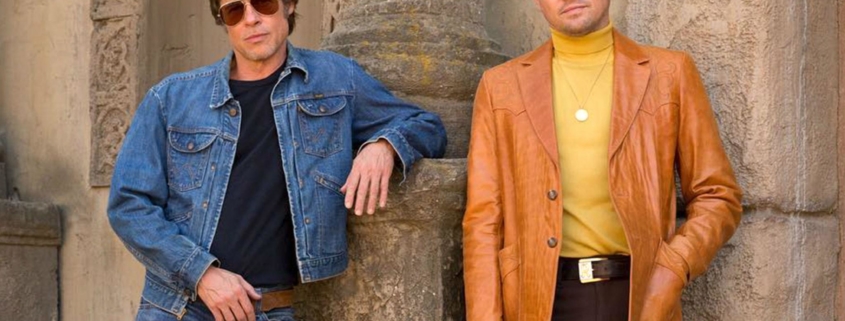
What drives the movie and constitutes its backbone is the contrast and interplay between two conceptions of what it is to be manly, the one embodied by the mostly Western genre actor Rick (Leonardo DiCaprio) and the other by his stunt man Cliff (Brad Pitt). Rick has been playacting killers and tough guys most of his career. As such he is gritty and fearless and highly skilled in the manly art of self-defense. But, of course, because he is an actor, it is all just an act. The real Rick, the Rick not in front of the cameras, is insecure, and given to weeping, self-loathing and childishness. On the studio grounds he is at one point lectured on the responsibilities of the actor by an eight-year-old girl actor. Later, after doing a scene together, it is the little girl who feels the need to encourage this man much her senior by whispering in his ear, “That was the best acting I’ve ever seen.”

Cliff, by contrast, is fundamentally NOT an actor. He is in movies as a stuntman but his role isn’t to act. It is to fall off roofs and horses and generally help Rick “carry the load,” as Cliff modestly sums up his job the first time we see him. Indeed, Cliff’s modesty, which is fundamentally a self-assurance and far removed from humility, is one of the prominent characteristics that go into defining what it is for Cliff to be manly. The others we will shortly see illustrated: he is confident and exceedingly capable, as exemplified in his genuine ability to defend himself against real threats; he has a pronounced sense of responsibility for his fellow man, even those only distantly related to him, as when he persists at the risk of his own life to enquire about the well being of George Spann; and he is an adult, which is to say mature, not one to give in to the sexual enticements of a girl child. These are some of the jewels in Cliff’s manly crown.

Brad Pitt and Leonardo DeCaprio portray two contrasting types of masculinity in Once Upon a Time in Hollywood.

Read more

Exclusive Interview with Andrew Clarke on the National Action Trials and His 18 Months in Prison

Introduction.

Several weeks ago, Andrew Clarke, a former member of Britain’s National Action, walked free with no criminal convictions after 18 months in prison. During that period of time, Andrew, along with some of his former colleagues, was subjected to two trials at the direction of the Crown Prosecution Service, neither of which convinced a jury that Clarke was guilty of the charge levelled at him – that he remained a member of National Action after the banning of the organization under terrorism legislation in December 2016. Shortly after his release from prison, Andrew reached out to me on social media, in part because I was one of the very few people on the dissident Right to speak out at the time of the banning of National Action and again during the subsequent series of arrests. I was extremely disturbed by what he then described to me about the background and nature of his arrest and imprisonment, and I felt that the attention of a wider audience should once again be directed to these events in England, and for Andrew to be able to have a voice for his experiences.

The nature of increasingly oppressive developments in legislation require that, in order to ensure the continued freedom of Andrew and others, this interview begins with certain legal caveats. Part II, Section 12 of the Terrorism Act (2000) makes it an offence to “invite support for a proscribed organisation,” or to arrange a meeting that is to be addressed by someone “who belongs or professes to belong to a proscribed organisation.” It should be abundantly clear from the following interview, but just to reiterate: the following interview is with an individual who ceased to be a member of National Action either before, or at the event of, its banning under the Terrorism Act (2000). Furthermore, no aspect of this interview should be interpreted as lending or inviting support for National Action, an organisation that is now defunct and probably has been since it was arbitrarily banned by the Home Office. That being said, the position is firmly and unashamedly maintained that the banning process itself, and the background to that process as it relates to a specific proscription, should, in any truly democratic society, be open to scrutiny and critique. The arrest and imprisonment of the many individuals following the proscription of National Action in December 2016 should also be open to scrutiny and critique, especially since these arrests have evidently resulted in the jailing of innocent men.

It is hoped that this interview breaks some of the fear that surrounds the discussion of “right wing terrorism.” The banning of National Action, and subsequent related arrests, have been met with almost complete silence from the dissident Right, presumably because many are fearful of making any kind of statement that could make them liable to arrest themselves. And yet the proscription of National Action is a key element in trends of government actions against the dissident Right, preceding Unite the Right by 8 months, but in many respects also prefiguring the response to the latter. To be clear, the proscription of National Action marked the beginning of the most recent wave of mainstream associations between dissident Right thought and “terrorism” — a term that had hitherto been reserved for acts of violence in the pursuit of political goals. Just days after the proscription of National Action, and long before Charlottesville, I warned:

Faced with a White identity movement that remains, frustratingly for its opponents, law-abiding and peaceful, we can expect an elaboration on existing tactics. The meaning and definition of words like ‘terrorism’ and ‘extremism’ will themselves be expanded to encompass non-violent entities and individuals in an effort to drag them into hastily constructed spheres of illegality and, thus, deeper social opprobrium and even prison sentences.

This prophecy was to come ominously to fruition around a year later, when Andrew Clarke and several others had their homes raided, before being summarily charged and dragged into police vehicles to begin an 18 month odyssey of prison transports, trials, and intense media demonisation. While some would eventually walk free, many remain in prison, and will remain in prison for many years to come. The vast majority were never convicted under the original charges, or indeed under any aspect of the Terrorism Act. Instead, a slow trickle of speech laws and related legislation was brought into play in order to imprison individuals for up to 16 months for placing stickers reading “White Zone” around university campuses. One of the most striking features of all of the trials, and the related media coverage, has been the focus not on what these individuals have or have not done, but on what they think and believe. Thus, regardless of one’s opinion on the organisation that was once in existence, or on any style of activism, these arrests have grave implications for anyone still entertaining the idea they live in a free society.

As a final note, the story of these arrests, and of Andrew’s in particular, is an important corrective and admonition to those among us who have waxed eloquently with their “disavowals” of “terrorism” because it “undermines White Nationalism.” I have always had a problem with such disavowals, and for a few simple reasons. More often than not, they are simply exercises in preaching to the converted. Most disavowals are made by people “plugged into” the “movement”, while the very rare handful of extreme acts of White violence are carried out by isolated fringe individuals who never hear such disavowals or are least likely to be moved by them. Disavowals are thus, more or less, languid and effete acts of moral self-satisfaction. Second, disavowals simply add to, and increase the volume of, discourse critiquing the dissident Right, and they are divisive and demoralising. They implicitly assume a problem within the “movement” that needs to be addressed (where none in fact exists because the movement is already overwhelmingly non-violent), a pernicious trend that conforms very strongly to opposition narratives. They are, therefore, in terms of image management or “optics” undoubtedly worse than mere silence – we can’t correct criticism and image problems by making concessions to the opposition’s vision of our cause. Third, and related to the second, “right wing terrorism” is a largely invented phenomenon, embellished by falsified statistics, media tactics, and the steady production of propaganda by dedicated anti-White groups. It is a largely fictional opposition talking point that would be foolish to adopt ourselves. Fourth, and most important, by adopting discussions and perceptions of “right wing terrorism” we are easily corralled into fear and silence when entirely innocent activists are swept up in “terrorism” arrests. We allow ourselves to be pre-programmed to disavow these individuals and abandon them to their fate. I personally find this mode of conduct to be shameful, cowardly, and highly revealing. I reject it in disgust. Read more


Free Expression Foundation needs help in this huge battle

Free Speech Worth Supporting

Getting free speech rights would be really easy these days if we donned black masks and helmets, threw on some all-black military fatigues, grabbed a few bags of dog poo and a truncheon, and showed up to harass anyone showing pride in America or our U.S. culture heroes. Who knows? You might even be able to slam seven people in the head with a metal bike lock and get away with it, as did college professor and anti-free speech activist Eric Clanton. 

Fortunately, however, we here at the Free Expression Foundation (FEF) believe in the rule of law, and we believe in free speech for everyone, whether you are a red leftist or an ultra-conservative red, white, and blue patriot.

But, we are sad to say, that is not the way those in charge think in America today.

You know that’s true, because, every once in a while, you turn on the TV and sit through a FINK broadcast—the “Fake Industrial News Komplex.” You may have also realized that never before in American history has the news been so blatantly fictional. Every mass shooter is a “white supremacist” (even if he or she is for universal healthcare, saving gay whales, stopping “apocalyptic” climate change or inspired by communist Rep. Alexandria Ocasio-Cortez). For instance, the “fascist” shooter in the recent El Paso massacre described himself as a progressive leftist!

In his “manifesto,” he warned that, “[T]he media will probably call me a white supremacist anyway and blame Trump’s rhetoric.” He then stated, “The media is infamous for fake news. Their reaction to this attack will likely just confirm that.”

But who cares about the truth? And who cares about open and stimulating political debate? Certainly not the Democrats, who have adopted the bogus narrative that white people in general and conservative white males in particular are the worst plague to have infected mankind since the first flea jumped off the first rat and bit a human, passing on the Yersinia pestis bacterium thus kicking off the Black Death. Leftists today are only concerned about acquiring complete political power, and they will support any lie to regain the White House.

And, really, the Republicans are hardly better, scratching and clawing over one another to claim their spot on the censorship bandwagon. We can’t count on them to protect free speech and to defend those whose First Amendment rights are being fed through the shredder.

We’ll have to do this ourselves—average Americans and the Free Expression Foundation. Read more