Featured Articles

“Child refugees” are coming to the UK. Why is the Jewish community so determined to bring them in?

Citizens UK Private Sponsorship Chanukah Video from Charlotte Fischer on Vimeo.

The dismantling of the Calais “Jungle” refugee camp has been marked by huge scenes of disorder with rioting, at least one gang rape, and much of the camp going up in flames. But there has been uproar in Britain too since the realisation that most of the thousands of “child refugees”, which the Prime Minister had agreed to accept, were neither children nor refugees.

From the moment these healthy, strapping adult male migrants stepped off the bus in London it was obvious that the British people had been subjected to yet another massive immigration deception. Those who enabled and organised this “child refugee” scam are brazening it out, safe in the knowledge there will be no comebacks for them.

First they attempted to prevent any more embarrassing pictures by throwing blankets over the arrivals so they resembled state witnesses at a Mafia trial. Then a screened walkway from the bus alighting point to the door of the reception centre was erected overnight for the same purpose. Dental tests to determine the real age of these youths were ruled out as an “invasion of privacy.” And there is no question of having them deported, so nothing can be done now. They’re here. Get over it.

But of course, it all works better if there is no clamour from the public. So the powers-that-be have resorted to the tried and tested method of stifling dissent. Anyone who sticks his head above the parapet to raise doubts is subjected to stern lectures about their moral shortcomings. BBC TV presenter Gary Lineker chastised his fellow British for their “shameful” attitudes, while Labour shadow Home Secretary Diane Abbott attacked those who wanted to carry out dental tests to assess their age as “racist.” Pop singer Lily Allen became a media darling when, on behalf of the people of Britain, she made a tearful apology to the refugees for causing their plight.

Let that sink in. Britain caused the plight of the refugees. Read more
Ezra Pound, Jewish Activism, and the Struggle for Cultural Memory

The terror of Pound for Kazin and the rest of us, if we are honest, is Pound’s racism”
Theodore Weiss, The New York Review of Books, 1986. 

I often take great pleasure from looking into the past and finding, among persons and works of great genius, ideas that we very closely share. It’s not terribly difficult. Times have changed so dramatically, and the window of ‘acceptable’ ideas has so radically narrowed, that almost every great creative thinker of substance prior to the 1950s held socio-political views regarded as quasi-Fascistic by the current dispensation. Most of us will be aware, of course, that these broader cultural shifts have had extremely negative repercussions for the socio-historical legacy of such figures. In short, within a society all too keen to abolish the ‘old White men’ from the history books, such figures will be the first to go.

Against this ominous backdrop, a colleague and literary scholar recently felt the inclination to inform me that the great genius of literature Ezra Pound (1885–1972), who possessed a genuine and open sympathy for Fascism, is being slowly and insidiously exiled from college reading lists and school curricula. It should come as no great surprise to readers of the Occidental Observer that having been caged in a ‘death cell’ for his war-time affiliations, and driven first into a mental health hospital and then out of his country, Pound’s punishment would continue posthumously with his relegation to anonymity. Where my friend erred, however, was in attributing the slow vanishing of Pound to an amorphous ‘neoliberal’ zeitgeist. As an ‘armchair’ fan of Modernist poetry for almost a decade, and an ethno-nationalist even longer, I’ve been more acutely aware of the specificities behind the degradation of the much-maligned poet. Far from being a recent phenomenon, I was also aware that the most important steps in Pound’s marginalization had been put in place decades earlier. Having shared these specificities with my colleague, I now present them here for the consideration of our readership.

The process of annihilating a genius and his worldview from the cultural memory of his people is both straightforward and relatively commonplace. During the course of several research projects over the last decade, it became apparent to me that even where ideologically suspect cultural figures are permitted to remain under study, the socio-political ideas of these ‘tainted’ individuals, no matter how central to their character or intellectual worldview, are sequestered within their social and professional biographies, and often presented as unpleasant ‘moral stains’ upon an otherwise acceptable and productive life. An excellent example in this regard is W.J. McCormack’s 2005 Blood Kindred: W.B. Yeats, The Life, The Death, The Politics, which endeavored to ‘expose’ and quarantine the Anglo-Irish poet’s alleged “intense relationship” with Fascism and anti-Semitism. In this way, ‘offending’ but ‘milder’ figures like Yeats are made ‘safe’ for the young and impressionable White minds passing through our college systems. In the more ‘extreme’ cases, however, like that of the explicitly Fascist-affiliated Pound, these ‘moral stains,’ and the indignation they provoke, are deemed unmanageable and unforgiveable. They are amplified, and utilized in attempts to defame and degrade the cultural figure. The process of defamation and degradation eventually forces that figure out of acceptable public discussion and recognition, and thus into obscurity. Read more

“The Book and the Rifle”: Cultural and Racial Policy in Fascist Italy, Part 3

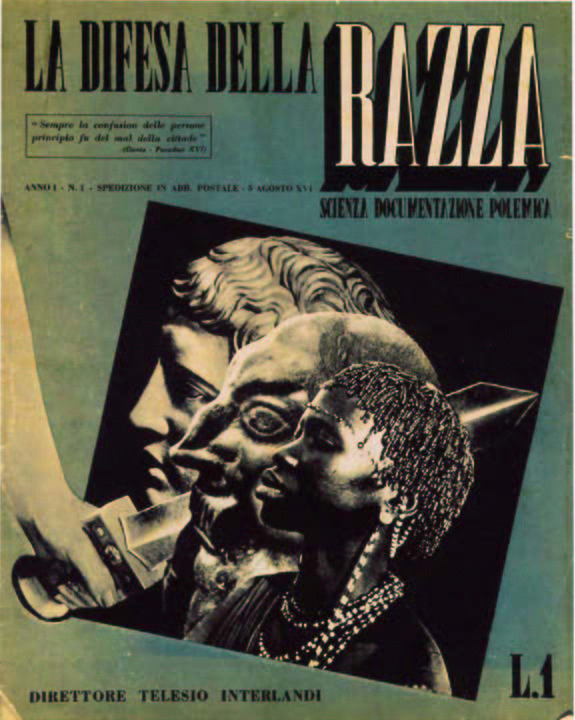
difesa_della_razza

Eugenics and Racial Policy

Tarquini devotes substantial attention to race and eugenics in Italian culture under Fascism. She notes that the Fascist government gave Italian eugenic scientists support and attention which they had never enjoyed under previous regimes:

From 1922 to 1945 Italian scientists contributed to racial culture and policy. These included anthropologists, statisticians, demographers, and doctors who were already well-known in the scientific world in the early years of the century, when demography and eugenics — the science which studies the methods to perfect the human species by favoring the proliferation of individuals deemed best (positive eugenics) or through the suppression of individuals considered harmful (negative eugenics) — brought their attention to the demographic decline present in many Western countries. … With the advent of fascism these scientists played a role which they did not have in previous regimes. In exchange they offered the totalitarian and racist policy their own generous support. (pp. 201–202)

Demographic issues were given particular attention in the aftermath of the massive bloodletting of World War I and a significant fall in the birth rates of Western countries. Read more

“The Book and the Rifle”: Cultural and Racial Policy in Fascist Italy, Part 2

gm

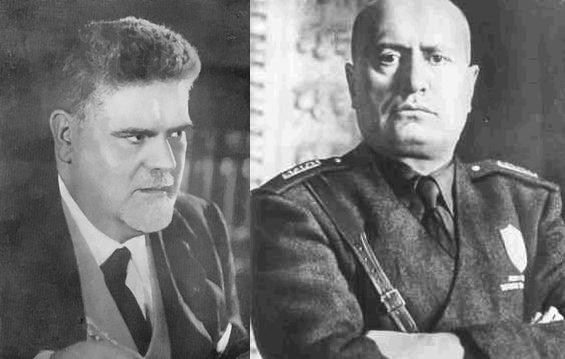
Giovanni Gentile and Benito Mussolini

Go to Part 1.

Intellectual Debate in Fascist Italy

Tarquini emphasizes that culture in Fascist Italy was by no means monolithic, but allowed considerable stylistic variation and intellectual debate so long as these respected core Fascist principles. Indeed, Fascists emphasized that being a Fascist was more about a certain manly mindset than about theoretical abstractions. As Nietzsche did, the Fascists rejected the bourgeois spirit with its satisfaction with mediocrity, its skepticism and compromise, its concern with careers, and its death-fearing selfishness.

Fascism was born out of diverse groups dissatisfied with Italy’s small gains during World War I, frustrated with liberal impotence, and disturbed by the rise of communism. These included military veterans, self-sacrificial arditi soldiers, futurist artists, revolutionary syndicalists, socialistic republicans, and others. Fascism emerged organically as “a militia in the service of the nation,” a political movement, and finally a government, rather than as a preset set of ideas.

The “spirit of the trenches,” the spirit of hierarchy, discipline and community, which had shown its awesome destructive power in wartime would be used by the Fascists to constructively develop the nation in peacetime. Indeed, Fascism developed a “secular liturgy” (p. 43) and “a conception of the nation elevated to a sacred entity” (p. 51). Fascism rejected internationalism, egalitarianism, and materialism, embracing aristocracy, spirituality, and nationalism. Some Fascists even credited their movement with the potential to save Europe from decadence and degeneration.

Fascism was unabashedly communitarian. Economics and culture were to respect community interests. The Fascist doctrine of corporatism reflected “the relevance to the state [statalità] of every economic phenomenon” (p. 157). Fascists similarly argued that writers had “a political, moral, and educational role” and culture had to support “the struggle for civilization” (p. 184). Read more

“The Book and the Rifle”: Cultural & Racial Policy in Fascist Italy, Part 1

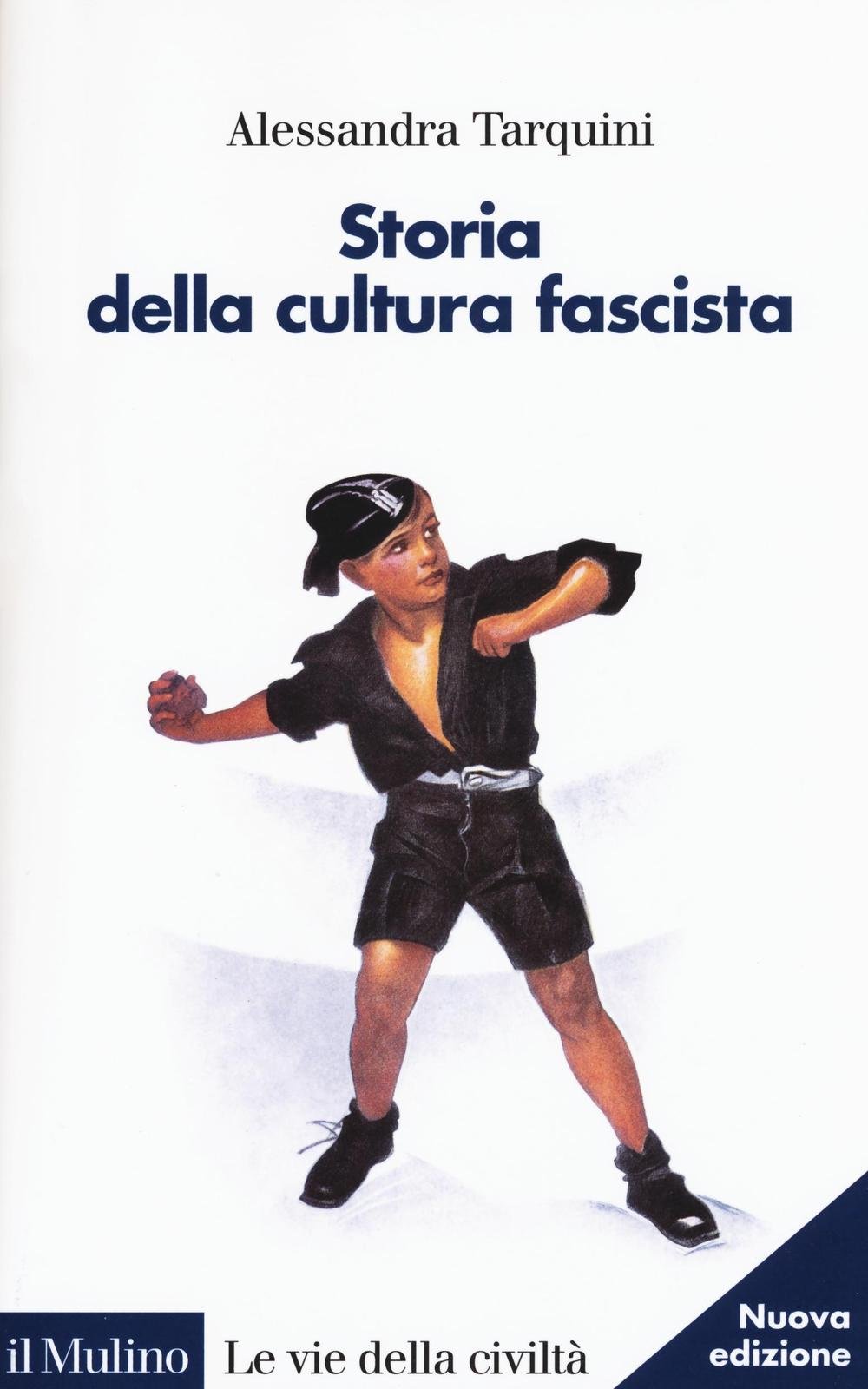
tarquini

Storia della cultura fascista (Bologna, Italy: Il Mulino, 2011)
by Alessandra Tarquini

Since World War II, the very word “fascism” has always conjured up images of evil in the cultural and political mainstream. This is largely because the fascists lost that war and, as we know, the victors write the history books. It is also because the most famous fascist regime, National Socialist Germany, did in fact have an official doctrine of disregard for the lives of many non-German groups, thus providing ample material for the Allies’ atrocity propaganda.

It is interesting then to note that the original fascist regime, that of Fascist Italy, also been widely demonized despite the fact that this government was far more moderate. Indeed, the deaths attributable Fascist Italy are perhaps an order of magnitude lower than those of the Western Allies or the Soviet Union. Italian Fascism, having ruled for over 20 years, longer than National Socialist Germany and mostly in peacetime, then provides another example of what the West might have been had history taken a different course.

Here at The Occidental Observer, we are obviously extremely interested in culture and its impact on evolutionary adaptiveness and reproduction, that is to say gene-culture coevolution. Italian historian Alessandra Tarquini has provided a useful summary of cultural policy and life in Fascist Italy in her Storia della cultura fascista (History of Fascist Culture). Tarquini’s study is scrupulously neutral and empathetic, even as she dedicates her book to “the memory of the first anti-fascist I knew” (presumably a close relative).

Perhaps the most striking theme in the book is the absolute importance the Fascists gave to culture understood as the systematic education of the people. This meant especially the youth, but also the working masses and women who had been neglected by previous regimes. Tarquini observes: “From 1922 to the end of 1943, one of the main objectives of Fascism’s cultural policy was the education of the young generations” (p. 231). The National Fascist Party (PNF) “for the entire Ventennio [two decades of Fascist government] invested all its energy in the mobilization of the new generations” (p. 232). Furthermore, “from the earliest years, the Fascists showed the will to educate women and workers” (p. 233). This was not done in the lackadaisical way characteristic of liberal regimes — a bit of schooling, perhaps some cultural subsidies, but otherwise leaving young people’s minds in the hands of often hostile television oligarchs —  but systematically, through schooling, sports, Party activities, holidays, film, radio, etc. Read more

Hope for Bleeding Heart Social Justice Warriors

“When a ship goes down there are never enough lifeboats. Sailors are trained to beat off with violence those still in the sea once the lifeboat is full. If they do not—everyone dies. This is real compassion.”   Sam Gerrans

I know that there are many of you who are deeply affected by the pitiable plight of Syrian refugees, and indeed with the awful privations that poor African migrants suffer. You are full of empathy, but you lack the resources to help them. You feel impotent. It is a helpless feeling, isn’t it?

So instinctively, you implore governments to take action. You ask them not only to provide aid with my tax dollars, but to fling open our borders to allow them to pour in un-vetted, so as to overburden our social safety net, bring chaos and conflict to our society, expose our women to rape, fill up our parks and streets with make-shift tents and rubbish, occupy social housing units left empty by the forcible eviction of our own low income residents, and ultimately make refugees out of our own citizens.

You do everything to pull our heart strings. You even take heartrending pictures of migrant women and children in distress, while ignoring the homeless and the unfed and unclothed in your own backyard.

And then, if this is not enough, you turn to me for help. You appeal to my conscience. You try to guilt me out. Even though I am a pensioner who has worked long and hard to fund the medical system and the benefits that accrue from it, you tell me that I have too much, that I am too affluent, that I can afford to share my “bounty”. And that I should open my heart and wallet to these poor unfortunates and let them have the hospital bed and the dental care and subsidized one bedroom apartment that I am entitled to. Read more

Trump in West Palm Beach


Donald Trump’s West Palm Beach speech has gotten a lot of attention (see Lawrence Murray’s comments, at The Right Stuff). There does seem to be a ramping up of tone apparent here — a sense that this election is an apocalyptic moment, as indeed it is. Trump understands, as the Alt Right has been saying, that the establishment is corrupt from top to bottom, that we live in a sham democracy, a sham republic:

This election will determine whether we are a free nation or whether we have only the illusion of democracy, but are in fact controlled by a small handful of global special interests rigging the system, and our system is rigged. This is reality, you know it, they know it, I know it, and pretty much the whole world knows it.

As Angelo Codevilla noted, “Because Republicans largely agree with Democrats that they need not take seriously the founders’ Constitution, today’s American regime is now what Max Weber had called the Tsarist regime on the eve of the Revolution: ‘fake constitutionalism.’”

Trump is aware of the special role of the media:

The establishment and their media enablers will control over this nation through means that are very well known. Anyone who challenges their control is deemed a sexist, a racist, a xenophobe, and morally deformed.

As we have emphasized repeatedly on TOO, the media indictment is always fundamentally a moral indictment, as in Clinton’s “basket of deplorables.” Media messages in favor of massive immigration and the displacement of traditional populations have typically been couched in moral terms. If you oppose the transformation of European societies by immigration, you are a bad person. It’s not just that you are mistaken about the practical effects of massive non-White migration in terms of a decline in social cohesion, increase in social conflict, crime, terrorism, etc., you are morally evil. It’s so simple that there’s no need to get into the social science research. Read more