The Big Short: Film and Book
I’ve never worked a day of my life on Wall Street and, in fact, have never knowingly spoken with someone who has. Still, it is child’s play to uncover the vast roles Jews play in New York’s financial district. For that matter, it is not that hard to show how Hollywood consistently covers up those roles, particularly when it comes to gross misbehavior.
This is sort of the case when it comes to Michael Lewis’s 2010 book The Big Short: Inside the Doomsday Machine, as well as the film version in 2015. I say “sort of” because, first, in both stories, it is unclear whether the unfathomable sums of money lost on Wall Street was a result of fraud, stupidity, or simply not understanding immensely complex financial instruments.
Second, this time Hollywood cannot be faulted for seriously downplaying Jewish identity. Lewis has already done that for them, although it’s quite likely that he understands the Jewish nexus of the whole thing. He describes himself as a “toy goy” — he has had close connections with Jews and Jewish institutions throughout his life, beginning in grade school and continuing throughout his professional life: “Some of my earliest memories are of playing dreidels, singing Jewish folk songs and defending myself against anti-Semitism.” This is a guy who knows how the world works and what he can and cannot say to defend himself against charges of anti-Semitism.
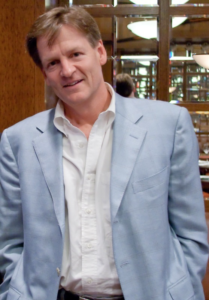
Author Michael Lewis
Plot summary: the story is about four men who came to believe that the subprime mortgage industry was slated for a big fall, so they devised ways to place bets on such a fall. To them, there was a serious housing bubble and they meant to collect when the collapse of the bubble came. Read more


 One of the more spectacular examples of an MSM frenzy over supposed anti-Semitism: the reaction to