Featured Articles

Wilhelm Marr’s “The Victory of Judaism over Germanism: Viewed from a Nonreligious Point of View”

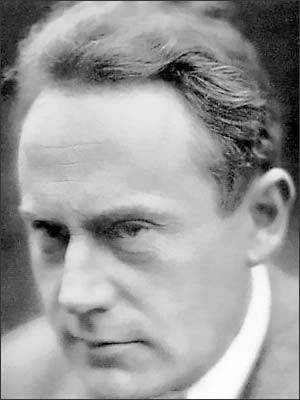
Wilhelm Marr (1819–1904) has gone down in history as the first racial anti-Semite. His signature work, The Victory of Judaism over Germanism: Viewed from a Nonreligious Point of View, expresses Marr’s views on the conflict between Germans and Jews in a strikingly modern manner.

The pamphlet is difficult to obtain, and there have been no English translations. Now the text has been translated by Gerhard Rohringer and is available online in pdf format. The following summarizes Marr’s ideas as presented in this translation of the 8th edition, first published in 1879.

Marr was a journalist, and his pamphlet is expressed in a journalistic style with all the pluses and minuses that that entails. Marr’s pamphlet contains a number of ideas that agree with modern theories and social science research on Jews, as well as some ideas that are less supported but interesting nonetheless. His ideas on future events are fascinating with the 20/20 hindsight of 130 years of history.

Marr describes his writing as “a ‘scream of pain’ coming from the oppressed” (p. 6). Marr sees Germans as having already lost the battle with Jewry: “Judaism has triumphed on a worldwide historical, basis. I shall bring the news of a lost battle and of the victory of the enemy and all of that I shall do without offering excuses for the defeated army.”

In other words, Marr is not blaming the Jews for their predominance in German society, but rather blaming the Germans for allowing this to happen. He sees historical hatred against Jews as due to their occupational profile (“the loathing Jews demonstrate for real work” — a gratuitously negative and overly generalized reference to the Jewish occupational profile) and to “their codified hatred against all non-Jews” (p. 8). Historical anti-Semitism often had a religious veneer, but it was actually motivated by “the struggle of nations and their response to the very real Judaization of society, that is, to a battle for survival…. I therefore unconditionally defend Jewry against any and all religious persecution” (p. 10).

Marr claims that Jews have a justified hatred toward Europeans:

Nothing is more natural than the hatred the Jews must have felt for those who enslaved them and abducted them from their homeland [i.e., the Romans; Marr seems unaware that the Jewish Diaspora predated the failed Jewish rebellions of the 1st and 2nd centuries]. Nothing is more natural than that this hatred had to grow during the course of oppression and persecution in the Occident over the span of almost two thousand years. … Nothing is more natural than that they responded using their inborn gifts of craftiness and cleverness by forming as ‘captives’ a state within a state, a society within a society. (p. 11)

Jews used their abilities to obtain power in Germany and other Western societies: “By the 19th century the amazing toughness and endurance of the Semites had made them the leading power within occidental society. As a result, and that particularly in Germany, Jewry has not been assimilated into Germanism, but Germanism has been absorbed into Judaism” (p. 11).

Marr claims that Judaism retreated in the face of “Christian fanaticism,” and achieved its greatest successes first among the Slavs and then among the Germans — both groups that were late in developing national cultures. He attributes the success of Jews in Germany to the fact that Germans did not have a sense of German nationality or German national pride (p. 12).

This is a point that I have also stressed: Collectivist cultures such as medieval Christianity tend to be bad for Jews because Jews are seen as an outgroup by a strongly defined ingroup. (See, e.g., here.) Moreover, a general trend in European society after the Enlightenment was to develop cultures with a strong sense of national identity where Christianity and/or ethnic origins formed a part. These cultures tended to exclude Jews, at least implicitly. An important aspect of Jewish intellectual and political activity in post-Enlightenment societies has been opposition to national cultures throughout Europe and other Western societies (see, e.g., here).

Marr credits Jews with bringing economic benefits to Germany: “There is no way to deny that the abstract, money-oriented, haggling mind of the Jews has contributed much to the flourishing of commerce and industry in Germany.” Although “racial anti-Semites” are often portrayed as viewing Jews as genetically inferior or even subhuman, a very strong tendency among racial anti-Semites is to see Jews as a very talented group. Marr clearly sees Jews as an elite.

Indeed, Marr sees the Germans as inferior to the Jews and as having a mélange of traits that caused them to lose the battle to Jews:

Into this confused, clumsy Germanic element penetrated a smooth crafty, pliable Jewry; with all of its gifts of realism [as opposed to German idealism], intellectually well qualified as far as the gift of astuteness is concerned, to look down upon the Germans and subduing the monarchical, knightly, lumbering German by enabling him in his vices. (p. 13)

What we [Germans] don’t have is the drive of the Semitic people. On account of our tribal organization we shall never be able to acquire such a drive and because cultural development knows no pause, our outlook is none other than a time when we Germans will live as slaves under the legal and political feudalism of Judaism. (p. 14)

Germanic indolence, Germanic stinginess, convenient Teutonic disdainfulness of expression are responsible [for the fact] that the agile and clever Israel now decides what one shall say and what not…. You have turned the press over to them because you find brilliant frivolity more to your liking than moral fortitude …. The Jewish people thrive because of their talents and you have been vanquished, as you should have been and as you have deserved a thousandfold.  (p. 30)  

Are we willing to sacrifice? Did we succeed in creating even a single anti-Jewish leaning paper, which manages to be politically neutral? … To de-Judaize ourselves, for that we clearly lack physical and spiritual strength.

I marvel in admiration at this Semitic people which put its heel onto the nape of our necks. … We harbor a resilient, tough, intelligent foreign tribe among us, who knows how to take advantage of every form of abstract reality. (p. 24)

We are no longer a match for this foreign tribe. (p. 27)

As a result of his high estimation of Jews and low estimation of Germans, Marr claims that he does not hate Jews. It’s simply a war where one side loses. The conflict between Jews and Germans is “like a war. How can I hate the soldier whose bullet happens to hit me? — Does one not offer one’s hand as victor as well as a prisoner of war? … In my eyes, it is a war which has been going on for 1800 years” (p. 28).

Despite their long history of living together, Jews, unlike other peoples who have come to Germany, remain foreigners among the Germans  — the separatism that is fundamental to Judaism as a group evolutionary strategy (and hence my titles, A People that Shall Dwell Alone and Separation and Its Discontents):

[The Jew] was a typical foreigner to them and remained one until today; and yes, his exclusive Judaism, as we shall demonstrate in what follows, shows itself even more today after his emancipation, than it did in earlier times. (p. 13)

All other immigration into Germany … disappeared without a trace within Germanism; Wends and Slavs disappeared in the German element. The Semitic race, stronger and tougher, has survived them all. Truly! Were I a Jew, I would look upon this fact with my greatest pride. (p. 17)

One of Marr’s most interesting observations is his proposal that Germans formed idealistic images of Jews during the Enlightenment when others had more realistic and negative views. Jews are realists, accepting the world as it is and advancing their interests based on their understanding of this reality. Judaism is characterized by particularlst morality (Is it good for the Jews?). Germans, on the other hand, tend to have idealized images of themselves and others — to believe that the human mind can construct reality based on ideals that can then shape behavior. They are predisposed to moral universalism — moral rules apply to everyone and are not dependent on whether it benefits the ingroup.

This is a reference to the powerful idealist strand of German philosophy that has been so influential in the culture of the West. An illustrative example is American transcendentalism, a movement that created an indigenous culture of critique in 19th-century America. This perspective resulted in overly optimistic views of human nature and tended toward radical egalitarianism; it also provided the theoretical underpinnings the abolitionist movement among elite intellectuals like Ralph Waldo Emerson.

In particular, Marr notes that, whereas prominent and influential Enlightenment thinkers like Voltaire were critics of Judaism (seeing it as reactionary tribalism), in Germany the most influential writer was Gotthold Ephraim Lessing  (1729–1781). Lessing presented a very positive image of Judaism in his play Nathan the Wise. The Jewish Nathan (Marr calls him “Rothschild” to give it contemporary relevance) makes an eloquent plea for religious tolerance — while at the same time he finances the Muslim war against the Christian Crusaders. Marr suggests that Lessing engaged in a bit of self-deception: Despite his positive portrayal of Nathan as the essence of tolerance, “Lessing could not in his subconscious self overcome the identity of Jew and servant of Mammon” (p. 15).

The influence of Lessing was profound: “German idealism was captivated by the legend of the ring [i.e., Lessing’s metaphor for religious tolerance], but missed that Lessing’s Nathan could only be — a character from a fable” (p. 16).

Marr suggests that instead of a fictional character like Nathan the Wise, Lessing should have seen 17th-century Jewish philosopher Baruch Spinoza as an illustration of what Judaism is really like. Whereas Nathan the Wise suggests that religious tolerance is a characteristic of Judaism, Marr interprets Spinoza’s fate as illustrating Jewish intolerance and fanaticism in the real world — features of Judaism also noted by several contemporary writers, most notably Israel Shahak, but also including Enlightenment thinkers like Voltaire. Spinoza was hounded out of the Jewish community of Amsterdam because of his views on religion: “This truly great Jewish non-Jew had been cursed by his own tribal associates — all the way to attempted murderous assault” (p. 16). But in the 19th century, “woe to the German who dares to show the Jewish masses who the great Spinoza was and what he stood for!!” (p. 16).

Another trait of Germans that Marr sees as deleterious is “abstract individualism.” Marr states that Jewish economic success within capitalism is “in agreement with the dogma of ‘abstract individualism’ which you have accepted with enthusiasm from the hands of Judaism” (p. 30). In other words, Marr believed that individualism was something Jews imposed on Germany, not a tendency within the Germans themselves. (Contrary to Marr’s position, I have argued that the fundamental uniqueness of European peoples is a greater tendency toward individualism  than other human groups. Individualism then leads to moral universalism, a form of idealism, rather than the tribally-based morality of groups like the Jews.) As noted above, Marr (correctly) believed that individualistic societies are relatively defenseless against Jews, whereas societies centered around a strong collectivist religious core (e.g., medieval Christianity) or a strong sense of ethnic nationalism are more able to defend themselves.

Because of their grievances against Europeans, it is not surprising that Jews support revolution:

Who can hold it against the Jews that they happily welcomed the revolutions of 1789 and the one of 1848 and actively participated in them? “Jews, Poles and writers” was the battle cry of the conservatives in 1848. Well, of course, three suppressed factions! (p. 16)

Following his first decisive victory of 1848 he had to — whether he wanted to or not — pursue his success further and must now attempt to ruin the Germanic, Occidental world. (p. 28).

By 1848 Judaism had entirely ceased being a religion at all. It was “nothing else but the constitution of a people, forming a state within a state and this secondary or counter-state demanded certain material advantages for its members” (p. 17). Marr states that Jewish emancipation only meant political equality because Jews had already achieved “a leading and dominating role” (p. 17), and dominated all political factions except the Catholics. “The daily press is predominantly in Jewish hands, which have transformed journalism … into a business with public opinion; critique of the theater, of art in general — is to three quarters in the hands of Jews. Writing about politics and even religion is — in Jewish hands” (p. 19). While Jews are deeply involved in creating the culture of Germany, “Judaism has been declared a subject off-limits for us Germans. … To comment on [Jewish] rituals is ‘hatred’, but if the Jew takes it upon himself to pronounce the last word in our religious and state affairs, then it is quite a different matter” (p. 20).

Jews are particularly involved in the “culture struggle” against ultramontanism — the view that papal authority should extend over secular affairs. Ultramontanism was attacked by Jews because the Church “opposed Judaism for world domination.” Although opposition to ultramontanism was also an interest for many Germans, Jews did all the talking, and any criticism of Roman Catholicism was banned “if Israel was touched on ever so slightly!!” (p. 20).

Jews are powerful and they will continue to obtain more power. In the end, Germans will be at the mercy of the Jews:

Within less than four generations there will not be a single office in the land, including the highest, which will not have been usurped by the Jews. Yes, through Jewry Germany will become a world power, an Occidental Palestine… Jewry has fought the Occident for 1800 years. It has conquered and subjected it. We are the vanquished and it is quite in order that the victor chants ‘Vae Victis’ [woe to the vanquished]. (p. 22)

The Jew has no real religion, he has a business contract with Jehovah and pays his god with statutes and formulations and in return is charged with the pleasant task of exterminating all that is not Jewish. (p. 14)

Marr saw Russia as the only European nation that had resisted the Jewish onslaught. However, he believed that Russia would eventually fall by bloody revolution and this revolution would lead to the downfall of the West:

[Among European nations, only Russia] is left to still resist the foreign invasion. … [T]he final surrender of Russia is only a question of time. … Jewish resilient, fly-by-night attitude will plunge Russia into a revolution like the world might never have seen before. … With Russia, Jewry will have captured the last strategic position from which it has to fear a possible attack on its rear …. After it has invaded Russia’s offices and agencies the same way it did ours, then the collapse of our Western society will begin in earnest openly and in Jewish fashion. The ‘last hour’ of doomed Europa will strike at the latest in 100 to 150 years” (p. 24–25).

Indeed, Jews are already taking the lead in fomenting anti-Russian policy, as in the Russian-Turkish war. For example, ideas that “the insolence of the great sea power England might be curbed” by allying with Russia were banned from the Jewish newspapers (p. 26).

Marr is entirely pessimistic about the future, foreseeing a cataclysm:

The destructive mission of Judaism (which also existed in antiquity) will only come to a halt once it has reached its culmination, that is after Jewish Caesarism has been installed” (p. 28).

Jewry will have to face a final, desperate assault particularly by Germanism, before it will achieve authoritarian dominance. (p. 29)

Marr thinks that anti-Jewish attitudes will become powerful but ultimately they will fail to fend off disaster for the Germans and the West. Marr lays part of the blame on the fact that the only people who publicly oppose the Jews conceptualize them incorrectly as a religion. As a result, responsible, informed criticism of Jews that would appeal to non-religious people and intellectual elites never appears in the press: “A catastrophe lies ahead, because the indignation against the Judaization of society is intensified by the fact that it can’t be ventilated in the press without showing itself as a most abstruse religious hatred, such as it surfaces in the ultramontane and generally in the reactionary press” (p. 30). Nevertheless, even a “violent anti-Jewish explosion will only delay, but not avert the disintegration of Judaized society” (p. 30).

Regarding his own mission, Marr sees himself as a soldier fighting a lost cause: “I am aware that my journalist friends and I stand defenseless before Jewry. We have no patronage among the nobility or the middle class. Our German people are too Judaized to have the will for self-preservation (p. 32).

Marr concludes with the following:

The battle had to be fought without hatred against the individual combatant, who was forced into the role of attacker or defender. Tougher and more persistent than we, you became victorious in this battle between people, which you fought without the sword, while we massacred and burned you, but did not muster the moral strength to tell you to live and deal among your own. 

Finis Germaniae

Sex Plague

Sigmund Freud: “Sexual morality is contemptible. I advocate an incomparably freer sexual life….If only Americans knew, we are bringing them the plague!”

A recent pamphlet published by the German government contains these chilling words:

Fathers do not devote enough attention to the clitoris and vagina of their daughters. The child touches all parts of their father’s body, sometimes arousing him. The father should do the same.

Toddlers are to be encouraged to indulge in “unlimited masturbation.” Their parents are expected to offer practical demonstrations if need be — the better to produce sexual precocity in their offspring. “Children should learn there is no such thing as shameful parts of the body,” the booklet advises. “The body is a home you should be proud of.”

Children, it is suggested, should be taught the movements of copulation as soon as they reach the age of four, giving them what virtually amounts to a crash course in the Kama Sutra as soon as they have learnt to walk.

Depravity, it seems, cannot be taught too early.

In Holland, things have gone further. Here a political party, set up by convicted pedophiles, clamors for the legalization of child pornography and intergenerational sex between children of twelve and adults old enough to be their grandparents. I forgot to mention bestiality. They want to legalize that too. (See here for a full report).

Who is to blame for the sex addictions we see suppurating all round us? This licentiousness, growing by the day, thanks to the internet and the mass media, is far deadlier and more destructive than it was half a century ago, before the sexual revolution.

Those who are responsible for this sickening depravity are clearly the people who started the sexual revolution. They are the people, moreover, who control the mass media.

Who controls the media? Who determines the imagery and attitudes drip-feeding steadily into the minds of the public? Who runs Hollywood? Who contaminates mass consciousness? Who defiles the collective mind? Who pulls the puppet strings of marionette man? Who are the Bad Shepherds leading the sheeple astray?

Who are to blame, in short, for letting the world go to hell in a handcart?

I won’t bother to answer that question. More to the point, I dare not. If you don’t know who owns the media—lock, stock and barrel—you’re wasting your time reading this article.

Art and Sexual Subversion: The Vaginocentric Female Artist

Let me resume here my discussion of sexual depravity which formed the basis of my recent article Sex and the Jews; and let me begin by saying a few words on art, a subject I know something about. (See here and here). And then let me proceed to the subject of pornography and consider its deployment in the systematic demoralization of the masses.

First, ask yourself this question: is there anything intrinsically admirable or aesthetically pleasing about British painter Tracey Emin’s attention-seeking leg-and-vagina paintings?

If you were a man of taste, which of these two depictions of the Eternal Feminine would you prefer: this beautiful woman painted by Botticelli or the ugly feminist icon who appears below?

Botticelli’s Venus

Consider only these titles by the outrageously untalented Emin and draw your own conclusions: Everyone I Have Ever Slept With, Fucking Down An Ally (sic), Asleep Alone With Legs Open (several large-scale canvases of her splayed legs and vagina), I’ve Got It All (legs splayed again, clutching banknotes to her crotch), Weird Sex, CV Cunt Vernacular, Is Anal Sex Legal, Masturbating, Get Ready For the Fuck Of Your Life.

With titles like these, Tracey Emin could hardly fail. Her rich Jewish patron, advertising mogul Charles Saatchi, knew he was on to a good thing.

As the Gadarene swine hurtle over the cliff top, Tracey Emin and her kind clearly lead the pack on their way down into the bottomless abyss. These are the dupes of organized Jewry. By doing exactly what appeals to art patrons (almost all Jewish; see below), these infinitely corrupt talentless opportunists know they will become rich and famous.

The sad truth is that so many female “artists” — almost all of them rabid feminists and sexual exhibitionists — have nothing to sell but vaginas.

Here are ten other vagina-obsessed females, apart from Tracey Emin and the notorious Annie Sprinkle (see my previous article), who use sex to sell their “art”:  Karen Finley, Hannah Wilke, Carolee Schneeman, Andrea Fraser, Sarah Lucas, Marlene McCarty, Vanessa Beecroft,  Malerie Marder, Katy Grannan, and Kembra Pfahler.

Being unable to paint properly or produce objects of lasting value, these exhibitionists like to display their vaginas to the world and call it “art”. Here is one such exhibitionist, Jewish performance artist Carolee Schneemann, pulling a paper scroll out of her vagina:

Carolee Schneemann:  “I saw the vagina as enlivened by its passage from the visible to the invisible, a spiralled coil with the shape of desire and generative mysteries….”

Who helps to promote this pretentious claptrap? You don’t need three guesses to answer that question.

In 2001, ARTnews listed the world’s Top Ten Art Collectors. Eight of them were Jews. Ponder these staggering statistics: A people who constitute 0.2% of the world’s population make up 80% of the world’s richest art collectors. Out of every thousand people in the world, roughly two are Jews. To be precise, one in every 457 people are Jews. Yet go to a conference at which 1000 of the world’s wealthiest art collectors have gathered and you will find, to your amazement, that 800 of them are Jewish! Phenomenal, isn’t it? (See here)

Some of the vaginocentric exhibitionists mentioned above, like lesbian “performance artist” Annie Sprinkle, maintain websites blocked by porn filters. The aptly named Sprinkle—a nom de porn in honor of  urolagnia — is the lady who douched her vagina onstage in 1991, before lying down and opening her legs so that members of the audience, mostly male, could inspect her cervix with the help of a flashlight and speculum.


Annie Sprinkle (Ellen Steinberg): performance artist, prostitute, porn actress, feminist icon, and lesbian diva of depravity. Her idea of “art” is to masturbate onstage with sex toys, her legs wide open, and invite members of a predominantly male audience to peer up her vagina with torchlight and speculum. Sprinkle’s show was funded by the National Endowment for the Arts, a mini-empire controlled by the hidden hand of organized Jewry.

If Sprinkle acquired fame and fortune by allowing dirty old men to peep between her legs, Hannah Wilke and Karen Finley sought variations in which the vulva was again put to good use. The Jewish Wilke, being sadly deficient in originality, molded bits of chewing gum into vulvas and stuck them all over her body, much to the delight of the dirty old men who could now examine an assortment of vulvas simultaneously instead of just one. Not to be outdone, Finley smeared her naked torso with chocolate syrup and performed public acts—using a yam—which I won’t describe in detail in case nuns are reading this article. Rape, flatulence and menstruation formed the least offensive items in her repertoire.

Andrea Fraser, however, deserves first prize for sheer chutzpah. This raunchy performance artist arranged to meet a man at the Royalton Hotel in Manhattan, owned by Jewish hotelier Ian Shrager. Above the bed, an overhead camera played Peeping Tom. The man was persuaded to part with $20,000 for the privilege of helping to create a “work of art” with the frisky Fraser, the said work of art being a pornographic video filming the two participants copulating on a Queen-size bed. This sex video, now available for posterity, is pretentiously called “Untitled”.

It’s not “art” we’re dealing with here, of course.  It’s pornography pure and simple.

The Jewish Affinity for Porn

Nina Hartley, Jewish porn star, who is reported to have said, “I’ve yet to meet a Jewish guy who wasn’t a horny rabbit.”

Jews dominate the world’s $10 billion a year porn industry, roughly 90 per cent of which is generated within the United States.

As many as 260 new porn sites go online daily, more than ten sites an hour.

Since Jews are known to dominate the porn industry and comprise only 2% of America’s population, it is reasonable to suppose that most of the new sites being started up every hour are being started up by Jews.

It is even more alarming to note how sex is now deployed by many American Jews as a weapon against Christianity with its socially cohesive and family-friendly values.

Jewish pornographer Al Goldstein’s infamous words — “The only reason that Jews are in pornography is that we think that Christ sucks”—surely tell us all we need to know about the bitter hatred felt by so many Jews for the Western countries that have harboured them and given them hospitality for so long.

Jewish hatred for Christianity is legendary, spanning the Jewish political spectrum, from the far left to the neoconservative right. It can hardly be doubted, as the picture below makes only too clear.

“Christ sucks!”

The arrogance and sense of entitlement of so many Jews, whose values Al Goldstein seems to have imbibed with his mother’s milk, never cease to astonish me. “The difference between a Jewish soul and the soul of non-Jews,” Rabbi Kook assures us, “is greater and deeper than the difference between a human soul and the soul of cattle.” Given that Rabbi Kook would be the first to agree that rabbis form the intellectual and spiritual backbone of Jewry, one is tempted to ask what makes a man become a rabbi in the first place. Is it the thirst for God? Is it the wish to save one’s soul and help others along the path to salvation?

Here is Jewish actor Richard Pacheco who couldn’t quite make up his mind whether to become a rabbi or a porn star:

Five years before I got my first part in an adult film. … I went to an audition for an X-rated film with my hair down to my ass, a copy of Wilhelm Reich’s Sexual Revolution under my arm and yelling about work, love and sex, which were Reich’s three principles. These things have got to be in balance or your life is going to be fucked.

Note that Pacheco had signed on to the radical left-Freudian views of Wilhelm Reich—the wackiest and most extreme of the subversive sexual ideologies that emerged from psychoanalysis. Jewish devotees of psychoanalysis typically saw it, first and foremost, as a blow against Christian sexual mores; hence, as a sneak attack on Christianity itself. For Jews, psychoanalysis  placed  Western culture on the couch. It was an assertion of Jewish  contempt for Christian culture—the culture of the outgroup now destined for the dustbin of history.

Pacheco didn’t get the job, but he kept on auditioning, since all he really wanted was to screw gorgeous blonde shiksas—doubtless an atavistic expression of Jewish hatred for the goyim, every act of sex being an act of revenge.

Five years later I auditioned for another X-rated film. That very day, I also interviewed at Hebrew Union Seminary to do rabbinical study. I made the choice that the kind of rabbi I would be, if I became one, was one that could have been performing in sex films as part of his experience. (My emphasis, see here).

Mindboggling, isn’t it? This dupe of the sexual revolution couldn’t make up his mind whether to sing hymns to God or kiss the devil’s ass! In the end, it’s the devil who won out. Pacheco decided to build a career in pornography—with the full blessings, incidentally, of ADL chairman Abe Foxman who said that porn offered American Jews a valid and worthy way “to pursue the American dream.”

Richard Pacheco (b. 1948). Scion of an orthodox Jewish family from Pittsburg, Pacheco was attracted from an early age to the rabbinate and to porn in equal measure.  Star of over 100  X-rated films and winner of countless awards for his sexual prowess in front of the cameras, Pacheco was lucky to receive the loyal support of his wife Ashley. Managing somehow to juggle  a career in porn with a commitment to family life, Pacheco later had sex with Ashley “considerably less often after they had children and AIDS became a threat, but he credits his pornography career for giving him the opportunity to continue sexual encounters for a time without endangering his home life.”

Here is Pacheco being interviewed after his retirement from porn:

As a young husband, I had no idea how to ask my beloved wife to be my “fuck-your-ass whore”. Yeah, I wanted some of that kind of sex, some very, very selfish lust with a sex kitten.  A “fuck-me-fuck-me” woman. There’d be corsets and leathers, high-heeled boots laced up to crotchless  panties, breasts spilling out of nippleless bras in lush bordello bedrooms filled up with sex toys. Like blindfolds and vibrators, handcuffs and paddles. Yeah, and there’d be me with a genuine tarted up won’t-say-no-woman. All the best drugs and oils in the world and plenty of time. And there’d be no “I love you” in any of it! I would meet this X-rated woman at the hotel where they were holding the auditions…and I would have sex with her right there in the hotel elevator! And then I would go home to my wife.


Richard Pacheco (a recent photo). Asked if he still watched adult movies now that he was  a Senior Citizen, the former rabbinical student replied: “Not much.  Occasionally I’ll toss one on for masturbation if my wife ain’t around.” (See here).

In 1984, Pacheco won the Best Couples Sex Scene (video) with porn star Nina Hartley. In 1999, he was inducted into the AVN Hall of Fame with feminist porn diva Annie Sprinkle.  In 2000, along with Sprinkle, he was given a Lifetime Achievement Award by the Free Speech Coalition (FSC), an organization that had given Nina Hartley an award only a few months earlier. (See here).

Note that these three luminaries of lust—Pacheco, Sprinkle and Hartley—are all Jewish pornographers and that the impressively named “Free Speech Coalition” is in fact a trade association set up in 1991 to safeguard the interests of “adult entertainers” pornographers who for the most part are Jewish.

The FSC rejects all claims that pornography is addictive; it refuses to consider the possibility that serial killers and rapists could in any way be influenced by inflammatory erotica.

In an important court case in 2002, Ashcroft v. Free Speech Coalition, the US Supreme Court decided in the Coalition’s favour, thereby making it easier for pornographers to demoralize Americans, corrupt their children, and promote a general debasement of values — all this in accordance, incidentally, with the Frankfurt School agenda of producing a “culture of pessimism” designed to foster anarchy and promote impotent anger and despair.  (See here and here).

Our new elite is clearly engaged in the business of mind manipulation and mass demoralization, nor will it rest until it has rebuilt the world in the image of a new Sodom and Gomorrah — a dystopic nightmare.
America, 2050

Apocalypse America

I have said it before, and I will say it again:

A great storm is brewing and only a military coup or revolution can now save America. Save it from what?  From the spiritual cancer that is consuming it from within, and from the foreign wars into which it is being lured—Afghanistan, Iraq, and soon perhaps Iran—on behalf of another nation and its indefatigable agents in America.

Unless a miracle soon occurs and some charismatic leader comes to our rescue, an unimaginably bleak future surely awaits us: a future in which the only consolations left to us will be mindless entertainment, drugs, alcohol, sexual intoxication—and suicide.

Depravity appears to have no limits, as those who have surfed the internet have often discovered to their cost. The most appalling sexual addictions now render even children helpless. Many a marriage is blighted and ends in ruins amid these terrifying toxins.

And yet, we are only at the beginning. We have many a slime-green step to go before we reach rock bottom. Abyss yawns below bottomless abyss, and even to peer into these black moral chasms is to make us giddy with vertigo.

There is indeed no end to man’s depravity.

And now…

Things fall apart. The centre cannot hold. The blood-dimmed tide is loosed, and everywhere the ceremony of innocence is drowned.

And what rough beast, its hour come round at last,
Slouches towards Bethlehem to be born…?
— William Butler Yeats,
The Second Coming

Dr Lasha Darkmoon (email her) is an academic, age 32, with higher degrees in Classics. She is also a published poet and translator whose verse can be sampled here. “Lasha Darkmoon” is a pen name.

Rick Sanchez on Jewish Media Power

How Jewish is Hollywood? That’s the question Los Angeles Times columnist Joel Stein asked two years ago just before Christmas. In answer, he wrote:

When the studio chiefs took out a full-page ad in the Los Angeles Times a few weeks ago to demand that the Screen Actors Guild settle its contract, the open letter was signed by: News Corp. President Peter Chernin (Jewish), Paramount Pictures Chairman Brad Grey (Jewish), Walt Disney Co. Chief Executive Robert Iger (Jewish), Sony Pictures Chairman Michael Lynton (surprise, Dutch Jew), Warner Bros. Chairman Barry Meyer (Jewish), CBS Corp. Chief Executive Leslie Moonves (so Jewish his great uncle was the first prime minister of Israel), MGM Chairman Harry Sloan (Jewish) and NBC Universal Chief Executive Jeff Zucker (mega-Jewish). If either of the Weinstein brothers had signed, this group would have not only the power to shut down all film production but to form a minyan with enough Fiji water on hand to fill a mikvah.

Funny guy, Joel Stein. But his point is important. To sum up, he wrote sarcastically, “The Jews are so dominant, I had to scour the trades to come up with six Gentiles in high positions at entertainment companies. When I called them to talk about their incredible advancement, five of them refused to talk to me, apparently out of fear of insulting Jews. The sixth, AMC President Charlie Collier, turned out to be Jewish.”

Stein ended his column by saying, “As a proud Jew, I want America to know about our accomplishment. Yes, we control Hollywood. Without us, you’d be flipping between ‘The 700 Club’ and ‘Davey and Goliath’ on TV all day.”

Needless to say, Stein was not fired for writing this, nor was he rebuked in the least. As we have seen time and again, there is a glaring double standard about alluding to Jewish power in the media. Jews are free to reference it, but woe unto the non-Jew who wades into those shark-infested waters.

We now have a very high visibility example of this double standard in action. As reported recently, “CNN anchor Rick Sanchez abruptly left the network Friday afternoon, just one day after making controversial comments on a satellite radio program. ‘Rick Sanchez is no longer with the company,’ according to a statement from CNN. ‘We thank Rick for his years of service and we wish him well.’”

Our editor Kevin MacDonald immediately picked up on this and commented in a blog called Joe Sobran was Right on Jewish Media Power:

In my post on Joe Sobran, I included this quote from Joe:

“Jewish control of the major media in the media age makes the enforced silence both paradoxical and paralyzing. Survival in public life requires that you know all about it, but never refer to it. A hypocritical etiquette forces us to pretend that the Jews are powerless victims; and if you don’t respect their victimhood, they’ll destroy you. It’s a phenomenal display not of wickedness, really, but of fierce ethnocentrism, a sort of furtive racial superpatriotism.”

A current example that illustrates exactly this is the firing of Rick Sanchez from CNN for saying the following about Jews as victims:

“Very powerless people… [snickers] He’s such a minority, I mean, you know [sarcastically]… Please, what are you kidding? … I’m telling you that everybody who runs CNN is a lot like Stewart, and a lot of people who run all the other networks are a lot like Stewart, and to imply that somehow they — the people in this country who are Jewish — are an oppressed minority? Yeah.” [sarcastically]

This kind of media development is right up my alley, for my academic specialty is the impact Jews have on American media, especially film. While the firing of Mr. Sanchez is perhaps more high profile than previous instances, it is still part of an all-too-typical pattern.

While I’ve long explored how Jews have translated their own concerns into Hollywood and television fare, I’ve had to devote a fair amount of time to proving first that Jews in fact have immense power in American media. Among other things I’ve written toward this goal are essays in the print journal The Occidental Quarterly. One such essay was “The Jews of Prime Time” where I collected these examples of testimony of Jewish power:

Michael Medved, Orthodox Jew and author of Hollywood vs. America: “It makes no sense at all to try to deny the reality of Jewish power and prominence in popular culture . . . Any Martian monitoring American television . . . would view Seinfeld, Friends, The Nanny, Northern Exposure, Mad about You, and other shows and be surprised to learn that fewer than 1 in 40 Americans is Jewish.”

Brandies Professor Stephen J. Whitfield: “From its origins, Hollywood has been stamped with a Jewish identity, but nobody else was supposed to know about it. But somehow, no matter how thorough the attempt to suppress or disguise it, Jewishness is going to bob to the surface anyway.”

Author Stephen Schiff: “The way Steven Spielberg sees the world has become the way the world is communicated back to us every day.”

Neal Gabler, author of An Empire of Their Own: How the Jews Invented Hollywood, wrote that “The American Dream—is a Jewish invention.” As he documented: “The storefront theaters of the late teens were transformed into the movie palaces of the twenties by Jewish exhibitors. And when sound movies commandeered the industry, Hollywood was invaded by a battalion of Jewish writers, mostly from the East. The most powerful talent agencies were run by Jews. Jewish lawyers transacted most of the industry’s business and Jewish doctors ministered to the industry’s sick. Above all, Jews produced the movies.”

Because the double standard about revealing Jewish media power was so critical, I devoted a section to it called “Denial and Deception Regarding Jewish Power.”

Any number of Jewish observers are willing to acknowledge the immense power of Jews in American media, particularly in Hollywood film and television, although this view cannot yet be described as conventional wisdom as far as the general public is concerned. But for informed observers, identity always matters. In Jews and the Left, Arthur Liebman observes that “one of the most important pieces of information a researcher can gather on a social movement is the socioeconomic composition of its membership.” The same can be said about the ethnic composition of those openly commenting on Jewish power in the media: they are overwhelmingly Jews themselves.

In contrast, Gentiles are routinely discouraged from noticing, yet alone analyzing, this phenomenon which is crucial in a democracy. As MacDonald notes, “Jewish groups have made any critical discussion of Jewish issues off limits, and that’s vitally important because, yes, Jews are a very powerful group.”

It appears that a regime of silence has been imposed, with ample rewards going to those Gentiles willing to toe the party line and a graduated range of punishments being administered to those unwilling to abide by the established rules of discourse. Prominent examples have been cited by MacDonald et al., including the case of young British journalist William Cash. He is the one who, with innocent candor, noted the Hollywood presence of Michael Ovitz, Steven Spielberg, David Geffen, Jeffrey Katzenberg, Lew Wasserman, Sidney Sheinberg, Barry Diller, Gerald Levin, Herbert Allen and others and wrote of the Spielberg-Geffen-Katzenberg “Dream Team”: “But in one respect at least this particular combination of talents, or ‘talent combo’ in the local argot, will start out on the right foot. Like the old mogul founders of the early studios — and unlike most other failed build-your-own studio merchants — they are Jewish.”

I recall how one defender of this secret, Vincent Brook, author of Something Ain’t Kosher Here, attempted to enforce this silence among non-Jews, applauding the fact that a group critical of some TV portrayals “refrained from reviving the old canard of Jewish media control.” Never mind that Brook’s book is all about Jewish prominence in Hollywood.

Brook followed this censure of Cash with a condemnation of Marlon Brando for his unsettling statements on Larry King Live, claiming that Jews run Hollywood and exploit stereotypes of minorities. “Hollywood is run by Jews, it is owned by Jews, but we never saw the kike because they know perfectly well that’s where you draw the wagons around.”

Two comments about Brando’s observation are in order. First, Brando could easily have added White Christians to the list of exploited Hollywood stereotypes, but perhaps his greatest insight was about the “kike.” Though an unfortunate choice of words, it did point to the fact that we do not begin to see in Hollywood fare even a fraction of the real behavior of real Jews.

The absence of any narrative of Jewish power—political, financial, academic—forces us to reconsider David Zurawik’s concept of “surplus visibility” and its application to American media. Zurawik defined the sociological concept of “surplus visibility” as “the feeling among minority members and others that whatever members of that group say or do, it is too much and, moreover, they are being too conspicuous about it.” Zurawik accepts the conventional wisdom that membership in a “particular community of production” will result in less stereotypical images of that community and images “more representative of social reality.” The paradox he finds is that this “is not what happened with Jews and television.”

In my view, the Jewish “self-censorship” exhibited by important gatekeepers of TV programming such as William Paley, David Sarnoff, and Brandon Tartikoff can best be described as a form of deception in which Jewish producers of culture are highly conscious of the perceived interests of the Jewish community. The question “Is it good for the Jews?” is often uppermost in their thoughts. But almost without exception, these producers of culture refuse to depict Jews as they really are. Instead, the images are created in order to bolster the image of Jews among the goyim.

And yet Jews themselves often fail to see that the implications of the fact that images of Jews presented in the media are sanitized for public consumption. Jewish film critic Lester Friedman makes this error even though he acknowledges that Jews intensely police images of themselves: “Unlike films about other American minorities, movies with Jews were often scrutinized by one segment of that minority group with the power to decide how the entire group would be presented to society as a whole. The resulting images of Jews in films constitute a rich and varied tapestry woven by several generations of moviemakers responding to the world around them.”

Of course, this rich and varied tapestry is nothing more than a creative public relations campaign. In the old days, there were formal agreements between the Hollywood studios to subject their films to scrutiny by Jewish organizations.

In An Empire of Their Own, Neal Gabler describes how major Jewish organizations, such as the American Jewish Committee, the ADL, and the American Jewish Congress, developed a formal liaison with the studios by which depictions of Jews would be subjected to censorship. One such group stated in 1947 that “Jewish organizations have a clear and rightful interest in making sure that Hollywood films do not present Jews in such a way as to arouse prejudice. . . . In some cases, such pictures should be taken out of production entirely. In other cases, scripts should be edited carefully to eliminate questionable passages. Everything should be done to eliminate unfortunate stereotypes of the Jews.” Gabler describes several instances where scripts were altered to provide more positive portrayals of Jews. The activities of this group were not publicized, out of fear that it could result in “the charge that [a] Jewish group is trying to censor the industry,” which, as Gabler notes, “was exactly what it was trying to do” (p. 304).

We haven’t seen realistic visual portrayals of Jewish power and behavior because Jews in control know that far too many non-Jews imbibe their sense of reality from the visual media. It would most certainly be bad for the Jews to show what is actually going on. That is the whole reason for the taboo against Gentiles noting Jewish media power. I suppose the reason some Jews get away with it in print is that the audience for most print media is relatively small, so the risks are smaller, too. Film and TV, on the other hand, broadcast information to millions, if not tens of millions, at a time.

Here are some more examples of Jews who have discussed Jewish power in the media, from my “Understanding Hollywood” series.

Film critic Lester D. Friedman: “Indeed, from the very beginnings of the industry until the present, it is impossible to ignore the influence of Jews on the movie business or to overlook the importance of a Jewish consciousness in American films.”

Steven Silbiger, author of The Jewish Phenomenon: “The Jewish involvement in motion pictures is more than a success story; it is the basis of the disproportionate influence that Jews have had in shaping American popular culture.”

Silbiger again: “In addition to the corporate chieftains, a huge number of Jewish people participate in the entertainment industry. It has not been part of a grand scheme, but when an ethnic group becomes as heavily involved, and as successful, in a particular industry as Jewish people have been in movies, the group’s influence, connections and power produce a vast ripple effect, and other Jewish actors, writers, editors, technicians, directors, and producers follow in their footsteps.”

David Desser and Lester D. Friedman: “Regardless of a Jewish author’s past or present involvement with organized religion, current religious or cultural practices, and personal sense of group attachment or isolation, the underlying critical assumption is that the work of a Jewish writer must either overtly or covertly reflect a Jewish sensibility.”

In their book Jewtopia: The Chosen Book for the Chosen People, Bryan Fogel and Sam Wolfson confirm Jewish dominance in Hollywood, noting that of the ten major studios under discussion, nine were created by Jews (Walt Disney was a Gentile), and as of 2006 all ten studios were run by Jews. As they concluded: “Yes, we do control the movie studios. All Jews please report to the World Conspiracy Headquarters immediately (don’t forget to bring your pass code).” Playwright David Mamet confirmed this by adding, “For those who have not been paying attention, this group [Ashkenazi Jews] constitutes, and has constituted since its earliest days, the bulk of America’s movie directors and studio heads.”

(Incidentally, Fogel and Wolfson also did the same for American TV networks, finding a leadership figure of seventy-five percent. Discussing print media, they found that seven of ten major publications are run by Jews. “Conclusion: Jews have lots of opinions that they love to write about and charge you money to read!  Cool.”)

Clearly, Jews are given the freedom to write about Jewish power if they like. But what would happen if someone who was only half-Jewish were to do so?

Olivers Stone is a case in point. The Wall Street Journal reported this past summer that Stone said that “public opinion was focused on the Holocaust because of ‘Jewish domination of the media.’” Stone also said that the Jews “stay on top of every comment, the most powerful lobby in Washington. Israel has f—– up United States foreign policy for years.”

Like so many others before him, Stone groveled: “In trying to make a broader historical point about the range of atrocities the Germans committed against many people, I made a clumsy association about the Holocaust, for which I am sorry and I regret. Jews obviously do not control media or any other industry.”

I think that qualifies perfectly as an example of Sobran’s paradox on Jewish power and how (not) to refer to it. Perhaps because he’s got one foot in the Tribe’s tent, however, Stone’s apology was quickly accepted. Said ADL National Director Abraham Foxman. “I believe he now understands the issues and where he was wrong, and this puts an end to the matter.”

Goyim who violate this rule, though, fair worse. Writing about the recent Rick Sanchez affair, Steve Sailer reminds us how Gregg Easterbrook was punished for his informational transgression. Recall back in 2003 how Easterbrook had written:

Set aside what it says about Hollywood that today even Disney thinks what the public needs is ever-more-graphic depictions of killing the innocent as cool amusement. Disney’s CEO, Michael Eisner, is Jewish; the chief of Miramax, Harvey Weinstein, is Jewish. Yes, there are plenty of Christian and other Hollywood executives who worship money above all else, promoting for profit the adulation of violence. Does that make it right for Jewish executives to worship money above all else, by promoting for profit the adulation of violence? Recent European history alone ought to cause Jewish executives to experience second thoughts about glorifying the killing of the helpless as a fun lifestyle choice.

Apologies or not, Disney, the parent of ESPN, fired Easterbrook.

In his blog, MacDonald summed up current unspoken rules nicely:

So the scenario is exactly as Joe Sobran described it. Deep down you must be fully aware of Jewish power, but public utterances must pledge allegiance to the idea that Jews are powerless victims. Don’t mention the fact that “a lot of people who run [CNN and] all the other networks are a lot like [Jon] Stewart” — that they are Jews with immense power, able to shape public discourse on everything of importance. Never mention the obvious fact that Jews are a very large component of the elite in the US and throughout the West. And if you don’t go along with the “Jews as powerless victims” idea, then Jews will destroy you.

Powerless victims with the power to destroy their enemies.  And that’s exactly what happened.

As emphasized here, however, not everyone who calls attention to Jewish media power is fired or forced to grovel. Jews who proudly call attention to Jewish media power get a free pass. And that fact is yet another indication of the enormity of Jewish power in America.

Edmund Connelly (email him) is a freelance writer, academic, and expert on the cinema arts. He has previously written for The Occidental Quarterly.

Solzhenitsyn’s “The February Revolution”: Chapter 13 of 200 Years Together

Chapter 13 of 200 Years Together recounts the period of the February Revolution of 1917—the revolution that toppled the czar and led to a period of instability followed in October by the Bolshevik Revolution. (See here; donations are of critical importance for finishing this important project.) Solzhenitsyn is critical of the radical slogans of the period—e.g., “All Russian life must be rebuilt from the roots.” Solzhenitsyn responds as a cultural conservative, aware of the danger of uprooting ancient institutions because they do not conform to an ideal as decreed by an intellectual elite: “A thousand-year life! — why, all of a sudden from “the roots”?

There was a consensus that Jews must have the same legal status as any other citizen. Quotas in education were repealed, as were restrictions on land ownership. For example, Jews were allowed to serve as military officers and as full-fledged attorneys. Those with a reputation of having anti-Jewish views were targeted for prosecution or dismissal. For example, the chief investigator of the Menahem Beilis ritual murder trial was dismissed because he had allowed testimony of an expert witness for the prosecution, not only for the defense.

Given Solzhenitsyn’s views on the restrictions on Jews discussed in Chapter 5, his quoting Jewish sources describing the old regime is presumably meant to suggest Jewish hypersensitivity and over-dramatization of their plight under the Czar; for example, a Jewish commentator:  “Like hard labor camp prisoners on their way to camp, all Jews were chained together as despised aliens…. The drops of blood of our fathers and mothers, the drops of blood of our sisters and brothers fell on our souls, there igniting the inextinguishable revolutionary fire.”

The revolution did indeed improve life for the Jews. But “as for the rest of the country, falling, with all its peoples, into an abyss — that was the unpredictable way of the history.”

Solzhenitsyn notes that the American Jewish financier Jacob Schiff had long had a prominent role in opposition to the Russian government.

[After the February Revolution, Schiff wrote,] “I was always the enemy of Russian absolutism, which mercilessly persecuted my co-religionists. Now let me congratulate … the Russian people for this great act which they committed so perfectly.” Schiff was quick to provide credit and financing for the new Russian government. “Later in emigration, the exiled Russian right-wing press published investigative reports attempting to show that Schiff actively financed the Revolution itself. Perhaps Schiff shared the short-sighted Western hope that the liberal revolution in Russia would strengthen Russia in the war. Still, the known and public acts of Schiff, who had always been hostile to the Russian absolutism, had even more effect than any possible secret assistance to such a revolution.”

The role of Schiff in financing the revolution is acknowledged by mainstream historians:

In fact, American Jewish capitalists like Jacob Schiff did finance Russian radical movements directed at overthrowing the Czar and may well have had considerable impact (Goldstein 1990, 26–27; Szajkowski 1967). The leaders of Western Jewish communities were highly committed to the overthrow of the czar. For example, in 1907 Lucien Wolf wrote to Louis Marshall of the AJCommittee that “the only thing to be done on the whole Russo-Jewish question is to carry on persistent and implacable war against the Russian Government” (in Szajowski 1967, 8). “Western Jewish leaders actively participated in general actions in favor of the liberal and revolutionary movements in Russia both during the revolution and after its downfall” (Szajkowski 1967, 9). (Separation and Its Discontents, Ch. 2, p. 37.)

Although traditional Jews reacted with caution to the revolution, the secular Jews who created the dynamic energy of the Jewish community were “eager to build ‘the happy new world.’” Jews quickly achieved important offices in the new regime. Nevertheless, Solzhenitsyn blames the Russians themselves for what happened:

No, the February Revolution was not something the Jews did to the Russians, but rather it was done by the Russians themselves, which I believe I amply demonstrated in The Red Wheel. We committed this downfall ourselves:  our anointed Tsar, the court circles, the hapless high-ranking generals, obtuse administrators, and their enemies — the elite intelligentsia, the Octobrist Party, the Zemstvo, the Kadets, the Revolutionary Democrats, socialists and revolutionaries, and along with them, a bandit element of army reservists, distressingly confined to the Petersburg’s barracks. And this is precisely why we perished. True, there were already many Jews among the intelligentsia by that time, yet that is not basis enough to call it a Jewish revolution.

Solzhenitsyn sees the February Revolution as a Russian ethnic revolution, but one that in the long run most benefited the Jews, whereas the Russians “got nothing but harm and destruction.”  With the revolution, the Jewish community had attained everything it wanted, so that “the October Revolution was altogether unnecessary for them, except for a small slice of young cutthroat Jews who, with their Russian internationalist brothers, accumulated an explosive charge of hate for the Russian governing class and burst forth to ‘deepen’ the Revolution.” Solzhenitsyn acknowledges that in his earlier work he had exaggerated the role of the Russians and minimized the Jewish role—not wanting the Russians to deceive themselves on what happened by blaming others. He makes the important point that “the ideology [of the February Revolution] was permeated and dominated by intransigent hostility to the historical Russian state.” Such an ideology did not characterize “ordinary Russians” but it did characterize Jews and the Russian intelligentsia. The character of the revolution was therefore determined not by popular attitudes but by the attitudes of an intellectual elite and by ethnic outsiders—the forerunner of the hostile elite that came to power with the Bolsheviks.

[adrotate group=”1″]

Solzhenitsyn places particular importance on the ethnic composition of theExecutive Committee of Workers’ and Soldiers’ Deputiesa powerful committee that became an important focus of power outside the Kerensky government. “It was precisely this Executive Committee, and not the judiciary, not the timber industrialists, not the bankers, which fast-tracked the country to her doom.”  Not counting soldiers placed on the committee to give it a Russian face, of the 30 people “who actually wielded power, more than half were Jewish socialists. There were also Russians, Caucasians, Latvians and Poles. Less than a quarter were Russians.”

Solzhenitsyn claims to resist the temptation “to look for a guilty party” in this, but the implication is clear: Russia had fallen into the hands of foreigners. Worse, they were foreigners with a grudge against the entire fabric of traditional Russian society — holding views quite at odds with the vast majority of Russians. The grudge was not only against the government of Czar, but against all social strata and all manifestations of traditional Russian culture.

In any crime, there is a perpetrator and a victim. One can always blame the victim for not resisting sufficiently, for not understanding the gravity of the situation, or for having illusions about the consequences of the crime. But clearly, the moral onus is on the perpetrator—the individual or groups that commit the crime. Solzhenitsyn is being very clear where the onus of guilt for the direction of the February Revolution lies, especially given his views that the restrictions on Jews were nowhere near as oppressive or unreasonable as claimed by Jewish activists. Thus there was no legitimate motive to rebuild all of the thousand-year Russian life “from the roots.” Given the totality of Solzhenitsyn’s view, the blame lies with the Jews and other foreigners who together made up the great majority of the most revolutionary elements that propelled the country into the abyss.

One can certainly blame the Russians for losing this battle, as Solzhenitsyn hints. But in the end, what mattered is that losing the battle unleashed a torrent of murderous hostility not only against the previous elites but against millions of ordinary Russians.

It is a lesson that Whites throughout the West would do well to ponder. Alliances among non-White ethnic groups, led by Jews as an element of the elite, are already a reality of politics of America, centered around the Democratic Party; similar phenomena exist in other Western countries. As was the case in the February Revolution, the motive for multiculturalism is fear and loathing of the traditional peoples and cultures of the West. Although a sudden anti-White revolution on the model of the February Revolution is unlikely in the near term, the long term trends are clear. The ultimate folly for any ethnic group is to give up political power.

Kevin MacDonald is editor of The Occidental Observer and a professor of psychology at California State University–Long Beach. Email him.

The American Legal System is a Fraud

The governing philosophies that rule the legal system are: (a) “legal realism” by which is meant that the judge decides whom he wants to prevail (or who “should” prevail as the legal theorists would claim, not wanting to let the cat out of the bag that the judge is not a philosopher king and is likely to rule for his former law partner or for the utility companies); and (b) “critical legal studies” which is an basically a Marxist theory that mirrors “legal realism” but is even nastier because the criteria by which the judge is supposed to decide who should prevail is based on which litigant belongs to the “victim class” and which one belongs to the “oppressor class.”

These two philosophies work very well upon a foundation of the “common law system” which we in Anglo-Saxon countries “enjoy” as opposed to the code system most European countries use.

When I was in law school, the professors would tout the benefits of the common law system especially its “flexibility.”

What has happened is that on most issues there are contradictory so-called “precedents” from which the judge can choose much like an artist chooses which color to use from his palette.

I followed the cases of several White dissidents who were prosecuted in trumped up claims that they incited someone else to commit a crime.  (The SPLC’s Morris Dees specializes in such cases and such claims.)

Some decades ago a White businessman won a lawsuit against the NAACP arising out of a boycott of White-owned stores in a small town in Mississippi.  The local Blacks had ignored the NAACP’s calls for the boycott.  Enraged by the failure of the brothers and sisters to obey instructions, the NAACP sent the brother of Medger Evans to speak in the local Black churches.

In his sermons Evans warned the local Blacks that the NAACP was going to be taking down the names of Blacks who shopped with White merchants and that they were “going to break your necks.”

Sure enough the houses of Blacks who didn’t obey were burned down.

This was the case of Claiburn Hardware vs. NAACP.

The U.S. Supreme Court indignantly overturned the judgment against the NAACP and said that the 1st Amendment protected such speech.  In order for speech to constitute an incitement and to give rise to liability the speech had to be a direct and immediate incitement.

This “precedent” has been cited by attorneys defending White activists over and over again.  Never has any Judge cited it or relied on it.  Instead, the Judges have chosen other precedents and have allowed Dees to get judgments against White activists whose statements really did not threaten any violence at all.  Dees and his witnesses were allowed to deconstruct the text of the statements and to explain to the jury that when a White racist tells an audience “we are non-violent” and things like this, that such statements are “code” for “go out and commit crimes.”

The fact that not one court has ever cited Claiborne Hardware vs. NAACP in cases brought against White activists even if only to distinguish it shows just how fixed the system is.

The icing on the cake is a little known “rule of court” in the federal courts which allows the Judges to make a ruling and include in the ruling a holding that the decision will not be precedent on any other case and to order that the decision never be published!

This was done in the Georgia case of Carver vs. State so the federal courts could uphold a kangaroo court conviction of a Klansman in which — among numerous other outrages in the conduct of the trial — the trial judge denied the defendant the right to subpoena evidence in violation of Mapp vs. Ohio and the Fourth Amendment.

Almost no lay Americans are aware of this unspeakable star chamber rule and the vast majority of lawyers don’t know about it either.

There was a proposal a few years ago to change this rule and the federal judges vehemently opposed taking their “discretion” away from them.

The American justice system is held in awe by its victims who haven’t got a clue about how it works.  Its filth and corruption are made all the worse by its hypocrisy.

Obviously, there are many judges who are fine men and women and do follow the law.

But they are very much in the minority.

As Montesquieu said there is no crueler tyranny than one in which the forms of the law and justice are maintained without the reality.

Thorborne Richardson is an attorney.

Recent research on Individualism/Collectivism

In cross-cultural perspective, the unique thing about European culture is the tendency for individualism. Individualism is the basis for Western modernization — for why the West has dominated the rest of the world. It is intimately linked with a suite of traits, including democratic and republic forms of government, relatively high status for women, relatively low ethnocentrism, moral universalism, and science.

Research on Individualism/Collectivism has become a rather large academic industry. Recent research has found genetic differences between individualist and  collectivist societies and has linked this dimension to economic growth and innovation. Several of these strands come together in a paper by Yuriy Gorodnichenko and Gérard Roland, “Culture, Institutions, and the Wealth of Nations” put out by the Center for Economic Policy Research (short online version: “Does Culture Affect Long-run  Growth.”)

The long version of the article notes that individualism/collectivism is “the main dimension of cultural variation.”

Individualism emphasizes personal freedom and achievement. Individualist culture therefore awards social status to personal accomplishments such as important discoveries, innovations or great artistic achievements. On the other hand, individualism can make collective action more difficult because individuals pursue their own interest without internalizing collective interests. Collectivism makes collective action easier in the sense that individuals internalize group interests to a greater degree. However, it also encourages conformity and discourages individuals from standing out. This framework implies that individualism should encourage innovation, everything else equal, but collectivism should have an advantage in coordinating production processes and in various forms of collective action.

Their model relies on the idea that collectivist cultures are better at producing goods but that individualist cultures are better at creating innovations required for new products. Individualist cultures are therefore proposed to be better at producing growth, but not as good for efficiently producing goods once the technology is in place. In support, they note several anecdotal examples where technological innovations originating in Western societies led to products that were produced more efficiently in Japan. As another example, they note that General Motors was unable to introduce the Toyota culture based on teamwork and consensus into the United States.

This figure in the upper left below shows world-wide variation in individualism-collectivism ranging from yellow (individualist) to red (collectivist).

individualism

Geographical coincidence between serotonin transporter gene diversity and cultural traits of individualism–collectivism across countries. Gray areas indicate geographical regions where no published data are available. (a) Map of frequency distribution of Individualism-Collectivism. (b) Map of frequency distribution of S alleles of 5-HTTLPR. (c) Map of frequency of global prevalence of anxiety. (d) Map of frequency of global prevalence of mood disorders. Yellow to red colour bar indicates low to high prevalence. From Chiao and Blizinsky (2009).

Notice anything? Quite clearly, individualism is a European phenomenon.

Gorodnichenko and Rolandin essentially measure Europeanness  genetically, using Cavalli-Sforza’s (1994) data on genetic distance based on blood groups and corrected for the percentage of an ethnic group in country. Although the authors see the genetic data as mere proxies for the cultural differences, needless to say, they are also proxies for underlying genetic differences between these culture regions that go well beyond genes for blood type.  By their measures, the US is the most individualistic country in the world, so that the closer countries are genetically to the US, the more individualistic they are. This is a strong correlation: “The strong negative correlation between genetic distance (computed relative to USA, which has a highly individualistic culture) and individualism suggest that genetic distance may be a strong instrument.”

The article also plugs into recent research indicating a genetic basis for individualism/collectivism. Collectivist cultures are associated with two genetic markers  both of which make people more prone to stress in the absence of the kind of social support found in collectivist cultures. Chiao and Blizinsky (2009) found a strong correlation between collectivism and the presence of a short (S) allele in the polymorphism 5-HTTLPR of the serotonin transporter gene SLC6A4 in 30 countries. This allele is known to put individuals at greater risk for depression when exposed to life stressors. The idea is that that collectivist cultures protect individuals from these risks by embedding them more strongly in communities with strong social links thus providing strong psychological support networks. Therefore the gene is more adaptive in collectivist cultures and probably selected against in individualist cultures.

Here’s another figure from Chiao and Blizinsky (2009) again showing the rank order of cultures on individualism-collectivism but also showing the correlation with the percentage of the 5-HTTLPR allele.

rspb20091650f02

Another (compatible) explanation is that people with the short form of the allele are more sensitive to social disapproval, as found in a recent paper by Thomason et al. People with the short form of the allele reacted more strongly to frowning faces — not a good trait if one is adopting non-conformist positions. It’s a gene that those of us subjected to public opprobrium for politically incorrect views would do well to be without.

Another genetic marker for collectivism is the G allele in polymorphism A118G in the μ-opioid receptor gene that leads to higher stress in case of social rejection.Way and Liebermann (2010) reason that this gene and the other genes linked thus far to individualism/collectivism operate by making people more socially sensitive. This in turn makes them more prone to depression in the absence of the strong social support available in collectivist cultures. For example,  adults who have had a serious personal loss have less activation in the μ-opioid system, suggesting that it is sensitive to social inclusion. They also point to a genetic variant in the monoamine oxidase system that is activated under conditions of social exclusion, although to date this gene has not been correlated with individualism/collectivism.

Relying on a paper by Fincher et al., Chiao and Blizinsky propose that ultimately worldwide differences in genes for individualism/collectivism were favored by natural selection because collectivism is better for combating pathogens such as infectious diseases and parasites. The basic idea is that collectivist cultures would be less open to new people and hence less likely to be infected; retaining the status quo is adaptive because change may allow diseases and parasites to enter the  culture.

However, it should be noted that Fincher et al. simply find a correlation between pathogen presence and collectivism. Their proposal for why such a correlation should occur is not based on any data. The authors note that the basic correlation is with latitude: Warmer climates have fewer pathogens and are more likely to be collectivistic. This correlation is also compatible with my argument that the European tendency toward individualism is the result of lessened importance of group-based competition during the Ice Ages for the ancestors of Europeans because large kinship-based groups would not have been supported because of the ecological constraints imposed by a cold climate. Indeed, the explanation of collectivism as involving its utility in group-based competition has far more surface plausibility than an explanation based on the putative benefits of collectivism for avoiding pathogens.

Although not included in the Gorodnichenko and Roland study, another gene linked to non-conformity is the 7R allele of the D4 dopamine receptor gene associated with novelty seeking, impulsivity, and attention deficit hyperactivity disorder. This allele is absent in China, although alleles derived from the 7R allele are common. Cochran and Harpending (2009, p. 112) suggest that this pattern may be due to high levels of social controls weeding out non-conforming individuals. “The Japanese say that the nail that sticks out is hammered down, but in China it may have been pulled out and thrown away.”

This scenario of actively suppressing non-conformists does not fit well with the pathogen prevention explanation of non-conformity but fits well with the importance of getting rid of such a gene in the interests of promoting cohesive groups. Similarly, I have argued that there was strong selection for social conformity within traditional Jewish communities. People who were less ethnocentric were ultimately excluded from the gene pool.

In any case, getting back to the Gorodnichenko and Roland paper, innovation was measured by the number of patents per million of population. The figure below shows a strong correlation.

RolandFig2

Individualism versus Patents per Million Population

However, G&R do not correct their results for IQ — a rather amazing omission considering that Richard Lynn and Tatu Vanhanen’s IQ and the Wealth of Nations (2002) found strong associations between economic development and measures of average national IQ. Notice in the  figure that Japan with a high average IQ has the highest level of patents as measured by G & R but they score in the middle on individualism/collectivism. Israel is another society that, compared to Western norms, is relatively collectivist (~60 on Hofstede’s index) but relatively high on patents. We may anticipate that as China continues its spectacular development, they will also have increasing numbers of patents per capita, given its huge commitment to education in basic science and engineering.

On the other  hand, it has often been noted that because of the increasing dominance in the West of the financial sector, smart people are increasingly going into investment banking rather than engineering and basic science. Unlike engineering and basic science, the financial sector does not contribute to growth or innovation. Indeed, the recent financial collapse resulting from malfeasance in the  financial sector shows that this sector is quite capable of having a negative effect on economic growth.

Moreover, because of free trade policies, individualist  cultures are prone to exporting jobs to collectivist cultures with a strong sense that economic policy should be designed in the national interest. As a result of an unholy alliance between ethnic lobbies and business interests, individualist cultures are also prone to massive immigration of both skilled and especially low-IQ unskilled labor without regard for effects on national cohesiveness or any other costs.

European-derived cultures are committed to multiculturalism, and they are being swamped by economic refugees from collectivist cultures, dispossessing their founding peoples. In the long run,  in the absence of a political revolution against non-European immigration, it is highly doubtful that individualist cultures can survive. The research reviewed here indicates that predispositions to individualism/collectivism are genetically based. The biological basis of individualism/collectivism combined with an official ideology of multiculturalism means that people prone to collectivism will likely continue their collectivist ways even as citizens of individualist cultures. Certainly the lack of integration of Muslims in Western societies is a prime example of lack of integration. And, although Jews have certainly assimilated in many ways, they retain strong ties to other Jewish communities and they are highly organized in opposition to the interests of Europeans. As noted elsewhere, Jews would not matter except that they have a strong sense of fear and loathing of erstwhile European majorities. Jews are particularly important because of their elite status in terms of wealth as well as their influence on the media and on the political process.

As non-Europeans become the majority in traditionally European societies, there is no reason to suppose that they will retain individualist political and cultural institutions. As they say, demography is destiny.

Kevin MacDonald is editor of The Occidental Observer and a professor of psychology at California State University–Long Beach. Email him.

Solzhenitsyn’s “During the Civil War” — Chapter 16 of 200 Years Together

Chapter 16 of 200 Years Together covers the pivotal period of the civil war (1918–1921)—pivotal because the Bolshevik victory was a disaster for the Russian people and for Europe generally. (The translation is available here; donations are of critical importance for finishing this important project.) Once again, Solzhenitsyn highlights the role of Jews as instruments of state terror, particularly their role in the Cheka and in the Red Army. The perception that this was a “Jewish terror” was widespread: “Why was the perception that Chekists and Jews were all but the same so widespread among both the Reds and the Whites alike and among the people in general?”

At least part of the reason is because of the Jews’ “ardent service on the highest posts in Cheka.” Jewish Chekists “at that time were supreme, by status and rank, representatives of Russian Jewry.” He quotes a Jewish observer (also quoted by Yuri Slezkine; see here, p. 85):  “we were astonished to find among the Jews what we never expected from them — cruelty, sadism, unbridled violence — everything that seemed so alien to a people so detached from physical activity; those who yesterday couldn’t handle a rifle, today were among the vicious cutthroats.” Slezkine quotes another Jewish observer: 

The formerly oppressed lover of liberty had turned into a tyrant of “unheard-of-despotic arbitrariness”…. The convinced and unconditional opponent of the death penalty not just for political crimes but for the most heinous offenses, who could not, as it were, watch a chicken being killed, has been transformed outwardly into a leather-clad person with a revolver and, in fact, lost all human likeness (pp. 183–184).

It is a cautionary tale on what kinds of behavior we can expect from current multi-cultural elites when Whites become a minority: Present-day platitudes about the future world of multicultural harmony and the moral imperative of Whites giving up power may be replaced very quickly by a quite different set of attitudes of revenge and hatred — the image of the kindly, tolerant Jewish professional quickly replaced by the image of a brutal perpetrator of torture and mass murder motivated by revenge against the old order. Images of hatred and estrangement from the White, Christian majority are commonplace among Jewish leaders — the Jews as a hostile elite theme of much of my writing (see, e.g., here andhere).

Indeed, Solzhenitsyn suggests that Jewish revenge against the Cossacks was a motive for “the genocide on the river Don, when hundreds of thousands of the flower of Don Cossacks were murdered …. What should we expect from the Cossack memories when we take into consideration all those unsettled accounts between a revolutionary Jew and a Don Cossack?”

Indeed, the Cossacks were strongly identified with state power during the 19thcentury, and for Jews they were hated because of their role in assaults on Jews (for example, during the Khmelnytsky Uprising in the 17th century) andpopularized in stories by Jewish writer Sholem Aleichem. As I noted elsewhere:

The Cossacks served the Czar as a military police force, and they used their power against Jewish communities during the conflicts between the government and the Jews. After the Revolution, the Cossacks were deported to Siberia for refusing to join the collective farms. During the 1930s, the person in charge of the deportations was an ethnic Jew, Lazar Kaganovich, nicknamed the “wolf of the Kremlin’ because of his penchant for violence. In his drive against the peasants, Kaganovich took “an almost perverse joy in being able to dictate to the Cossacks. He recalled too vividly what he and his family had experienced at the hands of these people…. Now they would all pay — men, women, children. It didn’t matter who. They became one and the same. That was the key to [Kaganovich’s] being. He would never forgive and he would never forget” (Stuart Kahan, The Wolf of the  Kremlin, 1987, 164). Similarly, Jews were placed in charge of security in the Ukraine, which had a long history of anti-Semitism (Albert Lindemann, Esau’s Tears, 1997, 443) and became a scene of mass murder in the 1930s. (See here, pp. xxiv–xxv.)

It was payback time for ethnic hostilities that long preceded the Bolshevik Revolution. While Jews were vastly overrepresented among the perpetrators of mass murder, Solzhenitsyn “can’t help noticing that almost all names [of the victims] were Slavic – it was the ‘chosen Russians’ who were shot. In Kiev, a key area because of its long history of tensions between Jews and Slavs, 75% of the staff of the Cheka were Jews, including 70% of the top officials.

His account of the murders is particularly chilling:

An executioner (and sometimes “amateur” Chekists) escorted a completely naked victim into a shed and ordered the victim to fall facedown on the ground. Then he finished the victim with a shot in the back of the head. Executions were performed using revolvers (typically Colts). Usually because of the short distance, the skull of the executed person exploded into fragments…. The next victim was similarly escorted inside and laid down nearby…. When number of victims was exceeding … the capacity of the shed, new victims were laid down right upon the dead or were shot at the entrance of the shed…. Usually the victims went to their execution without resistance.

It’s not surprising therefore that the opposition to the Bolshevik regime often had strong anti-Jewish overtones. Examples from 1921 are the Kronstadt Uprising, where photos of prominent Jewish Bolsheviks were destroyed, and labor strikes, whose slogan was “Down with Communists and Jews!”

Solzhenitsyn wrestles with the question of whether the Jewish community as a whole supported the Bolsheviks: “Thus it looked as though not only Bolshevik Jews, but all of Jewry had decided to take the Red side in the Civil War. Could we claim that their choice was completely reactive? No. Could we claim that they didn’t have any other choice? Again, no.”

As evidence on Jewish attitudes toward the Bolsheviks he cites a writer who noted that as Kiev was about to surrender to the Bolsheviks, the Jews remained, while “it was an entirely Russian exodus, people were leaving on foot with knapsacks, across the bridges over the Dnepr river. … And all of those rich and very rich Jews – they didn’t leave, they chose to stay and wait for arrival of Bolsheviks. ‘The Jews decided not to share their fate with us. And with that they carved a new and possibly the deepest divide between us.’” Throughout Russia and in Poland during the Soviet invasion of 1920, Jewish communities greeted the Bolsheviks with celebration, while the Slavic population was terrified of its future.

The special role of Jews in the Soviet government was common knowledge, to the point that some Jews pleaded for Jews to fight Bolshevism because Jewish behavior was leading to intense anti-Jewish attitudes; however, this was not the view of the organized Jewish community:

And yes, there were Jews then who appealed to their compatriots looking back on the tragedy that had befallen both Russia and Russian Jewry. In their proclamation To the Jews of all countries!, this group wrote in 1923 that “overly zealous participation of Jewish Bolsheviks in the oppression and destruction of Russia … is blamed upon all of us … the Soviet rule is identified with Jewish rule, and fierce hatred of Bolsheviks turns into the equally fierce hatred of Jews…. [We] firmly believe that Bolshevism is the worst of all evils possible for the Jews and all other peoples of Russia, and that to fight tooth and nail against the rule of that international rabble over Russia is our sacred duty before humankind, culture, before our Motherland and the Jewish people.” Yet the Jewish community “reacted to these declarations with great indignation.”

Solzhenitsyn spends a great deal of time on the anti-Jewish pogroms of the period and the role of the White army and Symon Petiliura’s Ukrainian nationalist forces. In general, he denies that Jews sided with the Bolsheviks because of the pogroms. For example, the Jewish dominance of the Cheka in the Ukraine happened in 1918, before the pogroms of 1919.

Interestingly, he foregrounds his discussion by noting that wars and revolutions are nasty affairs, and, quoting a Jewish writer, they are “especially gruesome and dangerous for a minority, which in many ways is alien to the bulk of population.” This is especially so when there is a long history of mistrust and hostility toward the minority because of traditional economic relationships and Jewish hostility toward the culture of the outgroup.

During this period, Jews suffered far more than they did under the Czar, with estimates of Jewish dead ranging to 200,000. The main force was the Ukrainian separatist movement. Rather than seeing the hostility of the separatists toward Jews as irrational anti-Semitism, Solzhenitsyn shows that Jews did not support Ukrainian nationalism—a familiar theme in modern anti-Jewish attitudes, present also in Germany, were Jews were often seen as insufficiently enthusiastic about German nationalism. For example, the prominent 19th-century intellectual Heinrich von Treitschke strongly opposed what he perceived as “alien” Jewish cultural influence on German life, because of Jewish tendencies to mock and belittle German nationalistic aspirations (see here, p. 140). Similarly, Solzhnenitsyn describes “Jewish philistines … making fun of the Ukrainian language and shop-signs.” They were “afraid of Ukrainian nationalism, and believed in the Russian state and Russian culture.”

The opposition to Ukrainian nationalism had a Jewish face. When the Soviet government moved against the Ukrainian nationalists,

There was no shortage of Jewish names among the top Bolsheviks … in such centers as Odessa and Ekaterinoslav. That was sufficient to fuel talks about “Bolshevik Jews” and “Jewish Bolsheviks” among the troops loyal to the [Ukrainian parliament]. Verbal cursing about “traitorous Jews” became almost commonplace.

When a nationalist government led by Petliura came to power, his newspaper wrote, “The birth of the Ukrainian State was not expected by the Jews. The Jews did not anticipate it despite having an extraordinary ability of getting the wind of any news. They … emphasize their knowledge of Russian language and ignore the fact of Ukrainian statehood … Jewry again has joined the side of our enemy.”

[adrotate group=”1″]

Solzhenitsyn juxtaposes Jews being blamed for Bolshevik military successes in the Ukraine with accounts of pillaging and pogroms directed against Jews — the implication being that Jews were being repaid in kind.  Nevertheless, the pogroms were not official policy. Even commanders who were sympathetic to the Jews, such as Nestor Mahkno, were unable to control the anti-Jewish actions of their troops. A result was that Jewish parties quickly began to radicalize toward the Left, thus inevitably turning their sympathies to Bolshevism.

Pogroms occurred despite the best intentions of the leaders of the White army, such as General Anton I. Denikin. The misbehavior of the troops cannot be completely explained by resentment about the Jewish role in Bolshevism or traditional anti-Jewish attitudes. There was also the raping and pillaging that has always been part of the culture of undisciplined armies. Solzhenitsyn provides several sources corroborating this perspective. For example:

A top White general, A. von Lampe, claims that rumors about Jewishpogroms by the Whites are “tendentiously exaggerated”, that these pillaging “requisitions” were unavoidable actions of an army without quartermaster services or regular supplies from the rear areas. He says that Jews were not targeted deliberately but that all citizens suffered and that Jews “suffered more” because they were “numerous and rich.” “I am absolutely confident that in the operational theaters of the White armies there were no Jewishpogroms, i.e., no organized extermination and pillaging of Jews. There were robberies and even murders … which were purposefully overblown and misrepresented as anti-Jewish pogroms by the special press…. Because of these accidents, the Second Kuban Infantry Brigade and the Ossetian Cavalry Regiment were disbanded…. All peoples, be they Christian or Jewish, suffered in disorderly areas.” [The exception was that] there were executions (on tip offs by locals) of those unfortunate commissars andChekists who did not manage to escape and there were quite a few Jews among them.

One way that Jews aided the Bolsheviks was financially. Jews contributed little to the White cause, “yet whenever the Bolsheviks showed up and demanded money and valuables, the population obediently handed over millions of rubles and whole stores of goods.” The Whites even rejected some Jewish support because of “the prominent involvement of other Jews on the Red side.” While the White army was originally free of anti-Jewish attitudes, “the situation dramatically changed by 1919” when Jews were seen as the main base of support for Bolshevism, exaggerated by the intense local anti-Jewish attitudes in areas like the Ukraine with a long history of hostility between Jews and Slavs, now exacerbated by the prominence of Jewish support for the Bolsheviks. “The Whites perceived Russia as occupied by Jewish commissars — and they marched to liberate her.”

The fate of the White cause also was sealed because of failure to obtain Jewish support in the West. Solzhenitsyn states unequivocally that “the White Movement was in desperate need of the support by the Western public opinion, which in turn largely depended on the fate of Russian Jewry.” Churchill appealed to Denikin to stop the pogroms, but he also quotes a historian who notes that Churchill feared the reactions of “powerful Jewish circles within the elite.” Jewish elites throughout the West threw their support to the Bolsheviks, aided by idealistic perceptions of “grandiose plans” for a New World under communism.

Solzhenitsyn is scathing in his condemnation of the Western powers: “And yet, the behavior of the former Entente of Western nations during the entire Civil War is striking by its greed and blind indifference toward the White Movement — the successor of their wartime ally, Imperial Russia.” This inaction and indifference led to an incalculable tragedy for Russia.

Both the general sympathy of Russian Jews toward the Bolsheviks and the developed attitude of the White forces toward Jews eclipsed and erased the most important benefit of a possible White victory — the sane evolution of the Russian state.

And because of its long term reverberations in the history of the 20th century, the result was a disaster for all European peoples. The prominent role of Jews in the Soviet government dovetailed not only with the warm welcome by Jews for the Soviet invasion of Poland of 1921, but also with Jewish involvement in revolutionary movements in Hungary and Germany. The result was a deepening of anti-Jewish attitudes, especially in Eastern and Central Europe. A historian comments, “the intensity and tenacity of anti-Semitic prejudice in both the east and the center of Europe was significantly influenced by Jewish participation in the revolutionary movement.” “The fact that the leaders of the suppressed Communist revolts were Jews was one of the most important reasons for the resurrection of political anti-Semitism in contemporary Germany.”

And in Hungary, “While Jews played a ‘quite conspicuous’ role in the Russian and German communist revolutions, their role in Hungary became central…. Out of 49 People’s Commissars there, 31 were Jews.” “Granted, the prime-minister was a gentile, Sandor Garbai, but [Mátyás] Rákosi later joked that Garbai was elected because someone had to sign execution orders on Sabbath days.” As was typical wherever communists gained power, the traditional culture was eradicated: “Statues of Hungarian kings and heroes were knocked off their pedestals, the national anthem outlawed, and wearing the national colors criminalized.”

The Jewish role in Bolshevism and in the abortive revolutions in Hungary and Germany cast a long shadow on later events:

For long after the Revolution, conservatives throughout Europe and the United States believed that Jews were responsible for Communism and for the Bolshevik Revolution. The Jewish role in leftist political movements was a common source of anti-Jewish attitudes among a great many intellectuals and political figures. In Germany, the identification of Jews and Bolshevism was widespread in the middle classes and was a critical part of the National Socialist view of the world. As historian Ernst Nolte has noted, for middle-class Germans, “the experience of the Bolshevik revolution in Germany was so immediate, so close to home, and so disquieting, and statistics seemed to prove the overwhelming participation of Jewish ringleaders so irrefutably,” that even many liberals believed in Jewish responsibility (Ernst Nolte, Three Faces of Fascism [1965, 331]). Jewish involvement in the horrors of Communism was also an important sentiment in Hitler’s desire to destroy the USSR and in the anti-Jewish actions of the German National Socialist government. Jews and Jewish organizations were also important forces in inducing the Western democracies to side with Stalin rather than Hitler in World War II.

The victory over National Socialism set the stage for the tremendous increase in Jewish power in the post-World War II Western world, in the end more than compensating for the decline of Jews in the Soviet Union. As [Yuri] Slezkine shows, the children of Jewish immigrants assumed an elite position in the United States, just as they had in the Soviet Union and throughout Eastern Europe and Germany prior to World War II. This new-found power facilitated the establishment of Israel, the transformation of the United States and other Western nations in the direction of multiracial, multicultural societies via large-scale non-white immigration, and the consequent decline in European demographic and cultural preeminence. The critical Jewish role in Communism has been sanitized, while Jewish victimization by the Nazis has achieved the status of a moral touchstone and is a prime weapon in the push for massive non-European immigration, multiculturalism, and advancing other Jewish causes.

The Jewish involvement in Bolshevism has therefore had an enormous effect on recent European and American history. It is certainly true that Jews would have attained elite status in the United States with or without their prominence in the Soviet Union. However, without the Soviet Union as a shining beacon of a land freed of official anti-Semitism where Jews had attained elite status in a stunningly short period, the history of the United States would have been very different. The persistence of Jewish radicalism influenced the general political sensibility of the Jewish community and had a destabilizing effect on American society, ranging from the paranoia of the McCarthy era, to the triumph of the 1960s countercultural revolution, to the conflicts over immigration and multiculturalism that are so much a part of the contemporary political landscape. (See here, pp. 95–96 and references therein; see also here, pp. xxx–xxxii)

Solzhenitsyn’s treatment once again hits all the right notes. While staying squarely within mainstream scholarship, he succeeds in laying bare the ethnic conflict that is at the heart of the fraught relationship of Jews and Europeans.

Kevin MacDonald is editor of The Occidental Observer and a professor of psychology at California State University–Long Beach. Email him.