General
Mark Wauck’s compilation: So, Blockade Is Plan … C, D?
/3 Comments/in General/by Kevin MacDonaldTrump is announcing a naval blockade of Iran because, per Veep Vance, “Iran has chosen not to accept our terms”. Is that really how “negotiations” work?
“We are disappointed with how US behaved. Netanyahu’s call to Vance during the meeting shifted the focus from US-Iran negotiations to Israel’s interests. The U.S. tried to achieve at the negotiating table what it could not achieve through war. We came here with good faith, the press conference by Vance before he left Pakistan was unnecessary, we are committed & prepared to safeguard our nation’s interest and sovereignty”- Iran FM Seyed Abbas Araghchi
Trump on his beautiful blockade: “It’ll take a little while.” Yeah, I bet it will:
DD Geopolitics @DD_Geopolitics
Supreme Leader of Smart Decisions confirms they will indeed be blockading the Strait of Hormuz soon
SIMPLICIUS Ѱ @simpatico771
You can’t make this joke up
How this works, and everyone in the world knows it:
Patarames @Pataramesh
 Trump’s blockade & its dynamics:
– He got out of his “Powerplant & Bridge Day” ultimatum
– China-linked ships do most of the current traffic at the Strait of Hormuz
– China can rein-in Iran to some extend by limiting provision of satellite-intel targeting data
– But China can also provide targeting data on USN vessels, if China-linked tankers are attacked by USN.
– Dramatic impact on Global energy prices will show themselves almost immediately before any blockade effects are felt in Iran 
– Iran’s supplies & self-suffciency allow it to sit this out much less affected than the Persian Gulf Arab countries and the World
Will Schryver @imetatronink
 Iran Chooses THIS fight, on THIS hill, NOW.
As I have argued repeatedly, the kind of war the US will now be compelled to fight against Iran is precisely the battle the Iranians WANT to fight, and the one they have prepared to fight for decades.
Here’s what happened yesterday—clarified—when the USN tried to break the Iranian blockade:
DD Geopolitics @DD_Geopolitics
 Press TV Exclusive: US destroyer transit in Strait of Hormuz aborted under Iranian pressure
A Press TV investigation says a U.S. Navy attempt to send two destroyers through the Strait of Hormuz on Saturday ended in failure after Iranian forces intervened.
According to the report, the USS Michael Murphy (DDG-112) and USS Frank E. Peterson (DDG-121) attempted a high-risk transit but were detected and intercepted by Iran’s Islamic Revolutionary Guard Corps (IRGC) naval units.
Remember when the Iranian navy had been totally sunk?
The investigation says the ships used electronic warfare tactics and false identification to appear as commercial vessels from Oman, while navigating close to shore through shallow waters. Iranian forces identified the deception early and moved to block the passage.
Press TV says Iranian cruise missiles locked onto the vessels and drones were deployed overhead, with a warning giving the ships 30 minutes to withdraw or face attack. The U.S. ships then reversed course before entering the Persian Gulf.
The report frames the operation as a failed U.S. attempt to test Iran’s readiness during a ceasefire and to influence talks in Islamabad, adding that the mission did not achieve its objectives and risked escalation.
Meanwhile:
DD Geopolitics @DD_Geopolitics
 Vladimir Putin held a phone call with Masoud Pezeshkian, the Kremlin said. Pezeshkian congratulated Putin and Orthodox Christians in Russia on Easter and commented on the April 11 Iran–U.S. talks in Islamabad.
Pezeshkian also thanked Putin for Russia’s humanitarian assistance to the Iranian people and for Moscow’s principled stance, including on international platforms, aimed at de-escalation. Both leaders reaffirmed their commitment to further strengthening comprehensive, good-neighborly relations between Russia and Iran.
Also, for those who have claimed that China didn’t help Iran:
Megatron @Megatron_ron
NEW: China gave Iran real-life [= real time] footage during the war
Chinese firm MizarVision used AI, satellite imagery, and flight and ship tracking data to map US carrier movements, aircraft concentrations, air defense configurations, and pre-strike buildup during the war.
The company holds certifications tied to China’s military standards and has links to PLA-affiliated institutions.
Drawing from open sources, it fused fragmented data into operational patterns and published its analysis in near real time, effectively providing a continuously updated picture of US force posture that is then utilized by the IRGC.
Trump:
Trump announced a naval blockade on oil exports from Iran which will cause another massive increase on oil prices:
“We’re putting on a complete blockade. We’re not gonna let Iran make money on selling oil to people that they like and not people that they don’t like.
It’s gonna be all or none, and that’s the way it is. You saw what we did with Venezuela. It’ll be something similar to that, but at a higher level.”
.
“I was thinking about calling it the Gulf of Trump, but I decided not to do it.”
.
“I could take out Iran in one day. One hour.”
Rrrrriiight!
Larry Johnson:
The real action that will put the most pressure on Trump will start on Monday morning when the US stock market takes a nose dive… again… and the price of oil heads back up into triple digit territory. JD Vance actually did Iran a favor by breaking off first and walking away. This paints Iran in a very favorable light in the eyes of the global south, i.e., Iran was willing to negotiate, but the US refused to engage in good faith negotiations and bailed.
Amerikanets:
Just taking a step back to appreciate the strategic double bind Trump is in:
– If he gives into Iranian demands, the Democrats will crush him with his own rhetoric, portray him as weak, point out that “gave more money” to Iran than Obama did. The Iranians are holding firm in their demands and refusing to give in to pressure. The Israelis can blow up a deal at any moment, and Trump is clearly too weak to restrain them.
– If he escalates he’ll just double down on being responsible for sending gas to $6+ dollars a gallon and triggering a global economic depression. The longer the war drags out, the worse it’ll be. There’s no clear path to victory, and any deal he might be able to put together at a later date is likely to be even less favorable than the one he just refused.
He’s chosen to resolve this, apparently, by accelerating the negative economic effects of the war without directly attacking Iran. It makes no sense because there’s no way out of this trap. This conflict is probably the most egregious unforced foreign policy error in American history.
Unforced? Tucker:
“I feel sorry for him, as I do for all slaves. He is not free in this moment.“
Lastly, Patty Marins explains ten strong points of Iran’s positions:
Patricia Marins @pati_marins64
14h
The bad news
In JD Vance’s own words, he stated that Iran has not accepted the US/Israel terms for establishing peace.
But I’d like to know what kind of negotiation this is, in which terms are simply imposed. Did anyone inform the American delegation that this isn’t a surrender treaty?
They seem to be living in a different reality. This is not how you negotiate peace, and this delegation certainly includes many people who know that very well.
Here are 10 points explaining why Iran is not in a position to give in:
- It controls the Strait of Hormuz, and any attempt to take it would be extremely bloody and result in heavy casualties;
- It can close the other strait using the Houthis;
- It has maintained a stable daily rate of missile and drone launches for several weeks, demonstrating it has a large arsenal;
- Its ground forces still have intact equipment and high morale, especially after the failure at Isfahan;
- No one knows where the enriched uranium is, nor is there any effective way to seize it;
- It is Iran that is effectively sanctioning America, with fuel prices and inflation already knocking at the door;
- It is Iran generating pressure on Trump from Gulf countries;
- It is Iran generating pressure on Trump from its Asian and European allies;
- Iran is well aware of the shortage of interceptors and is actively exploiting it;
- Its air defense capabilities are gradually improving through the deployment of new equipment, showing that Iran has a long-term strategy.
On the other hand, the daily bombings are steadily eroding Iranian infrastructure. The decisive factor in this war is precisely whether this resilience will prove sustainable in the long run.
But the infrastructure damage applies to Israel in spades, and the economic and political pressure on Trump is about to escalate dramatically.
Yossi Verter in Haaretz: Counting Down the Minutes to the Next Iran War, Netanyahu Turns His Attention to Disarming Israel’s Democracy
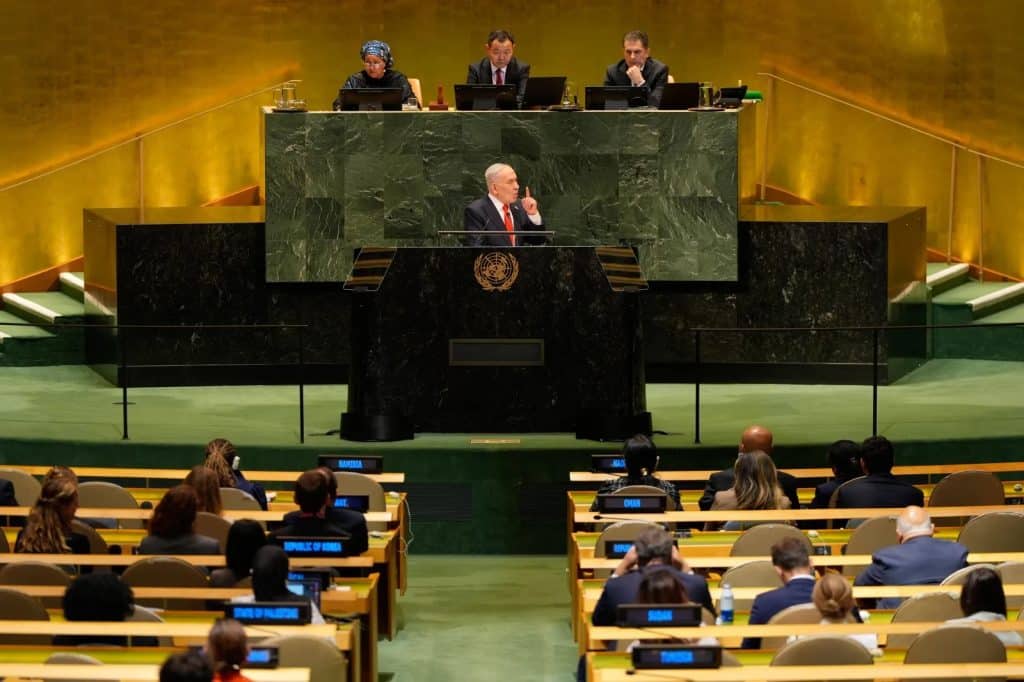
/5 Comments/in General/by Kevin MacDonaldCounting Down the Minutes to the Next Iran War, Netanyahu Turns His Attention to Disarming Israel’s Democracy
The government’s efforts to undermine and destroy everything it can and to turn Israel into an authoritarian state bordering on a dictatorship, have not ceased for a single moment ■ The High Court of Justice’s decision to allow Ben-Gvir to remain in his position will have a domino effect
April 10th, 06AM
The bitterness that many Israelis were feeling with the sudden end of the war with Iran, just as we were about to see the death of a complete civilization, is by now familiar. We’ve been there before.
Thus ends another campaign with extraordinary military-tactical achievements and strategic-political failure. Just like in the Gaza Strip. Prime Minister Benjamin Netanyahu wanted to fight endlessly, conquer Gaza City, establish a military government and let 20 hostages die in the tunnels. In October, U.S. President Donald Trump forced him to end it immediately. In June, Netanyahu wanted to keep bombing Iran till the last ayatollah, but Trump told him to abort the mission.
And now a third time, the pleas and tense phone calls between Jerusalem, Washington and Florida didn’t help. The president has learned from experience. He waved Netanyahu away without sharing with him the terms of the negotiations that were conducted to reach a cease-fire. When will Trump also realize that the prime minister is a con artist?
As was the case many times during the Gaza war, when Hamas (or Egypt) announced a cease-fire, Israelis again were informed that the fighting was over by foreign sources – the Pakistan’s prime minister and Trump. The local ruler disguised himself as someone who observes the holidays and remained silent. When there are no hostages released in a heroic operation, he chooses to observe the holiness of the day.
Netanyahu’s contempt for Israelis, whom he sees as mere cannon fodder for the realization of his imperial delusions (“We are changing the face of the Middle East!”) and his personal schemes (the cancellation of the criminal trial), was revealed again this week given the 18 hours it took for him to acknowledge that the cease-fire had been declared.
Related video: Watch: Netanyahu says no to Lebanon ceasefire as strikes continue (The Independent)
He acknowledged it in a laconic statement in English in the name of “the Prime Minister’s Office.” Why not in Hebrew? Oh, the sanctity of the last day of Passover. At 8:15 P.M., the prime minister released a video, of course, with recycled text. Eight months after he had removed the existential threat for generations to come, he promised another round to come. “The finger is on the trigger,” he warned, his eyes shining strangely. He offered not a single word of hope. Only more wars, blood, destruction and suffering. Take his war away, and what’s left? An empty suit. An aging ruler with health problems, a record of failure and corruption, a liar and an inciter loathed by most of the public. A wannabe autocrat.
The ruler has been revealed for the umpteenth time in the last 30 months as a sycophant and warmonger. Now, even senior White House officials know it. A New York Times investigation reported on the dismissive reactions to the presentation given by Netanyahu, Mossad chief David Barnea and the Israel Defense Forces chiefs on the eve of the attack. “Crazy,” “bullshit” and “farcical” – Secretary of State and National Security Advisor Marco Rubio, CIA Director John Ratcliffe and Chairman of the U.S. Joint Chief of Staff Gen. Dan Caine gave short shrift to the rosy predictions of the war’s outcome presented by Israeli leaders (and the report only covered the wide forum). Vice President JD Vance thought it was a bad idea. Later, he would accuse Netanyahu of misrepresentation.
The Times investigation reported that Netanyahu showed them a video of post-regime change Iran led by the son of the last shah, Reza Pahlavi. It sounds like something that AI created for Science Minister Gila Gamliel. The optimistic predictions he and his people made in the Situation Room discussion – that the Strait of Hormuz would not be closed, the Kurds would invade, the street protests would resume, the likelihood of Iran attacking its neighbors was low, the missile program would be destroyed within a few weeks and the chance of the regime being overthrown was high – all turned out to be mere illusions.
There’s a good that either Vance or Rubio will succeed Trump in the White House in two-and-a-half years. If they do – or if a Democrat is elected – what can only imagine what kind of reception Netanyahu (if he is still in office!) will get.
For the Israeli public, it has been an exhausting 40 days. Millions are sleepy-eyed from not getting a good night’s rest. Children are wetting their beds at night, coping without school and friends. Businesses are struggling; their owners have not yet seen a shekel (the Haredi politicians, on the other hand, don’t know what to do with the money that has been showered on them). And the emergency situation remains north of the Haifa line. Twenty-seven Israelis were killed, 7,000 were wounded and 6,000 were displaced. Hundreds of homes and vehicles were destroyed. And, of course, no one should forget the damage of Moshe Gafni’s window shade, a national calamity.
Netanyahu is the same old Netanyahu, the lies and the hyperboles are the same old lies and hyperbole and the mouthpieces are the same old mouthpieces. He promised regime change, the end of the nuclear project and the elimination of the ballistic missile threat. So what is everyone so bitter about?
License to kill
Hezbollah will not be disarmed in the coming years, certainly not by Israel. Only the Lebanese government and army can do it. Netanyahu has given up on that, but the disarmament of Israeli democracy remains a top priority, the raison d’être for him and his coalition partners. The effort underway to undermine and destroy everything possible, on the way to transforming Israel into an authoritarian, soon-to-be dictatorial state, never ceases. They will be renewed with greater intensity on May 10, when the Knesset reconvenes for its summer session until it dissolves before the elections.
Next Wednesday, the High Court of Justice will hold a hearing with an expanded panel of nine justices to hear a petition seeking an order for the prime minister to remove National Security Minister Itamar Ben-Gvir from his post. The hearing and the ruling will mark a milestone in the history of the governmental coup.
What Ben-Gvir has done to the police in the three-plus years he has been in office (politicization, interference with top appointments and enforcement, backing corrupt cops and going behind the commissioner’s back) will in the future be required reading material in any class that examines Israel’s decline from a liberal democracy to a country where anti-government protests are violently suppressed while gatherings several times larger organized by coalition supporters are treated sympathetically. People who protest against the war or the assault on democracy are brought to the police station and stripped naked to humiliate them and deter them from protesting again. Violent thugs who harass journalists and public figures are embraced by ministers and Knesset members.
It’s not just the relevant ministers and their boss (who declared in advance that he wouldn’t respect a ruling that orders him to fire Ben-Gvir) who will be following the matter closely after the statements of the justices, especially those of Supreme Court President Isaac Amit and his deputy Noam Sohlberg, the heads of the court’s liberal and conservative wings. Many ministers, for whom the criminal thug is a role model, will also be listening to what the court has to say.
If the court grants some kind of legal permission for Ben-Gvir to continue holding office, it will have an immediate and devastating domino effect. Whatever restrictions he may have imposed on himself will disappear as soon as he gains immunity. The police leadership – headed by the cowardly Police Commissioner Danny Levy – which has been corrupted to the core (except for Boaz Balat, the head of the investigations and intelligence division) will fall into line very quickly.
We tend to divide the court along the lines of conservative and activist. The Bibi-ists will argue that the Deri-Pinhasi ruling, which prohibited the prime minister from appointing a minister who is an accused in a binding ruling, is far-reaching enough and should not be expanded. But this argument is narrow and misleading. Ben-Gvir’s case is a thousand times more serious. This is about equal rights, civil rights and equal enforcement of the law. This is the beating heart of the High Court. When civil rights are violated in plain sight, week after week, and when the law is clearly enforced unequally, the High Court must enter the picture.
The attorney general’s stand is not that Ben-Gvir is unfit to be a minister, but that he should not be given a ministry responsible for law enforcement. A justice, no matter how conservative, who does not treat the case before him or her as tantamount to protecting civil rights will dishonor their role. The result, as already noted, will be devastating.
For two and a half years, the liberal-democratic public, civil society groups, the media, the gatekeepers, headed by the attorney general, have been fighting tooth and nail against a lawless government that has lost all restraint. Someone has compared it to a soccer game between a strong and well-heeled team (the government) and a weaker team (the opponents of the assault on democracy). The latter holds on until the 85th minute, but then a goal is scored, and the team that is barely holding on breaks. Then it concedes another goal and another. By the 90th minute, the score is already 5:0.
The first goal in this story is a High Court ruling that puts into Ben-Gvir’s hands a license to kill what’s left of the police.
‘The Propaganda and Lies of ‘Supreme Leader’ Benjamin Netanyahu’ (Israeli Channel 13)
/3 Comments/in General/by Kevin MacDonald‘The Propaganda and Lies of ‘Supreme Leader’ Benjamin Netanyahu’ (Israeli Channel 13)
Conflicts Forum’s compilation of consequential & strategic perspectives from leading Israeli political & security commentators (translated from the Hebrew press), 10 April 2026
Alon Ben David on ‘The Propaganda and Lies of ‘Supreme Leader’ Benjamin Netanyahu’ /
Ben Caspit: Netanyahu’s Lies and Imagined Victories /
Ronen Bergman: Netanyahu’s Promises vs Painful Realities /
Netanyahu’s post-ceasefire media statement to Israelis: “Iran is weaker than ever, Israel stronger than ever” /
Uri Misgav: “Blame can’t fall only on Netanyahu. A huge majority of Israeli public and Opposition enthusiastically supported war on Iran; believed in its absolute righteousness” /
Which Iran, which Israel will emerge from the war?
[These compilations are drawn from analysis & commentary by leading Israeli political, security and intelligence commentators in the Hebrew press — as reports published in Hebrew often provide a different window on Israeli internal discourse. Minor edits have been made for clarity].
STRATEGIC DEVELOPMENTS; CONSEQUENTIAL OBSERVATIONS —
‘The Propaganda and Lies of “Supreme Leader” Benjamin Netanyahu’ (Alon Ben David, senior Israeli military commentator, Channel 13):
[Netanyahu’s words are] a collection of wishful thinking and half-truths … He says “Iran is weaker than ever,” that “we set them back years”. Well, Iran emerges strong from this war! Iran emerges as a new regional power. He says his friendship with Trump “changed the face of the Middle East.” Yes, to Israel’s detriment! Iran today projects power over Saudi Arabia, over the Emirates, over Qatar, over Kuwait. They all need to pay [Iran] (protection) to export their oil. Iran is now the landlord of the Persian Gulf … Therefore, to come and say “we set Iran back years” … No, we advanced it! Its regime is stronger than it was on February 27, standing firm, and with the money Iran will earn from this ceasefire, it will repair all the physical damage we caused.
Netanyahu’s post-ceasefire media statement to Israelis — “Iran is weaker than ever, Israel stronger than ever” (Anna Barsky, Ma’ariv, 8 April 2026):
[On 7 April], Netanyahu issued a statement to the media: “I want to thank you, our wonderful people. When you showed resilience, you sat in the barracks and shelters – we achieved tremendous achievements together, our fighters on the front lines and you – on the home front. The State of Israel has achieved tremendous achievements … that until recently would have seemed completely imaginary. Iran is weaker than ever, Israel is stronger than ever – that is the situation right now. And there are other goals, and we will achieve them – either through an agreement, or by renewing the fighting. We will return to fighting whenever necessary … This is a stop on the way to achieving all [our] goals … Trump and I talk every day and we smile at each other when we hear the assessments that our relations are not good. Anyone who chooses to ignore the strength of this partnership is simply ignoring the truth.”
He then addressed [Trump] directly: “ … My friend Donald, I want to thank you for the deep friendship and deep friendship”. He continued: “We have undermined the foundations of the regime: we have destroyed the missile production plants … We have severely damaged the nuclear program, destroyed centrifuge factories and eliminated more nuclear scientists.[Regarding Lebanon]: “I insisted that the ceasefire not include Hezbollah and we continue to hit it. The biggest blow it has suffered since the pagers. We attacked 100 targets in 10 minutes, in places where Hezbollah was sure they were immune.”
Uri Misgav (leading opposition protest spokesman):
“Blame can’t fall only on Netanyahu. A huge majority of Israeli public and Opposition enthusiastically supported war on Iran; believed in its absolute righteousness and the ability to achieve its insane goals”.
Yossi Melman (leading intelligence commentator):
Approximately an hour before the ceasefire, the PM of Pakistan … announced that the ceasefire would also apply to Lebanon … The IDF also understood it that way. But toward morning, Netanyahu clarified that the war against Hezbollah would continue. [IDF] Chief of Staff Zamir echoed him. Netanyahu and the Generals love wars. Each for his own reasons … In contrast, most Israeli citizens are actually pleased with the ceasefire. After forty days of sweltering nights, exhaustion, dozens of dead, collapsing homes, thousands of wounded, damage amounting to tens of billions to the economy — a bit of normalcy won’t hurt. At least for two weeks … It’s regrettable that the opposition leaders, in order to bash Netanyahu, continue to stoke the flames of war. They could have welcomed the ceasefire and continued to accuse Netanyahu of failure. [But in stoking the flames of war] they place the public in a tough dilemma: they don’t offer it a choice between bad and good, but between bad and worse.
Israeli commentator Gideon Levy:
Israel’s opposition has no right to criticise [Netanyahu]. Anyone who cheered the war at its outset, all the Yair Lapids and Yair Golans who didn’t dare say one negative word about joining the war, who lined up in its justification, lost their right to criticise it. You supported it? Be quiet now. All those who saluted the war, some out of cowardice, others out of shortsightedness, most out of both, who proposed bombing and destruction while establishing grotesque “hasbara war rooms,” cannot now assail Netanyahu over the war.
Oppositions Leaders accuse Netanyahu of weakness & failure (Ma’ariv):
Opposition leader and MK Yair Lapid accused Netanyahu of “a political disaster that has never happened in the entire history of the State of Israel”: “There has never been such a political disaster in our entire history. Israel was not even at the table when decisions were made concerning the core of our national security”. “The army did everything it was asked to do, the public showed incredible resilience, but Netanyahu failed politically, failed strategically and stood up to no one … It will take us years to repair the political and strategic damage that Netanyahu has caused, as a result of arrogance, negligence and lack of strategic planning.”
Chairman of Democrats, Maj. Gen. (res.) and MK Yair Golan, also attacked: “Netanyahu lied. He promised a ‘historic victory’ and security for generations, and in reality we received one of the worst strategic failures Israel has ever known … Civilians killed. Heroic warriors fell. An entire country in shelters. The IDF did its part with strength and brought achievements, but the Netanyahu-Smotrich-Ben Gvir government once again failed to translate them into victory.” “None of the goals were achieved … [Iran] remained intact and even emerged from this war stronger … controls the Straits of Hormuz and dictates the terms. And Israel again, as in Gaza, was not in the room” … “This is not a ‘historic victory’. This is a complete failure that endangers Israel’s security for years to come”.
Walla and Maariv Poll (9 April):
46% of Israelis believe the US and Israel did not achieve victory; 22% believe victory was achieved; the remaining polled Israelis did not see a clear victory for either side. 63% of polled Israelis were dissatisfied with the outcome of the war and 43% expressed dissatisfaction with Trump’s actions during the conflict.
Is Lebanon Included in the Ceasefire? — Depends Who You Ask (Ronen Bergman, Yedioth Ahoronot, 8 April):
The two-week ceasefire announced on (Wednesday) by Trump, will also include Lebanon. Senior security sources familiar with the details of the temporary ceasefire agreement reached between Iran and the United States told Ynet. A few hours after the announcement, the Prime Minister’s Office announced that the two-week ceasefire agreement does not include Lebanon … This is not a final agreement … but this interim agreement, which concerns a cessation of hostilities, the opening of the Strait of Hormuz, and the entry into accelerated negotiations, is a dramatic step on the way to a permanent agreement … It was agreed, as stated, that the ceasefire will also apply to the Lebanese arena. In other words, when Iran opens the Strait of Hormuz, Israel and Hezbollah will secure their weapons.
“A few days of operational grace” for intensive attacks against Hezbollah before US pressure for calm (Anna Barsky, Ma’ariv, 10 April):
According to sources involved in [US-Israeli] talks … the focus of the quiet discourse currently taking place between several capitals [is] to allow the IDF, and especially the Air Force, additional time for intensive activity against Hezbollah … Israel says that as long as most of the attention and air resources were devoted to the Iranian arena, there was no real possibility of carrying out what was planned in Lebanon. Now, with the changing picture, there are those in Israel who believe that now is the time to take advantage of the created space for action. Assessments in Israel speak of a partial American understanding of this need … [However there] is a fear that Trump will send his envoys, Witkoff and Kushner, or will activate direct channels, to tell Israel that the blow has already been dealt and that it is time to move on to the next stage … In the talks … the possibility of a quieter formula is emerging, in which Israel would be given a short period of time to strike as broad a blow as possible on Hezbollah’s infrastructure, and then systematic American pressure would be applied to try to stabilise the northern front. Jerusalem believes … [it has] a few days of operational grace … After that, Israel estimates that an orderly American appeal will arrive … in about two days … Jerusalem wants to first complete the blow to Hezbollah, and only then move on to the political phase.
Ron Dermer removed as Israel’s Lebanon Envoy after he pressed for Lebanon to be included in the ceasefire (Anna Barsky, Ma’ariv)
[Netanyahu confidant] Ron Dermer … pressed to include Lebanon in the agreement … Negotiations between Israel and Lebanon are expected to begin next week in Washington. The one who will lead the negotiations with the Lebanese government is the Israeli ambassador to Washington, Yechiel Leiter, and not Ron Dermer … According to sources familiar with the details, Dermer believed that the demand to include Lebanon in the ceasefire should be met, but the IDF and the defense establishment opposed it. Ultimately, according to them, Netanyahu decided not to agree to the Iranian demand to apply a temporary ceasefire to Lebanon as well, and the issue was closed in a direct conversation between him and Trump … Meanwhile, [Trump] asked Netanyahu in a phone call to reduce attacks in Lebanon, in order not to harm talks with Iran, NBC reported, citing a senior US administration official. Although Washington and Jerusalem emphasize that Lebanon is not included in the ceasefire agreement, Israel has agreed to “be a helpful partner” in the process.
LEADING ISRAELI COMMENTATORS ON THE STRATEGIC BALANCE, AS OF NOW:
Netanyahu’s Lies and Imagined Victories (Ben Caspit, Ma’ariv, 9 April):
The mockery with which [Netanyahu] spoke about our imagined victories under his leadership is rivalled only by the mockery with which he speaks about all those … who have actually achieved achievements … Netanyahu is a man who is all talk … In the end … when the gunpowder dissipates, we are left with what we are left with: declarations, threats, statements, promises, bragging and nonsense … next to which is a wonderful nothingness.
Don’t get me wrong: I was “for the war” … The [2023] October War was forced upon us, but we emerged from it thanks to our own merits – not thanks to him. Thanks to us … The war on Hezbollah is just beyond compare, and the war on Iran is the most just since our ancestors began fighting each other at the dawn of history. I am not one of those who hesitate when force must be used, and in our neighborhood, those who do not possess force and are unable to use it to defend themselves – will not survive …
When he should have defined goals in advance – he defined only one goal: that the war last as long as possible. His leading interest was himself … We can only hope that the lies he lied to Trump will not cost us dearly, and that they will not turn on him and come back to haunt us. Because [Trump], who is the only one who brags more than Netanyahu, is a fickle president. He will not be here in three years; we will …
“The goal of the operation,” the headlines and commentators shouted, “is to eliminate the nuclear weapons, eliminate the ballistic missile threat, and overthrow the regime.” Today, 40 days later, none of these goals have been achieved … The bottom line: Hamas controls Gaza and is getting stronger, with the support of Qatar and Turkey. Hezbollah suffered heavy blows, but survived and harassed us aggressively until the last moment. The Iranian regime withstood a massive attack by two superpowers for weeks — and survived. Not only survived: it currently holds all the enriched uranium, quite a few ballistic missiles and their launchers, and the Strait of Hormuz … We still don’t know how it will end and what will happen … We do know that we have learned the limits of power – not just ours, but even that of American power …
Netanyahu’s Promises vs Painful Realities (Ronen Bergman, Yedioth Ahoronot, 9 April):
In a war led by two leaders who change the goals, the achievements, and without hesitation – the facts, it is difficult for the public to follow and form an opinion. Although an agreement has not yet been reached to close the war … we can discern some significant [things] … In public, Iran is making demands that will seem to Israeli and American eyes as crazy, outrageous, and delusional … but in talks with intermediary countries, the Iranians speak in a different language, and offer conditions that will be roughly along the same lines as those they offered in talks with the US in Geneva, which were blown up by the Americans, who attacked [Iran] two days later. If this is indeed what will be signed – including the dilution of enriched uranium or its shipment to Russia, a reduction in uranium enrichment, an Iranian promise to stop supporting proxies, and … the opening of the Strait of Hormuz to free navigation, many will say … we can live with this … [However] Iran has already informed senior intelligence and military officials on behalf of mediating countries that the two conditions that it did not agree to accept in Geneva … are also now out of the question: there will be no enrichment [restrictions]. In other words, Iran will not dismantle [its enriched uranium] and will not stop restoring the “nuclear fuel cycle” … The second issue: dismantling its missile project, which Israel sees as an existential threat, or at least a commitment to limit the range of its missiles to 500 km, Iran says there is nothing to talk about [on this] …
The Israel-Hezbollah-Lebanon front: Trump will soon have to make a difficult choice between Israel’s wishes and his own desire for the Agreement. “Israel will also have to choose how to get out of the trap it has fallen into,” says a senior official, “either blow up the most important agreement in the world right now or fold. In my opinion, the second. American patience, in my opinion, is running out. They didn’t understand that we would do something so unusual. It’s to the point where some people think we’re deliberately thwarting the agreement.”
The last 24 hours of Trump’s ultimatum were a frantic and nerve-wracking race for many of the participants in an attempt to prevent expanded American action. A look behind the scenes of the negotiations that culminated on Tuesday in an agreement on how to reach an agreement reveals a great effort by Iran and the United States to close the story [or the war], each with its own motives, alongside an identical, opposite effort by Israel and some of the Gulf states to influence in exactly the opposite direction – to go all the way … Others, like Vance, who opposed [the war from the outset] … influenced the President to ultimately accept an agreement that, for the time being, at least, does not achieve any of the original war goals — not [Trump’s], certainly not Netanyahu’s …
There will be more talk, investigation, and stories about what the Mossad’s plan to overthrow the regime in Iran was and who was to blame for its failure, along with an examination of how it was presented and how it was perceived in Trump’s mind … Netanyahu promised that he had removed the nuclear and missile threat back in June. It was a lie, and the pretense of removing it quickly turned out to be hopeless. This is the difference between words and missiles. The former do not cost money. The latter cost blood … Netanyahu tried to convince Trump to continue, that destroying the chemical industry infrastructure and oil facilities would bring Iran to its knees … [but] there were also people, led by Vance, who warned Trump not to fall for these false promises again.
Trump’s ceasefire leaves Netanyahu flustered (Ben Caspit, Al-Monitor):
Trump’s decision to pursue a ceasefire … puts Israel in a difficult position: despite its military achievements, Tehran may be emerging as the victor … [Iran’s] capabilities, combined with [its] resilience under heavy sustained bombardment … were sufficient to give it the upper hand … If and when the sides reach a negotiated agreement, the conflict could be seen as a tactical victory for Israel but a strategic defeat … it may have lost long-term leverage … Avigdor Lieberman, Israel’s former Defense Minister, often responds to questions about the state of affairs in recent years saying, “Nothing good is looming on the horizon”. That sentiment reflects a broader national mood … “Netanyahu has proven once again his ability to enter conflicts but not exit them,” a former associate of Netanyahu [said]. “He is incapable of planning an exit strategy, remaining realistic and telling the truth, and to avoid overcommitting” … Many in Israel hope that the major gaps in negotiations will undermine a final agreement, forcing Trump to resume the US campaign until the regime in Tehran collapses. But they also realise that such an outcome is unlikely.
Former Israeli Deputy National Security Adviser Eran Etzion: The Strategic Balance, as of now; Gulf States main losers; their economic and security models have collapsed
The main losers — Saudi Arabia, UAE, Qatar and all the Gulf states. Their economic model has collapsed … Their security concept, which was based on an American defense umbrella and American bases on their territory, has collapsed. The working assumptions regarding the understandings with Iran have collapsed. The immediate and long-term damages — colossal. There are no clear and attractive alternatives. Deep thinking and rebuilding of basic strategic concepts and economic and energy resilience are required.
The overall Israeli balance sheet — Significant military achievements against Iran; Joint fighting with the US and demonstrating operational and intelligence assets. But the bet on regime change failed. Dragged the US into war with false promises — strategic damage for generations … Collapse of decision-making processes, and the heads of the security services’ resignation to Netanyahu. Complete disconnection of the government from the public. Paralysis of the economy and closure of Ben Gurion Airport for a month – exposing strategic weakness. Stretching the IDF beyond its capacity, to the point of ‘collapsing into itself’. Astronomical economic damage, hidden from the public. Promotion of the coup d’état and suppressing protest and freedom of expression, under the cover of war. Closed natural gas exports and failing to honour contracts.
Which Iran, which Israel will emerge from the war? (Ben Caspit, Ma’ariv, 10 April):
[At] the cabinet meeting that took place on [8 April], to mark the (temporary?) final episode of the [war], which is in the final stages, [it] is unbelievable, but true: the ministers were united in their opinion that the war achievements were fantastic. “We made history,” said some of them, pointing to the unprecedented cooperation with the US (it’s true), the divine victories, the military achievements (amazing by any measure), the fact that no one can defeat us, and that we have met all the tasks and hit all the targets. When it came to the details, they got a little stuck … Well, the enriched uranium is still in Iran. That’s true. It is also not clear whether it will come out of it. And the regime, well, the regime hasn’t collapsed yet. But it will collapse … We don’t have a date right now. The ballistic project is alive, existing and being launched towards us and all the other Arabs for almost two months straight. The proxies are also shooting and kicking. From Hezbollah to the Houthis. And there’s a bonus: Iran has become the official owner of the Strait of Hormuz, and chances are good that when the war is over, it will be able to collect transit fees there, which will make the Iranian economy prosperous and the Ayatollahs, that is, those who remain there, will be swimming in money … Oh, we forgot Hezbollah. No, it is not disarmed. Nor has it lost its launching and combat capabilities …
So the atmosphere of the historic victory in the cabinet was not complete. Several of those present reported afterwards a feeling of sourness, not to mention a slight and annoying gloom, because no one understands the magnitude of the victory … The general feeling was that the way the war ended, without achieving any of its goals … will keep the right out of power in the upcoming elections.
The question is which Iran will emerge from the [war] and which Israel will emerge from it. The answer is not clear. Because if the Iranians are indeed going to get a license to collect tax from every ship that passes through Hormuz, we are in trouble. If they get rid of the sanctions and get a goldmine in the form of control over the Strait, we will still miss Ali Khamenei. Not to mention Iran’s immediate neighbors, the United Arab Emirates and all that … We should be worried, this war could create a new regional economic power, which is both Shiite, extremist, violent and vengeful and continues to stubbornly plan our elimination. It is true that the nuclear danger has been postponed, but it has not passed …
If [Iran gets a nuclear bomb], the story is over … It ends, almost always, the way it ends in Gaza. Two years of war, hundreds of deaths, 1,200 murdered, and in the end Hamas is the same Hamas, Gaza is the same Gaza, plus Qatar and Turkey. And Iran … in the end the most significant achievement of the war as of now is the opening of a Strait that was open before [the war]. Could it have been planned differently? Yes, of course. Without selling Trump … legends …
‘Alienated in disgust’: There is something … even bigger than the Iranian story. I’m talking about the American story. About the strategic alliance between Israel and the US, which is the Jewish state’s greatest security, political and economic asset, by an order of magnitude greater than all other assets … Relations with America are supposed to be our etrog. We must not touch, we must not spoil, we must not shock, we must not endanger. We must treat it as the holy of holies. Exactly the opposite of the behavior of the savage Netanyahu in recent years. And now, all of this is in real danger. A fresh PEW survey in the US has published shocking, sleep-inducing data on our situation among the American electorate: for the first time ever, 60% of Americans hold a negative opinion of Israel, only 37% of them hold a positive opinion. During the Bennett-Lapid government, the situation was 55% positive and 41% negative.Dislike of Israel is prominent among Democrats, but it also exists and is growing among Republicans. In both parties, the majority of voters under 50 are against us. These numbers are hard to digest. We are essentially exchanging places with the Palestinians. At this rate, we will become alienated from disgust.
Netanyahu and his government cannot be exempted from direct responsibility … More and more American media outlets and opinion leaders are blaming Netanyahu for dragging Trump into a war that is perceived by most of the American public as an unnecessary, deceitful war. If it does end in a fiasco … it will not be long before Israel becomes the scapegoat of large sections of the American public, and a significant part of the political map. Netanyahu will leave behind ruins. Israel’s transformation into [just] “another country” … and the loss of its status as a preferred ally could be the greatest disaster to befall us since the founding of the state. Everything must be done to prevent this.
We must not forget that in the end, this alliance is truly founded on shared values. When they peek in here and see Ben Gvir and Bezalel Smotrich, the rampage in Judea and Samaria, the systematic erosion of democracy, our transformation into a regional brat, and our long-standing whining about all the accepted Western conventions, they draw conclusions … The Holocaust generation is no longer here, the middle generation is also on its way out, the younger generation looks at us and gets sick. Rightly or wrongly. Our biggest and most important support is on the way to breaking. Thank you, Bibi …
In 2001, [Netanyahu] went to the US Congress … to convince them that America must invade Iraq and overthrow the regime of Saddam Hussein. The entire segment was filmed and exists online. This was America after the September 11 attacks and after the invasion of Afghanistan, [and] the Americans were looking for additional targets to vent their anger on. Netanyahu was good for them. He explained, in an authoritative and convincing baritone, that if Saddam’s Sunni regime fell, it would project American power in all directions and would also bring about the containment or fall of the Shiite regime in Iran. The Americans bought it, invaded Iraq, and were buried in a quagmire that cost trillions, buried thousands of fighters, and produced zero results. Everyone misses Saddam Hussein today. They haven’t forgotten him. The invasion of Iraq was disastrous, even in our eyes. That was the reason why no American president after it agreed to hear about action in Iran.
TWO WONGS DON’T MAKE A RIGHT
/0 Comments/in General/by Ann CoulterPresident Trump’s executive order denying citizenship to “anchor babies” has caused quite a stir. The media insist that kids born to illegal aliens on U.S. soil are automatic citizens at birth. Although asserted with smug arrogance, they then bury any discussion of the issue in lies.
Thus, for example, the entire media claim that Trump’s order is about “birthright citizenship.” That’s rather circular. The precise question at issue is whether kids born to illegals are citizens by right. It would be like calling a case about transgenders a “women’s rights” case.
In fact, for nearly a century, no one disputed that “birthright citizenship” referred exclusively to the citizenship of children born on U.S. soil to citizens and legal immigrants—not including tourists, diplomats or others in the country temporarily. No court has ever held otherwise.
But the Times neurotically insists that anchor babies’ citizenship is “well-established through the 14th Amendment and nearly 130 years of case law.” The Newspaper of Record is lying about the record.
Actually, the idea that babies of illegals have won the citizen jackpot was invented by Justice William Brennan in 1982 and inserted as dicta—i.e., idle chitchat, not part of the court’s ruling—in a footnote. He cited no law, no constitutional provision and no court holding.
There’s your “well-established” doctrine that anchor babies are citizens—Doctor Demento’s crayon scribbling on the Constitution in the 1980s.
The legendary “130 years of case law” said to establish the citizenship of anchor babies refers to an 1898 case, U.S. v. Wong Kim Ark, that took the 14th Amendment’s guarantee of citizenship to freed slaves and gave it to a child of legal immigrants.
Manifestly, the opinion in Wong had nothing to do with illegal immigrants.
Otherwise, Brennan wouldn’t have had to announce his personal opinion in 1982 that children born to illegals should be treated as citizens. It would already have been the law.
The Wong court never expressly refers to legal or illegal immigrants at all. The concept would have been incomprehensible in 1898. From 1620 to 1920, pretty much anybody could come to America—although in the late 19th century, we began excluding the diseased, the criminal and the feeble-minded. (Probably why Brennan had such a soft spot for illegals.)
There was no social safety net, so if you couldn’t make it, you went home. Until we began plunging immigrants into the warm bath of government handouts, about half of all immigrants didn’t stay. No deportations necessary: They left the same way they came.
It wasn’t until the 1960s that three major innovations conspired to wreck our country: 1) the rise of the welfare state; 2) television; and 3) international air travel. Suddenly, every poor person on Earth was showing up, uninvited, and demanding that we support them for life.
The ruling in Wong does not require that we make their kids citizens. That case merely held that a Chinese man born to parents living in the U.S. as “permanent domiciled residents” was a citizen. Solicitor General John Sauer argued that the court’s repeated references to Kim Ark’s parents being “permanently domiciled” in the U.S. meant they were in the country legally.
Of course not! That amendment was about freed slaves.
The framers might have made that point with greater clarity, except our Constitution intentionally avoids referring to race or slavery, out of embarrassment. Instead, the framers used convoluted euphemisms, like “free Persons” and “all other Persons” or “Person held to Service or Labour.”
Even the post-Civil War amendments—despite being all about slaves and slavery—go out of their way to minimize the subject, by, for example, guaranteeing “equal protection” to “any person within [a state’s] jurisdiction.”
That’s the reason for the 14th Amendment’s strange locution: “All persons born or naturalized in the United States, and subject to the jurisdiction thereof, are citizens of the United States and of the State wherein they reside.”
The odd phraseology wasn’t an IED meant to blow up in the country’s face a century later. The framers were expressing their discomfort with the “peculiar institution” that had been demanded by plantation owners in need of cheap labor. (Because, otherwise, “the crops would rot in the field”!)
A few of the media’s other favorite moments from the oral argument were Justice Amy Coney Barrett’s retort to Sauer, “Yeah, yeah, yeah, yeah—but what about the Constitution?” and Chief Justice Roberts’ remark, “It’s a new world. It’s the same Constitution.”
If the justices are so concerned with the meaning of the Constitution, the only possible conclusion is that the 14th Amendment doesn’t have anything to do with immigrants at all. It’s about freed slaves. Wong was wrong and should be overruled. And if they won’t say that, then maybe drop the sanctimony about being legal purists doing straight constitutional interpretation.
Wong may be contrary to the 14th Amendment’s history and precedent, but that doesn’t mean it flung open the door and gave automatic citizenship to just anyone. Unlike anchor babies, Wong’s parents were not in the country illegally, and his citizenship was the only issue decided by the court.
COPYRIGHT 2026 ANN COULTER
From Mark Wauck’s “What Was The Ceasefire About?”
/8 Comments/in General/by Kevin MacDonaldFrom Mark Wauck’s “What Was The Ceasefire About?”
… On Trump’s side, we’ve seen the reports that the US is currently stripping its Asian bases of standoff precision missiles. However, I continue to suspect that the ceasefire theater was precipitated by an internal crisis, probably twofold in nature. The crisis is a crisis of leadership amid growing doubts regarding Trump’s ability to lead and in the context of a severe lack of public support for the Anglo-Zionist war—including a continuing collapse in support for or even in sympathy for the Zionist Entity itself. Here’s how I see this crisis unfolding.
First came Trump’s insistence on a boots on the ground raid to snatch a major portion of Iran’s enriched uranium. Had that raid been successful, it might have fueled hope in the typically Anglo-Zionist fantasy of an internal Iranian regime change, based on lost confidence in the regime’s competence. At the least, it might have allowed for a pause to prepare for the bigger push for complete subjugation and fracturing of Iran. The raid failed in fairly spectacular fashion, requiring a massive coverup of losses—including human casualties—which placed the US military on difficult political grounds.
Second came Trump’s inability to conceal his rage at the shambolic failure and Iran’s refusal to submit, which led to his vulgar, profanity laced “civilization ending” social media tirades over the weekend. In my speculation, a line in the establishment must have been drawn. The reset required not only a pause to retool militarily but also politically. Thus the ceasefire theater. The desperation for a ceasefire—before Iran could call Trump’s deadline bluff—was so serious that the US was forced to accept Iran’s maximalist position. That, of course, has been discarded amid a blizzard of lies. But the truth is out:
DD Geopolitics @DD_Geopolitics
3h
 CONFIRMED! The White House reviewed and approved a social media post by Pakistan’s prime minister, Shehbaz Sharif, which explicitly stated that Lebanon was part of the ceasefire agreement.
However, after Israel bombed Lebanon, the Trump administration backtracked, claiming that Lebanon had not been included in the deal.


That rush to extricate Anglo-Zionism from Trump’s rhetorical excesses has led to another black eye for the Zionist Entity—which launched its Freudian Operation Eternal Darkness on Lebanese civilians—but it achieved the purpose of deflecting attention from Trump’s TACO.
The major problem facing Anglo-Zionist Central is that a mere military munitions resupply—dangerous in itself because the stripping of America’s Asian bases enhances China’s hand—is far from guaranteed to succeed. Iran publicly flexed its strong hand by revealing the numbers of its missile and drone arsenal, and the Anglo-Zionists are painfully aware that their military effort has failed. Is it time for another roll of the dice?
Trump has renewed his efforts to arm twist the NATO countries into what looks like a suicidal attempt at a blunt force reopening of Hormuz.

Pressure leads to understanding? !!!

Again, this is a sign of desperation, but we’re seeing it being pushed forward yet again. It would be ludicrous on its face—why would NATO countries commit this absurd form of suicide? We’ve seen them breaking ranks out of sheer panic for economic survival—but for the financial leverage that the Anglo-Zionist still possesses. But it looks like that fading leverage may not be up to the task at hand. The NATO countries appear to be playing a delaying game, a diplomatic form of the old rope-a-dope strategy—appearing to agree while setting up conditions that are road blocks:
DD Geopolitics @DD_Geopolitics
The US is ramping up pressure on European allies to take a military role in the Strait of Hormuz. According to Der Spiegel, NATO Secretary General Mark Rutte has informed European capitals that Trump expects concrete commitments within days—such as sending warships or other military assets. General political statements are no longer considered sufficient.
European diplomats say Trump’s demand amounts to an ultimatum following his meeting with Rutte. Germany has indicated general willingness to join a mission, but only under conditions such as a UN mandate and either a lasting ceasefire or a negotiated truce.
Beyond Hormuz, Trump is also reportedly pressuring NATO allies with threats. US media say he is compiling a list of European countries that supported or opposed him in his war on Iran, with possible US troop withdrawals from “uncooperative” allies. Spain is mentioned as a key case after refusing overflight rights for US military aircraft.
Germany, meanwhile, has placed no restrictions on US bases, but Trump is said to view Berlin as unsupportive because of political messaging describing the conflict as “not our war”—a quote attributed to Defense Minister Boris Pistorius, though it was reportedly misattributed in Washington to Chancellor Friedrich Merz.

In the meantime, while awaiting developments, we see the pivot to more blustering in this curious social media post. I say curious, because to my eye this reads like a Hegseth production rather than a Trump one. See what you think:

Could this be a sign that Trump is being restricted, at least for the time? There are a few Trumpian flourishes, such as—”bigger, and better, and stronger than anyone has ever seen before”—but even those fail to capture the essential BS.
In the meantime, while awaiting a return to full scale military action, Iran has restricted Hormuz traffic. And that’s the real name of the game.