General

Patricia Marins updates the war; on X

@pati_marins64
War Causes $3.2 Trillion Losses in Global Markets and pressure US-Israel The United States is deploying its B-52 bombers to attack Iran, along with more B-2s, in a move that appears aimed at devastating Iran and forcing surrender. Today, missiles and drones continued hitting Israel and U.S. bases, but with one detail: almost no reaction from air defenses, which are likely being conserved to protect assets like airports, energy infrastructure, and military industry.
With daily costs potentially reaching $10 billion and, according to The Economic Times, losses of $3.2 trillion in global markets already reported in the first 48 hours of war, this is generating more pressure to end the conflict. Israel’s central bank governor has announced estimated losses of $17–20 billion. If Israel’s losses are that high, how much are the American ones?
The order is to intensify efforts to end the war quickly. However, the waves of bombings hitting Iran do not seem to have that effect. Iran’s entire military doctrine was built around such scenarios, which is why it has such an extensive network of multi-kilometer underground bases. I see no possibility of the war ending in the coming days for several reasons, including:
1. In addition to their naval strength of hundreds of remaining assets, Iran still maintains a sustained rate of fire, deploying dozens of missiles and hundreds of drones every daqui ;
2. The decentralization of operations. For example, anti-ship missiles are operated by four forces: IRGC, navy, army, and aerospace forces. The same decentralization applies to drones and other military assets, creating resilience;
3. The belief that the US and Israel cannot sustain a long war. Iranians know that, although missile attacks have been reduced, current waves are enough to continue neutralizing most U.S. bases in the region, maintain economic chaos in Israel and Arab countries, and drive losses in global markets;
4. Iranians are certain that no matter how many bombs fall, they will emerge victorious, since there is no way to destroy their nuclear program except by themselves, and the war has virtually suppressed internal opposition movements.
5. The attacks have not sparked internal guerrilla movements or any uprising against the government. On the contrary, the level of violence has increased support for the regime. It’s that old story: if the dose of the medicine is too high, it can have the opposite effect.
Ironically, Iran is heading toward a scenario similar to Ukraine’s, where everyone knows there’s no way to win against the Russians, but the cost keeps getting higher. In fact, when I read Pentagon reports, they remind me a lot of the Russian MoD’s in the early days of the Ukraine invasion. Iranian missiles and drones launched today face almost no resistance from air defenses already depleted in many areas, the Strait of Hormuz remains closed, Iranian naval forces are nearly intact, markets are in panic, and Iran still has dozens of underground military fortresses loaded with missiles and equipment. Anyone who thinks the US and Israel can sustain this war for weeks in this scenario is very optimistic.

Prof. Mearsheimer on Judge Nap: “It is almost impossible for me to see how Israel and the US win this war.”

On 3 March 2026, I was on “Judging Freedom” talking about the Iran war. I told the Judge that the Trump administration was dragged into this war by Israel and its enormously powerful lobby in the US. Both Secretary of State Marco Rubio and House Speaker Mike Johnson have admitted as much and it is clear from listening to and reading the discourse on the internet that many Americans understand that this is another war for Israel. Iran was no threat to the US and there was no reason for Trump to attack it.

I also emphasized that it is almost impossible for me to see how Israel and the US win this war. It seems that victory for this aggressive tag team requires not only regime change in Iran, but replacing the regime with new leaders who are subservient to Israeli and American wishes. If those two things do not happen, Iran will surely keep its nuclear enrichment capability; keep building ballistic missiles, cruise missiles, & long-range drones; and keep supporting Hamas, the Houthis, and Hezbollah. The likelihood of this war producing an Iranian regime that is subservient to Israel and the US is close to zero in my estimation.

For Iran to win, all it has to do is survive and not end up as a pawn of Israel and the US. Even if its missile inventory is greatly diminished, its nuclear enrichment capability is crippled, and its infrastructure is badly damaged, it matters little if the regime survives or is replaced by a regime that refuses to kowtow to the tag team. Remember that in the Vietnam War, the US won virtually every battle and lost the war.

Glenn Diesen interviews Col. Douglas MacGregor: A New World Emerges: Iran Will Win & Israel May Not Survive

Mark Wauck: Day 4 Op Epstein Fury: Early Update

Summary of the disaster so far…

First we have an update on the destruction of some of Iran’s naval assets. While Trump was crowing about destroying some Iranian ships that were left at the docks, I speculated that these were vessels that were deemed expendable or indefensible in the circumstances—crews would not be put to risk. It appears that was the case:

Patricia Marins @pati_marins64

From the 8 ships sunk and visually confirmed- , 3 were from 60s and without any relevance, 3 unarmed an 2 more modern frigates. Where are the others 25-30 Iranian ships and 28-30 submarines?

Shahryar Pasandideh @shahpas

A waste of a munition against an essentially unarmed ship (the Makran and Kordestan should not be confused with the Shahid Mahdavi) and an unnecessary pollution hazard. The waters of the Persian Gulf, which Iran shares with the Gulf Arab states, are slow to circulate and flush.

Joseph Dempsey @JosephHDempsey

20h

INS Makran, a former oil tanker converted into an Expeditionary Mobile Base (ESB), indicated damaged in strikes at Bandar Abbas naval base, Iran.

I can’t vouch for Marins’ numbers—Wikipedia lists Iran as having 20 submarine. Of these, three are Russian Kilo class subs, which are very dangerous attack subs—extremely quiet, well armed. Their presence in the area should be very concerning to the USN and they are probably the most significant asset the Iranian navy possesses for this type of war. Most of the rest are mini-subs. These are most likely designed for coastal operation, so useful for keeping the USN at a distance—little is known about their range, but they carry two torpedoes. Beyond the submarines the Iranian navy operates numerous fast patrol ships—some can reach 100 mph—which are armed with anti-ship missiles. These present a very real asymmetric threat.

More generally, Marins notes this morning:

An operation planned entirely for a 5-day war

As we’ve been discussing over the past few days, the shortage of interceptors is already critical and is directly affecting the United States, Israel, and their allies, who are now openly accusing the U.S. of turning its back on them and prioritizing Israel’s protection instead.

Not to mention the failure to evacuate the bases, with soldiers reportedly hiding in hotels in the face of such obvious bombardment in a conflict of this scale. …

In the best-case scenario, there will only be enough ammunition left for another 4 days if Iran returns to its initial pace of attacks.

But that’s not even the main concern. In the configuration most oriented toward anti-missile defense, which is almost certainly the loadout of the two Carrier Strike Groups currently stationed in the region, the number of Tomahawks should range between 300 and 500 missiles.

Since hundreds have already been expended in the last 3 days, it’s quite possible that no more than 100–150 remain or even less.

That’s the point I made before the war started. That the interchangeable launch silos (able to accommodate both anti-missile and Tomahawks) would be heavily skewed toward defense rather than toward the offensive Tomahawks.

So, in addition to the interceptor shortage, the Tomahawk inventory is also dropping fast, and they can only be reloaded in port. Although the Navy is working on at-sea reload capability, it is still not operational.

Everything was planned for a lightning war that never materialized.

Now, in the big picture, this is very big.

Collingwood @admcollingwood

3h

Maybe because, given the midterms are coming, the traders at Henry Hub know that Donald Trump could easily impose export controls.

Philip Pilkington @philippilk

5h

European natural gas prices are absolutely soaring. Henry Hub in the US is pretty muted. Weird considering LNG demand from the US is going to increase significantly.

So, the Euros cut themselves off from cheap Russian energy to import expensive US gas. Who wants to bet that Trump would inflict pain on American consumers in the event of major shortages just to accommodate allies? Me neither. And it gets worse.

Iran has struck Fujairah, which is the only Gulf energy hub that lies outside the actual Persian Gulf, beyond the Strait of Hormuz. The only bypass of the Strait. Energy analysts didn’t count on this and assumed that energy would continue flowing from Fujairah. Fujairah is also an important support and resupply facility for the USN Fifth Fleet.

Image

Shanaka Anslem Perera @shanaka86

BREAKING: Fujairah is not just a port. It is the terminus of the Habshan-Fujairah pipeline, the UAE’s only bypass around the Strait of Hormuz.

Iran just struck the escape route.

Every analyst modelling the Hormuz closure built their base case on 4.0 to 6.5 million barrels per day of bypass capacity through pipelines terminating outside the Strait. Fujairah was the linchpin of that assumption. Saudi Aramco’s East-West Petroline to Jeddah was the other.

On March 1, Iranian missiles hit Ras Tanura, Saudi Arabia’s primary export terminal. On March 3, Iranian drones reached Fujairah Oil Industry Zone. Debris from an intercepted drone ignited a fire at the facility. Contained quickly, no casualties, operations resumed.

But the message to reinsurers is not about this fire. It is about the next one.

The bypass capacity that every energy desk on Wall Street uses to argue Hormuz disruption is manageable just became a target set, not a solution. Reinsurers now must model not only Hormuz transit risk but bypass terminal risk. The insurance withdrawal that shut down 80% of Hormuz transits can now extend to the infrastructure the market assumed would compensate.

$79 Brent assumes the bypass works. Iran just demonstrated that the bypass is within range.

Recalculate everything.

Rethink that lightning 5 day war.

@calvinfroedge

22h

Friday: weekend war, we’ll kill Khamenei and the people will rise up

Saturday: 4 day war, people need some encouragement, we have people in mind

Sunday: 4 week war, our people are dead, not sure what comes next, maybe civil war

Monday: Boots on the ground

What’s next? Trump is likely on the phone to Tel Aviv seeking instructions.

Will Schryver @imetatronink

11h

 Running Dry

Less than 72 hours into this exercise in madness, US stockpiles of air defense interceptors are manifestly running dry.

That is to be expected when you expend 10+ to intercept just 1 or 2 incoming missiles.

This debacle continues to progress from bad to worse.

Statement by Permanent Russian Federation Representative Vassily Nebenzia at UNSC Briefing in connection with US and Israeli Strikes against Iran

Mr. President,

We would like to thank the Secretary-General for his briefing.

First of all, we would like to express our strong disagreement with the fact that today’s meeting is convened under the agenda item “The situation in the Middle East.” We wish to recall that Russia and China requested the briefing be held under the item “Threats to international peace and security.” The same request was also contained in a letter from our Iranian colleagues. The aggression to which Iran has been subjected today has already spurred the escalation in the region and is liable to spill over far beyond the region, especially given that one of the two initiators of this military misadventure is far from being a State of the region. Attempts by the British presidency to artificially “downplay” the magnitude of danger of the current situation are simply unacceptable.

The Presidency also grossly scorned Russia and China’s request to invite Jeffrey Sachs, professor of Columbia University, as a briefer at today’s meeting. Normally, our British colleagues invariably assert the importance of involving civil society representatives in Security Council meetings whenever possible. But obviously, this does not apply to cases whereby internationally recognized academics can reveal the truth that may turn out unflattering to Western governments.

Mr. President,

In recent hours, we have witnessed another extremely dangerous surge in escalation in the Middle East. In the early hours of February 28, the United States and Israel began launching massive military strikes on the territory of Iran. It was publicly declared that one of the targets of the attack was the country’s senior political leadership, as well as civilian nuclear facilities. In real time we are getting reports from the Iranian authorities about casualties, including among civilians: more than 200 people have died in 24 provinces of the country. We were particularly grieved to learn about the strike targeting a girls’ school in Minab, where 85 children are reported to have been killed. We express our sincere condolences to the families and loved ones of the victims and we wish a speedy recovery to the injured. Our country is taking all necessary steps to ensure the safety and security of Russian citizens who are currently in the Islamic Republic of Iran (IRI).

Mr. President,

The actions taken by Washington and West Jerusalem are nothing but yet another unprovoked act of armed aggression against a sovereign and independent UN Member State, in violation of the UN Charter and of the fundamental principles of international law. Such actions are openly geared towards further meddling in Iran’s internal affairs and destroying the State that is “disfavored” by the West. As we warned previously, this reckless move by the United States and Israel has triggered a sharp escalation of the situation throughout the region, affecting Bahrain, Jordan, Qatar, Kuwait, the United Arab Emirates, Syria and Saudi Arabia.

Moreover, the US and Israel’s military operation is a genuine betrayal of diplomacy. Yet again, these countries are bringing to bear military force against Iran at the very height of negotiations – just as they did in June 2025. As recently as the day before yesterday, on February 26, Geneva hosted the latest round of US-Iranian talks facilitated by Oman. As Iranian Foreign Minister Abbas Arakchi noted, the parties agreed to continue the dialogue. For our part, we emphasize that the Russian side has repeatedly received signals that Israel has no interest whatsoever in a military confrontation with Iran. And now, despite its willingness to engage in the diplomatic process, Tehran is once again being stabbed in the back. Moreover, Washington has been regorously building up its military presence in the region for a very long time, which only attests to the fact that the aggression against Iran was plotted in advance.

The actions of the US and Israel risk spiraling into a humanitarian and economic catastrophe. Of particular concern, once again, are the threats to nuclear and radiological safety and security.

US President Donald Trump has announced today that this operation is aimed at preventing Iran from acquiring nuclear weapons. But such claims are ungrounded. Tehran has consistently stated that it has no such plans and is complying with its obligations under the Non-Proliferation Treaty (NPT). Moreover, Iran has repeatedly stressed its readiness to place the preservation of its status as a non-nuclear-weapon state at the heart of new agreements with the US, provided that Iran’s legitimate right as a state party to the NPT to develop peaceful nuclear technologies is respected and upheld.

Against this backdrop, we deem completely unfounded all the attempts by Western countries to justify this US-Israeli aggression by citing alleged threats to international peace and security supposedly emanating from Iran’s nuclear program. We can’t but recall here that the only credible sources of information on this matter are the relevant reports of the IAEA Director General. And these reports have never indicated that Iran could be developing nuclear weapons. The facilities being hit are under the Agency’s safeguards, which means that they cannot, a priori, be used for such activities. We expect that the IAEA Director General, Rafael Grossi, will give unambiguous assessments and will condemn this yet another act by the USA and Israel to undermine the authority of the NPT and the global non-proliferation regime as a whole.

Under no circumstances can nuclear facilities, including the Bushehr Nuclear Power Plant, be targeted by armed forces. That is unacceptable.

Mr. President,

We note that what was being done today is the latest phase of consistent escalatory moves taken by Western countries against Iran. These moves include the US-Israeli strikes against the country’s territory in June 2025 and the open interference of the US and its allies in Iran’s domestic political situation this past January. We also remember the failed attempts by the United Kingdom, France, and Germany to trigger the mechanism for reinstating anti-Iranian Security Council resolutions, that is the “snapback” mechanism. That did not happen owing to the efforts of Russia and a number of other UN member States who repeatedly and exhaustively explained why the UK, France and Germany had no right to invoke that mechanism.

However, none of this worked out, and the US and Israel once again resorted to the use of military force. What immediately comes to mind are obvious parallels with the events of 2003, when US representatives were trying to justify the US invasion of Iraq by waving a vial with some powder in this very chamber, alleging that Iraq possessed weapons of mass destruction, which no one ever found. In 2023, future US Vice President Jay D. Vance said that the Iraq campaign was “unforced,” that innocent Iraqis and Americans died as a result of it, and that Washington needed to learn this lesson. However, as it turned out, this lesson was never learned.

In the statements of our European colleagues (we will hear more of them today), we do not hear words of condemnation for the aggression, nor do we hear about the deaths of many Iranian civilians. What we hear instead are, for example, the words by French President Emmanuel Macron: «The Iranian regime must understand that it now has no other option but to engage in good faith negotiations to end its nuclear and ballistic programs, as well as its regional destabilization activities». Similar assessments were voiced by British Prime Minister Keir Starmer. These absurd statements were then underpinned by a joint statement by the leaders of the UK, France, and Germany, who condemned only “Iran’s strikes on countries in the region.”

Colleagues, just think for a moment – this is being said at a time when Iran has been subjected to military attack in the midst of active negotiating process. The hypocrisy of our European colleagues knows no bounds. This is not even a case of “double standards”; it is some kind of parallel reality or the other side of the looking glass. In the English language, there is a term that perfectly describes this situation – “victim-blaming.” One gets the impression that London, Paris, and Berlin are living in “la-la land” they created for themselves, trying to make the whole world believe in their illusions. However, attempts to mislead the international community are doomed to failure – any sane person is perfectly aware of who is responsible for the latest unchecked escalation.

Mr. President,

We demand that the United States and Israel immediately cease their aggressive actions. There are no and will never be any alternatives to a peaceful and diplomatic resolution of the Iranian issue, including its nuclear component. We insist on the immediate resumption of political and diplomatic settlement efforts in pursuit for solutions based on international law, mutual respect, and balance of interests. Russia stands ready to provide all necessary support for such efforts.

Thank you.

Mark Wauck: Asymmetric Wars Are Different

Asymmetric Wars Are Different

That’s the title of Patricia Marins’ new post. I’ll paste it in with some comments. Before I do so …

I’ve seen claims that the IRGC says it hit the USS Lincoln. However, other posts suggest that what happened—and I saw this reported last night—is that a remote operated resupply ship associated with the Lincoln’s CSG was taken out of action. For now I’d go with the earlier report.

Here’s Marins:

Patricia Marins @pati_marins64

1h

Asymmetric Wars Are Different

You don’t measure an asymmetric war by saying you need to assassinate leaders to gain any advantage, especially when that includes opposition leaders. A war needs to be won on the theater of operations, not through political assassinations.

You don’t measure a war by the number of bombings. They need to be efficient enough to inhibit asymmetric actions, and that’s far from happening due to Iran’s size, the capillarity of its operations, and the scale of its arsenal.

Regarding “the capillarity of [Iran’s] operations,” Iran publicly made a point of mentioning before the war started that all commanders had replacements. Araghchi today also mentioned the decentralized nature of Iranian military operations. They knew that the US/Israel would strike at central command nodes, so they prepared for that. This directly militates against Trump’s hoped for “short war.”

How can we talk about air superiority at this point? Iran’s MiGs, despite being outdated, are all intact, and certainly many air defense units are still operating, which is why no one has entered Iranian airspace.

No B-2 will penetrate Iran with MiG-29s in operation. And locating and neutralizing these MiGs, which can operate from any highway, takes some time.

There are reports of a corvette sunk and a frigate damaged, but Iran still operates dozens of ships (corvettes, frigates, catamarans and robust patrol boats).

It’s too early to talk about the end of the war. Knowing what posture the Iranian navy will take is crucial for calculating the conflict’s duration.

The photos I’ve seen—and readers probably have to—show the destroyed ships sitting at docks. That strongly suggests that Iran knew those larger surface ships wouldn’t be defensible at sea, so they were left in the harbor. The smaller fast boats and sub-surface assets appear to be still operational.

The advantage in military power in an asymmetric war against Iran will always be with Israel-US, and that shouldn’t be the parameter for calculating the conflict’s duration, but rather Iran’s capacity to sustain operations while wearing down a much larger power than its own.

That is, once again, Iran’s strategy. It worked in June and it appears to be working again.

And we have to measure that capacity day by day, as Iran operates many underground bases it calls missile cities, replete with missiles and many silos across various cities.

It’s estimated that Iran still possesses 25 missile cities with up to 60 silos and launch points each, plus dozens of bunkers and tunnels also used for launches. Degrading Iran’s capacity will be a gradual and exhausting task, with high costs for US-Israel.

And it’s not enough to bomb the surface structure, blocking the tunnels of these Iranian bunkers.

At night, they reopen the entrances with internal machinery and carry out launches quickly.

At the second day, the attacks with penetrating munitions on hangars is what Israel is doing, but at this stage of the war, I don’t believe the planes are staying in hangars.

The situation is much more complex and takes more time than that. It requires hundreds of drones rotating and monitoring all these installations 24/7, which doesn’t exist yet.

This is the point, which I mentioned earlier, of Iran touting how many drones it has shot down. Off the top of my head, I believe the number cited was 22.

After four years, the Russians haven’t been able to stop the Ukrainians from operating aircraft, and Iran is three times larger than Ukraine.

Yesterday, Iran shot down a Hermes 900 drone. Even monitoring activities must be done in a way that avoids losing assets.

The Hermes 900 is the most advanced, but there are others that have been used.

There’s a lot of fog of war in the air, giving the impression of the conflict’s end when it’s just at its beginning.

We’ll be talking about the final phase when Israeli and American planes are flying over Tehran and American ships are in the Strait of Hormuz. Now the question is about who will run out ammo,

I would say that if, within the next 3-4 days, the number of Iranian missile launches is not substantially reduced, the munitions situation will begin to seriously concern the US–Israel coalition.

There is no American operation against Iran today. Israel remains the protagonist in the action, employing far more aircraft and intelligence assets and getting support from US.

As we noted in an earlier post, the US is already concerned about the munitions situation. Alastair Crooke maintains that Iran is in the drivers seat vs. Trump’s goal of a short war victory.

Mark Wauck: Armchair Warlord’s End Of Day Roundup

Armchair Warlord’s End Of Day Roundup

Armchair Warlord has produced a thoughtful summary of the days events and their significance going forward. It’s worth reproducing in full:

Armchair Warlord @ArmchairW

Well. War with Iran it is. I had hoped it would not come to this juncture, but here we are. Some thoughts after the day’s fighting.

1. As an initial matter, the Trump Administration’s actions here are aggression and perfidy. This attack on Iran was unprovoked and occurred during negotiations in which the Iranians were by all indications willing to make significant and lasting concessions to assuage American and Israeli concerns about the peaceful nature of their nuclear program. Soon enough we will regret setting this precedent.

This is true, but it isn’t exactly a precedent. With Trump it has become SOP, and it’s a matter for perplexity that it should have worked to the extent that it did.

2. US and Israeli forces appear to have achieved tactical surprise by launching a limited decapitation strike first against senior figures in the Iranian regime. The measure of performance of the strike – did they hit what and whom they intended to hit – is currently the subject of… significant debate. The measure of effectiveness of the strike – did it dislocate the Iranian defensive response or cause panic and infighting in the regime – was negative. The Iranian military deliberately cleared what was at the time an airspace crowded with civilian traffic, brought air defenses online, and began launching retaliatory strikes about an hour later.

Yes, the true measure of Iranian preparedness is that they were able to respond quickly and effectively.

2A. The Iranians only brought their air defenses online after their airspace was clear of civilian traffic, suggesting they felt confident in their ability to absorb a limited first strike and also indicating that they very much wanted to avoid repeating Ukraine International Airlines Flight 752 with wild defensive fire.

3. Iran has thus far had some success penetrating US and Israeli missile defenses on the far side of the Middle East and considerable success smashing up US bases (and local critical infrastructure) in the Gulf and Iraq with their plentiful arsenal of short-range missiles and cruise drones. There’s nothing really new and game-changing here from the Twelve Day War, as I pointed out earlier. They have a lot of missiles and drones and seem more than happy to contest with us on throw-weight.

This is probably important. As far as we can tell, Iran has yet to expend large numbers of their heavy new ballistic missiles, but the Anglo-Zionists are expending huge numbers of air defense missiles.

4. As I pointed out earlier, the considerable standoff that US and Israeli aircraft are operating from has wrecked sortie generation. Coalition strikes on Iran throughout the day have been remarkably modest following the initial wave of attacks, likely due to a combination of delay from forced refueling, disruption to remote bases due to Iranian missile attacks, forced use of standoff weapons due to Iranian AD [Air Defense] coverage, and Iranian AD attritioning incoming salvos. Effects have not been particularly impressive either – I’ve seen a grand total of two strikes with noticeable secondaries.

The extra distances will also have the effect of quickly using up vast quantities of aviation fuel. The longer the war goes on—and Iran has been provided with ample incentive to keep it going—the more acute the logistics problems will become.

4A. As long as the Iranian IADS [Integrated Air Defense Network] network remains intact enough to deter Coalition forces from flying “downtown” into Iranian airspace proper, there’s very hard limits on the amount of coercive power that can actually be applied to Iran. We only have so many standoff missiles and don’t have a Russo-Chinese missile printer to call upon. And I remind the reader that our bigger and stronger adversaries (Russia and China) are very invested in ensuring that IADS network remains intact so as to preserve their ally.

5. There has been no noticeable regime fracture or civil insurrection in Iran. Everyone in the regime seems to have fallen in line immediately and all the demonstrations in Iran through the day have been pro-government. This is to be expected – the Iranians have not only rehearsed this, they’ve had multiple repetitions of executing it over the past year.

6. Mossad’s attack network in Iran seems to be well and truly dismembered – as I suggested it had been earlier. There have been no reports of commando or insurgent activity in Iran over the course of the day. The Iranian internet is shut down at the moment and nobody seems to be posting online via Starlink.

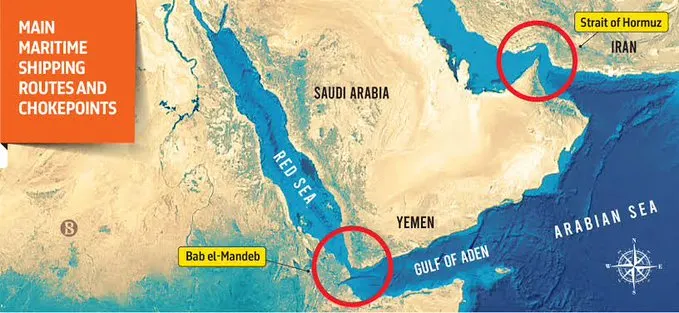
7. Oil shock is a real prospect here. The Strait of Hormuz is closed. The Bab al-Mandeb is likely going to be interdicted soon by the Houthis. Iran has already begun limited strikes on oil and gas infrastructure in the region. Air and missile campaigns are inherently indecisive, and Americans are not going to tolerate a weeks or monthslong campaign that spikes oil to $150+/barrel.

8. Claims are floating around – out of Israel, of course – that this entire affair was a scheme cooked up by Trump and Netanyahu and that the negotiations were always a sham. I suspect that isn’t the case, and that Trump was herded into action by Netanyahu threatening to attack unilaterally after the US “coercive task force” was finally fully assembled in the Gulf.

Continues…