Israel Lobby

Bob Carr on the Australian Jewish Lobby

The following are excerpts from an interview with Bob Carr, former Australian premier for New South Wales—the largest state in Australia and home of that nation’s largest city, Sydney. Carr, 77, served as premier from 1995 to 2005, and then later as Foreign Minister (2012–2013). He is a member of the Labor Party, which leans center-left in politics.  When in office, he supported efforts to reduce immigration into Australia; he was also a defender of Julian Assange.  Early in his career, Carr supported Israel but his views shifted over time as he learned more about the situation in Palestine.  Recently, he took part in the pro-Palestine “March for Humanity” in Sydney (August 3), in which between 100,000 and 300,000 people took to the streets to protest the genocide in Gaza.

The Islamic news channel OnePath Network interviewed Carr, which aired August 22.  The discussion focused primarily on the situation in Gaza, the Australian Jewish Lobby, and the practical politics of dealing with a potent political adversary.  It is a strikingly honest discussion by Carr, perhaps the most open and explicit by any major Australian leader.

The following are highlights from the 40-minute interview (in full here).  The Islamic interviewer is unnamed, apparently by intention.  I note here that I used an auto-transcription process to generate the following text, and so there are some slight deviations in wording (but not meaning) from the actual video.  Notable in Carr’s language is the use of ‘Jewish’ rather than simply ‘Israeli’; it is a small but significant shift in emphasis that gets closer to the heart of the problem.

*****

OnePath:  Today, we are joined by one of the most experienced figures in Australian politics, former Australian Foreign Minister, and the longest-serving Premier of New South Wales, the honorable Bob Carr. Thank you for being with us, Bob.

Carr:  It is my pleasure to be with you and talk to the community.

OnePathToday, Bob, you are recognized as one of the strongest critics of Israel in Australia and an advocate for Palestinian rights. You have been famously photographed among those who led the historic march, the March for Humanity across the iconic Sydney Harbor Bridge. Early in your career in 1977, you co-founded Friends of Israel in the Labor Party with Bob Hawke, earning you a reputation, as you know, as a respected friend and ally of Israel. What was the specific moment in your career when your perspective changed?

Carr:  I think it was gradual, reflecting me getting to know Palestinians and their stories. Because none of us in the seventies knew a Palestinian, or knew the story of a Palestinian family, or knew what the massacres that were part of the establishment of the State of Israel were. We didn’t know that back then. That was not on anyone’s mind, not even the educated person in the Western world. We were blind to that story. And one of the simmering concerns that undermined any faith I had in the State of Israel was the spread of settlements.

About the late 1990s and early 2000s, it was pretty clear that the settlements were serious. And they would, at least, hinder the establishment of the Palestinian state, and it appears they were intent on preventing the establishment of a Palestinian state, despite all the assurances we received from the spokespeople of Israel. And today, even as we speak, this is being confirmed through explicit statements from members of the Israeli cabinet that these settlements will prevent the establishment of a Palestinian state.

OnePath (3:10): Yes, that is interesting. I want to take you back to the time when you were the Foreign Minister of Australia [in 2013], when the United Nations wanted to hold a vote to upgrade Palestine’s status to a non-member observer state. The Prime Minister at that time, Julia Gillard, wanted to follow the United States and Israel, but you objected and succeeded in securing an abstention from the vote.  In your memoirs, you later asked whether the Labor Party’s reliance on donations from the Jewish community had shaped its stance. How significant was that moment for you in obtaining the abstention, and what did that experience teach you about Australian politics?

Carr:  The big thing it taught me is that promoting Palestinian rights at a time when it was considered a dangerous opinion was really like pushing against a half-open door.  Because when I tested my opinion with the Parliamentary Labor Party, after Julia Gillard made it clear in the Cabinet that she would not change to alter our vote in the General Assembly [to upgrade Palestine’s status], when I tested it in the party caucus, I found that they feel the same way as I do toward Israel and toward its contempt, its almost hidden contempt, for the two-state solution.

The majority of the Cabinet agreed with me that Australia should not oppose this resolution in the General Assembly to upgrade the status of the Palestinian delegation. It was interesting what was said around the cabinet table, when they were saying, instead of abstaining from voting, why don’t we vote Yes? Why don’t we vote Yes? But this was considered a risky opinion when I was arguing against the Prime Minister’s wishes, who was my boss; but the big lesson from that is that the ordinary members of parliament, whom I hadn’t yet asked for their opinions, had reached the same position I had. The support for Israel was very shallow, and people like me started questioning the entire settlement expansion process.

OnePath (5:47):  As you know, in the United States, lobbying groups like AIPAC hold big sway over politicians through donations and funded trips to Israel. You have previously spoken about a similar influence of the Israeli lobby here in Australia. Based on your experience and knowledge, how deep is this influence, and should Australians be concerned?

Carr:  I think Australians should be concerned.  I have said, and I am recorded as having said, that the Israeli lobby—I believe the [term] ‘Jewish-Israeli Lobby’ is more accurate, because that is the term used by AIJAC [Australia Israel and Jewish Affairs Council]—the Jewish-Israeli Lobby in Australia is a foreign influence operation.  It is designed to place Israel’s interests above Australia’s in its foreign policy.  No one else has such a well-funded operation. No one else, no other country, has an operation with offices in every Australian capital city.  No one else organizes donations to try to raise their influence, like the Jewish Lobby in Australia does.

Now, this is simply a fact of life, and I recorded it in my diary as Foreign Minister, and it has never been contradicted.  …

And the model for the Jewish Lobby is what happens in the United States.  If any member of Congress or the Senate expresses a view criticizing Israel or sympathizing with the Palestinian cause, you can guarantee that someone will receive funding from pro-Israel supporters to run against them in the next primary  And the person they find to run against the incumbent, he might be someone who has never expressed a view about Israel and Palestine, but there will be a well-funded opponent.

Now, I remember years ago, I had a meeting with someone from the Jewish Lobby in Washington who spelled this out to us.  He explained to us… For a group of us, who were considered supporters of Israel, as we were at that time, this is how they operate.  And if there is anyone, even in a remote Rocky Mountain state, or in a state with an insignificant population like Montana, any member of Congress who departs from the pro-Israel line can be guaranteed of having a well-funded opponent in the primary elections.

OnePath (8:45):  In the Australian context, how does this affect democracy?

Carr:  Oh, it’s a distortion of democracy because instead of considering the priorities and interests of our foreign policy, we are swayed by taking the desires of the Jewish community into account.  And they are very explicit that they… I mean, if there is the slightest departure, they will immediately seek a meeting with the Prime Minister to present their case. The prime ministers from the Liberal side—Malcolm Fraser was one of them—have confirmed this. Certainly Kevin Rudd confirms that. When he made the decision to kick out two Mossad agents in the Israeli embassy in Canberra, because Mossad, in an operation in the Gulf states, used someone holding an Australian passport to complete its mission, Rudd protested.  And he was completely justified in doing so, and he expelled a couple of Mossad agents.  There was an immediate request from the leadership of the Jewish community in Australia to speak to the Prime Minister.

So the Lobby conflates their desires as a community with the making of Australia’s foreign policy, and I think people have only now just woken up to the sheer bravado and arrogance [of this]. They say, “Hang on, how dare you?”

I mean, I used to get this response all the time as Foreign Minister.  For example, and I like to be specific, here is a concrete example. As the Foreign Minister in New York for a meeting with the General Assembly, I issued a statement expressing opposition to the latest surge in Israeli settlements. And I got a request relayed thru Bruce Wolpe, advisor to Julia Gillard, to meet “the community,” to discuss this, referring to the leadership of the Jewish community.

And I told him, “No.” The opposition to the expansion of settlements is based on the fact that they are plainly illegal under international law. We oppose them in line with the policy of our like-minded allies, our partners—except for the United States, which does not use the word ‘illegal’, but at that time, used the word ‘illegitimate.’

So, I thought it was simply impertinent of the Jewish community to say, “Oh my goodness, the Australian Foreign Minister has expressed opposition to the expansion of settlements. We need to get him on line.”

OnePath (11:47):  Have you received any criticism for expressing this particular opinion?

Carr:  […]  I will not be silenced. I was not silenced when, as a premier, I agreed to a request to present a peace prize. It was not awarded by me, but by the University of Sydney, to the esteemed and respected Palestinian speaker—Hanan Ashrawi. And suddenly, there was a bullying campaign by the Jewish Lobby to force me, as the Premier of New South Wales, to pull out from the event.

Now, I had given my word that I would do it. I thought it was something that would support Israel’s interests, because it would be an award and acknowledgement for a Palestinian who supports a peaceful road toward Palestinian statehood.

It wasn’t good enough for them. That wasn’t enough. So they launched a campaign of petitions and lobbying. I received a phone call from a prominent figure in the business world asking me why I was doing this—as if talking to representatives of the Palestinian people was abnormal behavior.  She was able to have conversations with left-leaning Israeli politicians, but somehow it was considered out of bonds for me, as the Premier of New South Wales, to speak with [Ashrawi] and present an award, an award that was not given by me, but by the University of Sydney.

And they got Catherine Greiner, who was a member of the committee that awarded the prize, to pull out from the function. And Lucy Turnbull, who was then, I believe, the Deputy Mayor of the city, pulled out.

And I just said, “I will not pull out.” I gave my word that I would present this peace prize. My commitment is taken seriously by a large Arab-background community, in New South Wales, indeed in Australia. And also by a small Palestinian community. How would it be if, after giving my word, I succumbed to lobbying from another community and turned my back? It would have been appalling. I stood firm. …

OnePath (14:28):  You are also a man of integrity. You have been very outspoken about Gaza, even comparing the scenes to Holocaust-like scenarios. In response to your comments, Alex Ryvchin from the Executive Council of Australian Jewry described your views, and I quote, as “shameful and utterly despicable.” He said that you show deep contempt for members of the Jewish community. [Ryvchin in a video clip:] “Look, it’s shameful and utterly despicable, showing his deep contempt for members of the Jewish community, especially its leadership.” How do you respond to comments like these? And do you still stand by your statements?

Carr:  I stand by them absolutely, and they have grown stronger since I said them.  Evidence of war crimes has accumulated, especially the use of famine against civilians. The analogy I used was a reference to the Warsaw Ghetto. The starvation of men, women, and children, the starvation of civilians, has been confirmed, has been confirmed. …

OnePath (16:28):  Are you saying it’s genocide?

Carr:  Yes. Yes. If you destroy eighty percent of the people’s housing, if you cut off their supplies of food and medicine, if you increase the targeting of civilians, you will allow and live with it and consider it collateral damage.  If you do not allow drinking water, if you flood the camps with polluted water, causing the spread of diseases, if you do not allow access to medicine and food even for children or pregnant women in the hospital, what other word can you use?

What other word does the dictionary give us? What is another word you can find in the thesaurus, beside the planned murder of a people?

It is what the Convention against Genocide means, genocide, which was drafted and lobbied for by a very determined survivor of the Holocaust in Poland [the Jewish lawyer, Raphael Lemkin, in 1944].  This is directed against civilians, destroying their homes, and making them live in unsanitary conditions in tents. I can’t believe what additional evidence would be required for people to say, “If you do this to a people, to a population of two and a half million, it can only be described in terms of genocide.”

OnePath (18:20):  You previously said that the Israeli Lobby was able to stop even routine criticisms of settlement expansion, and I mentioned the settlements. From your perspective and understanding of the situation, how damaging do you think Israeli settlement policies are to the freedom and future of the Palestinian people, and what do you think the public needs to understand about this issue?

Carr:  […]  I started to worry about this type of settlement a quarter of a century ago. Australian Jews, who support Israel, reassured me, saying: “Don’t worry. Don’t worry, Bob. If there is a peace settlement, those settlements in the West Bank will be dismantled quickly. The Israeli people urgently want a peace deal.”

But now we know we were being lied to, when Netanyahu told me when I was in his office as Foreign Minister, that he wants a two-state solution.  And he had just given a speech a few days earlier supporting it.  He was lying. The plan all along was to use the settlements to block the possibility of establishing Palestinian sovereignty with the support of the world community in the West Bank. […]

With reports circulating that they [Gazans] will be offered the option to live in Libya or South Sudan, I ask the Israeli Lobby, I ask the supporters of Israel, can you put yourselves in the minds of [a Palestinian] family?  Their house was blown up. They left most of their belongings behind. They are embarking on a journey, perhaps on foot, because they cannot afford to rent a truck, toward a future in a tent.  Imagine how that would be. Where is the humanity of the people in the Jewish Lobby in Australia? They haven’t uttered a word of criticism about the behavior of the Israeli Defense Forces, not a word.

OneStep (23:18):  Recently, Australia took a bold step in its desire to recognize a Palestinian state. Despite the many conditions surrounding this recognition, it represents a major shift in Australia’s official stance.  Netanyahu came out to criticize Australian Prime Minister Anthony Albanese for his decision, and directed criticism at him on platform X, quoting: “History will remember Albanese for what he is; a weak politician who betrayed Israel and abandoned the Jews of Australia.”  You have met Netanyahu in person. What do you think of his comments?

Carr:  Well, even the Israeli Lobby, even the Jewish Lobby in Australia, say they have not been abandoned by Prime Minister Albanese. It’s an absurd smear, without any basis of evidence. And it’s shocking to say that, as it says everything about Netanyahu and nothing about Anthony Albanese…

Albanese should be granted the status of a hero, and I believe the Australian people will grant him that for standing up and branding this as wrong.  I think the reaction of Australians, including, interestingly, some Australian Jews, is that saying this about our Prime Minister is simply wrong. Even the Jewish Lobby in Australia does not support what Netanyahu did. […]

OneStep (29:40):  You are a former journalist, and we have seen some media outlets harshly criticize the Labor Party’s recognition of Palestine. Some of the headlines we’ve seen recently from The Australian, “A shameful day for Australia.” The Daily Telegraph says, “It’s a slap in the face.” Is the Australian media partially responsible for fanning division in the face of genocide accusations in Gaza?

Carr:  Yes. Well, the one thing I can say with confidence is that those media campaigns to defend Israel are not working. This doesn’t work. Public opinion has shifted. The majority of opinions support Albanese.  The same media sources that are trying to rally support for Netanyahu over our government, over our Prime Minister, were defending Peter Dutton and supporting his election as Prime Minister in the May elections. It had no effect. There are unified shifts in favor of the Labor Party in every state, in every electoral district across the country. […]

OneStep (37:22): Given the international arrest warrant for Benjamin Netanyahu due to the alleged war crimes he committed in Gaza, should he come to Australia, do you think Australia should seek to arrest him if he comes here?

Carr:  We have no alternative but to arrest him. It is our obligation as a signatory to the treaty. And look at America, America did not sign the treaty. America does not believe in an international criminal justice system. We do. We have signed. We will be obligated to arrest him.

OneStep (37:55):  Do you think it’s time for Australia to impose some sanctions on Israel in response to what you and others have described as genocide in Gaza? And if so, what form should these sanctions take?

Carr:  If a state knowingly commits genocide, uproots civilians, sends them on death marches, reduces the population to walking corpses, expresses satisfaction with the death of Palestinian babies, and allows the IDF to shoot children, then how do we deal with that? Do we deal with the perpetrators of this like a normal nation with normal diplomatic contacts? I don’t think we can.

And I believe it is better to start by evaluating diplomatic options, including sanctions, and discussing with like-minded countries how to revise our relations with Israel, given Israel’s pursuit of an open, unabashed, and arguably proud policy of genocide against this exposed, vulnerable, and wretchedly weakened civilian people.  […]

OneStepMr. Bob Carr, thank you very much for your time.

*****

All in all, a remarkable interview, one not likely to get much coverage in the US or Europe.  Carr comes across as a man who, after decades of trying to understand and compromise with the Jewish community, finally figured out, at age 77, that they are largely incorrigible liars, manipulators, and exploiters of human suffering for their own benefit.  Those of us who have spent years studying the Jewish Question are not surprised in the least, but it is encouraging to see that at least one major political figure is now willing to speak some words of truth.

Naturally, I take this as good news.  It certainly seems as if, for the Jews, the wheels are coming off the buggy.  And not just in one nation, but rather, for the first time in history, in the whole world—at once.  This could spell a radical, large-scale shift in non-Jewish and White attitudes toward Jews in general.  There is reason for hope.

Remember, if there is one lesson from history, it is this: It’s not “the Zionists,” not “the Israelis,” not “the globalists”…it’s the Jews.  And their time is quickly coming to an end.

Thomas Dalton, PhD, is the author or editor of some three dozen books on the Jews, Judaism, and the Jewish Question.  All his books can be found at www.clemensandblair.com.  See also his personal website, www.thomasdaltonphd.com.


The Judeo-Accelerationist Presidency

The Judeo-Accelerationist Presidency

From killing Iran’s top general to legitimizing West Bank annexation, Donald Trump has made U.S. power serve Israel.

Donald Trump’s presidency has been marked by a dramatic intensification of U.S. support for Israel that would make previous presidential administrations blush. This shift is so marked and forceful that it can be understood through the lens of Judeo-Accelerationism. Originating from accelerationist theory, which holds that intensifying a prevailing system’s logic can bring about transformative change, Judeo-Accelerationism describes the abandonment of incremental support for Israel in favor of rapid, sweeping policies that reshape the geopolitical landscape to Israel’s benefit.

While every American president since Harry Truman has maintained a baseline of pro-Israel policy, Trump has gone well beyond this norm. His approach shattered long-standing diplomatic taboos and pushed U.S.-Israel relations into an entirely new and more aggressive phase. Far from merely maintaining the status quo, Trump’s policies reflect a zealous commitment to radically advancing Israeli interests at an unprecedented pace, making even the most hawkish neoconservative administrations of the past appear cautious by comparison.

Trump’s Judeo-Accelerationist Agenda: From First to Second Term

Both of Trump’s presidential terms reflect this relentless pursuit of Israeli objectives. The clearest and most symbolic move came in 2018, when Trump officially moved the U.S. embassy from Tel Aviv to Jerusalem. This wasn’t just a symbolic gesture—it was the violation of a long-held international consensus. Although Congress had passed the Jerusalem Embassy Act in 1995, every president since then, including Bill Clinton, George W. Bush, and Barack Obama, had deferred the move out of concern it would undermine peace negotiations. Trump not only executed the move but also timed the embassy’s opening for May 14, 2018, the 70th anniversary of Israel’s founding. As Palestinians protested at the Gaza border, Israeli forces killed dozens of demonstrators.

In March 2019, Trump went further by recognizing Israeli sovereignty over the Golan Heights. This region has been occupied by Israel since 1967 and unilaterally annexed in 1981. No other country had ever formally accepted this annexation. The timing of Trump’s announcement—just two weeks before Israeli parliamentary elections—suggested it was a deliberate attempt to help Benjamin Netanyahu secure victory. Secretary of State Mike Pompeo justified the move by stating it acknowledged “the reality on the ground,” effectively endorsing Israeli territorial conquest through military force.

Where earlier administrations at least gave lip service to a two-state solution, Trump and his advisors openly abandoned the framework. Jared Kushner, Trump’s senior advisor and son-in-law, declared in May 2019: “If you say ‘two-state,’ it means one thing to the Israelis, it means one thing to the Palestinians. We said, you know, let’s just not say it.” The Trump administration’s so-called peace plan would have confined Palestinians to disconnected territories resembling bantustans, while allowing Israel to annex roughly 30% of the West Bank. This represented the most pro-Israeli “peace” proposal ever advanced by an American administration, one that would have formalized permanent Israeli control over Palestinian territory.

Further entrenching Israel’s power, Trump’s Secretary of State Mike Pompeo declared in November 2019 that Israeli settlements in the West Bank were “not inherently illegal,” overturning decades of U.S. policy that had treated settlements as violations of international law. The “Pompeo Doctrine” marked a radical departure from the positions of previous presidents, including ardent Israel supporters like Ronald Reagan and George W. Bush.

Trump’s Abraham Accords, heralded by many as a diplomatic success, in fact undermined the long-standing Arab Peace Initiative. By pressuring Bahrain, the UAE, Morocco, and Sudan to normalize relations with Israel without securing any concessions for Palestinians, Trump stripped away one of the last forms of regional leverage against Israel’s intransigence. For groups like Hamas, this shift represented a death knell for Palestinian statehood aspirations. The October 7, 2023, Hamas attack on Israel was in part a daring response to the erosion of regional support for their cause—a gambit designed to re-ignite global attention and leverage international outrage over Israel’s retaliation.

Maximum Pressure, Minimum Restraint: The Trump Doctrine Against Iran

Trump’s sustained hostility toward Iran, Israel’s foremost regional adversary, further illustrates his Judeo-Accelerationist trajectory. His opposition predates his 2016 campaign, going back at least to his 2011 book Time to Get Tough, in which he declared:

“America’s primary goal with Iran must be to destroy its nuclear ambitions. Let me put them as plainly as I know how: Iran’s nuclear program must be stopped–by any and all means necessary. Period. We cannot allow this radical regime to acquire a nuclear weapon that they will either use or hand off to terrorists.”

He repeatedly condemned the Iran nuclear deal (JCPOA), calling it a “disaster” and “the worst deal ever.”

Though he occasionally struck a peaceful tone with select audiences, Trump’s actual policy toward Iran was one of consistent escalation. After pulling the United States out of the JCPOA in May 2018, he launched the “maximum pressure” sanctions campaign—an aggressive move that clashed with his public image as an antiwar candidate. He dismissed the deal as “the worst deal ever,” claiming it “enriched the Iranian regime and enabled its malign behavior, while at best delaying its ability to pursue nuclear weapons.” Sanctions were swiftly reinstated, hitting Iran’s energy, petrochemical, and financial sectors. Trump also warned of “severe consequences” for any country that continued doing business with Iran.

These measures ranked among the most severe sanctions in modern history, with the explicit aim to “bring Iran’s oil exports to zero, denying the regime its principal source of revenue.” Trump’s administration steadily widened the scope of the sanctions, targeting Iran’s central bank, space agency, and even the inner circle of Supreme Leader Ali Khamenei.

In October 2019, Trump sanctioned Iran’s construction industry, linking it to the Islamic Revolutionary Guard Corps (IRGC), which he had previously designated as a foreign terrorist organization in April of that year—the first time the United States had ever applied that label to another country’s military.

At the time of the terrorist designation, Trump bragged: “If you are doing business with the IRGC, you will be bankrolling terrorism…This designation will be the first time that the United States has ever named a part of another government as an FTO [foreign terrorist organization].” These steps were not only economic in nature but also intended to isolate Iran diplomatically, cripple its economy, and prepare the ground for potential military confrontation.

The most dramatic episode came in January 2020, when Trump authorized the drone strike that killed Iranian General Qassem Soleimani in Baghdad. Trump claimed Soleimani had been “plotting imminent and sinister attacks on American diplomats and military personnel,” a move that brought the United States and Iran to the edge of open conflict. Iran retaliated with missile strikes on U.S. bases, and tensions surged as the world braced for war.

Even after this volatile episode, Trump continued to escalate with Iran. Toward the end of his first term, he reportedly explored military options for targeting Iran’s nuclear infrastructure. According to accounts, Chairman of the Joint Chiefs of Staff Mark Milley and other senior officials pushed back firmly. Milley warned, “If you do this, you’re gonna have a f***ing war,” and began holding daily briefings to prevent an unchecked spiral toward military conflict, a process he described as efforts to “land the plane.”

As tensions with both Iran and Israel intensified, Trump privately gave the green light for preparations to strike Iranian targets. U.S. military assets—including carrier strike groups, bombers, and fighter jets—were moved into strategic positions. According to The Wall Street Journal, Trump informed aides that he “approved of attack plans for Iran, but was holding off on giving the final order to see if Tehran will abandon its nuclear program.”

In June 2025, Trump ordered direct strikes on three Iranian nuclear sites—Fordow, Natanz, and Isfahan—using B-2 stealth bombers and bunker-buster bombs. Trump declared that Iran’s nuclear capabilities were “completely and totally obliterated,” despite conflicting reports from the Defense Intelligence Agency (DIA) and the International Atomic Energy Agency (IAEA) suggesting that the strikes failed to neutralize Iran’s underground infrastructure and only briefly hindered its nuclear capabilities. Rafael Grossi, head of the UN nuclear watchdog, stated Iran could resume uranium enrichment “within a matter of months.”

This escalation went far beyond anything contemplated by previous neoconservative administrations. Even the Bush administration, which went on a nation-building bender in Iraq and Afghanistan, had never authorized such a strike on Iranian soil. Trump’s willingness to risk regional war to directly advance Israeli security interests represents a qualitatively different level of commitment to Zionist objectives that previous administrations would dare not broach.

Unprecedented Support from Israel First Interests

Trump’s policies cannot be divorced from the powerful influence of pro-Israel donors and organizations. According to watchdog group Track AIPAC, pro-Israel interests have contributed over $230 million to Trump since 2020. The vast majority—over $215 million—came from Miriam Adelson’s Preserve America PAC. Trump’s unwavering pro-Israel stance has helped win over former critics in the neoconservative camp, such as Bill Kristol, who endorsed Trump’s Iran strikes, stating, “You’ve got to go to war with the president you have.”

Within his administration, Trump has elevated individuals whose views reflect the most extreme elements of the Zionist project. David Friedman, who served as U.S. ambassador to Israel during Trump’s first term, was a financier of West Bank settlements and later published One Jewish State: The Last, Best Hope to Resolve the Israeli-Palestinian Conflict. Mike Huckabee, Trump’s current ambassador to Israel and a vocal Christian Zionist, has floated ideas for population transfers of Palestinians while supporting continued Israeli annexation.

In January 2025, Trump proposed moving Gaza’s 2 million Palestinians to Egypt and Jordan: “I’d like Egypt to take people, and I’d like Jordan to take people … we just clean out that whole thing.” Asked if the relocation would be temporary, he responded that it could be “long term.” The following month, Trump stated during a press conference with Netanyahu that the United States would “take over” Gaza and transform it into the “Riviera of the Middle East.” Israeli analyst Noam Sheizaf observed: “Trump accomplished what no Israeli politician has: He transformed ‘population transfer’ from a fringe, near-taboo concept in Israeli political discourse to a viable policy option.”

Domestically, Trump further prioritized Jewish interests through his January 2025 Executive Order to “Combat Anti-Semitism.” This order allowed for the deportation of foreign students participating in pro-Palestinian activism and threatened universities with loss of funding if they failed to suppress such speech. The order marked an unprecedented use of federal power to silence political dissent in service of a foreign nation.

America Last: Trump’s Radical Realignment in Service of Israeli Power

What makes Trump’s presidency uniquely dangerous is not simply the extremity of individual policies, but their cumulative effect in normalizing Jewish supremacist objectives under U.S. protection. By shattering norms around Jerusalem, settlements, and Palestinian displacement, Trump has created new facts on the ground that future administrations may find politically impossible to reverse.

Unlike his predecessors, who operated within international frameworks, respected multilateral diplomacy, and maintained at least nominal distance from Israel’s most extreme demands, Trump has turned the United States into an uncritical enabler of Israeli expansionism. His decisions have gone far beyond even the Bush administration, which pursued nation-building campaigns in Iraq and Afghanistan but never attacked Iran directly or endorsed population transfer.

Despite running as an America First candidate, Trump has spent much of his political capital bolstering Israeli military and geopolitical power. In the process, he has revealed the hollow nature of his anti-war image and nationalist rhetoric. His administration, staffed with ideologues committed to Israeli supremacy, has reoriented U.S. foreign policy around the goal of cementing Israel’s regional hegemony, no matter the cost in lives, stability, or American credibility.

By aligning U.S. power with Israel’s expansionist agenda, Trump has steered American foreign policy into dangerous and potentially irreversible territory.

Thoughts and Predictions on Israel’s war

Trump should have remembered the French proverb: If you dine with the Devil, you’d better have a long spoon.

 Netanyahu and the Jews have played their cards adroitly and Trump has been left hanging out to dry.
At about 22:30 and 24:00 Mearsheimer comments on how the administration has been conned and what the costs will be.

The impact of the bombing of Iran and of the Israelis playing Trump for a fool is such that Trump’s presidency will never recover.
Trump’s base — cobbled together out of MAGA type Southerners and peace Democrats like Tulsi Gabbard and Kennedy — is going to be shattered.  The surprising defections of Gabbard and Kennedy enabled Trump to squeak by into office with 50.5% of the popular vote.  Trump could never afford to shatter that slender base.  His base will now dissolve.
Gabbard and Kennedy have been publicly humiliated.  The peace voters will drop out.  As the situation worsens and Trump is dragged along by the Israeli dog leash, I would not be at all surprised to see Tulsi Gabbard resign and make a public statement damning Trump.
The US may be drawn into a prolonged conflict.  The deficit will continue to soar as it did due to the money poured into the pockets of Liz and Daddy Dick Cheney and the rest of the military industrial complex when the neocons and their Baby Bush got us into the invasions of Iraq and Afghanistan.  Oil is going to soar in price…potentially to staggering prices. If oil prices rise dramatically, the economy is going to sour and as a result much of the public support for Trump will nosedive.
The neocons are going to be back in the driver’s seat. Trump is going to be at their mercy.  There’s no feasible way he can maneuver out of the situation.  The System Media will have an easy job exciting Americans into wanting to “get even” with Iran when American troops and oil investments in the Middle East are endangered.
Trump has no wiggle room.  He has been played for a fool by Netanyahu and the Jews.
Trump has boundless self-confidence in himself as “the master of the deal.”  He foolishly thought he could manipulate the Jews into going along with him on the immigration issue by making a deal with them — supporting the Gaza genocide and in exchange he thought the Jews would abandon their anti-WASP politics.
The Jews are far greater masters of the deal than Trump, but Trump’s pride made it impossible for him to see that and set his foolish course.
The Jews understand that crushing Amalek, the word they apply to White European Christians, is what is critical.  They can never abandon their policy of hostility toward us.  Without hostility, without cultivating and maintaining an adversarial attitude toward the host culture, the Jews would cease to exist.  Hostility is the sine qua non of their survival.
Netanyahu would never be so blind as to sign up for Trump’s deal.  Nor would “the community” at large buy into it.  Destroying Amalek through Third World immigration is their #1 priority. 
The latest poll shows that 71% of American Jews are opposed to Trump.  They are not going to change as a result of Trump’s championing Israel.  The Jews know that all significant politicians and both parties will always cater to them.  Trump’s “deal” was always DOA but Trump didn’t see this.
Netanyahu and the Zionists hate the demographic core of America.  They love immigration.  They are not going to change.  Trump should have thought of that but his level of self confidence did not allow for such considerations.
What will happen now?
Netanyahu and the community hold the trump cards.  They have trumped Trump.  Trump has no way out.  He’s caught.  They have caught him.  He has no options.
Trump will flop around like a fish out of water.  There’s no path open to him to save his Presidency.  There’s no way out for Trump. He cannot abandon Israel now.  He has to do what Israel tells him to do.  He will have to continue to cater to Israel even as the military “defense” budget rises staggeringly, oil doubles in price, inflation takes off, the economy reels and Trump’s public support dries up.
The Republicans will be crushed in the midterms.  Trump’s remaining time in the White House will be years of humiliation.  The neocons will be laughing their heads off and will be back in control even during the remaining Trump term.  In fact, the neocons are back in the driver’s seat already.
J. D. Vance will not be elected President in 2028.  His career is finished along with that of Trump.  He needs to start planning a new career.  Maybe he should become a real estate agent or a stock broker. After the peace voters return to the Democratic Party, after demographics ratchet America several more percentage points against the GOP, after working class voters get nothing while the plutocratic elite conspicuously enjoys Trump’s tax cuts, I would not be surprised to see the Republican Party lose the 2028 election by Goldwater/Johnson margins with the Democrats getting over 60% of the vote.
In 2028 the US will return to the post WWII status.  The Democrats will inherit the mantle of “racial progress”, wars to end war, etc.  The GOP will be a shadow opposition party that — as was the case for most of the post war period — will not oppose anything of consequence.
Anyway, these are my predictions.
As the English proverb says, “Truth is the daughter of time.”

Time will either confirm my assessment or disprove it.

Prof. John Mearsheimer on the Israeli attacks

Mearsheimer: Trump was trapped by Israelis—once attack happened (against the president’s expressed wishes) the forces for war (Israel Lobby, etc.) were too much, so that he would have a political disaster if he disowned Israel. As I noted, “Trump is likely unhappy with what Israel did but will make the best of it and will defend Israel if it comes to that.” It has come to that.

Mearsheimer: Israel knows that no matter what anti-war conservatives say, when push comes to shove, “Israel has us tied around their little finger.” This does not exonerate Trump, but it would have been political suicide to jettison Israel as people like Tucker Carlson have advocated. Napolitano especially condemns Trump while Mearsheimer seems more willing to see the wider picture of Israel’s ultimate responsibility.

Mearsheimer:  Israel “Israel owns us”; Israel did not do all that much damage yet—lots of Iranian missiles underground; Iran can do serious damage to Israel (as we are seeing). He is worried about wider war, bombing oil facilities leading to disaster, global recession, etc. “Israel wants Americans to be killed because it would suck us into the war.” False Flag alert!

Trial by Jewry: Asa Winstanley on Weaponizing Anti-Semitism

Weaponizing Anti-Semitism: How the Israel Lobby Brought Down Jeremy Corbyn
ASA WINSTANLEY
OR Books, 2023

The Jew cries out in pain as he strikes you.
Polish proverb

Jeremy Corbyn was the leader of Britain’s Labour Party prior to the current Prime Minister, Keir Starmer, taking over in 2015 remaining leader until Labour’s comprehensive defeat in 2019. Despite losing the snap General Election in 2017, Labour exceeded expectations electorally, and Corbyn remained at the helm until 2019, when Boris Johnson’s Tories (in name, at least) won a resounding mandate. Corbyn’s tenure as leader was particularly tempestuous as he was fighting not just the old enemy in the form of the Conservative Party, but another, more shadowy foe:

The most successful attack vector against Corbyn would prove to be the narrative of a ‘crisis’ of anti-Semitism within the Labour Party.

The quote is from Weaponising Anti-Semitism: How the Israel Lobby Brought Down Jeremy Corbyn, a book by British journalist, Asa Winstanley. Anti-Semitism, along with racism, homophobia, Islamophobia et al, is one of the new occupational hazards, a reboot of the Seven Deadly Sins for the workplace. An accusation of any one of them can lose someone their job, and politicians must tread particularly carefully. But whereas racism and transphobia bring hordes out onto the streets waving ill-written signs, the Jews are not much given to placardism. Anti-Semitism is a charge more clinically applied, but equally deadly. Corbyn’s political demise, according to Winstanley, was “death by a thousand investigations into anti-Semitism”.

The book represents seven-years’ research into Labour’s relationship with (and attack by) the Jewish lobby by Winstanley and colleagues at his website, Electronic Intifada. A long-time Labour member himself before leaving the party in disgust, Winstanley and his site represent a rare voice, one critical of Jewish presence and influence in British politics. This book shines an unwelcome light into the shadows, as when the site’s investigations revealed that “the Israeli state is arming Ukraine’s Azov Battalion—one of the world’s most dangerous Nazi armed groups.”

As soon as Corbyn took the reins of the Labour Party from the utterly hopeless Ed Miliband, there were stirrings within the British establishment the cause of which is the subject of Winstanley’s work here. Corbyn was correctly seen as a creature of the hard Left, and his reception was a frigid one. Media coverage and interviews were hostile and provocative, an ex-British Army General said that there would be mass resignations should Corbyn become Prime Minister, and both MI5 and MI6 invited the new Labour leader to “let’s get acquainted” meetings which gave him the sense there was an éminence grise working behind the scenes.

The media were cautious about Corbyn’s accession to the Labour leadership, although impressed by the party’s showing in the 2017 election. Already, though, the expected chorus warning of anti-Jew enmity had begun to build:

Jewish Chronicle editor Stephen Pollard had to face up to the reality of Corbyn’s achievements, admitting that ‘Like most pundits, I called the election completely wrongly.’ But he went on to write that the 12.8 million people who had voted for Labour ‘scare me’, implying that they were all anti-Semitic, or at least willing to tolerate Jew-hatred.

But the opposition to Corbyn, and the complex and determined campaign to depose him, had as its center of gravity the Labour leader’s lack of vocal support for Israel. It is not sufficient in British politics to pay lip-service to Israel. You must support Zionism, at least tacitly. And so Corbyn was painted into a corner before he had even begun his run at the premiership:

No matter how much Corbyn tried to pander, the Israel lobby always refused to take yes for an answer.

The ultimate aim of the Israeli lobby was to keep a genuinely Socialist Prime Minister out of 10 Downing Street, and Corbyn alarmed them: “probably more than anything else, Corbyn was known among activists for his involvement in the Palestine solidarity movement.” In fact, Winstanley’s tenacious research shows that the lobby did not suddenly turn their fire on the Labour leader once he had won the leadership contest:

Israel’s security services had set their sights on the MP at least five years before he became Labour leader and long before anti-Semitism in Labour became a newsworthy issue.

Anti-Semitism was not something that British newspapers such as The Jewish Chronicle and Jewish News suddenly discovered in the Labour Party, but rather something they at best exaggerated and at worst confected.

Much of the war over perceived racism of any kind is waged on the battlefield of language, and now that social media has amplified political commentary, use of language, vocabulary, and rhetoric is forensically examined by those who wish to use it to serve their political purposes. Winstanley is in no doubt in his choice of equivalence:

‘Do you agree that’ a certain quote, social media posting, or unfortunate turn of phrase ‘is anti-Semitic?’ became the new ‘Are you now, or have you ever been, a member of the Communist Party?’.

The term “trope” is always in play for the Jewish lobby. Their Islamic and Black counterparts tend not to use it, Muslims perhaps because its provenance is Ancient Greek (and thus a relic from the jahiliyya, the time before Islam), Blacks because they can’t find it in their slim, one-volume dictionary of Ebonics. Thus, when Al Jazeera’s media arm produced a revealing series called The Lobby, which involved undercover reporting and recording, the response of Labour Friends of Israel (LFI) was typical:

LFI [called] Al Jazeera’s series ‘a combination of lies, insinuations, and distortions’ that ‘attempted to construct a vast conspiracy involving hidden power, money and improper influence — typical anti-Semitic tropes’.

Well, sure. All Jew-critical observers understand that “hidden power, money and improper influence” are the reasons they are Jew-critical observers in the first place. It’s a little like saying that poisonous snakes possess deadly agility, sharp, canalised teeth, and lethal venom, and that these are “typical, anti-snake tropes”. If a “trope” is simply a feature, it loses its sinister overtones. It too must be weaponized. One prominent member of LFI related with pride that her son had recently got a very good job by virtue of having worked for the Labour faction. When a journalist implied that LFI might have access to some serious funding from the Jewish lobby, “She instantly lashed out: ‘It’s anti-Semitic. It is. It’s a trope. It’s about conspiracy theorists!’.”

It’s also interesting to note the name of LFI’s savior in the Labour Party when they fell on hard times:

The decline of LFI’s membership led its director, in an internal report, to write that 1992 ‘came near to seeing the end of LFI as an active body.’ Its fortunes were revived when Tony Blair took over in 1994. Blair called it ‘one of the most important organizations within the Labour movement’.

The Jewish lobby’s concerted and ultimately successful attempt to bring down Corbyn was no mere whispering campaign among Zionists. “Israeli officials often described their campaign against ‘delegitimisation’ using military language”, Winstanley writes:

According to Israeli journalist Barak Ravid, there was even a ‘war room’ at the Israeli embassy in London. Describing a map of Britain hanging on the wall, … Ravid wrote that it was like something from ‘a brigade on the Lebanese border.’ The map showed ‘the front’ (Britain’s universities) as well as ‘the deployment of pro-Israel activists and the location of ‘enemy forces’. The aim was to sabotage and divide the left in order to promote Zionist ideology, and to block the rise of democratic socialist governments overseas that would be more likely to loosen ties with Israel.

Corbyn was not the only Labour Party member to be targeted and ultimately defenestrated by the Jewish lobby, nor even the most high-profile. When Corbyn won the leadership contest, no one outside the Westminster bubble had even heard of him. Ken Livingstone, on the other hand, was a household name. The two-term London Mayor affectionately known as “Red Ken” was effectively brought down by forces using anti-Semitism as their field artillery, and two names which are never far from the Jewish lobby’s lexicon: Hitler and the Holocaust.

In an interview, Livingstone mentioned the fact that Hitler, in the early 1930s, announced his plan for Germany’s Jews, which did not involve gas chambers, but instead mass deportation to Israel. Even Reinhard Heydrich, known as the “architect of the Holocaust”, approved of Zionism (although Livingstone was not so foolish as to mention that). The interview was a classic stitch-up:

In the days, months and years to follow, Livingstone would be incessantly berated with the allegation that he had brought the Nazis into the conversation out the blue, even of being ‘obsessed’ by Hitler. But examination of the transcript shows that, in fact, it had been [the interviewer] who had raised the issue of the Nazis.

The interview was followed a familiar maneuver by the Jewish lobby: Get the interviewee onto Hitler territory and then watch closely for any slip-up. When Corbyn tried to defend Livingstone’s comments, the Jewish media pounced with trademark hyperbole. Former chief rabbi Jonathan Sacks accused Corbyn of “the most offensive statement made by a senior British politician since Enoch Powell’s 1968 ‘Rivers of Blood’ speech”. Powell, of course, never mentioned any “Rivers of blood” but rather, as a classics expert, was making an allusion to Virgil. This regular misquotation has passed into the currency both of the Left and the Jewish lobby. It has become, as our Jewish friends might say, a trope. Concerning Corbyn’s apparent defense of Livingstone, Jewish journalist Simon Heffer announced on live radio that Corbyn “wanted to re-open Auschwitz”. This is a willful and absurd misinterpretation of the situation, but it helped to put Corbyn on the defensive. Once a prominent personality is forced to start saying things like, “I’m not a racist” or, “I don’t have an anti-Semitic bone in my body”, the struggle is already slipping away from them.

Winstanley and his research team were also affected by Labour’s desperate purge of anything that even remotely resembled anti-Semitism:

At the Electronic Intifada, we saw signs of this early on, as Labour Party bureaucrats implemented what was in effect a stealth ban on party members sharing our stories.

Published in 2023, Winstanley’s book almost bring us up to the present day (in which it is possible for the staunchest Tory to feel nostalgic about Corbyn) and extends to Starmer’s accession as Party leader, as well as the clarity of his attitude towards Israel and its ever-busy lobbyists:

[Starmer’s] first act as ‘Labour’ leader was not to address the material conditions of the working classes or (with the looming threat of millions of newly unemployed) lay out his plans to combat COVID-19. Rather his top priority was assuring the Israel lobby that they were back in the driver’s seat.

The return of Israeli influence was confirmed with the first of Starmer’s minor scandals: Inviting an Israeli spy to take over as head of “social listening”, a euphemism for the surveillance of citizens on social media. “Israel and its lobby no longer needed to infiltrate the Labour Party”, writes Winstanley. “Starmer had invited them into headquarters”.

Starmer now has to serve two masters, the Jewish lobby and the Muslim Council of Britain. It seems at first glance that the mass importation of Muslims into Europe represents what people have taken to calling an “existential threat” to Europe’s Jews. An alternative view is that it is the Israel lobby which is orchestrating this invasion, and a few hospitalized Jews and damaged synagogues are collateral damage. It is even whispered that the Jewish Board of Deputies is an arm of the Muslim Brotherhood. But that is a tale for another day.

Winstanley’s book is both highly competent, responsible journalism, and a reminder that, for the Israeli lobby, the only thing worse than anti-Semitism is no anti-Semitism, nothing with which to gain political purchase and leverage. “Israel and its lobby”, Winstanley writes, “have always used anti-Semitism as a political weapon.”

We hear much, at least from our own quarter, about the influence of Jews at a global level and too little about the small maneuvers—the grassroots plots and plans, the targeting of individuals. The strategy used by the Jewish lobby is simple but, as the case of Jeremy Corbyn shows, devastatingly effective. One leading Jewish lobbyist explains the methods used to control both the narrative and even an entire political party:

[We] built a robust political discourse, rooted in the politics of the left, and deployed it in their own backyard.

“Our” Man in Israel

Introduction

The issue of dual loyalty is an ancient one. As noted in a previous TOO article,

[Stephen] Walt points out that Ross has a long involvement with pro-Israel activist organizations, such as being director of WINEP [Washington Institute for Near East Policy, a pro-Israel think tank headquartered in Washington, DC].

But Ross’s ties to Israel are even deeper than that. Until his appointment as Middle East envoy in the Obama Administration, from 2002–2009 Ross was Chairman of the Board of Directors of the Jewish People Policy Planning Institute. This organization has assumed the role of long term planning for the Jewish people, not only in Israel but also the Diaspora. The JPPPI is an independent think tank that reports to the Israeli government and has close ties with other Jewish organizations. Its mission is “to promote the thriving of the Jewish people via professional strategic thinking and planning on issues of primary concern to world Jewry. JPPPI’s work is based on deep commitment to the future of the Jewish people with Israel as its core state.”

The JPPPI’s report Facing Tomorrow 2008 is interesting because it focuses on the threat of Iran and but also because it sees people like Stephen Walt as a threat to Israel:

The Jewish people must, as the highest priority, develop an appropriate response to the Iranian nuclear threat to Israel and to global stability as a whole. While there is no ambiguity about the need to do so in Israel, it is necessary to mobilize Jewish opinion around the world as well. The American Jewish community cannot be intimidated either by a post Iraq syndrome in the United States, or by the false and pernicious allegations of Professors Walt and Mearsheimer, or former President Carter.

In other words, Jews around the world are encouraged to mobilize to combat the threat to Israel represented by Iran. The assumption is that Jews have common interests as Jews no matter what country they happen to live in. Dennis Ross is doing his best to promote exactly this view within the Obama administration.

One might think that such a view would leave Jews in the Diaspora open to the charge of disloyalty, but the problem is easily finessed: Jews in the Diaspora are told to frame Israel’s concerns about Iran as a global threat, not simply as a threat to Israel.

Of course, that’s what we are seeing now. But we needn’t be naïve. Jews like Dennis Ross are clearly far more loyal to Israel than to the US. Speaking as a psychologist, they wouldn’t be able to see a conflict of interest between the US and Israel if it was staring them in the face. Indeed, as Gore Vidal said of Norman Podhoretz, they are unregistered agents of a foreign government.

In a sane society, there would be a huge groundswell of public opposition to Ross’s appointment–as there has been for a number of Obama’s appointments. But that won’t happen.

Since there has been no groundswell of media or public opposition to pro-Israel operatives like Ross at the highest levels of the U.S. government, it’s not surprising that the practice continues. Amos Hochstein is a good contemporary example. Israel and the powerful Lebanon-based Shiite Hezbollah militia are on the brink of open warfare, conflict that could trigger U.S. intervention and escalate to a regional or even a world war. To date these dangers have attracted little notice from the American mass media, ever eager to divert and dissemble from the direr consequences of the Washington regime’s one-sided support for Israel. Small wonder, then, that the media should evince the same reluctance in investigating the shadowy past and dubious allegiance of Hochstein, the emissary the U.S. recently dispatched to “mediate” between Hezbollah and Israel. The following is a brief foray into the workings of the Israel Lobby in the Biden Administration, as well as a primer on the perks of being Jewish in America.

Hochstein’s  importance

To be sure, media reports have not slighted Hochstein’s great influence in the Biden White House or his meteoric career. He has been described as “one of President Biden’s closest confidantes [who] has worked with him for many years,” while another Washington insider calls Hochstein “the person who bridges State, Treasury, the White House and Energy”
Fittingly, one of Hochstein’s titles is “Special Presidential Coordinator.”

Yet the media have underplayed, and often ignored, a key fact about Hochstein in his role as an impartial arbiter between Hezbollah and Israel: his birth, youth, and military service in Israel.

Beyond those bare facts about his origins, Hochstein has been remarkably unforthcoming about his life before he arrived in the United States in 1974. While nearly every successful denizen of the D.C. is eager to brandish Ivy League/Seven Sisters (or the equivalent) educational credentials, one may scour the internet (including his page on the usually resume-rich LinkedIn job-hunting site) without finding anything about Hochstein’s education, college or secondary.

Just as murky are the circumstances by which Adam Hochstein, a 21-year-old immigrant with unknown credentials, became a congressional staffer within a year of his arrival in this country, working for Rep. Sam Gejdenson (D-CT) who, like Hochstein, is  a Jew.

Despite his youth and inexperience, Hochstein carried out important assignments for Gejdenson. Not yet 25, he traveled to North Korea in 1997 to report on its economic and military situation; still in his twenties, he undertook negotiations with the Iraqi government (against the advice of the U.S. State Department) aimed at “resettling” thousands of Palestinians there in exchange for loosening some of the crippling sanctions then in force there.

Well before 9/11, Hochstein advocated acting against Iraq for harboring “weapons of mass destruction” in a press release issued by Congressman Gejdenson, and soon afterward he was serving as senior advisor to a senator and a governor. Like many members of the permanent government, Hochstein has used hiatuses between his party’s dominance to work in lobbying and industries close to government, in his case capitalizing on energy policy expertise that he seems to have acquired with no expertise in the field. He’s evidently done well, at some point becoming a partner in two D.C. restaurants and a movie theater.

Under Obama, Hochstein (without known diplomatic training or experience) rapidly climbed the ladder at the State Department to become America’s chief energy negotiator, deeply involved in efforts to block Russian natural gas from Europe and to facilitate Israeli access to energy.

During the Trump presidency, Hochstein served on the board of Ukraine’s natural gas company, Naftogaz.

Hochstein’s knowledge of the ins and outs of Ukraine’s shady corrupt energy industry is evidently considerable. In his testimony to the U.S. House of Representatives, Hunter Biden stated that Hochstein had advised him merely to be “very careful” in serving on the board of the notoriously corrupt Burisma corporation.

Hochstein also seems to have had a role in the “whistle blowing” that led to Trump’s first impeachment resulting from a phone call interpreted by Democrats as pressuring Zelensky to investigate Biden family corruption in Ukraine, and to have been advising Zelensky before his election.

It’s also interesting that there is a lack of definitive information on Hochstein’s current citizenship:

According to one report, a State Department source has claimed that he is “not a dual national,” but refused to state if he has renounced his Israeli citizenship, and in fact gave no [details as to Hochstein’s American citizenship.] So the question raised, unanswered— Hochstein’s citizenship is evidently a “carefully guarded secret.” Not acknowledging Hochstein’s Israeli citizenship would be useful because, for example, in Lebanon, where Hochstein has been involved as an American negotiator on the Israeli conflict with Hezbollah, “it is normally illegal for an Israeli” to visit Lebanon.

Even Hezbollah at the time did not comment on the mediator’s nationality or military past, with leader Hassan Nasrallah saying they will “not express an opinion or position related to the demarcation of borders”.

Given all this, it’s hard to disagree with this quote originally from Ha’aretz:

…the American brokerage farce, whose players are almost all American Jews, some of them former or future Israelis. If the United States is a side in the conflict, then it should say so and conduct the negotiation as though Israel is its protégé. And if it really wants to be an honest broker, then come on – Amos Hochstein?…

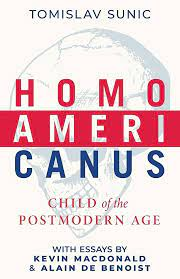
Homo judaicus: The Political Theology of US Foreign Policy

Below is a short compilation of excerpts from my book, first published almost two decades ago, and republished by Arktos media in 2017.  In light of the new geopolitical realignments and continuing political tremor in the Mideast it may be worth looking again at some underlying aspects of US foreign policy.

America’s unconditional support of Israel resembles a belated form of White House Christian-inspired medieval neurosis. Fear of being called an anti-Semite prevents American politicians and a great number of American academics from openly criticizing Israel. When some sparse critical voices are heard, they usually leave out the founding myths of the Biblical narrative, and focus, instead, on dry facts relating to the influence of Jewish lobbies in America. In the typical fashion of American “expertise,” American academics who happen to be critical of Israel use one set of arguments while neglecting other scholarly approaches. In their analysis of the holy alliance between postmodern Israel and America, American scholars tend to forget that the Old Testament ties between these two countries had already predestined America to nurture a special and privileged rapport with the state of Israel.

Clearly, America gains little, if any, geopolitical benefit from supporting Israel. Israel is more of a liability than an asset for America. From the geopolitical perspective, Israel is even a nuisance for America, given that as a small country of approximate size of New Jersey it surrounded by a host of hostile cultures, religions, and neighbors, both outside and within its borders. Although America, due to its unique insular position, has been able to avoid troublesome neighbors and their tribal problems, it has willingly accepted on its own soil the issue of the balkanized Middle East. America’s special friend, Israel, acts in a way similar to that of ancient Prussia; it must grow at the expense of its neighbors — or it must perish. [i] But America’s special filial-fatherly links to Israel must also prevent this last from happening.

Metaphysically speaking, Israel is the spiritual origin of the American divine world mission and the incarnation of American ideology itself. Only within the context of a strange filial relationship with Jewishness and Israel can one understand why America is accepting with equanimity its own deliberate decline into a world-wide morass in the early 21st century — especially since America’s foreign policy actions stand in sharp contrast to the originally proclaimed goals of America’s founding fathers.

Unfortunately, the fear of being called an anti-Semite prevents intelligent Americans from openly discussing the explosive issue of American-Israeli entanglement. Unlike previous geopolitical evaluations that had some sound basis in American foreign policy decision-making, the role of Israel and the Jewish lobby in America are the two major elements that formulate overall American foreign policy. The imagery of Israel and “God’s chosen people” represents the framework of America’s commitments, not only toward the Middle East but also regarding other foreign policy issues. In the meantime, “any aspiring policymaker is encouraged to become an overt supporter of Israel, which is why public critics of Israeli policy have become an endangered species in the foreign policy establishment.”[ii]

These words were written in 2005 by two prominent American scholars whose essay was relayed by major media outlets around the USA and Europe, in turn prompting Jewish lobbies in America to cry foul and raise the proverbial specter of “anti-Semitism.”

What John Mearsheimer and Stephen Walt write, however, is nothing new to knowledgeable individuals. Similar critical views of Israel were voiced earlier by many American authors, and these views also reflect, both privately and officially, those of many European scholars and politicians. But when such observations are uttered by scholars from respectable academic establishments, they leave a different aftereffect on the entire American political scene. This explains the reason for worry among American Jews and Israelis.

In Yahve we Trust 

American founding myths drew their inspiration from Hebrew thought. The notion of the “City on the Hill” and “God’s own country” was borrowed from the Old Testament and the Jewish people. The Biblical idea of predestination served the early American founding fathers as a launching pad for their own concept of democratic self-righteousness. Of all Christian denominations, Calvinism was the closest to the Jewish religion and, as some authors have noted, the United States owes its very existence to the Jews. “For what we call Americanism,” writes Werner Sombart, “is nothing else than the Jewish spirit distilled.” [iii]

The author, a disciple of Max Weber, was sympathetic to Jews and, therefore, when he describes the overwhelming influence of the Judaic spirit in American life, he cannot be accused of manifesting a bias against Jews. Similar remarks will be found later among legions of European authors, most of whom fell into oblivion or disgrace given their ties to antidemocratic and racialist schools of thought. Sombart further writes that “the United States is filled to the brim with the Jewish spirit.[iv] Many wide-spread customs in America, such as giving newborn children Judaic names, or administering circumcision to young newborn males, come from Jewish heritage.[v]

Very early on America’s founding fathers, pioneers, and politicians identified themselves as Jews who had come to the new American Canaan from pestilent Europe. In a postmodern Freudian twist, these pilgrims and these new American pioneers were obliged to kill their European fathers in order to facilitate the spreading of American democracy world-wide. “Heaven ha[s] placed our country in this situation to try us; to see whether we would faithfully use the incalculable power in our hands for speeding forward the world’s regeneration.” [vi]

Even American Christian antisemites are subconsciously enamored with the Jewish idea of predestination, which they harbor side by side with their antisemitic sentiments. In fact, American antisemitism can be described as a distorted and hidden form of philo-Semitism which, while not able to materialize itself on its own American chosenness, projects its would-be supremacy through its hatred against Jews. It is not far-fetched to argue, as some authors do, that the American dream is a role model for universal Jewishness, only one which must not be limited to a specific race or tribe in America, as is the case with ethnocentric Jews who are well aware of their ingroup racial feelings. Americanism is designed for all peoples, races and nations on Earth. America is, by definition, an extended form of globalized Israel and not reserved for one specific tribe only. Does that, therefore, mean that our proverbial homo americanus is a universal carbon copy of homo judaicus?

The word “antisemitism,” unlike the words “anticommunism” or “antifascism,” does not reflect political beliefs or critical views of the Jews. This term is exclusively used as a lexical label to depict a person’s grave mental illness. As a perceived medical or judicial illness, antisemitism must never be debated; an antisemitic patient must not be a partner in scholarly duels; his sick views must not be the subject of academic inquiry and counter-inquiry. As an element of medical pathology, antisemitism must only by treated by doctors, preferably by a Jewish psychoanalyst, or legally, by a liberal prosecutor in court.

Accusing American Jews of possessing extraterrestrial powers, or blaming them for their purported conspiracy to subvert Gentile culture, borders on delusion and only reflects the absence of normal dialogue. American antisemitic delusions only provide legitimacy to American Jews in their constant search for a real or surreal antisemitic boogieman around every corner. Without the specter of antisemitism, Jews would likely assimilate quickly and hence disappear. Thus, antisemitism provides Jews with alibis to project themselves as victims of Gentile prejudice. Consequently, it assigns them the cherished role of posing as the sole educational super-ego for Americans and, by proxy, the entire world. In his book on the social role of Jews, a prominent Jewish-French politician and author, Jacques Attali, writes: “As Russian Jews invented socialism, and as Austrian Jews invented psychoanalysis, American Jews in the forefront, participated in the birth of American capitalism and in the Americanization of the entire world.”[vii]

For certain Jewish authors, like Attali, such a remark is easier to put to paper than it would be for a Gentile thinker, who with the same comment would be immediately shouted down as an “anti-Semite.” If a serious American scholar or a politician venture into this forbidden field, his gesture is interpreted as a sign of his being an agent provocateur, or worse, as an indication that he has decided to write his own obituary. Such a schizophrenic climate of self-censorship in America will sooner or later lead to dramatic consequences for both American Jews and Gentiles. The lack of healthy dialogue can last for a century or so, but feigned conviviality between American Gentiles and American Jews cannot last forever, if it continues to take as its basis distorted perceptions of the Other and how this Other should behave. Mendacity carries the germ of civil war.


[i] Jordis von Lohausen, Les Empires et la puissance, (Paris: Le Labyrinthe) p. 266.

[ii] John Mearsheimer and Stephen Walt, “The Israel Lobby” London Review of Books, Vol. 28 No. 6, March 23, 2006. Also published in an extended version by Harvard University, “The Israel Lobby and U.S. Foreign Policy,” by John

  1. Mearsheimer and Stephen Walt; Working Paper Number: RWP06–011; Submitted: 13/03/2006.

[iii] Werner Sombart, The Jews and Modern Capitalism, translated with notes by M. Epstein, (New York: Burt Franklin, 1969; originally published in London 1913), pp. 43–44.

[iv] Ibid., p. 38.

[v] Ibid., p. 249.

[vi]  George B. Cheever, God’s Hand (New York: M.W. Dodd Brick Church Chapel, 1941; London: Wiley & Putnam, 1941); in Carl Bode (ed.), American Life in the 1840s (New York: Doubleday & Company, 1967), 315.

[vii] Jacques Attali, Les Juifs, le monde et l’argent (Paris: Fayard; 2002), p. 419 and passim.