Western Culture

Roger Scruton on Beauty

A reader, Alan, pointed out that I did not call attention to this passage from Scruton:

There is a liturgy of denunciation here that is repeated all across Europe by a ruling elite that trembles in the face of ordinary loyalties. But the fact is that national sentiment is, for most ordinary Europeans, the only motive that will justify sacrifice in the public cause. Insofar as people do not vote to line their own pockets, it is because they also vote to protect a shared identity from the predations of those who do not belong to it, and who are attempting to pillage an inheritance to which they are not entitled.

Motivation is indeed worth pondering. The EU has no motivational power for Europeans because its an artificial construct with no historic cultural, ethnic or linguistic ties. Read more

Roger Scruton’s “The Rebirth of Nations”

Roger Scruton is familiar to TOO readers for his starring role in Brenton Sanderson’s wonderful series, The War on the English (see here and here). Scruton’s comments on the destruction of the English quoted by Sanderson are well worth re-reading.

Scruton recently published an article in The American Spectator that summarizes some of the successes of nationalist parties in Europe and the deep disillusionment with immigration, multiculturalism and the European Union (“The Rebirth of Nations“). It is a very heartening article with some familiar themes, particularly the point that this has been a top-down, anti-democratic revolution. The elites have systematically stifled nationalist sentiments, but these sentiments are once again “prominent in the cultural landscape of Europe. And they are the more prominent for the attempt by the Eurocrats to forbid them.” Read more

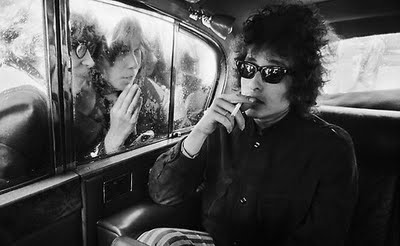
Quantum Dylan: A Double Act, Part 1

Bob Dylan’s 70th anniversary was celebrated worldwide on May 24th. Hailed as the Shakespeare of his generation, Dylan has sold more than 58 million albums, and written more than 500 songs recorded by more than 2000 artists. Dylan has described himself as “a person who owns the Sixties.”  At the same time, he has spent a lifetime “despising the nineteen-sixties — all the while being held up everywhere as its avatar.”[1] To post-1968 generations, the remarkable success of Robert Allen Zimmerman – alias Shabtai Zisel ben Avraham — remains “a riddle wrapped in a mystery inside an enigma.”  While the success of his precursors Elvis and Sinatra is easily explainable, neither looks, nor voice, nor charisma can explain Dylan’s unique and enduring iconic status.  He has been described as diffuse, ugly, even dirty — “His ‘diffuseness’ muddies all the waters whose streams make him up.”[2]

Deconstructing the binary high/low culture divide

In postmodern discourse, the status of ‘high culture’ –- perhaps reaching its historical climax with Clement Greenberg’s 1939 essay “Avant-Garde and Kitsch” –- has been undermined through exposure of its “inherently White, class-based, West-centric, and gendered elements.”[3] Postmodern discourse tends to break down distinctions between subject and object, consciousness and the unconscious, “oppressor” and “oppressed,” spectacle and spectator, “high” and “low,” etc.   The movement of “canon into kitsch, or identification into stylization or exaggeration”[4] can be seen in the art of Andy Warhol —  often seen as postmodernism’s chief avatar, “the locus classicus for the deconstruction of ‘mass production,’ and the figure who summarily disrupts every distinction there is, especially the difference between high and low.”[5] Hence, postmodernism seems to express a kind of cultural logic that sociologist Charles Lemert has described as relativistic:

The most important feature of the matrix is that, being relative, it overthrows the rationalist distinctions between the “big” and the “small,” the “greater” and the “lesser,” the “higher” and the “lower,” and so forth.  In other words, while the principles of complementarity and indeterminacy rebel against the rationalist epistemological distinction between knowing subject and known object, the relativistic principle overthrows the rationalist ontological perspective that views the natural and human world in hierarchical terms.  Relativity radically equalizes all things, persons, events, and facts in reality.  All things become platitudinous and, simultaneously, the platitude reigns supreme.[6]

Bob Dylan seems to fit into this picture as a figure heralded by intellectual elites as erasing the distinction between “high” and “low” culture.  Rock music has oftentimes (stereotypically) been portrayed as ‘low culture’ — as “anti-intellectual, concerned with the sensual, bodily effects of music rather than with rational thought.”[7] Beneath the surface, however, Dylan’s gravitas — attained from being a ”serious” folk artist — has been important for the ideology of rock as a “higher” cultural form. This ideology (or cultural strategy) has been staged through an alloy of myths, branding and cultural codes. Read more

“Whiteness” as a Theological Problem: J Kameron Carter on Race

Mainstream Christian theology today seems determined to confuse the worship of Christ with the worship of the poor, the suffering, and the marginalized.  Such confusion reflects the influence of modern Christian humanism which dissolves differences of race, class, gender, or sexual orientation into a common “humanity.”  In Theologian Daniel C. Migliore’s words (149–150), “human beings” are created in the “image of God…to be persons in communion with God and others.”  But “[i]f we are created for relationship with God who is wholly different from us, sin is a denial of our essential relatedness to those who are genuinely ‘other.’”  A sinful “human intolerance for difference” leads many to reject “the victim, the poor, the ‘leftover person.’”  In the social gospel of liberal Protestantism, as taught by Migliore, human beings deny Christ—the Word incarnate in poor, suffering flesh—when they assert the will to power over the “other.”  Black American theologian J Kameron Carter asserts (368), however, that “privileged” White folks, in particular, compounded that sin by transforming the desire for domination and mastery over others into a science; as a consequence, their communion with God can be restored only by uniting themselves with the poor, Black victims of scientific racism “since that is where Christ is.”

Naturally, Migliore, too, deplores the heavy over-representation of Black people among the underclass in American society.  He also attributes the condition of Black America to the sinful “spirit of mastery over others” (140) that is responsible for the dismal history of patriarchy, racism, and colonialism in modern Western history generally.  Carter issues a more pointed indictment, charging that the modernist political theology of “Whiteness” “created an analytics of race that tyrannically divides creation” between a Western overclass and the underworld inhabited by the “wretched of the earth” (345)—a reference to Frantz Fanon’s book of the same title. Read more

What Is and Isn’t Creative—and Not Just in Hollywood

In the comment thread following Kevin MacDonald’s recent blog post “Hollywood and the Left, Again,” one of the commenters, Caleb, wrote “It’s not just Hollywood. Creative people in all fields tend to be tolerant and politically liberal. Show me an artist who’s also a country club Republican.” In effect, several of those who replied seemed to think, as do I, that generalizing about creativity and creative people should be approached with caution. After I tried teasing out the implications of this concise sentiment, however, concision soon got consigned to oblivion. The paragraphs that follow are what replaced it.

The truism that “creative people” tend to manifest the “values”—tolerance and liberalism, for two—of this society’s masters is as uninformative as every other truism (“a proposition that states nothing beyond what is implied by any of its terms”). Unsurprisingly, the people who have successfully peddled this bill of goods, even to some TOO commenters, fail to reveal that the definers of creativity are the same people that run the communication, information, and entertainment industries and much else besides. Read more

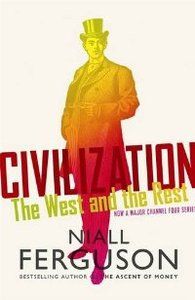
Review of Civilization: The West and the Rest, by Niall Ferguson

Review of Civilization: The West and the Rest, by Niall Ferguson (2011) London: Allen Lane.  402 pages.

If you’ve ever found yourself saying, as I have, that your major political preoccupation is the salvaging of the best of “Western Civilization” [WC], you may then have been queried, “What is it? What aspect of WC is so important?”

[Let us pause here while you review your own list…]

Perhaps a bit of uncertainty? Not sure how long a list to compile? Not sure of your priorities? Isn’t it a matter of taste? And importantly, most of us are not at all sure how WC came about.

Niall Ferguson will certainly help you out here. He is the now well-known and popular (e.g., The Accent of Money) Scottish economic historian, teaching at Harvard and the London School of Economics, and frequent TV commentator.  The book under review was the basis for a six-part documentary, for Channel 4 in Britain, “Civilization: Is the West History?”. (Aha! That ought to wake you up, all you readers of The Occidental Observer.) Read more

Helmuth Nyborg on the Genetic Decline of Western Civilization: Denmark as a Case Study

Prof. Helmuth Nyborg

The Danish psychologist Helmuth Nyborg has an academic paper soon to be published in Personality and Individual Differences (“The decay of Western Civilization: Double Relaxed Natural Selection“). Nyborg is well-known for his work showing a sex difference in IQ favoring males, a paper which resulted in an investigation of his work and a reprimand from his university. (Nyborg describes the “witch hunt” he endured  here.)

Nyborg’s latest paper charts past trends and projects IQ changes in Denmark as a result of two trends: relaxation of natural selection among the traditional Danes, and an influx of low-IQ immigrants. These two trends together amount to what he terms a “double relaxation of natural selection” (DRNS).

Relying on Richard Lynn’s work Dysgenics: Genetic Deterioration in Modern Populations, the relaxation of internal selection is thought to have begun around 1850 as the fertility of the lower classes exceeded the upper classes because of improvements in hygiene and reduction in diseases. He cites Lynn’s estimate that England lost 6.9 IQ points over 90 years (1920-2010) and estimates that Denmark’s average IQ dropped around 10 points since 1850 due to internal relaxation of natural selection. Read more